
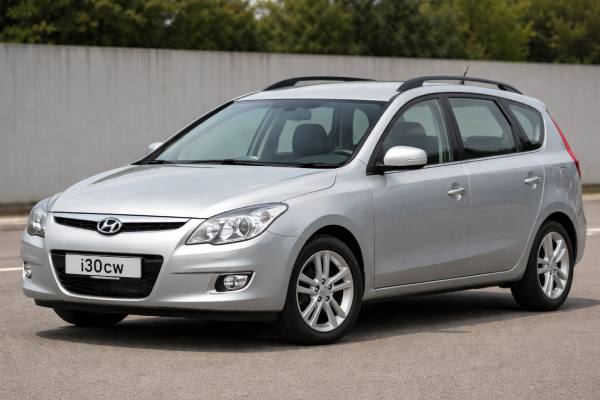
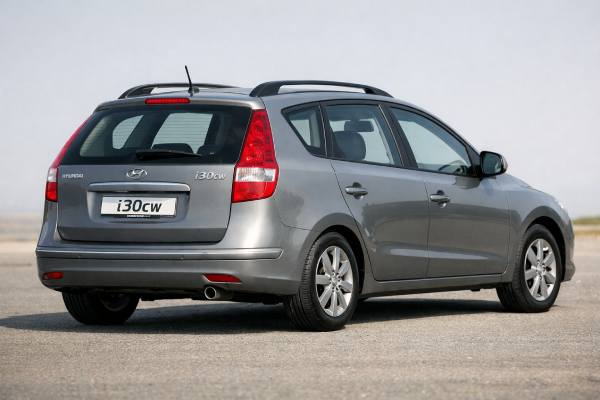
The 2008–2010 Hyundai i30cw 1.6 CRDi 90 is one of those cars that makes more sense the longer you live with it. It combines the first-generation FD wagon body with Hyundai’s low-output 1.6-liter common-rail diesel, giving you useful torque, excellent range, and a genuinely practical load area without the size or cost of a larger estate. For buyers who cover long distances, the 90 hp version is more about efficiency than speed, but it is still flexible enough for family use thanks to its 235 Nm torque figure. The real ownership story is mixed in a good way: the chassis is more sophisticated than many budget rivals, the wagon body is genuinely useful, and routine costs can stay reasonable. The caveat is that this diesel rewards the right use pattern. Cars driven mostly on short trips can suffer from soot-related issues, sticky EGR hardware, and neglected service items. Buy carefully, maintain it well, and it can still be a very rational compact diesel wagon.
Owner Snapshot
- Strong low-rpm torque makes it easier to drive than the 1.4 petrol, especially when loaded.
- The wagon body offers 415 L to 1,395 L of cargo space, which is excellent for a compact family car.
- Real motorway economy is a major strength, especially on later 6-speed Blue cars.
- Short-trip use can trigger EGR, intake, and diesel particulate filter trouble on later Euro 5 examples.
- A smart service baseline is engine oil and filter every 15,000 km or 12 months.
What’s inside
- Hyundai i30cw FD Diesel Wagon
- Hyundai i30cw FD Spec Tables
- Hyundai i30cw FD Trims and Safety Kit
- Fault Patterns and Recall History
- Service Plan and Used-Buy Checks
- On-Road Character and Fuel Use
- Better or Worse Than Rivals
Hyundai i30cw FD Diesel Wagon
The first-generation Hyundai i30cw took the FD hatchback and gave it the one thing many compact family cars lacked at the time: real luggage space. In 1.6 CRDi 90 hp form, it also added the long-range appeal of a small turbo diesel. That combination matters, because this version was not sold as the sporty or premium choice in the range. It was the sensible one. You bought it for commuting, family trips, and fuel bills that stayed under control, not for rapid overtaking or fast-lane image.
Mechanically, this version uses Hyundai’s 1.6-liter D4FB common-rail diesel. It is an inline-four with DOHC, four valves per cylinder, a turbocharger with intercooling, and a timing chain rather than a cambelt. Output is modest at 90 hp, but torque is the figure that shapes the experience: 235 Nm from 1,750 to 2,500 rpm. In daily driving, that means the car feels more flexible than its power figure suggests. It does not need to be revved hard, and it copes with passengers and luggage much more naturally than the 1.4 MPI petrol.
There is an important year split inside the 2008–2010 range. The earlier 2008–2009 wagons are the simpler pre-facelift cars, typically with Euro 4 emissions tuning and a 5-speed manual gearbox. In 2010, the facelifted Blue version of the 90 hp diesel brought cleaner Euro 5 emissions, a 6-speed manual, slightly improved official economy, and a longer body. That late change is worth knowing because buyers often group all 2008–2010 diesel wagons together even though the later car is mechanically a little different in use and ownership.
The chassis is one of this car’s most underrated strengths. Like the FD hatch, the i30cw uses MacPherson struts at the front and an independent multi-link rear suspension rather than the simpler torsion-beam layout seen on some cheaper rivals. That gives it a more settled feel over broken roads and helps it stay composed when the luggage area is full. Add four-wheel discs and a sensible wheelbase, and the car ends up feeling more mature than its price point might suggest.
The ownership trade-off is straightforward. This is a very rational compact diesel wagon if you do regular longer trips and keep on top of service work. It is far less convincing if it has spent years on short urban runs with delayed oil changes and neglected fuel-system maintenance. The engine itself is not unusually complicated by modern standards, but any small turbo diesel of this era can get expensive if soot, injectors, clutch wear, or steering faults have been ignored. As a used buy, the i30cw 1.6 CRDi 90 works best when its practical strengths are matched by realistic expectations: strong economy, decent torque, real boot space, and only modest performance.
Hyundai i30cw FD Spec Tables
The most useful way to present the Hyundai i30cw 1.6 CRDi 90 is to separate the stable core specifications from the year-dependent changes. The engine’s basic hardware stayed the same, but the 2010 facelift and Blue update altered emissions, gearbox count, and some published economy and body-length figures. If you are buying parts, comparing road tax, or matching workshop data, that split matters.
| Powertrain and efficiency | 2008–2009 i30cw 1.6 CRDi 90 | 2010 i30cw 1.6 CRDi 90 Blue / facelift |
|---|---|---|
| Code | D4FB | D4FB |
| Engine layout and cylinders | Inline-4, DOHC, 4 valves/cyl | Inline-4, DOHC, 4 valves/cyl |
| Bore × stroke | 77.2 × 84.5 mm (3.04 × 3.33 in) | 77.2 × 84.5 mm (3.04 × 3.33 in) |
| Displacement | 1.6 L (1,582 cc) | 1.6 L (1,582 cc) |
| Induction | Turbocharged, intercooler | Turbocharged, intercooler |
| Fuel system | Diesel common rail direct injection | Diesel common rail direct injection |
| Compression ratio | 17.3:1 | 17.3:1 |
| Max power | 90 hp (66 kW) @ 4,000 rpm | 90 hp (66 kW) @ 4,000 rpm |
| Max torque | 235 Nm (173 lb-ft) @ 1,750–2,500 rpm | 235 Nm (173 lb-ft) @ 1,750–2,500 rpm |
| Timing drive | Chain | Chain |
| Rated efficiency | 5.9 / 4.3 / 4.9 L/100 km urban / extra-urban / combined | 5.4 / 4.3 / 4.7 L/100 km urban / extra-urban / combined |
| Rated efficiency in mpg | 39.9 / 54.7 / 48.0 mpg US and 47.9 / 65.7 / 57.6 mpg UK | 43.6 / 54.7 / 50.0 mpg US and 52.3 / 65.7 / 60.1 mpg UK |
| Real-world highway @ 120 km/h | Usually around 5.6–6.2 L/100 km in good condition | Usually around 5.3–5.9 L/100 km thanks to the 6-speed gearbox |
| Emissions standard | Euro 4 | Euro 5 |
| Diesel particulate filter | Not consistently listed on open data sources | Yes, commonly listed on facelift Blue 90 hp cars |
The main point here is that the later Euro 5 Blue wagon is not meaningfully faster, but it is usually the stronger long-distance choice because it cruises with lower revs and slightly better official economy. The earlier 5-speed car is a little simpler in emissions terms and can be the easier ownership pick if most trips are mixed rather than all-urban.
| Transmission, driveline, and chassis | Specification |
|---|---|
| Transmission | 5-speed manual on early cars; 6-speed manual on facelift Blue cars |
| Transmission code | Varies by market; early cars are commonly associated with Hyundai M5CF3-family manuals, later cars with M6CF3-family manuals |
| Drive type | FWD |
| Differential | Open front differential |
| Suspension front / rear | MacPherson strut / independent multi-link |
| Steering | Rack-and-pinion power steering |
| Steering ratio | Not consistently published in open wagon-specific data |
| Brakes | 280 mm (11.0 in) vented front discs / 262 mm (10.3 in) rear discs |
| Wheels and tyres | 185/65 R15 is the common size on 90 hp wagons; some higher trims use 205/55 R16 |
| Ground clearance | About 135 mm (5.3 in) on commonly published facelift data |
| Length / width / height | 4,475 / 1,775 / 1,565 mm for early cars; 4,500 / 1,775 / 1,565 mm for facelift cars |
| Wheelbase | 2,700 mm (106.3 in) |
| Turning circle | 10.4 m (34.1 ft) |
| Kerb weight | About 1,334 kg (2,941 lb) |
| GVWR | 1,920 kg (4,233 lb) |
| Fuel tank | 53 L (14.0 US gal / 11.7 UK gal) |
| Cargo volume | 415 L (14.7 ft³) seats up / 1,395 L (49.3 ft³) seats folded |
| Payload | About 586 kg (1,292 lb) |
| Towing capacity | Up to 1,400 kg (3,086 lb) braked and 550 kg (1,213 lb) unbraked on later published 90 hp wagon data |
| Performance and service capacities | Specification |
|---|---|
| 0–100 km/h | 14.4 s |
| Top speed | 172 km/h (107 mph) |
| Braking distance | Not consistently published for the exact 90 hp wagon variant |
| Engine oil | 0W-30 or 5W-30; about 5.3 L (5.6 US qt) service fill, about 5.7 L (6.0 US qt) dry |
| Coolant | About 6.8 L (7.2 US qt) |
| Transmission oil | Verify by gearbox code; manual drain-and-fill quantity is commonly just under 2.0 L |
| Differential / transfer case | Not applicable |
| A/C refrigerant | R-134a; exact charge varies by VIN and under-bonnet label |
| A/C compressor oil | PAG type; verify exact grade and fill by compressor label |
| Key torque specs | Wheel nuts are commonly tightened to 100 Nm (73.8 lb-ft) |
| Crash ratings | Euro NCAP 2008 reassessment: 5 stars under the older protocol; ANCAP 2009 wagon rating: 5 stars only where side curtains are fitted, otherwise 4 stars |
| Headlight rating | IIHS not applicable for this market and era |
| ADAS suite | AEB, ACC, lane support, BSD, and traffic-sign functions not available |
This is a good example of why VIN-based parts lookup matters. Two 90 hp diesel wagons from adjacent years can look similar but differ in gearbox count, emissions equipment, and some service data.
Hyundai i30cw FD Trims and Safety Kit
Trim structure on the FD i30cw varies by country, so the best approach is to think in equipment groups rather than assume one universal trim ladder. In many European markets, the 1.6 CRDi 90 sat in value-oriented trims such as Classic, Comfort, or similar names. In Australia, wagon safety documentation refers to SX and SLX versions. The diesel engine itself did not dramatically change the chassis or brake package in base 90 hp form, but trim level could alter wheel size, upholstery, convenience features, and, most importantly, safety equipment.
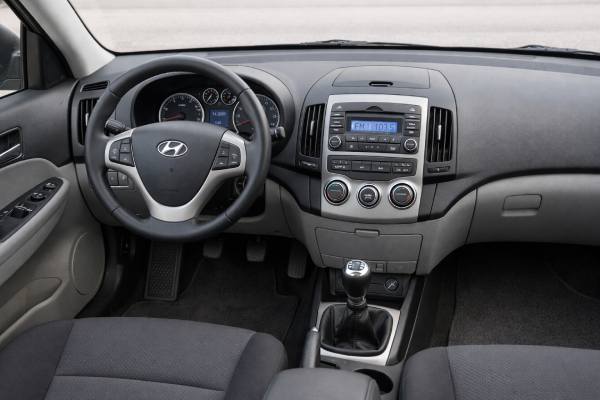
Entry trims usually came with the basics done properly: manual air conditioning, power windows, remote locking, a CD or basic audio unit, and practical seat cloth rather than anything fancy. On these cars, the quick visual identifiers are usually 15-inch wheels, simpler interior trim, and fewer cosmetic upgrades. Higher trims added alloy wheels, upgraded audio, more steering-wheel controls, and small cabin improvements that make the car feel less budget-focused. None of that changes the engine’s character, but it does change how pleasant the car feels in long ownership.
Where buyers really need to slow down and check details is passive safety. The FD i30cw can be a better-equipped old family car than people expect, but not every car has the same airbag count. The wagon achieved a 5-star ANCAP rating only when fitted with side-curtain airbags. Without the curtains, the same wagon dropped to 4 stars. That is not a small paperwork difference. It changes the car’s real safety position on the used market. Side airbags and curtains were standard on some better-equipped variants and only optional on lower ones.
The broader safety package is respectable for a late-2000s compact wagon. Dual front airbags, ABS, EBD, ESC, front pretensioners, and ISOFIX child-seat provisions were all part of the car’s basic safety identity in better-specified markets. Structurally, the car also benefited from the same platform logic that gave the hatch a stronger crash reputation after Hyundai improved knee and femur protection in the 2008 Euro NCAP reassessment. That is why the FD i30 often feels more serious than some lower-cost rivals from the same period.
Still, this remains an old-protocol car. Modern active safety technology is absent. There is no autonomous emergency braking, no adaptive cruise control, no lane-keep assist, no blind-spot monitoring, and no traffic-sign recognition. If you want a compact wagon with electronic crash-avoidance systems, this is not the right era. If you want a structurally decent older car with stable chassis behavior and reasonable passive protection for its time, it makes more sense.
For shoppers, the best trim strategy is simple:
- Prefer cars with confirmed curtain airbags.
- Check whether ESC is present and working.
- Do not assume safety equipment from badges alone.
- Verify year-specific equipment because 2010 facelift cars can differ in trim packaging.
- Inspect seat fabrics, steering-wheel wear, and switchgear condition because honest cabin wear often tells the truth about how the car has been used.
A tidy 1.6 CRDi 90 in a mid or upper trim can feel like a well-thought-out long-distance family tool. A sparse base car without the right safety equipment is still usable, but much less appealing in today’s used-car market.
Fault Patterns and Recall History
The i30cw 1.6 CRDi 90 is generally a sensible engine-and-chassis package, but it is old enough now that the fault pattern depends heavily on use. Cars that did steady motorway work and saw regular oil changes usually age far better than examples that spent most of their lives doing short urban trips. That matters because this diesel does not usually fail in one dramatic, signature way. Instead, it gets expensive through accumulated neglect.
The most common diesel-specific trouble spots are soot-related. On all versions, the EGR valve and intake path can clog over time, especially if the car is driven gently and rarely gets fully hot. Typical symptoms are hesitation, flat throttle response, rougher idle, higher smoke output, and intermittent engine-management warnings. On later Euro 5 Blue cars, diesel particulate filter problems become a bigger concern, especially if regeneration is interrupted repeatedly by stop-start urban use. A healthy DPF car needs regular long runs and the right oil specification. A neglected one can trap the owner in a cycle of warning lights and forced regenerations.
Fuel-system age is the next thing to watch. Common-rail diesels depend on clean fuel delivery and strong injector behavior. With mileage, owners can run into injector leak-off imbalance, poor cold starting, diesel knock at idle, or a smell of combustion gases around the injectors if the copper seals have started to leak. The 90 hp engine is not unusually fragile, but diesel injection repairs are never cheap enough to ignore during a pre-purchase inspection.
Timing-chain wear is less famous on this engine than on some petrol Hyundai units, but it is still worth listening for. Persistent chain noise at cold start, rough running with timing-correlation faults, or a poorly maintained lubrication history should all make you cautious. The correct approach is condition-based inspection, not panic, because many of these engines go a long time without chain trouble when oil changes have been done on time.
Other issues are more chassis and age related:
- Clutch and dual-mass flywheel wear: usually shows up as vibration on take-off, rattling at idle, or shudder under load.
- Turbo hose and vacuum-control leaks: can cause weak boost, limp-home behavior, or oily residue around pipes.
- Wheel bearings and rear suspension bushes: common old-car wear items rather than design scandals.
- Electric power steering faults: heavy steering, warning lights, or intermittent assist loss should be taken seriously.
- Brake drag and caliper corrosion: often seen on cars that have sat unused or covered low mileage.
Recall and service-action history matters more than many buyers think. Official Hyundai campaign information for the FD generation includes steering-related concerns in some markets, ABS control-module moisture risks on certain 2006–2012 cars, and an airbag control unit software campaign affecting i30 FD vehicles in some regions. The correct habit is simple: check official recall portals by VIN and ask for dealer history, not just a stamped service book.
A used example becomes much more attractive when it comes with evidence of recent oil services, fuel-filter changes, suspension refresh work, and completed campaign items. It becomes much less attractive when the seller says the engine light is “just an EGR thing” or the steering warning has “never caused a problem.”
Service Plan and Used-Buy Checks
The i30cw 1.6 CRDi 90 rewards disciplined maintenance more than heroic repair work. In other words, this is a car you keep healthy by doing ordinary jobs on time. If you wait until it develops drivability faults, smoke, or repeated limp mode, repair costs climb fast. That is true of most older common-rail diesels, but the Hyundai’s relatively simple layout means a well-kept car can still be a good-value long-term buy.
A practical maintenance schedule looks like this:
| Item | Practical interval |
|---|---|
| Engine oil and filter | Every 15,000 km or 12 months |
| Engine air filter | Inspect every service, replace around 30,000–45,000 km |
| Cabin air filter | Replace about yearly or sooner in dusty use |
| Fuel filter | Around every 30,000–60,000 km depending on fuel quality and service history |
| Coolant | About every 90,000 km or 5 years on commonly published open service data |
| Manual transmission oil | Sensible preventive change around 90,000–120,000 km |
| Brake fluid | Every 2 years |
| Auxiliary belt | Around 120,000 km or earlier if cracked or noisy |
| Timing chain | No fixed change interval; inspect for noise, stretch symptoms, and timing-correlation faults |
| Tyre rotation | Every 10,000–15,000 km |
| Alignment check | When tyres wear unevenly or after suspension work |
| 12 V battery test | Yearly after about 4 years |
| DPF health check on Euro 5 cars | At service time if regeneration frequency or warning lights increase |
For service planning, the key fluid figures are useful. Engine oil takes about 5.3 L in a normal drain-and-fill and about 5.7 L dry. Coolant is about 6.8 L. The fuel tank is 53 L. Manual gearbox fill depends on the exact transmission family, so this is one place where gearbox code and workshop documentation matter. The correct engine oil grade is especially important on later DPF-equipped Euro 5 cars, because the wrong ash content can shorten DPF life.
A buyer’s inspection should be specific, not generic. Ask for the following:
- A cold start with the engine fully cold.
- Full service history, including fuel-filter and brake-fluid evidence.
- Recall or campaign proof by VIN.
- A scan for stored engine, ABS, airbag, and steering codes.
- Evidence of recent clutch, battery, or suspension work if mileage is high.
Then inspect these areas carefully:
- Injector area for diesel smell, carbon deposits, or seal leakage.
- Turbo hoses for oil mist and split rubber.
- EGR and intake behavior, especially if the engine feels flat below 2,000 rpm.
- Steering feel at parking speed and any EPS warnings.
- Rear suspension bushes, brake pipes, and subframe areas for corrosion.
- Tailgate opening, luggage floor, and lower door seams for body rust or poor repairs.
The better years to seek are usually the later 2010 cars if you do regular long trips and want the 6-speed gearbox and improved official economy. The better cars to avoid are the ones that have lived in town, never seen proper motorway runs, and already show signs of DPF, steering, or clutch trouble. Long-term durability is good when maintenance is consistent. It is mediocre when owners treat it like a petrol car and ignore diesel-specific needs.
On-Road Character and Fuel Use
The i30cw 1.6 CRDi 90 is not quick, but it is often more pleasant to drive than the power figure suggests. That comes down to torque and gearing. Around town, the diesel pulls more easily from low revs than the small petrol engines, so it feels less strained in day-to-day use. On country roads, it is not exciting, but it is relaxed enough if you drive within the engine’s limits. Fully loaded motorway overtakes still require planning, especially in the earlier 5-speed car.
Ride quality is one of the car’s stronger points. The FD platform’s independent rear suspension helps the wagon stay stable over rougher surfaces, and the chassis usually feels planted rather than flimsy. Straight-line stability is good for a compact estate, and the steering is light enough for everyday use without feeling completely disconnected. On poorer roads, the car generally settles better than some bargain rivals with simpler rear suspension. That makes it a better long-trip family tool than the plain cabin might suggest.
Noise levels depend heavily on condition. A healthy example has the typical old-school small-diesel soundtrack at idle, but once warm it settles down. At motorway speed, the later 6-speed facelift car is usually the more refined one because it runs lower revs than the earlier 5-speed version. Wind and tyre noise will still be more noticeable than in a newer car, and rough low-cost tyres can make the wagon sound much older than it is.
Real-world fuel economy is where this model earns its keep. Official numbers are already strong, but real use is still impressive if the engine is healthy. A realistic pattern looks like this:
- City use: around 6.0–6.8 L/100 km for early cars, slightly better for later Blue cars if the DPF is healthy.
- Highway at 100–120 km/h: around 5.3–6.2 L/100 km depending on gearbox, load, wind, and tyre choice.
- Mixed driving: usually around 5.6–6.3 L/100 km in everyday ownership.
That is the good-news scenario. The bad-news scenario is a car with EGR buildup, a partially blocked DPF, dragging brakes, bad alignment, or a failing thermostat. Those faults can push economy up quickly, so a thirsty 90 hp diesel should never be dismissed as “normal for an old car.”
The 90 hp version is not the best pick for towing regularly, but it can cope with moderate loads if the car is healthy and the cooling system is in good order. Under load, expect more downshifts, more cabin noise, and a noticeable rise in fuel use. Braking confidence is decent thanks to four-wheel discs and ESC-equipped setups, but tyre quality matters a lot. Cheap tyres undo much of the chassis’s natural competence.
Overall, this is a car that drives best when used for what it was built for: practical, efficient family travel with enough torque to make daily life easy, but not enough power to hide poor maintenance or overload.
Better or Worse Than Rivals
The Hyundai i30cw 1.6 CRDi 90 competed against the same kind of cars it still faces on the used market today: the Kia Cee’d SW 1.6 CRDi, Ford Focus Wagon diesel, Opel Astra wagon diesel, and Volkswagen Golf Variant diesel. That is a strong field, so the Hyundai’s position needs to be judged honestly.
Against the Kia Cee’d SW, the i30cw is the closest relative. Much of the mechanical story is shared, so condition matters more than badge preference. In practice, buyers should choose the better-maintained example, not the one with the supposedly better logo. Against the Ford Focus Wagon, the Hyundai usually gives away some steering sharpness and driver appeal, but it counters with a practical cabin, good ride quality, and a reputation for straightforward ownership when serviced properly.
Against the Volkswagen Golf Variant diesel, the Hyundai often loses on interior richness and brand image. It can also feel less refined in details such as switchgear and cabin trim. But it often wins on value. If you want a simple compact diesel wagon and do not want to pay Golf money for an older car, the i30cw makes a strong case. Against the Opel Astra wagon, the Hyundai’s balance is similar: less image, often less equipment drama, and usually a cleaner value proposition if the service history is right.
Its weaknesses are easy to define. The 90 hp tune is not fast, and some rivals offered stronger low-end performance or more relaxed motorway pace. Diesel-specific issues such as EGR fouling, DPF trouble on later cars, injector wear, and dual-mass flywheel costs are not unique to Hyundai, but they still matter. The cabin is also functional rather than special, and safety technology is firmly of its era.
Its strengths are just as clear:
- Real wagon practicality in a compact footprint
- Strong fuel economy
- Useful diesel torque
- A more sophisticated rear suspension setup than some cheaper rivals
- Straightforward day-to-day parts and service logic when compared with more complex newer diesels
That leads to a simple verdict. The i30cw 1.6 CRDi 90 is a good used buy for drivers who do enough distance to suit an older diesel and who want maximum practical value rather than badge prestige. It is not the best choice for short-hop town use, and it is not the most enjoyable driver’s wagon of its era. But as a cheap, efficient, useful family estate, it still makes a convincing case.
References
- Hyundai Owners manuals | Hyundai Motor UK 2026 (Owner’s Manual)
- EuroNCAP | Hyundai i30 2008 (Safety Rating)
- Hyundai i30 | Safety Rating & Report | ANCAP 2009 (Safety Rating)
- Service & Safety Campaigns | Hyundai New Zealand 2026 (Recall Database)
- Car Recalls | Owning | Hyundai Australia 2025 (Recall Checker)
Disclaimer
This article is for informational purposes only and is not a substitute for professional diagnosis, repair, or workshop guidance. Specifications, torque values, service intervals, fluids, procedures, and equipment can vary by VIN, market, build date, emissions level, and trim, so always verify critical details against the correct official service documentation for the exact vehicle.
If this guide was useful, please consider sharing it on Facebook, X, or another social platform to support our work.