
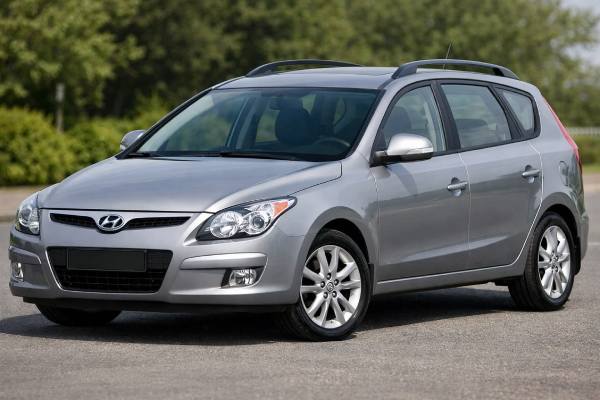
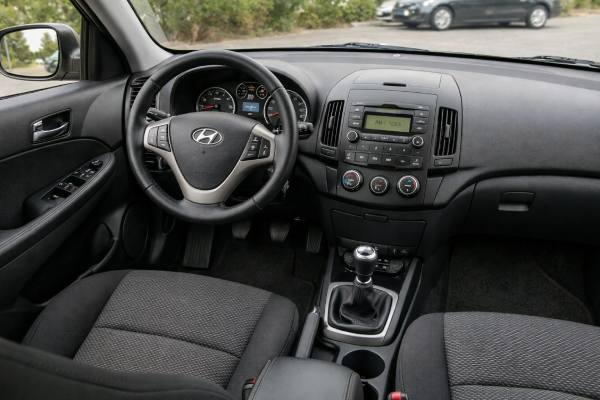
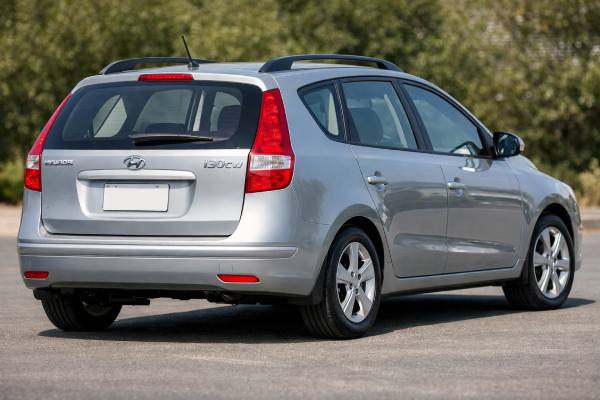
The Hyundai i30cw FD with the 2.0 MPI petrol engine is one of those rare used cars that makes more sense the closer you look. It takes the solid first-generation i30 formula and adds the body style many buyers actually need: a longer roof, a bigger load bay, roof rails, and more rear practicality without the weight, complexity, or fuel cost of a larger SUV. The 143 hp 2.0-liter four-cylinder also suits the wagon better than the smaller petrol engines. It is not quick by modern standards, but it gives the i30cw enough mid-range to feel relaxed with passengers and luggage on board. Mechanically, this is a straightforward front-wheel-drive estate with conventional multi-point injection, proven Hyundai underpinnings, and easy-to-understand servicing. Its real appeal today is not glamour. It is honest engineering, useful space, manageable running costs, and strong value when you find one with the right maintenance history.
Owner Snapshot
- The 2.0 MPI engine gives the wagon enough power to feel calmer under load than the smaller petrol versions.
- The long-roof body adds a genuinely useful 415 L boot and strong family-car versatility.
- Independent rear suspension helps ride quality and stability when the cargo area is full.
- Timing belt service is critical on this engine and should never be treated as optional.
- Routine servicing is typically every 15,000 km or 12 months, with shorter intervals for severe use.
What’s inside
- Hyundai i30cw FD ownership profile
- Hyundai i30cw FD technical figures
- Hyundai i30cw FD equipment and crash protection
- Trouble spots and factory actions
- Upkeep schedule and used-buying guide
- Everyday performance and travel economy
- Hyundai i30cw versus estate rivals
Hyundai i30cw FD ownership profile
The Hyundai i30cw arrived at a time when compact estates still mattered. Buyers wanted hatchback-sized running costs with more luggage room, better rear-seat usefulness, and lower purchase prices than most SUVs. Hyundai’s answer was simple and effective. The i30cw kept the friendly, easy-driving FD-platform character of the hatchback but stretched the body, lengthened the wheelbase to 2,700 mm, and carved out a much more usable cargo area. In 2.0 MPI form, it also avoided the “under-engined family wagon” problem that affects many small-petrol estates from the same era.
That 2.0-liter engine is a big part of the car’s identity. It is a naturally aspirated, multi-point injected four-cylinder with 143 hp and 186 Nm. In practice, that gives the i30cw enough headroom for long motorway runs, hill work, and full-family use without constant downshifts. It is still not a fast estate, but it is meaningfully more relaxed than the smaller 1.4 and 1.6 petrol variants. Buyers who tow light trailers, regularly carry adults in the rear seats, or live in hilly areas will usually prefer this engine.
The engineering story is equally important. This is an older Hyundai in the good sense: no turbocharger, no direct injection, no dual-clutch transmission, and no complex adaptive systems to age badly. Most cars in this specification use either a 5-speed manual or a 4-speed automatic, both paired with front-wheel drive. The rear suspension is independent multi-link rather than a simple torsion beam, which helps the wagon feel planted and mature when it is loaded.
For ownership, the i30cw’s main strengths are clarity and balance. Visibility is good, controls are simple, and the cabin design remains intuitive even now. The wagon body adds real everyday value. A 415 L VDA boot with the rear seats up is useful for prams, dogs, luggage, or bulky weekly shopping, and folding the rear seat opens up 1,395 L. Roof rails further widen its practical range.
The trade-offs are typical for an older compact estate. The interior plastics are durable rather than plush. Fuel use is reasonable, not outstanding. The 2.0 engine is smoother and stronger than the smaller petrols, but it is also thirstier. And because these cars are now well into age-related maintenance territory, condition matters more than trim badge or mileage alone. A tidy i30cw 2.0 feels rational, roomy, and dependable. A neglected one can need a timing belt job, cooling system work, suspension renewal, and recall verification almost immediately. That is why the right buying mindset is essential: treat this car as an engineering package first and an equipment list second.
Hyundai i30cw FD technical figures
For clarity, the tables below follow the widely documented 2008–2010 i30cw 2.0 petrol wagon in front-wheel-drive form, using the 5-speed manual as the baseline where a figure differs by transmission. Automatic differences are noted where they materially change weight or fuel use.
| Powertrain and efficiency | Specification |
|---|---|
| Code | G4GC |
| Engine layout and cylinders | Transverse inline-4, DOHC, 4 cylinders, 4 valves per cylinder |
| Bore × stroke | 82.0 × 93.5 mm (3.23 × 3.68 in) |
| Displacement | 2.0 L (1,975 cc) |
| Induction | Naturally aspirated |
| Fuel system | Sequential multi-point fuel injection |
| Compression ratio | 10.1:1 |
| Max power | 143 hp (105 kW) @ 6,000 rpm |
| Max torque | 186 Nm (137 lb-ft) @ 4,600 rpm |
| Timing drive | Belt |
| Rated efficiency | 7.3 L/100 km manual and 7.7 L/100 km automatic |
| Real-world highway @ 120 km/h (75 mph) | About 7.0–8.0 L/100 km manual, usually 7.5–8.5 L/100 km automatic |
| Transmission and driveline | Specification |
|---|---|
| Transmission | 5-speed manual or 4-speed automatic |
| Drive type | FWD |
| Differential | Open |
| Chassis and dimensions | Specification |
|---|---|
| Suspension front / rear | MacPherson strut / independent multi-link |
| Steering | Electric-assist rack and pinion |
| Steering ratio | 2.69 turns lock-to-lock; published numeric gear ratio is not commonly listed in open literature |
| Brakes | 280 mm (11.0 in) ventilated front discs, 262 mm (10.3 in) rear solid discs |
| Wheels and tyres | 205/55 R16 on common 2.0 wagon trim |
| Ground clearance | 150 mm (5.9 in) |
| Length / width / height | 4,475 / 1,775 / 1,520 mm (176.2 / 69.9 / 59.8 in) |
| Height including roof rails | 1,565 mm (61.6 in) |
| Wheelbase | 2,700 mm (106.3 in) |
| Turning circle | 10.42 m (34.2 ft) |
| Kerb weight | 1,407 kg (3,102 lb) manual; 1,421 kg (3,133 lb) automatic |
| GVWR | 1,860 kg (4,101 lb) manual; 1,880 kg (4,145 lb) automatic |
| Fuel tank | 53 L (14.0 US gal / 11.7 UK gal) |
| Cargo volume | 415 L (14.7 ft³) seats up / 1,395 L (49.3 ft³) seats folded, VDA |
| Performance and capability | Specification |
|---|---|
| 0–100 km/h | About 11.1 s |
| Top speed | About 205 km/h (127 mph) |
| Braking distance | Exact body-specific public test figure is not consistently published for this variant |
| Towing capacity | 1,200 kg (2,646 lb) braked / 500 kg (1,102 lb) unbraked |
| Payload | About 453 kg (999 lb) manual; varies slightly by transmission and trim |
| Roof rail load | 80 kg (176 lb) |
| Fluids and service capacities | Specification |
|---|---|
| Engine oil | 5W-30 or 5W-40 meeting the correct Hyundai and market spec; about 4.0 L (4.2 US qt) with filter |
| Coolant | Ethylene-glycol long-life coolant, typically 50:50 mix; about 6.3–6.6 L (6.7–7.0 US qt), verify by VIN |
| Manual transmission oil | API GL-4 manual gear oil, about 2.0 L (2.1 US qt), exact grade varies by market |
| Automatic transmission fluid | SP-III-type ATF; dry-fill volume is higher than a normal drain-and-refill, so verify by transmission tag and service data |
| A/C refrigerant | R-134a; charge varies by label and compressor setup |
| A/C compressor oil | PAG type; verify by under-bonnet label |
| Key torque specs | Critical fasteners should be checked against the service manual for the exact VIN before repair |
| Safety and driver assistance | Specification |
|---|---|
| Crash ratings | Euro NCAP 2007: 4-star adult, 4-star child, 2-star pedestrian; older protocol used points rather than the later percentage format |
| IIHS | Not applicable for this exact overseas-market variant |
| Headlight rating | No IIHS headlight rating for this vehicle |
| ADAS suite | No factory AEB, ACC, lane centering, blind-spot monitoring, or rear cross-traffic alert |
This specification sheet tells you what the i30cw really is: a practical compact estate with decent power, useful load capacity, conventional petrol engineering, and enough chassis sophistication to feel more refined than many budget-oriented wagons from the same period.
Hyundai i30cw FD equipment and crash protection
Trim structure varies by market, so the exact badge on the tailgate is less important than the equipment actually fitted. In broad terms, 2008–2010 i30cw 2.0 MPI wagons were sold in entry, mid, and better-equipped trims, often with different names depending on region. Australian-market cars, for example, commonly grouped features under SX, SLX, Sportswagon, or Trophy-style packages, while European markets used their own trim ladders. The useful rule is to judge the car by mechanical equipment, safety content, and wheel package rather than by the name printed in the brochure.
The 2.0 wagon generally came with a 16-inch wheel and tyre package, front fog lamps on better trims, roof rails, air conditioning, cruise control, power windows, and a straightforward factory audio setup. Some higher-spec wagons added leather-wrapped touchpoints, upgraded trim cloth, steering-wheel controls, Bluetooth phone capability in some markets, and a few wagon-specific practical details such as a cargo blind, boot-floor storage, and a 12 V cargo-area outlet. These are not luxury features, but they make daily life easier.
What really matters is the safety equipment list. On well-equipped 2.0 wagons, Hyundai offered a respectable package for the time:
- ABS with Electronic Brakeforce Distribution,
- Electronic Stability Program and traction control on many better trims,
- front, side, and curtain airbags,
- front seatbelt pretensioners and load limiters,
- ISOFIX in the rear outboard seats,
- child-seat anchor points,
- and a body shell designed around multiple load paths and side-intrusion protection.
That sounds basic now, but in 2008–2010 it was competitive for a compact family estate. The i30cw was never sold with modern active-safety systems such as autonomous emergency braking or lane-keeping assist, so tyre condition, brake performance, and working stability control matter more than ever on used examples.
The crash-test story needs context. The first-generation i30 platform earned a respectable Euro NCAP result under the older 2007 test method. That rating applied to the i30 range, not a separately re-tested wagon-specific body shell, so it should be read as a platform-level guide. In plain terms, the i30 was seen as acceptably strong in period, though not a class leader under the stricter standards that came later. Buyers should not confuse an older 4-star result with the performance of a much newer 5-star car tested under modern rules.
Year-to-year equipment changes are worth checking because late cars may have slightly better standard safety content or small convenience revisions. For identification, look for wheel size, fog lamps, steering-wheel controls, climate-control type, cargo-area fittings, and ESP switchgear where fitted. After repairs, confirm that airbag warning lamps, ABS lamps, and EPS lamps all behave correctly on start-up. On an older wagon, functioning safety systems matter far more than cosmetic upgrades. A lower-trim i30cw with documented recall completion, good tyres, and working stability control is usually a stronger buy than a fancier one with missing history and warning lights.
Trouble spots and factory actions
The i30cw 2.0 MPI is generally a durable estate, but it is not maintenance-proof. Its biggest advantage is that the faults are mostly understandable and repairable. The biggest risk is buying one that has been run on delayed servicing because the car often stays drivable even as age-related problems build up.
The most important issue is the timing belt system. On this 2.0-liter engine, the belt is a real ownership deadline. A car with unclear belt history should be priced as though it needs belt, tensioner, idler, and ideally water pump service immediately. That is a high-priority, high-consequence item.
A useful fault map looks like this:
- Common, medium cost: overdue timing belt and water pump service.
- Symptoms: belt history unknown, chirping from front cover area, aging coolant, visible cracking if inspected.
- Likely cause: missed interval because the car still runs normally.
- Remedy: full belt kit and water pump service, not just a belt alone.
- Common, low to medium cost: front suspension links, bushes, and top mounts.
- Symptoms: clunks, imprecise tracking, tramlining, uneven front-tyre wear.
- Likely cause: age, potholes, and wagon load use.
- Remedy: renew worn components in pairs and align properly.
- Common, low to medium cost: ignition coils, spark plugs, and battery-related electrical complaints.
- Symptoms: misfire under load, rough idle, slow start, occasional warning lights.
- Likely cause: aging coils, tired battery, poor grounds.
- Remedy: proper scan and load test first, then replace weak coils or battery as needed.
- Occasional, medium cost: cooling-system leaks or thermostat issues.
- Symptoms: sweet smell, rising temperature, poor heater output, unexplained coolant loss.
- Likely cause: hoses, thermostat housing, radiator end tanks, or pump seepage.
- Remedy: pressure test and repair early before overheating damages confidence in the engine.
- Occasional, medium cost: engine mount wear.
- Symptoms: vibration at idle, shunt during take-up, harsher cabin feel.
- Likely cause: age and torque movement.
- Remedy: inspect all mounts, not just the top visible one.
- Occasional, medium cost: rear brake drag and seized hardware.
- Symptoms: hot wheel, uneven pad wear, poor handbrake action.
- Likely cause: corrosion and infrequent use.
- Remedy: caliper service or replacement plus pads and discs if needed.
Factory actions matter on FD-platform cars. In some markets, official campaigns covered motor-driven power steering faults that could increase steering effort, and separate actions addressed incorrectly tightened steering-column hardware on certain cars. Later recall actions also covered ABS-module fire risk and, in some markets, driver airbag inflator replacement. Not every campaign applies to every wagon, but every buyer should run the VIN through official recall systems and ask a dealer to print open and closed campaign status.
Rust is the other long-term threat. Inspect front subframe areas, sills, jacking points, lower tailgate seam, roof-rail mounting areas, rear wheel arches, and brake-line routing. Also inspect the tailgate harness area because wagon body movement can strain wiring over time. Mechanically, the i30cw is a sensible car. Structurally neglected examples are the ones that turn bad value.
Upkeep schedule and used-buying guide
The i30cw 2.0 MPI rewards steady, boring maintenance. That is good news, because it means a careful owner can keep one dependable without specialist drama. It also means a buyer should inspect service history with the mindset of a workshop manager, not a casual shopper.
A practical schedule looks like this:
| Maintenance item | Practical interval | Why it matters |
|---|---|---|
| Engine oil and filter | Every 15,000 km or 12 months; halve that in severe use | Protects top end, CVVT operation, and general engine wear |
| Engine air filter | Inspect every service, replace around 30,000 km | Helps fuel economy and throttle response |
| Cabin air filter | Every 15,000 km or 12 months | Keeps HVAC airflow and demisting strong |
| Spark plugs | Around 45,000–60,000 km depending on fitted plug type | Ignition quality affects economy and smoothness |
| Timing belt kit | Inspect history immediately; belt interval is the major service item | High-risk if overdue |
| Timing belt inspection point | Inspect every 90,000 km or 48 months | Official schedule marker for the 2.0 petrol |
| Timing belt replacement | Replace every 140,000 km or 72 months | Treat as a hard deadline unless documented otherwise |
| Coolant | First replacement at about 210,000 km or 10 years, then every 30,000 km or 24 months | Also inspect annually for level and leaks |
| Brake fluid | Every 24 months | Protects pedal feel and hydraulic components |
| Manual gearbox oil | Check history at purchase; renew around 90,000–120,000 km | Often improves shift feel and longevity |
| Automatic ATF | Sooner than “lifetime” claims suggest; a cautious owner usually renews it preventively | Old fluid accelerates shift deterioration |
| Auxiliary belts and hoses | Inspect annually | Age cracks matter as much as mileage |
| Brake pads, discs, and calipers | Inspect every service | Rear hardware can seize on older wagons |
| Tyre rotation and alignment | Every 10,000–12,000 km and after suspension work | Helps the longer wagon track properly |
| 12 V battery test | Yearly after year four | Weak voltage can trigger nuisance faults |
For fluids, a buyer or owner should plan around about 4.0 L of engine oil with filter, about 6.3–6.6 L of coolant, and about 2.0 L of manual transmission oil. The exact automatic fluid service volume depends on whether you drain, flush, or rebuild, so do not guess.
The buying checklist is straightforward:
- Demand proof of timing belt replacement or budget for it immediately.
- Verify recall completion by VIN.
- Check cold-start behavior, idle smoothness, and cooling-fan operation.
- Inspect for rust underneath and in wagon-specific rear body areas.
- Test EPS, ABS, and airbag lights on start-up.
- Drive it on rough roads and at motorway speed to expose bush, bearing, and alignment wear.
- Test the rear brakes and handbrake carefully.
- Check the tailgate struts, rear wiper, cargo blind, and rear-seat fold mechanism.
The best examples are late-build cars with documented maintenance, working ESP, and honest body condition. Avoid wagons with vague belt history, cooling-system neglect, or multiple dashboard warning lamps. Long term, the i30cw 2.0 can still be a very durable estate, but only if the buyer respects its service schedule and age-related needs from day one.
Everyday performance and travel economy
The i30cw 2.0 MPI is not sporty, but it is better matched to wagon duty than its modest paper numbers first suggest. The extra wheelbase and longer body give it a planted, settled feel, and the 2.0-liter engine makes the car less strained when it is carrying a family or travel load. That matters more in real life than a headline acceleration time.
Around town, the engine responds cleanly and predictably. There is no turbo lag to work around and no abrupt low-speed calibration. The throttle is easy to meter in traffic, the clutch on manual cars is light enough for daily use, and the steering is easy at parking speeds. Automatic cars are simpler still, though the 4-speed unit feels older and less efficient than later six-speed rivals. It is usually durable, but it blunts performance and raises fuel use.
On open roads, the wagon feels stable and composed. Straight-line tracking is one of its strengths, especially on healthy suspension and good tyres. The independent rear suspension helps the car stay calm over patched surfaces and mid-corner bumps, which is especially noticeable with luggage in the back. Steering feel is lighter than the best European rivals, but the car is predictable and secure. Braking is solid when the system is fresh, though neglected rear calipers can dull that confidence.
NVH is respectable for its age. At city speed, the cabin is quiet enough. On the motorway, wind and tyre noise rise, but the wagon never feels fragile or buzzy. The 2.0 engine settles the car better than smaller petrols because it does not need to be worked as hard. That gives the i30cw a more relaxed touring character than many compact estates of similar age and price.
Real-world economy is fair:
- City: about 9.5–11.0 L/100 km
- Highway at 100–120 km/h: about 7.0–8.2 L/100 km
- Mixed use: about 7.8–9.0 L/100 km
Cold weather, short trips, roof loads, and automatic transmission use will push those numbers upward. The wagon body also pays a small aerodynamic penalty versus the hatch, but the difference is modest in normal use.
With a light trailer or a full cabin, the i30cw still behaves sensibly. Braked towing capacity of 1,200 kg is useful for a small estate, and the longer body helps stability. Expect fuel use to rise by roughly 15 to 30 percent under moderate towing or sustained full-load running. That is normal. The broader verdict is simple: the i30cw 2.0 is at its best as an easy, honest travel wagon. It is not exciting, but it is composed, useful, and rarely tiring to drive.
Hyundai i30cw versus estate rivals
The i30cw 2.0 MPI makes the most sense when compared with the used rivals buyers actually cross-shop: the Kia cee’d SW, Ford Focus wagon, Mazda3 hatch or estate alternatives, Opel or Vauxhall Astra estate, Toyota Corolla or Auris family models, and the Skoda Octavia estate. Each does something better than the Hyundai. Very few beat it across the full ownership picture.
Against the Kia cee’d SW, the Hyundai is essentially a cousin with a similar engineering philosophy. The decision often comes down to price, trim, and local service history. Neither has a major simplicity advantage over the other, though the i30cw can feel slightly more mature in ride and packaging depending on spec.
Compared with the Ford Focus wagon, the Hyundai loses on steering feel and handling finesse. The Focus is the sharper driver’s car. The i30cw counters with a calmer ownership proposition, a simpler image, and often a better price for equivalent age and condition. For buyers who care more about durability and luggage space than cornering feel, the Hyundai is the safer bet.
The Mazda3 of the same era can feel more eager and better finished in some areas, but rust and suspension condition are just as important there, and clean examples are often priced more strongly. Toyota alternatives bring the usual reliability appeal, yet many of them do not offer the same wagon-body practicality in the same value range.
The Skoda Octavia estate is perhaps the most serious rival if you want true estate usefulness. It often offers a bigger boot and a more premium cabin impression. But depending on engine and transmission choice, it can also bring more complexity and higher repair sensitivity. The Hyundai does not feel as sophisticated, yet it is easier to understand and often cheaper to own once the timing belt and basic age-related work are sorted.
That is the i30cw’s real place in the market. It is a value-first estate for buyers who want:
- genuine cargo usefulness,
- straightforward petrol engineering,
- decent long-distance stability,
- and manageable parts and repair costs.
It is less convincing if you want premium cabin quality, crisp steering, or especially low fuel use. But judged fairly, the i30cw FD 2.0 MPI does exactly what a compact wagon should do. It moves people and luggage honestly, asks for sensible maintenance rather than specialist devotion, and remains one of the more practical used-car buys in its class when condition is right.
References
- Hyundai i30 Owner’s Manual 2010 (Owner’s Manual)
- i30 TROPHY. A winning performer. 2010 (Model Brochure)
- Frontal impact driver Frontal impact passenger Side impact … 2007 (Safety Rating)
- Hyundai Motor Company Australia Pty Ltd – HYUNDAI I30, ELANTRA | Vehicle Recalls 2020 (Recall Notice)
- Hyundai Motor Company – HYUNDAI i30 (FD) , Elantra (HD) 2009 – 2010 | Vehicle Recalls 2015 (Recall Notice)
Disclaimer
This article is for informational purposes only and is not a substitute for professional diagnosis, repair, or official workshop guidance. Specifications, torque values, service intervals, procedures, and equipment can vary by VIN, market, gearbox, and trim, so always verify the exact details against the correct official service documentation for the vehicle you are working on or planning to buy.
If this guide was useful, please consider sharing it on Facebook, X, or another social platform to support our work.