
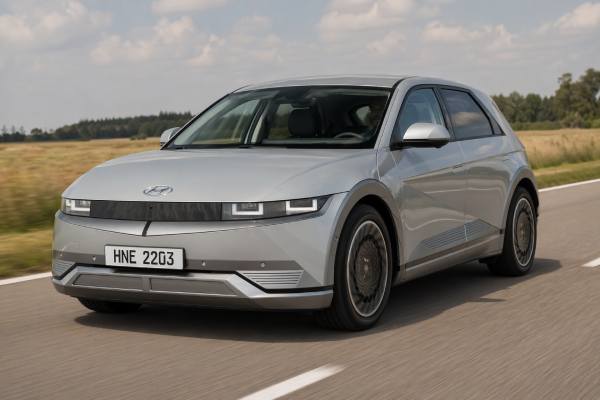
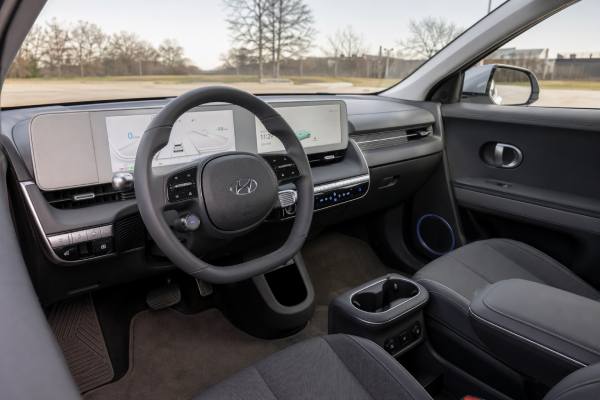
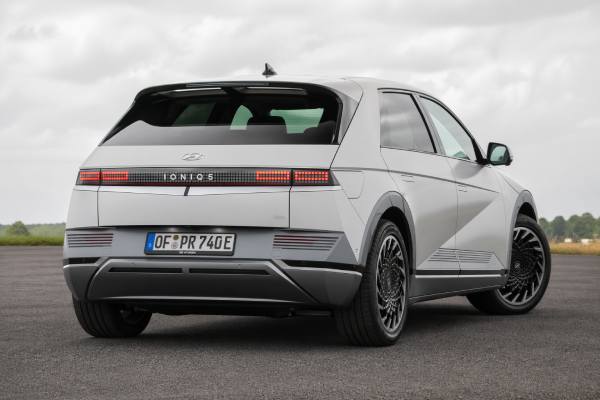
The 2022–2024 Hyundai IONIQ 5 AWD in 320 hp form is the version that many used-EV buyers end up wanting once they look past the base trims. It combines the larger 77.4 kWh battery with dual-motor all-wheel drive, giving the car stronger mid-range pull, much better poor-weather traction, and the same fast-charging E-GMP architecture that helped the IONIQ 5 stand out from launch. This is also the sweet spot for buyers who want the model’s signature strengths without moving into the later facelifted 84 kWh cars, which are a different specification. The cabin remains one of its biggest advantages: long wheelbase, flat floor, useful rear legroom, and a calm, airy feel that still holds up well. Ownership is not trouble-free, though. The biggest thing to get right is software and campaign history, especially around the ICCU and battery-conditioning updates. Buy a fully updated example, and this version still feels advanced, practical, and genuinely easy to live with.
Essential Insights
- Very fast DC charging remains a standout advantage on a warm battery with current software.
- The dual-motor setup gives secure traction and strong overtaking without spoiling ride comfort.
- Cabin space is excellent for the footprint, especially in the rear seat.
- Recall and campaign history matters, with ICCU and 12-volt charging checks near the top of the list.
- Inspect tyres, brakes, and cabin filter every 15,000 km or 12 months as a practical baseline.
What’s inside
- Hyundai IONIQ 5 AWD essentials
- Hyundai IONIQ 5 AWD data
- Hyundai IONIQ 5 AWD grades and safety
- Known faults and campaign fixes
- Service schedule and used-buy tips
- Road manners and charging
- IONIQ 5 AWD versus rivals
Hyundai IONIQ 5 AWD essentials
This 320 hp IONIQ 5 AWD is the later pre-facelift long-range dual-motor version, and that distinction matters. It is not the earliest 72.6 kWh, 305 hp car, and it is not the later facelifted 84 kWh model either. Instead, it sits in a very useful middle point in the range: more power, more battery, and better charging-related features than the original launch cars, while still keeping the clean early design and lighter, slightly simpler feel of the first-generation body.
The engineering package is still impressive by mainstream EV standards. Hyundai paired a 74 kW front motor with a 165 kW rear motor for a combined 239 kW, which works out to about 320 hp or 325 PS. Total torque is 605 Nm, so the car never feels short of urge. It is quick from rest, but the more important part is how effortless it feels in the middle of the speed range. For daily driving, it has the kind of reserve that makes the car feel expensive and relaxed, not frantic.
The bigger reason enthusiasts still pay attention to this version is the charging architecture. Hyundai’s E-GMP platform uses an 800-volt system, which lets the IONIQ 5 charge unusually quickly on suitable high-power DC equipment. That is not brochure trivia. It changes how the car feels on longer trips. Plenty of rivals can match the Hyundai for urban use, but fewer can recover usable motorway range this quickly when conditions are right.
Space remains one of the IONIQ 5’s strongest cards. The 3,000 mm wheelbase is huge for this class, and the practical effect is obvious as soon as you sit in the rear. Adults fit comfortably, the floor stays flat, and the interior has a lounge-like openness that many electric SUVs still do not match. The boot is useful, the hatch opening is wide, and the car is easier to live with than some more style-led EVs.
This AWD version is also the one that feels most complete in mixed climates. The rear-wheel-drive car is more efficient, and frequent long-distance motorway drivers may still prefer it. But the AWD model suits buyers in wet, snowy, hilly, or heavily loaded use far better. It feels more planted, more confident, and less sensitive to poor conditions.
The ownership caveat is simple. Do not shop this version by power alone. Shop it by campaign completion, software history, charging behavior, and winter-condition performance. The exact car to seek is one with confirmed ICCU recall work, no recurring 12-volt complaints, functioning battery preconditioning, and a clear service record. Get that right, and this remains one of the most convincing used family EVs of its generation.
Hyundai IONIQ 5 AWD data
Powertrain, battery, and efficiency
| Spec | Value |
|---|---|
| Motor type | Dual permanent magnet synchronous motors |
| Motor layout | One front motor and one rear motor |
| Front motor output | 74 kW (99 hp) |
| Rear motor output | 165 kW (221 hp) |
| Combined output | 239 kW (320 hp / 325 PS) |
| Combined torque | 605 Nm (446 lb-ft) |
| Drive type | AWD |
| Battery chemistry | Lithium-ion polymer, NMC |
| Battery layout | Floor-mounted underbody pack |
| Gross battery capacity | 77.4 kWh |
| Usable battery capacity | 74.0 kWh |
| Battery configuration | 384 cells, 32 modules, 192s2p |
| System voltage | 697 V |
| Electrical architecture | 800 V |
| Thermal management | Liquid-cooled battery and power electronics |
| Heat pump | Available, market and trim dependent |
| Battery preconditioning | Yes, navigation-triggered |
| Official efficiency standard | WLTP |
| WLTP rated efficiency | 17.9–19.1 kWh/100 km (288–307 Wh/mi) |
| WLTP rated range | 454–481 km (282–299 mi) |
| Real-world mixed range | about 385 km (239 mi) |
| Real-world highway at 120 km/h | about 24.0 kWh/100 km (386 Wh/mi) |
| Real-world highway range at 120 km/h | about 308 km (191 mi) |
Charging and performance
| Spec | Value |
|---|---|
| AC connector | Type 2 |
| DC connector | CCS Combo 2 |
| Charging port location | Right rear quarter |
| Onboard AC charger | 10.5 kW three-phase |
| AC 0–100% charge time | about 7 h 35 min |
| DC fast-charge peak | up to 260 kW |
| DC average power, 10–80% | about 196 kW |
| DC 10–80% charge time | about 17–18 min |
| Vehicle-to-load output | 3.6 kW |
| 0–100 km/h | 5.1 s |
| 0–62 mph | 5.1 s |
| Top speed | 185 km/h (115 mph) |
Chassis, dimensions, and capacities
| Spec | Value |
|---|---|
| Front suspension | MacPherson strut |
| Rear suspension | Multi-link |
| Steering type | Rack and pinion, motor-driven power steering |
| Steering wheel turns lock-to-lock | 2.67 |
| Front and rear brakes | Ventilated discs, regenerative and hydraulic blend |
| Brake disc diameter | 345 mm front and rear |
| Wheel and tyre size | 235/55 R19 or 255/45 R20 |
| Ground clearance | 160 mm (6.3 in) |
| Length | 4635 mm (182.5 in) |
| Width | 1890 mm (74.4 in) |
| Width with mirrors | 2152 mm (84.7 in) |
| Height | 1605 mm (63.2 in) |
| Wheelbase | 3000 mm (118.1 in) |
| Turning circle | 11.98 m (39.3 ft) |
| Kerb weight | about 2120 kg (4674 lb) |
| GVWR | 2560 kg (5644 lb) |
| Payload | about 515 kg (1135 lb) |
| Cargo volume | 527 L seats up / 1578 L seats down |
| Front trunk | 24 L |
| Towing capacity, braked | 1600 kg (3527 lb) |
| Towing capacity, unbraked | 750 kg (1653 lb) |
Safety and service data
| Spec | Value |
|---|---|
| Euro NCAP | 5 stars |
| Euro NCAP adult occupant | 88% |
| Euro NCAP child occupant | 86% |
| Euro NCAP vulnerable road users | 63% |
| Euro NCAP safety assist | 88% |
| IIHS award | Top Safety Pick+ for 2024 model year |
| IIHS headlight rating | Good or Acceptable, depending on trim |
| Standard safety structure features | Front-center airbag, front side airbags, curtain airbags, ABS, ESC |
| ADAS suite | AEB, adaptive cruise control, lane keep assist, lane follow assist, blind-spot assist, rear cross-traffic assist, speed sign assist |
| Brake fluid | DOT 4 |
| Brake fluid interval | 30,000 km or 24 months |
| High-voltage battery warranty | 8 years or 160,000 km |
Hyundai IONIQ 5 AWD grades and safety
In Europe and the UK, this 77.4 kWh AWD version is usually found in Premium, Ultimate, and Namsan Edition form, and the trim differences matter more than they first appear. Mechanically, all of them share the same 239 kW dual-motor layout, 77.4 kWh battery, and core charging hardware. The day-to-day differences come from wheel size, comfort equipment, safety technology packaging, and cold-weather features.
Premium is often the best value used buy. It usually rides on 19-inch wheels, which help efficiency, tyre cost, and ride comfort. It also tends to avoid the heavier visual extras that look appealing in adverts but cost range in real use. On these cars, you still get the main IONIQ 5 strengths: large screens, smart packaging, good driver assistance coverage, heated front seats, practical cabin layout, and strong long-distance charging ability. For many buyers, Premium is the trim that best matches the car’s brief.
Ultimate pushes the IONIQ 5 into a more premium-feeling class. Depending on market and year, it adds 20-inch wheels, augmented-reality head-up display, BOSE audio, heated rear seats, ventilated front seats, better camera assistance, and broader parking technology. Those upgrades are genuinely pleasant, but they come at a cost. Twenty-inch cars look stronger and feel slightly more tied down on first impression, yet they usually ride more firmly and give away usable range.
The Namsan Edition sits at the more distinctive end of the line. It is easier to identify because it combines the highest powertrain with high-spec cabin details, digital side mirrors in some markets, the full-length vision roof, and a broader luxury equipment set. It is an appealing flagship, but it is usually not the rational used choice unless you specifically want its styling and equipment mix.
A key year-to-year change is the powertrain update itself. This 320 hp, 77.4 kWh AWD setup was introduced as Hyundai revised the range, replacing the earlier 72.6 kWh, 305 hp AWD car. That matters because buyers often search by registration year alone. A car first registered in 2022 can already be the later 77.4 kWh version, while some 2024-registered vehicles are still this pre-facelift specification and not the later 84 kWh facelift. VIN-based decoding or a proper build-sheet check is the safest way to confirm what you are looking at.
Safety remains a strong selling point. Euro NCAP awarded the IONIQ 5 five stars, with solid scores for adult occupants, child occupants, and safety-assist performance. In the U.S., IIHS results are also strong, but buyers should understand the fine print. The car’s headlight performance varies by trim, with projector-LED setups scoring better than reflector units, and the Top Safety Pick+ headline is tied to later model-year evaluation criteria and equipment.
The ADAS package is broad and mostly well judged. Depending on trim, buyers can expect automatic emergency braking for vehicles, pedestrians, cyclists, and junction turns, plus smart cruise control, lane-centering support, blind-spot systems, rear cross-traffic assistance, and Highway Drive Assist. Higher trims add blind-view and surround-view camera systems. After repair work, calibration matters. Windshield replacement, front bumper repair, radar work, suspension alignment, and even tyre-size changes can affect how these systems behave. On a used IONIQ 5, “everything works” should mean properly calibrated, not just that no warning light is showing.
Known faults and campaign fixes
The reliability picture for this IONIQ 5 AWD is better than some online discussion suggests, but it is also more software-sensitive than many conventional used cars. The major problems are not usually catastrophic battery failures. Instead, the most important issues sit around charging electronics, low-voltage support, and early software logic.
The fault that matters most is the ICCU issue. This is the one buyers should treat as a high-priority check, not a footnote. The symptoms can start small: repeated 12-volt battery warnings, unexplained discharge, charging alerts, or a “check electric vehicle system” message. In worse cases, the car may enter a fail-safe mode and gradually reduce drive power as the 12-volt battery stops being charged properly. That happens because the Integrated Charging Control Unit, which manages charging of the 12-volt auxiliary battery and powers low-voltage equipment, can fail under certain electrical load conditions. The correct remedy is dealer campaign completion, which can involve software updating alone or ICCU and fuse replacement if fault codes are present.
A second issue, usually medium severity, involves interrupted or reduced AC charging. Some owners of early cars reported home charging sessions that slowed dramatically or stopped after extended higher-current charging. That can look like a wallbox problem at first, but on some IONIQ 5s the car-side logic was part of the issue. Hyundai issued updates to improve charging behavior. A seller who says “it just charges a bit funny sometimes” is giving you useful information, not harmless background detail.
Cold-weather fast charging is another area where software state matters. The 77.4 kWh update brought battery heater and battery-conditioning improvements, and properly updated cars are much more consistent at reaching strong DC charge speeds in poor weather. Cars that missed early updates can feel slower and more frustrating on winter road trips than the specification sheet suggests. That does not always mean broken hardware. Often it means incomplete software history.
There are also lower-severity but common EV ownership patterns to watch. Brake discs can corrode surprisingly badly on lightly used cars because strong regeneration reduces friction-brake use. Heavy curb weight and instant torque also mean tyres wear more quickly than some first-time EV owners expect, especially on 20-inch setups. None of this is unusual, but it affects running costs and inspection priorities.
Less common issues include trim rattles, charge-port flap or latch wear, and the usual occasional sensor or infotainment glitches that modern Hyundai products can show. A few owners also report drivetrain noises that turn out to be tyre-related, half-shaft related, or simple mounting wear rather than a failing rear motor. Genuine large-scale traction-battery degradation does not appear to be the defining story here. Most healthy cars still hold up well if they have avoided abuse, repeated deep cycling in extremes, or poor repair work after damage.
The key recalls and service actions are worth knowing by name. Early 2022 cars had a shift-by-wire control unit update related to parking-pawl behavior. Later cars were affected by ICCU recall actions, first as software inspection work and later in expanded form with software update plus possible ICCU and fuse replacement. Hyundai also issued vehicle-control updates related to regenerative-brake light logic and system behavior. For a used buyer, that leads to one conclusion: never accept “all done” without a dealer printout.
Before purchase, ask for full recall history, proof of campaign completion, records of any 12-volt battery replacement, evidence of AC or DC charging repairs, and a recent battery state-of-health report. On this model, a fully updated, correctly maintained example is much more important than chasing the lowest mileage alone.
Service schedule and used-buy tips
Maintaining the IONIQ 5 AWD is mostly about being disciplined with the simple things. It does not ask for engine oil, spark plugs, or transmission servicing in the usual sense, but it still needs regular inspection of brakes, tyres, suspension, coolant circuits, and the 12-volt system. This is also a car where software status is part of maintenance, not an optional extra.
A practical real-world service plan looks like this:
- Every 15,000 km or 12 months: inspect tyres, rotate if wear pattern supports it, inspect brakes and slider movement, inspect suspension and steering joints, inspect wipers and cabin filter, and confirm no open campaigns or pending software actions.
- Every 30,000 km or 24 months: replace brake fluid with the correct DOT 4 specification and inspect brake hoses and lines carefully.
- Every 60,000 km or 36 months: replace the low-conductivity coolant where the relevant schedule applies.
- At 200,000 km or 10 years, then every 40,000 km or 24 months after: replace the standard coolant on the later stage of the factory schedule.
- From year 3 onward: test the 12-volt battery annually and be proactive about replacement if the car has had any ICCU or charging complaints.
For severe use, tighten the schedule. If the car lives on rapid charging, short winter trips, towing, steep terrain, dusty roads, or repeated high-speed motorway use, inspect brakes and tyres more often and do not wait for wear to become obvious. Lightly used EVs can look cheap to run and still surprise owners with seized rear brake hardware or badly corroded inner disc faces.
For workshop decision-making, the useful figures are straightforward. Brake fluid is DOT 4. The reduction gear uses dedicated Hyundai fluid, and a sensible condition-based drain-and-fill strategy is worth considering once mileage gets high even if your market does not call for early routine replacement. Wheel nuts should be tightened to the correct Hyundai specification, not guessed with an impact gun. This platform also uses separate EV coolant strategies, so coolant work should be done only with the correct low-conductivity and standard coolant types specified for the VIN.
Used-buyer checks should focus on what matters most on this model:
- Battery health: ask for a state-of-health report and compare displayed range with realistic expected range at a known state of charge.
- Charging behavior: verify both AC and DC charging. A car that fast-charges well but behaves badly at home, or vice versa, needs explanation.
- Thermal management: confirm the heat pump works if fitted, the battery-conditioning function is active, and there are no coolant leaks or fan issues.
- 12-volt system: check age and test result of the auxiliary battery. Weak 12-volt behavior is never something to dismiss on this car.
- Brakes and tyres: inspect for inner-edge tyre wear, rotor corrosion, and signs that the car has spent long periods parked.
- Underside and battery housing: look for impact damage, bent undertrays, poor accident repair, corrosion around fasteners, and any evidence of moisture intrusion.
- Electronics and ADAS: make sure every camera, radar-dependent function, screen feature, and charging-menu item works correctly.
The best examples to seek are usually 19-inch-wheel cars with full campaign history, a heat pump if you live in a cold climate, and no unexplained charging stories. The trims to approach more carefully are the high-spec 20-inch versions that look great but usually cost more to run and give away some of the range advantage.
Long-term durability looks sound if the car has been kept current on updates. Battery aging should be modest in normal use. The more likely high-cost items over the life of the car are tyres, brakes neglected by over-reliance on regen, charge-related electronics, suspension wear, and occasional climate-system or coolant-loop work rather than sudden battery collapse.
Road manners and charging
The IONIQ 5 AWD drives like a refined fast family EV rather than a sharp performance crossover. That is the right character for this car. The initial response is immediate, but Hyundai tuned it to feel smooth and substantial rather than hyperactive. Around town, that makes it very easy to place and easy to modulate. On faster roads, the strong mid-range is what you notice most. It gathers speed effortlessly, especially from 50 to 120 km/h, and the extra traction of the front motor makes the car feel calm rather than dramatic in poor conditions.
Ride quality is still one of its best real-world strengths. The long wheelbase helps the body settle over broken surfaces in a way many shorter rivals cannot quite match. Nineteen-inch cars are clearly the best compromise. They are quieter, more compliant, and more range-friendly. Twenty-inch cars look more premium and feel a touch firmer on turn-in, but they also pass more impact harshness into the cabin and make the car feel heavier-footed over rough roads.
Handling is secure rather than playful. The low battery position helps keep body control tidy, and grip is strong, but the steering does not deliver much real feedback. That is not really a flaw in a car like this. It simply means the IONIQ 5 AWD is at its best as a fast, composed long-distance EV, not a back-road specialist. In snow, rain, and wet junction exits, the AWD calibration is one of the car’s biggest advantages.
Brake feel is good by EV standards, though still recognizably blended. The paddle-adjustable regeneration system is excellent in daily use, and one-pedal driving is easy to learn. The actual brake pedal can feel slightly synthetic if you are braking hard after long coasting or strong regen use, but in ordinary traffic it is consistent enough. The bigger practical concern is maintenance, not pedal feel: cars that rely heavily on regen still need their friction brakes exercised and inspected.
Real-world efficiency is decent rather than class-leading. In town and low-speed mixed driving, the IONIQ 5 AWD can be impressively economical for its size. In mild weather, mixed-use range around the high-300-km mark is realistic. On the motorway, things change. At steady fast-road speeds, this AWD version usually lands closer to the high-20s kWh/100 km in cold conditions and around the low-to-mid-20s in milder weather. A sensible high-speed expectation is roughly 300 km at 120 km/h in good conditions, with winter motorway range dropping meaningfully below that.
Charging is where the car still feels special. At home, a three-phase AC setup will refill the battery overnight in roughly seven and a half hours. Public DC charging is the real party piece. When the battery is warm and the charger is capable, 10 to 80 percent in under 20 minutes is realistic. The charge curve remains strong deep into the session, which is why the car still works so well on long trips. Starting state of charge, ambient temperature, and battery preconditioning all matter, though, so the healthiest fully updated cars are notably better road-trip companions than neglected ones.
With passengers and luggage aboard, the IONIQ 5 AWD stays stable and relaxed. It can tow usefully too, but towing will cut range heavily. A realistic moderate-trailer penalty is often in the 30 to 40 percent region, especially at higher speed or on hills. Used as intended, this is a fast, comfortable, grown-up EV rather than a hard-edged one.
IONIQ 5 AWD versus rivals
The IONIQ 5 AWD remains easy to recommend because it does not try to win on only one metric. It is not the absolute efficiency champion, not the sharpest handler, and not the cheapest used EV in the class. What it does better than many rivals is combine space, charging speed, comfort, and real usability in one package.
Against the Kia EV6 AWD, the Hyundai feels more spacious and more relaxed. The Kia shares much of the same underlying hardware, so the big difference is character. The EV6 is lower, more driver-focused, and slightly tighter in body control. The IONIQ 5 counters with better rear-seat space, a more airy cabin, and an easier-going long-distance feel. Buyers choosing between the two are usually choosing personality, not quality.
Against the Tesla Model Y Long Range, the Hyundai generally loses on outright efficiency, software integration, and route-planning convenience. The Tesla also tends to feel simpler in public-charging logistics. But the Hyundai fights back with a calmer interior design, often better ride comfort, and charging performance that is still seriously competitive when conditions are right. For buyers who dislike the Tesla cabin style or want something more distinctive, the IONIQ 5 has genuine appeal.
Against the Ford Mustang Mach-E AWD, the Hyundai’s big strengths are charging speed and cabin packaging. The Ford can feel more tied down in corners and more conventional in some control responses, but the Hyundai is roomier, usually faster to recharge on a trip, and more obviously built around an EV-first platform.
Against the Volkswagen ID.4 GTX and related European dual-motor EVs, the Hyundai stands out most in charging pace and sense of occasion. The Volkswagen products are practical and easygoing, but the IONIQ 5 generally feels more advanced and more memorable inside. That matters on the used market, where the IONIQ 5 still looks fresher than many of its rivals.
The main rival that really challenges the Hyundai’s overall balance is often the EV6, because the hardware is so closely related. Even there, the IONIQ 5 keeps a clear identity. It is the choice for people who value comfort, cabin openness, and relaxed family usability over a sportier seating position and marginally sharper responses.
That leads to the bottom-line verdict. The IONIQ 5 AWD is the right used EV for buyers who want fast charging, strong all-weather traction, generous space, and a premium-feeling cabin without stepping into luxury-brand running costs. Its main compromises are middling high-speed efficiency, some campaign-sensitive reliability points, and the usual tyre and brake realities of a heavy dual-motor EV. With those understood, it still stands as one of the most rounded choices in the class.
References
- Hyundai IONIQ 5 to receive product enhancements for 2023 model year 2022
- IONIQ 5 2023 Owner Manual.pdf 2023 (Owner’s Manual)
- Euro NCAP | Hyundai IONIQ 5 2021 (Safety Rating)
- 2024 Hyundai Ioniq 5 2024 (Safety Rating)
- Safety Recall 272: Integrated Charging Control Unit (ICCU) 2024 (Recall Database)
Disclaimer
This article is for informational purposes only and is not a substitute for professional diagnosis, repair, or VIN-specific technical guidance. Specifications, torque values, service intervals, charging behavior, and repair procedures can vary by market, software version, equipment level, and production date, so always verify details against the correct official service documentation for the exact vehicle.
If this guide helped you, please consider sharing it on Facebook, X, or another social platform to support our work.