
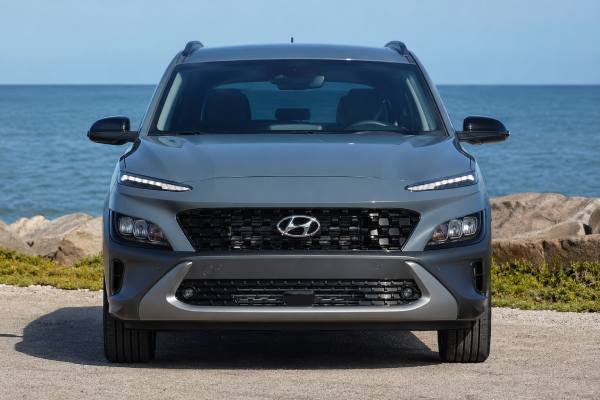
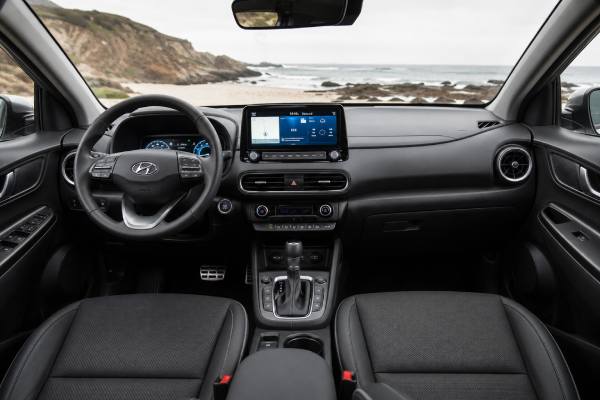
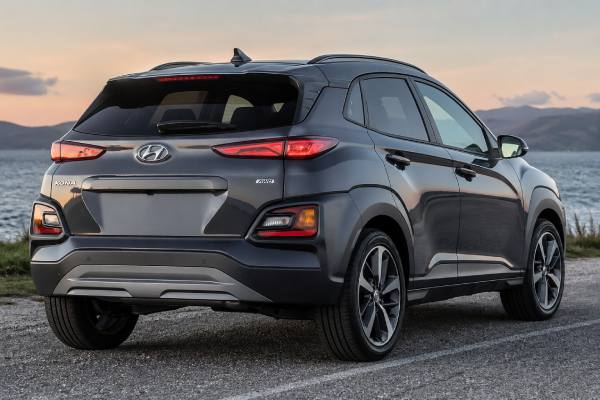
The 2021–2023 facelift Hyundai KONA AWD with the 2.0 MPI engine is the sensible version of the first-generation KONA for buyers who value traction, simplicity, and low-stress ownership more than outright pace. It uses Hyundai’s naturally aspirated 2.0-litre multi-point-injection four-cylinder rather than the more complex turbo engine, and that matters. In real ownership, this version usually costs less to feed, prefers regular fuel, and avoids some of the long-term heat and carbon concerns that come with smaller turbocharged direct-injection alternatives. The trade-off is obvious: 147 hp is enough, not abundant. The facelift also hides an important year split. A 2021 AWD car still uses a 6-speed automatic, while 2022–2023 AWD versions moved to Hyundai’s IVT for better economy. That means this is not one identical drivetrain across the whole run. For the right owner, though, it remains one of the most balanced KONA variants: compact, well equipped, sure-footed, and easier to live with than the turbo trims.
At a Glance
- AWD versions gain useful traction, a multi-link rear suspension, and larger brakes.
- The 2.0 MPI engine is simpler than the turbo options and is happy on regular unleaded.
- Facelift models feel fresher inside and carry stronger active-safety equipment than earlier cars.
- Performance is adequate rather than quick, and 2021 and 2022–2023 cars do not drive quite the same because the transmission changed.
- A practical oil and filter baseline is every 8,000–12,000 km or every 6–12 months, depending on use.
Explore the sections
- Hyundai KONA AWD facelift character
- Hyundai KONA AWD specs and data
- Hyundai KONA AWD trims and safety
- Reliability patterns and service notes
- Maintenance roadmap and buyer advice
- Daily driving and real efficiency
- Rivals and overall value
Hyundai KONA AWD facelift character
The facelifted AWD 2.0 KONA is easy to underestimate because the brochure headline is modest. A naturally aspirated 2.0-litre engine with 147 hp does not sound exciting in a market full of small turbo crossovers. But the appeal of this version is not raw output. It is the way Hyundai combined a simple four-cylinder engine, a compact body, and an active on-demand AWD system into a small SUV that feels honest, durable, and well judged for everyday use.
That balance becomes clearer once you compare it with the other KONA options. The turbocharged 1.6 versions are noticeably quicker, but they also add cost, heat, more complicated intake and fuel-system behavior, and a different long-term risk profile. The 2.0 MPI AWD is the opposite. It is the powertrain for owners who want fewer surprises, regular fuel, and easier off-warranty ownership. It is also one of the few KONA versions where AWD is more than a traction checkbox, because the AWD setup brings a multi-link rear suspension and larger brakes. That means the AWD 2.0 is not just a FWD KONA with a propshaft added. It is a slightly more substantial chassis package.
The 2021–2023 run also has an important year split that matters in the used market. A 2021 facelift AWD 2.0 uses Hyundai’s 6-speed automatic. For many drivers, that is the smoother, more familiar drivetrain. It is not especially fast, but it behaves naturally in traffic and can feel better matched to low-speed driving. The 2022 and 2023 AWD 2.0 models switched to Hyundai’s IVT, which improved fuel economy on paper and usually in real life. Those later cars feel a little calmer at steady cruising speeds, but they also deliver the familiar CVT-style elastic response that some drivers like less. Neither setup is wrong. They simply suit different tastes.
The facelift itself was worthwhile. Hyundai sharpened the exterior, cleaned up the dashboard and display presentation, and expanded the active-safety offering. That helps this KONA feel newer than many 2021–2023 small SUVs of similar size. It is still compact outside, still easy to park, and still more upright and confidence-inspiring than a hatchback, but it no longer feels like a first draft.
The verdict on character is straightforward. This is the KONA for buyers who want secure all-weather usability, manageable dimensions, decent equipment, and a powertrain that prizes predictability over drama. It is not the enthusiast’s KONA. It is the grown-up one. And in the used market, that can make it the smarter buy.
Hyundai KONA AWD specs and data
The facelift AWD 2.0 KONA mixes one stable core package with one important mechanical change. The engine stayed the same through the run, but the transmission did not. That means the most accurate way to understand this model is to treat 2021 and 2022–2023 as closely related, but not identical, versions.
| Item | Hyundai KONA AWD (OS) 2.0 MPI facelift 2021–2023 |
|---|---|
| Code | Nu 2.0 MPI Atkinson family |
| Engine layout and cylinders | Inline-4, DOHC, 16 valves, DCVVT, 81.0 × 97.0 mm (3.19 × 3.82 in) |
| Displacement | 2.0 L (1,999 cc) |
| Induction | Naturally aspirated |
| Fuel system | MPI |
| Compression ratio | 12.5:1 |
| Max power | 147 hp (110 kW) @ 6,200 rpm |
| Max torque | 132 lb-ft (179 Nm) @ 4,500 rpm |
| Timing drive | Chain-driven layout is typical for this engine family; verify by VIN before major parts ordering |
| Rated efficiency | 2021 AWD: 25/30/27 mpg US city/highway/combined; 2022–2023 AWD: 28/33/30 mpg US |
| Real-world highway @ 120 km/h | Usually about 7.4–8.2 L/100 km (31.8–28.7 mpg US / 38.2–34.4 mpg UK) |
| Item | Hyundai KONA AWD (OS) 2.0 MPI facelift 2021–2023 |
|---|---|
| Transmission | 2021: 6-speed automatic (A6GF1-2); 2022–2023: IVT |
| Drive type | Active on-demand AWD |
| Differential | Open, with brake-based torque vectoring |
| Suspension (front / rear) | MacPherson strut / multi-link on AWD |
| Steering | Column-mounted motor-driven power steering; 13.8 overall ratio on 2021 spec sheet |
| Brakes | Ventilated front discs 305 × 25 mm (12.0 × 1.0 in), solid rear discs 284 × 10 mm (11.2 × 0.4 in) on AWD |
| Wheels and tyres | Common AWD sizes are 205/60 R16 and 215/55 R17, depending on trim |
| Ground clearance | 170 mm (6.7 in) |
| Length / Width / Height | 4,206 / 1,801 / 1,549 mm (165.6 / 70.9 / 61.0 in), higher with roof rails |
| Wheelbase | 2,601 mm (102.4 in) |
| Turning circle (kerb-to-kerb) | 10.6 m (34.8 ft) |
| Kerb weight | About 1,390–1,453 kg (3,064–3,203 lb), trim-dependent |
| GVWR | About 1,875 kg (4,134 lb) on 2022 AWD spec |
| Fuel tank | 50 L (13.2 US gal / 11.0 UK gal) |
| Cargo volume | 544 / 1,297 L (19.2 / 45.8 ft³), SAE method |
| Item | Hyundai KONA AWD (OS) 2.0 MPI facelift 2021–2023 |
|---|---|
| Acceleration | Typically around 9.5–10.5 s to 100 km/h, depending on year, transmission, and test method |
| Top speed | Market sheets for the North American 2.0 AWD do not consistently publish a single figure |
| Braking distance | No single factory stop-distance figure published in the open AWD 2.0 material |
| Towing capacity | Not recommended in U.S. product guides |
| Payload | Roughly 422–485 kg (930–1,070 lb), depending on trim and curb weight |
| Engine oil | SAE 5W-20 in open Kona 2.0 MPI manual data; about 4.0 L (4.23 US qt) drain-and-refill reference |
| Coolant | Use Hyundai-approved long-life coolant to the exact VIN-market specification |
| Transmission fluid | 2021 6AT: Hyundai SP-IV type, about 6.7 L (7.08 US qt) reference; 2022–2023 IVT fluid quantity should be VIN-verified |
| Differential / transfer case | AWD service fluid details should be verified against dealer or workshop documentation |
| A/C refrigerant | Check under-bonnet label before service |
| Key torque specs | Wheel nuts: 107–127 Nm (79–94 lb-ft) |
| Crash ratings | IIHS: strong Good crashworthiness scores across the 2018–2023 Kona family; IIHS notes ratings apply to 2018–23 models |
| Headlight rating | Trim and lamp-package dependent; check the exact year and trim on IIHS before purchase |
| ADAS suite | FCA, LKA, lane following, driver attention warning, and later blind-spot and cross-traffic systems depending on trim and market |
The key takeaway from the spec sheet is that this KONA is more interesting in hardware than its power figure suggests. AWD brings meaningful chassis changes, and 2022–2023 cars added noticeably better economy, while 2021 kept the smoother-feeling conventional automatic.
Hyundai KONA AWD trims and safety
For this model, trims matter because the AWD 2.0 KONA was usually sold as a mainstream, practical version rather than a sport model. In U.S.-market terms, that typically meant SE and SEL-grade logic for the 2.0 engine, while Canada also offered Essential and Preferred-style trims with AWD packages. That matters because the same engine can feel like a basic fleet-spec crossover in one trim and a well-rounded everyday SUV in another.
The useful mechanical distinction is simple. AWD cars gain larger brakes and the multi-link rear suspension, so even the lower trims get a genuine hardware upgrade over the FWD 2.0. That is why the AWD model often feels a little more planted and a little less coarse over broken surfaces. It is a better version of the chassis, not merely a snow option.
On wheels and tyres, lower AWD trims often run 16-inch wheels with 205/60 tyres, while better-equipped versions move to 17-inch wheels and 215/55 tyres. The 17-inch setup is usually the sweet spot. It looks better, improves steering response slightly, and does not punish ride comfort the way larger wheels can on rough roads. For buyers planning to keep the car in mixed climates, 17-inch AWD trims also tend to offer the best balance of replacement tyre cost, comfort, and stability.
Interior equipment rose materially through the facelift run. Even modest cars usually include a touchscreen, rear camera, heated front seats in colder-market trims, and the key Hyundai safety basics. Better trims add features such as blind-spot collision avoidance, rear cross-traffic collision avoidance, safe exit warning, wireless charging, stronger infotainment, automatic climate control, and better keyless-entry hardware. In real use, those features matter more than trim badges. A well-optioned AWD 2.0 often feels much more current than its modest engine output suggests.
Safety is a genuine strength. IIHS testing for the Kona family shows Good scores in driver-side small overlap, passenger-side small overlap, moderate overlap, side impact, roof strength, and head restraints, with a Superior rating for vehicle-to-vehicle front crash prevention on equipped systems and Advanced pedestrian front-crash-prevention results on the optional system. The child-seat anchor ease-of-use result is only Marginal, which is worth knowing for family buyers because it tells you the back seat is safe but not class-leading for child-seat convenience.
Hyundai’s active-safety rollout also improved with the facelift. Base-grade cars commonly include forward collision-avoidance assist with pedestrian detection, lane keeping assist, lane following assist, driver attention warning, rear occupant alert, and six airbags. Better trims layer on blind-spot monitoring, rear cross-traffic assist, safe exit warning, adaptive cruise or highway assist in certain packages, and stronger lighting. After service or collision repair, buyers should also ask whether any front camera or radar calibration work was performed. On a modern KONA, that is not a minor detail.
Reliability patterns and service notes
The AWD 2.0 facelift KONA has a better reliability profile than the turbo variants, but it is not identical across all three years. The biggest reason is the transmission split. A 2021 AWD 2.0 uses the older 6-speed automatic, while 2022–2023 models use the IVT. That difference shapes both the driving feel and the likely maintenance discussion later in life.
| System | Typical issue level | What to look for |
|---|---|---|
| 2.0 MPI engine | Generally good | Oil neglect, noisy cold start, rough idle, coil or plug-related misfire |
| 2021 6-speed automatic | Usually good, but not immune | Delayed or harsh shifts, flare, incorrect-ratio faults, rough warm engagement |
| 2022–2023 IVT | Watch closely | Shudder, hesitation, abnormal noise, heat-related behavior, recall history on 2023 cars |
| AWD hardware | Usually durable | Driveline vibration, rear-end noise, fluid neglect, tyre mismatch |
| Chassis and brakes | Common wear items | Rear brake corrosion, drop-link noise, alignment wear, uneven tyre shoulders |
| Electronics and ADAS | Usually minor | Weak 12 V battery, camera calibration issues, sensor warnings after body work |
The 2.0 MPI engine itself is not the scary part of this car. It is a simple naturally aspirated multi-point-injection unit, and that is good news. It avoids the direct-injection carbon-loading story that can follow some small turbo engines, and it is generally less stressed. What it really wants is regular oil service, decent plugs, and no cooling-system neglect. The problems that do appear are usually ordinary: overdue maintenance, ignition components, dirty throttle behavior, or the slow accumulation of age-related vibration and mount wear.
Transmission behavior deserves more attention. The 2021 6-speed automatic is the more conventional unit. It can still show delayed or harsh shifts if neglected, and older Hyundai-family technical bulletins around shift quality and incorrect-ratio faults show why fluid condition and software history matter. But in everyday use it is the more familiar, easier gearbox. The 2022–2023 IVT is more efficient, but buyers should road test it carefully. A healthy IVT should feel smooth and consistent, not noisy, flaring, or rubbery in a worrying way. Some 2023 U.S.-market Konas were also included in a recall involving the transmission electric oil pump for the idle stop and go system, so campaign history is worth checking.
The AWD system is usually robust if the car has been kept on matching tyres and has not been abused. Mismatched rolling diameters, skipped fluid checks, and repeated hard launches are the kind of things that turn a quiet AWD system into an expensive one. Rear-end noise, shunt on take-up, or vibration under steady throttle should never be ignored.
The most common everyday ownership nuisances are less dramatic. Rear brakes can corrode quickly on lightly used cars. Alignment drift and inner-edge tyre wear are common on small crossovers with pothole exposure. A weak battery can trigger strange warnings. And on ADAS-equipped cars, windscreen replacement without recalibration can create faults that look worse than they are.
Maintenance roadmap and buyer advice
This KONA rewards sensible preventive maintenance. Because the engine is relatively simple, the biggest long-term wins come from staying ahead of fluids, tyres, brake condition, and transmission behavior. For a buyer planning to keep one past the easy years, the smartest plan is slightly more conservative than the longest possible interval.
| Item | Practical interval | What matters |
|---|---|---|
| Engine oil and filter | Every 8,000–12,000 km or 6–12 months | Shorter interval for repeated short trips, cold starts, or hot weather use |
| Engine air filter | Inspect every service, replace around 30,000–45,000 km | Earlier in dusty areas |
| Cabin air filter | Every 15,000–30,000 km or 12–24 months | Helps demisting and HVAC performance |
| Spark plugs | About 60,000–90,000 km, depending on plug type and duty | Do not wait for a misfire |
| Brake fluid | Every 2–3 years | Cheap insurance for pedal feel and corrosion control |
| Coolant | Follow official long-life schedule, but inspect level and condition every service | Use the exact Hyundai-approved coolant |
| 2021 6AT fluid | Prudent service around 60,000–90,000 km | Especially wise for mixed city use |
| 2022–2023 IVT fluid | Inspect service history and use only VIN-correct fluid and procedure | Do not improvise on an IVT |
| AWD rear driveline fluids | Check the workshop schedule and inspect for seepage at every service | Important on higher-mileage cars |
| Tyre rotation and alignment | Every 10,000–12,000 km | Critical for AWD health and even wear |
| Brake pads and discs | Inspect every service | Rear disc corrosion is common on low-mileage cars |
| 12 V battery test | Annually from year four onward | Weak batteries create false faults and poor stop-start behavior |
Fluid and decision-making notes are straightforward. For the 2.0 MPI engine, open owner-manual data shows a 5W-20 oil recommendation and roughly 4.0 L fill for drain-and-refill service. The 2021 6-speed automatic uses Hyundai SP-IV-type fluid. For 2022–2023 IVT cars, the correct fluid and service method should be verified by VIN and dealer-level documentation, because public sheets do not publish the full story as cleanly.
The buyer’s checklist is simple but important:
- Confirm whether the car is a 2021 6AT or a 2022–2023 IVT before you even drive it.
- Check for even tyre wear and four matching tyres.
- Listen for rear-end hum or vibration on a steady-throttle road test.
- Inspect rear discs for heavy lip or corrosion.
- Check that all ADAS warnings clear normally.
- Ask for campaign and recall printouts, not just verbal assurances.
- Look for proof of transmission fluid attention on higher-mileage examples.
The best cars to buy are usually unmodified AWD SEL or Preferred-type trims with full history, matching tyres, and no mystery dashboard lights. The ones to avoid are neglected short-trip cars, examples with cheap mixed tyres, and any seller who cannot explain which transmission the car has or what maintenance it has actually received. Long term, this KONA can be a very durable small SUV, but only if bought intelligently.
Daily driving and real efficiency
The AWD 2.0 KONA is not fast, but it is easier to live with than the raw numbers suggest. Around town, the upright driving position, compact footprint, and light controls make it simple to place. Visibility is decent for the class, parking is easy, and the extra traction of AWD gives the car a more settled feel in rain, gravel, and winter conditions. That is the first reason people end up liking this version more than they expected.
The second reason is chassis balance. AWD models get the multi-link rear suspension, and you can feel it. They are not sports cars, but they ride with a little more composure over mid-corner bumps than the simpler FWD versions. The steering is light rather than talkative, yet it is accurate enough to make the KONA feel tidy and predictable. On a winding road, the car stays neutral and obedient rather than clumsy. That matters because many small crossovers feel much less sorted than this when pushed even mildly.
The year split shows up here too. The 2021 6-speed automatic version feels more conventional and often more natural at low speed. Creep, parking maneuvers, and rolling throttle applications are handled in the way most drivers expect. The 2022–2023 IVT versions trade some of that naturalness for better economy. On a steady cruise they are quieter and more efficient, but under stronger acceleration they feel more elastic, as CVT-style transmissions tend to do. Buyers who value smooth, old-school automatic behavior may prefer the 2021 car. Buyers who care more about fuel savings may prefer the later IVT.
Real-world economy is respectable for an AWD crossover with a naturally aspirated 2.0. A healthy 2021 AWD car often returns roughly 8.5–9.5 L/100 km mixed. The later 2022–2023 IVT cars can often do a little better, roughly 7.8–8.8 L/100 km mixed, especially on longer suburban or highway routes. In dense winter traffic, either version will use more. At a steady motorway 120 km/h cruise, expect around the mid-7s to low-8s in L/100 km for most healthy cars.
Noise, vibration, and harshness are decent rather than luxurious. The 2.0 MPI is smooth enough under moderate load, but it will sound busy if asked to work hard on steep grades. Wind noise is controlled, road noise depends heavily on tyre choice, and the AWD chassis does a good job of keeping the car feeling planted. Under load, this KONA is happier carrying people and luggage than pulling a trailer, which matches Hyundai’s no-towing recommendation in U.S. guides.
The short version is this: it drives like a sensible small SUV that happens to be better resolved than many of its rivals. It does not thrill, but it rarely irritates. For daily use, that is often the more valuable trait.
Rivals and overall value
The facelift AWD 2.0 KONA makes the most sense against other small SUVs bought by practical owners, not against mini performance crossovers. Its real rivals are cars like the Subaru Crosstrek, Mazda CX-30, Toyota Corolla Cross AWD, and Kia Seltos AWD. Each of those can make a strong case, but the Hyundai’s value comes from how evenly it blends traction, size, equipment, and manageable running costs.
The Subaru Crosstrek often feels more obviously all-weather focused and can offer more ground-clearance confidence. The Mazda CX-30 usually wins on cabin finish and steering polish. The Corolla Cross has the Toyota reputation advantage and a conservative ownership image that appeals to many buyers. The Seltos overlaps closely and can feel slightly roomier. But the KONA answers back with its tidy dimensions, honest simplicity in 2.0 MPI form, and the fact that AWD versions quietly receive meaningful hardware upgrades in the suspension and brakes.
That last point is the hidden advantage. Many buyers look at the KONA AWD and see only a traction option. In practice, the AWD 2.0 often feels like the sweet-spot non-turbo KONA because the multi-link rear suspension and larger brakes make it a better-rounded vehicle. It is still compact and urban-friendly, but it feels more complete on rougher roads and in poor weather.
Its weaknesses are just as clear. Rear-seat room is adequate rather than generous. The engine is dependable but unexciting. The 2022–2023 IVT is efficient, but not everyone enjoys its character. And because the KONA’s styling is stronger than its power output in this form, some buyers expect a quicker car than they are actually getting.
Even so, the overall value case is strong. If you want the quickest facelift KONA, this is not it. If you want the simplest, most sensible AWD version of the first-generation facelift car, it is very close to ideal. It is easy to drive, easy to park, well equipped when chosen carefully, and generally less intimidating to own long term than the turbo alternatives.
That is the real conclusion. The facelift Hyundai KONA AWD 2.0 MPI is not a glamour pick. It is the version that makes the most sense once the warranty is over and the weather turns bad. For many owners, that is exactly the right kind of advantage.
References
- 2021 Kona Specifications 2021 (Specifications)
- 2023 Kona Specifications 2023 (Specifications)
- 2023 Kona Features 2023 (Features)
- 2022 Hyundai Kona 2022 (Safety Rating)
- Vehicle Maintenance Schedule | Service Centers 2026 (Maintenance Schedule)
Disclaimer
This article is for informational purposes only and is not a substitute for professional diagnosis, inspection, or repair. Specifications, torque values, service intervals, procedures, capacities, and equipment can vary by VIN, market, trim, drivetrain, and production date, so always verify details against the official service documentation for the exact vehicle.
If this guide was useful, please consider sharing it on Facebook, X, or another platform to support our work.