
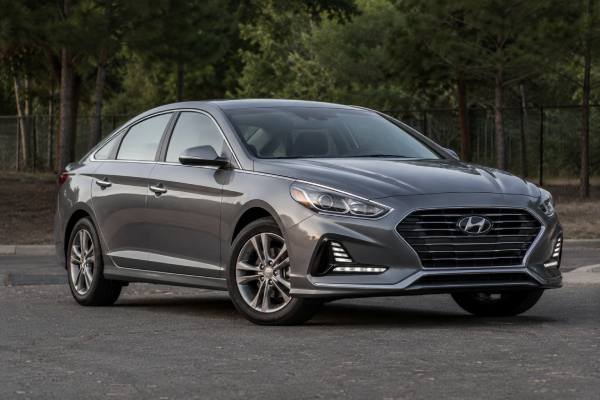
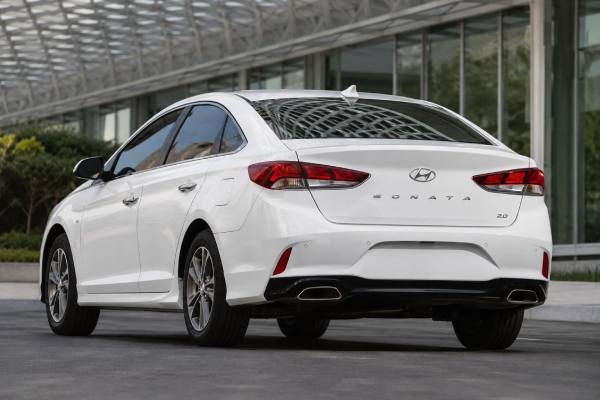
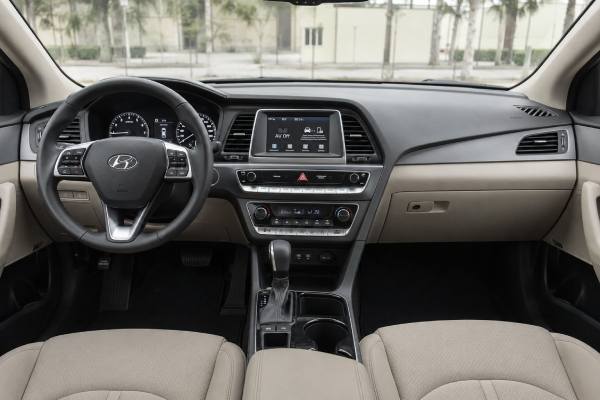
The facelifted 2018–2019 Hyundai Sonata LF with the Theta II 2.4 GDi engine is a practical midsize sedan built around comfort, space, value, and straightforward daily use. This version is not the quickest Sonata and it is not the most fuel-efficient hybrid model, but it is the mainstream gasoline model most used buyers are likely to find.
Its appeal depends heavily on condition and maintenance history. The 2.4-liter direct-injection engine gives adequate power, the six-speed automatic is generally smooth, and the cabin is unusually roomy for the class. The main ownership question is not whether the car is pleasant to drive; it is whether the specific car has clean oil-service records, completed Hyundai engine campaigns, and no signs of Theta II bearing or oil-consumption trouble.
Final Verdict
The 2018–2019 Hyundai Sonata LF 2.4 GDi is a good used midsize sedan for buyers who want space, comfort, strong safety credentials, and lower purchase prices than many Toyota or Honda rivals. It suits commuters, families, and value-focused owners more than enthusiastic drivers. The main tradeoff is the Theta II engine’s sensitivity to oil maintenance and campaign history, especially around bearing-wear monitoring, oil consumption, and P1326-related dealer checks. A well-serviced car with documented oil changes, completed recalls/service campaigns, and a quiet cold start can be a sensible buy; a neglected one is worth avoiding.
| Pros | Cons |
|---|---|
| Roomy LF cabin with large 16.3 cu ft trunk | Rear headroom and seating shape are not class-leading |
| 185 hp 2.4 GDi feels adequate for daily use | Theta II engine history makes maintenance records essential |
| Six-speed automatic is smoother than many rival CVTs | Not as efficient as Camry, Accord, or Sonata Hybrid |
| Strong IIHS results with the right headlights and ADAS | Advanced safety features vary sharply by trim and package |
| Good used-market value and broad parts availability | Resale value trails Toyota Camry and Honda Accord |
Table of Contents
- Detailed Overview of the 2018–2019 Sonata LF 2.4 GDi
- Specifications and Technical Data
- Trims, Options, Safety and Driver Assistance
- Reliability, Common Issues and Service Actions
- Maintenance and Buyer’s Guide
- Driving and Performance
- How the Sonata LF 2.4 GDi Compares to Rivals
Detailed Overview of the 2018–2019 Sonata LF 2.4 GDi
The facelifted LF Sonata 2.4 GDi is the volume gasoline version of Hyundai’s seventh-generation midsize sedan. It is best understood as a spacious, comfortable, value-heavy family car rather than a sporty sedan or a high-efficiency specialist.
The 2018 facelift gave the LF Sonata a sharper front end, revised rear styling, updated interior details, and a stronger equipment story. The 2019 model year was broadly a carryover before the fully redesigned DN8-generation Sonata arrived for 2020 in many markets. For used buyers, that makes 2018 and 2019 cars attractive because they have the later LF styling and equipment, but they still use the familiar naturally aspirated 2.4-liter Theta II gasoline direct-injection engine.
This article focuses on the standard 2.4 GDi version rated at 185 hp and 178 lb-ft. It does not cover the 1.6T Eco, 2.0T, Hybrid, or Plug-in Hybrid models except where they matter for trim or comparison context. In the U.S. market, the 2.4-liter engine was commonly found in SE, SEL, Sport, and Limited trims, paired with front-wheel drive and a conventional six-speed automatic transmission.
The Sonata’s strongest day-to-day qualities are simple but important. The cabin is wide and easy to live with, the trunk is large, the controls are generally clear, and the ride is tuned more for comfort than sharpness. Long highway drives are where it feels most natural. The engine is smooth enough when maintained well, and the automatic avoids the droning feel some drivers dislike in CVT-equipped rivals.
The main caution is the engine family. Hyundai’s Theta II engines have a long public history involving connecting rod bearing wear, oil-consumption complaints, knock-sensor detection updates, warranty extensions, and service campaigns. Not every Sonata 2.4 GDi will have engine trouble, and many run high mileage with proper service, but buyers should treat oil history and Hyundai campaign completion as central inspection items, not minor paperwork.
A good example is a quiet cold-start car with no flashing check-engine light, no P1326 history unless properly resolved, no abnormal oil use, and proof of frequent oil and filter changes. A poor example is one with vague maintenance records, a low oil level, ticking or knocking when warm, delayed dealer campaign work, or evidence that warning lights were cleared before sale.
The Sonata LF also benefits from a mature parts network. Normal wear items such as brakes, suspension links, filters, batteries, sensors, and body parts are widely available. Independent shops are familiar with the platform, and Hyundai dealers can verify recall and campaign status by VIN. That makes ownership more predictable than many rarer sedans, provided the engine checks out.
In short, the 2018–2019 Sonata LF 2.4 GDi is a strong value used car when bought carefully. It is not the safest blind purchase in the midsize class because of the Theta II background, but it can be a very useful sedan when documentation and inspection results support the car.
Specifications and Technical Data
The Sonata LF 2.4 GDi uses a naturally aspirated inline-four engine, front-wheel drive, and a six-speed torque-converter automatic. The most important technical points are its large-car cabin packaging, comfortable chassis tuning, regular-gasoline fuel requirement, and the need to verify engine-service history because of the Theta II family’s known sensitivity.
| Item | 2018–2019 Hyundai Sonata LF 2.4 GDi |
|---|---|
| Engine family | Theta II 2.4 GDi gasoline inline-four |
| Displacement | 2.4 L / 2,359 cc |
| Induction | Naturally aspirated |
| Fuel system | Gasoline direct injection |
| Valvetrain | DOHC, D-CVVT, 16 valves |
| Bore × stroke | 88.0 × 97.0 mm |
| Compression ratio | 11.3:1 |
| Maximum power | 185 hp at 6,000 rpm / about 138 kW |
| Maximum torque | 178 lb-ft at 4,000 rpm / about 241 Nm |
| Fuel type | Regular unleaded gasoline |
| Timing drive | Timing chain; inspect when noisy or fault codes appear |
| Item | Specification |
|---|---|
| Transmission | Six-speed electronic automatic with torque converter |
| Manual mode | SHIFTRONIC manual shift mode |
| Drive type | Front-wheel drive |
| Final drive | 2.885 |
| Towing | Not recommended |
| Item | Value |
|---|---|
| Body style | Four-door midsize sedan, five seats |
| Length | 4,855 mm / 191.1 in |
| Width | 1,865 mm / 73.4 in |
| Height | 1,475 mm / 58.1 in |
| Wheelbase | 2,805 mm / 110.4 in |
| Ground clearance | 135 mm / 5.3 in |
| Turning circle | 10.9 m / 35.8 ft curb-to-curb |
| Suspension | MacPherson strut front; independent multi-link rear |
| Trunk volume | 462 L / 16.3 cu ft |
| Passenger volume | 106.1 cu ft / about 3,005 L |
| Fuel tank | 70 L / 18.5 US gal |
| Item | Common 2.4 GDi specification |
|---|---|
| SE tires | 205/65R16 |
| SEL, Sport and Limited tires | 215/55R17 |
| Standard tire pressure | 235 kPa / 34 psi front and rear |
| Wheel-lug torque | 107–127 Nm / 79–94 lb-ft |
| Front brakes | 12.0-in ventilated discs; larger 12.6-in setup on some packages |
| Rear brakes | 11.2-in solid discs |
| Item | Useful value |
|---|---|
| 2018 EPA, SE | 25/36/29 mpg US city/highway/combined; about 9.4/6.5/8.1 L/100 km |
| 2018 EPA, other 2.4 trims | 25/35/28 mpg US; about 9.4/6.7/8.4 L/100 km |
| 2019 EPA, SE | 26/35/29 mpg US; about 9.0/6.7/8.1 L/100 km |
| 2019 EPA, other 2.4 trims | 25/33/28 mpg US; about 9.4/7.1/8.4 L/100 km |
| Engine oil capacity | 4.8 L / 5.07 US qt, drain and refill |
| Common oil viscosity | SAE 5W-20 for fuel economy; 5W-30 also used by temperature/market |
| Automatic transmission fluid | Hyundai SP-IV type; listed system capacity 7.1 L / 7.50 US qt |
| Coolant capacity | 7.2 L / 7.60 US qt, ethylene-glycol coolant for aluminum radiator |
| Brake fluid | DOT 3 or DOT 4; about 0.7–0.8 L |
Trims, Options, Safety and Driver Assistance
For this engine, the most relevant trims are SE, SEL, Sport, and Limited. The best buy is usually an SEL or well-documented Limited because they add comfort and safety equipment without changing the basic 2.4-liter drivetrain.
Trim and equipment overview
The SE is the entry point. It usually has the 2.4 GDi engine, six-speed automatic, 16-inch wheels, cloth upholstery, a touchscreen audio system, smartphone integration, a rearview camera, and blind-spot-related assistance on many U.S. facelift cars. It is the simplest and lightest 2.4 trim, and it also posts the best official highway fuel economy in 2018.
The SEL is often the sweet spot. It commonly adds 17-inch wheels, more convenience equipment, upgraded seating features, keyless access depending on package, and wider availability of driver-assistance options. For many used buyers, it gives the right balance: enough equipment to feel modern, but fewer high-cost luxury features than a loaded Limited.
The Sport 2.4 is mostly an appearance and feel package rather than a mechanical performance model. It should not be confused with the 2.0T Sport. Expect sportier trim details, different interior accents, and a slightly more expressive look, but the same 185 hp 2.4-liter engine.
The Limited is the comfort-focused version. Leather upholstery, higher-grade lighting, more power-seat adjustment, premium audio or navigation availability, and advanced safety packages are the reasons to seek it. On these cars, verifying the headlight type and active-safety package matters because it can change both night-driving quality and safety-rating relevance.
Quick identifiers include the trim badge, wheel size, headlight design, seat material, and interior switchgear. A U.S.-market 2.4 GDi car often has an “F” engine character in the eighth VIN position, but buyers should still confirm by VIN decoder, build sheet, under-hood emissions label, and service records because market coding can differ.
Safety ratings and crash-test context
The 2018 and 2019 Sonata LF performed strongly in IIHS testing. The car earned Good ratings in the main crashworthiness categories, and Top Safety Pick+ status applied when equipped with the required optional front crash-prevention system and specific headlights. That last phrase is important: not every Sonata on the used lot has the headlights or ADAS needed to match the highest award conditions.
The NHTSA overall rating for these model years is commonly listed as five stars, with strong frontal and side-crash results and a four-star rollover rating. As always, check the exact year, trim, build date, and VIN because safety ratings can be tied to equipment and production changes.
Child-seat usability is not perfect. The Sonata has two complete rear LATCH positions plus a center tether, but IIHS rated LATCH ease of use as Marginal for the 2018 model. Families should test their actual child seats before buying.
Driver-assistance availability
Standard safety basics include multiple airbags, anti-lock brakes, stability control, traction control, electronic brake-force distribution, and a rearview camera. Blind Spot Detection, Rear Cross-Traffic Alert, and Lane Change Assist are especially useful on this car because the sedan’s rear quarters are not as easy to judge as in a small hatchback.
More advanced systems, depending on trim and package, include automatic emergency braking, forward collision warning, lane departure warning, lane keeping assistance, adaptive cruise control, and automatic high-beam assistance. These features are most common on higher trims or option packages.
For used buyers, ADAS inspection should include more than checking whether the buttons are present. A car that has had windshield replacement, front bumper repair, grille damage, or collision work may need camera or radar calibration. Warning lights, intermittent sensor messages, or disabled lane/forward-collision functions should be diagnosed before purchase, not after.
Reliability, Common Issues and Service Actions
The Sonata LF 2.4 GDi can be durable, but its reliability reputation is dominated by the Theta II engine family. The best cars are those with frequent oil changes, verified Hyundai campaign completion, no bearing-noise symptoms, and no unexplained oil consumption.
| Issue | Prevalence | Severity | Typical signs | Best response |
|---|---|---|---|---|
| Rod bearing wear / P1326 | Occasional | High | Flashing check-engine light, limp mode, knock | Dealer diagnosis, campaign/warranty verification |
| Oil consumption | Occasional | Medium to high | Low dipstick level, top-up history, smoke | Oil-consumption test and service records review |
| GDI intake carbon | Occasional | Medium | Rough idle, misfire, weak low-speed response | Diagnosis, cleaning if confirmed |
| Transmission shift flare or harshness | Occasional | Medium | Delayed shifts, bump into gear, hunting | Fluid condition check, TCM update, service |
| Suspension and wheel bearings | Common with mileage | Low to medium | Clunks, humming, uneven tire wear | Replace worn links, bearings, bushings |
| Electronics and camera faults | Occasional | Low to medium | Blank screen, weak camera image, sensor alerts | Software update or component diagnosis |
Theta II bearing wear and P1326
The most important issue is connecting rod bearing wear. Hyundai service information for affected 2.0T and 2.4 GDi vehicles describes cases where the check-engine light may illuminate with DTC P1326, followed by inspection, ECU software action, or engine replacement depending on results. The Knock Sensor Detection System is designed to detect vibration patterns that may point to bearing damage and then limit engine operation.
Symptoms to take seriously include:
- A flashing check-engine light.
- Reduced power or engine-protection mode.
- Metallic knocking, especially under load or when warm.
- Oil-pressure warning lights.
- A history of P1326, engine replacement, or repeated oil top-ups.
A seller who says “it only needs a knock sensor” should be treated carefully. On these cars, P1326 can be part of an official engine-inspection process, not a simple sensor-swap diagnosis. The correct next step is dealer-level verification by VIN and inspection result.
Oil consumption and GDI deposits
Some Theta II GDi engines develop oil consumption as mileage rises. This can accelerate wear if owners do not check the dipstick between services. A pre-purchase inspection should include the oil level, oil condition, service interval history, underbody leaks, exhaust smoke, and any documented oil-consumption test.
Direct injection can also leave deposits on intake valves because fuel is injected directly into the combustion chamber rather than washing the valve backs. Symptoms can include rough idle, hesitation, and misfire codes. This is not unique to Hyundai, but it is worth checking on higher-mileage city-driven cars.
Transmission, chassis and electronics
The six-speed automatic is generally less controversial than many CVTs, but it still needs clean fluid and software that is up to date. Harsh engagement, flare during upshifts, delayed reverse, or shudder on light throttle should be inspected. Many owners never service the fluid under normal-use language, but used buyers are safer when the transmission has had sensible fluid maintenance, especially after 60,000 miles in city or hot-climate service.
Chassis wear is normal for the class. Listen for front-end clunks over small bumps, humming wheel bearings, brake pulsation, rear suspension noise, and steering noises. None of these should automatically kill a deal, but they affect price.
Electronics to check include the rear camera, touchscreen, Bluetooth, USB ports, blind-spot alerts, power seats, sunroof operation if fitted, and all steering-wheel controls. Any ADAS warning after windshield or bumper work should be diagnosed before sale.
Recalls, campaigns and service history
Buyers should run the VIN through official Hyundai and NHTSA recall tools and ask a Hyundai dealer for campaign history. Important items may include engine-inspection or knock-sensor-related campaigns, high-pressure fuel pipe recall applicability after certain engine replacements, anti-theft software campaigns for keyed cars, and any market-specific warranty extensions.
The paper trail matters. Ask for:
- Oil and filter records, ideally at 5,000–7,500-mile intervals or sooner in severe use.
- Proof of recall and service-campaign completion.
- Dealer records for any P1326, engine inspection, or engine replacement.
- Transmission-fluid service history if the car has high mileage.
- Diagnostic scan results before purchase, not just a clear dashboard.
Maintenance and Buyer’s Guide
The safest maintenance approach for the Sonata 2.4 GDi is more conservative than the longest possible factory interval. Frequent oil changes, regular dipstick checks, clean cooling-system service, and verified campaign completion are the main reasons some examples age well.
| Service item | Practical interval | Notes for the 2.4 GDi |
|---|---|---|
| Engine oil and filter | 5,000–7,500 miles / 6–12 months | Use shorter intervals for city, heat, cold, short trips, or oil use |
| Oil-level check | Every fuel fill or monthly | Important because oil consumption can damage Theta II engines |
| Tire rotation | Every oil service | Check alignment if shoulder wear appears |
| Engine air filter | Inspect 15,000 miles; replace 30,000 miles | Replace sooner in dusty conditions |
| Cabin air filter | 15,000–30,000 miles | Shorter interval if airflow or odor worsens |
| Brake inspection | Every service | Check pads, rotors, calipers, hoses, and parking brake |
| Brake fluid | Every 2–3 years | Use DOT 3 or DOT 4 as specified |
| Coolant | Initial long interval, then about 30,000 miles / 2 years | Verify by manual and coolant condition |
| Spark plugs | About 100,000 miles | Replace sooner if misfires or poor fuel economy appear |
| Automatic transmission fluid | 60,000 miles severe use; 60,000–80,000 miles is sensible used-car care | Use Hyundai SP-IV type fluid |
| Serpentine belt and hoses | Inspect annually | Replace for cracking, swelling, glazing, or coolant seepage |
| Timing chain | No routine replacement interval | Inspect for rattle, stretch, guide wear, or timing-correlation faults |
| 12 V battery | Test yearly after 3 years | Many batteries need replacement around 3–5 years |
Fluid and torque quick reference
For the 2.4 GDi, the commonly listed engine oil drain-and-refill capacity is 4.8 L / 5.07 US qt. Oil quality should meet the required API/ILSAC standard for the market, with 5W-20 commonly recommended for fuel economy and 5W-30 often acceptable depending on temperature and official market documentation. In hot climates, severe use, or older high-mileage engines, owners should follow the official viscosity chart and professional advice rather than guessing.
The automatic transmission uses Hyundai SP-IV type fluid, with a listed system capacity of 7.1 L / 7.50 US qt. A drain-and-fill will not usually replace the full system amount, so service method matters. Avoid universal fluid unless it specifically meets the required Hyundai specification.
Coolant capacity for the 2.4 GDi is listed around 7.2 L / 7.60 US qt, using ethylene-glycol coolant suitable for an aluminum radiator. Brake fluid is DOT 3 or DOT 4. Standard tire pressure is commonly 235 kPa / 34 psi, and wheel-lug torque is 107–127 Nm / 79–94 lb-ft.
Used-buying inspection checklist
Before buying, prioritize the engine and paperwork. A clean-looking Sonata with missing oil records is riskier than a slightly worn car with excellent documentation.
Check the following before money changes hands:
- Cold start: no metallic knock, long rattle, heavy ticking, or smoke.
- Warm idle: stable idle, no misfire, no oil-pressure warning.
- Dipstick: correct oil level, no burnt smell, no severe sludge on cap.
- Scan report: no P1326, misfire, timing, catalyst, or transmission codes.
- Dealer history: KSDS, campaign, recall, and warranty-extension status verified.
- Test drive: smooth shifts, no harsh engagement, no steering pull, no bearing hum.
- Body: inspect front-end repairs because they can affect ADAS calibration.
- Underside: look for oil pan leaks, coolant seepage, exhaust damage, and rust.
- Interior: test camera, infotainment, seat motors, blind-spot alerts, and sunroof.
The SEL is often the best used value. The SE is attractive if budget and simplicity matter. The Limited is worth buying when the advanced safety and comfort features are working correctly and the price reflects possible future repair costs. Avoid any car with active engine noise, unexplained oil loss, a flashing check-engine light, salvage repairs near sensors, or a seller who cannot document campaign completion.
Long term, a well-maintained Sonata LF 2.4 GDi can be a useful 150,000-mile-plus sedan. The engine risk does not make every car bad, but it changes the buying standard: documentation and diagnosis matter more here than on a Camry with similar mileage.
Driving and Performance
The Sonata LF 2.4 GDi drives like a comfort-focused midsize sedan with adequate, not exciting, acceleration. Its best qualities are relaxed highway manners, a roomy cabin, predictable controls, and a smoother automatic transmission feel than many CVT-equipped rivals.
Powertrain character
The 2.4 GDi engine makes its torque higher in the rev range, so it is not especially punchy from very low rpm. Around town, the transmission helps by downshifting readily enough when the driver asks for more acceleration. At light throttle, it tries to keep revs low for economy. Under heavier throttle, the engine becomes louder and more strained, but performance remains acceptable for merging, commuting, and normal family use.
The six-speed automatic is one of the car’s better drivability features. It is not as quick-shifting as a modern dual-clutch or eight-speed automatic, but it is predictable. It avoids the rubber-band feel of some CVTs and works well for drivers who want familiar automatic behavior. Eco, Normal, and Sport drive modes mainly alter throttle and shift response; they do not transform the car.
Expect 0–60 mph performance in roughly the low-to-mid-eight-second range depending on trim, tires, conditions, and test method. Passing power is adequate, but loaded highway climbs require downshifts. Drivers coming from a V6 sedan or turbocharged rival may find it modest. Drivers coming from older compact sedans will usually find it comfortable and sufficient.
Ride, handling and braking
Ride comfort is a core Sonata strength. On 16- and 17-inch wheels, it absorbs broken pavement well and feels settled on long highway drives. The 17-inch setup looks better and gives slightly sharper response, while the 16-inch SE tire package has a bit more sidewall comfort and slightly better official efficiency.
Handling is safe and predictable rather than playful. The front end will push wide if driven hard into corners, and the steering is more about light effort than detailed feedback. For normal commuting, that is not a problem. The car tracks straight, feels stable at speed, and is easy to place in traffic.
Braking feel is generally confidence-inspiring for daily driving, but used examples vary by pad quality, rotor condition, tire choice, and brake-fluid age. Pulsation, grinding, or a soft pedal should be treated as maintenance issues, not normal behavior.
Noise, comfort and real-world economy
Cabin noise is reasonable for the class. Tire noise increases on coarse pavement, and the engine is more audible during full-throttle acceleration, but highway cruising is calm. Seats are comfortable for most adults, and the wide cabin makes the Sonata feel larger than some rivals. Rear legroom is useful, although rear headroom and seat contour should be tested by taller passengers.
Real-world fuel economy depends heavily on speed and trip length. In steady highway driving, many 2.4 GDi cars can return about 6.5–7.1 L/100 km, or roughly 33–36 mpg US / 40–43 mpg UK. Mixed use often lands around 7.8–8.7 L/100 km, or about 27–30 mpg US / 32–36 mpg UK. Dense city driving, winter warm-up, short trips, and aggressive throttle use can push consumption toward 9.5–11.0 L/100 km, or about 21–25 mpg US / 25–30 mpg UK.
Cold weather can reduce economy by around 10–20% on short trips because the engine spends more time warming up and accessories run harder. Tire pressure also matters; underinflated tires can noticeably hurt both economy and steering feel.
Towing is not recommended for this version. The Sonata is best used as a passenger sedan, not a trailer vehicle. If you need regular towing or heavy-load use, a vehicle rated for that job is the better choice.
How the Sonata LF 2.4 GDi Compares to Rivals
The Sonata’s strongest rival advantage is value. It usually costs less than a comparable Camry or Accord, offers a large cabin and trunk, and avoids CVT behavior, but it demands more careful engine-history screening.
| Rival | Where the Sonata is stronger | Where the rival is stronger |
|---|---|---|
| Toyota Camry 2.5 | Often cheaper with generous equipment | Stronger resale, better engine reputation, better efficiency |
| Honda Accord 1.5T | Conventional automatic feel, lower used prices | Sharper handling, stronger economy, more modern cabin feel |
| Nissan Altima 2.5 | Smoother traditional six-speed behavior | Altima can be efficient, but CVT condition is critical |
| Kia Optima 2.4 | Similar platform with a calmer design | Optima may appeal more on styling and trim value |
| Mazda6 2.5 | More rear-seat and comfort-focused character | Mazda has sharper handling and a richer driving feel |
Against the Toyota Camry, the Sonata usually wins on purchase price and equipment-per-dollar. A used Sonata SEL or Limited may offer features that cost more in a Camry. The Camry’s advantage is long-term confidence, resale value, and a stronger reputation for engine durability. Buyers who want the lowest-risk ownership experience often lean Camry; buyers who want more car for the money may prefer the Sonata after inspection.
Against the Honda Accord, the Sonata feels less athletic. The Accord has sharper steering, a more modern chassis feel, and strong turbocharged performance in many trims. The Sonata counters with simple comfort, familiar automatic behavior, and used-market affordability. Buyers sensitive to CVT feel may prefer the Sonata, while drivers who enjoy a more responsive sedan may prefer the Accord.
Against the Nissan Altima, the Sonata’s six-speed automatic is a major selling point. Altimas can be comfortable and efficient, but CVT condition is a major used-car inspection concern. A clean Altima is still a valid choice, but many buyers find the Sonata’s powertrain feel more conventional.
The Kia Optima is the closest relative. It shares broad platform and powertrain DNA, so the same engine-history caution applies. The decision often comes down to styling, interior preference, local availability, and service documentation. Do not assume the Kia avoids the same inspection priorities.
The Mazda6 is the driver’s pick. It feels more composed and premium from behind the wheel, especially on a winding road. The Sonata is roomier-feeling and often cheaper. For families and commuters, the Sonata’s space and value can matter more; for drivers who care about steering and chassis feel, the Mazda is more satisfying.
Overall, the 2018–2019 Sonata LF 2.4 GDi is not the benchmark for resale value or engine reputation, but it is a compelling used sedan when priced correctly. Buy the best-maintained example, not the cheapest listing.
References
- 2018 Sonata 2.4L SE/SEL/Sport/Limited, Sonata 2.0T Sport/Limited, and Sonata 1.6T Eco 2018 (Manufacturer Specifications)
- Gas Mileage of 2018 Hyundai Sonata 2018 (Fuel Economy)
- 2018 Hyundai Sonata 2018 (Safety Rating)
- LFa CAN-e 8.qxp 2018 (Owner’s Manual Specifications Section)
- theta gdi engine dtc p1326 2020 (Technical Service Bulletin)
Disclaimer
This article is for informational purposes only and is not a substitute for professional diagnosis, repair, or official service information. Specifications, torque values, maintenance intervals, campaign applicability, and procedures can vary by VIN, market, trim, build date, and equipment. Always verify details against the official owner’s manual, service manual, recall database, and a qualified Hyundai technician.
If this guide helped you, please consider sharing it on Facebook, X/Twitter, or your preferred platform to support our work.