
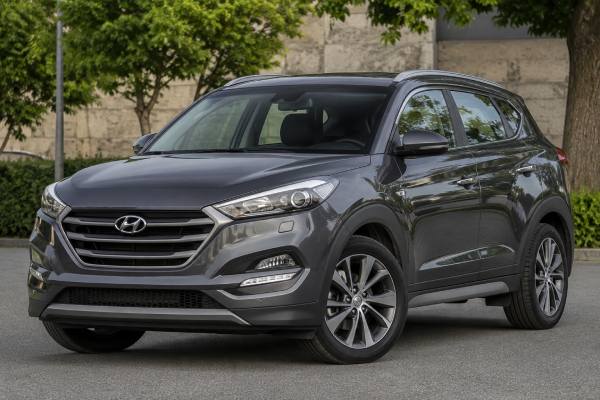
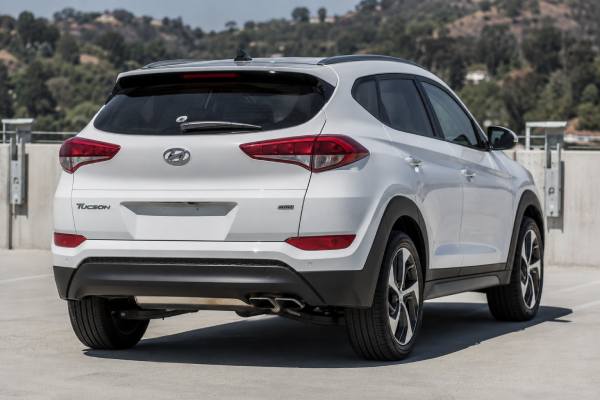
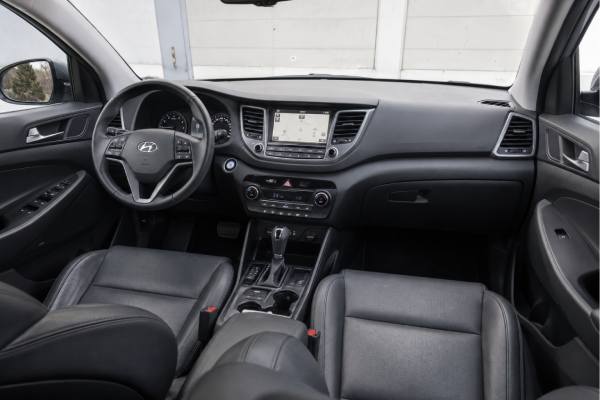
The 2016–2018 Hyundai Tucson TL with the naturally aspirated Nu 2.0 GDI engine is the simpler, lower-output version of Hyundai’s third-generation compact SUV. It does not have the punch of the 1.6 turbo models, but it also avoids the dual-clutch transmission that made some early turbo Tucsons feel less smooth in city driving. For many used buyers, that is the main appeal: a practical five-seat SUV with a conventional six-speed automatic, available front-wheel drive or AWD, good crash-test credentials, and manageable running costs.
Final Verdict
The 2016–2018 Hyundai Tucson TL 2.0 GDI is a sensible used compact SUV for drivers who value cabin space, a smooth automatic, easy parking, and strong safety ratings more than quick acceleration. Its best ownership case is as a daily family, commuter, or bad-weather vehicle, especially in SE or SEL form with complete service records. The main tradeoff is the Nu 2.0 GDI engine’s sensitivity to oil level, oil quality, and recall or campaign completion. Buy one only after verifying VIN-specific engine coverage, recall status, oil-change history, and a clean cold-start inspection.
| Pros | Cons |
|---|---|
| Conventional six-speed automatic is smoother than early DCT models | 164 hp feels modest with passengers, cargo, or AWD |
| Spacious cabin and 31.0 cu ft cargo area | Fuel economy trails some CR-V and CX-5 rivals |
| Good IIHS crashworthiness and available front crash prevention | Best safety tech was optional or trim-dependent |
| Simple naturally aspirated layout, no turbocharger to service | Nu GDI engine needs careful oil-level monitoring |
| AWD versions add useful snow and wet-road traction | AWD adds weight, fuel use, and rear-driveline service needs |
Table of Contents
- Tucson TL 2.0 GDI Overview
- Specifications and Technical Data
- Trims, Options, Safety and ADAS
- Reliability, Common Issues and Service Actions
- Maintenance and Buyer’s Guide
- Driving, Performance and Efficiency
- How the Tucson Compares to Rivals
Tucson TL 2.0 GDI Overview
The 2.0 GDI Tucson is the dependable, everyday version of the 2016–2018 TL range, but it is not the exciting one. Its value is in practicality, safety, and a straightforward automatic drivetrain rather than strong acceleration or class-leading fuel economy.
This Tucson sits in the compact SUV class against the Honda CR-V, Toyota RAV4, Mazda CX-5, Ford Escape, Kia Sportage, Subaru Forester, and Nissan Rogue. In North America, the 2.0-liter engine was most closely associated with entry and mid-level trims, while higher trims often used the 1.6-liter turbo during these years. The 2.0 GDI engine produces 164 hp and 151 lb-ft of torque, paired with a six-speed torque-converter automatic.
That drivetrain choice matters. The six-speed automatic is less dramatic than the seven-speed dual-clutch gearbox fitted to many 1.6 turbo models. It is usually easier to live with in stop-start traffic, parking maneuvers, hills, and low-speed crawling. The downside is that the 2.0 GDI engine has limited torque, so the transmission often has to downshift when climbing grades or passing at highway speed.
The Tucson TL’s body is well sized for daily use. It is shorter than many midsize SUVs but still offers generous rear-seat room, a useful cargo area, and a comfortable driving position. Visibility is generally good, controls are easy to learn, and the cabin feels more mature than the earlier Tucson. Ride comfort is also one of its strengths, especially on the 17-inch wheel package common to 2.0-liter trims.
For a used buyer, the biggest decision is not whether the Tucson 2.0 is fast enough. It usually is for normal commuting. The bigger question is whether the individual vehicle has been maintained correctly and whether VIN-specific recalls, campaigns, and engine warranty actions have been completed. A well-serviced example can be a practical family SUV. A neglected one, especially with poor oil history, unexplained engine noise, or warning lights, should be treated carefully.
Specifications and Technical Data
The 2016–2018 Tucson TL 2.0 GDI uses Hyundai’s Nu-family naturally aspirated direct-injection four-cylinder engine. It is mounted transversely and paired with a conventional six-speed automatic transmission, with either front-wheel drive or Hyundai’s Active On-Demand AWD system depending on trim and market.
| Item | 2016–2018 Tucson TL 2.0 GDI |
|---|---|
| Engine family | Hyundai Nu 2.0 GDI inline-four |
| Engine code | G4NC commonly associated with this Nu GDI application |
| Displacement | 2.0 L / 1,999 cc |
| Induction | Naturally aspirated |
| Fuel system | Gasoline direct injection |
| Valvetrain | DOHC, 16 valves, CVVT |
| Maximum power | 164 hp at 6,200 rpm / about 122 kW |
| Maximum torque | 205 Nm at 4,000 rpm / 151 lb-ft |
| Bore × stroke | 81 × 97 mm |
| Compression ratio | 11.5:1 |
| Fuel type | Regular unleaded gasoline |
| Item | Specification |
|---|---|
| Transmission | Six-speed automatic with torque converter |
| Manual shift mode | SHIFTRONIC manual gear selection |
| Drive types | Front-wheel drive or all-wheel drive |
| AWD system | Active On-Demand AWD with driver-selectable lock mode |
| Final drive | 3.510:1 FWD / 3.648:1 AWD |
| Item | Metric | Imperial |
|---|---|---|
| Length | 4,475 mm | 176.2 in |
| Width excluding mirrors | 1,849 mm | 72.8 in |
| Height | 1,646–1,651 mm | 64.8–65.0 in |
| Wheelbase | 2,670 mm | 105.1 in |
| Ground clearance | 163 mm | 6.4 in |
| Turning diameter | 10.6 m | 34.9 ft |
| Passenger volume | 2,894 L | 102.2 cu ft |
| Cargo volume, seats up | 878 L | 31.0 cu ft |
| Cargo volume, seats folded | 1,753 L | 61.9 cu ft |
| Fuel tank | 62.1 L | 16.4 gal |
| Item | Specification |
|---|---|
| Front suspension | MacPherson struts with coil springs |
| Rear suspension | Independent multi-link with coil springs |
| Steering | Column-mounted motor-driven power steering |
| Front brakes | 305 × 25 mm ventilated discs |
| Rear brakes | 302 × 10 mm solid discs |
| Common 2.0 tire size | P225/60R17 on 17 × 7.0J wheels |
| Towing with trailer brakes | 680 kg / 1,500 lb |
| Towing without trailer brakes | 454 kg / 1,000 lb |
| Drive type | City | Highway | Combined |
|---|---|---|---|
| FWD | 10.2 L/100 km / 23 mpg US / 27.6 mpg UK | 7.8 L/100 km / 30 mpg US / 36.0 mpg UK | 9.0 L/100 km / 26 mpg US / 31.2 mpg UK |
| AWD | 11.2 L/100 km / 21 mpg US / 25.2 mpg UK | 9.0 L/100 km / 26 mpg US / 31.2 mpg UK | 10.2 L/100 km / 23 mpg US / 27.6 mpg UK |
Trims, Options, Safety and ADAS
For 2016–2018, the 2.0 GDI was mainly the practical, lower-cost Tucson powertrain. Shoppers should identify the trim by equipment and VIN, because the best driver-assistance features were not standard across every 2.0-liter model.
Trims and equipment identifiers
In 2016 and 2017, the 2.0 GDI was most commonly found in SE trim in the U.S. market. The SE generally used 17-inch alloy wheels, cloth seating, a rearview camera, Bluetooth, basic infotainment, and the six-speed automatic. Higher trims such as Eco, Sport, and Limited were usually linked to the 1.6 turbo engine, although trim naming and availability varied by market.
For 2018, Hyundai adjusted the Tucson lineup, and 2.0-liter versions became easier to find in lower and mid-level grades such as SE and SEL in the U.S. market. A quick visual check helps: 2.0-liter models usually have a traditional automatic shifter feel, a lower output rating on the under-hood emissions label, and often 17-inch wheels rather than the larger wheel packages fitted to upper trims.
Useful identifiers include:
- Engine label showing 2.0L gasoline direct injection.
- Transmission behavior: smooth torque-converter creep rather than dual-clutch take-up.
- SE or SEL badges and equipment level.
- 17-inch P225/60R17 tire package on many 2.0-liter examples.
- VIN build sheet or dealer service record confirming the engine and drivetrain.
Safety ratings
The Tucson TL performed well in major crash-test programs for its time. IIHS rated the 2016–2018 Tucson strongly in crashworthiness, with Good ratings in key crash tests such as small-overlap front, moderate-overlap front, original side, roof strength, and head restraints. The 2016 model earned Top Safety Pick+ status when equipped with optional front crash prevention, while 2018 models with the right optional front crash prevention and headlight equipment qualified for Top Safety Pick.
There is an important nuance. The Tucson’s original side-impact result was strong, but IIHS later introduced a tougher updated side test. Under that newer standard, the 2016–2021 Tucson generation did not perform as strongly as in the original side test. That does not erase its good period-correct safety record, but it does show how crash-test standards became more demanding.
NHTSA overall safety ratings for these model years were also strong, with five-star overall results reported for front-wheel-drive and all-wheel-drive versions. Rollover ratings are typically lower than frontal and side ratings for compact SUVs because of vehicle height and center of gravity, so tires, suspension condition, and electronic stability control health still matter.
Safety equipment and driver assistance
Standard safety equipment included front airbags, front side airbags, side-curtain airbags, anti-lock brakes, electronic stability control, traction control, tire-pressure monitoring, and child-seat anchors. A rearview camera was widely fitted and is one of the most useful everyday features.
ADAS availability varied by year and trim. Depending on equipment, the Tucson could be fitted with blind-spot detection, rear cross-traffic alert, lane departure warning, automatic emergency braking, pedestrian detection, and related warning systems. Buyers who care about active safety should not assume these features are present. Check the steering-wheel buttons, instrument-cluster menus, camera or sensor areas, and the original window sticker.
After windshield replacement, front-end repairs, suspension work, or collision repair, camera and radar-based systems may need calibration. A Tucson with warning lights for lane support, forward collision warning, ABS, ESC, or blind-spot monitoring should be diagnosed before purchase, not after.
Reliability, Common Issues and Service Actions
The Tucson 2.0 GDI can be a durable SUV, but the Nu GDI engine has enough known service history that buyers should take oil maintenance, engine noise, and campaign completion seriously. The best examples have frequent oil changes, no cold-start knock, no oil-pressure warnings, and documented recall or campaign work.
| Issue | Prevalence | Severity | Typical signs |
|---|---|---|---|
| Connecting-rod bearing wear | VIN-dependent | High | Knock, oil-pressure light, limp mode, no-start |
| Oil consumption | Occasional | Medium to high | Low dipstick level, smoke, fouled plugs, catalyst stress |
| GDI carbon deposits | Occasional with short trips | Medium | Rough idle, hesitation, misfires, poor economy |
| Ignition coil or spark plug faults | Occasional | Low to medium | Misfire codes, rough running under load |
| AWD coupling or rear driveline wear | Occasional | Medium | Binding, rumble, rear-end noise, mismatched tires |
| Suspension links and bushings | Common with age | Low to medium | Clunks, tire wear, wandering, loose steering feel |
Engine bearing recall and warranty coverage
The most important official action for this powertrain is Hyundai Safety Recall 209, tied to certain 2017 Tucson vehicles equipped with the 2.0-liter Nu GDI engine. The concern involves premature connecting-rod bearing wear that can lead to engine knocking, oil-pressure warning-light illumination, engine failure, or non-crash fire risk. The remedy involves inspection and engine replacement where required.
There is also a related engine warranty extension and inspection or replacement process covering certain 2016–2021 Tucson TL vehicles with Nu 2.0 GDI engines. The extension concerns engine damage or malfunction from connecting-rod bearing wear, and coverage terms have been listed as 15 years or 150,000 miles for eligible vehicles. Completion of knock-sensor detection software is important because it helps the engine control module detect bearing-related vibration and trigger protective warnings.
The practical takeaway is simple: do not buy a Tucson 2.0 GDI without a VIN check. Ask for proof of completed recalls, campaign work, ECU updates, and any engine replacement. A seller saying “it runs fine” is not enough.
Oil consumption and GDI carbon buildup
Gasoline direct injection can improve efficiency and power, but it does not wash the intake valves with fuel the way older port-injection systems do. Over time, short trips, extended oil intervals, poor PCV performance, and low-quality oil can contribute to intake deposits and combustion-chamber deposits. Symptoms include rough idle, hesitation, misfires, reduced fuel economy, and sometimes increased oil use.
Hyundai has published oil-consumption inspection procedures for gasoline engines. In practical terms, a used buyer should check the dipstick before the test drive, again after a proper warm-up, and ask how often the previous owner had to add oil. A Tucson that uses oil rapidly, shows blue smoke, has a dirty tailpipe, or has a history of low-oil warnings deserves a professional inspection.
Transmission and AWD concerns
The six-speed automatic is generally a better used-car bet than the early dual-clutch setup for buyers who want smoothness and simplicity. It should engage Drive and Reverse quickly, shift cleanly, and downshift without a harsh bang. Delayed engagement, flare between gears, or shuddering under light throttle can point to fluid condition, adaptation issues, mounts, or internal wear.
AWD models add rear driveline parts: a transfer unit, prop shaft, coupling, rear differential, and extra seals. On a test drive, make tight low-speed turns in both directions and listen for binding, clunks, or groaning. Mismatched tires can stress AWD components, so all four tires should be the same size, similar brand and model, and close in tread depth.
Chassis, brakes and corrosion
By age rather than design, many 2016–2018 Tucsons now need suspension and brake attention. Front sway-bar links, strut mounts, lower control-arm bushings, rear suspension links, wheel bearings, and brake hardware are normal inspection items. In salted climates, inspect the subframes, lower control arms, rear suspension mounts, brake lines, exhaust flanges, fuel and vapor lines, and the lower tailgate seam.
A Tucson that has lived in a dry climate can feel tight at high mileage. One from a heavy road-salt region may need more money spent underneath than under the hood.
Maintenance and Buyer’s Guide
The right maintenance approach for the Tucson 2.0 GDI is conservative: fresh oil, clean filters, regular fluid checks, and early attention to small noises. This engine is not a good match for extended neglect, especially once mileage climbs beyond 100,000 miles.
| Item | Suggested interval | Why it matters |
|---|---|---|
| Engine oil and filter | 8,000 km / 5,000 miles or 6 months for mixed use | Protects GDI engine, bearings, chain and oil-control parts |
| Engine air filter | Inspect yearly; replace about 24,000–48,000 km | Dusty use shortens the interval |
| Cabin air filter | Every 12 months or when airflow drops | Improves HVAC performance and defogging |
| Spark plugs | About 96,000–160,000 km depending on market guidance | Misfires can damage the catalyst |
| Coolant | Follow owner’s manual; often first major change near 10 years | Age, contamination and leaks matter more than mileage alone |
| Brake fluid | Every 2–3 years | Moisture reduces boiling point and corrodes hydraulic parts |
| Automatic transmission fluid | About 60,000–100,000 km for long-term ownership | Helps shift quality and transmission life |
| AWD rear differential and transfer oil | About 50,000–80,000 km in severe use | Protects gears, seals and AWD coupling-related parts |
| Serpentine belt and hoses | Inspect yearly after 5 years | Cracks, glazing and swelling increase breakdown risk |
| 12 V battery | Test yearly after 4 years | Low voltage can trigger electronic faults |
| Tire rotation and alignment check | Every 8,000–12,000 km | Protects tires and AWD driveline balance |
The 2.0 GDI uses a timing chain rather than a scheduled timing belt. That does not mean it should be ignored. Listen for cold-start rattle, check for cam-crank correlation fault codes, and investigate any chain, guide, or tensioner noise promptly. Chain problems are more likely when oil level has been allowed to run low or oil changes were stretched too far.
Essential service checks before buying:
- Confirm the VIN through Hyundai and NHTSA recall tools.
- Ask for dealer printouts showing completed campaigns and software updates.
- Start the engine cold and listen for knock, rattle, or piston-slap-like noise.
- Check the dipstick level and oil condition before the test drive.
- Scan for stored and pending powertrain, ABS, AWD, and ADAS codes.
- Inspect for oil leaks at the valve cover, timing cover, oil pan, drain plug and filter.
- Check coolant level, coolant smell, radiator condition and heater output.
- Test the automatic transmission from cold and warm.
- On AWD models, check tire matching and rear driveline noise.
- Inspect underbody corrosion, brake lines, subframes and suspension mounts.
- Verify both keys, infotainment function, camera operation and warning lights.
For trims, a clean SE or SEL 2.0 with service records is often the smartest buy. It keeps the Tucson’s useful size and safety while avoiding more complex high-trim features that can be expensive to repair later. AWD is worth seeking in snowy regions, but not if it comes with neglected tires, driveline noise, or missing fluid-service history. Front-wheel drive is cheaper to own and slightly more efficient.
Avoid examples with engine knock, oil-pressure warnings, unexplained stalling, heavy oil use, incomplete recalls, salvage history, severe rust, or a seller who cannot explain the maintenance record. A bargain Tucson can become expensive if the engine or AWD system needs major work.
Driving, Performance and Efficiency
The Tucson 2.0 GDI drives like a comfortable compact SUV, not a sporty one. Its strongest real-world traits are smooth low-speed behavior, predictable handling, and a quiet enough cabin for commuting.
In city traffic, the six-speed automatic helps the 2.0 feel more refined than its modest torque figure suggests. It creeps smoothly in parking lots, shifts without the clutch take-up feel of a dual-clutch transmission, and usually responds predictably to gentle throttle inputs. The engine is naturally aspirated, so there is no turbo lag, but there is also no strong low-rpm surge. To accelerate briskly, the gearbox needs to downshift and the engine needs revs.
On the highway, the Tucson is stable and easy to place. Passing power is adequate when lightly loaded, but it is not generous. With four passengers, luggage, AWD, air conditioning, or mountain grades, the 2.0 works harder and becomes noisier. Drivers coming from a V6 SUV or a modern turbocharged compact SUV may find it slow. Drivers coming from an older compact sedan or small crossover will likely find it acceptable.
Ride quality is a strong point on 17-inch wheels. The suspension absorbs broken pavement well, and the multi-link rear suspension helps the Tucson feel settled over uneven surfaces. Steering is light rather than communicative, which suits parking and commuting but does not give the Mazda CX-5’s more connected feel. Braking feel is normal for the class, but old brake fluid, rusty slide pins, or worn rear rotors can make used examples feel worse than they should.
Real-world economy depends heavily on drivetrain and use. FWD models can return about 9.0–10.5 L/100 km in mixed driving when maintained well. Highway trips at steady speeds can be closer to 7.8–8.5 L/100 km. AWD models often land around 10.0–11.5 L/100 km in mixed use and can do worse in winter, short-trip city driving, or with underinflated tires. Cold weather, remote starts, roof racks, short trips, and old spark plugs all reduce economy.
Towing is limited. The Tucson 2.0 can handle a small utility trailer, light garden trailer, or compact camping load within rating, but it is not a heavy towing SUV. Keep trailer weight modest, use trailer brakes where required, and avoid long high-speed climbs with a fully loaded cabin. If towing is a regular need, a larger SUV with more torque and stronger cooling margin is a better choice.
How the Tucson Compares to Rivals
The Tucson 2.0 GDI compares best as a value-focused compact SUV, not as the fuel-economy, performance, or resale-value leader. Its strongest rival argument is equipment and comfort for the money.
Against the Honda CR-V, the Tucson usually costs less used and can feel more substantial inside than its price suggests. The CR-V counters with stronger resale value, excellent packaging, and better fuel economy in many years. A well-maintained CR-V is often the safer long-term bet, but the Tucson can be better value if inspected carefully.
Against the Toyota RAV4, the Hyundai again often wins on used price and cabin feel. The RAV4 has a stronger reliability reputation and typically holds value better. Buyers who want the least ownership risk may prefer Toyota, while buyers shopping on budget may find a cleaner, newer Tucson for the same money.
Against the Mazda CX-5, the Tucson is softer and more comfort-focused. The Mazda handles better, has a more premium driving feel, and is more enjoyable on a curvy road. The Tucson offers easier controls and a calmer personality, which may suit family use better.
Against the Kia Sportage, the comparison is very close because the two share platform roots and related powertrains. The Sportage may feel slightly different in styling and tuning, but the same used-car rules apply: verify engine campaigns, oil history, transmission behavior, and underbody condition.
Against the Subaru Forester, the Tucson offers a conventional automatic rather than Subaru’s CVT in many comparable years. The Forester has standard AWD and excellent visibility, but it can have its own engine, CVT, and oil-consumption concerns depending on year. In snowy regions, a clean AWD Tucson is useful, but Subaru’s full-time AWD reputation remains a strong draw.
Overall, the Tucson TL 2.0 GDI is best for buyers who want a comfortable compact SUV at a fair price and are willing to inspect the engine history properly. It is not the class benchmark, but the right example can be a practical and pleasant used vehicle.
References
- 2017 HYUNDAI TUCSON SPECIFICATIONS 2017 (Specifications)
- Gas Mileage of 2018 Hyundai Tucson 2018 (Fuel Economy)
- 2018 Hyundai Tucson 2018 (Safety Rating)
- Part 573 Safety Recall Report 21V-727 2021 (Recall Database)
- TXXM/T6G – Engine Warranty Extension and Engine Inspect/Replace – Dealer Best Practice 2022 (TSB)
Disclaimer
This article is for informational purposes only and is not a substitute for professional diagnosis, repair, or inspection. Specifications, torque values, fluid capacities, service intervals, recall eligibility, and repair procedures can vary by VIN, market, equipment, production date, and later service updates. Always verify details against the official owner’s manual, service information, VIN-specific dealer records, and current recall databases before buying or repairing a vehicle.
If this guide helped you, please consider sharing it on Facebook, X/Twitter, or your favorite automotive group to support our work.