
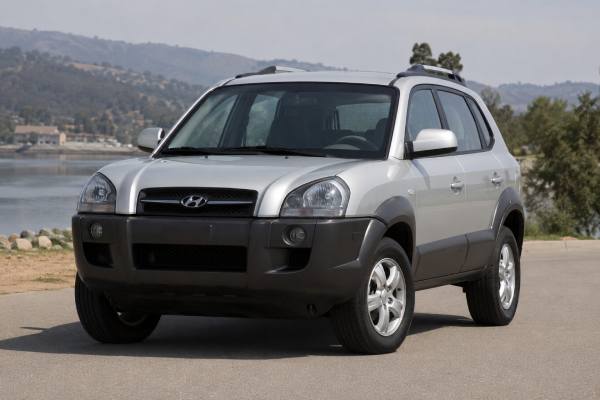
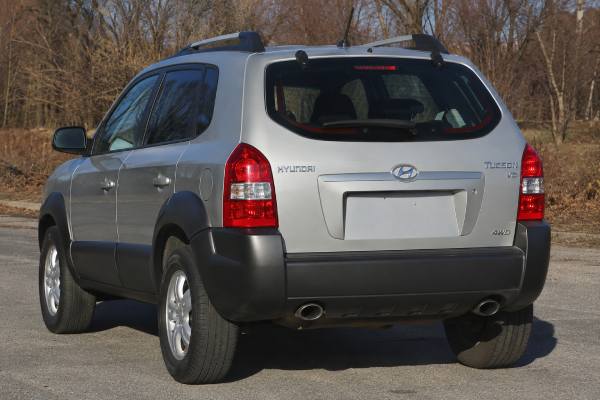
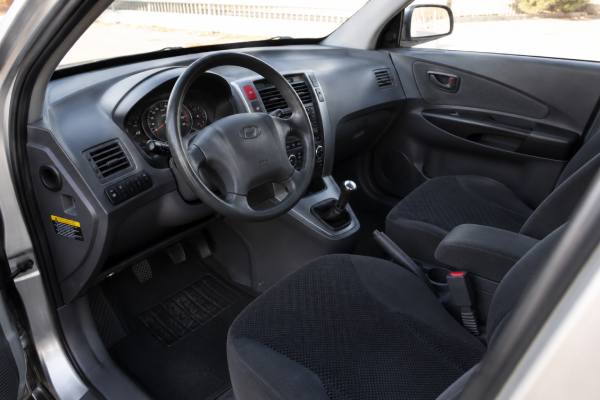
The 2005–2006 Hyundai Tucson 4WD (JM) with the early 2.0 CRDi diesel is a simple, practical compact SUV from the first Tucson generation. It is not fast, luxurious, or especially refined by modern standards, but it offers useful cabin space, a torquey diesel engine, selectable 4WD assistance, and straightforward mechanicals that still make sense for budget-minded buyers.
This version sits in an interesting place on the used market. It is usually cheaper than a Toyota RAV4 or Honda CR-V of the same age, more road-friendly than a traditional off-roader, and more useful in bad weather than the front-wheel-drive Tucson. The main question is condition. A well-serviced 2.0 CRDi 4WD can be a solid, honest workhorse. A neglected one can quickly need timing belt, clutch, injector, suspension, corrosion, and 4WD driveline work.
Final Verdict
The 2005–2006 Hyundai Tucson 4WD (JM) 2.0 CRDi 113 hp is a good choice if you want an affordable diesel SUV with useful traction, simple controls, and decent load space rather than modern speed or refinement. It suits rural driving, winter roads, light towing, family errands, and owners who value durability over image. The main tradeoff is age: rust, timing belt history, injector wear, clutch or dual-mass flywheel noise, and 4WD coupling condition matter more than mileage alone. Buy only with service proof, a clean underside, working 4WD, and no diesel starting, smoke, or overheating symptoms.
| Pros | Cons |
|---|---|
| Torquey 2.0 CRDi suits hills, loads, and relaxed driving | 113 hp feels slow with passengers or a trailer |
| 4WD system helps on snow, mud, gravel, and wet lanes | No low-range gearbox, so it is not a true off-roader |
| Compact size with useful five-seat cabin and SUV visibility | Cabin materials and noise isolation feel dated today |
| D4EA diesel can last well with clean oil and belts | Neglected timing belts, injectors, and EGR systems are costly |
| Parts availability is generally good across Europe | Rust and worn suspension can exceed the car’s value |
| Cheaper to buy than many Japanese compact SUV rivals | Safety and driver assistance are old by modern standards |
Table of Contents
- Used Tucson JM 2.0 CRDi Overview
- Tucson 2.0 CRDi Specifications
- Trims, Safety, and Driver Assistance
- Reliability, Common Issues, and Service Actions
- Maintenance and Buying Guide
- Driving, Performance, and Fuel Economy
- How the Tucson Compares to Rivals
Used Tucson JM 2.0 CRDi Overview
The first-generation Hyundai Tucson is best understood as a compact, road-biased SUV with extra traction, not as a heavy-duty 4×4. In 2.0 CRDi 4WD form, its appeal comes from practicality, diesel torque, low purchase prices, and a drivetrain that is useful in bad weather.
The JM Tucson was sold from the mid-2000s as Hyundai’s smaller SUV below the Santa Fe. It shared much of its general platform thinking with the related Kia Sportage of the same era. The body is a five-door, five-seat SUV with a high roof, upright seating position, and a simple dashboard. It was aimed at buyers who wanted SUV visibility and winter confidence without the size, cost, and fuel use of a larger off-roader.
This article focuses on the early 2.0 CRDi 4WD diesel rated at about 113 PS, 83 kW, or roughly 111–113 hp depending on how the market rounded the figure. It uses Hyundai’s D4EA 1,991 cc four-cylinder common-rail turbodiesel. In this 2005–2006 tune, it is the lower-output version sold before the more powerful 140 PS VGT diesel became common in many European markets.
The 4WD system is an on-demand setup. In normal driving, the Tucson behaves mainly like a front-wheel-drive SUV. When slip is detected, torque can be sent to the rear wheels through an electronically controlled coupling. A 4WD Lock button can help at low speeds by holding a more even front-rear drive split, but it is intended for slippery surfaces such as snow, wet grass, mud, loose tracks, or steep gravel access roads. It is not designed for dry-road use, rock crawling, or sustained hard off-road driving.
The Tucson’s strengths are easy to understand. It is roomy for its footprint, has a wide tailgate, good visibility, and a simple driving position. The diesel has enough low-rpm pull for everyday use, and the 5-speed manual gearbox is generally preferable if you want the best economy and response. The chassis is not sophisticated, but it is predictable. The suspension gives a comfortable enough ride on rough local roads, and ground clearance is useful compared with a normal hatchback or estate.
The weak points are also clear. Performance is modest. The car is now old, so condition varies hugely. Many examples have worked hard in rural areas, carried pets, towed small trailers, or spent winters on salted roads. A low asking price can hide overdue timing belt work, old tyres, tired dampers, rusty rear suspension mounts, worn front control arms, leaking intercooler hoses, or diesel fuel-system problems.
For the right buyer, this Tucson is a practical used SUV with few pretensions. It is at its best as a cheap-to-run winter car, rural family vehicle, light-duty tow car, or general utility SUV. It is less convincing if you want modern crash-avoidance technology, strong motorway acceleration, low cabin noise, or guaranteed low repair costs without inspection.
Tucson 2.0 CRDi Specifications
The 2005–2006 Tucson 2.0 CRDi 4WD uses a transverse diesel engine, a 5-speed manual gearbox in the most common European specification, and an on-demand 4WD system. The important ownership points are the timing belt, common-rail diesel hardware, 4WD coupling, rear differential, and the extra weight of the 4WD drivetrain compared with the 2WD model.
| Item | Specification |
|---|---|
| Engine | D4EA 2.0 CRDi four-cylinder diesel |
| Displacement | 1,991 cc / 2.0 litres |
| Layout | Front transverse inline-four |
| Induction | Turbocharged and intercooled |
| Fuel system | Common-rail direct injection |
| Valvetrain | OHC, 4 valves per cylinder |
| Power | 83 kW / about 113 PS at 4,000 rpm |
| Torque | About 245–255 Nm, depending on market listing |
| Bore × stroke | 83.0 mm × 92.0 mm |
| Compression ratio | About 17.7:1 |
| Timing drive | Timing belt |
| Official combined economy | About 7.1 L/100 km / 33 mpg US / 40 mpg UK |
| Item | Specification |
|---|---|
| Common gearbox | 5-speed manual |
| Automatic availability | 4-speed automatic in some markets |
| Drive type | On-demand 4WD / all-wheel drive |
| 4WD lock function | Low-speed traction aid for slippery surfaces |
| Front differential | Open differential with brake-based traction support where fitted |
| Rear drive hardware | Prop shaft, electronically controlled coupling, rear differential |
| Item | Specification |
|---|---|
| Body style | Five-door compact SUV |
| Seats | Five |
| Length | 4,325 mm |
| Width | About 1,795 mm |
| Height | About 1,680–1,730 mm by market/roof equipment |
| Wheelbase | 2,630 mm |
| Curb weight | About 1,585 kg for 4WD manual listings |
| Gross vehicle weight | About 2,210 kg |
| Fuel tank | 58 litres |
| Cargo volume | Commonly listed around 644 litres seats up |
| Towing capacity | Typically up to about 1,600 kg braked in European listings |
| Item | Specification |
|---|---|
| Front suspension | MacPherson struts |
| Rear suspension | Independent multi-link layout |
| Steering | Hydraulic power-assisted rack and pinion |
| Front brakes | Ventilated discs |
| Rear brakes | Discs |
| Common tyre size | 235/60 R16 |
| 0–100 km/h | About 13.8 seconds |
| Top speed | About 168 km/h / 104 mph |
| Item | Useful value |
|---|---|
| Engine oil capacity | About 5.9 litres with filter |
| Coolant capacity | About 8.7 litres |
| Timing belt interval | Commonly treated as 120,000 km or 8 years |
| Manual gearbox oil | Use the VIN-correct Hyundai specification |
| Automatic fluid | Hyundai/Kia SP-III type where applicable |
| Wheel-nut torque | Typically around 90–110 Nm; verify by wheel and VIN |
Trims, Safety, and Driver Assistance
Equipment matters more than the trim name on a used Tucson JM because names changed by country. For this 2.0 CRDi 4WD, focus on airbags, ABS/EBD, stability control, alloy wheels, air conditioning, service history, and whether the car is the early 113 hp diesel or later 140 PS VGT version.
In the UK and parts of Europe, first-generation Tucson trims included names such as GSI and CDX, while other markets used GL, GLS, Comfort, Style, Elite, or local equivalents. The diesel 4WD models were often positioned above basic petrol front-wheel-drive versions, but standard equipment was not identical everywhere.
Useful features to look for include:
- Air conditioning or climate control that still blows cold.
- Six-airbag coverage where fitted, including front side and curtain airbags.
- ABS with electronic brake-force distribution.
- Electronic stability or traction control where fitted.
- Alloy wheels with the correct tyre size and matching tyres.
- Working heated mirrors, rear wiper, central locking, and electric windows.
- Towbar wiring installed neatly rather than spliced badly.
- Rear ISOFIX child-seat anchor points in markets where fitted.
Quick identifiers are simple. The “CRDi” badge identifies the diesel, while “4WD” or “4×4” badging and the 4WD Lock switch confirm the driveline. On the road, a working 4WD car should pull cleanly away on loose or wet surfaces without drivetrain grinding, rear coupling judder, flashing 4WD warning lights, or clunks from the prop shaft area. If the car has no 4WD switch, no rear differential, and no prop shaft, it is a 2WD model no matter what the advertisement says.
Safety ratings and crash-test context
The Tucson’s crash-test results must be read as 2000s-era results, not as modern safety performance. Period testing generally found decent adult occupant protection for the class, but pedestrian protection was weak by today’s standards, and active crash-avoidance systems were either basic or absent.
ANCAP’s 2006 assessment notes the tested model period, small SUV class, petrol/diesel applicability, and an overall score of 29.24 out of 37 under that older protocol. It also notes that AEB functions were not available on any variant in that assessment. This is the key point for a modern buyer: the structure and airbags were respectable for the time, but the Tucson lacks today’s automatic emergency braking, lane support, blind-spot monitoring, adaptive cruise control, driver monitoring, and modern pedestrian/cyclist mitigation.
Airbag equipment varied. Dual front airbags and ABS/EBD were widely fitted, but side airbags and head-protecting curtain airbags depended on variant and market. Higher-trim models are worth seeking because passive safety equipment is not something you can sensibly retrofit later.
Child-seat practicality is acceptable for a compact SUV of this age. The rear bench is broad enough for normal family use, but the middle rear seat is less comfortable, and three child seats across the back may be difficult depending on seat width. Check the actual anchor points, buckle access, and front passenger airbag deactivation arrangement before buying if child-seat use is a priority.
Driver assistance
There is no modern ADAS suite. Expect conventional hydraulic steering, ABS, brake-force distribution, and traction or stability control depending on trim. That makes the Tucson simple and easy to understand, but it also means tyre quality, brake condition, suspension condition, and driver attention do far more work than on a newer SUV.
After accident repairs, pay close attention to the SRS warning light, steering wheel alignment, ABS warning lights, and front-end panel gaps. A car of this value is sometimes repaired cheaply after minor impacts, and poor repairs can affect airbag, seatbelt, ABS sensor, or alignment performance.
Reliability, Common Issues, and Service Actions
The D4EA 2.0 CRDi can be durable, but this Tucson is now old enough that maintenance history matters more than reputation. The biggest risks are overdue timing belt work, neglected diesel fuel service, tired clutch or flywheel parts, worn suspension, rust, and 4WD components that have never had their oils changed.
| Issue | Prevalence | Cost risk | Typical signs |
|---|---|---|---|
| Timing belt overdue | Common on cheap cars | High | No invoice, noisy rollers, unknown water pump history |
| EGR and intake carbon | Common with short trips | Medium | Flat response, smoke, limp mode, rough idle |
| Injector or fuel-filter issues | Occasional | Medium to high | Hard starting, diesel knock, uneven idle, smoke |
| Clutch and dual-mass flywheel wear | Occasional to common | High | Rattle, judder, slipping, heavy pedal |
| 4WD coupling or rear driveline wear | Occasional | Medium to high | Binding, clunks, warning lights, rear-end groan |
| Suspension bushes and ball joints | Common with age | Low to medium | Knocks, wandering, uneven tyre wear |
| Corrosion | Market-dependent | Medium to high | Rusty subframes, sills, arches, brake pipes |
Engine and diesel system
The D4EA diesel’s most important service item is the timing belt. Do not rely on a seller saying it was “probably done.” You want an invoice showing belt, tensioner, idlers, and ideally water pump replacement. If there is no proof, treat the belt as due immediately and price the car accordingly.
Hard starting can come from weak glow plugs, old battery, poor fuel-filter condition, air leaks in the fuel line, injector leak-back, or low compression on a tired engine. Blue smoke after startup suggests oil burning or turbo seal wear. Black smoke under load can point to boost leaks, EGR faults, dirty intake, MAF/MAP sensor issues, injector wear, or a remap that was not done well.
The EGR valve and intake tract can clog, especially on cars used for short urban trips. A Tucson that has spent most of its life doing short cold starts may feel lazy, smoky, and uneven compared with one used for longer journeys. Cleaning or replacing EGR and intake parts can help, but only after checking boost hoses, vacuum lines, and fuel delivery.
Cooling system condition is important. The temperature gauge should stay stable, the heater should blow hot, and there should be no coolant smell, pressurised hoses from cold, or oil contamination. If the timing belt is being replaced, replacing the water pump and coolant at the same time is sensible.
Transmission, clutch, and 4WD system
The 5-speed manual gearbox is usually straightforward, but listen for bearing whine, crunching into gear, and clutch chatter. A worn dual-mass flywheel can rattle at idle and shudder when pulling away. If the clutch bites high, slips in higher gears, or judders badly when hot, budget for a clutch job.
The automatic is less lively and uses more fuel, but it can be acceptable if the fluid is clean and shifts are smooth. Harsh shifts, flares, delayed engagement, or burnt-smelling fluid are warning signs. Because many owners treated automatic fluid as “lifetime,” a documented fluid history is a major plus.
For 4WD models, inspect the rear differential, coupling, prop shaft, centre bearing, CV joints, and transfer/PTU area. On a test drive, use the 4WD Lock only on a loose surface, never on dry tarmac. Listen for clunks when taking up drive and feel for vibration at 50–100 km/h. Mismatched tyres can strain the driveline, so all four tyres should be the same size, similar brand/model, and close in tread depth.
Chassis, brakes, and corrosion
Suspension wear is normal at this age. Front lower control arm bushes, ball joints, anti-roll-bar links, rear trailing or multi-link bushes, wheel bearings, and dampers can all be tired. A wandering Tucson with uneven tyre wear may need more than an alignment; it may need bushes, joints, and tyres first.
Brake discs and calipers need inspection, especially on cars that sit outside or do low mileage. Rear brakes can corrode, handbrake performance may be weak, and brake pipes should be checked carefully on salted-road cars.
Rust is one of the biggest buying risks. Check sills, rear arches, subframes, rear suspension mounting points, brake and fuel lines, the spare-wheel area, the lower tailgate edge, front crossmember, jacking points, and the floor near suspension mounts. Surface rust is expected. Deep flaking rust near structural mounting points can turn a cheap Tucson into a parts car.
Recalls and service actions
A known U.S. safety campaign covered certain 2005–2007 Tucson vehicles for the driver airbag module, with Campaign 079 and NHTSA recall documentation describing replacement of the driver airbag module or cover module to improve the margin of compliance in a low-risk deployment test. This does not automatically mean every European diesel 4WD is affected, but it shows why VIN-based recall checking matters.
For any used Tucson, check:
- Official Hyundai recall or campaign status by VIN.
- Dealer records for completed airbag, SRS, or safety campaigns.
- Warning lights at key-on and after startup.
- Evidence of steering wheel, dashboard, or seatbelt repairs.
- Service records for timing belt, fluids, clutch, fuel filter, and brake work.
A clean MOT or roadworthiness certificate is helpful, but it is not the same as a full mechanical inspection.
Maintenance and Buying Guide
A good maintenance plan for this Tucson should be more conservative than the minimum schedule because most examples are now roughly two decades old. Use mileage, time, and condition together; old fluids and rubber parts age even when the vehicle is not driven much.
| Service item | Practical interval |
|---|---|
| Engine oil and filter | 10,000–15,000 km or annually |
| Engine air filter | 15,000–30,000 km; sooner in dusty use |
| Cabin filter | Annually |
| Fuel filter | About 30,000 km, or sooner with poor fuel |
| Timing belt kit | 120,000 km or 8 years; replace if history is unclear |
| Auxiliary belts and hoses | Inspect annually; replace cracked or noisy parts |
| Coolant | Every 3–5 years, using correct antifreeze type |
| Brake fluid | Every 2 years |
| Manual gearbox oil | 60,000–90,000 km on older vehicles |
| Automatic transmission fluid | 60,000 km if fitted, especially for towing or city use |
| Transfer/PTU and rear differential oil | 60,000–90,000 km, or sooner after water exposure |
| Tyre rotation and alignment check | 10,000–15,000 km or with uneven wear |
| 12 V battery test | Annually after 4 years |
Use good-quality diesel oil in the correct viscosity and specification for the engine and climate. Many D4EA listings use around 5.9 litres with filter, and diesel-rated 5W-30, 5W-40, or 10W-40 oils may appear depending on climate and market documentation. The safest approach is to match the oil specification to the official manual or service database for the VIN, especially if the car has a diesel particulate filter in a later or market-specific version.
For driveline fluids, avoid guesswork. The manual gearbox, automatic gearbox, transfer unit, and rear differential do not all use the same oil. Automatic models commonly require Hyundai/Kia SP-III type fluid. Gear oils should match the correct GL rating and viscosity for the component. Using the wrong friction or gear oil can cause shift problems, bearing wear, or differential noise.
Pre-purchase inspection checklist
Before buying, inspect the car cold. A warm engine can hide glow-plug, injector, battery, and compression issues.
Check these items carefully:
- Cold start: should start cleanly without long cranking or heavy smoke.
- Idle: should settle evenly without diesel knock or hunting.
- Exhaust: black smoke under light throttle is not normal.
- Oil leaks: inspect turbo feed/return areas, sump, crank seals, and rocker cover.
- Coolant: look for clean coolant, no oil film, no overheating history.
- Timing belt: require proof, not verbal reassurance.
- Clutch: test for slipping in a high gear from low rpm.
- Gearbox: check all gears cold and warm.
- 4WD: listen for rear coupling or prop shaft noise.
- Tyres: all four should match closely on a 4WD car.
- Brakes: check for vibration, pulling, weak handbrake, and rusty pipes.
- Suspension: listen for knocks over rough roads.
- Rust: inspect underside, sills, arches, subframes, and rear mounts.
- Electronics: check every window, lock, light, wiper, heater setting, and warning lamp.
- Air conditioning: cold air matters because repairs can be expensive compared with vehicle value.
The best examples are usually unmodified cars with long ownership, regular oil changes, timing belt invoices, clean coolant, matching tyres, and no towbar abuse. A towbar is not automatically bad, but heavy towing with poor maintenance is. Look for signs such as overheated clutch smell, sagging rear suspension, worn rear tyres, and dirty automatic fluid.
Which versions to seek or avoid
For this exact 113 hp diesel, the manual 4WD is the most balanced version. It gives better control, better economy, and fewer automatic-transmission concerns. The automatic can be fine for gentle use, but it is slower and thirstier.
Seek higher-trim cars if they include extra airbags, stability control, better seats, and working climate equipment. Avoid cars with missing service history, mismatched tyres, obvious rust repairs, warning lights, rough cold starts, or “just needs a sensor” explanations. On a diesel of this age, a warning light may be a cheap sensor, but it can also be injectors, boost control, EGR, fuel pressure, or wiring.
Long-term durability is fair to good if the car is maintained. The engine itself is not the weak link when serviced properly. The real limit is usually the cost of bringing an old SUV back to standard. A cheap Tucson needing belt, clutch, tyres, brakes, and rust repair is rarely cheap by the time it is safe and dependable.
Driving, Performance, and Fuel Economy
The 113 hp Tucson 2.0 CRDi 4WD is slow but usable. It works best when driven on torque, shifted early, and treated as a practical diesel SUV rather than a quick crossover.
At town speeds, the high seating position and large glass area make the Tucson easy to place. Steering is light enough for parking, and the compact length helps on narrow streets. The diesel’s low-rpm torque is useful when pulling away on hills or crawling along rough tracks. Turbo lag is noticeable if you ask for acceleration from very low rpm, but once the engine is in its working range it feels stronger than the horsepower figure suggests.
The 5-speed manual gearbox has fairly long, utilitarian shifts. It is not sporty, but it suits the engine. On a good car, the clutch should be progressive and the gearshift should not crunch. The automatic version is easier in traffic, but the 4-speed gearing makes the engine feel busier and performance more relaxed.
On the motorway, the Tucson will cruise at legal speeds, but it is not a strong overtaking car. You need to plan passes, especially with passengers, luggage, a roof box, or a trailer. Wind noise, tyre noise, and diesel vibration are all more obvious than in a modern Tucson, Sportage, Qashqai, or RAV4. The engine is happiest at steady speeds, not repeated hard acceleration.
Ride comfort is generally acceptable. The suspension deals well with broken local roads and gravel tracks, but body roll is noticeable in corners. The Tucson is safe and predictable if driven smoothly, but it does not enjoy sudden direction changes. Good tyres make a large difference. Cheap, mismatched, or old tyres can make the car noisy, vague, and less secure in the wet.
Braking feel is adequate when the system is fresh. Many used examples, however, suffer from old brake fluid, rusty discs, sticky calipers, tired hoses, or uneven tyres. A firm, straight stop from moderate speed is a useful test-drive check. Any steering wheel shake, pulling, grinding, or long pedal travel needs investigation.
Fuel economy in real use
Official combined economy is around 7.1 L/100 km, equal to roughly 33 mpg US or 40 mpg UK. Real-world figures vary widely because of age, tyres, terrain, driving style, and mechanical condition.
A healthy manual 4WD can often manage:
- City and short trips: about 8.5–10.0 L/100 km, or 24–28 mpg US.
- Steady rural roads: about 6.5–7.5 L/100 km, or 31–36 mpg US.
- Mixed use: about 7.5–8.8 L/100 km, or 27–31 mpg US.
- Motorway at 110–120 km/h: usually around 7.5–9.0 L/100 km, depending on load and tyres.
Cold weather raises consumption because the diesel takes longer to warm, glow-plug and battery load increases, winter diesel may be used, and short trips prevent efficient operation. A roof rack, aggressive all-terrain tyres, dragging brakes, poor alignment, or a failing thermostat can also hurt economy.
Traction, towing, and load use
The 4WD system is helpful in the situations most owners actually face: snow-covered driveways, muddy parking areas, wet fields, gravel tracks, and steep rural lanes. It is not a substitute for proper winter tyres, and it will not turn the Tucson into a Land Cruiser. The lack of low range means clutch control matters on steep, slow climbs.
For towing, the diesel torque and 4WD traction are useful, but the modest power output, older cooling system, and vehicle weight limit expectations. A small trailer, light caravan, garden trailer, or utility load is realistic if the car is healthy and the trailer is within the VIN-specific legal rating. Heavy towing on hills will expose weak clutches, old coolant, tired brakes, and marginal tyres quickly.
When loaded with passengers and cargo, performance drops noticeably. The engine will still pull, but you will use lower gears more often. If towing or carrying loads regularly, shorten oil, coolant, brake fluid, gearbox, transfer, and differential service intervals.
How the Tucson Compares to Rivals
The Tucson’s strongest rival advantage is value. It usually costs less than the Japanese compact SUVs that buyers cross-shop, but it also feels less refined and depends heavily on maintenance condition.
| Rival | How it compares with Tucson 2.0 CRDi 4WD |
|---|---|
| Toyota RAV4 diesel | Usually more refined and desirable, but often costs more to buy |
| Honda CR-V diesel | Roomier and more polished, but good examples command stronger prices |
| Kia Sportage 2.0 CRDi | Very closely related; choose mainly by condition and equipment |
| Nissan X-Trail diesel | More practical and tougher-feeling, but rust and diesel issues matter |
| Suzuki Grand Vitara diesel | More off-road focused in some versions, but less car-like on road |
| Volkswagen Tiguan diesel | More modern in later years, but usually costlier and more complex |
Compared with a Toyota RAV4, the Hyundai feels more basic and less sharp, but it can be much cheaper. The RAV4 has a stronger reputation and usually better resale value, yet neglected diesel examples can still be expensive. If the Hyundai is rust-free and fully serviced, it can be the better value buy.
Compared with a Honda CR-V, the Tucson is smaller and less refined. The CR-V has a more polished cabin and excellent practicality, but many diesel CR-Vs are priced well above an equivalent Tucson. Buyers who just need a dependable budget winter SUV may find the Hyundai easier to justify.
The Kia Sportage of the same era is the closest rival because it shares much of the same basic engineering. Do not assume one badge is automatically better. Buy the cleaner, better-maintained vehicle with the stronger service history, better tyres, and less rust.
The Nissan X-Trail offers a more square, practical load area and can feel tougher, but diesel problems and corrosion can be serious. A good X-Trail is useful; a bad one can be more troublesome than the Hyundai.
The Suzuki Grand Vitara is more appealing if you need genuine off-road ability in certain versions, but it is less relaxed as a family road car. The Tucson is the better choice for mostly tarmac use with occasional slippery tracks.
The Volkswagen Tiguan belongs mostly to a slightly newer, more refined group. It drives better and has a more upmarket cabin, but complexity, purchase price, and repair costs are usually higher. For a buyer who wants low-cost utility rather than brand image, the older Tucson still makes sense.
The final comparison is against a normal estate car or hatchback. If you do not need 4WD, extra ground clearance, or towing ability, a diesel estate will usually be quieter, more economical, and better to drive. The Tucson makes sense when the SUV shape and traction are genuinely useful.
References
- Hyundai Owners Manuals 2026 (Owner’s Manual Portal)
- Hyundai Tucson | Safety Rating & Report 2006 (Safety Rating)
- 2005-2007 Tucson – Driver Airbag Replacement 2007 (Recall / Campaign 079)
- Hyundai Tucson I 2.0 CRDi 4WD (112 Hp) | Technical specs, data, fuel consumption, Dimensions 2005 (Technical Specifications)
- Hyundai Tucson jm 2.0 CRDi Timing belt (113 hp Diesel D4EA) 2026 (Service Interval Reference)
Disclaimer
This article is for informational purposes only and is not a substitute for professional diagnosis, repair, inspection, or official service data. Specifications, torque values, service intervals, recall status, procedures, and equipment can vary by VIN, market, model year, trim, and previous repairs. Always verify critical information against the official Hyundai service documentation for the exact vehicle and consult a qualified technician before repair work.
If this guide helped you, please share it on Facebook, X/Twitter, or your preferred social platform to support our work and help other used-car buyers make better decisions.