
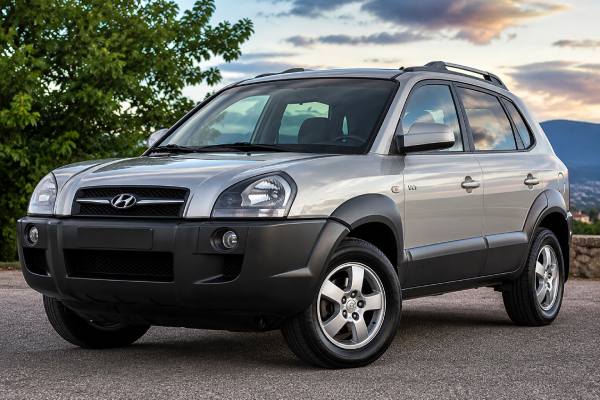
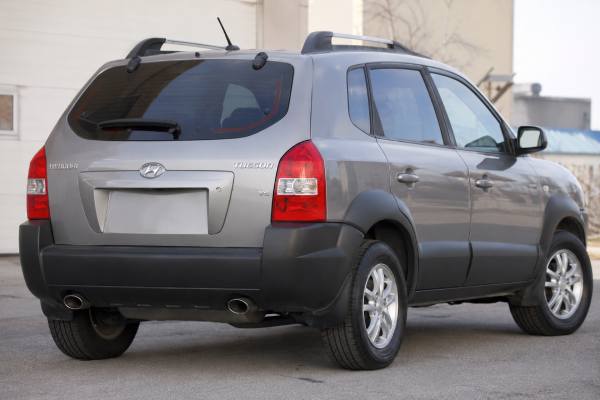
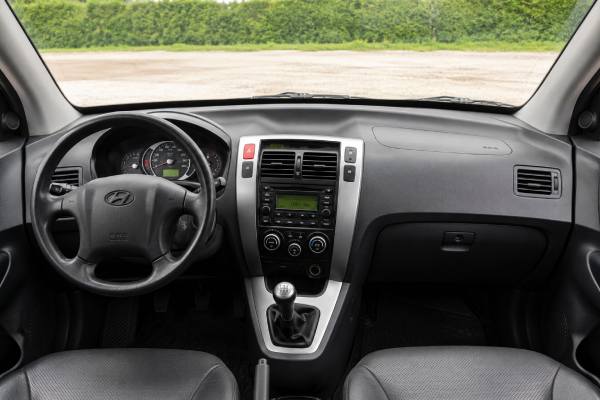
The 2006–2008 Hyundai Tucson 4WD JM with the 2.0 CRDi VGT diesel is the higher-output version of Hyundai’s first-generation compact SUV. It combines a 140 hp common-rail diesel engine, a 6-speed manual gearbox, and on-demand four-wheel drive in a simple, practical body that is still easy to live with today.
Its appeal is not luxury or sharp handling. It is a useful mix of diesel torque, compact dimensions, winter traction, decent towing ability, and relatively straightforward mechanicals. The main question for used buyers is condition: a well-serviced Tucson can be a dependable budget SUV, while a neglected one can quickly need timing belt, clutch, turbo, suspension, brake, and corrosion work.
Final Verdict
The Hyundai Tucson 4WD JM 2.0 CRDi VGT 140 hp is a sensible used SUV for drivers who want diesel torque, simple controls, winter traction, and useful space without paying modern crossover prices. It suits rural use, rough roads, family errands, light towing, and owners who value durability over refinement. The tradeoff is age-related maintenance: rust, worn suspension, tired clutches, EGR soot, turbo wear, and overdue timing belt work matter more than mileage alone. Buy one only with strong service history, a clean underside, working 4WD, and proof that the belt, fluids, brakes, and diesel fuel system have not been neglected.
| Pros | Cons |
|---|---|
| 140 hp VGT diesel gives useful low-speed pulling power | Turbo, EGR, and intake soot need age-aware maintenance |
| On-demand 4WD improves wet-road and winter traction | Not a true low-range off-road system |
| Compact body is easier to park than many newer SUVs | Cabin refinement feels dated at motorway speeds |
| 6-speed manual suits diesel cruising and towing | Clutch and dual-mass flywheel can be expensive |
| Parts availability is generally good across Europe | Rust can turn a cheap car into a bad buy |
| Simple interior controls age better than complex screens | Safety technology is basic by modern standards |
Table of Contents
- Hyundai Tucson JM 2.0 CRDi Overview
- Tucson 2.0 CRDi VGT 4WD Specifications
- Trims, Options, Safety and Driver Assistance
- Reliability, Common Issues and Service Actions
- Maintenance and Buyer’s Guide
- Driving and Performance
- How the Tucson JM Compares to Rivals
Hyundai Tucson JM 2.0 CRDi Overview
The Tucson JM 2.0 CRDi VGT 4WD is best understood as a rugged, compact, diesel family SUV rather than a premium crossover. It is mechanically related to the second-generation Kia Sportage and was built during a period when Hyundai focused on value, warranty confidence, and practical equipment.
This version uses Hyundai’s D4EA 2.0-litre common-rail diesel engine with a variable-geometry turbocharger. In 140 hp form, it is noticeably stronger than the earlier 112–113 hp CRDi, especially for motorway driving, hills, and loaded use. The engine is not especially quiet by modern diesel standards, but it has the kind of low-rpm torque that suits a compact SUV.
The 4WD system is front-biased in normal driving. The rear axle is brought in automatically when traction demands it, and many versions have a 4WD Lock button for low-speed slippery conditions. This helps on snow, mud, wet grass, and rough access roads, but it does not make the Tucson a heavy-duty off-roader. There is no low-range transfer case, and ground clearance, tyres, clutch heat, and approach angles still set the real limits.
For today’s buyer, the Tucson’s strongest points are simple usability and low purchase cost. The seating position is upright, visibility is good, the tailgate is wide, and the cabin controls are easy to understand. It feels more old-school than a modern Tucson, RAV4, or CR-V, but that simplicity can be a strength when the car is already 18–20 years old.
The weak point is not one single catastrophic flaw. It is accumulated age. A Tucson that has had regular oil changes, timing belt replacement, clean diesel fuel, brake fluid, coolant, gearbox and 4WD fluid service, and rust prevention can still be useful. A cheap example with missing history can need several jobs at once, quickly exceeding its market value.
Tucson 2.0 CRDi VGT 4WD Specifications
This Tucson combines a transverse 2.0-litre diesel engine, 6-speed manual transmission, and on-demand 4WD in a five-door compact SUV body. The most important technical points are the D4EA diesel, the 305 Nm torque figure, the timing belt service requirement, and the age-sensitive 4WD driveline. Values can differ slightly by country, trim, wheel package, and measuring standard, but the figures below reflect the common European 140 hp 4WD version.
| Item | Specification |
|---|---|
| Engine | D4EA 2.0 CRDi VGT diesel |
| Displacement | 1,991 cc, inline-four |
| Induction | Variable-geometry turbocharger with intercooler |
| Fuel system | Common-rail direct injection |
| Valvetrain | 16 valves |
| Bore × stroke | 83.0 × 92.0 mm |
| Power | 140 PS / 138 hp / 103 kW at 4,000 rpm |
| Torque | 305 Nm / 225 lb-ft at about 1,800 rpm |
| Timing drive | Timing belt |
| Official combined economy | About 7.1 L/100 km, 33 mpg US, 40 mpg UK |
| CO2 emissions | About 187 g/km |
| Fuel tank | 58 litres |
| Item | Specification |
|---|---|
| Gearbox | 6-speed manual |
| Drive type | Front-biased on-demand 4WD |
| 4WD lock function | Low-speed traction aid for slippery surfaces |
| Front suspension | MacPherson struts, coil springs, anti-roll bar |
| Rear suspension | Independent multi-link, coil springs, anti-roll bar |
| Steering | Rack and pinion with power assistance |
| Brakes | Front ventilated discs, rear discs |
| Common tyre size | 235/60 R16 |
| Item | Specification |
|---|---|
| Body style | Five-door compact SUV |
| Seats | Five |
| Length | About 4,325 mm |
| Width | About 1,795–1,830 mm, depending on measurement method |
| Height | About 1,720–1,730 mm |
| Wheelbase | 2,630 mm |
| Ground clearance | About 195 mm |
| Turning circle | About 10.8 m |
| Kerb weight | About 1,600–1,660 kg |
| Maximum loaded weight | About 2,120 kg |
| Cargo volume | About 644–1,856 litres by large-volume measurement |
| Item | Specification |
|---|---|
| 0–100 km/h | About 12.0 seconds for 4WD manual versions |
| Top speed | About 177 km/h / 110 mph |
| Braked towing capacity | Typically up to about 1,600 kg where rated |
| Unbraked towing capacity | Typically around 750 kg |
| Best use case | Family use, winter roads, light towing, rural driving |
| Item | Specification or practical note |
|---|---|
| Engine oil capacity | About 5.9 litres with filter |
| Engine oil viscosity | Commonly 5W-30, 5W-40, or 10W-40 by climate and specification |
| Coolant capacity | About 8.7 litres |
| Wheel nut torque | About 88–107 Nm |
| Timing belt interval | Verify by VIN; many schedules use 90,000–120,000 km or time limit |
Trims, Options, Safety and Driver Assistance
Equipment varied a lot by country, but the diesel 4WD Tucson was usually positioned above the basic 2WD versions. The mechanical identifier to care about is not just trim name, but the 140 hp CRDi VGT engine, 6-speed manual gearbox, 4WD badge, and working 4WD Lock switch.
Trims and option patterns
European trim names differed by market, but common equipment steps included:
- Entry and mid trims with cloth seats, manual air conditioning, steel or alloy wheels, ABS, central locking, and basic audio.
- Higher trims with alloy wheels, climate control, heated front seats, leather or part-leather upholstery, fog lamps, roof rails, electric sunroof, cruise control, and upgraded audio.
- Safety upgrades that could include front side airbags, curtain airbags, and electronic stability control depending on market and trim.
The quickest visual identifiers are the CRDi or VGT badging, 4WD rear badge, 6-speed gear knob, and a 4WD Lock button in the cabin. On a test drive, the drivetrain should feel front-drive in normal use but should not clunk, bind, or vibrate when the rear axle engages on a loose surface.
Year-to-year, the most important change for this guide is the higher-output VGT diesel and 6-speed manual pairing. Some later markets received a more powerful 150 PS version, so buyers should check documents, engine plate, emissions label, and VIN information rather than relying only on badges.
Safety ratings
The first-generation Tucson is respectable for its age but not comparable with a modern SUV. Euro NCAP rated the 2006 European Tucson at 4 stars for adult occupant protection, 3 stars for child occupant protection, and 1 star for pedestrian protection. ANCAP also published a 2006 assessment for the Australian-market Tucson and noted that specifications varied by region.
IIHS data for the 2006 Tucson showed Acceptable results in the original moderate-overlap front and side tests, but Poor ratings for roof strength and head restraints/seats. This gives a useful real-world message: the passenger cell was not weak for the era, but whiplash, rollover resistance, pedestrian protection, and modern crash avoidance were not strengths.
Safety systems and driver assistance
Expect a basic safety package by modern standards. Typical equipment may include:
- Dual front airbags.
- Front side airbags and curtain airbags on better-equipped versions.
- ABS with electronic brakeforce distribution.
- Three-point rear seatbelts.
- ISOFIX child-seat points on many European-market cars.
- Stability control on some trims and markets.
Modern driver assistance is essentially absent. Do not expect autonomous emergency braking, adaptive cruise control, lane-keeping assist, blind-spot monitoring, rear cross-traffic alert, or automatic emergency steering. Parking sensors may have been optional or dealer-fitted in some markets, but they are not a substitute for careful reversing because rear visibility is only fair around the tailgate corners.
After windscreen replacement, crash repairs, suspension work, or alignment, there are no complex ADAS cameras to calibrate on this generation. That keeps repair costs down compared with modern SUVs, but it also means the driver carries more responsibility in emergency braking and lane control.
Reliability, Common Issues and Service Actions
A good Tucson JM 2.0 CRDi can be durable, but its reliability now depends more on age, corrosion, service history, and previous owners than on factory build quality. The big-ticket checks are timing belt history, clutch and dual-mass flywheel condition, turbo health, fuel system cleanliness, 4WD operation, suspension wear, and rust.
| Area | Prevalence | Severity | Typical sign |
|---|---|---|---|
| Timing belt overdue | Common on cheap cars | High | No proof of belt and water pump replacement |
| EGR and intake soot | Common | Medium | Smoke, limp mode, rough running, poor response |
| Turbo wear or sticking vanes | Occasional | High | Whistle, boost loss, overboost faults, blue smoke |
| Clutch and dual-mass flywheel | Occasional to common | High | Rattle, vibration, slipping, judder on takeoff |
| Suspension joints and bushes | Common | Low to medium | Knocks, wandering, uneven tyre wear |
| Wheel bearings and driveshaft joints | Occasional | Medium | Humming, clicking on turns, vibration under load |
| Underbody corrosion | Market dependent | Medium to high | Rusty subframes, sills, brake pipes, mounts |
Diesel engine problems
The D4EA engine responds well to regular oil and filter changes. Problems usually appear when it has lived on long oil intervals, low-quality fuel, short trips, or ignored warning lights.
EGR and intake soot are among the most common diesel complaints. Symptoms include hesitation, black smoke, poor low-rpm response, rough idle, and fault codes related to EGR flow or boost control. Cleaning the EGR valve alone may not be enough if the intake path is heavily restricted.
Turbocharger issues usually show as siren-like noise, boost loss, smoke, oil in the intercooler pipework, limp mode, or overboost/underboost faults. Sticking variable vanes can come from soot and gentle short-trip use. A hard-driven neglected engine can also wear the turbo bearings. Before replacing the turbo, check vacuum hoses, boost solenoids, intercooler leaks, and the air intake system.
Glow plugs and glow control faults cause difficult cold starts, smoke after startup, and diesel knocking in winter. Injectors can also cause rough idle, hard starting, excessive smoke, or uneven correction values. A proper diesel diagnostic check is better than guessing.
Timing belt and cooling system
The timing belt is a critical purchase check. If there is no invoice proving a recent belt kit, tensioners, idlers, and ideally water pump, budget for it immediately. A snapped belt can cause severe valve and piston damage.
Cooling system age matters as much as mileage. Inspect the radiator, hoses, thermostat, coolant colour, heater performance, and expansion tank. Overheating can harm the cylinder head, turbo, and head gasket. Any diesel Tucson with coolant loss, pressurised hoses from cold, or unexplained white smoke needs careful diagnosis before purchase.
Transmission, clutch and 4WD
The 6-speed manual should shift cleanly without crunching or jumping out of gear. A heavy clutch pedal, biting point at the top, slipping under boost, or judder when pulling away can point to clutch wear. Rattling at idle that changes when the clutch pedal is pressed often suggests dual-mass flywheel wear.
The 4WD system should engage smoothly. Listen for rear differential whine, propshaft vibration, clunks, or binding. On a lift, check the propshaft, centre bearing, rear differential mounts, coupling area, and CV joints. Tyre mismatch can stress the driveline, so all four tyres should be the same size, similar wear, and ideally the same model.
Chassis, brakes and corrosion
Front lower arms, ball joints, anti-roll bar links, bushes, tie rods, rear suspension arms, and wheel bearings are normal wear points. None is unusual for an SUV of this age, but several worn parts together can make the car feel vague and expensive to sort.
Rust is the most important body inspection. Check sills, rear arches, subframes, suspension mounts, brake pipes, fuel lines, rear trailing arm areas, exhaust hangers, tailgate edges, and the underside near the spare wheel well. Surface rust is expected; structural corrosion, weak jacking points, and heavily corroded brake lines should affect the price or stop the purchase.
Recalls and service actions
Recall coverage depends on market and VIN. Known legacy Hyundai Tucson campaigns in some markets included driver airbag concerns on certain 2005–2007 vehicles and stop-lamp switch issues affecting several Hyundai models. The practical step is simple: check the VIN through the relevant Hyundai national recall tool and ask for dealer proof of completed campaigns. Do not assume a European diesel has the same campaigns as a U.S. petrol model.
Maintenance and Buyer’s Guide
The best maintenance strategy for this Tucson is conservative rather than optimistic. Because these vehicles are now old, time-based servicing is just as important as distance-based servicing.
| Item | Suggested interval | Why it matters |
|---|---|---|
| Engine oil and filter | 15,000 km or 12 months; sooner for short trips | Protects turbo, bearings, timing components, and diesel cleanliness |
| Engine air filter | 15,000–30,000 km | Reduces turbo and MAF sensor contamination |
| Cabin filter | 12 months | Improves demisting and HVAC airflow |
| Fuel filter | 30,000 km or 2 years | Protects high-pressure pump and injectors |
| Timing belt kit | By VIN schedule; replace immediately if unknown | Prevents severe engine damage |
| Auxiliary belts and hoses | Inspect yearly; replace if cracked or noisy | Prevents roadside failure and overheating |
| Coolant | Every 3–5 years | Protects radiator, heater core, water pump, and head gasket |
| Brake fluid | Every 2 years | Prevents internal corrosion and soft pedal feel |
| Manual gearbox oil | 60,000–90,000 km | Helps shift quality and bearing life |
| Transfer and rear differential oil | 60,000–90,000 km; sooner for towing | Protects 4WD components |
| Tyre rotation and alignment | 10,000–15,000 km | Reduces tyre mismatch and driveline strain |
| 12 V battery | Test yearly after 4 years | Prevents cold-start and electrical faults |
Use diesel-rated oil that matches the owner’s manual and emissions equipment. Non-DPF and DPF-equipped versions may need different oil specifications, so do not buy oil by viscosity alone. Gearbox and differential oils should also match Hyundai specifications, not just generic grade labels.
Pre-purchase inspection checklist
Before buying, check these items in order:
- Confirm the VIN, engine, gearbox, emissions standard, and 4WD specification.
- Ask for timing belt, water pump, oil, fuel filter, coolant, brake fluid, gearbox, transfer, and differential service records.
- Start the engine from cold and watch for slow cranking, smoke, uneven idle, diesel knock, or warning lights.
- Test full-throttle acceleration from low rpm in a higher gear and check for clutch slip, limp mode, or heavy smoke.
- Drive at motorway speed and listen for wheel bearing hum, driveline vibration, and wind noise.
- Test the 4WD Lock function on a loose surface, not on dry tarmac.
- Inspect the underside, brake pipes, sills, subframes, suspension mounts, and rear arches.
- Check all tyres for matching size, brand, tread depth, and wear pattern.
- Scan the engine, ABS, airbag, and 4WD modules for stored codes.
- Verify recall completion with a Hyundai dealer or official VIN check.
The best examples are usually not the cheapest. A tidy Tucson with service history, recent belt, clean underside, matching tyres, and working 4WD is worth paying more for than a low-priced car needing all the deferred maintenance at once.
Driving and Performance
The 2.0 CRDi VGT 4WD is not fast, but it feels usefully stronger than the earlier lower-output diesel. Its best zone is low-to-mid rpm driving, where the 305 Nm torque makes it relaxed in traffic, on hills, and with passengers aboard.
The engine has some turbo lag below low rpm, then pulls cleanly once boost arrives. It is happier being short-shifted than revved hard. Above about 3,500 rpm, it becomes noisier without feeling much quicker, so the 6-speed gearbox is best used to keep the engine in its torque band.
The manual gearbox gives the Tucson better cruising manners than the older 5-speed diesel versions. Sixth gear helps reduce engine speed on the motorway, although this is still an older diesel SUV with noticeable road and wind noise. Around town, the clutch and gearshift should feel predictable; any judder, rattle, or stiffness deserves investigation.
Ride comfort is generally good on 16-inch wheels and sensible tyres. The suspension is soft enough for broken roads, rural lanes, and winter surfaces. The tradeoff is body roll in corners. The Tucson does not enjoy being hurried like a car-based hot hatch or modern sporty crossover. It prefers smooth steering, early braking, and measured inputs.
Steering is light and easy but not especially communicative. Braking performance is adequate when the discs, pads, fluid, calipers, and rear brakes are healthy. A long pedal, vibration, pulling, or rusty rear discs suggests maintenance is due.
Real-world economy depends heavily on tyres, temperature, terrain, and driving style. Expect roughly:
- City use: 8.5–10.5 L/100 km, about 22–28 mpg US or 27–33 mpg UK.
- Highway at 100–120 km/h: 6.4–7.5 L/100 km, about 31–37 mpg US or 38–44 mpg UK.
- Mixed use: 7.2–8.5 L/100 km, about 28–33 mpg US or 33–39 mpg UK.
Cold weather, short trips, roof bars, underinflated tyres, poor alignment, dragging brakes, and a sticking thermostat can all push consumption higher. Towing or carrying a full load can easily add 15–30 percent, especially on hills.
The 4WD system is most useful in rain, snow, gravel, mud, wet fields, and steep driveways. It is not designed for rock crawling or deep off-road abuse. Good tyres matter more than the badge: a 4WD Tucson on old budget tyres will be worse in winter than a 2WD car on proper all-season or winter tyres.
How the Tucson JM Compares to Rivals
The Tucson’s strongest rival is the Kia Sportage 2.0 CRDi of the same era because it shares much of the same platform and mechanical character. Against Japanese rivals, the Hyundai usually wins on used price and equipment, but often loses on refinement, perceived interior quality, and brand image.
| Rival | Where it beats the Tucson | Where the Tucson can make more sense |
|---|---|---|
| Kia Sportage 2.0 CRDi 4WD | Very similar package, sometimes easier to find | Condition and history matter more than badge |
| Toyota RAV4 2.2 D-4D | Sharper road manners and stronger resale image | Tucson is usually cheaper to buy |
| Honda CR-V 2.2 i-CTDi | More refined cabin and excellent diesel drivability | Tucson has simpler value appeal and lower prices |
| Nissan X-Trail 2.2 dCi | More practical cargo area and tougher image | Tucson feels more compact and easier in town |
| Suzuki Grand Vitara 1.9 DDiS | Better off-road credibility on suitable versions | Tucson is more car-like and usually more comfortable |
Choose the Tucson if the price is right and the car is clean, serviced, and rust-free. Choose a CR-V or RAV4 if you want a more polished road car and are willing to pay more. Choose an X-Trail or Grand Vitara if cargo practicality or rougher off-road use matters more than cabin comfort.
The Tucson is at its best as a practical second-hand tool: winter family car, rural commuter, light tow vehicle, dog car, or budget SUV for poor roads. It is less convincing as a high-mileage motorway cruiser for drivers expecting modern noise suppression, modern infotainment, or advanced safety assists.
References
- Hyundai Owners Manuals | Hyundai Motor UK 2026 (Owner’s Manual Index)
- 2006 Hyundai Tucson 2006 (Safety Rating)
- Hyundai Tucson | Safety Rating & Report | ANCAP 2006 (Safety Rating)
- Hyundai Tucson 2.0 CRDi VGT 4WD Specs, Performance, Comparisons 2005 (Technical Data)
- Hyundai Tucson I 2.0 16V CRDi (140 Hp) Technical specs, data, fuel consumption, Dimensions 2006 (Technical Data)
Disclaimer
This article is for informational purposes only and is not a substitute for professional diagnosis, repair, or inspection. Specifications, torque values, service intervals, fluids, recalls, and procedures can vary by VIN, market, trim, emissions equipment, and production date. Always verify critical data against official Hyundai service documentation, the owner’s manual, and a qualified technician before buying parts or carrying out repairs.
If this guide helped you, please share it on Facebook, X/Twitter, or your preferred platform to support our work.