
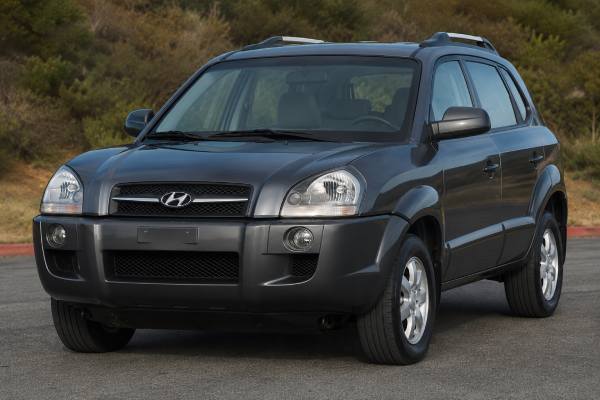
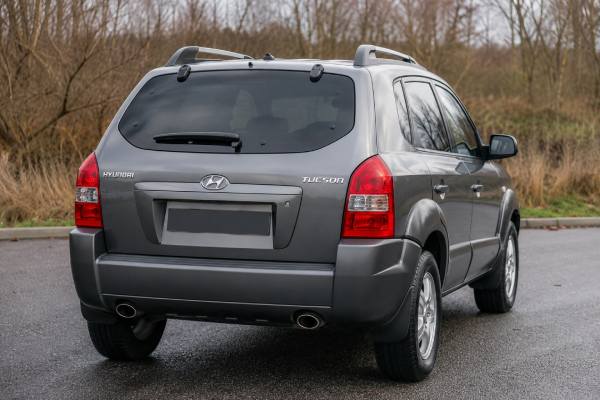
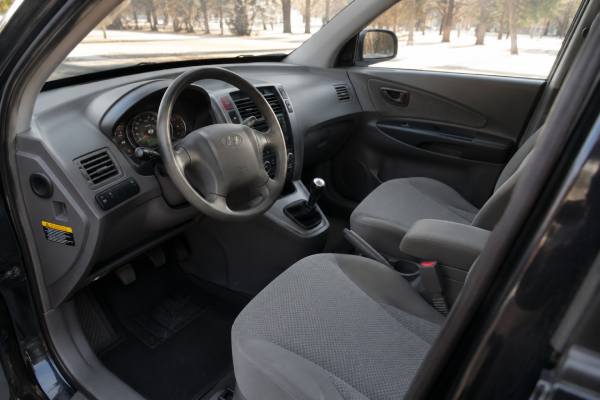
The 2005–2006 Hyundai Tucson FWD (JM) with the 2.0 CRDi diesel is a simple, practical compact SUV from the first Tucson generation. It is not fast, luxurious, or especially modern by today’s standards, but it offers a useful mix of diesel economy, easy cabin access, good cargo flexibility, and generally straightforward mechanicals.
This version matters most to used buyers who want an affordable diesel SUV without the extra weight and complexity of four-wheel drive. The key questions are condition, service history, timing belt evidence, corrosion, suspension wear, and whether the diesel fuel system has been looked after properly.
Final Verdict
The Hyundai Tucson JM 2.0 CRDi FWD is a sensible used buy when the price is right and the maintenance file is strong. Its main appeal is the combination of a roomy five-door SUV body, useful low-rpm diesel torque, and lower running costs than many petrol or 4WD versions. It suits drivers who want a simple commuter, family runabout, or light-duty utility vehicle rather than a refined modern crossover. The tradeoff is age-related wear: timing belt neglect, injector issues, rust, tired suspension, and worn brakes can quickly erase the low purchase price. Buy only after a cold start, underbody inspection, and proof of major services.
| Pros | Cons |
|---|---|
| 2.0 CRDi torque suits relaxed town and rural driving | 113 hp feels slow when fully loaded or overtaking |
| FWD layout avoids 4WD transfer and rear driveline upkeep | Less traction on mud, snow, and steep loose surfaces |
| Roomy cabin and square cargo bay for the vehicle size | Interior plastics and noise insulation feel dated today |
| D4EA diesel can last well with clean oil and fuel | Injectors, EGR, turbo hoses, and timing belt need attention |
| Simple mechanical package keeps many repairs manageable | Rust, suspension wear, and brake pipe corrosion are common age checks |
Table of Contents
- 2005–2006 Tucson JM CRDi overview
- Specifications and technical data
- Trims, options, safety and driver assistance
- Reliability, common issues and service actions
- Maintenance and buyer’s guide
- Driving, performance and fuel economy
- How the Tucson JM compares to rivals
2005–2006 Tucson JM CRDi overview
The 2.0 CRDi FWD Tucson is best understood as a rugged-feeling family crossover rather than a serious off-roader. In front-wheel-drive form, it gives up some all-weather traction but gains lower weight, lower fuel use, and fewer driveline parts to maintain.
The JM-generation Tucson arrived as Hyundai’s compact SUV offering, sharing much of its basic thinking with the related Kia Sportage of the same era. It used a tall five-door body, upright seating, a practical rear hatch, and simple suspension that was designed more for durability and comfort than sharp handling.
This article focuses on the diesel 2.0 CRDi front-wheel-drive version sold around 2005–2006, rated at about 113 hp depending on market notation. In many European listings this engine is shown as 112 PS or around 83 kW, while some markets round it to 113 hp. The important point is that this is the earlier lower-output CRDi, not the later 140 hp VGT version.
The FWD diesel appeals because it keeps the ownership formula fairly simple. There is no rear differential, prop shaft, transfer coupling, or 4WD lock system to inspect. That makes it a better choice for drivers who mainly use paved roads and want diesel economy more than rough-ground ability.
Its age now matters more than its original brochure position. A well-kept Tucson can still be a useful everyday vehicle, but neglected examples often need a chain of catch-up repairs: timing belt, brakes, suspension bushes, tyres, glow plugs, engine mounts, air-conditioning work, and corrosion repairs. The cheapest car on the market is rarely the cheapest one to own.
Look at this Tucson as a condition-led purchase. Mileage is less important than evidence of regular oil changes, clean coolant, proper belt replacement, decent tyres, and dry underbody seams. A 180,000 km example with invoices can be a better buy than a 110,000 km example with no history and a noisy cold start.
Specifications and technical data
The 2005–2006 Tucson 2.0 CRDi FWD uses a transverse four-cylinder common-rail diesel engine, a five-speed manual gearbox, and front-wheel drive. It is a compact SUV with five seats, a relatively boxy body, and useful boot space for its footprint. The numbers below reflect commonly published data for the early 113 hp diesel FWD JM Tucson; exact figures can vary slightly by market, trim, tyre size, and homologation method.
| Item | Specification |
|---|---|
| Engine | 2.0 CRDi diesel, D4EA family |
| Layout | Inline-4, 16-valve, common-rail diesel |
| Displacement | 1,991 cc (2.0 L) |
| Induction | Turbocharged; early lower-output versions use a simpler turbo setup |
| Maximum power | 113 hp / 83 kW at about 4,000 rpm |
| Maximum torque | 245 Nm (181 lb-ft) at about 1,800 rpm |
| Timing drive | Timing belt |
| Official combined economy | About 7.0 L/100 km (34 mpg US / 40 mpg UK) |
| CO₂ emissions | About 184 g/km where listed under European data |
| Item | Specification |
|---|---|
| Transmission | 5-speed manual |
| Drive type | Front-wheel drive |
| Clutch | Single dry clutch; inspect for slip, judder, and dual-mass flywheel noise where fitted |
| 4WD hardware | Not fitted on this FWD version |
| Item | Specification |
|---|---|
| Body style | 5-door compact SUV |
| Seats | 5 |
| Length | 4,325 mm (170.3 in) |
| Width | 1,795 mm (70.7 in), excluding mirrors |
| Height | 1,680 mm (66.1 in) |
| Wheelbase | 2,630 mm (103.5 in) |
| Turning circle | About 10.8 m |
| Curb weight | About 1,505 kg (3,318 lb) |
| Gross weight | About 2,120 kg (4,674 lb) |
| Fuel tank | 58 L (15.3 US gal) |
| Cargo volume | About 644 L, depending on measurement method |
| Metric | Figure |
|---|---|
| 0–100 km/h | About 13.1 seconds |
| Top speed | About 168 km/h (104 mph) |
| Urban fuel economy | About 9.1 L/100 km (26 mpg US / 31 mpg UK) |
| Extra-urban fuel economy | About 5.8 L/100 km (41 mpg US / 49 mpg UK) |
| Combined fuel economy | About 7.0 L/100 km (34 mpg US / 40 mpg UK) |
| Item | Practical reference |
|---|---|
| Engine oil | Commonly listed as 5W-30 or 5W-40 diesel-rated oil |
| Oil capacity | About 6.5 L with filter on many D4EA applications |
| Timing belt | Replace by official interval or immediately if history is missing |
| Brake fluid | Use the specification shown on reservoir cap and service manual |
| Manual gearbox oil | Confirm exact grade by VIN and gearbox code |
Trims, options, safety and driver assistance
Equipment on the Tucson JM varies heavily by country, so trim names matter less than the individual car’s fitted features. For this diesel FWD version, the most important checks are airbags, ABS/EBD, ESC availability, air conditioning, wheel size, and whether the car is truly FWD rather than a 4WD model being described loosely.
Trims and equipment to look for
In European and export markets, the Tucson was often sold with trim names such as JX, GL, GLS, CDX, Comfort, Style, or similar local grades. Base cars usually focused on value: cloth seats, manual or basic climate controls, steel or smaller alloy wheels, and fewer safety or comfort extras. Higher trims could add alloy wheels, side and curtain airbags, leather trim, sunroof, upgraded audio, roof rails, heated seats, and automatic climate control.
Useful quick identifiers include:
- FWD layout: no rear differential, no rear drive shafts, and no 4WD lock button.
- Diesel model: CRDi badging, diesel tachometer range, glow plug light, and diesel fuel filler labeling.
- Higher safety trim: side airbag labels on seat bolsters and curtain airbag markings near roof pillars.
- Factory alloys: often paired with higher trims, but wheels are easily swapped on old cars.
- Sunroof and leather: usually higher-trim indicators, but both add items to inspect for leaks and wear.
Mechanically, the big difference in the JM range is not the badge on the tailgate. It is the combination of engine output, gearbox, and drive system. The 113 hp CRDi FWD manual is simpler and lighter than diesel 4WD versions. Later 140 hp VGT models feel stronger but add more turbo control complexity and, in some versions, different gearbox or emissions hardware.
Safety ratings and crash-test context
The first-generation Tucson was respectable for its era but should not be judged against modern SUV standards. In period testing, the model achieved a four-star adult occupant result in Euro NCAP-era reporting, with weaker pedestrian protection by modern expectations. ANCAP data for the period also notes that the diesel left-hand-drive European model was tested by Euro NCAP and that Australasian specifications could vary.
A practical buyer should read these ratings with context. A 2005–2006 Tucson does not have the crash-avoidance technology, high-strength structure design, advanced airbag logic, or pedestrian protection expected from a current compact SUV. Its safety value depends heavily on condition: tyres, brakes, suspension, lights, seatbelts, airbags, and whether recall work has been completed.
Airbags, braking systems and child-seat provisions
Most market versions included dual front airbags and ABS with electronic brake-force distribution. Higher trims could add front side airbags and curtain airbags, but base models in some regions did not include all of them. Check the actual car, not just the brochure description.
The Tucson has three-point seatbelts for rear passengers in many markets and practical rear-door access for child seats. ISOFIX/LATCH availability depends on market specification, so inspect the rear seat base and owner documentation before assuming it is fitted.
Driver-assistance technology is minimal. Do not expect AEB, adaptive cruise control, lane keeping, blind-spot monitoring, traffic-sign recognition, or modern parking-camera systems from a factory 2005–2006 car. Parking sensors may be aftermarket or dealer-installed. ESC/ESP availability varies, and if fitted, the warning light should illuminate at key-on and go out after self-check.
Reliability, common issues and service actions
A well-maintained D4EA diesel Tucson can cover high mileage, but age now makes preventive maintenance more important than the brand’s reputation. The highest-risk cars are those with unclear timing belt history, poor diesel fuel quality, short-trip use, neglected oil changes, and visible underbody corrosion.
| Area | Prevalence | Cost risk | What to check |
|---|---|---|---|
| Timing belt system | Common age concern | High if neglected | Invoices for belt, tensioner, idlers, water pump |
| Injectors and fuel pressure control | Occasional | Medium to high | Cold start, smoke, rough idle, leak-back test |
| EGR and intake deposits | Common on short-trip diesels | Low to medium | Flat acceleration, smoke, limp mode, fault codes |
| Suspension bushes and links | Common with age | Low to medium | Knocks, wandering, uneven tyre wear |
| Brake corrosion and seized calipers | Common in wet climates | Medium | Dragging wheels, rusty discs, corroded brake pipes |
| Body and subframe corrosion | Market-dependent | Medium to high | Sills, arches, rear suspension mounts, brake lines |
Engine and diesel system problems
The D4EA 2.0 CRDi is generally a durable diesel when serviced correctly. It dislikes dirty oil, poor fuel, blocked filters, intake sludge, and extended belt intervals. On a test drive, it should start cleanly from cold, settle into an even idle, pull from low rpm without heavy smoke, and avoid warning lights under load.
Common symptoms and likely causes include:
- Hard cold starting: weak glow plugs, glow relay fault, low battery voltage, injector leak-back, or air entering the fuel system.
- Rough idle or diesel knock: injector wear, fuel pressure regulation issues, poor fuel quality, or EGR contamination.
- Black smoke under acceleration: boost leak, split intercooler hose, dirty air filter, sticking EGR valve, or tired injectors.
- Limp mode on hills: turbo control issue, vacuum leak, MAF/MAP sensor fault, clogged intake, or fuel delivery problem.
- Coolant loss or overheating: radiator age, thermostat, water pump, hoses, or poor maintenance after a timing belt job.
The turbo should spool smoothly. A faint whistle is not unusual, but siren-like noise, oil in intake pipes, heavy smoke, or boost drop under load needs investigation. Early lower-output CRDi models are usually less stressed than later high-output versions, but that does not excuse neglect.
Timing belt and cooling-system risk
The timing belt is one of the biggest buying points. If the seller cannot prove when it was replaced, budget for it immediately. A proper job should include the belt, tensioner, idlers, auxiliary belts, and usually the water pump while access is available.
Coolant condition matters too. Old coolant can accelerate corrosion, damage the water pump, and contribute to overheating. Look for clean coolant, no oil film in the expansion tank, a stable temperature gauge, and no pressure build-up from cold that might suggest combustion gas entering the cooling system.
Driveline, clutch and chassis wear
The FWD manual setup is simpler than the 4WD models, but the clutch, engine mounts, driveshafts, and gearbox still need checking. A healthy car should pull away cleanly without judder, engage gears without crunching, and avoid vibration under acceleration.
Check for:
- Clicking from outer CV joints on full-lock turns.
- Clutch slip in a high gear at low rpm.
- Flywheel rattle or vibration at idle, especially with the clutch engaged.
- Gear lever looseness or difficult second/third gear selection.
- Engine movement from worn mounts.
Suspension wear is common because these cars are tall, fairly heavy, and often used on rough roads. Front control-arm bushes, ball joints, anti-roll-bar links, rear trailing-arm bushes, wheel bearings, and shock absorbers are all routine inspection items. Uneven tyre wear can point to worn bushes or poor alignment.
Recalls and service actions
Recall coverage depends on country, production date, and VIN. In the United States, one important campaign covered certain 2005–2007 Tucson vehicles produced from July 30, 2004 through November 1, 2006 for driver airbag module replacement. Other market campaigns and safety notices can include lighting, parking brake, ESC-related, or brake switch concerns.
Do not assume a used import has had all work completed. Ask for dealer records and run the VIN through an official recall checker for the country where the vehicle is registered. A recall listed for a 2006 Tucson in one market may not apply to a European diesel FWD car, but open safety campaigns should never be ignored.
Maintenance and buyer’s guide
The best maintenance plan for this Tucson is conservative and simple: clean oil, clean filters, fresh coolant, fresh brake fluid, documented timing belt work, and regular underbody checks. At this age, time-based service matters as much as mileage-based service.
| Item | Suggested interval | Why it matters |
|---|---|---|
| Engine oil and filter | 10,000–15,000 km or yearly | Protects turbo, bearings, hydraulic lifters, and timing components |
| Air filter | 15,000–30,000 km | Prevents smoke, low boost, and MAF contamination |
| Fuel filter | 30,000–60,000 km | Protects common-rail injectors and high-pressure pump |
| Cabin filter | Yearly | Improves heater, demister, and air-conditioning performance |
| Timing belt kit | By official interval; sooner if history is unknown | Failure can cause major engine damage |
| Coolant | Every 2–5 years depending on coolant type | Protects radiator, water pump, heater core, and cylinder head |
| Brake fluid | Every 2 years | Reduces corrosion and maintains braking feel |
| Manual gearbox oil | 60,000–100,000 km as preventive service | Improves shift quality and bearing life |
| Auxiliary belts and hoses | Inspect yearly | Prevents charging, cooling, and power steering problems |
| Tyres, alignment, suspension | Inspect every service | Protects handling, braking, and tyre life |
| 12 V battery | Test yearly after 4 years | Weak voltage causes diesel starting and electrical issues |
Fluids, capacities and torque values
For the D4EA diesel, many service references list around 6.5 litres of oil with filter and common oil grades such as 5W-30 or 5W-40 in the correct diesel specification. The exact oil approval should be matched to climate, emission equipment, and the owner’s manual for the market.
Use the correct manual gearbox oil grade for the transaxle code, not a generic gear oil chosen by price. Brake fluid should match the reservoir cap and service manual. Coolant should be the correct ethylene-glycol type mixed at the proper concentration.
For torque values, avoid guessing from internet tables. Wheel-nut torque, drain-plug torque, brake fastener torque, suspension fasteners, and timing belt fasteners should be taken from service data for the exact VIN. This matters because old cars often suffer from stripped sump plugs, over-tightened wheel nuts, and reused stretch bolts.
Pre-purchase inspection checklist
Before buying, inspect the Tucson cold, not after the seller has warmed it up. A cold diesel reveals glow plug, injector, compression, fuel pressure, and smoke problems more honestly.
Prioritize these checks:
- Cold start: quick start, even idle, glow plug light behavior, no heavy smoke cloud.
- Service records: oil changes, timing belt kit, water pump, fuel filter, coolant, brake fluid.
- Underbody: sills, subframes, rear suspension mounts, brake pipes, fuel lines, jacking points.
- Engine bay: oil leaks, coolant stains, split boost hoses, injector blow-by, belt condition.
- Road test: clutch slip, gearbox selection, turbo response, steering pull, brake vibration.
- Electronics: ABS/airbag/ESC lights, window switches, central locking, heater fan, A/C.
- Tyres: matching size and load rating, even wear, no old cracked sidewalls.
- Interior: wet carpets, sunroof drains, tailgate leaks, seatbelt operation.
Best versions to seek and avoid
For low-cost ownership, the FWD 2.0 CRDi manual is one of the simpler Tucson JM choices. It avoids 4WD hardware and usually gives better economy than automatic or petrol V6 versions. Seek cars with higher safety equipment, working air conditioning, good tyres, and clear timing belt history.
Avoid cars with airbag lights, overheating signs, heavy diesel smoke, no belt records, severe rust, patched brake pipes, slipping clutch, or a seller who cannot explain basic maintenance. A cheap Tucson needing injectors, clutch, belt kit, tyres, brakes, and welding is no longer cheap.
Long-term durability is good only when the basics are respected. Mechanically, the platform can take mileage. Financially, repairs must still make sense compared with the value of the car.
Driving, performance and fuel economy
The 113 hp 2.0 CRDi Tucson drives like an old-school diesel SUV: flexible at low rpm, calm at moderate speeds, and slow when pushed hard. It works best when driven on torque rather than revved like a petrol engine.
Powertrain character
The engine’s useful torque arrives low in the rev range, so town driving is easy once the clutch is healthy. It pulls cleanly from around 1,700–2,000 rpm and feels most comfortable in the middle of the tachometer. There is some turbo lag by modern standards, and the engine becomes louder and less rewarding if revved hard.
The five-speed manual gearbox is adequate rather than slick. Expect a fairly long throw and modest refinement. A good gearbox should not crunch, jump out of gear, or whine loudly on overrun. If the clutch bite point is very high or the car judders badly when pulling away, budget for clutch and flywheel inspection.
Ride, handling and braking
Ride comfort is one of the Tucson’s better qualities when the suspension is fresh. The tall sidewalls used on smaller wheel packages help it cope with broken roads. Worn dampers, tired bushes, and cheap tyres can make it feel vague, noisy, and bouncy.
Handling is safe but not sharp. The body leans in corners, the steering is light, and the high centre of gravity reminds you that this is an SUV from the mid-2000s. It is happiest on ordinary roads, not rushed along twisty routes.
Braking performance depends heavily on maintenance. Old brake fluid, rusty rear discs, seized calipers, and budget tyres all reduce confidence. During a test drive, the pedal should feel firm, the car should stop straight, and there should be no steering-wheel shake during medium-to-hard braking.
Real-world fuel economy
Official combined economy is around 7.0 L/100 km, but real use usually depends on traffic, tyres, load, and engine condition. A healthy manual FWD diesel often returns:
- City driving: about 8.5–10.0 L/100 km (24–28 mpg US / 28–33 mpg UK).
- Steady highway driving: about 6.2–7.2 L/100 km (33–38 mpg US / 39–46 mpg UK).
- Mixed use: about 7.5–8.5 L/100 km (28–31 mpg US / 33–38 mpg UK).
Short winter trips can add noticeable consumption because the diesel warms slowly. A clogged thermostat, dragging brake, dirty air filter, old tyres, or injector issue can also push economy well above normal.
Load and light towing
The Tucson’s diesel torque helps with passengers, luggage, and modest loads, but this 113 hp version is not a strong towing vehicle. It can manage light-duty work if properly equipped and legally rated in the local market, yet hills, headwinds, and heavy trailers expose the limited power.
When loaded, allow more distance for overtaking and braking. Keep cooling system health high, use correct tyres, and avoid buying a car that has spent years towing without evidence of clutch, brake, and cooling maintenance.
How the Tucson JM compares to rivals
The Tucson 2.0 CRDi FWD competes best on value, space, and mechanical simplicity. It is usually less polished than a Honda CR-V, less sharp than a Toyota RAV4, and less rugged than some 4WD rivals, but it can be a sensible buy when condition and price are right.
| Rival | Where it beats the Tucson | Where the Tucson can make more sense |
|---|---|---|
| Kia Sportage 2.0 CRDi | Very similar package, sometimes better local availability | Shared platform means buying on condition and price |
| Toyota RAV4 D-4D | Stronger image, sharper drive, strong reliability reputation | Tucson can be cheaper and more spacious for the money |
| Honda CR-V 2.2 i-CTDi | More refined cabin, better road manners, strong diesel engine | Tucson is simpler, cheaper, and easier to buy at low budgets |
| Nissan X-Trail 2.2 dCi | More practical boxy load space and stronger outdoor image | Tucson FWD avoids some 4WD running-gear complexity |
| Suzuki Grand Vitara 1.9 DDiS | Better off-road credibility in 4×4 form | Tucson is more road-focused and usually easier as a daily driver |
The Kia Sportage is the closest rival because it shares much of the same era, market position, and diesel ownership reality. Choose between them based on rust, service history, engine condition, safety equipment, and parts availability.
The Toyota RAV4 and Honda CR-V are usually more desirable, but that often means higher prices. At the bottom of the used market, a neglected Toyota or Honda can cost more to rescue than a well-kept Hyundai. Condition beats badge.
The Nissan X-Trail is more utilitarian and often appeals to buyers who need a boxier cargo area. The Suzuki Grand Vitara is the better choice for true rough-road needs, especially in proper 4×4 specification, but it is not automatically cheaper to run.
For most buyers considering this exact Tucson, the deciding point is simple: choose it if you want an affordable, practical diesel SUV for road use and can verify the maintenance. Skip it if you need modern safety tech, strong performance, refined motorway manners, or reliable off-road traction.
References
- HYUNDAI 2006 TUCSON OWNER’S MANUAL Pdf Download | ManualsLib 2006 (Owner’s Manual)
- Hyundai Tucson 2004 2.0 CRDi 2WD (2004 – 2009) reviews, technical data, prices 2004 (Technical Data)
- Hyundai Tucson | Safety Rating & Report | ANCAP 2006 (Safety Rating)
- MOTOR VEHICLE RECALL 2006 (Recall Database)
- Hyundai – Recalls 2026 (Official VIN Recall Check)
Disclaimer
This article is for informational purposes only and is not a substitute for professional diagnosis, inspection, repair, or official service information. Specifications, torque values, fluid capacities, service intervals, safety equipment, emissions hardware, and procedures can vary by VIN, market, model year, trim, and previous repairs. Always verify critical information against the official owner’s manual, service documentation, parts catalog, and qualified technician guidance for the exact vehicle.
If this guide helped you, please share it on Facebook, X/Twitter, or your preferred car community to support our work.