
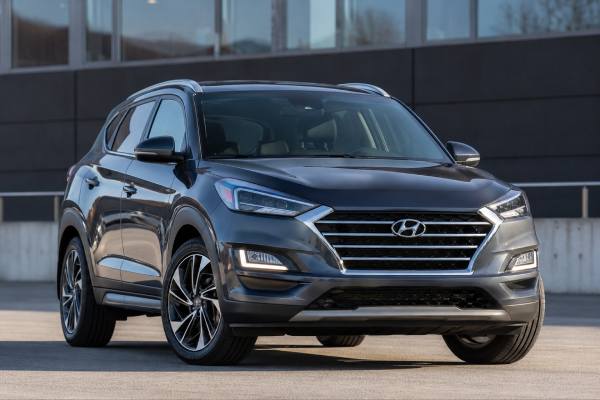
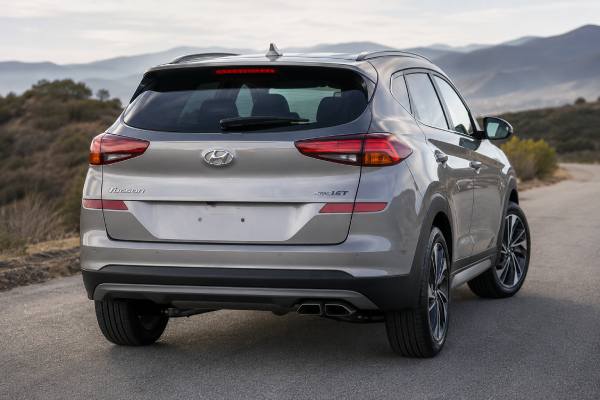
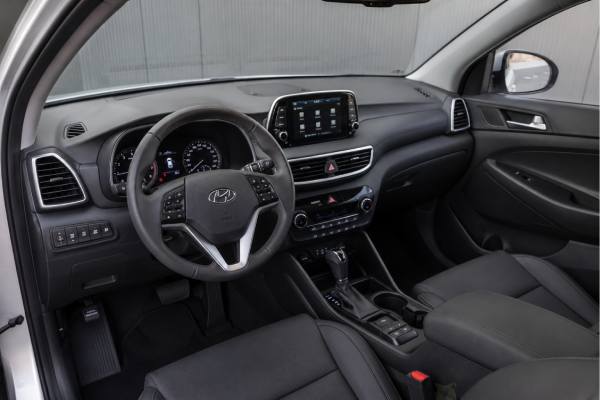
The facelifted Hyundai Tucson TL with the 1.6 CRDi 136 hp diesel and HTRAC AWD sits in a useful middle ground. It is more economical than the older 2.0 CRDi, more flexible than the 115 hp front-wheel-drive diesel, and better suited to winter roads than the basic 2WD versions. For European buyers especially, it is a practical family SUV with sensible running costs, a roomy cabin, and enough torque for commuting, holidays, and light towing.
The main thing to understand is that this Tucson is not a fast SUV, and the diesel emissions system needs the right use pattern. It rewards regular servicing and longer drives, but short urban trips can create DPF, EGR, and AdBlue-related costs.
Final Verdict
The Hyundai Tucson TL facelift 1.6 CRDi 136 hp HTRAC AWD is a strong used choice for drivers who want a comfortable, spacious diesel SUV with secure all-weather traction and reasonable fuel use. It suits families, motorway commuters, rural drivers, and buyers who value practicality over sharp performance. Its main tradeoff is maintenance sensitivity: the diesel emissions system, timing-belt engine, AWD hardware, and 7-speed DCT on automatic versions all need proper service history. Buy one only with documented maintenance, completed recall checks, clean DPF behaviour, and smooth clutch or DCT operation.
| Pros | Cons |
|---|---|
| 136 hp diesel has useful torque for daily SUV driving | Acceleration is modest, especially with AWD and DCT |
| HTRAC AWD improves winter and wet-road confidence | AWD adds weight, fuel use, and extra driveline servicing |
| Roomy cabin and large boot suit family use well | 19-inch wheels can make the ride firmer and noisier |
| Good safety equipment on facelift European models | ADAS calibration matters after windscreen or front-end repairs |
| Diesel economy is strong on longer mixed journeys | Short urban trips can cause DPF and AdBlue issues |
| Parts supply is generally good across Europe | Recall and oil-pump campaign history must be verified |
Table of Contents
- Tucson TL Diesel AWD Overview
- Specifications and Technical Data
- Trims, Options, Safety and ADAS
- Reliability, Common Issues and Recalls
- Maintenance and Used Buying Guide
- Driving, Performance and Fuel Economy
- How the Tucson Compares to Rivals
Tucson TL Diesel AWD Overview
The 2018–2019 facelifted Tucson TL 1.6 CRDi HTRAC AWD is best understood as a practical compact SUV rather than a performance-focused diesel. Its appeal is the mix of torque, space, road comfort, safety equipment, and AWD security in a package that is still manageable in town.
This version replaced much of the earlier 1.7 CRDi and 2.0 CRDi overlap in European markets. The 1.6 CRDi 136 hp engine, commonly identified as Hyundai’s D4FE Smartstream diesel family, brought a newer emissions package, lower official consumption, and enough pulling power for normal family use. It produces 320 Nm of torque, which matters more than the headline horsepower in daily driving.
HTRAC is Hyundai’s electronically controlled all-wheel-drive system. In normal conditions it behaves mostly like a front-biased SUV, then sends torque rearward when the system detects slip or when the driver demands more traction. There is also a lock-style mode at low speeds on many versions, useful for snow, mud, wet grass, or steep loose surfaces. It is not a hard-core off-road system, but it is a meaningful upgrade over front-wheel drive in winter climates.
Depending on market and trim, this engine could be paired with a 6-speed manual gearbox or a 7-speed dual-clutch automatic. The manual is usually simpler and cheaper to maintain. The 7DCT is easier in traffic and suits higher trims, but it must be checked carefully for low-speed judder, delayed engagement, or poor service history.
The facelift also brought sharper exterior styling, improved infotainment availability, better driver-assistance equipment, and more mature trim packaging. In some late-2019 and 2020 listings, the same 1.6 CRDi 136 hp output appears with 48V mild-hybrid hardware. That is a related but slightly different ownership case. This guide focuses on the conventional 2018–2019 facelift 1.6 CRDi 136 hp HTRAC AWD unless a car’s documents clearly state it is a 48V mild hybrid.
For used buyers, the right Tucson is one with a clean service record, no unresolved recalls, healthy DPF regeneration, no AdBlue warning countdowns, and smooth driveline behaviour. Mileage alone is less important than how the car was used. A 120,000 km example that has lived on long motorway trips may be healthier than a lower-mileage car used only for short school runs.
Specifications and Technical Data
The Tucson TL facelift 1.6 CRDi HTRAC AWD uses a transverse four-cylinder diesel engine, front-biased on-demand AWD, and either a 6-speed manual or 7-speed DCT depending on market and equipment. The most important figures are the 320 Nm torque output, the 62-litre fuel tank, the 1,600 kg braked towing rating, and the added weight of AWD hardware.
Powertrain and efficiency
| Item | Hyundai Tucson TL facelift 1.6 CRDi 136 AWD |
|---|---|
| Engine family/code | Smartstream D1.6 CRDi, commonly D4FE |
| Fuel type | Diesel |
| Layout | Inline-4, transverse front engine |
| Displacement | 1.6 litres, 1,598 cc |
| Valvetrain | DOHC, 16 valves |
| Induction | Turbocharged and intercooled |
| Fuel system | Common-rail direct injection |
| Power | 136 PS / 100 kW at 4,000 rpm |
| Torque | 320 Nm / 236 lb-ft at about 2,000–2,250 rpm |
| Bore × stroke | 77.0 × 85.8 mm |
| Compression ratio | About 15.9:1 |
| Timing drive | Timing belt system, not a maintenance-free chain |
| Emissions equipment | DPF; SCR/AdBlue on many Euro 6d-TEMP European cars |
| Official combined economy | About 5.2 L/100 km, depending on gearbox and tyres |
| CO₂ emissions | About 138 g/km on AWD DCT data sets |
Transmission and driveline
| Item | Specification or practical note |
|---|---|
| Manual gearbox | 6-speed manual, available in some AWD markets |
| Automatic gearbox | 7-speed dual-clutch transmission on many higher-spec cars |
| Drive type | On-demand all-wheel drive |
| AWD name | Hyundai HTRAC |
| AWD behaviour | Front-biased in normal use, rear torque added when needed |
| Useful traction aids | ESC, hill-start assist, downhill brake control, trailer stability assist |
| DCT ownership note | Check for smooth take-up, no shudder, and clean software history |
Dimensions, capacities and chassis
| Item | Value |
|---|---|
| Body style | 5-door compact SUV |
| Seats | 5 |
| Length | About 4,475–4,480 mm |
| Width | 1,850 mm excluding mirrors |
| Height | About 1,650–1,655 mm depending on tyres and roof rails |
| Wheelbase | 2,670 mm |
| Ground clearance | About 172 mm |
| Turning circle | About 10.6 m |
| Suspension | MacPherson strut front, multi-link rear |
| Boot capacity | About 513 litres seats up, 1,503 litres seats folded |
| Fuel tank | 62 litres |
| AdBlue tank | About 14 litres where SCR is fitted |
| Kerb weight | Roughly 1,580–1,760 kg depending on gearbox and trim |
Performance, towing and wheels
| Item | Value or note |
|---|---|
| 0–100 km/h | About 11.4–12.0 seconds depending on gearbox |
| Top speed | About 180 km/h / 112 mph |
| Braked towing capacity | Up to 1,600 kg |
| Unbraked towing capacity | 750 kg |
| Maximum roof load | 100 kg |
| Common tyre sizes | 225/60 R17, 225/55 R18, 245/45 R19 |
| Brake layout | Ventilated front discs, rear discs |
| Wheel-nut torque | Typically 108–127 Nm; verify by VIN documentation |
Quick service reference
| Item | Practical value |
|---|---|
| Engine oil capacity | About 4.4 litres with filter |
| Oil type | Low-SAPS diesel oil matching Hyundai approval and VIN market |
| Coolant capacity | About 7.5 litres |
| Brake fluid | DOT fluid to Hyundai specification; replace by time interval |
| DCT fluid | Use Hyundai/Kia-approved DCT fluid only |
| Rear differential/AWD oil | Use the exact Hyundai specification for AWD hardware |
| Timing system | Belt-driven; interval must be confirmed from VIN service data |
Trims, Options, Safety and ADAS
Equipment varies heavily by country, but the facelifted TL generally offered stronger safety and infotainment equipment than early 2015–2017 cars. The most desirable used examples combine the 136 hp diesel, HTRAC AWD, heated seats, navigation, camera systems, and a complete driver-assistance package.
In the UK, the facelift trim structure included grades such as S Connect, SE Nav, Premium, and Premium SE. Continental European markets often used names such as Comfort, Trend, Style, Executive, Premium, or N Line depending on country. The names matter less than the actual build sheet.
Trim and option identifiers
Quick ways to identify a better-equipped Tucson include:
- HTRAC or AWD badging on the tailgate, plus a rear differential visible underneath.
- DCT selector and Auto Hold on automatic versions.
- 17-, 18-, or 19-inch alloys, with 19-inch wheels usually linked to higher trims.
- 8-inch navigation screen rather than the simpler display audio unit.
- Krell audio, wireless charging, leather-faced seats, and electric front seats on higher grades.
- Panoramic sunroof, smart tailgate, heated steering wheel, and ventilated front seats on top trims.
- Front radar and windscreen camera equipment for higher ADAS functionality.
Mechanical differences are not huge, but they matter. The AWD system adds rear driveline hardware and extra fluid-service points. The DCT changes the driving character and future repair risk compared with the manual. Wheel size also changes comfort: 17-inch tyres give the best ride and cheapest replacements, 18-inch wheels are a good compromise, and 19-inch wheels look good but can make the Tucson feel firmer over broken roads.
Safety ratings
The third-generation Tucson was awarded a five-star Euro NCAP result under the 2015 test protocol. The published category scores were 86% for adult occupant protection, 85% for child occupant protection, 71% for pedestrian protection, and 71% for safety assist.
That is a strong result for its period, but it should not be read as equal to a five-star rating under newer Euro NCAP rules. Modern testing places more weight on advanced driver assistance, vulnerable road-user detection, lane support, and crash compatibility. A 2018–2019 Tucson facelift is safe by compact SUV standards of its era, but newer SUVs have moved the active-safety benchmark forward.
Safety systems and driver assistance
Typical facelift equipment included front, front-side, and curtain airbags; ABS; brake assist; electronic stability control; vehicle stability management; hill-start assist; downhill brake control; tyre-pressure monitoring; trailer stability assist; and ISOFIX child-seat points on the outer rear seats.
Many European facelift cars also included:
- Autonomous emergency braking
- Lane keep assist
- Driver attention alert
- Speed limit information
- Blind spot detection on higher trims
- Rear cross-traffic alert on higher trims
- Adaptive cruise control with stop-and-go on selected DCT versions
- Around-view monitor on top trims
ADAS condition matters when buying. A replaced windscreen, repaired front bumper, changed radar bracket, or front crash repair can affect calibration. Warning lights are not the only clue. On a test drive, check that lane assist, cruise control, parking sensors, blind spot alerts, and the rear camera behave consistently. If the car has had bodywork near the front camera or radar, ask for calibration proof.
Reliability, Common Issues and Recalls
A well-maintained Tucson 1.6 CRDi can be durable, but it is not a neglect-tolerant old diesel. The main risks are emissions-system problems from short-trip use, DCT wear on automatic cars, timing-belt or oil-supply concerns if maintenance is poor, and unresolved recall work.
| Issue | Prevalence | Severity | Typical signs |
|---|---|---|---|
| DPF regeneration trouble | Common in short-trip cars | Medium | Warning lights, rising oil level, frequent fan running |
| EGR or intake deposits | Occasional | Medium | Hesitation, poor cold running, fault codes |
| NOx or AdBlue faults | Occasional | Medium | Countdown warnings, emissions lights, limp mode |
| 7DCT clutch judder | Occasional | Medium to high | Shudder, delayed take-up, harsh low-speed manoeuvres |
| Rear driveline fluid neglect | Occasional | Medium | Whine, binding, vibration, poor AWD engagement |
| Oil supply campaign issues | VIN-dependent | High | Engine warning, noise, brake-booster assistance concerns |
| ABS/ESC module recall | Market-dependent | High | Recall notice, ABS warnings, fire-risk campaign |
Diesel emissions and short-trip use
The diesel particulate filter needs regular heat to burn off soot. A Tucson used mainly for short urban journeys may not complete regeneration cycles. Early signs include more frequent cooling-fan operation after stopping, fuel dilution, DPF warning messages, higher fuel use, or a car that feels flat.
The best remedy is not simply clearing fault codes. The technician should check soot loading, differential pressure sensor values, EGR operation, thermostat performance, injector correction values, and whether the car is reaching proper operating temperature. A forced regeneration may help only if the underlying cause has been fixed.
SCR and AdBlue equipment also need attention. Low-quality AdBlue, crystallisation around the filler or injector, NOx sensor faults, and wiring issues can trigger countdown messages. Never buy a car with an active AdBlue countdown unless the price reflects a confirmed repair plan.
DCT and manual gearbox issues
The 7-speed DCT suits light throttle driving and motorway cruising, but it can wear if used like a torque-converter automatic in stop-start traffic. A healthy DCT should pull away cleanly, creep predictably, and shift without flaring or banging. Repeated shudder when parking, reversing uphill, or inching in traffic points toward clutch adaptation issues, software needs, or clutch wear.
Manual cars avoid DCT complexity, but they are not immune from clutch wear. Check for clutch slip in higher gears, a high biting point, pedal noise, dual-mass flywheel vibration, and difficulty selecting gears when hot.
Timing belt and oil-supply concerns
The D4FE 1.6 CRDi uses a timing-belt design rather than the older assumption of a chain. That makes verified timing-belt information important. Intervals vary by market and service document, so a buyer should not rely on hearsay. Age matters as much as mileage, especially where the car has had long oil intervals, contaminated oil, or uncertain history.
Some European Tucson diesels built around late 2018 to 2020 were also affected by oil-supply related recall action, with official notices describing possible interruption of engine oil supply and possible brake-booster impact. For a 2018–2019 car, this is one of the most important VIN checks.
AWD, suspension and corrosion checks
The HTRAC system itself is usually not troublesome when serviced, but neglect can be expensive. Listen for rear differential whine, clunks when changing direction, vibration under load, and binding on tight turns. Check rear differential, coupling, propshaft, and CV boots for leaks or damage.
Suspension wear is normal as mileage rises. Front drop links, control-arm bushes, rear suspension bushes, wheel bearings, and top mounts are worth checking around 80,000–140,000 km depending on roads and tyre size. Cars on 19-inch wheels tend to stress tyres and suspension more than cars on 17s or 18s.
Corrosion is not usually the Tucson’s biggest weakness, but salted-road cars need inspection. Look underneath at rear subframe areas, suspension mounting points, brake pipes, exhaust brackets, rear arms, and the lower edges of doors and tailgate.
Recalls and service actions to verify
Do not assume a recall is complete because the car has dealer stamps. Ask for a VIN printout from Hyundai or use the official market recall checker.
Important recall and campaign themes to verify include:
- ABS/ESC module short-circuit or fire-risk campaigns in some markets.
- Oil-supply and tandem-pump related campaign work on affected diesel cars.
- Curtain airbag installation checks on some Tucson vehicles.
- Brake pedal or brake booster push-rod checks on limited affected vehicles.
- Any market-specific emissions, software, or DCT calibration updates.
A clean pre-purchase inspection should include an OBD scan of the engine, transmission, AWD, ABS, airbag, and ADAS modules. A generic engine-only scan is not enough.
Maintenance and Used Buying Guide
The safest ownership plan is to service this Tucson more conservatively than the longest official interval. Diesel emissions hardware, a timing belt, AWD components, and the DCT all benefit from fresh fluids and early fault diagnosis.
| Item | Practical interval | Why it matters |
|---|---|---|
| Engine oil and filter | Every 10,000–15,000 km or 12 months | Protects turbo, timing system, DPF health, and oil-control parts |
| Engine air filter | Every 30,000 km, sooner in dust | Helps turbo and MAF readings stay healthy |
| Cabin filter | Every 12 months | Maintains airflow and demisting performance |
| Fuel filter | Every 30,000–60,000 km | Protects high-pressure diesel injection components |
| Brake fluid | Every 2 years | Prevents moisture-related braking and ABS problems |
| Coolant | About 100,000 km first, then shorter repeat intervals | Protects cooling system, EGR cooler, and heater performance |
| DCT fluid | Consider 60,000–80,000 km in real use | Helps shift quality and long-term gearbox durability |
| Manual gearbox oil | Inspect for leaks; refresh around 80,000–100,000 km | Cheap insurance on higher-mileage cars |
| Rear differential and AWD oils | About 60,000–80,000 km for severe use | Protects HTRAC coupling and rear driveline |
| Timing belt system | Verify VIN interval; plan age-based replacement | D4FE is belt-driven and not maintenance-free |
| Auxiliary belts and hoses | Inspect yearly after 5 years | Prevents cooling, charging, and roadside failures |
| Tyre rotation and alignment | Every 10,000–15,000 km | Protects AWD tyres and prevents uneven wear |
| 12 V battery | Test yearly after 4 years | Weak batteries cause electronic and stop-start faults |
| AdBlue system | Top up with fresh fluid; inspect at service | Prevents countdown warnings and SCR faults |
Pre-purchase inspection checklist
Before buying, check the car cold, warm, stationary, and on the road. A short test drive around the block is not enough for a modern diesel SUV.
Focus on these items:
- Full service history with oil changes at least yearly.
- Hyundai recall printout showing completed campaigns.
- DPF soot level, regeneration history, and no emissions warning lights.
- No AdBlue countdown, crystallisation, or repeated NOx sensor faults.
- Smooth DCT take-up or clean manual clutch engagement.
- No engine rattle, oil-pressure warning, turbo whistle, or boost leaks.
- No coolant smell, coolant loss, or heater weakness.
- Matching tyres across each axle, preferably all four on AWD cars.
- No rear differential whine or tight-turn binding.
- No accident signs around radar, windscreen camera, bumper, or front crash structure.
- Working camera, parking sensors, blind spot monitoring, lane assist, and cruise control.
- Dry boot floor and spare-wheel area, with no tailgate water ingress.
Best versions to seek
The best buy is usually a mid-to-high trim with 17- or 18-inch wheels, proper safety equipment, complete servicing, and motorway-heavy usage. A manual AWD car is appealing if you want lower long-term gearbox risk. A DCT car is fine if it drives smoothly and has not spent its life crawling through traffic.
Be cautious with the cheapest high-spec cars on 19-inch wheels, especially if they have patchy history. Luxury equipment is nice, but a clean DPF, serviced AWD system, and completed recalls are more important than a panoramic roof or premium audio.
Long-term durability is good when maintenance is consistent. The Tucson’s body, cabin, and basic chassis age well, and parts supply is generally strong. The expensive failures usually come from ignored warning signs, poor diesel use patterns, or missed campaign work.
Driving, Performance and Fuel Economy
The Tucson 1.6 CRDi 136 HTRAC AWD feels relaxed rather than quick. Its torque makes it easy to drive at normal speeds, but the extra AWD weight means it is not as lively as the front-wheel-drive 136 hp version.
At low rpm, the engine pulls cleanly once the turbo is awake. It is happiest between about 1,800 and 3,000 rpm, where the 320 Nm torque band gives enough response for roundabouts, hills, and motorway slip roads. Below that, there can be a short wait for boost, especially with a loaded car.
The manual gearbox gives the driver more control on hills and in snow. The 7DCT feels more polished on the open road, shifting quickly and keeping engine revs low. In city traffic, however, it can feel less natural than a torque-converter automatic. Repeated low-speed creep, reversing uphill, and stop-start congestion are the situations that expose clutch wear or poor calibration.
Ride, handling and noise
Ride comfort is one of the Tucson’s strengths, especially on 17- or 18-inch wheels. The suspension is tuned for stability and comfort rather than sporty response. It feels planted on motorways and secure in bad weather, with predictable steering and good straight-line confidence.
The handling is safe and neutral. Push harder and the Tucson leans more than a lower estate car, but it does not feel vague or unstable. HTRAC helps most when accelerating on wet roads or climbing slippery gradients. It does not turn the Tucson into an off-roader, but it reduces wheelspin and gives the driver more confidence on poor surfaces.
Cabin noise is reasonable for a diesel compact SUV of this period. The engine is audible when cold or under load, but it settles at cruising speed. Tyre noise increases with wider 19-inch tyres, and worn budget tyres can make the cabin feel much less refined.
Real-world fuel economy
Official figures around 5.2 L/100 km are possible only in favourable use. In normal mixed driving, most owners should expect about 6.0–7.2 L/100 km. Careful motorway driving can sit in the high-5s to low-6s, while city-heavy use can climb toward 7.5–8.0 L/100 km.
In imperial terms, realistic mixed economy is roughly 39–47 mpg US or 47–56 mpg UK, depending on road type, tyre size, gearbox, weather, and driving style. Winter use, short trips, roof bars, and towing can raise consumption noticeably.
For towing, the 1.6 CRDi is acceptable rather than effortless. The 1,600 kg braked rating is useful, but a fully loaded trailer will make the engine work. Expect much higher fuel use on gradients and leave more space for braking. For regular heavy towing, the older 2.0 CRDi or a larger SUV may feel more relaxed.
How the Tucson Compares to Rivals
The Tucson’s strongest rivals are the Kia Sportage, Volkswagen Tiguan, Nissan Qashqai, Mazda CX-5, Peugeot 3008, and Toyota RAV4. The Hyundai is not the sharpest to drive or the most premium inside, but it is one of the more balanced choices when price, space, warranty history, diesel economy, and equipment are considered.
| Rival | Where the Tucson is stronger | Where the rival may be better |
|---|---|---|
| Kia Sportage 1.6 CRDi AWD | Very similar package; Tucson styling and trim may suit some buyers | Sportage availability and warranty history may be stronger in some markets |
| Volkswagen Tiguan 2.0 TDI 4Motion | Usually better value and generous equipment | Tiguan feels more premium and stronger with 2.0 TDI power |
| Nissan Qashqai dCi AWD | Roomier cabin and stronger towing-friendly SUV feel | Qashqai can feel lighter and easier in tight urban use |
| Mazda CX-5 2.2D AWD | Simpler cabin controls and often lower purchase price | Mazda drives more sharply and has stronger diesel performance |
| Peugeot 3008 diesel | Available with true mechanical AWD in this Tucson form | 3008 has a more stylish cabin and lower fuel use in 2WD form |
| Toyota RAV4 Hybrid AWD | Diesel torque and towing feel can be better on long trips | RAV4 hybrid is better for urban use and avoids diesel DPF issues |
Against the Kia Sportage, the decision often comes down to condition, service history, price, and personal preference. They share much of the same engineering approach, so buy the better individual car rather than the badge.
Against the Tiguan, the Tucson usually wins on value. The VW feels more expensive inside and often has stronger 2.0 TDI performance, but it can cost more to buy and maintain. A clean Tucson with the right history can be the more sensible family purchase.
Against hybrid rivals, the Tucson diesel makes most sense for longer journeys. If your driving is mostly city-based, a petrol hybrid will usually be easier to live with and kinder to its emissions system. If your driving includes regular motorway trips, rural routes, winter roads, and occasional towing, the 1.6 CRDi HTRAC AWD remains a practical and economical choice.
References
- Hyundai Tucson – Technical data and dimensions 2018 (Manufacturer Technical Data)
- Hyundai Tucson III (facelift 2018) 1.6 CRDi (136 Hp) AWD DCT | Technical specs, data, fuel consumption, Dimensions 2018 (Technical Specifications)
- Hyundai Tucson – Euro NCAP Results 2015 2015 (Safety Rating)
- Home | Hyundai Recalls & Service Campaigns 2026 (Recall Database)
- REC-000603 – Hyundai Motor Company – HYUNDAI TUCSON 2014 – 2020 | Vehicle Recalls 2021 (Recall Database)
Disclaimer
This article is for informational purposes only and is not a substitute for professional diagnosis, repair, or vehicle inspection. Specifications, torque values, service intervals, fluid requirements, recall eligibility, and repair procedures can vary by VIN, market, equipment level, software version, and production date. Always verify details against the official Hyundai service documentation for the exact vehicle.
If this guide helped you, please consider sharing it on Facebook, X/Twitter, or another platform to support our work.