
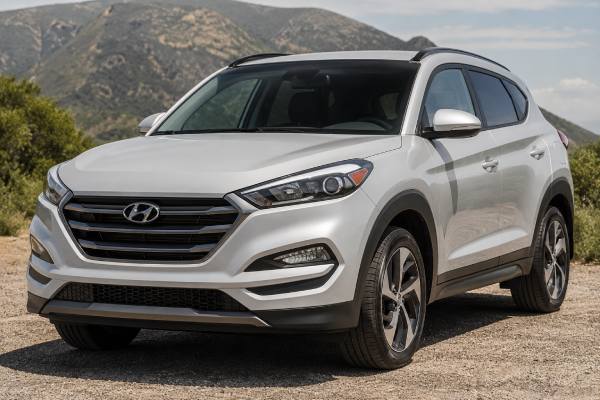
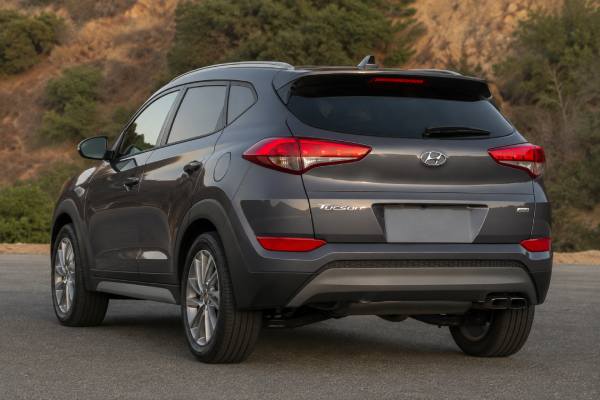
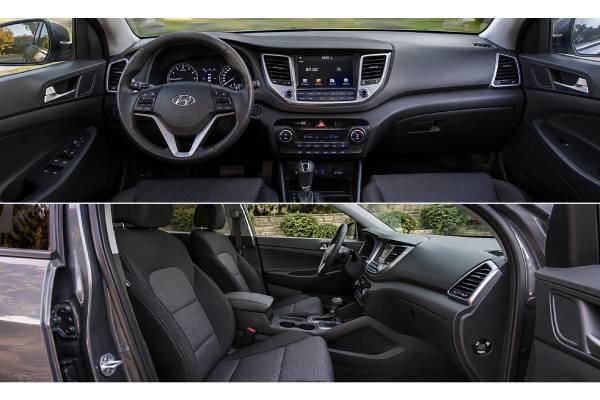
The facelifted Hyundai Tucson TL with the 1.6 CRDi 136 hp diesel engine is a practical family SUV aimed at drivers who want useful torque, sensible fuel economy, a roomy cabin, and lower running costs than larger diesel SUVs. In front-wheel-drive form, it is lighter and simpler than the AWD versions, while still offering enough pulling power for everyday use and moderate towing.
This version is most relevant to European and UK buyers looking at 2018 and 2019 cars. It sits in the sweet spot of the facelift range: stronger than the lower-output 1.6 CRDi, less complex than the 2.0 CRDi mild hybrid AWD, and more economical than the petrol alternatives when used for regular longer journeys.
Final Verdict
The Hyundai Tucson FWD (TL) 1.6 CRDi 136 hp is a good used choice for drivers who want a comfortable, roomy diesel SUV without the extra weight and servicing complexity of all-wheel drive. Its strongest appeal is the blend of 320 Nm torque, practical cargo space, good safety equipment, and generally sensible fuel use. It suits commuters, small families, and high-mileage owners better than short-trip city drivers. The main tradeoff is diesel emissions-system sensitivity, especially DPF, EGR, and AdBlue/DEF faults if the car is used mainly for short journeys. Buy one only with clear service history, completed recall checks, and evidence of correct low-ash oil use.
| Pros | Cons |
|---|---|
| Strong 320 Nm torque suits motorway use and family loads | Short urban trips can clog the DPF and stress emissions hardware |
| FWD layout is lighter and simpler than AWD versions | No AWD traction advantage on snow, mud, or steep loose surfaces |
| Spacious cabin and up to 1,503 litres of cargo room | Ride quality is firmer on 18- and 19-inch wheel packages |
| Facelift brought useful safety and infotainment improvements | ADAS availability depends heavily on trim and market |
| Manual version offers 1,400 kg braked towing capacity | DCT version is smoother in traffic but needs careful inspection |
Table of Contents
- Detailed Overview of the Tucson 1.6 CRDi FWD
- Specifications and Technical Data
- Trims, Options, Safety and Driver Assistance
- Reliability, Common Issues and Service Actions
- Maintenance and Buyer’s Guide
- Driving and Performance
- How the Tucson Compares to Rivals
Detailed Overview of the Tucson 1.6 CRDi FWD
The 2018–2019 Tucson TL facelift 1.6 CRDi 136 hp FWD is best understood as a comfortable, practical diesel crossover rather than a sporty SUV. Its key strengths are cabin space, relaxed torque delivery, reasonable fuel use, and straightforward front-wheel-drive packaging.
The facelift arrived with sharper exterior styling, updated lighting, revised interior details, improved infotainment on many trims, and broader availability of active safety systems. The 1.6 CRDi diesel replaced or supplemented older diesel options in many markets and brought Euro 6d-TEMP compliance, diesel particulate filtration, and AdBlue/DEF aftertreatment on relevant versions.
This article focuses on the non-mild-hybrid 1.6 CRDi 136 hp front-wheel-drive Tucson TL facelift sold around 2018 and 2019. In many markets, it was available with either a 6-speed manual gearbox or a 7-speed dual-clutch transmission. The manual is mechanically simple and suits buyers who cover longer trips. The DCT is easier in traffic but should be checked carefully for smooth take-up, clutch judder, hesitation, and evidence of correct servicing.
The engine is the Hyundai-Kia D4FE 1.6-litre common-rail diesel. It produces 136 PS, equal to about 134 hp in mechanical horsepower terms, and 320 Nm of torque. The torque peak arrives low in the rev range, so the car feels stronger in normal driving than the modest horsepower figure suggests. It is not quick by modern SUV standards, but it is calm at motorway speeds and capable of carrying passengers without feeling strained.
The FWD setup is a major part of the appeal. It keeps weight down, reduces driveline service items, and slightly improves efficiency compared with AWD diesel versions. For most paved-road family use, that is the better compromise. The limitation is traction: wet grass, steep gravel, snow, and muddy rural lanes can expose the lack of rear-drive assistance, especially on worn tyres.
As a used buy, this Tucson makes the most sense for owners who regularly drive long enough for the diesel particulate filter to regenerate. A buyer doing mostly five-minute trips, school runs, and cold starts should look carefully at petrol or hybrid alternatives. Diesel economy only pays back when the engine reaches temperature often and the emissions system is allowed to complete its cleaning cycles.
Specifications and Technical Data
The Tucson TL facelift 1.6 CRDi FWD uses a transverse 1.6-litre four-cylinder diesel engine driving the front wheels. The important technical points are the 320 Nm torque output, Euro 6d-TEMP emissions equipment, 6-speed manual or 7-speed DCT availability, and the simpler layout compared with AWD versions. The tables below focus on useful, confirmable data for the 136 hp front-wheel-drive diesel.
| Item | Hyundai Tucson FWD 1.6 CRDi 136 hp |
|---|---|
| Engine family / code | D4FE 1.6 CRDi |
| Fuel type | Diesel |
| Layout | Front transverse, inline-four |
| Displacement | 1,598 cc |
| Valvetrain | DOHC, 16 valves |
| Bore × stroke | 77.0 × 85.8 mm |
| Compression ratio | 15.9:1 |
| Induction | Turbocharger with intercooler |
| Fuel system | Common-rail diesel injection |
| Maximum power | 136 PS / 100 kW at 4,000 rpm |
| Maximum torque | 320 Nm at 2,000–2,250 rpm |
| Emissions standard | Euro 6d-TEMP |
| Emissions equipment | DPF and AdBlue/DEF system on applicable versions |
| Item | 6-speed manual FWD | 7-speed DCT FWD |
|---|---|---|
| Drive type | Front-wheel drive | Front-wheel drive |
| Transmission | 6-speed manual | 7-speed dual-clutch automatic |
| 0–62 mph / 0–100 km/h | About 11.2 seconds | About 11.8 seconds |
| Top speed | About 112 mph / 180 km/h | About 112 mph / 180 km/h |
| Braked towing limit | 1,400 kg | 1,600 kg |
| Unbraked towing limit | 750 kg | 750 kg |
| Noseweight | 100 kg | 100 kg |
| Item | Value |
|---|---|
| Body style | Five-door compact SUV |
| Seats | Five |
| Length | 4,475–4,480 mm |
| Width excluding mirrors | 1,850 mm |
| Width including mirrors | 2,065 mm |
| Height | About 1,645–1,650 mm, depending on trim |
| Wheelbase | 2,670 mm |
| Turning circle | 10.6 m |
| Kerb weight | About 1,507 kg manual; about 1,525 kg DCT |
| Gross vehicle weight | 2,120 kg manual; 2,145 kg DCT |
| Fuel tank | 62 litres |
| AdBlue/DEF tank | 14 litres on equipped versions |
| Cargo volume | 484–513 litres seats up; 1,474–1,503 litres seats down |
| Item | Value or common fitment |
|---|---|
| Front suspension | MacPherson struts with coil springs |
| Rear suspension | Multi-link |
| Steering | Motor-assisted rack and pinion |
| Front brakes | Ventilated discs |
| Rear brakes | Solid discs |
| Common tyre sizes | 215/70 R16, 225/60 R17, 225/55 R18, 245/45 R19 |
| Roof load | 100 kg |
| Item | Useful reference value |
|---|---|
| Engine oil capacity | About 4.4 litres |
| Coolant capacity | About 7.1 litres |
| Engine oil type | Use Hyundai-approved low-ash oil for DPF-equipped diesel engines |
| Oil service interval | Commonly 15,000 km / 12 months in many European schedules |
| Timing drive | Timing chain; inspect if noisy or fault codes appear |
Trims, Options, Safety and Driver Assistance
Trim names vary by country, but the Tucson 1.6 CRDi 136 FWD usually appears in mid and upper equipment grades rather than the most basic specification. In the UK facelift range, 136 PS diesel availability was concentrated around SE Nav, Premium, and Premium SE depending on gearbox and equipment.
The practical differences between trims are often more important than the badge. Wheel size, infotainment, seat trim, parking assistance, lighting, and driver-assistance features can change the ownership experience more than the engine itself.
Trim and option differences to check
Lower and mid trims commonly used 16- or 17-inch wheels, cloth seats, simpler audio, and fewer comfort features. Higher trims could add 18- or 19-inch alloys, leather seat facings, heated and ventilated front seats in some markets, power seat adjustment, larger navigation screens, upgraded audio, keyless entry, panoramic roof, LED lighting, and additional driver-assistance equipment.
For used buyers, the easiest identifiers are the wheels, headlamps, infotainment screen, seat trim, reversing camera, front parking sensors, roof rails, and whether the car has blind-spot or rear cross-traffic warning. A Premium SE-style car usually looks and feels more upscale, but the largest wheels can add tyre cost and make the ride busier.
Mechanical differences are limited on the FWD 1.6 CRDi. The main choice is manual versus 7-speed DCT. The DCT has a higher braked towing rating in some published specifications, but it is more sensitive to creeping in traffic, clutch heat, and software calibration. The manual is usually the safer choice for a buyer prioritising simplicity.
Safety ratings
The third-generation Tucson received a five-star Euro NCAP result when tested under the 2015 protocol. The published score set included strong adult and child occupant protection for the period, along with useful pedestrian and safety-assist performance. A 2018–2019 facelift car belongs to the same broad TL generation, but buyers should remember that Euro NCAP protocols change over time. A five-star result from 2015 should not be read as directly equivalent to a five-star result under newer test rules.
Safety equipment and ADAS
Core safety equipment generally includes front airbags, side airbags, curtain airbags, anti-lock brakes, electronic stability control, emergency stop signal, hill-start assist, vehicle stability management, trailer stability assist, tyre pressure monitoring, and ISOFIX child-seat mounting points on the outer rear seats.
Depending on trim and market, driver-assistance equipment may include lane keep assist, speed limit information, autonomous emergency braking or forward collision warning, blind-spot monitoring, rear cross-traffic alert, parking sensors, reversing camera, and adaptive cruise control on some automatic models. Availability is not uniform, so do not assume every facelift car has the same ADAS package.
After windscreen replacement, front-end repair, suspension work, or alignment correction, camera- and radar-based systems may need calibration. A used Tucson with warning lights, unavailable lane assistance, or unexplained ADAS messages should be scanned properly before purchase.
Reliability, Common Issues and Service Actions
The Tucson TL 1.6 CRDi is generally durable when serviced correctly and driven in a diesel-friendly pattern. The highest-risk areas are emissions equipment, ABS/ESC recall status, DCT behaviour, suspension wear, and signs of neglected fluid servicing.
| Issue area | Prevalence | Cost severity | Typical clues |
|---|---|---|---|
| DPF soot loading | Occasional to common on short-trip cars | Medium to high | Warning light, forced regeneration, poor fuel economy |
| EGR and intake contamination | Occasional | Medium | Rough running, hesitation, fault codes |
| AdBlue/DEF faults | Occasional | Medium to high | No-start countdown, urea warning, NOx-related codes |
| DCT clutch judder | Occasional | Medium to high | Shudder when pulling away, hesitation, harsh engagement |
| Suspension and wheel bearings | Occasional with age and poor roads | Low to medium | Knocks, humming, uneven tyre wear |
| ABS/ESC module recall | VIN-dependent | High if ignored | Recall notice, ABS/ESP lights, dealer campaign record |
Diesel emissions system
The DPF needs hot exhaust flow to burn off soot. Cars used mainly for short cold trips can develop frequent regeneration attempts, rising fuel consumption, DPF warning lights, and eventually limp mode. A good road test should include steady running after the engine is warm, with no hesitation, excessive fan operation, smoke, or warning messages.
EGR issues usually show up as hesitation, rough idle, loss of response, or engine-management lights. The likely root cause is soot contamination, a sticking valve, sensor faults, or related intake deposits. The remedy may be cleaning, replacement, software update, or repair of a failed sensor or actuator.
AdBlue/DEF faults can be more expensive. Symptoms include urea-system warnings, NOx sensor codes, heater or pump faults, and a countdown that can prevent restarting if ignored. Before buying, confirm that the AdBlue warning system works normally and that there are no stored emissions codes.
Engine, timing chain and cooling
The D4FE engine uses a timing chain. There is no routine belt replacement interval like on a belt-driven engine, but the chain is not a “forget forever” part. Listen for cold-start rattle, metallic chain noise, uneven idle, cam/crank correlation fault codes, or delayed oil-pressure signs. Chain, guide, or tensioner work is uncommon on well-maintained examples, but neglected oil changes increase risk.
Oil quality matters because the engine has a DPF. Use the correct low-ash oil specification for the market and VIN. Wrong oil can increase ash loading in the DPF, shorten turbo life, and create avoidable emissions-system problems.
Cooling-system issues are not a defining weakness, but age brings normal risks: coolant seepage, tired hoses, stuck thermostats, radiator damage, and water-pump wear. Any smell of coolant, low level, overheating history, or heater inconsistency deserves investigation.
Transmission and driveline
The 6-speed manual should shift cleanly, with no clutch slip under load and no dual-mass flywheel rattle. A high biting point, vibration at idle, or clonk when taking up drive can point to clutch and flywheel wear.
The 7-speed DCT should engage smoothly from rest and shift without harshness once warm. A little low-speed character is normal for a dry-clutch-style dual-clutch setup, but repeated shuddering, delayed engagement, warning messages, or a burning smell are not. Software updates can improve shift quality on some Hyundai-Kia DCT applications, but mechanical clutch wear still needs mechanical repair.
Because this is FWD, there is no rear differential or transfer case to service. Check CV joints, driveshaft boots, engine mounts, and front tyres carefully, because the front axle handles steering, power delivery, and most braking load.
Recalls and service actions
The most important campaign to verify on Tucson TL/TLe cars is the ABS/ESC control-module recall affecting some vehicles in several markets. The issue concerns possible internal short circuit and overheating risk. The remedy and affected VIN range depend on market, so a registration lookup is not enough if the car has moved countries. Ask a Hyundai dealer to confirm completion by VIN.
Some markets also list campaigns affecting braking vacuum/tandem pump assemblies on related Hyundai models and diesel engines. Because campaign coverage is VIN-specific, buyers should request dealer printouts rather than relying on forum lists or generic recall summaries.
Pre-purchase checks to request
Ask for a full service history with oil specification shown, not just stamped dates. Request proof of recall completion, emissions-system repairs, DCT updates if applicable, and any dealer diagnostic reports. A proper scan should check engine, transmission, ABS/ESC, airbag, ADAS, infotainment, and body-control modules.
A strong used example should start cleanly from cold, idle evenly, pull smoothly from low rpm, complete a long road test without warning lights, and show no evidence of deleted or tampered emissions equipment.
Maintenance and Buyer’s Guide
A well-maintained Tucson 1.6 CRDi can be a dependable long-term SUV, but it does not reward neglect. The best approach is shorter, predictable servicing with the correct fluids, regular brake and tyre checks, and early attention to diesel warning signs.
| Interval | Service work |
|---|---|
| Every 10,000–15,000 km or 12 months | Engine oil and filter; inspect tyres, brakes, lights, wipers, leaks |
| Every 15,000–30,000 km | Engine air filter check or replacement, depending on conditions |
| Every 12–24 months | Cabin filter; brake inspection; tyre rotation and alignment check |
| Every 2 years | Brake fluid replacement; inspect hoses and calipers |
| Every 30,000–60,000 km | Fuel filter service, especially in markets with variable diesel quality |
| Every 60,000–90,000 km | Manual gearbox or DCT fluid service if specified by local schedule or severe use |
| Every 100,000 km range | Coolant renewal where scheduled; inspect belts, pulleys, hoses, mounts |
| At every service | Check DPF soot data, AdBlue level, stored codes, and battery condition when possible |
Engine oil is the most important maintenance item. The capacity is about 4.4 litres, but always fill by dipstick and official procedure rather than by memory. Use a Hyundai-approved low-SAPS oil compatible with diesel particulate filters. Low-SAPS means reduced sulphated ash, phosphorus, and sulphur; in simple terms, it helps protect the DPF from ash contamination.
Brake fluid should be changed by time, not just mileage. SUVs often spend years doing short trips, and moisture in old brake fluid can corrode internal brake parts and reduce boiling resistance. Brake pads and discs should be inspected at every service, especially the rear discs, which can corrode if the car is driven gently.
The fuel filter matters more on common-rail diesel engines than many owners realise. A restricted or contaminated filter can stress the high-pressure pump and injectors. If the car has uncertain service history, replacing the fuel filter early is sensible preventive maintenance.
The timing chain should be inspected by symptoms rather than replaced at a fixed belt interval. Cold-start rattle, chain slap, correlation fault codes, or poor running should be taken seriously. Keeping oil fresh is the best prevention.
For tyres, avoid fitting the cheapest possible replacements. The FWD Tucson relies on its front tyres for drive, steering, and braking. Quality all-season or touring tyres can transform wet-road confidence and reduce wheelspin. Uneven shoulder wear usually points to alignment, worn suspension bushes, or underinflation.
Buyer inspection checklist
Before purchase, check the following carefully:
- Cold start: quick starting, smooth idle, no chain rattle, no excessive smoke.
- Road test: strong low-rpm pull, no limp mode, no hesitation under load.
- DPF and AdBlue: no warning messages, no deleted hardware, no suspicious software claims.
- Transmission: clean manual shift or smooth DCT take-up when hot and cold.
- Brakes: no pulsing, sticking calipers, corroded rear discs, or ABS/ESC warnings.
- Suspension: no knocking from drop links, bushes, ball joints, or strut mounts.
- Interior electronics: infotainment, camera, sensors, mirrors, climate control, and seat heaters.
- Body: inspect sills, subframes, suspension mounts, tailgate edges, and underside corrosion.
- Paperwork: VIN recall check, invoices, oil specification, mileage consistency, and MOT history.
Which version to seek
For most buyers, a clean manual 1.6 CRDi 136 FWD in a mid or upper trim is the best value. It offers the stronger diesel engine without the added DCT complexity. Buyers who regularly drive in traffic may prefer the DCT, but should budget for careful inspection and avoid any car that shudders badly or hesitates from rest.
Avoid cars with poor service evidence, repeated DPF warnings, emissions deletes, unexplained engine lights, or a seller who says “it just needs a motorway run.” A Tucson with a complete dealer or specialist history is worth paying more for, especially if the previous owner used it for regular longer journeys.
Long-term durability is good when the car is used as intended. The cabin wears well, parts availability is generally strong, and the basic platform is not exotic. The expensive failures tend to come from neglected diesel emissions systems, ignored recalls, and deferred transmission or brake work.
Driving and Performance
The Tucson 1.6 CRDi FWD is relaxed rather than exciting. It feels at its best on A-roads and motorways, where the diesel torque keeps it moving without constant gear changes.
Around town, the engine is quiet enough once warm, but it can feel a little gruff from cold compared with petrol or hybrid SUVs. The turbocharged torque arrives usefully in the low-to-mid rev range, so there is no need to rev it hard. In manual form, smooth progress depends on choosing the right gear and avoiding low-rpm labouring. In DCT form, it is easier in traffic but can feel less natural when creeping, parking, or pulling away uphill.
Ride comfort depends strongly on wheel size. Cars on 17-inch wheels usually feel more settled and forgiving. Eighteen-inch wheels still suit the car, but 19-inch wheels can make sharp urban bumps more obvious. The rear multi-link suspension helps stability and comfort compared with cheaper torsion-beam setups used on some crossovers.
Steering is light and predictable. It does not provide much road feel, but it makes the Tucson easy to park and place in traffic. Body roll is present but controlled. This is a family SUV, not a hot hatch on stilts, so it rewards smooth inputs rather than aggressive cornering.
Braking feel is generally progressive, with ventilated front discs and solid rear discs. On older examples, rear-disc corrosion, sticking sliders, or mismatched tyres can affect stopping feel more than the original brake design.
Real-world fuel economy depends heavily on journey type. On steady longer runs, many drivers can expect roughly 5.0–6.0 L/100 km, equal to about 39–47 mpg US or 47–56 mpg UK. Mixed driving is often closer to 5.8–6.8 L/100 km, equal to about 35–41 mpg US or 42–49 mpg UK. Short winter trips can push consumption much higher because cold starts, cabin heating, DPF regeneration, and low-speed traffic all hurt diesel efficiency.
Towing is reasonable for a compact SUV. The manual version’s 1,400 kg braked limit is enough for many small caravans and utility trailers, while the DCT has a higher published braked figure in some specifications. Even so, this is not a heavy-duty tow vehicle. When towing, use conservative speeds, watch coolant and oil condition, service the brakes, and remember that fuel economy will drop sharply with aerodynamic drag and weight.
Traction is the main limit. In dry weather, the FWD setup is fine. In heavy rain, snow, mud, or on steep gravel, tyre quality matters more than engine output. Good tyres and gentle throttle use are essential because all torque goes through the front axle.
How the Tucson Compares to Rivals
The Tucson 1.6 CRDi FWD competes with compact SUVs such as the Kia Sportage, Nissan Qashqai, Volkswagen Tiguan, Peugeot 3008, Ford Kuga, Renault Kadjar, Mazda CX-5, and Toyota RAV4. Its strongest case is value: it gives a roomy cabin, useful equipment, good warranty reputation in many markets, and sensible diesel economy without premium-brand pricing.
| Rival | Where the Tucson is stronger | Where the rival may be stronger |
|---|---|---|
| Kia Sportage 1.6 CRDi | Very similar hardware; Tucson may feel slightly more refined by trim | Sportage can offer sharper pricing and similar warranty appeal |
| Nissan Qashqai dCi | Tucson feels roomier and more substantial inside | Qashqai is easier to park and often cheaper to buy |
| Volkswagen Tiguan TDI | Tucson usually offers better value and generous equipment | Tiguan has a more premium cabin feel and strong diesel refinement |
| Peugeot 3008 BlueHDi | Tucson has a more conventional cabin and straightforward controls | 3008 has a more distinctive interior and often better perceived style |
| Ford Kuga TDCi/EcoBlue | Tucson is calmer and easier to live with day to day | Kuga is usually better to drive on a twisty road |
| Toyota RAV4 Hybrid | Tucson diesel is cheaper used and better for long motorway diesel economy | RAV4 Hybrid is better for short trips and urban reliability patterns |
Compared with the Kia Sportage, the Tucson is almost a sibling rival. They share broad engineering links, so the choice often comes down to condition, price, trim, and service history. A better-maintained Sportage is preferable to a neglected Tucson, and the reverse is also true.
Against the Qashqai, the Tucson feels larger and more substantial. The Nissan is lighter and more city-friendly, but the Hyundai is the better choice for buyers who value rear-seat room, boot space, and a more planted motorway feel.
The Tiguan is the more polished product in many details, especially interior finish and diesel refinement. The Tucson fights back with lower used prices, generous equipment, and less of a premium-brand repair-cost image.
The Peugeot 3008 is more stylish and efficient in some diesel forms, but its cabin layout is more divisive. The Tucson’s controls are more conventional, which many used buyers prefer.
The Toyota RAV4 Hybrid is the better answer for short-trip drivers because it avoids diesel DPF and AdBlue concerns. However, a good Tucson diesel can still be more cost-effective for high-mileage motorway use, especially if bought at a sensible price.
Overall, the Tucson 1.6 CRDi FWD is not the most exciting SUV in its class, but it is one of the more rational choices. Buy on condition rather than badge, prioritise service evidence over mileage alone, and choose the wheel and gearbox combination that fits your driving pattern.
References
- Hyundai Tucson – Technical data and dimensions 2018 (Manufacturer Technical Data) :contentReference[oaicite:0]{index=0}
- Hyundai Owners manuals | Hyundai Motor UK 2026 (Owner’s Manual Index) :contentReference[oaicite:1]{index=1}
- Hyundai Tucson – Euro NCAP Results 2015 2015 (Safety Rating) :contentReference[oaicite:2]{index=2}
- Service & Safety Campaigns | Hyundai New Zealand 2026 (Recall and Service Campaigns) :contentReference[oaicite:3]{index=3}
- Hyundai – Recalls 2026 (Recall Database) :contentReference[oaicite:4]{index=4}
Disclaimer
This article is for informational purposes only and is not a substitute for professional diagnosis, repair, or inspection by a qualified technician. Specifications, torque values, service intervals, fluid requirements, software updates, recall coverage, and repair procedures can vary by VIN, market, trim, production date, and equipment. Always verify details against the official owner’s manual, service documentation, dealer records, and a Hyundai VIN recall check before buying, servicing, towing, or repairing the vehicle.
If you found this guide useful, please consider sharing it on Facebook, X/Twitter, or your preferred community to support our work.