
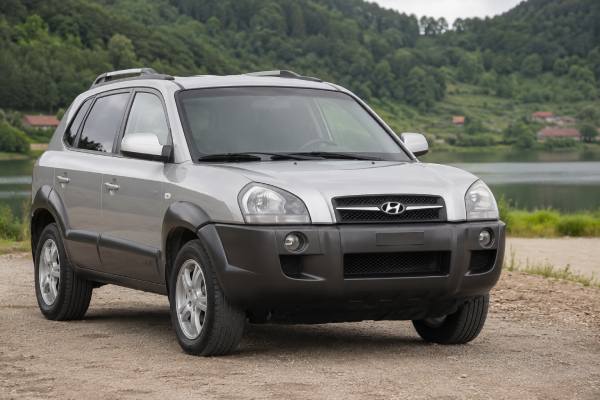
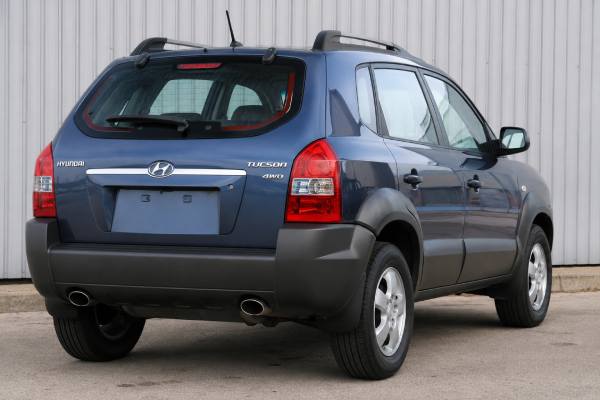
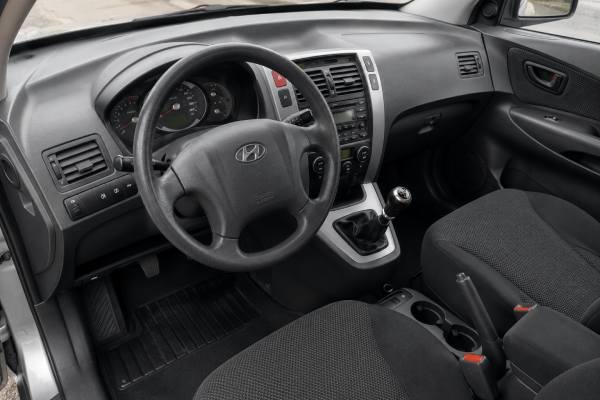
The first-generation Hyundai Tucson JM with the Delta 2.7 V6 is a compact SUV from the era when small crossovers were still simple, upright, and mechanically straightforward. In front-wheel-drive form, it gives buyers the smoothest engine available in the early Tucson range without the extra weight and servicing needs of the 4WD system. It is not a modern high-efficiency SUV, but it can still make sense as an affordable used family car when condition, corrosion, and timing-belt history are checked carefully.
Final Verdict
The Hyundai Tucson FWD JM 2.7 V6 is a good used choice for buyers who want a simple, comfortable, five-seat compact SUV with stronger performance than the four-cylinder model and fewer driveline parts than the 4WD version. Its biggest appeal is the smooth Delta V6 paired with a conventional automatic, making it easy to drive and generally inexpensive to understand. The tradeoff is fuel economy, plus age-related repairs such as timing-belt service, leaks, suspension wear, and rust. Buy one only with proof of belt replacement, clean cooling-system behavior, completed recalls, and a solid underside.
| Pros | Cons |
|---|---|
| Smooth 2.7 V6 feels stronger than four-cylinder Tucson models | Fuel economy is modest for a compact FWD SUV |
| Conventional four-speed automatic is simple and familiar to service | Only four ratios, so highway revs and kickdowns feel dated |
| FWD version avoids 4WD transfer-case and rear-differential upkeep | Less bad-weather traction than the on-demand 4WD model |
| Practical cabin with fold-flat rear seat and useful cargo floor | Interior materials and infotainment feel old by current standards |
| Standard stability control and six airbags were strong for the period | Roof-strength rating and ADAS technology lag modern crossovers |
| Parts supply is helped by shared Kia Sportage mechanicals | Timing-belt neglect can turn a cheap SUV into a costly repair |
Table of Contents
- JM Tucson 2.7 V6 Overview
- Tucson 2.7 V6 Specifications
- Trims, Options, and Safety
- Reliability, Common Issues, and Recalls
- Maintenance and Buying Guide
- Driving, Performance, and Efficiency
- Tucson 2.7 V6 vs Rivals
JM Tucson 2.7 V6 Overview
The JM-generation Tucson 2.7 V6 FWD is best understood as the comfortable, road-biased version of Hyundai’s first compact SUV. It offers more relaxed acceleration than the 2.0 four-cylinder while keeping the mechanical package simpler than the 4WD model.
The Tucson JM arrived for the 2005 model year and shared much of its basic platform thinking with the Kia Sportage of the same era. The shape is compact by modern standards, with a tall cabin, short overhangs, and an easy-to-park footprint. It is not a soft luxury crossover, but it feels honest: upright seating, simple controls, a large tailgate, and a rear seat that folds down to create a broad cargo space.
The 2.7-liter Delta V6 was the premium petrol engine. In many markets it is listed at 175 hp or 175 PS, while U.S. SAE figures commonly show 173 hp. The difference is mostly a rating-standard issue, not a meaningful difference in how the vehicle drives. Torque is the more important figure in daily use, and the V6’s 241 Nm or 178 lb-ft gives the Tucson more effortless passing and hill-climbing ability than the base four-cylinder.
Front-wheel drive suits buyers who do most of their driving on pavement. It saves some weight, removes the rear differential and transfer components from the ownership equation, and usually helps fuel economy slightly compared with 4WD. The downside is obvious in snow, mud, wet grass, and steep gravel tracks. This Tucson has SUV styling, ground clearance, and a practical body, but the FWD V6 is not an off-roader.
Today, its value depends far more on condition than trim badge. A clean, serviced Tucson V6 can still be a useful budget SUV. A neglected one with an overdue timing belt, rusty brake lines, tired suspension, and leaking gaskets can quickly cost more than it is worth.
Tucson 2.7 V6 Specifications
The 2.7 V6 Tucson uses Hyundai’s naturally aspirated Delta-series petrol engine, a four-speed SHIFTRONIC automatic, and front-wheel drive in the version covered here. Its technical appeal is simplicity: port fuel injection, no turbocharger, no hybrid system, and a conventional automatic gearbox.
Powertrain and efficiency
| Item | Hyundai Tucson FWD 2.7 V6 |
|---|---|
| Generation / platform | JM, first-generation Tucson |
| Model years covered | 2005–2009 |
| Engine family | Hyundai Delta V6 |
| Common engine code | G6BA |
| Displacement | 2.7 L, 2,656 cc |
| Layout | 60-degree V6, DOHC, 24 valves |
| Induction | Naturally aspirated |
| Fuel system | Multi-port fuel injection |
| Maximum power | 175 PS / about 173 hp SAE at 6,000 rpm |
| Maximum torque | 241 Nm / 178 lb-ft at 4,000 rpm |
| Timing drive | Timing belt |
| Fuel type | Regular unleaded petrol / gasoline |
The Delta V6 is not especially powerful by modern standards, but it gives the Tucson a noticeably smoother and quieter character than the 2.0-liter four-cylinder. Its main maintenance priority is the timing belt, because age matters as much as mileage on an older belt-driven engine.
Transmission and driveline
| Item | Specification |
|---|---|
| Transmission | Four-speed automatic with SHIFTRONIC manual mode |
| Drive type | Front-wheel drive |
| Final drive ratio | 4.407:1 on V6 automatic models |
| Front suspension | MacPherson struts |
| Rear suspension | Multi-link independent layout |
| Steering | Power-assisted rack and pinion |
| Brakes | Four-wheel disc brakes with ABS |
The four-speed automatic is a dated design now, but that is not automatically a bad thing in a used SUV. It is generally easy to diagnose, easy to service, and less complex than many later dual-clutch or high-ratio automatics.
Dimensions, space, and capacities
| Item | Value |
|---|---|
| Body style | Five-door compact SUV |
| Seating | Five |
| Length | 4,326 mm / 170.3 in |
| Width | About 1,831 mm / 72.1 in on V6 trim |
| Height with roof rails | About 1,730 mm / 68.1 in |
| Wheelbase | 2,629 mm / 103.5 in |
| Turning circle | About 10.8 m / 35.4 ft curb-to-curb |
| Curb weight | About 1,529 kg / 3,370 lb for V6 FWD automatic |
| Cargo volume | 22.7 cu ft seats up; 65.5 cu ft seats folded |
| Fuel tank | 65 L / 17.2 US gal on V6 models |
| Common tire size | 235/60R16 on V6 SE/Limited-type trims |
The Tucson’s cabin is one of its best used-car arguments. It is compact outside but not cramped inside, and the flat cargo floor is more useful than the small exterior length suggests.
Performance and economy
| Item | Value or practical note |
|---|---|
| Official U.S. fuel economy | 18 mpg city / 24 mpg highway / 20 mpg combined |
| Metric equivalent | About 13.1 city / 9.8 highway / 11.8 combined L/100 km |
| 0–100 km/h | Typically around the 10-second range, depending on market and condition |
| Top speed | Typically around 175–180 km/h / 109–112 mph |
| Towing | Market-dependent; verify the VIN plate and local handbook |
Fuel economy is the main weakness. The V6 is pleasant, but it was designed before today’s small turbo engines and six-to-eight-speed automatics became common.
Trims, Options, and Safety
The V6 was generally fitted to higher Tucson trims, so most 2.7 models have more equipment than base four-cylinder versions. The exact trim names vary by country, but the usual split is basic four-cylinder models below better-equipped V6 grades.
In the U.S. market, early V6 models were sold as GLS and LX, later moving toward SE and Limited naming. V6 versions commonly brought the automatic transmission, wider 235/60R16 tires, alloy wheels, fog lights, body-color trim, cruise control, and upgraded audio. Higher trims added leather seating surfaces, heated front seats, a power sunroof, automatic climate control, a subwoofer, and later a Kenwood navigation/audio unit.
Quick identifiers include V6 badging where fitted, dual exhaust tips on some trims, wider 16-inch wheels with 235-section tires, fog lights, and upgraded interior trim. A VIN check is still better than relying on badges, because used cars can lose emblems, gain aftermarket trim, or be imported across markets with different equipment names.
Mechanically, the key difference for this article is FWD versus 4WD. The 4WD Tucson used an electronically controlled on-demand system with a driver-selectable lock function for low-speed slippery conditions. The FWD model does without those extra components, which makes inspection simpler and slightly reduces long-term maintenance exposure.
Safety equipment was strong for a budget compact SUV of the mid-2000s. Many markets received six airbags, including dual front airbags, front seat-mounted side airbags, and roof-mounted side-curtain airbags covering both rows. Hyundai also fitted ABS, traction control, and electronic stability control on many versions, and the 2009 U.S. Tucson had active front head restraints and a tire-pressure monitoring system.
Child-seat provisions include rear lower anchors for the outboard positions and top tether anchors. The second-row center seating position has a three-point belt, which is a useful detail in a family car of this age.
Crash-test results should be read in period context. The IIHS rated the 2005–2009 Tucson Acceptable in the original moderate-overlap front test, Acceptable in the original side test, Good for head restraints and seats, and Poor for roof strength. ANCAP tested an Australian-market 2.7 petrol Tucson introduced during 2006 and rated it under the test rules of that era. Modern crash tests are tougher, and this Tucson does not have current driver-assistance systems such as automatic emergency braking, adaptive cruise control, blind-spot monitoring, or lane-keeping assist.
There are no ADAS calibration concerns in the modern sense, because this generation does not rely on radar or camera-based driver assistance. After collision repair, the important checks are structural alignment, airbag-system fault codes, seat-belt pretensioners, wheel-speed sensors, ABS function, steering angle sensor calibration where applicable, and correct headlamp aim.
Reliability, Common Issues, and Recalls
A well-kept Tucson 2.7 V6 can be durable, but most examples are now old enough that age, rust, and maintenance gaps matter more than the original build quality. The highest-risk items are overdue timing-belt service, corrosion, cooling-system neglect, oil leaks, and worn suspension parts.
| Issue | Prevalence | Severity | Typical symptoms and remedy |
|---|---|---|---|
| Timing belt overdue | Common on neglected cars | High | No proof of replacement; renew belt kit, tensioner, idlers, and water pump |
| Valve-cover or cam-cover leaks | Occasional | Medium | Oil smell, wet cylinder head area; replace gaskets and check breather system |
| Cooling-system aging | Occasional | Medium to high | Overheating, coolant smell, weak hoses; pressure-test and replace tired parts |
| Automatic shift flare or harsh shifts | Occasional | Medium | Delayed engagement or thump; inspect fluid, mounts, sensors, and service history |
| Front suspension wear | Common with age | Low to medium | Clunks, wandering, uneven tire wear; inspect links, bushings, ball joints |
| Wheel bearing noise | Occasional | Medium | Humming rising with road speed; replace affected hub or bearing assembly |
| Corrosion underneath | Climate-dependent | High | Rust on subframes, brake lines, mounts; inspect before purchase |
| Stop-lamp switch faults | Recall-related | Medium | Brake lights, shifter interlock, ESC light; verify recall completion |
The timing belt is the first question to ask. The 2.7 V6 uses a belt rather than a chain, and an old belt should not be treated as “fine because it still runs.” On a used Tucson, the ideal evidence is a dated invoice showing the full kit: belt, tensioner, idler pulleys, water pump, coolant, and accessory belts. A seller who says “the previous owner did it” but has no receipt should be priced as if the job is due.
Oil leaks are usually manageable if caught early. Valve-cover gaskets can harden with age and drip onto hot surfaces, causing a burnt-oil smell. Cam and crank seals may also be addressed during timing-belt work if there is evidence of seepage. A clean engine bay is nice, but a freshly washed engine before sale can hide leaks, so inspect after a test drive.
Cooling-system health matters because heat is hard on an older aluminum V6. Look for stable temperature, clean coolant, strong cabin heat, no coolant smell, and no signs of bubbling or pressure loss. Radiator tanks, hoses, thermostat housings, and water pumps are all age-sensitive parts.
The automatic transmission should shift smoothly once warm. The four-speed unit is not fast, and it may downshift noticeably on hills, but it should not bang into gear, flare between shifts, or delay Drive engagement for several seconds. Old fluid, broken mounts, tired sensors, and internal wear can all mimic each other, so a proper diagnosis is better than guessing.
Underneath, focus on the front subframe area, rear suspension mounting points, brake and fuel lines, rocker panels, wheel arches, exhaust hangers, and the rear trailing-arm area. Rust is highly market-dependent. A dry-climate Tucson can be simple to own; a salt-belt Tucson with structural corrosion should usually be avoided unless it is exceptionally cheap and repairable.
Known recall activity includes stop-lamp switch campaigns affecting various Hyundai models, including Tucson production ranges. Symptoms can include brake lamps not operating correctly, difficulty shifting out of Park, ESC warning lights, or cruise-control issues. The correct buying move is simple: run the VIN through an official recall checker and ask for dealer records showing completed campaign work.
Maintenance and Buying Guide
The Tucson 2.7 V6 rewards preventive maintenance more than expensive upgrades. A buyer should prioritize timing-belt proof, fluid history, rust condition, and clean automatic-transmission behavior before caring about leather, sunroof, or audio options.
Practical maintenance schedule
| Item | Practical interval | What to check or replace |
|---|---|---|
| Engine oil and filter | Every 5,000–7,500 miles / 8,000–12,000 km | Use correct viscosity for climate; shorten interval for city use |
| Engine air filter | Every 15,000–30,000 miles / 24,000–48,000 km | Replace sooner in dust |
| Cabin filter | Yearly or as airflow drops | Check for leaves and moisture smell |
| Timing belt system | About 60,000 miles / 96,000 km or time limit | Replace belt, tensioner, idlers, water pump, coolant |
| Spark plugs | Usually around 100,000 miles / 160,000 km | Use correct plugs; inspect coils and leads |
| Coolant | Every 2–5 years depending on fluid type | Pressure-test system and inspect radiator, hoses, thermostat |
| Automatic transmission fluid | Every 40,000–60,000 miles / 64,000–96,000 km | Use the correct Hyundai-compatible ATF |
| Brake fluid | Every 2 years | Flush fluid; inspect lines, calipers, parking brake |
| Auxiliary belts and hoses | Inspect yearly | Replace cracked, glazed, swollen, or oil-soaked parts |
| Tires and alignment | Rotate every oil service or 6,000–8,000 miles | Check inner-edge wear and suspension looseness |
| 12 V battery | Test yearly after 3 years | Replace weak batteries before winter |
Service data varies by market and handbook, but common useful reference points include an engine oil refill of roughly 4.5 L to 4.8 US qt with filter, a V6 fuel tank of about 65 L / 17.2 US gal, and a wheel-nut torque commonly around 88–108 Nm / 65–80 lb-ft. Always verify against the exact owner’s manual or service data for the vehicle’s VIN, because market documentation can differ.
Pre-purchase inspection checklist
Start the inspection cold. The engine should start cleanly without a long crank, heavy smoke, loud belt noise, or immediate warning lights. A brief higher idle when cold is normal; rough running, fuel smell, misfire, or flashing check-engine light is not.
During the walkaround, check:
- Timing-belt invoice with mileage and date.
- Coolant level, color, and signs of dried residue.
- Oil leaks around valve covers, timing covers, sump, and rear main area.
- Smooth engagement into Drive and Reverse.
- Transmission fluid condition if accessible.
- Rust on subframes, brake lines, rocker panels, wheel arches, and suspension mounts.
- Clunks from sway-bar links, control arms, ball joints, and strut mounts.
- Brake pulsation, sticky calipers, and corroded brake pipes.
- Working brake lights, cruise control, ABS, ESC, heater, air conditioning, and window regulators.
- Matching tires with even wear and no old date codes.
- Sunroof drains and cargo-floor water leaks on higher trims.
The best version to seek is a clean FWD V6 with complete maintenance records and no structural corrosion. A higher trim is pleasant, but the added features are secondary. Leather, sunroof, and navigation are less important than a healthy engine, rust-free underside, and properly serviced transmission.
Avoid examples with overheated engines, missing timing-belt records, harsh transmission behavior, heavy underside rust, multiple warning lights, or evidence of poor crash repair. The Tucson is not rare enough to justify buying a bad one unless it is a short-term beater at a very low price.
Long-term durability is decent when the basics are handled. The 2.7 V6 is not highly stressed, the automatic is conventional, and parts availability remains reasonable because of shared Hyundai and Kia mechanicals. The main challenge is that cheap older SUVs are often maintained only after something breaks.
Driving, Performance, and Efficiency
The Tucson 2.7 V6 FWD drives like a simple mid-2000s compact SUV: easy, upright, and relaxed rather than sporty. Its strongest dynamic trait is smooth low-to-mid-speed response, not sharp handling or modern fuel efficiency.
The V6 gives the Tucson a useful step up in everyday performance. It pulls away cleanly, handles urban traffic without needing high revs, and feels less strained with passengers or a full cargo area than the four-cylinder. Passing response is acceptable, though the four-speed automatic sometimes needs a decisive kickdown because there are not many ratios to choose from.
Throttle response is straightforward. There is no turbo lag, no hybrid blending, and no drive-mode complexity. The engine feels most comfortable in the middle of the rev range, with enough torque for normal hills and motorway merging. It is not a quick SUV by modern standards, but it does not feel underpowered in routine use when properly maintained.
The automatic transmission is smooth in gentle driving and predictable in traffic. Its weakness is ratio spacing. On rolling roads or long climbs, it can drop from fourth to third more noticeably than newer six-speed automatics. That can make the cabin louder, especially if the engine mounts, exhaust, or tires are tired.
Ride comfort is generally good on normal 16-inch tires. The Tucson has a short wheelbase compared with larger SUVs, so sharp bumps can be felt, but the suspension is soft enough for commuting and family use. Worn rear shocks, tired bushings, or cheap tires can make one feel much rougher than it should.
Handling is safe rather than engaging. The steering is light, parking is easy, and the body leans if pushed through bends. The FWD layout means the front tires do most of the work: steering, braking, and pulling the vehicle. In wet conditions, hard acceleration can bring wheelspin, especially on old tires, but stability control helps keep the vehicle composed.
Braking feel should be steady and confidence-inspiring. A soft pedal, steering-wheel shake, rear brake drag, or ABS warning light deserves investigation. Rusty brake lines and old fluid are common age-related concerns, so the brake system should be inspected carefully on any used Tucson.
Real-world fuel economy depends heavily on trip length. In city use, expect roughly 13–15 L/100 km, or about 16–18 mpg US and 19–22 mpg UK. On steady highway runs, a healthy FWD V6 can often sit around 9.5–11 L/100 km, or about 21–25 mpg US and 26–30 mpg UK. Mixed use usually lands near 11.5–13 L/100 km, or about 18–20 mpg US and 22–24 mpg UK. Cold weather, roof racks, underinflated tires, short trips, and dragging brakes can make those numbers worse.
Cabin noise is acceptable for the class and age, but not quiet like a modern Tucson. Wind noise from the upright body, tire noise from budget rubber, and engine noise during kickdown are normal. Excessive booming, humming, or vibration usually points to wheel bearings, tires, exhaust leaks, mounts, or driveline issues rather than the basic design.
Tucson 2.7 V6 vs Rivals
The Tucson 2.7 V6 stands out among older compact SUVs because it offers six-cylinder smoothness in a class where many rivals used only four-cylinder engines. Its weakness is that the extra smoothness comes with higher fuel use and a less modern driving feel than some competitors.
| Rival | Where it beats the Tucson | Where the Tucson V6 can make sense |
|---|---|---|
| Honda CR-V | Fuel economy, resale value, cabin packaging | V6 smoothness and often lower purchase price |
| Toyota RAV4 | Reliability reputation and available stronger V6 in some markets | Simpler used-market pricing and practical cabin shape |
| Kia Sportage | Very similar mechanical package and sometimes cheaper | Condition matters more than badge; choose the cleaner car |
| Ford Escape / Mazda Tribute | Broader engine choice and common parts supply | Hyundai’s standard safety kit was competitive for the period |
| Nissan X-Trail / Rogue | Four-cylinder economy and more car-like feel in later models | No CVT concerns on the Tucson’s conventional automatic |
Against the Honda CR-V, the Tucson usually wins on purchase price and V6 smoothness. The CR-V is often more efficient, more refined in packaging, and easier to sell later. Buyers who want the safer long-term bet may lean Honda; buyers who find a clean Tucson with proof of service may get better value.
Against the Toyota RAV4, the comparison depends heavily on engine and market. Some RAV4 V6 models are much quicker than the Tucson, while four-cylinder RAV4s are more economical. Toyota’s reputation keeps prices high, so the Tucson can appeal when budget matters more than brand image.
The Kia Sportage is the closest rival because it is mechanically related. Do not overthink the badge. Buy whichever has the better underside, service file, tires, brakes, and transmission behavior.
The Ford Escape and Mazda Tribute offer a more truck-like feel in some versions and broad parts availability. The Tucson counters with a compact footprint, useful safety equipment, and a straightforward cabin. Rust and maintenance history decide more than brochure specs at this age.
Overall, the Tucson 2.7 V6 FWD is not the best compact SUV for low running costs, sporty handling, or modern safety technology. It is best for buyers who want a cheap, simple, smooth petrol SUV and are willing to inspect carefully before buying. Choose condition over mileage, service history over cosmetics, and a rust-free body over every optional feature.
References
- TUCSON BOASTS EVEN BETTER FUEL ECONOMY FOR 2009 2008 (Manufacturer Publication)
- Gas Mileage of 2009 Hyundai Tucson 2026 (Fuel Economy Data)
- 2009 Hyundai Tucson 2009 (Safety Rating)
- Hyundai Tucson | Safety Rating & Report | ANCAP 2006 (Safety Rating)
- Microsoft Word – FINAl Dealer QA Campaign 110 Stop Lamp Switch 04022013.docx 2013 (Recall Document)
Disclaimer
This article is for informational purposes only and is not a substitute for professional diagnosis, inspection, or repair. Specifications, torque values, service intervals, fluids, procedures, equipment, and recall applicability can vary by VIN, market, production date, and trim. Always verify details against the official owner’s manual, service information, VIN plate, recall database, and qualified technician advice before buying or repairing a vehicle.
If this guide helped you, please share it on Facebook, X/Twitter, or your preferred platform to support our work and help other used-car buyers make better decisions.