


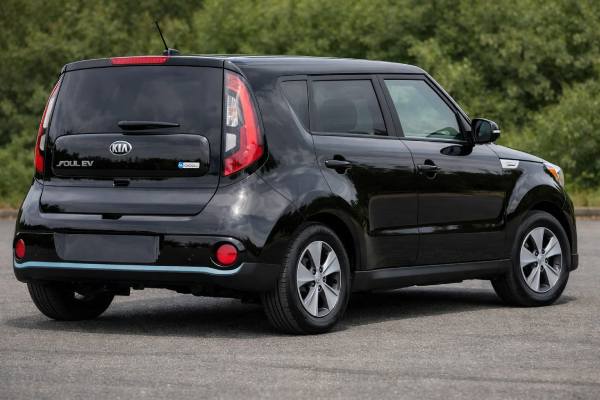
The 2014–2017 Kia Soul EV is one of the more interesting early mass-market electric cars because it does not feel like a science project. It takes the upright, practical Soul body and pairs it with a simple front-motor layout, a 27 kWh usable battery, and packaging that still works well in daily life. The result is an EV that is easy to park, easy to see out of, and easy to understand as a used buy. Its strongest traits are comfort around town, honest controls, and a cabin that wastes very little space. Its biggest limits are also clear: first-generation range, CHAdeMO charging, and an air-cooled battery pack that rewards careful ownership. For buyers who want a sensible local or suburban EV rather than a long-distance specialist, the Soul EV still makes a strong case. The key is to shop by battery health, charging performance, recall completion, and trim level, not just by price.
Owner Snapshot
- Practical cabin packaging and upright seating still make it one of the easiest early EVs to live with.
- The 109 hp motor is not quick, but it delivers smooth low-speed torque and predictable city driving.
- Better trims add a heat pump, which matters in colder weather and improves usable range.
- The main ownership caveat is battery condition and campaign history, especially on cars with later battery-related service actions.
- A sensible inspection and service rhythm is every 16,000 km or 12 months, with brake checks and tyre rotation done regularly.
What’s inside
- Kia Soul EV AM explained
- Kia Soul EV AM data tables
- Kia Soul EV AM trims and protection
- Battery faults and recall history
- EV upkeep and buying strategy
- Range, charging, and road feel
- Soul EV against its peers
Kia Soul EV AM explained
The first-generation Soul EV sits in an important moment in EV history. It is modern enough to feel genuinely usable, but old enough that every major design choice is visible. You can see where Kia spent money, where it saved weight, and where the limits of mid-2010s charging and battery tech begin to show. That makes it a very readable used EV.
This guide covers the 2014–2017 AM-generation car built around the 81.4 kW front electric motor and the original 27 kWh usable battery format. In Europe, the car appeared in late 2014. In the U.S., it is best understood as a 2015–2017 model-year product, and that U.S. version provides the clearest official trim and equipment breakdown. The core hardware is straightforward: front-wheel drive, a single-speed reduction gear, a lithium-ion polymer battery under the floor, and regenerative braking with simple driver-selectable behavior rather than true one-pedal driving.
Its advantages are still easy to appreciate. The boxy body gives it much better access and outward visibility than many sleek early EVs. The battery placement preserves cabin usefulness. The steering is light, the controls are not confusing, and the car feels more like a normal hatchback than a tech exercise. It also came with a serious warranty story for its era, including EV-system coverage and battery-capacity coverage tied to a 70 percent threshold.
The limits are just as important. This is not a motorway EV by modern standards. Real range falls quickly at sustained higher speeds, the car has no battery preconditioning for fast charging, and the CHAdeMO connector is now a meaningful ownership consideration in some markets. The battery pack is air-cooled, not liquid-cooled, so climate and charging habits matter more than they do in many newer EVs. A heat pump is also not universal across the range, which can make winter efficiency very trim-dependent.
That is why the Soul EV works best when bought for the right job. As a second car, commuter, city runabout, or low-cost suburban EV, it still makes a lot of sense. As a single-car household solution for frequent long motorway trips, it asks for more patience than most drivers now want. If you approach it with realistic range expectations and put battery health ahead of cosmetic condition, it remains one of the more appealing first-wave electric hatchbacks.
Kia Soul EV AM data tables
Powertrain, battery, and efficiency
| Spec | Value |
|---|---|
| Motor type | AC synchronous permanent magnet motor |
| Motor count and axle | Single motor, front axle |
| System voltage | 360 V |
| Battery chemistry | Lithium-ion polymer |
| Traction battery gross capacity | 30.5 kWh |
| Traction battery usable capacity | 27.0 kWh |
| Battery pack location | Underfloor |
| Battery pack structure | Two battery pack sections |
| Max power | 109 hp (81.4 kW) |
| Max torque | 285 Nm (210 lb-ft) |
| Battery thermal management | Air-cooled |
| Cabin heating hardware | PTC heater standard |
| Heat pump | Standard on EV and EV+ trims |
| Efficiency test standard | EPA / NEDC |
| Rated efficiency | 19.9 kWh/100 km (320 Wh/mi) EPA combined |
| Rated range | 150 km (93 mi) EPA / 212 km (132 mi) NEDC |
Driveline and charging
| Spec | Value |
|---|---|
| Transmission / drive unit | Single-speed gear reduction unit |
| Final drive ratio | 8.206:1 |
| Drive type | FWD |
| Charging connector (AC) | SAE J1772, single-phase, 120/240 V |
| Charging connector (DC) | CHAdeMO |
| Charging port location | Behind front grille |
| Onboard charger (U.S.-spec) | 6.6 kW |
| DC fast-charge peak | 50 kW |
| DC charging time | 33 min to 80% at 50 kW |
| AC charging time | 4 h 10 min to 4 h 50 min at 240 V |
| 120 V charging time | 24 h |
| Battery preconditioning for DC charging | No |
Performance and capability
| Spec | Value |
|---|---|
| 0–100 km/h (0–62 mph) | 11.2 s |
| 0–60 mph | 11.2 s |
| Top speed | 145 km/h (90 mph) |
| Braking distance, 62–0 mph | 140 ft |
| Towing capacity | Not recommended |
| Payload | 470 kg (1,036 lb) |
Chassis and dimensions
| Spec | Value |
|---|---|
| Suspension, front | MacPherson strut with stabilizer |
| Suspension, rear | Coupled torsion beam axle |
| Steering | Motor-driven power steering; 15.7:1 |
| Brakes | 300 mm (11.8 in) vented front discs / 282 mm (11.1 in) solid rear discs |
| Parking brake | Electronic parking brake |
| Wheels and tyres | 205/60 R16 |
| Ground clearance | 150 mm (5.9 in) |
| Length | 4,140 mm (163.0 in) |
| Width | 1,801 mm (70.9 in) |
| Height | 1,600 mm (63.0 in) |
| Wheelbase | 2,570 mm (101.2 in) |
| Turning circle, kerb-to-kerb | 10.7 m (35.0 ft) |
| Kerb weight | 1,492 kg (3,289 lb) |
| GVWR | 1,960 kg (4,321 lb) |
| Cargo volume | 532 L (18.8 ft³) seats up / 1,402 L (49.5 ft³) seats folded, SAE |
Safety and driver assistance
| Spec | Value |
|---|---|
| Euro NCAP crash rating | 4 stars |
| Euro NCAP adult occupant | 84% |
| Euro NCAP child occupant | 82% |
| Euro NCAP vulnerable road users | 59% |
| Euro NCAP safety assist | 56% |
| IIHS status | Top Safety Pick |
| IIHS small overlap, driver side | Good |
| IIHS small overlap, passenger side | Acceptable |
| IIHS moderate overlap front | Good |
| IIHS side | Good |
| IIHS roof strength | Good |
| IIHS head restraints and seats | Good |
| ADAS suite | ESC standard; AEB, ACC, LKA, BSD, and RCTA not available |
Kia Soul EV AM trims and protection
Trim strategy is one of the most important parts of buying an early Soul EV well, because Kia used the same basic hardware but changed the ownership experience through equipment. In the U.S., the 2015 lineup started simply with Base and Plus trims. For 2016 and 2017, Kia expanded that into EV-e, EV, and EV+, which makes those model years easier to shop if you understand what the badges mean.
The EV-e is the budget-minded entry point. It keeps the core EV hardware, DC fast charging, the 6.6 kW onboard charger, heated front seats, and the heated steering wheel, but it does not get the heat pump HVAC system. That matters. In mild weather, the difference is small. In cold climates, the heat-pump-equipped trims are the more convincing cars because cabin heat costs less range. The EV and EV+ trims add the heat pump, better infotainment, more comfort equipment, and stronger daily usability. The EV+ then layers on leather trim, additional convenience items, and premium touches that make the Soul EV feel less like an economy car.
There were also meaningful year-to-year changes. For 2016, Kia added the EV-e trim, a charge-port nozzle lock, and the optional Sun and Fun Package for the EV+. For 2017, Kia improved the EV-e audio setup with a rear camera display and 5-inch color screen, added a rear center armrest on EV+, revised some wheel-cover and color details, and updated the connectivity logic. The 2017 model also added remote climate logic that could precondition the car when it was not grid-connected, which made daily winter use a little less rigid.
A battery heating system also matters in certain climates. On U.S.-market 2016 cars, Kia listed it for EV and EV+ trims. On 2017 cars, Kia described it as an Eastern Region factory-installed item for EV and EV+ versions. That is a reminder that not all Soul EVs with the same exterior badge are equally winter-friendly.
Safety hardware is solid for the period. The basic package includes front airbags, front thorax airbags, curtain airbags, electronic stability control, a seatbelt reminder system, and child-seat anchor points. Structurally, the car did reasonably well by the standards of its day. Euro NCAP gave the Soul EV four stars in 2014, with good adult and child scores but weaker pedestrian and safety-assist results. IIHS results for the redesigned Soul body are stronger in U.S. terms, with Good scores in the main crash tests and a Top Safety Pick result for the 2015 body structure.
What the car does not have is modern active safety. There is no factory forward collision braking, no adaptive cruise control, no lane centering, and no blind-spot package. After service work, that simplifies life. There are no cameras or radars to recalibrate. But it also means a Soul EV buyer should think in old-fashioned terms: brakes, tyres, visibility, structure, and driver attention still do most of the safety work.
Battery faults and recall history
The Soul EV’s reliability picture is better than many buyers assume, but it is not a car to purchase casually. The platform itself is not fragile. The risk comes from battery history, charging-system health, and whether the car has completed the right software and recall actions. A cheap car with vague battery history is usually the expensive way in.
The issue pattern is fairly clear:
- Common, low to medium cost: tired 12 V batteries, brake corrosion from light friction-brake use, worn tyres, alignment drift, suspension links, and ordinary age-related cabin or HVAC faults.
- Occasional, medium cost: onboard charger faults, charge-port wear, wheel-bearing noise, and sticky rear brake hardware on cars that have spent long periods parked.
- Occasional, high cost: battery-related campaigns, significant capacity loss in harsh climates, unresolved recall work, and charging-system faults that trigger repeated MIL warnings.
The single most important technical bulletin family concerns the onboard charger. Kia issued service actions for some 2015–2017 Soul EVs because the OBC could show malfunction warnings and charge-delay problems, with DTCs such as P1CF1 through P1CF6. In plain ownership terms, the symptom is simple: the car may charge unreliably on AC, throw a fault, or refuse to behave consistently at home. The official route was software update, inspection, and replacement where needed. If a seller says the car “sometimes needs to be plugged in twice,” treat that as a real warning.
Battery history now matters even more than original design. Kia later issued high-voltage battery campaign work for certain Soul EVs, especially cars with replacement E400 battery packs or later battery-related service history. In some cases, BMS software, the battery management system itself, and even the pack assembly all became part of the remedy path. That does not mean every early Soul EV is unsafe. It does mean you should ask a very specific question: is the car on its original pack, or has it had warranty battery work, and if so, exactly what was fitted and when?
The warranty story helps, but only if documented. Kia’s EV-system warranty covered the motor, gear drive unit, battery pack, EPCU, onboard charger, and internal parts. The battery-capacity coverage also promised a remedy if capacity dropped below 70 percent of original within the warranty window. That is valuable on paper, but on a used car today, you want evidence, not assumptions. A dealer battery report, remaining amp-hour data, or a clear diagnostic printout matters more than the dashboard guess-o-meter.
There are also non-battery campaigns that matter. Some 2015–2016 cars were recalled because the parking mechanism could be damaged if Park was selected before the car fully stopped, creating a vehicle-roll risk. Some 2014–2016 Souls and Soul EVs also fell under steering-gear pinion-plug repair confirmation work. For 2017 cars, airbag-control-unit recall activity matters because certain vehicles could lose airbag functionality.
Before you buy, request the full service file, all recall paperwork, and any high-voltage repair invoices. Then perform a VIN recall check yourself. On this model, campaign history is not background detail. It is part of the car’s value.
EV upkeep and buying strategy
The Soul EV is cheaper to maintain than a combustion Soul, but “lower maintenance” is not the same as “maintenance free.” The smartest ownership approach is to focus on the systems that age quietly: tyres, brakes, 12 V support battery, charging hardware, and the health of the high-voltage pack.
A practical service plan looks like this:
- General inspection: every 16,000 km or 12 months. This should include suspension, steering, brake hardware, tyres, charging-port condition, underbody damage, and a scan for stored fault codes.
- Tyre rotation and pressure check: every 10,000 to 12,000 km or at least once a year. Early EVs can be hard on front tyres because of weight and instant torque.
- Cabin air filter: every 15,000 to 20,000 km or 12 months. A blocked filter hurts demisting and makes the HVAC work harder.
- Brake fluid: every 24 months is a sensible practical rhythm. Even EVs need fresh brake fluid, and cars with an integrated brake actuation system should not have this ignored.
- Brake inspection and cleaning: yearly, and sooner in wet or salty climates. Regen reduces pad use, which is good for wear but bad for corrosion if the car is never exercised properly on the friction brakes.
- 12 V battery test: yearly from year three onward. Many strange EV warnings begin with a weak 12 V battery, not a failed traction pack.
- Battery health check: at least annually on an aging car, and always before purchase. State of health, cell balance behavior, and charge acceptance matter more than odometer mileage alone.
One subtle but important point separates the Soul EV from many later EVs: its traction battery is air-cooled. That means there is no liquid battery-coolant service budget in the way you would expect on many newer EVs. The focus shifts toward keeping the HVAC system healthy, monitoring charging behavior, and making sure heat-related battery stress has not already happened earlier in the car’s life.
The used-buyer checklist should be disciplined:
- Start with battery state of health and recent real-world range.
- Confirm AC charging at home power levels and DC fast charging if possible.
- Listen for abnormal noises from the drive unit and charger area.
- Inspect the front charge-port door, latch, seals, and pins.
- Check underbody panels and battery-area fasteners for impact damage or corrosion.
- Verify heat pump operation on EV and EV+ trims.
- Confirm every recall and service action by VIN.
The trims to seek are usually 2016 or 2017 EV and EV+ models. They give you the better HVAC setup, the clearer trim structure, and the most mature version of the first battery package. The trim to buy only at the right price is the EV-e, mainly because it gives up the heat pump. Cars to avoid are the ones with unclear battery history, repeated charging faults, weak winter range far below expectation, or sellers who cannot explain high-voltage service paperwork.
Long term, the Soul EV is durable enough for local use if the pack is healthy. The likely expensive items are battery-related repairs, onboard charger work, and any neglected brake or chassis rehabilitation on cars that have sat too much.
Range, charging, and road feel
The Soul EV drives exactly how many people want a city EV to drive: quietly, lightly, and without drama. Step-off response is immediate but not aggressive. The 109 hp figure sounds modest, yet the full 285 Nm arrives in a way that makes the car feel stronger in traffic than its power number suggests. It does not pin you back, but it moves off cleanly and makes urban gaps easy to use.
Ride and handling are shaped by the Soul body more than by the electric motor. The battery under the floor helps settle the car, and body control is better than you might expect from such a tall hatch. Still, it never stops being a tall hatch. It leans more than an e-Golf, and it feels more upright than a BMW i3. The steering is light, accurate enough, and clearly tuned for ease rather than feedback. At city speed that suits the car. At higher speed it feels more remote.
Regenerative braking is simple and old-school in a good way. Kia gave the driver D and B behavior plus Eco-on and Eco-off combinations, so you can choose whether the car coasts more freely or harvests more aggressively. It is not true one-pedal driving, and the transition to the friction brakes is still more obvious than in newer EVs, but the setup is easy to learn. The bigger practical issue is brake cleanliness. Because the friction brakes work less, they need deliberate inspection and occasional proper use.
Range remains the key real-world question. Official EPA range is 93 miles, and that still feels honest for mixed use when the car is healthy. In broader real-world terms, expect around 155 km as a fair average figure, with city use in mild weather able to go well beyond that and cold-weather motorway use dropping sharply. In mild conditions, a careful city driver can see about 235 km. On the highway at a steady 110 km/h, around 140 km is a more realistic warm-weather target, and around 110 km in cold weather is a more honest expectation. At a true 120 km/h pace, you should think near the lower end of that highway band, not the upper.
Charging is similarly straightforward but now clearly dated. U.S.-spec cars charge in roughly 4 hours 10 minutes to 4 hours 50 minutes on 240 V and need roughly 24 hours on a basic 120 V outlet. DC fast charging peaks at 50 kW. Early official Kia figures quote 80 percent in 33 minutes, while 2017 software logic allowed the car to push farther into the charge window, to 94 percent in 43 minutes. That sounds useful, but the bigger modern problem is the connector standard. CHAdeMO works where supported, but route flexibility depends heavily on local infrastructure.
The verdict on the road is simple: the Soul EV feels pleasant, not exciting. It is still a very good city EV. It is only an average highway EV, and only a modest long-trip EV.
Soul EV against its peers
Set against its natural rivals, the Soul EV has a very clear personality. Compared with the 24 kWh and early 30 kWh Nissan Leaf, it feels more upright, more practical to get in and out of, and often more agreeable in cabin packaging. Compared with the Volkswagen e-Golf, it gives up polish and composure but wins on visibility and seating position. Compared with a BMW i3, it is less advanced and less efficient, yet also less exotic in feel and easier for many buyers to treat like a normal everyday car.
Its biggest advantage is usability per square metre. The Soul EV’s body makes excellent use of modest size, and that remains one of the most valuable traits in an older EV. You do not need to climb down into it, you do not give up much luggage space for the battery, and you do not need a long familiarisation period to understand how it works. It also offers strong comfort value on better trims, particularly when the heat pump is present.
Its biggest weakness is equally obvious: it belongs to the first serious generation of mainstream EVs. That means modest range, modest DC charging, and aging infrastructure compatibility. In 2015 those limits felt manageable. In 2026 they feel like a deliberate lifestyle choice. Anyone cross-shopping a later Hyundai Ioniq Electric or even a newer Leaf will notice immediately that the Soul EV asks for more planning on longer routes.
There is also a climate angle. In a mild climate, the car makes a surprisingly rational second-hand EV. In a hot climate, the air-cooled battery deserves much more caution. In a cold climate, trim matters because the heat-pump-equipped versions are simply the better winter cars. This is why the Soul EV is not a generic recommendation. It is a targeted one.
Who should buy it? Drivers who want a low-cost local EV with easy entry, smart packaging, and simple controls. Who should skip it? Anyone who needs regular high-speed motorway range, fast modern public charging, or the reassurance of a newer thermal-management strategy.
As a used electric car, the Soul EV AM succeeds when you judge it honestly. It is not the best early EV at everything. It is one of the easiest early EVs to understand, and that still counts for a lot.
References
- 2017 Kia Soul EV Specifications 2017 (Manufacturer Specifications)
- 2017 Kia Soul EV Features & Options 2017 (Manufacturer Specifications)
- 2016 Warranty and Consumer Information Manual 2016 (Warranty Manual)
- 2015 Kia Soul 2025 (Safety Rating)
- Kia Soul EV – Euro NCAP Results 2014 2014 (Safety Rating)
Disclaimer
This article is for informational purposes only and is not a substitute for professional diagnosis, inspection, or repair. Specifications, charging performance, service intervals, torque values, battery remedies, and repair procedures can vary by VIN, market, trim, software level, climate package, and prior warranty work, so always verify details against official service documentation for the exact vehicle.
If this guide was useful, please consider sharing it on Facebook, X, or another platform to support our work.