

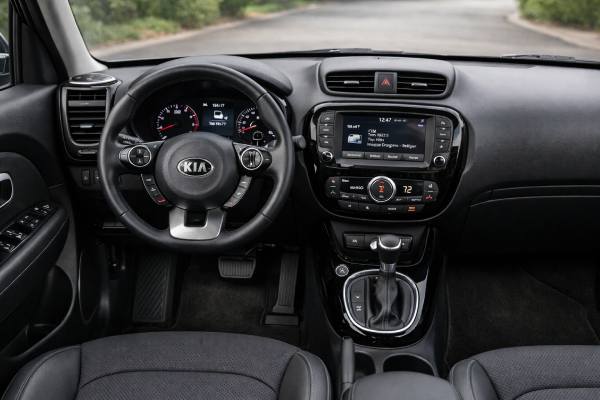

The facelifted Kia Soul PS diesel is one of those rare used crossovers that makes more sense the closer you look at it. It has the upright seating, square cargo area, and easy visibility buyers expect from a Soul, but in 2017–2019 facelift form it also feels more mature than its shape suggests. The 1.6-litre CRDi diesel brings the low-rpm torque the body style always wanted, so the car feels calmer and less strained in daily driving than the smaller petrol versions. In most European markets, this engine sat in the 136 hp class and could be paired with either a 6-speed manual or a 7-speed dual-clutch transmission. The result is a compact front-wheel-drive car that is practical in town, efficient on longer trips, and still simple enough to own without premium-brand repair costs. The best examples are genuinely useful family cars. The weak ones are usually the cars that lived on short trips, skipped diesel maintenance basics, or went too long between services.
Quick Specs and Notes
- Strong mid-range torque makes the Soul PS diesel feel more relaxed than the 1.6 petrol.
- Smart packaging gives it a roomy rear seat and a square, easy-to-load cargo area.
- The facelift brought better infotainment, nicer trim, and more available safety equipment.
- Short-trip use can create DPF, EGR, and intake-soot problems on neglected cars.
- Plan on oil service every 20,000 km or 12 months in normal use, with shorter intervals in harsh service.
Contents and shortcuts
- Kia Soul PS facelift profile
- Kia Soul PS diesel specs
- Kia Soul PS grades and safety kit
- Weak points and factory actions
- Upkeep schedule and used-buy tips
- Everyday driving and fuel use
- Why this Soul stacks up well
Kia Soul PS facelift profile
The facelifted PS-generation Soul kept the same core idea as the 2014 redesign, but it sharpened the formula in useful ways. It remained a compact, upright, front-wheel-drive crossover with a hatchback footprint and mini-MPV practicality, yet the 2017 update added better infotainment, cleaner trim details, and a broader spread of equipment. More importantly for used buyers, it kept the PS generation’s key engineering improvements over the earlier AM car: a stiffer structure, calmer ride, quieter cabin, and more mature road manners.
The 1.6 CRDi diesel is the powertrain that best matches the Soul’s shape if your driving includes regular motorway use, longer commutes, or loaded family trips. The engine does not turn the Soul into a performance car, but it gives it the right kind of energy. Instead of needing revs, it leans on torque. That makes the car easier to drive in traffic, more relaxed at speed, and less busy when climbing grades or carrying passengers. In facelift form, the diesel was offered in the 136 hp class and, depending on market, paired with a 6-speed manual or a 7-speed dual-clutch transmission.
This version also benefits from the Soul’s strongest design trait: packaging efficiency. The body is short but tall, the roofline is nearly square, and the tailgate opening is usefully upright. That gives rear passengers good headroom and gives owners a cargo area that is easy to fill with bulky items. It is one of those cars that often feels more useful than larger rivals simply because the shape wastes very little space.
The facelift car does come with a market caveat. Open official documents for this generation cluster around 2017 and 2018, while registration and sales histories in some European markets run into 2019. Equipment also varies sharply by country. Some cars stayed simple, with smaller wheels and cloth trim, while others picked up larger screens, JBL audio, lane-departure warning, blind-spot monitoring, and more upscale materials. That is why trim-by-trim shopping matters.
For the right buyer, the Soul PS diesel still has a very clear role. It is not the quietest long-distance car in the class, and it does not have the advanced driver-assistance depth of newer crossovers. But it is easy to see out of, easy to park, easy to load, and efficient enough to justify the diesel when the car is used properly. If you want a practical compact crossover with honest engineering and useful torque, this is one of the more sensible Souls to own.
Kia Soul PS diesel specs
The facelift PS diesel uses straightforward front-drive hardware, but the details show why it works well in real life. It has moderate weight, a broad spread of torque, compact external dimensions, and simple service capacities. The open UK specification sheet lists the facelift 1.6 CRDi at 134 bhp, which corresponds closely to the 136 hp class used in many European market descriptions.
Powertrain and efficiency
| Item | Data |
|---|---|
| Code | D4FB / 1.6 CRDi diesel |
| Engine layout and cylinders | Inline-4, DOHC, 4 cylinders, 4 valves per cylinder |
| Bore × stroke | 77.2 × 84.5 mm class for the 1.6 CRDi family; verify by VIN-market documentation |
| Displacement | 1.6 L (1,582 cc) |
| Induction | Turbocharged |
| Fuel system | Common-rail direct injection |
| Compression ratio | Market-dependent; verify by VIN or local technical data |
| Max power | 134 bhp / about 136 hp class (99 kW) @ 4,000 rpm |
| Max torque | 260 Nm (192 lb-ft) @ 1,500–3,000 rpm manual; 300 Nm (221 lb-ft) @ 1,750–2,500 rpm DCT |
| Timing drive | Chain |
| Rated efficiency | 4.8 L/100 km manual, 5.0 L/100 km DCT on the UK combined figure |
| Real-world highway at 120 km/h | Usually about 5.6–6.4 L/100 km |
Transmission and driveline
| Item | Data |
|---|---|
| Transmission | 6-speed manual or 7-speed DCT |
| Drive type | FWD |
| Differential | Open |
Chassis and dimensions
| Item | Data |
|---|---|
| Suspension front / rear | MacPherson strut / coupled torsion beam axle |
| Steering | Electric power-assisted rack and pinion |
| Steering ratio | About 16.0:1 for diesel PS models |
| Brakes | 280 × 26 mm ventilated front discs, 262 × 10 mm solid rear discs |
| Wheels and tyres | 205/60 R16, 215/55 R17, 235/45 R18 |
| Ground clearance | 143 mm (5.6 in) |
| Length / Width / Height | 4,140 / 1,800 / about 1,593–1,606 mm, wheel-dependent |
| Wheelbase | 2,570 mm (101.2 in) |
| Turning circle | 10.6 m (34.8 ft) |
| Kerb weight | 1,390–1,567 kg, trim and gearbox dependent |
| GVWR | 1,920 kg manual / 1,940 kg DCT |
| Fuel tank | 54 L |
| Cargo volume | 354 L seats up; folded volume varies by method, with official figures around 994 L in one UK spec sheet and about 1,367 L to roof in wider European data |
Performance and capacities
| Item | Data |
|---|---|
| Acceleration | Factory UK sheet quotes 0–60 mph in 10.8 s manual and 10.7 s DCT; expect about 11.0–11.3 s to 100 km/h |
| Top speed | 180–182 km/h (112–113 mph) |
| Braking distance | About 35.5 m from 100–0 km/h for the PS platform |
| Towing capacity | 1,300 kg braked manual / 1,100 kg braked DCT / 550 kg unbraked |
| Payload | Roughly 350–500 kg depending on trim and kerb weight |
| Engine oil | 5.3 L, ACEA C2 or C3, typically 5W-30 |
| Coolant | Verify by VIN; use correct long-life ethylene-glycol coolant for aluminium components |
| Manual transmission fluid | SAE 75W-85 GL-4 class |
| DCT fluid | Use Kia-approved DCT fluid only; verify VIN-specific fill data |
| Brake fluid | DOT-3 or DOT-4 |
| A/C refrigerant | Market-dependent; verify by under-bonnet label or service data |
| Wheel-nut torque | 88–107 Nm (65–79 lb-ft) |
Safety and driver assistance
| Item | Data |
|---|---|
| Euro NCAP | 4 stars for the PS-generation Soul |
| IIHS | North American gasoline models were tested separately; not directly applicable to the EU diesel |
| ADAS suite | Lane-departure warning and blind-spot monitoring were available on higher trims in some markets, but no full modern AEB-and-ACC package on most diesel cars |
The main lesson from the numbers is that the Soul diesel is not powerful on paper, but it is well matched to the body. The torque, gearing, and moderate weight give it enough real-world usefulness to feel stronger than the figures suggest.
Kia Soul PS grades and safety kit
The facelift Soul is a good example of why trim names matter less than trim content. In some markets the line-up used simple numbered grades, while others used names such as Concept, Drive, Emotion, or Sport-flavored variants. The actual ownership differences came from wheel size, gearbox, interior trim, infotainment level, parking aids, and the presence or absence of extra safety features.
Lower and middle grades usually came with 16-inch or 17-inch wheels, cloth or partial-cloth trim, manual or single-zone automatic climate control, and simpler audio systems. Better-equipped versions added larger touchscreens, JBL audio, rear camera, keyless entry, heated seats, heated steering wheel, larger instrument displays, and more decorative cabin finishes. The highest non-sport diesels often felt the most complete without becoming expensive to run. That makes them the used-market sweet spot.
Wheel size is still one of the most important practical choices. The 16-inch setup usually rides best and is cheapest to maintain. Seventeen-inch wheels are a good middle ground. Eighteens look sharper and can come with more desirable trim, but they also bring higher tyre cost, more road noise, and a slightly firmer ride. On a Soul, the smaller wheel often suits the car’s character better.
Mechanically, the diesel range stayed simple. Manual and DCT versions shared the same basic suspension and brake layout. There were no clever differentials, no all-wheel-drive options, and no heavy off-road hardware. That is part of the Soul’s charm. It never pretended to be something it was not. Instead, Kia focused on packaging, comfort, visibility, and usable equipment.
Safety is respectable rather than class-leading by modern standards. The PS-generation Soul earned a 4-star Euro NCAP rating, with the main limitation being active-safety technology rather than structural collapse. In plain terms, it had a solid enough safety shell for its time but could not score like newer cars because it lacked the broad electronic driver-assistance systems that later became expected. Front, side, and curtain airbags, electronic stability control, hill-start assist, tyre-pressure monitoring, and ISOFIX anchors formed the baseline safety set.
Some facelift trims added more modern support features. In the UK spec sheet, lane-departure warning and blind-spot detection with rear cross-traffic alert appeared on the Sport grade rather than across the full range. That means buyers should not assume every facelift diesel has the same active-safety equipment. Two cars can look similar in photos while having very different driver-assistance content.
For most buyers, the best trim is not the rarest one. It is the one that combines the diesel engine, a clean history, sensible wheels, and the equipment you will actually use. Heated seats, a reversing camera, rear sensors, and the better infotainment packages add more real value than flashy wheels or trim-only badges. On a used Soul, condition still matters more than specification, but the right specification makes a good car easier to live with every day.
Weak points and factory actions
The facelift Soul PS diesel is generally durable when used as a diesel should be used, meaning regular warm runs, correct low-ash oil, and timely filter service. Most expensive stories start when the car is used only for short trips or serviced like a simple old mechanical diesel. It is not that kind of engine.
Here is the fault map that matters most:
- Common, low to medium cost: diesel particulate filter, or DPF, loading from short-trip use.
Symptoms: frequent fan operation, rising fuel use, warning lights, limp mode, or repeated regeneration attempts.
Likely root cause: interrupted DPF regeneration caused by cold, stop-start driving.
Recommended remedy: confirm sensor health first, then carry out a proper forced regeneration or remove the root cause if the filter is already overloaded. - Common, medium cost: EGR and intake soot build-up.
Symptoms: hesitant throttle response, uneven idle, smoke under load, fault codes, or reduced performance.
Likely root cause: soot accumulation in the EGR valve, EGR cooler path, or intake tract.
Recommended remedy: clean or replace the affected parts and make sure the car is being driven in a way that allows full operating temperature. - Common, low cost: glow plug and battery-related cold-start weakness.
Symptoms: harder winter starts, rough first seconds after start-up, smoke, or pre-heat faults.
Likely root cause: aging glow plugs, a tired battery, or a weak control module.
Recommended remedy: test the whole starting and charging system rather than replacing one part by guesswork. - Occasional, medium cost: 7-speed DCT shudder or hesitant creep response.
Symptoms: jerky low-speed pull-away, awkward parking behavior, or inconsistent clutch engagement when warm.
Likely root cause: clutch wear, adaptation drift, or overdue software updates.
Recommended remedy: scan transmission data, confirm available calibrations, and do not ignore early drivability complaints. - Occasional, medium cost: front-end wear.
Symptoms: knocks over potholes, vague turn-in, uneven tyre wear, or humming from one corner.
Likely root cause: anti-roll-bar links, bushes, dampers, or wheel bearings.
Recommended remedy: inspect the whole corner assembly together.
The timing chain is a plus, but it is not a free pass. Listen for cold-start chain noise and watch for timing-correlation faults on high-mileage cars with weak oil-service history. Diesel engines also punish poor oil discipline more quickly than many owners expect. The correct ACEA C2 or C3 oil matters because it protects both the engine and the emissions hardware.
Factory actions are harder to summarize in Europe than in the U.S. because campaign visibility varies by country, importer, and VIN. That means the safest advice is also the most practical: ask a Kia dealer to check the VIN for all completed and outstanding campaigns, then compare that record with stamped service history and invoices. On this model, software status can matter for transmission behavior, idle quality, and emissions-system operation.
A pre-purchase inspection should include a true cold start, a full diagnostic scan, a look at DPF load history if the tool allows it, and proof of recent service using the correct oil specification. On a Soul diesel, that paperwork matters almost as much as the road test.
Upkeep schedule and used-buy tips
The facelift diesel Soul is a good long-term car when owners stay ahead of routine service. Kia’s open service guidance places this diesel in the 20,000 km or 12-month interval class in many European markets, but a used example with mixed or urban use benefits from slightly tighter habits. That is especially true if the car has the DCT or spends most of its time in city traffic.
Practical maintenance schedule
| Item | Practical interval | Notes |
|---|---|---|
| Engine oil and filter | 20,000 km / 12 months official in many markets; shorten to about 12,000–15,000 km in hard urban use | Use ACEA C2 or C3 low-SAPS oil, usually 5W-30 |
| Engine air filter | Inspect every service; replace about every 30,000 km sooner in dust | Cheap insurance for turbo and MAF health |
| Cabin air filter | Every 15,000–20,000 km or yearly | Improves HVAC performance |
| Fuel filter | Replace on schedule or sooner if history is unknown | Important on common-rail diesels |
| Coolant | Follow official interval; baseline replacement is sensible if history is incomplete | Use the correct long-life coolant |
| Manual gearbox oil | Inspect per service schedule; refresh on older cars with unknown history | Helps shift feel |
| DCT fluid | Use only approved fluid and follow VIN-specific guidance | Do not guess or mix fluids |
| Brake fluid | Every 2–3 years practical rule | Moisture matters more than mileage |
| Brake inspection | Every service | Rear corrosion and seized hardware are common on lightly used cars |
| Tyre rotation | About every 12,000 km | Also check alignment and inner shoulder wear |
| Drive belt and hoses | Inspect every service | Age matters |
| Glow plugs and battery | Test before winter after year 4 | Weak cold-start hardware can hide other issues |
| Timing chain | Inspect by noise, scan data, and oil-history clues | No fixed replacement interval |
Useful fluid and torque data
| Item | Specification |
|---|---|
| Engine oil | 5.3 L, ACEA C2 or C3, usually 5W-30 |
| Manual transmission oil | SAE 75W-85 GL-4 class |
| Brake fluid | DOT-3 or DOT-4 |
| Wheel-nut torque | 88–107 Nm |
| Service interval baseline | 20,000 km or 12 months in many European Kia schedules |
Buyer’s checklist
- Start the engine cold and listen for chain noise, injector imbalance, or rough idle.
- Check service invoices for the correct low-ash oil specification, not just “oil changed.”
- Confirm DPF use pattern. A former long-distance car is usually a better bet than a short-trip city car.
- On DCT cars, crawl in traffic and reverse uphill if possible to check smoothness.
- Inspect front suspension, rear brakes, and wheel bearings for age-related wear.
- Look for uneven tyre wear that suggests poor alignment or worn bushes.
- Verify all camera, parking-sensor, touchscreen, and steering-wheel controls.
- Ask a Kia dealer for a VIN campaign printout before purchase.
The best version for most owners is a mid-grade manual or a clean DCT car with strong service records and sensible wheels. The one to avoid is the stylish but neglected diesel that has only done short urban trips and has no proof of correct oil or filter service. Long term, this Soul can age well, but it rewards owners who stay preventive rather than reactive.
Everyday driving and fuel use
This is the Soul engine that makes the most everyday sense. The 1.6 diesel gives the PS facelift the kind of shove it needs in normal driving without asking the driver to work the gearbox constantly. In town, that means fewer revs and easier gaps in traffic. On the motorway, it means calmer cruising and better flexibility when climbing or overtaking.
The first thing you notice is the torque. The diesel does not leap away like a modern EV or a hot hatch, but it feels stronger than the numbers suggest because its useful performance arrives early. The manual gearbox suits that character very well. It lets the driver surf the mid-range and keeps the car feeling direct and easy to judge. The DCT adds convenience and can work nicely on open roads, but around town it can feel a little more hesitant or abrupt during creeping maneuvers, especially if the clutches or software are no longer in perfect condition.
Ride and handling remain honest rather than sporty. The PS structure is firm enough to feel settled at speed, and the steering is predictable even if it is light on feedback. Straight-line stability is good for a tall compact, and the Soul resists side-wind nervousness better than its shape suggests. Through corners it is secure and tidy, though never playful. It is a car that prefers neat inputs over aggressive driving.
Noise, vibration, and harshness, often shortened to NVH, are acceptable for the class. The diesel is more audible at idle than the petrol, of course, but it settles well once moving. At 100–120 km/h, the Soul is quieter than many small crossovers from the same era, though it still cannot match a lower, longer hatchback for wind noise. Wheel choice matters here. Sixteen-inch or 17-inch cars tend to be the best compromise. Eighteens add visual drama but more road noise.
Typical real-world fuel use
| Use case | Typical figure |
|---|---|
| City | 6.2–7.2 L/100 km |
| Mixed | 5.2–6.0 L/100 km |
| Steady 100 km/h | 4.8–5.4 L/100 km |
| Steady 120 km/h | 5.6–6.4 L/100 km |
| Cold-weather mixed use | Usually 0.5–0.9 L/100 km worse |
Key real-world takeaways
- The diesel feels more relaxed than the 1.6 petrol in real driving.
- Manual cars are usually easier to predict and cheaper to keep long term.
- DCT cars suit drivers who mostly do open-road or mixed commuting rather than constant stop-start crawling.
- The Soul’s shape still brings more wind noise than a sleek hatchback, but the PS facelift is mature enough to travel comfortably.
The result is a crossover that drives better than it looks like it should. It is not fast, but it is easy, efficient, and well judged. For buyers who use their cars properly, that is often the better kind of performance.
Why this Soul stacks up well
The facelift Soul diesel is easiest to understand when you compare it with the rivals people actually consider.
Against the Nissan Juke 1.5 dCi, the Soul wins on cabin space, rear-seat headroom, and cargo usability. The Juke can feel more style-driven and a little more playful, but the Kia is easier to see out of and easier to use as a family car. The Soul also feels more honest in the way it packages people and luggage.
Against a Renault Captur 1.5 dCi, the Soul gives away some badge freshness and, in some trims, some cabin flair. But it fights back with a more upright seating position, a squarer boot opening, and a sturdier, more conventional feel. The Captur is often the softer car. The Soul is often the easier one to live with.
Against the Suzuki SX4 S-Cross diesel, the answer depends on your priorities. The Suzuki can be the more conservative long-distance tool and, in some versions, the better value highway car. The Kia, however, offers better step-in access, a more distinctive cabin layout, and more personality without becoming impractical.
Against a Honda HR-V 1.6 i-DTEC, the Soul is less polished and less efficient at the margins, but it is often cheaper to buy and easier to judge in town. The Honda is the better engineering benchmark in some areas. The Kia is the friendlier used-car proposition if price and simple packaging matter more.
So where does the Soul PS diesel land?
- Choose it if you want visibility, torque, compact dimensions, and a genuinely useful cabin.
- Skip it if you mainly do short cold trips that never suit a diesel DPF system.
- Favor sensible wheel sizes and proven service history over top-trim looks.
- Treat the diesel as a motorway and mixed-use car first, not an urban-only runabout.
That last point is the key. The Soul diesel can be excellent, but only when it matches the job. Used properly, it offers a strong mix of fuel economy, passenger space, and easy everyday ergonomics. It still stands out because it does not try to mimic a premium crossover or a fake off-roader. Instead, it gives you a compact, efficient, upright family car with a lot of practical intelligence built into the shape. For the right owner, that remains a real advantage.
References
- DER NEUE KIA SOUL 2017 (Press Kit)
- SPECIFICATION 2017 (Technical Specifications)
- Kia Soul – Euro NCAP Results 2014 2014 (Safety Rating)
- Engine Oil Grades and Capacities – Kia 2023 (Service Guide)
Disclaimer
This article is for informational purposes only and is not a substitute for professional diagnosis, repair, or VIN-specific service information. Specifications, torque values, service intervals, procedures, and equipment can vary by VIN, market, gearbox, and trim, so always verify critical details against the official service documentation for the exact vehicle.
If this guide helped, please share it on Facebook, X, or another social platform to support our work.