
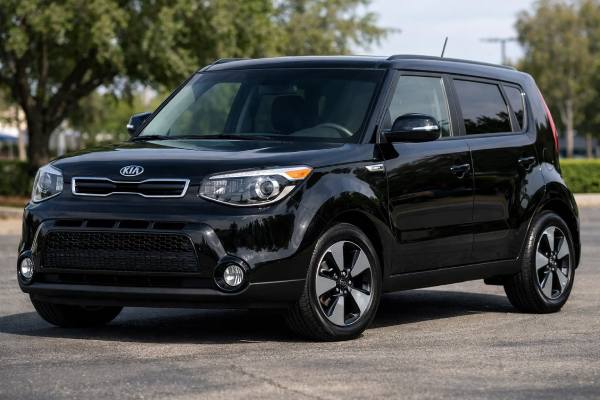
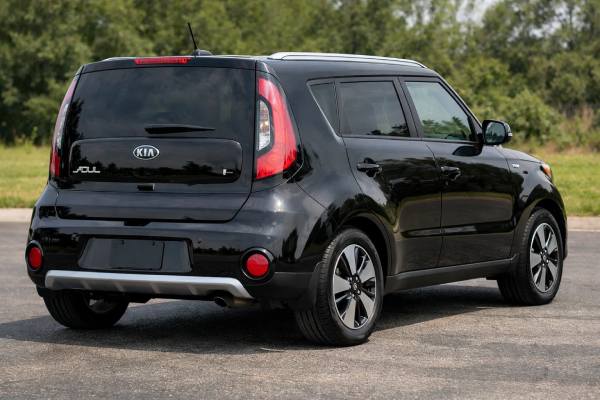
The 2014–2016 Kia Soul PS with the 2.0-litre G4NA engine is the version that makes the second-generation Soul feel fully rounded. It keeps the model’s tall roof, upright seating, and unusually practical cabin shape, but adds enough power to make the boxy body feel more relaxed in daily driving. In real ownership terms, that matters more than the styling. This is the Soul for drivers who want easy access, good urban visibility, useful cargo space, and a simple front-wheel-drive layout without settling for the slower base engine.
It is also a good example of Kia’s mid-2010s engineering priorities. The PS-generation Soul is stiffer, quieter, and more mature than the earlier AM car, while the 2.0 GDI engine gives it solid low-effort performance. The trade-off is familiar direct-injection ownership: carbon build-up, spark-plug discipline, and regular fluid service matter. Buy a clean one with recall work completed and sensible maintenance history, and it can be one of the better value used compact crossovers of its era.
What to Know
- The 2.0-litre engine gives the PS Soul noticeably better flexibility than the 1.6-litre base model.
- The tall roof, square hatch, and wide-opening doors make it more practical than many style-led rivals.
- Ride comfort is good on 16-inch wheels and usually less convincing on 18-inch setups.
- Direct injection means intake-valve carbon build-up and ignition-related faults are worth watching as mileage rises.
- A sensible real-world oil-service rhythm is every 8,000–10,000 km or 6–12 months.
Guide contents
- Kia Soul PS ownership profile
- Kia Soul PS technical details
- Kia Soul PS grades and safety
- Failure points and service actions
- Upkeep plan and used-buy tips
- On-road character and economy
- Soul PS against competitors
Kia Soul PS ownership profile
The second-generation Kia Soul PS is where the model stopped feeling like a novelty and started feeling like a genuinely complete everyday car. The design stayed recognizably Soul, with its upright stance, long roof, and bluff tail, but the engineering underneath became more polished. The body is tighter, the cabin is quieter, and the overall car feels less like a fashion-forward hatchback and more like a compact crossover that happens to have character.
In 2.0-litre G4NA form, that matters even more. The larger petrol engine suits the Soul’s shape better than the entry 1.6. It does not turn the car into a hot hatch, but it removes the sense of strain you can get from smaller engines in a tall-bodied vehicle. Around town, the engine is responsive enough to make gaps easily. On the highway, it holds speed with less effort and fewer downshifts. That makes the 2.0 the most balanced naturally aspirated PS Soul for mixed use.
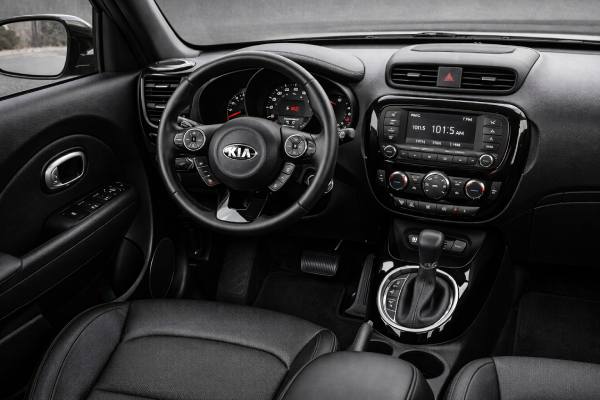
The cabin is one of the model’s strongest assets. You sit high, visibility is good in all directions, and entry and exit are easy for adults who do not want to drop down into a low hatchback. The square rear opening and tall load bay are useful in a way many sleeker rivals are not. Even before you fold the rear seats, the Soul carries bulky everyday items very well.
The PS-generation car is also a smarter used buy than the first generation for one simple reason: it feels more modern without becoming difficult to own. The platform is conventional, front-wheel drive is standard, and the six-speed automatic is a known unit rather than an experimental one. You still need to pay attention to direct-injection service needs, tyre choice, and recall completion, but this is not a fragile or especially complex vehicle.
The buyer profile is clear. This Soul works best for drivers who value seating position, cargo shape, and honest day-to-day usability more than badge prestige or sporty handling. It is especially strong as a city-and-suburb car that also sees regular highway trips. That broad usefulness is the main reason the PS Soul still holds attention in the used market.
Kia Soul PS technical details
The 2014–2016 Soul PS 2.0 uses Kia’s Nu-family G4NA gasoline direct-injection engine. Exact numbers can vary a little by market, trim, emissions certification, and wheel package, but the figures below describe the mainstream 164 hp configuration covered here.
| Powertrain and efficiency | Kia Soul PS 2.0 GDI |
|---|---|
| Engine code | G4NA |
| Engine layout and cylinders | Inline-4, DOHC, 4 valves per cylinder |
| Bore × stroke | 81.0 × 97.0 mm (3.19 × 3.82 in) |
| Displacement | 2.0 L (1,999 cc) |
| Induction | Naturally aspirated |
| Fuel system | GDI direct injection |
| Compression ratio | 11.5:1 |
| Max power | 164 hp (122 kW) @ 6,200 rpm |
| Max torque | 205 Nm (151 lb-ft) @ 4,700 rpm |
| Timing drive | Chain |
| Rated efficiency | Roughly 8.7–9.0 L/100 km combined (26–27 mpg US / 31–32 mpg UK), year dependent |
| Real-world highway @ 120 km/h | About 7.6–8.4 L/100 km (28–31 mpg US / 34–37 mpg UK) |
| Transmission and driveline | Figure |
|---|---|
| Transmission | 6-speed automatic |
| Drive type | FWD |
| Differential | Open |
| Chassis and dimensions | Figure |
|---|---|
| Front suspension | MacPherson strut with coil spring |
| Rear suspension | Coupled torsion beam axle |
| Steering | Rack-and-pinion with motor-driven power steering |
| Brakes | Four-wheel disc brakes on most 2.0-litre trims; exact rotor size varies by market |
| Common tyre sizes | 205/60 R16, 215/55 R17, 235/45 R18 |
| Ground clearance | 150 mm (5.9 in) |
| Length | 4,140 mm (163.0 in) |
| Width | 1,800 mm (70.9 in) |
| Height | 1,600 mm (63.0 in) |
| Wheelbase | 2,570 mm (101.2 in) |
| Turning circle, kerb-to-kerb | About 10.6 m (34.8 ft) |
| Kerb weight | Typically about 1,300–1,340 kg (2,866–2,954 lb), trim dependent |
| GVWR | Market-dependent, commonly around 1,800–1,850 kg (3,968–4,079 lb) |
| Fuel tank | 54 L (14.3 US gal / 11.9 UK gal) |
| Cargo volume | 686 L (24.2 ft³) seats up, SAE; about 1,736 L (61.3 ft³) seats folded |
| Performance and service data | Figure |
|---|---|
| 0–100 km/h | About 9.5–10.0 s |
| Top speed | About 180 km/h (112 mph) |
| Towing capacity | Often not officially rated in North American trim guides; verify by VIN and market |
| Payload | Usually around 430–500 kg (948–1,102 lb), equipment dependent |
| Engine oil | API SN / ILSAC GF-5 5W-20 or 5W-30 by climate and market |
| Engine oil capacity | About 4.0–4.2 L (4.2–4.4 US qt) with filter |
| Coolant | Ethylene-glycol based long-life coolant, typically 50:50 mix |
| Transmission fluid | Hyundai-Kia SP-IV automatic fluid |
| A/C refrigerant | R-134a, charge varies by equipment and market |
| Key safety structure | Reinforced body shell, six airbags, ESC, ABS, VSM, HAC |
One useful ownership point sits behind these numbers: wheel and tyre package choice changes the Soul more than the engine does. The 2.0 gives it enough power in any trim, but 16-inch cars usually ride better, feel quieter, and cost less to keep on tyres than 18-inch package cars.
Kia Soul PS grades and safety
For the 2014–2016 North American Soul PS range, the 2.0-litre engine was effectively the middle-ground powertrain. In practice, that means most buyers will meet it in the Soul + rather than the base Soul or the turbocharged !. That is important because the used-market sweet spot usually sits right there: enough engine, enough equipment, and fewer expensive extras than the top trim.
The base Soul generally came with the 1.6-litre engine and simpler trim. The Soul + added the 2.0 GDI engine, the six-speed automatic, stronger acceleration, and a better overall fit for the car’s weight and shape. Higher packages on the + often added 17- or 18-inch wheels, upgraded audio, UVO infotainment, a panoramic roof, leather or leatherette trim, heated seats, push-button start, and exterior detailing. The ! trim focused more on premium content and turbo performance, so it is not the direct comparison point for this engine article.
Quick identifiers for a 2.0-litre car include:
- Soul + badging in many North American examples.
- A six-speed automatic only with this engine in mainstream trims.
- Frequently 16- or 17-inch wheel packages, with 18-inch wheels on optioned cars.
- Better-equipped cabins, often with larger center screens or upgraded trim materials.
Mechanically, most 2.0-litre cars did not receive major suspension or brake changes that transform the ownership verdict. The biggest functional difference is wheel size. Large-wheel package cars look better on the lot, but standard-wheel cars usually age better in ride quality, tyre cost, and pothole tolerance.
Safety is one of the PS Soul’s strongest objective areas. The 2014 redesign earned strong IIHS results in moderate overlap front, side, roof strength, and head-restraint tests. For 2015 and later, the front-end and occupant-compartment structure were strengthened to improve driver-side small-overlap crash performance. That means a 2015 or 2016 car has a meaningful passive-safety advantage over the earliest 2014 examples.
Core safety hardware typically includes:
- Six airbags.
- ABS with electronic brake-force distribution.
- Electronic stability control and vehicle stability management.
- Hill-start assist control.
- LATCH or ISOFIX child-seat provisions.
- Rearview camera on many trims and packages.
This was still a transition-era vehicle, not a fully modern ADAS car. Most 2014–2016 Souls rely on conventional passive and stability systems rather than automated driving aids. Some upper trims or market-specific packages offered extras such as blind-spot monitoring, rear cross-traffic alert, or lane-related warning functions, but those features were not the universal story of the range. As a result, windscreen replacement, sensor calibration, and body-repair complexity stay simpler than on newer crossovers.
Failure points and service actions
The Soul PS 2.0 is usually a decent long-term ownership car, but the engine and the vehicle have a few known patterns worth separating by frequency and cost. None of them automatically make the model a bad choice. What matters is whether the car was maintained early enough and whether recall work was completed.
Common, low-to-medium cost issues
- Intake-valve carbon build-up: This is the classic direct-injection issue. Symptoms are rough idle, reduced throttle sharpness, cold-start stumble, and gradual fuel-economy loss. The likely cause is deposits on the intake valves because fuel no longer washes them clean. Walnut blasting or professional intake cleaning is the normal remedy.
- Ignition coils and spark plugs: Misfires under load, flashing check-engine light events, or rough cold starts often trace back to worn plugs or weak coils. The remedy is usually straightforward and not especially expensive.
- Brake drag and uneven rear wear: Rear brakes can wear faster than owners expect, especially on city cars. Corrosion, sticky slide pins, and infrequent servicing are typical root causes.
Occasional, medium cost issues
- Oil consumption on neglected engines: Some high-mileage or poorly serviced cars begin using more oil than owners expect. Causes vary, but long oil intervals, poor-quality oil, and ring deposit build-up are common contributors. The right response starts with consumption tracking, PCV inspection, and compression or leak-down testing before assuming the worst.
- Engine mounts and drivetrain vibration: Harsh idle feel in gear, a thump on take-up, or extra vibration through the cabin can point to tired mounts rather than a deeper engine fault.
- Automatic transmission shift quality drift: The six-speed automatic is generally durable, but old fluid can bring delayed engagement, heavier cold shifts, or mild flare between ratios. A correct fluid service often helps if the unit is not already badly worn.
Less common but higher consequence
- Timing-chain noise: The chain is not a routine replacement item, but neglect can accelerate tensioner or guide wear. Rattle on cold start and timing-correlation faults deserve proper diagnosis.
- Catalyst damage after prolonged misfire: The catalytic converter itself is not a routine weak point on this 2.0 in the way some other Kia engines are discussed online, but unresolved misfires can still overheat and damage it.
The most important official service-action story is the steering recall chain affecting certain 2014–2016 Souls. The core concern was the steering gear pinion plug and confirmation that earlier repairs had been completed correctly. For a buyer, the lesson is simple: do not rely on seller memory. Check the VIN through official recall lookup tools and ask for dealer records.
Before purchase, request:
- Cold-start and warm-idle evaluation.
- OBD scan for pending misfire, fuel-trim, and catalyst codes.
- Proof of recall completion.
- Evidence of regular oil changes, not just occasional top-ups.
- A transmission-road-test from cold and fully warm.
- Underbody inspection for impact damage, corrosion, and leaking dampers.
Upkeep plan and used-buy tips
The Soul PS 2.0 does best with conservative maintenance. Factory schedules were written for broad markets and warranty planning. A used direct-injection engine benefits from shorter oil intervals, timely spark plugs, and regular intake attention long before it becomes obviously unhappy.
Here is a practical plan that suits long-term ownership better than a bare-minimum approach.
| Item | Practical interval |
|---|---|
| Engine oil and filter | Every 8,000–10,000 km or 6–12 months |
| Engine air filter | Inspect every service; replace about every 20,000–30,000 km |
| Cabin air filter | Every 12 months or about 15,000–20,000 km |
| Spark plugs | About every 60,000–90,000 km depending on plug type and use |
| Coolant | About every 5 years, then by condition and official schedule |
| Automatic transmission fluid | Drain-and-fill around 60,000–90,000 km for longevity |
| Brake fluid | Every 2 years |
| Brake pad and rotor inspection | Every service |
| Tyre rotation | Every 8,000–10,000 km |
| Wheel alignment check | Annually or after tyre wear, pothole impact, or suspension work |
| Serpentine belt and hoses | Inspect every service; replace on cracking, noise, or age |
| Timing chain | No fixed interval; inspect if there is startup rattle or correlation faults |
| 12 V battery test | Annually from year 4 onward |
| Intake-valve carbon inspection | Consider at higher mileage if idle quality or response worsens |
Useful service notes
- Engine oil: 5W-20 or 5W-30, depending on climate and market guidance.
- Oil capacity: about 4.0–4.2 L with filter.
- Automatic transmission fluid: SP-IV.
- Fuel tank: 54 L.
- Wheel torque and other fastener values can vary by wheel type and market, so confirm those from VIN-specific workshop data before major work.
For used buyers, the checklist matters more than trim fantasy. Focus on condition first, then equipment.
What to inspect
- Smooth cold start and stable idle.
- No active misfire, knock, or timing codes.
- Clean transmission behavior from first movement to highway speed.
- Even tyre wear and no steering pull.
- Brake feel without pulsation or rear drag.
- Proper operation of camera, infotainment, climate control, and heated-seat functions.
- Panoramic roof drains and seals, if fitted.
- Recall proof, especially steering-related work.
What usually needs reconditioning
- Tyres on option-wheel cars.
- Brake service.
- Battery.
- Spark plugs and possibly coils.
- Filters and neglected fluid changes.
- Cosmetic trim, speaker lights, and switchgear on heavily used examples.
The best-used Soul PS 2.0 is usually a mid-spec car on 16- or 17-inch wheels with full history and no heavy modification. The long-term outlook is good if the car has been serviced like a direct-injection engine, not like an indestructible fleet hatchback.
On-road character and economy
The Soul PS 2.0 drives with more maturity than its shape suggests. It is still tall and square, so no one should expect sports-hatch reflexes, but the second-generation chassis is settled and predictable. Straight-line stability is good, the seating position gives a useful command view, and the controls are easy to learn within minutes.
The engine is the key to the experience. The 2.0-litre GDI is not especially charismatic, but it is well matched to the body. Throttle response is clean at city speeds, and the car pulls without feeling strained when merging or climbing grades. The six-speed automatic is old-fashioned in the best way: it is not ultra-fast, but it is usually smooth and understandable. It may hold gears a little longer than some drivers want when cold, yet its behavior is consistent and easy to predict.
Ride and noise depend heavily on wheel size. On 16-inch wheels, the Soul feels composed and absorbent enough for daily commuting. On 18s, it is firmer, a little louder, and less forgiving over sharp edges. Steering is light and tidy rather than detailed. Braking is dependable, with a normal, easy-to-meter pedal.
Real-world fuel use is reasonable for a boxy 2.0-litre compact:
- 2014 EPA rating: 23 city / 30 highway / 26 combined mpg US.
- 2016 EPA rating: 24 city / 31 highway / 27 combined mpg US.
- Typical mixed use: about 8.4–9.4 L/100 km.
- Typical highway use: about 7.2–8.3 L/100 km.
- Heavy urban use: about 9.8–11.0 L/100 km.
At a steady 120 km/h, expect the Soul to feel stable but not especially hushed. Wind noise is present, and coarse road surfaces bring a little tyre roar, especially on wider tyres. The payoff is excellent visibility and a relaxed driving position, which many owners value more than absolute silence.
In short, the PS Soul 2.0 is easy to drive well. It does not demand adaptation, and that is a real strength.
Soul PS against competitors
The Soul PS 2.0 occupies an unusual middle ground, which is exactly why it remains appealing. It is not as tall or rugged as a true compact SUV, but it is more spacious and easier to access than many ordinary hatchbacks. That makes rival comparison more interesting than it first looks.
Against the Nissan Juke, the Soul is the more rational car. The Juke feels more playful and more distinctive from the driver’s seat, but the Soul wins easily on rear-seat room, cargo shape, and everyday visibility. For family use or regular adult passengers, the Kia is the smarter buy.
Against the Honda HR-V, the Soul gives up some cabin polish and outright flexibility in the Honda’s rear-seat trick packaging, but it usually feels less expensive to buy used and often simpler to live with electronically. The HR-V is the calmer, more polished long-game choice. The Soul is the more characterful value play.
Against the Mazda CX-3, the Soul is roomier and easier to see out of. The Mazda feels sharper, quieter at speed, and more premium inside, but it is tighter in the rear and less useful for bulky cargo. Buyers who care about packaging tend to prefer the Soul.
Against the Fiat 500L, the Soul generally comes out ahead on drivetrain confidence and long-term ownership predictability. Both are practical in shape, but the Kia is the safer mechanical recommendation.
The broad verdict is simple. Choose the Soul PS 2.0 if you want a compact used car with crossover manners, real cabin utility, simple front-drive packaging, and enough power to avoid feeling underdone. Rivals may beat it in one category each, but very few combine visibility, space efficiency, price, and easygoing everyday use as well as this Kia does.
References
- Soul-brochure.pdf 2014 (Brochure)
- >> OWNER’S MANUAL QUICK REFERENCE GUIDE 2015 (Owner’s Manual)
- Gas Mileage of 2016 Kia Soul 2016 (Official Fuel Economy Data)
- 2015 Kia Soul 2015 (Safety Rating)
- Part 573 Safety Recall Report 17V-608 2017 (Recall Database)
Disclaimer
This article is for informational purposes only and is not a substitute for professional diagnosis, repair, or VIN-specific service information. Specifications, torque values, service intervals, fluid quantities, procedures, and fitted equipment can vary by VIN, market, build date, and trim level, so always verify critical details against the official Kia service documentation for the exact vehicle.
If this guide was useful, please consider sharing it on Facebook, X/Twitter, or another social platform to support our work.