

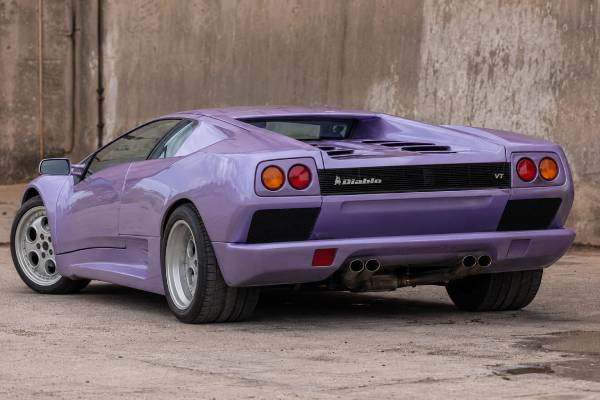

The Lamborghini Diablo P132 is the first-generation 5.7-liter V12 Diablo, built from 1990 to 1998 as the direct successor to the Countach and the last truly pre-Audi flagship Lamborghini design. In its original rear-wheel-drive form, it used a longitudinal mid-mounted 5,707 cc V12 with four camshafts, four valves per cylinder, electronic multi-point fuel injection, and 492 CV, commonly rounded in English-language markets to 492 hp. It mattered because it pushed Lamborghini into the 200 mph era while keeping the brand’s raw, dramatic, low-slung character intact. For buyers and collectors, the early Diablo is now more than a poster car: it is a scarce, manual, naturally aspirated V12 supercar with strong visual identity, complex maintenance needs, and rising historical importance. The best examples are valued for originality, documentation, color, specialist care, and the unfiltered driving feel that later supercars softened.
Table of Contents
- Why the P132 Diablo Still Matters
- V12 Specs and Chassis Data
- Variants, Production, and Authenticity
- Gandini Design and Diablo Engineering
- Road Feel, Performance, and Sound
- Maintenance Risks and Restoration Reality
- Values, Inspection, and Buying Advice
Why the P132 Diablo Still Matters
The Diablo matters because it turned Lamborghini’s flagship formula into a 1990s supercar without losing the wildness that made the Countach famous. It was wider, faster, more refined, and easier to live with than the Countach, yet it still felt hand-built, mechanical, loud, and slightly intimidating.
Development began under the P132 project code as the replacement for the aging Countach. The car had to do several jobs at once: protect Lamborghini’s V12 image, compete with Ferrari’s top road cars, satisfy new emissions and comfort expectations, and still look like nothing else on the road. That balance explains why the Diablo feels like a bridge between eras. It has electronic fuel injection, better cabin equipment, and more usable long-distance ability, but it also has a heavy clutch, a gated manual gearbox, huge rear tires, limited visibility, and a V12 that dominates the whole experience.
Lamborghini presented the Diablo in 1990 as a rear-wheel-drive berlinetta. Official company history describes it as the fastest car in the world at the time, with later versions adding all-wheel drive, a roadster, competition derivatives, and a major 1998 restyle before production ended in 2001. The full Diablo family reached 2,903 units, but the early 5.7-liter rear-wheel-drive Diablo covered here is a narrower slice of that history.
For collectors, the 1990–1998 base Diablo has a special position because it is the cleanest expression of the original idea. It came before the 1999 Audi-influenced facelift, before the 6.0-liter final cars, and before modern supercars became heavily software-managed. Early cars without power steering feel the most physical. Later 5.7 cars are easier to use but still keep the original pop-up-headlight shape and raw V12 layout.
The Diablo’s reputation has also changed. For years, it sat in a strange middle ground: not old enough to be treated like a Miura or Countach, not new enough to offer modern usability. That has shifted. Manual V12 Lamborghinis are now finite, analog 1990s supercars have become highly collectible, and well-preserved Diablos are increasingly seen as important cars rather than merely dramatic ones.
Key reasons enthusiasts and buyers still care include:
- It replaced the Countach, one of Lamborghini’s most famous models.
- It was the brand’s first production model associated with 200 mph performance.
- It kept the naturally aspirated Lamborghini V12 at the center of the car.
- It used a manual gearbox only, with no automatic or dual-clutch option.
- It kept scissor doors, extreme proportions, and a cabin layout that feels unmistakably period.
- It came from a turbulent Lamborghini era, which makes originality and documentation especially important.
- It is scarce compared with later mass-production performance cars.
The Diablo is not a casual classic. It is a large, hot-running, expensive, specialist-maintained V12 supercar. That is exactly why serious buyers inspect them carefully and why the best cars now draw attention from collectors who value analog performance, period design, and mechanical theatre.
V12 Specs and Chassis Data
The core specification is simple: a 5.7-liter naturally aspirated Lamborghini V12, five-speed manual gearbox, rear-wheel drive, and a low steel spaceframe chassis wrapped in dramatic coupe bodywork. The details matter because small differences in model year, market, and version can change usability, value, and maintenance risk.
| Item | Specification |
|---|---|
| Model | Lamborghini Diablo, P132 generation |
| Production period covered | 1990–1998 original 5.7-liter Diablo era |
| Body style | Two-door, two-seat berlinetta coupe |
| Engine layout | Longitudinal mid-mounted V12 |
| Displacement | 5,707 cc |
| Configuration | 60-degree V12, aluminum construction |
| Valvetrain | Dual overhead camshafts per bank, four valves per cylinder |
| Fuel system | Electronic multi-point fuel injection |
| Power | 492 CV / about 485 bhp, commonly listed as 492 hp |
| Torque | 580 Nm / about 428 lb-ft |
| Transmission | Five-speed manual |
| Drive | Rear-wheel drive on the original base Diablo |
| Top speed | About 325 km/h / 202 mph |
| 0–100 km/h | Roughly 4.1–4.5 seconds, depending on source and test conditions |
The engine is an evolution of Lamborghini’s classic V12 line rather than a clean-sheet modern unit. It uses a large bore and short stroke character, breathes through four valves per cylinder, and relies on displacement, revs, and throttle area rather than forced induction. In practical terms, it makes the Diablo feel urgent above the midrange and dramatic near the top end, but it also means cooling, oil condition, fuel delivery, ignition health, and correct setup matter greatly.
| Area | Typical 5.7 Diablo Detail |
|---|---|
| Chassis | Tubular steel spaceframe |
| Suspension | Independent suspension with unequal-length control arms |
| Brakes | Servo-assisted ventilated discs; early cars did not use modern ABS systems |
| Steering | Manual on earliest cars; power steering added during production |
| Front tires | 235/40 ZR17 on many early 5.7 cars |
| Rear tires | 335/35 ZR17 on many early 5.7 cars |
| Wheelbase | 2,650 mm |
| Width | About 2,040 mm |
| Height | About 1,105 mm |
| Curb weight | Usually listed around 1,576–1,620 kg depending on source, market, and equipment |
The numbers do not fully explain the car. A Diablo is much larger on the road than its low roof suggests. The rear track, tire width, long doors, and limited rear visibility make it feel wide in cities and on narrow lanes. At speed, though, the long wheelbase and wide stance give it stability that the Countach never matched as easily.
The original rear-drive Diablo is also mechanically different in character from the later Diablo VT. The VT introduced viscous all-wheel drive in 1993 and could send part of the torque forward when the rear tires lost grip. That made the car more secure and more usable in poor conditions, but it also added weight and complexity. Buyers who want the purest original Diablo usually focus on rear-wheel-drive cars. Buyers who want confidence and touring usability often look at VT models, even though this guide focuses on the original 5.7-liter specification.
Variants, Production, and Authenticity
The 1990–1998 Diablo range is not one single car with one single value. Early rear-drive coupes, VT models, SE30s, SVs, and roadsters differ in production numbers, driving feel, maintenance needs, and collector appeal.
The base Diablo was the original shape and concept: pop-up headlights, rear-wheel drive, 5.7-liter V12, manual gearbox, and dramatic scissor doors. It launched without some of the later usability aids. Early cars are especially valued by some collectors because they are the closest to the original P132 vision, but they are also the most demanding to drive in traffic.
The Diablo VT arrived in 1993 and brought “Viscous Traction” all-wheel drive. Lamborghini’s official history notes that the VT could transmit torque to the front wheels through a central viscous coupling, with self-locking differentials at both ends. This version changed the Diablo’s character by adding traction and stability, especially in wet or cold conditions. It also added mechanical complexity, so inspection of the drivetrain is more involved.
The SE30 celebrated Lamborghini’s 30th anniversary and moved the car in a lighter, sharper direction. It is not just a trim package. It used a more powerful version of the 5.7 V12, reduced weight, more focused equipment, and distinctive body and interior details. The SE30 Jota kit went further and is one of the most desirable Diablo-related configurations, but it sits outside the normal base-car buying conversation.
The Diablo SV brought rear-wheel drive back into focus with more aggressive styling and a stronger performance image. It is often more extroverted visually, especially with its large SV side graphics. It remains connected to the original 5.7-liter era but is not the same proposition as a plain early Diablo.
The VT Roadster added open-air drama and all-wheel-drive security. It is important because it gave Lamborghini a V12 open model before the Murcielago Roadster. It also has its own body, roof, sealing, and structural issues that buyers must inspect separately.
| Variant | Main Difference | Buyer Relevance |
|---|---|---|
| Diablo RWD | Original rear-drive coupe with 5.7 V12 | Purest early specification; demanding but highly collectible |
| Diablo VT | Viscous all-wheel drive, improved traction | More usable, more complex, often preferred for touring |
| Diablo SE30 | Limited 30th anniversary lightweight special | High collector appeal; originality is critical |
| Diablo SV | Rear-drive, more aggressive performance image | Strong enthusiast demand; spec and condition drive value |
| Diablo VT Roadster | Open body with all-wheel drive | Desirable but requires careful roof, seal, and chassis inspection |
For authenticity, the most important point is that the Diablo was hand-built in small numbers during a period of ownership changes and evolving specifications. Two cars of similar year may not be identical in detail. Market equipment, emissions hardware, lighting, bumpers, instruments, seat design, trim, and documentation can vary.
A serious buyer should confirm:
- VIN and chassis identity against factory records.
- Engine and gearbox numbers where possible.
- Original exterior color and interior trim.
- Market delivery specification.
- Factory options, including rear wing, luggage, stereo upgrades, special trim, or unusual interior choices.
- Service book, invoices, import documents, emissions paperwork, and ownership history.
- Any later conversion, repaint, retrim, wing addition, wheel change, or exhaust modification.
- Whether the car is a true variant or has been visually modified to resemble one.
Matching-numbers status matters most on low-mile, rare, or concours-level cars. On a driven example, mechanical condition may matter more than untouched originality, but missing records still reduce confidence. A properly serviced Diablo with honest mileage is usually a better ownership prospect than a long-stored car with a thin history file and attractive paint.
Gandini Design and Diablo Engineering
The Diablo’s design works because it is extreme without being only decorative. Its width, wedge profile, scissor doors, deep side intakes, and muscular rear body all serve the same purpose: to package a large mid-mounted V12, cool it, stabilize it at very high speed, and make the car instantly recognizable.
Marcello Gandini’s influence is central to the Diablo story, even though the final production shape was softened under Chrysler-era direction. The result is less angular than the Countach but still unmistakably Lamborghini. The front is low and clean, the windshield is steeply raked, the cabin is pushed forward, and the rear quarters are broad enough to make the car look almost square from behind.
The scissor doors are more than a visual signature. On a very low and wide car, they help access in tight spaces and keep the link to Lamborghini’s V12 lineage. They also introduce ownership details buyers should not ignore: hinges, gas struts, latches, alignment, seals, wiring through the door area, and paint condition around the openings should all be checked.
Cooling shaped much of the Diablo’s body. The side intakes feed the radiators and engine bay, while the rear bodywork manages hot air from the powertrain. Poor cooling health is one of the fastest ways to turn a Diablo from thrilling to expensive. Radiator condition, fans, hoses, thermostat function, coolant pipes, and proper bleeding matter more than cosmetic shine.
The cockpit is also part of the car’s character. Early cars have a high dashboard binnacle and a very 1990s supercar driving position. The pedals are offset, the windshield is shallow, the sills are wide, and the cabin can become hot. Luxury equipment such as leather trim, electric windows, air conditioning, and audio made the Diablo more usable than the Countach, but it remains far from a modern GT.
Engineering choices that define the car include:
- A longitudinal V12 placed behind the cabin.
- A five-speed gated manual gearbox with heavy mechanical engagement.
- Very wide rear tires that dominate low-speed steering and high-speed traction.
- A steel tubular chassis that requires careful accident and corrosion inspection.
- A body with large, costly panels that need specialist repair.
- Braking and steering systems that feel period-correct rather than modern.
- A huge rear overhang and limited rearward visibility that require practice.
The 1998 redesign matters, even though the article’s core span ends at the original 5.7 era. Lamborghini’s later second-series updates removed pop-up headlights and revised the interior and exterior details under Centro Stile Lamborghini. Collectors often separate pre-facelift pop-up-headlight cars from the later exposed-headlight cars. The earlier cars usually attract buyers who want the most period-correct 1990s look; later cars often appeal to those who want improved finish and usability.
Sound is one of the Diablo’s defining features. The V12 does not merely sit behind the driver; it fills the cabin with intake noise, exhaust resonance, heat, vibration, and mechanical texture. A healthy car sounds clean, urgent, and layered. A tired car may sound dramatic too, but smoke, fuel smell, rough running, overheating, or excessive valvetrain noise should never be dismissed as “old Lamborghini character.”
Road Feel, Performance, and Sound
A good Diablo feels heavy at low speed, stable at high speed, and explosively fast once the V12 is in its stride. It is not a point-and-shoot modern supercar; it rewards preparation, space, smooth inputs, and respect for tire temperature.
The first surprise is often the size. The car is extremely wide, and the driver sits low behind a shallow windshield with limited rear visibility. Parking, fuel stops, ramps, and narrow streets require patience. Early manual-steering cars can feel very heavy at walking pace, especially on wide front tires. Once moving, the steering gains feedback and accuracy, but it never hides the mass of the front tires or the width of the car.
The clutch is firm, the gearshift is mechanical, and the gearbox works best when treated with patience. Cold shifts can be stiff. A rushed shift can feel clumsy and expensive. When warm and properly adjusted, the five-speed manual is part of the car’s appeal: deliberate, metallic, and involving.
The V12 is the main event. It has strong torque, but the Diablo is not a lazy low-rpm cruiser in the way a large modern turbo engine can be. It builds intensity with revs. Throttle response is direct, the sound hardens as the engine climbs, and the car feels more alive above the midrange. Because there is no modern stability-control safety net on the original rear-wheel-drive cars, throttle use matters. A Diablo can put down huge speed, but it expects the driver to understand weight transfer, road surface, and tire condition.
Acceleration figures vary by test, but the broad picture is clear: the original 5.7 Diablo was a genuine 200 mph-class supercar, capable of roughly 0–100 km/h in the low-to-mid four-second range and a top speed around 325 km/h. Those numbers were extraordinary in 1990 and remain serious today. What has changed is context. A modern performance EV may beat it in a short sprint, but almost nothing modern matches the Diablo’s combination of manual control, V12 noise, and physical drama.
Braking requires realistic expectations. The brakes are powerful for the period when fresh, correctly serviced, and paired with proper tires. They do not have the casual, repeatable feel of modern carbon-ceramic systems. Brake fluid age, hoses, caliper condition, disc quality, pad compound, and tire grip make a large difference. A Diablo that has been stored or driven lightly may need a full brake refresh before it feels trustworthy.
On a fast road, the car’s best qualities are stability, sound, and presence. The long wheelbase helps it feel planted. The wide rear tires give strong traction in warm, dry conditions. The engine turns every straight into an event. On tight mountain roads, it can feel large and demanding, especially if the surface is uneven. On track, it needs careful cooling and brake management; it is not a modern track-day car that can absorb abuse without consequence.
The best driving advice is simple:
- Warm the engine and gearbox properly before using high revs.
- Let the tires build temperature before applying full throttle.
- Avoid aggressive downshifts until the gearbox oil is warm.
- Use smooth steering and throttle inputs.
- Treat wet roads with caution in rear-wheel-drive cars.
- Check coolant temperature, oil pressure, and fan operation.
- Do not confuse noise and drama with mechanical health.
A sorted Diablo feels special even at modest speeds. A neglected one can feel frightening for the wrong reasons. The difference between the two is usually maintenance, tires, alignment, suspension condition, and correct setup.
Maintenance Risks and Restoration Reality
Diablo ownership is expensive because the car combines a hand-built V12 powertrain, tight packaging, scarce parts, aging electronics, and high specialist labor. Reliability is not best judged by internet myths; it depends on whether the exact car has been maintained by people who know Diablos.
The engine itself is strong when serviced correctly, but it is not tolerant of neglect. Oil leaks, coolant leaks, tired fuel hoses, brittle wiring, weak ignition components, old sensors, poor grounding, and overheating can all create major bills. A car that has covered few miles may still need extensive recommissioning because rubber, seals, hoses, fluids, belts, gaskets, and electrical contacts age even when the odometer barely moves.
The cooling system deserves special attention. A Diablo has a large engine in a tight body with long coolant runs and significant heat load. Radiators can corrode or clog, fans can weaken, hoses can age, and air pockets can create problems after service. Any sign of overheating, coolant smell, staining, pressure loss, or inconsistent fan operation should be investigated before purchase.
The gearbox and clutch are major cost areas. The gated manual is durable when used correctly, but worn synchros, clutch wear, hydraulic issues, poor adjustment, and abuse can become expensive. A clutch that slips, drags, judders, or bites at the wrong point should not be treated as a minor inconvenience. Gear engagement should be assessed hot and cold by a specialist.
Common inspection priorities include:
- Engine oil leaks around cam covers, seals, lines, and fittings.
- Coolant leaks, radiator condition, fan operation, and temperature stability.
- Fuel hose age, fuel smell, injector condition, and tank-related issues.
- Clutch wear, hydraulic leaks, pedal feel, and engagement quality.
- Gearbox synchro health, especially when cold and on faster shifts.
- Suspension bushings, dampers, ball joints, wheel bearings, and alignment.
- Brake discs, calipers, hoses, fluid age, and handbrake operation.
- Air-conditioning function and costly HVAC faults.
- Window motors, switches, lighting, gauges, relays, and fusebox condition.
- Door struts, hinges, latches, seals, and wiring.
- Tire age, correct sizing, and matching high-performance compounds.
- Evidence of accident repairs, repainting, panel misalignment, or chassis damage.
Body and chassis inspection is critical. The Diablo’s low nose, wide body, and high repair cost mean accident damage is a real risk. Inspect the front structure, suspension pickup points, sills, floor, rear frame areas, undertray mounting points, door apertures, and cooling duct areas. Look for uneven panel gaps, overspray, mismatched paint texture, cracked composite pieces, incorrect fasteners, and distorted underbody sections.
Restoration is difficult because the car is neither simple like a 1960s classic nor supported like a current production model. Some parts are available through specialist suppliers and Lamborghini’s heritage/after-sales channels, but availability, price, and lead times can vary. Interior trim, switchgear, glass, wheels, body panels, lighting parts, and market-specific emissions items can be hard to replace correctly.
Originality versus upgrades is a real decision. Some upgrades improve usability, such as better cooling components, modern tires in correct sizing, improved electrical grounds, or carefully chosen exhaust repairs. Other changes can hurt value, especially non-original paint colors, heavy audio modifications, incorrect wheels, fake SV conversions, poorly trimmed interiors, removed emissions equipment, or crude engine tuning.
A strong service file should show:
- Regular fluid changes, not just occasional mileage-based servicing.
- Cooling system renewal or documented inspection.
- Fuel system and hose work.
- Clutch and gearbox history.
- Brake and suspension refreshes.
- Tire replacement based on age as well as tread.
- Specialist invoices with clear descriptions.
- Parts receipts and photos for major work.
- Documentation for any repaint, retrim, or restoration.
- VIN, engine, and gearbox references where relevant.
A pre-purchase inspection should be done by a Lamborghini specialist familiar with 1990s V12 cars, not a general exotic-car shop that mainly sees modern models. The inspection should include a lift check, road test, leak inspection, compression or leakdown testing when justified, borescope checks when concerns exist, cooling system pressure testing, electrical function testing, and a review of records.
Values, Inspection, and Buying Advice
The best Diablo to buy is the most documented, original, correctly serviced car you can afford, not simply the lowest-mile or cheapest one. Market value depends heavily on variant, condition, mileage, colors, ownership history, originality, and whether expensive maintenance has already been done.
As of the current collector market, base 1990–1998 Diablos generally sit below the rare SE30, Jota, GT, and GTR cars, but strong examples are no longer inexpensive. Public market trackers show base-model Diablos in the high-six-figure collector conversation less often than later special versions, while recent asking prices for good original 5.7 cars often sit well above older guide values. Hagerty and auction-market sources also show that excellent-condition and special-variant cars command significant premiums.
Do not treat a single price guide number as the price of “a Diablo.” A tired car with deferred maintenance can be financially dangerous even if its purchase price looks appealing. A premium car with recent engine-out service, clutch work, cooling renewal, correct tires, clean paint history, original books, tools, and strong provenance may be the cheaper car to own over five years.
| Value Factor | Why It Matters |
|---|---|
| Variant | SE30, Jota-related cars, SVs, and roadsters follow different demand patterns from base coupes. |
| Originality | Factory paint, trim, wheels, exhaust, and equipment are important on collector-grade cars. |
| Documentation | Books, tools, service invoices, ownership records, and factory data reduce risk. |
| Condition | Mechanical health matters more than cosmetics because repairs are expensive. |
| Mileage | Low mileage helps only if storage and recommissioning were handled correctly. |
| Color | Iconic colors can help, but rare tasteful factory combinations can also be desirable. |
| Maintenance | Recent specialist work can justify a premium and reduce immediate ownership cost. |
| Accident history | Structural or poorly repaired damage can sharply reduce value and safety. |
The ideal buyer checklist is more like an exotic-car audit than a normal used-car inspection.
- Confirm the identity of the car.
Check VIN, market specification, build details, variant claims, and factory configuration. Make sure a base car has not been presented as a rarer version through cosmetic changes. - Review the records before falling for the car.
A thick history file is valuable only if it shows the right work. Look for invoices from recognized specialists, not vague “annual service” stamps with no detail. - Inspect the body and chassis on a lift.
The Diablo is low and wide, so underside damage is common. Chassis repair quality is more important than fresh paint. - Road test it from cold to fully warm.
A seller who only presents the car already warm may be hiding cold-start, gearbox, clutch, smoke, or idle problems. - Budget for immediate service.
Even a good car may need fluids, tires, battery, belts, hoses, brake work, alignment, or air-conditioning repair after purchase. - Verify parts availability before negotiating.
If a car needs trim, glass, body panels, wheels, electronics, or market-specific parts, price the repair before agreeing on value. - Use a specialist, not optimism.
A Diablo can hide six-figure problems under beautiful paint. The inspection cost is small compared with the cost of buying the wrong one.
Cars to seek include original, well-documented examples with consistent use, known ownership, correct details, and recent specialist maintenance. Cars to avoid include long-stored examples with no recommissioning, cars with unclear import history, modified cars presented as rare versions, cars with incomplete cooling repairs, and cars with fresh paint but no bodywork documentation.
Long-term collectability looks strong because the Diablo has several traits that the market continues to reward: naturally aspirated V12 power, manual transmission, low production, brand significance, 1990s design, and a direct link to the Countach era. The risk is that ownership costs will continue to rise with parts scarcity and specialist labor. That makes condition and documentation more important with every passing year.
References
- Lamborghini History – Diablo | Lamborghini.com 2026 (Manufacturer History)
- Lamborghini Diablo’s 30th Anniversary with Cesare Cremonini 2020 (Manufacturer Publication)
- Check for Recalls: Vehicle, Car Seat, Tire, Equipment 2026 (Recall Database)
- Lamborghini Diablo Market – CLASSIC.COM 2026 (Market Data)
- 1998 Lamborghini Diablo SV | Hagerty Valuation Tools 2026 (Valuation Guide)
Disclaimer
This article is for informational purposes only and is not a substitute for professional diagnosis, repair, valuation, or inspection. Specifications, torque values, service intervals, procedures, emissions equipment, and parts can vary by VIN, market, model year, and factory equipment. Always verify details against the official service documentation for the exact car and consult a qualified Lamborghini specialist before buying, repairing, restoring, or modifying a Diablo.
If this guide helped you, please consider sharing it on Facebook, X/Twitter, or your favorite enthusiast community to support our work.