
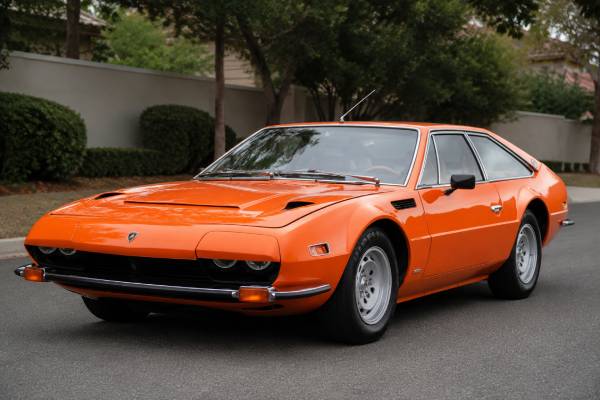
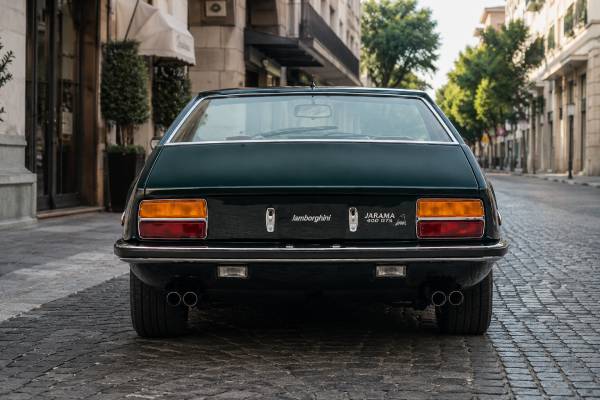
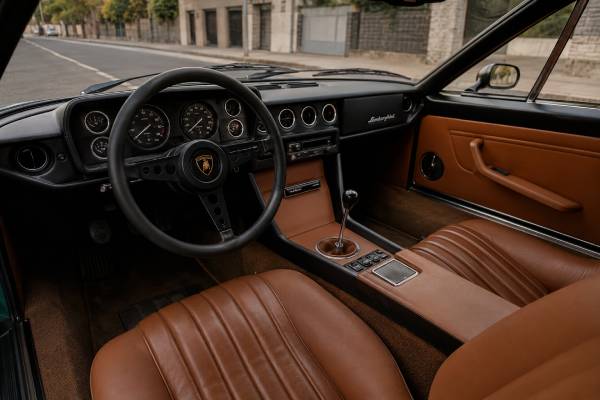
The Lamborghini Jarama 400 GTS is the sharp-edged, front-engine V12 Lamborghini that many people still overlook, yet it is one of the most interesting collector cars from Sant’Agata’s early years. Built as the sportier development of the Jarama 400 GT, the GTS kept the grand-touring layout, compact 2+2 cabin, and hand-built character, but added a stronger 3,929 cc V12, visual changes, improved cabin details, and more usable equipment. It was never a mass-market success, which is exactly why it matters now: only about 150 GTS examples were built, and each one sits at the crossroads between the elegant 1960s Lamborghini GTs and the wedge-era drama that followed. For buyers, the Jarama GTS is not just a rare V12 coupe. It is a car where originality, documentation, restoration quality, and specialist inspection matter as much as the driving experience.
Table of Contents
- Why the Jarama GTS Still Matters
- V12 Specifications and Chassis Details
- Production Changes, Options, and Identification
- Bertone Design and Grand-Touring Engineering
- How the Jarama GTS Drives
- Maintenance, Restoration, and Known Risks
- Market Values and Buyer Checklist
Why the Jarama GTS Still Matters
The Jarama 400 GTS matters because it was Lamborghini’s last true front-engine V12 2+2 grand tourer before the company’s image became dominated by mid-engine supercars. It is rarer than many better-known Lamborghinis, yet it remains more approachable in the market than a Miura, early Countach, or perfect Espada.
Lamborghini introduced the Jarama line at the Geneva Motor Show in 1970 as a replacement for the Islero. It used the proven front-mounted V12 layout that had helped define the company’s early identity through the 350 GT, 400 GT, Islero, and Espada. The GTS arrived in 1972 as the more developed and more powerful version, often referred to as the Jarama S depending on market, source, and period literature.
The car was designed by Bertone, with Marcello Gandini’s angular influence visible in the low nose, straight waistline, clipped tail, and partially covered headlamps. Body production and assembly were handled by Carrozzeria Marazzi, a small coachbuilder that also worked on the Islero. That matters today because the Jarama is not a high-volume pressed-steel product with perfect interchangeability. It is a hand-built Italian GT, and two cars can vary in details, panel fit, trim finish, and restoration difficulty.
The GTS sits in an unusual position in Lamborghini history. It is more compact and more aggressive than the Espada, more practical than the Miura or Countach, and more visually modern than the Islero. It also shows how Lamborghini tried to carry the gentleman’s express idea into the 1970s. The result was not a soft luxury coupe. It was a fast, loud, carbureted V12 car with a usable cabin, a proper manual gearbox in most examples, and a shape that divides opinion in the best collector-car way.
Ferruccio Lamborghini was known to favor the Jarama, and that detail helps explain the car’s character. It was not built to be the wildest poster car in the showroom. It was built as a fast, comfortable, expensive GT for people who wanted long-distance V12 performance with more usability than a mid-engine exotic. Today, that blend gives the Jarama GTS its appeal: rarity, period engineering, a dramatic V12, and a lower public profile than Lamborghini’s obvious icons.
For collectors, the GTS is especially attractive because it combines small production with clear visual and mechanical differences from the standard Jarama 400 GT. For drivers, it offers the mechanical theater of a classic Lamborghini without the same level of public attention or market pressure. For buyers, it requires serious due diligence because restoration costs can quickly exceed any apparent purchase-price advantage.
V12 Specifications and Chassis Details
The Jarama 400 GTS uses Lamborghini’s 3,929 cc naturally aspirated V12, upgraded to 365 hp at 7,500 rpm. It is a front-engine, rear-drive grand tourer with independent suspension, disc brakes, and the kind of mechanical density that makes expert maintenance essential.
| Category | Specification |
|---|---|
| Model | Lamborghini Jarama 400 GTS / Jarama S |
| Internal code | L405 |
| Production period | 1972–1976 model coverage |
| Body style | 2-door 2+2 coupe |
| Layout | Front engine, rear-wheel drive |
| Engine | 60-degree V12, four overhead camshafts |
| Displacement | 3,929 cc / 3.9 liters |
| Induction and fuel system | Naturally aspirated, six twin-choke Weber carburetors |
| Power | 365 hp / 365 CV at 7,500 rpm |
| Torque | About 300–302 lb-ft / about 410 Nm at 5,500 rpm |
| Transmission | 5-speed manual; automatic transmission reported on some later GTS cars |
| Suspension | Independent front and rear suspension with coil springs and anti-roll bars |
| Brakes | Four-wheel disc brakes; GTS commonly listed with ventilated front discs |
| Tires | 215/70 VR15 period specification |
| Wheelbase | About 2,375–2,380 mm / 93.5–93.7 in |
| Length | About 4,483–4,485 mm / 176.5–176.6 in |
| Width | About 1,819–1,820 mm / 71.6 in |
| Height | About 1,189–1,190 mm / 46.8 in |
| Weight | About 1,340–1,450 kg depending on source, trim, and measurement method |
| Top speed | Period and reference figures generally around 160–165 mph / 260–266 km/h |
| 0–100 km/h | Often quoted around 6.8 seconds, condition dependent |
The numbers need context. Period Italian performance data was not always measured with modern consistency, and figures can vary by gearing, tire type, carburetor tune, road conditions, and whether the car was tested as delivered or carefully prepared. A healthy Jarama GTS is fast by 1970s GT standards, but the value of the car is not only in acceleration. The appeal is the way the V12 builds revs, the mechanical intake noise from the carburetors, and the relaxed but serious long-distance character.
The engine is part of the Bizzarrini-origin Lamborghini V12 family, developed over time for road use. In the Jarama GTS, it is mounted longitudinally ahead of the cabin. The layout gives the car a long hood, a heavy mechanical center of gravity, and a very different feel from mid-engine Lamborghinis. It is not as instantly dramatic in balance as a Miura, but it is more conventional and more stable as a high-speed GT.
The chassis was related to Lamborghini’s earlier front-engine cars, with the Jarama using a shorter wheelbase than the Espada. Its compact size is important. The car looks broad and low, but it is not a huge GT by modern standards. The short wheelbase helps it feel more alert, while the V12 and cabin equipment keep it from feeling lightweight.
The GTS upgrade was not just a badge change. The higher-output engine, revised exterior details, improved seating, dashboard changes, and standard power steering on the GTS made it the more complete version. Buyers should still verify the exact specification of any individual car, because low-volume Lamborghini production can include running changes, market differences, owner modifications, and restoration-era substitutions.
Production Changes, Options, and Identification
The Jarama GTS is usually identified by its hood intake, front-fender vents, revised wheels, updated interior, and 365 hp engine specification. Production was very small, with Lamborghini’s own historical material commonly citing 177 Jarama GTs and 150 Jarama GTS cars.
The earlier Jarama 400 GT was built first, with 350 hp and a slightly cleaner exterior. The GTS, introduced in 1972, added enough changes to make it the more desirable version for many buyers. It was still the same basic concept: a hand-built 2+2 Lamborghini coupe with the V12 in front and drive going to the rear wheels.
Key GTS identifiers include:
- A raised central air intake on the hood.
- Air outlets or vents on the front fenders.
- Later-style Campagnolo wheels on five-bolt hubs.
- Revised cabin trim with an aluminum dashboard fascia.
- Reworked switch placement.
- More supportive front seats with contoured backrests.
- Improved rear-seat room compared with the earlier layout.
- Standard power steering on the GTS according to Lamborghini’s official historical description.
The name can cause confusion. Some sources use Jarama S, others use Jarama GTS, and some listings mix “400 GTS,” “S,” and “Jarama 400 GT S.” A buyer should not rely on the badge alone. The chassis number, engine number, body details, interior features, original delivery documents, factory records, and Lamborghini Polo Storico information are all more important than the wording in a classified advertisement.
Documentation that matters
A serious Jarama GTS should come with more than a nice story. The best cars have a chain of evidence that supports what the car is and how it has been cared for. Important documents include:
- Factory or heritage confirmation.
- Chassis and engine-number records.
- Original color and interior information.
- Early registration or delivery paperwork.
- Restoration invoices with photos.
- Specialist maintenance history.
- Carburetor, ignition, cooling, brake, and suspension service records.
- Ownership history that explains long gaps, storage, or export moves.
Matching numbers matter because the Jarama is rare and because its V12 is central to its value. A replacement engine does not make the car worthless, but it changes the buying conversation. The same is true for color changes, interior retrims, later wheels, non-original steering wheels, modern audio changes, and hidden structural repairs. Some changes are reversible. Others are expensive to correct.
Options and special-order details
Factory and period equipment can vary. Air conditioning, power windows, leather trim, special colors, market-specific lights, and transmission choices can all affect desirability. A small number of later GTS cars are reported with automatic transmission availability. For most collectors, the five-speed manual is the preferred configuration because it gives the car the full classic Lamborghini GT experience and is easier to position in the collector market.
Color matters more than many buyers expect. Strong period Lamborghini colors can make a Jarama look far more special than resale-red or conservative repaint choices. However, originality usually beats drama. A verified original color, even if unusual, can be a major advantage. A non-original color may still be acceptable if the work is excellent and the price reflects the change.
Bertone Design and Grand-Touring Engineering
The Jarama GTS looks the way it does because Lamborghini was moving from 1960s curves into 1970s wedge design. Its shape is not traditionally pretty, but it is distinctive, purposeful, and deeply tied to the period that produced it.
Bertone’s design gave the Jarama a blunt, low nose with semi-covered headlights. When the lights are not in use, the “eyelid” treatment gives the front end a narrow, watchful expression. The sides are defined by a straight beltline, a large rear quarter-glass area, and compact proportions compared with the Espada. The fastback-like rear profile is deceptive because the car uses a trunk lid rather than a full hatch.
The GTS details make the design more assertive. The hood scoop breaks up the broad front panel and signals the stronger engine. The fender vents add visual activity and help separate the GTS from the earlier GT. The updated wheels give the car a more modern stance. These changes are small in isolation, but together they make the GTS look more muscular and less formal.
Inside, the GTS is pure 1970s Italian exotic GT. The dashboard layout is low and wide, with an aluminum fascia and a more purposeful feel than the earlier car. The seating update was not cosmetic only; it helped rear-seat space by reshaping the front backrests. The rear seats are still best thought of as occasional seating, but the Jarama is more usable than a two-seat supercar.
The engineering choices reflect Lamborghini’s grand-touring priorities. The V12 sits up front for service access, cabin packaging, cooling airflow, and luggage space. The independent suspension gives the car high-speed composure, but it depends heavily on correct bushings, dampers, alignment, and tires. The disc brakes are capable for the period, but they must be in top condition. A tired braking system can make the car feel much older and heavier than it should.
The Jarama also has a distinct sound signature. It is not just an exhaust note. Much of the drama comes from the six Weber carburetors, the chain of mechanical sounds from the valve gear and accessories, and the hard-edged V12 note as the engine climbs toward high rpm. A well-tuned car sounds clean and eager. A badly tuned one can cough, hesitate, run hot, smell rich, and feel disappointing.
Hand-built construction is part of the appeal and part of the risk. Panel gaps, trim alignment, door fit, glass sealing, and interior finish need to be judged with knowledge of the model, not with modern mass-production expectations. A restored Jarama that looks “too perfect” may still be excellent, but buyers should check whether the work respected original details or simply made the car glossy.
How the Jarama GTS Drives
A good Jarama GTS drives like a compact, muscular V12 grand tourer rather than a delicate sports car. It rewards smooth inputs, proper warm-up, and mechanical sympathy, and it feels best on open roads where the engine can breathe.
The first impression is usually the engine. The V12 is flexible enough for relaxed driving, but it becomes much more alive as revs build. Below the main power band, the car feels like a strong classic GT. Above that, it becomes sharper, louder, and more exotic. Throttle response depends heavily on carburetor synchronization, ignition health, fuel delivery, and engine temperature. A sorted car pulls cleanly; a neglected one can feel flat or uneven.
The five-speed manual gearbox is a major part of the experience. It should feel mechanical and deliberate, not vague or obstructive once warm. Cold shifts may require patience, especially into lower gears, but serious grinding, jumping out of gear, or noisy bearings point to expensive work. Clutch weight varies with condition and setup. A heavy clutch is expected, but an unpleasant or inconsistent action deserves inspection.
Power steering makes the GTS more usable than a heavy unassisted front-engine exotic. At low speed, the car still feels substantial. At higher speed, it settles into the road with the long-legged confidence expected of a classic GT. Steering feedback is not modern-rack sharp, but it should be stable, progressive, and accurate when the suspension is fresh.
The ride can surprise people. On correct tires and healthy dampers, the Jarama is firm but not punishing. It was built for fast road use, not track-day stiffness. Poor tire choice can ruin the car. Overly modern low-profile tires, old hardened rubber, or incorrect sizing can make the steering nervous and the ride harsh. Period-correct high-speed-rated tires are important for both feel and safety.
The brakes require realistic expectations. The car is capable of serious speed, and its braking system must be maintained accordingly. Pedal feel should be firm and confidence-inspiring. Pulling, vibration, weak response, or a sinking pedal should be treated as more than routine old-car behavior. Brake hydraulics, flexible hoses, calipers, discs, and master-cylinder condition all matter.
Cabin experience is part luxury GT and part mechanical theater. Heat, noise, fuel smell, ventilation quality, and air-conditioning performance can vary widely. A freshly restored car may feel composed, while a tired car may feel hot, loud, and fussy. The difference between a sorted Jarama and an average one is huge.
The Jarama GTS is not a casual city car. It can handle traffic if maintained well, but it prefers flowing roads, steady cooling airflow, and a driver who understands old carbureted engines. It should be warmed properly, driven regularly, and checked often. Used that way, it offers something modern supercars cannot: a direct, analog, front-engine Lamborghini V12 experience with a real grand-touring personality.
Maintenance, Restoration, and Known Risks
The biggest ownership risk is not ordinary reliability; it is the cost of correcting decades of neglect, corrosion, poor repairs, and incorrect restoration work. A cheap Jarama GTS can become one of the most expensive ways to buy an early Lamborghini V12.
The V12 itself is strong when properly maintained, but it is complex, expensive, and intolerant of careless work. Carburetor tuning, ignition setup, valve adjustment, timing-chain condition, cooling efficiency, and oil leaks need specialist attention. A car that has sat unused may need far more than a fluid change. Fuel tanks, fuel lines, pumps, carburetor seals, cooling hoses, radiator condition, and water pump health should all be checked before real road use.
Common inspection areas include:
- Oil leaks from cam covers, timing covers, sump areas, and seals.
- Timing-chain noise or evidence of poor tensioner maintenance.
- Carburetor wear, air leaks, incorrect jets, and poor synchronization.
- Overheating caused by blocked radiators, weak fans, old hoses, or poor tuning.
- Fuel smell from aged lines, tanks, pumps, or carburetor seals.
- Weak charging or starting from tired wiring and old connectors.
- Gearbox noise, worn synchros, clutch wear, and hydraulic leaks.
- Differential noise and driveline vibration.
- Worn suspension bushings, ball joints, dampers, and steering components.
- Brake caliper sticking, old hoses, corroded lines, and tired master cylinders.
Corrosion is a serious issue. The Jarama’s body and structure need close inspection by someone who understands coachbuilt Italian cars. Rust can appear in floors, sills, wheel arches, lower doors, suspension mounting areas, front and rear valances, trunk sections, battery areas, and around glass. Fresh paint can hide expensive problems. Magnet checks and paint-depth readings help, but they are not enough. The car should be inspected on a lift, with trim, underbody, and known trap areas reviewed carefully.
Accident damage is another major concern. Because these cars were rare even when new, some repairs were done without proper factory panels or jigs. Poor front-end repairs can affect cooling, panel fit, headlamp operation, suspension alignment, and value. Uneven gaps are not always proof of a crash on a hand-built car, but they are always a reason to look deeper.
Interior restoration can be surprisingly costly. Correct leather, stitching patterns, dashboard finishes, switchgear, gauges, carpets, headliner materials, and seat shapes all affect authenticity. A retrim that looks attractive but ignores original details may reduce collector appeal. Missing GTS-specific interior pieces can be hard to replace.
Parts availability is better than it once was for some classic Lamborghinis, helped by heritage support and specialist suppliers, but buyers should not assume everything is easy. Mechanical parts may be rebuildable. Trim, glass, lights, body panels, and model-specific cabin pieces can be difficult, slow, and expensive. The best purchase is almost always the most complete, correct, and well-documented car, not the cheapest project.
Restoration versus preservation
A preserved, honest Jarama GTS can be more desirable than a shiny car restored without records. Original paint, original interior, matching numbers, and continuous history carry real weight. However, mechanical neglect should not be romanticized. A car can be cosmetically original and mechanically unsafe.
The ideal car has the right balance: authentic presentation, known history, careful mechanical work, and no hidden structural problems. Upgrades should be judged carefully. Sensible improvements such as discreet cooling-system upgrades, modern fuel-safe hose materials, improved ignition reliability, or rebuilt braking components can make the car better to use. Visible modifications that erase the car’s period identity are less attractive to collectors.
Market Values and Buyer Checklist
The Jarama GTS remains undervalued compared with Lamborghini’s most famous V12 models, but it is no longer a forgotten bargain. In early 2026, public guide and auction data often place usable GTS examples around the low-six-figure range, while exceptional, freshly restored, rare-color, or heavily documented cars can ask much more.
The market is thin, which makes pricing tricky. With only about 150 GTS cars built, there may be few public sales in any given year. One sale can influence perception, but it may not define the whole market. A car sold cheaply may have needs that are not obvious in a headline result. A high asking price may reflect restoration cost, rarity, color, or seller optimism rather than achieved value.
Value is driven by the following factors:
- Verified GTS identity.
- Matching engine and major components.
- Original color and interior combination.
- Manual transmission.
- Factory or Polo Storico documentation.
- Long-term ownership history.
- High-quality restoration with photos and invoices.
- Original interior or careful period-correct retrim.
- Correct GTS exterior details.
- Strong mechanical condition after real road use, not just static display.
- Absence of corrosion and accident damage.
- Specialist inspection by a known Lamborghini expert.
A buyer should avoid cars with vague histories, missing numbers, fresh paint over unknown metal, poor panel fit, non-working systems, unverified engine claims, incomplete interiors, overheating, weak oil pressure, gearbox noise, or “easy finishing” language. On a Jarama GTS, easy finishing is rarely easy.
| Priority | What to check | Why it matters |
|---|---|---|
| Identity | Chassis number, engine number, GTS features, documentation | Confirms the car is the version being advertised |
| Body and structure | Sills, floors, arches, suspension points, prior crash repair | Body restoration can exceed mechanical repair costs |
| Engine health | Compression, leakdown, oil pressure, leaks, cooling, carburetion | V12 rebuilds are specialist, lengthy, and expensive |
| Drivetrain | Gearbox synchros, clutch, differential, propshaft vibration | Poor shifting or noise can signal major work |
| Brakes and suspension | Calipers, hoses, discs, bushings, dampers, steering play | These systems define whether the car feels safe and valuable |
| Interior originality | Seats, dashboard fascia, gauges, switches, carpets, trim | GTS-specific and period-correct parts can be hard to replace |
| Road test | Warm starting, hot idle, full-throttle pull, cooling stability | A static inspection cannot reveal all carbureted V12 issues |
The best Jarama GTS to buy is not necessarily the lowest-mileage car. A well-maintained car that has been driven regularly can be a safer purchase than a stored car with ancient tires, stale fuel residue, dry seals, and a beautiful odometer reading. Mileage matters, but condition and proof matter more.
For long-term collectability, the Jarama GTS has several strengths: tiny production, V12 power, Bertone design, direct connection to Lamborghini’s early GT tradition, and a price position below the brand’s most famous classics. Its weakness is narrower demand. Not every Lamborghini buyer understands the shape or wants a front-engine 2+2. That narrower audience keeps values more restrained, but it also means knowledgeable buyers can still find character and rarity without chasing the obvious icons.
The right buyer should budget beyond the purchase price. Pre-purchase inspection, transport, recommissioning, tires, fluids, carburetor work, cooling checks, brake service, and sorting after first use should all be expected. A Jarama GTS is a serious classic Lamborghini, not a normal old coupe. Buy the best documented and most mechanically honest example you can find, even if it costs more at the start.
References
- Lamborghini History – Jarama | Lamborghini.com 2026
- Automobili Lamborghini’s history on the ice in St. Moritz 2024
- Lamborghini Polo Storico | Lamborghini.com 2026
- 1976 Lamborghini Jarama 400 GTS | Hagerty Valuation Tools 2026
- Lamborghini Jarama S / GTS Market – CLASSIC.COM 2026
Disclaimer
This article is for informational purposes only and is not a substitute for professional diagnosis, repair, appraisal, or restoration advice. Specifications, torque values, service intervals, procedures, and equipment can vary by VIN, market, production date, and individual vehicle history. Always verify details against official service documentation and consult a qualified Lamborghini specialist before buying, repairing, restoring, or driving a classic Jarama GTS.
If this guide helped you, please consider sharing it on Facebook, X/Twitter, or your favorite enthusiast community to support our work.