
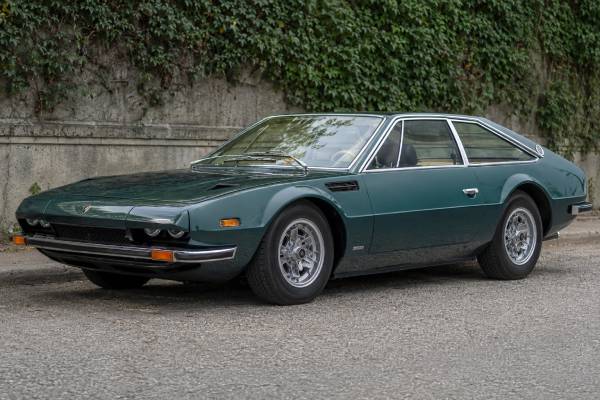
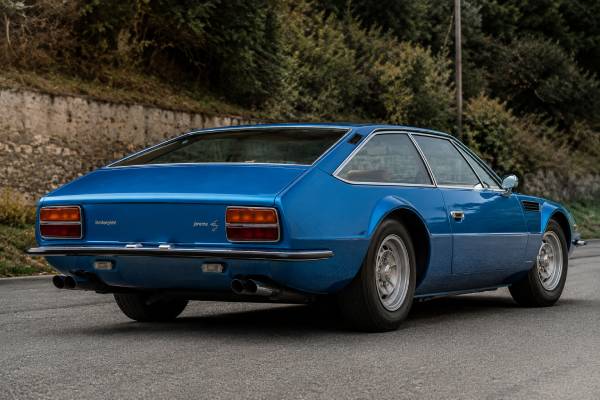
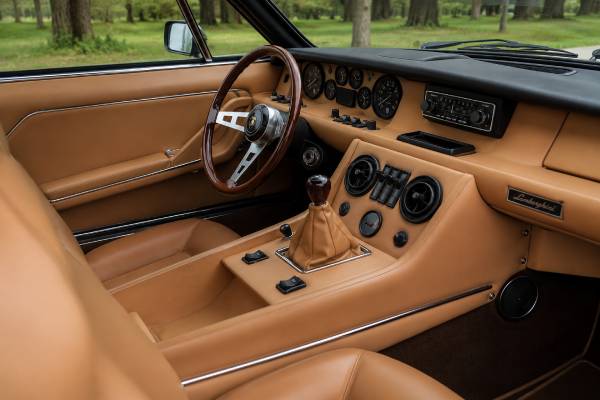
The Lamborghini Jarama 400 GT is one of the most overlooked V12 Lamborghinis, but it is not a lesser car. It is the final development of Lamborghini’s early front-engine 2+2 grand tourer idea: a compact, sharp-edged, hand-built coupe with a 3.9-liter V12, a five-speed manual gearbox, rear-wheel drive, and seating that was more useful than a Miura’s but far more intimate than an Espada’s. Built in very small numbers from 1970 to 1972, the Jarama GT sits at a fascinating point in Lamborghini history, between the elegant 400 GT and Islero era and the wedge-shaped Countach age. For buyers, it offers rarity, sound, mechanical character, and relative value. For owners, it demands the patience and budget of a true classic exotic. A good Jarama is special; a neglected one can become a very expensive lesson.
Table of Contents
- What the Jarama 400 GT Meant
- L403 V12, Chassis, and Key Specs
- Production Changes and Authenticity Clues
- Gandini Bodywork and Period Engineering
- How the Jarama 400 GT Drives
- Maintenance, Restoration, and Known Risks
- Market Values and Buying Checklist
What the Jarama 400 GT Meant
The Jarama 400 GT was Lamborghini’s last classic front-engine 2+2 V12 coupe. It replaced the Islero, borrowed heavily from the earlier 400 GT and Islero mechanical layout, and gave Lamborghini a sharper, more modern grand tourer for the early 1970s.
Lamborghini introduced the Jarama at the 1970 Geneva Motor Show. The timing matters. The Miura had already made Lamborghini famous for mid-engine drama, the Espada had proved there was demand for a fast four-seat Lamborghini, and the Countach concept was about to pull the brand into a more radical future. The Jarama arrived between those worlds. It was not as glamorous as a Miura, not as spacious as an Espada, and not as shocking as the Countach. Its purpose was different: it was meant to be a fast, compact, luxurious 2+2 for a driver who wanted a serious V12 Lamborghini without the theater of the company’s most extreme cars.
The name followed Lamborghini’s bullfighting tradition. Jarama refers to a Spanish region associated with fighting bulls, although the name is often confused with the Jarama racing circuit near Madrid. The car’s personality fits the name well. It is muscular, blunt, and compact, with a low roofline, wide stance, and a nose that looks restrained from some angles and aggressive from others.
Styling came from Marcello Gandini at Bertone, the same design mind connected with the Miura and Countach. The Jarama does not have the flowing beauty of the Miura or the poster-car shock of the Countach, but that is part of its appeal today. It is a thinking enthusiast’s Lamborghini: angular, rare, slightly strange, and full of details that reward close inspection.
The Jarama 400 GT also represents a turning point in Lamborghini’s business history. The company was still small, production was low, and build processes were far more artisanal than modern supercar buyers would expect. Period Italian exotic-car production involved hand fitting, supplier variation, and model-year changes that did not always follow neat calendar-year rules. That makes every surviving Jarama worth studying carefully.
Today, the Jarama 400 GT is collectible because it combines three qualities that rarely meet at a relatively accessible price: a hand-built V12 Lamborghini, very low production, and genuine usability as a grand tourer. It is not a cheap car to buy well or own properly, but compared with better-known early V12 Lamborghinis, it can still look undervalued when the example is complete, correct, and properly maintained.
L403 V12, Chassis, and Key Specs
The Jarama 400 GT’s core specification is simple and serious: a front-mounted naturally aspirated Lamborghini V12, a five-speed manual gearbox, rear-wheel drive, independent suspension, and four-wheel ventilated disc brakes. The engine code is commonly listed as L403, with displacement usually given as 3,929 cc, although some period and secondary references round or vary the figure slightly.
| Item | Specification |
|---|---|
| Model | Lamborghini Jarama 400 GT |
| Production period | 1970–1972 for the original GT version |
| Body style | Two-door 2+2 coupe |
| Engine code | L403 |
| Engine layout | Front longitudinal 60-degree V12 |
| Displacement | 3,929 cc, commonly rounded to 3.9 or 4.0 liters |
| Valve gear | Double overhead camshafts per bank, two valves per cylinder |
| Induction | Six twin-choke Weber carburetors |
| Power | 350 hp / 350 CV at 7,500 rpm, period rating |
| Torque | About 289 lb-ft / 393 Nm at 5,500 rpm |
| Transmission | Five-speed manual |
| Drive | Rear-wheel drive |
The engine is the heart of the car. It belongs to Lamborghini’s early V12 family, a high-revving all-alloy design with a chain-driven quad-cam layout and a sound that separates it from more ordinary grand tourers. In the Jarama GT, the engine is not hidden behind the driver like a Miura’s. It sits ahead of the cabin, giving the car a more traditional GT balance and a long, mechanical character from the front of the chassis.
The five-speed manual gearbox is central to the experience. This is not a modern gearbox that disappears into the background. It needs warmth, deliberate timing, and a driver who understands mechanical sympathy. When set up correctly, it gives the car the classic long-legged feel of a high-speed Italian GT. When worn or cold, it can feel heavy, reluctant, or noisy, so gearbox condition should never be dismissed during an inspection.
| Area | Jarama 400 GT detail |
|---|---|
| Chassis and body | Steel platform and steel body construction |
| Front suspension | Independent double wishbones, coil springs, telescopic dampers, anti-roll bar |
| Rear suspension | Independent double wishbones, coil springs, telescopic dampers, anti-roll bar |
| Brakes | Ventilated disc brakes front and rear |
| Steering | Period mechanical steering system; power assistance was not a defining GT feature |
| Wheelbase | About 2,380 mm |
| Length | About 4,485–4,486 mm |
| Width | About 1,820 mm |
| Height | About 1,190 mm |
| Published weight | Roughly 1,450–1,540 kg depending on measurement method and source |
| Top speed | About 260 km/h / 161 mph |
| 0–100 km/h | Commonly quoted around the high-six to low-seven-second range |
| Fuel capacity | About 100 liters |
The published data should be used with care. Classic Lamborghini figures were not always recorded with modern consistency, and later databases sometimes mix Jarama GT and Jarama GTS information. For buying or restoration work, the exact car matters more than a single printed number. Always compare the chassis number, engine number, equipment, and physical specification against factory documentation or a recognized Lamborghini specialist’s inspection.
Production Changes and Authenticity Clues
The Jarama 400 GT is rare enough that authenticity matters more than normal used-car condition. Lamborghini’s own historical material lists 177 Jarama GTs before the later GTS, while some market databases and registries use 176 because of counting differences, model-year overlap, or how transitional cars are classified.
The original GT was followed by the Jarama GTS, also known as the Jarama S in some markets and references. The GTS brought more power, more comfort equipment, and easy visual identifiers. Because values, parts, and originality depend on the exact version, buyers should learn the differences before inspecting a car.
| Feature | Jarama 400 GT | Jarama GTS / S |
|---|---|---|
| Main production era | 1970–1972 | From 1972 onward |
| Factory-listed output | 350 CV at 7,500 rpm | 365 CV at 7,500 rpm |
| Production | About 177 cars by factory historical count | About 150 cars by factory historical count |
| Visual identifiers | Cleaner bonnet, early wheel and trim details | Central bonnet intake, different wheels, revised interior details |
| Buyer concern | Originality and completeness of early GT-specific parts | Correct GTS equipment and avoidance of mixed-spec cars |
Numbers and documentation
A Jarama’s value depends heavily on paperwork. The ideal file includes old registration documents, import records, service invoices, restoration photographs, ownership history, period manuals, and evidence that the engine, gearbox, and body identity align with the car’s factory record.
Important checks include:
- Chassis number and engine number consistency
- Evidence of original delivery market
- Original color and interior trim confirmation
- Gearbox and differential history
- Carburetor type and setup
- Correct wheels, lights, badges, and dashboard details
- Records for major engine, cooling, brake, and suspension work
- Restoration invoices that show who did the work and what was replaced
Lamborghini Polo Storico has made factory heritage more important for classic Lamborghinis. Its archive and certification work give buyers a route to confirm originality against historical records. A Polo Storico-certified Jarama, or one with strong documentation that could support certification, will usually be easier to trust than a car with gaps, swapped components, or vague restoration claims.
Factory options and special details
The Jarama was not built like a modern configurator car with neat option packages and digital build sheets. Equipment varied by market, buyer request, and production period. Leather trim, air conditioning, specific exterior colors, wheel details, lighting differences, and roof treatment all matter because many parts are difficult to source now.
One notable feature associated with the Jarama is the optional removable roof-panel arrangement often described as a targa-style roof. This is rare and should be inspected carefully. Poorly repaired roof openings, leaks, panel fit problems, or missing trim can become expensive problems because fabrication quality matters and replacement parts are not easy to find.
For collectors, originality is not only about having the right engine. It is also about the smaller items that make the car feel correct: switchgear, gauges, steering wheel, seats, carpets, wheel finishes, glass, lighting, and badges. Missing details can be harder to replace than major mechanical parts because the market is thin.
Gandini Bodywork and Period Engineering
The Jarama looks the way it does because Lamborghini wanted a compact, modern V12 grand tourer for a changing decade. Gandini’s design gives it a low, wide, geometric shape with semi-covered headlights, a strong beltline, and a fastback rear that makes the car look shorter and tougher than an Espada.
The front end is the most recognizable detail. The partially covered headlights give the Jarama a guarded expression. They are not pop-up lights in the later wedge-car sense; instead, the “eyelid” treatment creates a distinctive face while keeping the nose low and clean. The effect is subtle compared with a Countach, but it was very modern in 1970.
The side profile is pure early-1970s Bertone discipline: crisp surfaces, little decoration, and a shape that relies on proportion rather than curves. The Jarama is much more compact than the Espada, and its shorter wheelbase changes the whole mood. Where the Espada feels like a four-seat express, the Jarama feels like a dense, muscular 2+2 built around a large engine and two serious front occupants.
The rear design is also important. The fastback glass and trunk line create a single swept surface. It gives the car luggage usefulness without turning it into a conventional sedan-like coupe. The rear seat is present, but it is best thought of as occasional space for small passengers, luggage overflow, or short-distance use. That matters for ownership: the Jarama is more usable than a two-seat exotic, but it is not a relaxed family GT in the modern sense.
Packaging and cooling
The front-mounted V12 dictates the car’s engineering character. The engine bay is crowded, hot, and packed with carburetors, ignition hardware, coolant plumbing, and exhaust heat. Correct cooling system condition is essential. A Jarama that behaves well in cool weather but struggles in traffic is not “normal old Lamborghini behavior”; it is a warning sign that the radiator, fans, water pump, hoses, ignition timing, carburetion, or engine condition needs attention.
The fuel system also deserves respect. Six twin-choke Webers can deliver crisp response and a wonderful intake sound, but only when clean, synchronized, and correctly jetted. Old fuel lines, weak pumps, varnished carburetor passages, air leaks, and poor linkage adjustment can turn a great V12 into a rough, hot, unpleasant engine.
Interior character
Inside, the Jarama feels hand-built and period-correct. The dashboard, gauges, leather, switches, and seating position give it the atmosphere of a small-production Italian exotic rather than a mass-produced luxury coupe. Air conditioning was part of the car’s luxury appeal, but old systems often need careful rebuilding to work properly.
The driving position is low and purposeful, with the long hood ahead and a cabin that feels more intimate than the Espada’s. Visibility is better than many mid-engine exotics, but the car still requires awareness. The nose, wide body, and heavy controls remind the driver that this was built before modern ergonomics and assistance systems softened the edges.
How the Jarama 400 GT Drives
A sorted Jarama 400 GT drives like a compact, old-school V12 grand tourer, not like a modern supercar. It rewards smooth inputs, warm fluids, correct carburetor tune, and a driver who lets the car build speed rather than forcing it to behave like a new performance car.
The first impression is usually the engine. The L403 V12 is smooth, mechanical, and eager to rev, with a layered sound from intake, valvetrain, exhaust, and gear whine. It does not need turbo boost or electronic modes to feel special. The power delivery is progressive below the midrange, then more urgent as the revs rise. At 7,500 rpm, the quoted power peak tells you what kind of engine this is: it was built to breathe.
Throttle response depends heavily on carburetor health. A correctly tuned car should pull cleanly, respond evenly, and idle without constant drama once warm. A poorly tuned one may stumble, smell rich, foul plugs, hesitate under load, or run hot. Many disappointing driving impressions come from cars that are tired, incorrectly set up, or only exercised gently.
The gearbox should be treated with patience. Cold shifts may be stiff, and rushing the lever is a mistake. Once warm, a good gearbox has a satisfying mechanical feel. Any serious crunching, jumping out of gear, severe whine, or clutch drag needs specialist diagnosis because gearbox work on a classic Lamborghini is not a casual repair.
Steering effort is part of the car’s character. At parking speeds, the Jarama can feel heavy and physical, especially on period-style tires. At road speed, the weight makes more sense. The car settles into a stable, planted rhythm, and the front-engine layout gives confidence on fast roads. It is not as light or delicate as some 1960s sports cars, but it feels solid and serious.
The ride depends greatly on suspension condition. Fresh dampers, bushings, ball joints, wheel bearings, and correct tire choice transform the car. Worn suspension can make a Jarama feel vague, harsh, or nervous. Because many examples cover low mileage, age-related deterioration can be more important than odometer reading.
Braking performance was strong for the period, with ventilated discs at all four corners, but expectations must be realistic. Brake feel, servo condition, flexible hoses, calipers, fluid age, and pad compound all matter. A good system should stop the car with confidence; a neglected one may pull, fade, drag, or feel wooden.
The Jarama is happiest as a fast road car. It can handle mountain roads, long highway journeys, and spirited weekend use when prepared correctly. It is less happy in stop-start traffic on a hot day, especially if the cooling or fuel system is marginal. That is not a flaw as much as a reminder that a 1970s carbureted V12 Lamborghini needs active ownership.
Maintenance, Restoration, and Known Risks
The Jarama 400 GT is reliable only when it is maintained like the rare exotic it is. Neglect is expensive because the car combines a complex V12, carburetors, hand-built bodywork, scarce trim, and age-sensitive electrical, fuel, brake, and cooling systems.
The engine itself is strong in principle, but condition varies widely. A car that has been stored, lightly used, or cosmetically restored without proper mechanical work can hide serious cost. Before purchase, a specialist should check compression, leak-down, oil pressure, cam timing, valve adjustment history, carburetor condition, cooling behavior, exhaust smoke, crankcase breathing, and signs of past overheating.
Common mechanical priorities include:
- Carburetor cleaning, synchronization, linkage adjustment, and correct jetting
- Fuel line, pump, filter, and tank inspection
- Radiator, fan, thermostat, water pump, and hose renewal
- Ignition system inspection, including distributor, coils, plugs, and wiring
- Valve clearances and cam-chain-related checks
- Oil leaks from gaskets, seals, cam covers, and timing covers
- Clutch hydraulic condition and clutch wear
- Gearbox synchro, bearing, and linkage condition
- Differential noise and mount condition
Cooling is one of the most important inspection areas. Overheating can damage a V12 quickly, and a freshly painted engine bay does not prove the system is healthy. The car should idle, pull under load, and recover temperature properly after a spirited run. Electric fans should cut in reliably, and the radiator should show evidence of proper service rather than old solder patches and blocked cores.
Body and corrosion
The steel body and platform are major ownership risks. Rust repair on a Jarama is not like replacing a bolt-on panel on a common classic. Correct repair requires fabrication skill, careful alignment, and an understanding of the car’s structure and trim fit.
Inspect closely around:
- Sills, inner rockers, and jacking areas
- Floorpans and footwells
- Wheel arches and lower fenders
- Door bottoms and door skins
- Windshield and rear glass surrounds
- Trunk floor and spare-wheel area
- Front structure and radiator support
- Suspension pickup points
- Previous accident repairs and uneven panel gaps
A shiny car can still be dangerous financially. Thick paint, poor panel fit, bubbling seams, cracked filler, uneven undercoating, or missing photos from restoration work should slow the deal. A high-quality metal restoration is valuable. A cosmetic repaint over corrosion is not.
Trim, wheels, and electrical systems
Small parts can become big problems. Original lights, lenses, switches, dashboard parts, gauges, seats, badges, and trim pieces may be difficult or expensive to source. Campagnolo magnesium wheels need careful inspection for corrosion, cracks, repairs, and suitability for road use. Old magnesium wheels should not be trusted simply because they look clean.
Electrical problems are common on low-volume classic exotics. Expect to inspect grounds, fuse boxes, charging system performance, fan wiring, lighting circuits, gauges, switches, relays, and any non-original modifications. Poorly installed modern upgrades can create more trouble than the old wiring they were meant to improve.
A practical ownership plan should include specialist servicing, not just occasional oil changes. Even a good Jarama benefits from a baseline service after purchase: all fluids, filters, ignition checks, valve and carburetor setup, cooling system inspection, brake system flush, tire inspection, suspension review, and a road test by someone who knows early Lamborghinis.
Market Values and Buying Checklist
The Jarama 400 GT remains one of the more attainable classic V12 Lamborghinis, but cheap examples are usually cheap for a reason. As of mid-2026, public market data places many Jarama GT transactions and benchmarks around the high-five-figure to low-six-figure range, with excellent, documented, correct cars capable of bringing more.
The most important market point is this: restoration cost can exceed the value gap between a mediocre Jarama and a good one. A buyer who saves money on a rough car can easily spend far more correcting bodywork, engine issues, missing trim, old wiring, and incorrect details. Because production was tiny, there is no deep parts supply to rescue a careless purchase.
| Value factor | Why it matters |
|---|---|
| Original identity | Matching or well-documented engine, chassis, and body details support collector confidence. |
| Documentation | Old records, invoices, ownership history, and factory confirmation reduce uncertainty. |
| Body condition | Rust and poor accident repair are among the most expensive risks. |
| Mechanical health | V12, gearbox, differential, cooling, and brake work require specialist labor. |
| Completeness | Missing trim, wheels, lights, switches, and interior pieces can be hard to replace. |
| Restoration quality | A correct older restoration can be better than a fresh cosmetic job with weak records. |
| Color and specification | Original or desirable period colors and correct interior trim help market appeal. |
| Specialist inspection | An expert report can reveal six-figure risks before they become ownership problems. |
Cars to seek
The best Jarama 400 GT to buy is a complete, correct, regularly exercised car with strong records and no hidden bodywork story. It should start cleanly from cold, warm up properly, hold temperature, shift well once warm, pull evenly through the rev range, stop straight, and show no major structural corrosion.
Look for:
- Factory color and trim confirmation
- Long-term ownership or clear chain of custody
- Specialist service invoices
- Evidence of cooling, brake, suspension, and fuel-system renewal
- Correct Weber carburetors and original-style engine presentation
- Clean underside with documented metal repairs if restored
- Original wheels in safe inspected condition or correct replacements
- Interior that is usable and correct, not over-restored with wrong materials
- No unexplained engine swap, missing tags, or altered numbering
Cars to avoid
Avoid a Jarama that has an attractive exterior but weak evidence underneath. Fresh paint, new leather, and polished carburetors are not enough. The most dangerous cars are incomplete projects, cars with unclear identity, and cars restored by shops without Lamborghini experience.
Walk away or renegotiate hard if you find:
- Serious rust in structural areas
- Poor panel gaps with no accident explanation
- Engine overheating during inspection
- Low oil pressure or heavy smoke
- Gearbox crunching after warm-up
- Missing rare trim or incorrect dashboard parts
- Old tires and tired suspension presented as “low-mile original”
- Undocumented engine or color changes
- Seller resistance to specialist inspection
The Jarama’s long-term collectability looks strong because the ingredients are real: V12 engine, manual gearbox, Bertone/Gandini design, very low production, and a direct link to Lamborghini’s first decade. It is unlikely to become common, and good examples rarely appear in large numbers. The challenge is selectivity. Buy the best documented, most structurally sound car you can justify, even if the purchase price feels high. With a Jarama 400 GT, condition and correctness are not luxuries. They are the difference between owning a fascinating Lamborghini and funding an endless restoration.
References
- Lamborghini History – Jarama | Lamborghini.com 2026 (Manufacturer History) ([Lamborghini.com][1])
- Lamborghini Jarama GT: 50 years of style and power 2020 (Manufacturer News) ([Lamborghini.com][2])
- Lamborghini Jarama GT 400 – Specs & Performance – LamboCars 2015 (Technical Specifications) ([LamboCars][3])
- Lamborghini Polo Storico | Lamborghini.com 2026 (Certification and Restoration) ([Lamborghini.com][4])
- Lamborghini Jarama GT Market – CLASSIC.COM 2026 (Market Data) ([Classic.com][5])
Disclaimer
This article is for informational purposes only and is not a substitute for professional diagnosis, repair, appraisal, or pre-purchase inspection. Specifications, torque values, service intervals, procedures, and equipment can vary by VIN, market, production date, and individual vehicle history. Always verify details against official service documentation, factory records, and a qualified Lamborghini specialist before buying, restoring, repairing, or driving a Lamborghini Jarama 400 GT.
If this guide helped you, please share it on Facebook, X/Twitter, or your favorite car community to support our work and help more enthusiasts make informed classic Lamborghini decisions.