
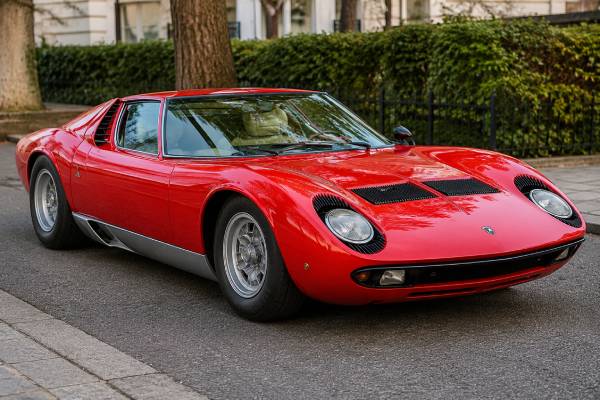
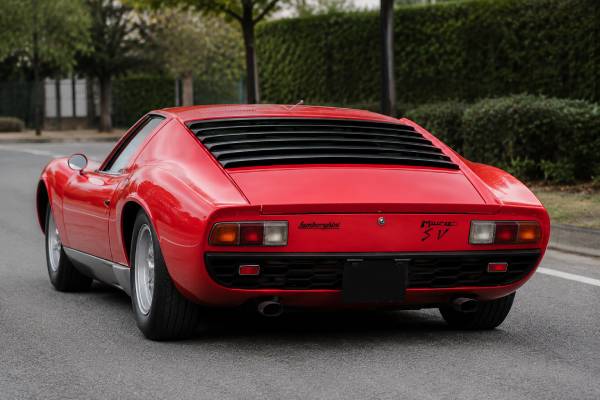
The Lamborghini Miura P400 S is the version that turned the original Miura from a shocking technical statement into a more complete exotic road car. It kept the beautiful Bertone body, transverse mid-mounted V12, low roofline, and theatrical presence of the early P400, then added more power, better cabin equipment, improved detailing, and the kind of polish wealthy late-1960s buyers expected. For collectors today, the P400 S sits in a sweet spot: rarer and more developed than the first Miura, but visually purer than the wider, later SV. It is still a demanding classic supercar, not a casual old sports car. The engine and gearbox layout, cooling needs, rust-prone structure, hand-built bodywork, and originality demands make expert inspection essential. A great P400 S is one of the defining Lamborghini road cars; a poor one can become a restoration project with seven-figure consequences.
Table of Contents
- Why the Miura P400 S Matters
- L406 V12 Specs and Chassis Data
- Production Details, Variants, and Originality
- Bertone Design and Mid-Engine Engineering
- Road Feel, Sound, and Performance
- Maintenance, Reliability, and Restoration Risk
- Market Value and Buyer Checklist
Why the Miura P400 S Matters
The Miura P400 S matters because it preserved the original Miura’s revolutionary shape and layout while making the car faster, richer, and more usable. It is the bridge between the raw first P400 and the more muscular P400 SV.
Lamborghini revealed the Miura in the mid-1960s when most fast road cars still followed the traditional front-engine grand touring formula. The Miura changed that conversation. Its V12 sat transversely behind the seats, driving the rear wheels through a compact transaxle. That placement gave the car a low nose, dramatic stance, and packaging that looked more like a racing prototype than a road-going GT.
The P400 S arrived after the first production Miura had already made Lamborghini famous worldwide. The “S” did not reinvent the car. Instead, it refined it. Power rose from the original 350 CV to 370 CV, trim quality improved, and the cockpit gained features such as power windows, revised switchgear, and available air conditioning. Chrome window surrounds, polished exterior details, and improved interior materials gave the S a more expensive feel without softening the car’s wild character.
The Miura’s story is also a story of young engineering confidence. Gian Paolo Dallara, Paolo Stanzani, Bob Wallace, and the wider Lamborghini team pushed the mid-engine idea forward while Ferruccio Lamborghini still preferred elegant high-speed GTs. Bertone, with Marcello Gandini shaping the body, turned that compact chassis into one of the most admired production car designs ever made.
For collectors, the P400 S has several layers of appeal:
- It keeps the famous “eyelash” headlight surrounds missing from many SV cars.
- It has the uprated 370 hp engine specification.
- It was built in far smaller numbers than ordinary mass-production sports cars.
- It represents the moment Lamborghini became a true supercar company.
- It has strong concours, auction, and preservation value when numbers, body stampings, colors, and documentation align.
The P400 S is not just valuable because it is beautiful. It is valuable because it marked a permanent shift in exotic-car engineering. After the Miura, the mid-engine supercar became the template for the Countach, Diablo, Murciélago, Aventador, and nearly every serious rival from Italy and beyond.
L406 V12 Specs and Chassis Data
The Miura P400 S uses Lamborghini’s 3,929 cc L406 V12 in a transverse mid-engine layout, tuned to about 370 hp. Its technical character comes from the mix of racing-style packaging, a steel monocoque center structure, independent suspension, and a compact engine-transaxle unit.
| Category | Specification |
|---|---|
| Model | Lamborghini Miura P400 S |
| Production era | 1968–1971, with most documented sales from 1969–1971 |
| Engine code | L406 V12 |
| Engine layout | 60-degree V12, transversely mounted behind the cabin |
| Displacement | 3,929 cc |
| Bore x stroke | 82 mm x 62 mm |
| Induction | Naturally aspirated |
| Fuel system | Four Weber triple-choke downdraft carburetors |
| Output | 370 hp at about 7,700 rpm |
| Torque | About 388 Nm at about 5,500 rpm |
| Transmission | 5-speed manual transaxle |
| Drivetrain | Rear-wheel drive |
| Body/chassis | Steel monocoque center structure with front and rear clamshell body sections |
The engine is one of the car’s defining features. It is not simply a front-engine Lamborghini V12 moved to the back. The Miura’s powertrain packaging placed the V12 sideways and integrated it closely with the gearbox. On the P400 and P400 S, the engine and gearbox share lubrication, an arrangement inspired by compact transverse powertrains such as the Mini but applied here to a high-output Italian V12. This saved space, but it also created long-term maintenance concerns because gearbox wear material could circulate in the shared oil supply.
| System | Miura P400 S specification |
|---|---|
| Front suspension | Independent double wishbones, coil springs, dampers, anti-roll bar |
| Rear suspension | Independent double wishbones, coil springs, dampers, anti-roll bar |
| Steering | Rack and pinion, unassisted |
| Brakes | Four-wheel Girling disc brakes |
| Wheelbase | About 2,500 mm |
| Overall length | About 4,360–4,390 mm, depending on source and measurement method |
| Width | About 1,760–1,780 mm |
| Height | About 1,060–1,100 mm |
| Weight | Commonly quoted around 1,250–1,300 kg in road trim |
| Fuel capacity | About 90 litres |
Period figures vary because Miuras were hand-built, tested under different conditions, and often quoted using different standards. A healthy P400 S is usually described as a 170 mph-class car, with 0–100 km/h often placed in the mid-to-high five-second range by later sources and road-test summaries. Those numbers are impressive even now, but the more important point is how they were achieved: no turbocharging, no electronic aids, no power steering, no stability control, and no modern tire technology.
Production Details, Variants, and Originality
The P400 S is best understood as the middle production Miura: more refined than the P400 and visually cleaner than the SV. The most widely repeated production figure is 338 P400 S cars, though older references and auction descriptions sometimes vary.
The Miura range is usually divided into three main production versions:
| Version | Period | Typical output | Main identity |
|---|---|---|---|
| P400 | 1966–1969 | 350 hp | Original, purest early version |
| P400 S | 1968/1969–1971 | 370 hp | More powerful and better trimmed |
| P400 SV | 1971–1973 | 385 hp | Wider rear bodywork and further mechanical development |
The S is often the connoisseur’s compromise. It keeps the elegant early body language, including the celebrated headlight “eyelashes,” but gains the stronger engine tune and more luxurious cabin details. Compared with the first P400, the S can include polished window trim, revised interior controls, power windows, a locking glovebox, optional air conditioning, and small body and luggage-area revisions. Compared with the SV, it lacks the wider rear haunches and later visual aggression, which some collectors see as a benefit.
Identification details that matter
A correct P400 S should be judged by evidence, not by badges alone. Many Miuras have been restored, repainted, upgraded, crashed, repaired, converted, or partially modified across more than five decades. A serious inspection should check:
- chassis number and factory records
- engine number and gearbox identity
- Bertone body number stampings
- original color and trim combination
- delivery market and dealer history
- period registration records
- restoration invoices and photo documentation
- Lamborghini Polo Storico certification or factory documentation where available
The body-number issue is especially important. Original Bertone panels and stampings can strongly support authenticity. Replacement clamshells, missing stampings, or inconsistent panel histories do not automatically make a car bad, but they change value and should be reflected in the price.
Originality versus period upgrades
Some P400 and P400 S cars were upgraded over time with SV-style mechanical parts, cooling improvements, brake changes, ignition updates, or dry-sump conversions. These may improve drivability, especially for owners who use the car hard, but they can reduce originality if not reversible or documented.
A concours buyer usually wants factory-correct trim, finishes, colors, carburetors, interior details, and body features. A driving-focused buyer may accept sympathetic changes, provided the original parts are retained and the work was done by respected Miura specialists. The worst outcome is undocumented modification: it can make the car neither fully original nor properly developed.
Bertone Design and Mid-Engine Engineering
The Miura P400 S looks timeless because its design is not decoration over ordinary hardware. Its shape comes directly from the mid-engine layout, low chassis, compact V12 packaging, and Bertone’s ability to turn engineering risk into visual drama.
Marcello Gandini’s body for Bertone remains one of the clearest examples of Italian design discipline. The car is low, wide, and sensual, but it is not overloaded with styling tricks. The nose is thin because there is no front-mounted engine. The cabin sits forward. The rear deck is long and ventilated because the V12 and transaxle live behind the occupants. The doors cut into the roofline and, when open, suggest the horns of Lamborghini’s bull identity.
The famous headlight surrounds are more than a detail. They give early Miuras and the P400 S a face that later SV versions partly lost. Collectors often prize this feature because it connects the car to the original Geneva-era design shock. The S also adds brightwork and trim that give the shape a slightly more jewel-like finish.
Packaging strengths and weaknesses
The transverse V12 layout made the Miura compact and spectacular, but it also created heat, access, and lubrication challenges. The engine bay is crowded. Carburetor tuning, ignition service, cooling-system work, and oil-leak diagnosis require familiarity with the car. Unlike a modern supercar, the Miura does not manage heat with layers of sensors, electric pumps, and software logic. It relies on good mechanical condition, clean airflow, correct setup, and careful use.
The shared engine and gearbox oil system is one of the most important engineering talking points. It helped make the car possible, but it means oil condition matters greatly. Owners and inspectors should pay close attention to metal contamination, oil pressure, gearbox behavior, and rebuild history.
The cabin experience
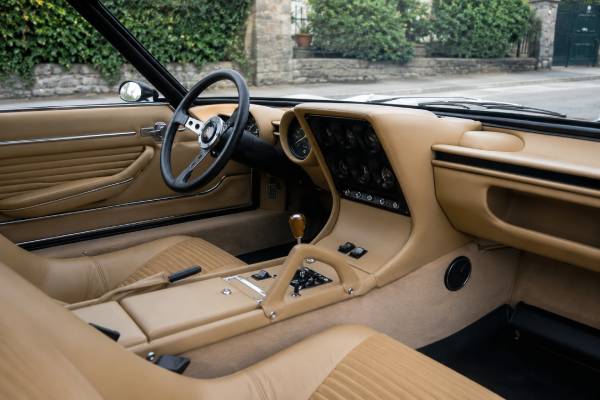
The P400 S interior is more comfortable than the early P400 cabin, but it remains a small, hot, loud, low exotic from the late 1960s. The driving position can feel offset. Visibility forward is dramatic because the nose drops away, while rear visibility is limited by louvers and engine cover structure. The overhead console and switch layout add theatre, but they also remind the driver that this was a hand-built car, not a mass-produced luxury coupe.
Air conditioning, when fitted, is desirable, but it should not be judged by modern standards. Its presence helps value, especially in hot climates, yet its performance depends heavily on restoration quality, refrigerant conversion choices, sealing, and condenser efficiency.
Road Feel, Sound, and Performance
A properly sorted Miura P400 S feels fast, mechanical, loud, and alive rather than effortless. Its performance is impressive, but its real appeal is the way the V12, carburetors, gearbox, steering, and chassis ask the driver to participate.
The engine dominates the experience. At low speeds, it can feel rich, warm, and slightly impatient until fully up to temperature. Once the carburetors are cleanly balanced and the ignition is correct, throttle response is crisp and progressive. The V12 pulls hard through the mid-range, then turns sharper and more urgent as revs rise. The sound is not the hard-edged scream of a later modern V12. It is layered: carburetor intake, cam-chain character, exhaust resonance, gear whine, and mechanical vibration all arrive together.
The 5-speed manual transaxle rewards patience. It should not be rushed when cold. A good car has a precise, mechanical shift once warm, but worn linkages, tired synchros, incorrect clutch setup, or contaminated lubricant can make the shift heavy or reluctant. Any crunching, jumping out of gear, or persistent stiffness deserves serious investigation.
The steering is unassisted, so parking-speed effort is high. On the move, it becomes one of the car’s great pleasures. The front end feels light compared with front-engine GTs of the same period, and the driver gets clear feedback through the rim. The short wheelbase, rear weight bias, and period tire behavior mean the car should be driven with respect. It is not a forgiving modern supercar with stability control waiting in the background.
Braking performance depends heavily on condition. The Girling discs were strong for the period, but a Miura with old hoses, glazed pads, tired calipers, contaminated fluid, or poorly restored hydraulics will not inspire confidence. A fresh system feels firm and capable for fast road use, but repeated hard stops require mechanical sympathy.
How it differs from a modern supercar
A Miura P400 S does not isolate the driver. Heat enters the cabin. The engine sits close. The brakes and tires need care. The steering loads up. The gearbox prefers rhythm. The car demands warm-up time and rewards smoothness.
That is exactly why enthusiasts value it. Modern performance cars deliver speed with layers of assistance. The Miura delivers occasion. A short drive can feel memorable because every action has weight and consequence. A good example is not difficult in the crude sense, but it is never casual.
For road use, the best P400 S is not necessarily the most powerful one. It is the one with balanced carburetors, correct ignition timing, healthy cooling, fresh suspension bushings, properly rebuilt brakes, good tires, and a driver who understands that old fluids and cold metal need patience.
Maintenance, Reliability, and Restoration Risk
The Miura P400 S can be reliable when expertly restored and maintained, but neglect is extremely expensive. The main ownership risks are corrosion, engine and gearbox condition, cooling weakness, accident history, poor past restorations, and missing original parts.
This is not a car for general exotic-car service shops unless they have proven Miura experience. The layout is unusual, the parts are specialized, and the value of originality is too high for guesswork. Even small mistakes can reduce value or create major mechanical damage.
Key mechanical risks
The V12 itself is strong when built correctly, but rebuild quality matters more than reputation. Inspectors should look for stable oil pressure, even compression, leakdown results, proper carburetor setup, clean oil, correct temperature behavior, and signs of timing-chain or valve-train wear.
The shared engine and transaxle lubrication system deserves special attention. Gearbox wear can contaminate oil, and oil choice must satisfy competing demands. Some owners pursue modifications or upgrades, but any change should be documented and reversible where originality matters.
Cooling is another major concern. A Miura that runs hot in traffic may have radiator problems, blocked passages, weak fans, tired hoses, incorrect coolant flow, poor engine tuning, or air trapped in the system. Heat also affects wiring, fuel lines, carburetors, and cabin comfort.
Common inspection priorities include:
- oil pressure when hot
- gearbox noise and shift quality
- clutch take-up and pedal feel
- cooling performance in traffic and at speed
- fuel smell or seepage near carburetors
- smoke on start-up or overrun
- brake pull, pedal travel, and caliper condition
- suspension bushing wear
- steering play
- exhaust leaks and cracked mounts
Body, chassis, and corrosion
Rust is one of the most serious Miura problems because the car’s value depends so much on structure and originality. The steel monocoque center section, sills, floor areas, suspension pickup points, bulkheads, and hidden seams need expert inspection. Aluminum outer panels can hide deeper structural issues, and old paint can conceal accident repair.
Panel fit should be studied carefully. Miuras were hand-built, so perfection is not the standard, but inconsistent gaps, distorted clamshells, stress cracking, mismatched body numbers, or crude repairs can signal expensive history. A car that looks glossy from five metres away may still need major structural work.
Restoration cost drivers
The most expensive restorations are not always caused by visible damage. They are often caused by missing parts, incorrect prior work, incomplete documentation, or body repairs that must be undone. Original trim, switches, lights, wheels, carburetor parts, glass, and interior details can be hard to source. Recreating a correct cabin or returning a car to its factory color can require deep research.
A proper Miura restoration should include:
- detailed pre-restoration photography
- body-number and panel documentation
- chassis measurement and corrosion assessment
- engine and gearbox teardown records
- carburetor, ignition, and cooling-system rebuilds
- brake and suspension renewal
- correct materials, finishes, and hardware
- post-restoration road testing and sorting
The sorting phase is often underestimated. A freshly restored Miura may still need hundreds of miles of careful adjustment before it feels right. Carburetors, throttle linkages, cooling fans, brake balance, suspension geometry, seals, and electrical contacts often need follow-up work after the car returns to the road.
Market Value and Buyer Checklist
The Miura P400 S sits in the multi-million-dollar collector market, and value depends more on authenticity and condition than on headline horsepower. The best cars combine factory-correct identity, known ownership, matching major components, original bodywork, expert restoration, and strong documentation.
As of the 2025–2026 market, public auction and valuation data place usable Miura P400 S examples around the low seven figures, while excellent, highly documented, original, or freshly restored cars can move well beyond that. Exceptional provenance, rare colors, preserved original interiors, concours success, factory certification, and long-term ownership can add major premiums. Cars with unclear identity, missing parts, non-original engines, heavy corrosion, weak documentation, or poor restoration work can be far more expensive to own than their lower purchase price suggests.
The buyer’s first question should not be “Is it cheap?” There is no cheap Miura P400 S. The right question is: “Is this the correct car at a price that reflects its true risk?”
| Area | What to verify | Why it matters |
|---|---|---|
| Identity | Chassis, engine, gearbox, and body numbers | Defines authenticity and value |
| Documentation | Factory records, ownership history, invoices, photos | Supports provenance and restoration claims |
| Body | Panel stampings, clamshell fit, corrosion, accident repair | Body errors are costly and value-sensitive |
| Engine | Compression, leakdown, oil pressure, rebuild records | V12 work is specialist and expensive |
| Gearbox | Synchros, noise, shared oil condition, shift quality | Powertrain layout makes repairs complex |
| Cooling | Temperature stability, radiator, fans, hoses, coolant flow | Heat can damage multiple systems |
| Interior | Correct trim, switches, instruments, air conditioning parts | Rare details affect restoration cost |
| Restoration quality | Specialist reputation and photographic evidence | Bad restorations can hide major problems |
Examples to seek
The strongest cars usually have matching major components, original Bertone coachwork, clear factory color records, limited ownership gaps, and careful specialist maintenance. A preserved car with honest finishes can be more desirable than an over-restored car with uncertain metalwork. A restored car can also be excellent, but only if the work was done correctly and documented thoroughly.
Good signs include:
- Lamborghini Polo Storico documentation or credible factory records
- original or factory-correct color combination
- known ownership chain
- original body stampings
- complete tool kit, manuals, and period documents
- recent specialist service
- clean hot running behavior
- no major hidden corrosion
- restoration photos showing bare-metal condition
Examples to avoid
Avoid cars with vague histories, missing identification evidence, unexplained engine swaps, heavy modifications, poor panel fit, fresh paint over unknown metal, overheating, gearbox issues, or claims that cannot be supported by records. A Miura that needs “minor sorting” may need much more than that once opened up.
A pre-purchase inspection should be done by a Miura specialist, not just a classic-car generalist. Ideally, the car should be inspected on a lift, cold-started, road-tested, checked hot, and reviewed against documentation. For a car at this level, paying for expert due diligence is not optional. It is part of the purchase price.
Long-term collectability remains strong. The P400 S has the ingredients that usually support enduring value: beauty, rarity, engineering importance, brand significance, analog driving appeal, and a central place in supercar history. Still, individual cars will separate sharply by quality. In the Miura market, the best example is often the better buy, even when it costs far more upfront.
References
- Lamborghini Miura – Technical Specifications, Pictures, Performance 2026
- Lamborghini History – Miura 2026
- 1969 Lamborghini Miura P400 S | Hagerty Valuation Tools 2026
- 1969 Lamborghini Miura P400S by Bertone | Miami 2026 2026
- 1969 Lamborghini Miura P400 S 2024
Disclaimer
This article is for informational purposes only and is not a substitute for professional diagnosis, repair, valuation, restoration advice, or pre-purchase inspection. Specifications, torque values, service intervals, factory procedures, component details, and originality standards can vary by VIN, production date, market, equipment, and restoration history. Always verify details against official service documentation, factory records, and a qualified Lamborghini Miura specialist before buying, repairing, restoring, or valuing a car.
If this guide helped you, please consider sharing it on Facebook, X/Twitter, or your favorite car community to support our work.