
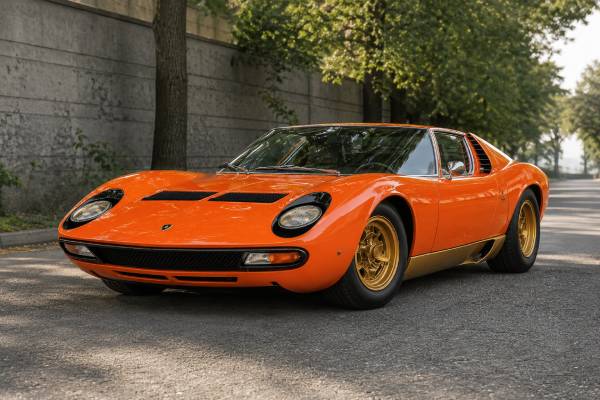
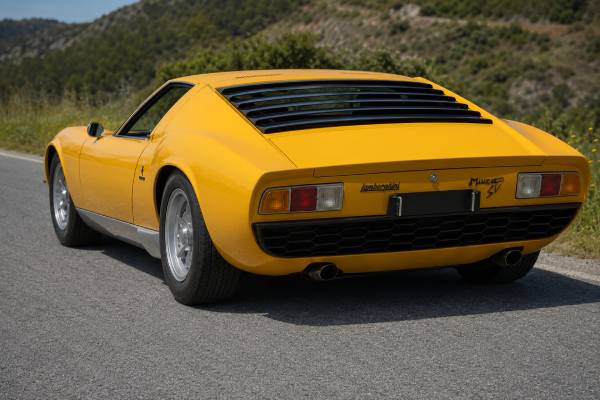
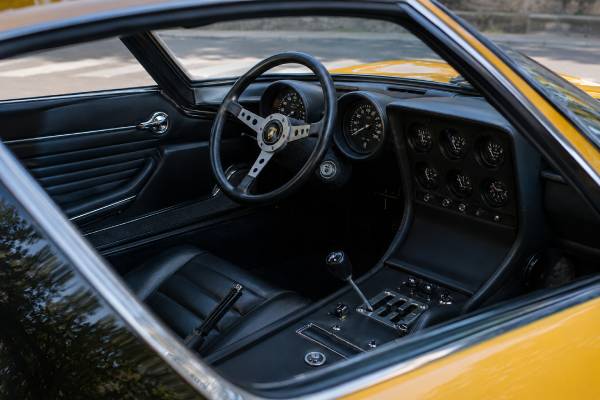
The Lamborghini Miura P400 SV is the final, most developed, and most valuable regular-production Miura. Built from 1971 to 1973, it took the original mid-engine V12 concept that shocked the 1966 Geneva Motor Show and made it faster, wider, stronger, and more stable. Its 3.9-liter L406 V12 produced 385 hp, while revised rear suspension, wider rear tires, and improved lubrication made the SV the Miura most serious collectors want to drive as well as display. It is not a modern supercar in the easy, polished sense. It is loud, hot, delicate, physical, and extremely sensitive to setup. That is part of its appeal. For buyers, the difference between a great SV and a risky one comes down to originality, factory identity, restoration quality, documentation, and specialist care. For enthusiasts, the Miura SV remains one of the clearest links between 1960s racing ideas and the modern supercar shape.
Table of Contents
- Why the Miura SV Still Defines the Supercar
- L406 V12, Chassis, and Key Specifications
- Production Numbers, Variants, and Authenticity Clues
- Bertone Shape and SV Engineering Details
- What the Miura SV Feels Like to Drive
- Maintenance, Restoration, and Known Risk Areas
- Market Values and Buying Checklist
Why the Miura SV Still Defines the Supercar
The Miura SV matters because it is the most mature version of the car that helped define the mid-engine supercar. Earlier Miuras introduced the idea; the SV made it more usable, more planted, and more powerful without losing the original drama.
Lamborghini began the Miura as project L105, a radical idea for a young company better known for refined front-engine grand tourers. The bare chassis shown at Turin in 1965 placed a V12 transversely behind the passenger compartment, a layout that looked more like a racing experiment than a luxury road car. When Bertone’s finished body appeared at Geneva in 1966, the Miura became more than a fast car. It became a new template: low nose, cockpit pushed forward, engine behind the seats, and visual drama built into the structure.
The SV arrived in 1971 as the final standard-production Miura. The name is commonly read as “Spinto Veloce,” meaning a more highly tuned or pushed-fast version. Lamborghini had already improved the original P400 with the P400 S, which added more power and a better-appointed cabin. The SV went further. It widened the rear bodywork, deleted the famous headlight “eyelashes,” revised suspension geometry, strengthened key chassis areas, improved rear tire fitment, and raised output to 385 hp.
Its place in Lamborghini history is unusually important. The Miura sits between the company’s early front-engine GT era and the wedge-shaped Countach era that followed. The SV is the bridge between the delicate original and the sharper supercar identity Lamborghini later made permanent. It is less raw than the first P400, less ornamental than some S examples, and more focused than both.
Collectors care about the SV for several reasons:
- Rarity: only 150 Miura SV examples were delivered from 1971 to 1973.
- Development status: it is the final and most resolved regular Miura.
- Visual distinction: wider rear arches and smooth headlight surrounds give it a stronger stance.
- Mechanical desirability: the 385 hp V12, revised rear suspension, and later lubrication improvements make it the preferred driver’s Miura.
- Cultural weight: the Miura is widely treated as one of the first true supercars and one of the most beautiful postwar sports cars.
The SV also has serious concours relevance. A correct, documented, matching-numbers SV with factory colors and Lamborghini Polo Storico certification can sit comfortably at the top level of international events. But the car is not judged only by shine. The best examples are valued for identity, restoration accuracy, original components, correct body details, and a clear paper trail from new.
For enthusiasts, the appeal is simpler. The Miura SV looks impossibly low, sounds mechanical and operatic, and carries the risk and excitement of a car designed before computers softened the edges. It is not merely a collectible object. It is the last and most capable expression of Lamborghini’s first great rebellion.
L406 V12, Chassis, and Key Specifications
The Miura SV uses Lamborghini’s 3.9-liter L406 V12 in its strongest regular Miura tune, with 385 hp at 7,850 rpm. The engine, gearbox, and rear-drive layout are central to the car’s character, but the SV’s wider rear track and revised suspension are just as important to how it behaves.
| Item | Specification |
|---|---|
| Production years | 1971–1973 |
| Project designation | L105 |
| Engine code | L406 |
| Engine type | 60-degree naturally aspirated V12 |
| Displacement | 3,929 cc |
| Bore x stroke | 82 mm x 62 mm |
| Fuel system | Four triple-choke Weber carburetors |
| Power | 385 hp at 7,850 rpm |
| Torque | 388 Nm at 5,500 rpm |
| Transmission | 5-speed manual |
| Drivetrain | Transverse mid-engine, rear-wheel drive |
| Top speed | Over 290 km/h |
| 0–100 km/h | About 5.5 seconds |
| Curb weight | About 1,245 kg |
The V12 is compact for its cylinder count because Lamborghini mounted it transversely. That packaging decision helped make the Miura short, low, and dramatic, but it also made service access more complex than on a traditional front-engine GT. The engine sits directly behind the cabin, and much of the car’s sound and heat comes from that layout.
The SV’s engine output came from revised tuning compared with earlier Miuras. The power increase over the P400 S was not a huge number on paper, but it sharpened the upper rev range. The engine is oversquare, meaning its bore is larger than its stroke. That helps it rev freely and gives the Miura its hard-edged top-end character.
| Area | Miura P400 SV detail |
|---|---|
| Body structure | Steel monocoque-style central structure with aluminum front and rear body panels |
| Front suspension | Independent wishbones, coil springs, anti-roll bar |
| Rear suspension | Independent wishbones, coil springs, anti-roll bar, revised SV geometry |
| Brakes | Four-wheel disc brakes |
| Steering | Manual rack and pinion |
| Wheelbase | 2,500 mm |
| Length | 4,360 mm |
| Width | About 1,780 mm |
| Height | About 1,060 mm |
The most important SV chassis change is at the rear. Wider rear tires, wider rear arches, and altered rear suspension made the car more secure than earlier Miuras, especially at speed. Early Miuras could feel light at the front and nervous at high velocity. The SV did not turn the car into a modern, neutral machine, but it reduced some of the original’s more alarming traits.
The gearbox is a five-speed manual. Shift quality depends heavily on condition, temperature, linkage setup, and driver patience. A cold Miura gearbox should not be rushed. A properly adjusted car rewards a deliberate hand; a worn or poorly set up car can feel obstructive and expensive.
Lubrication is one of the most discussed SV topics. Earlier Miuras used shared lubrication between engine and gearbox. Later SV production adopted separate lubrication systems, allowing more suitable oils for each area. This matters for both durability and buyer inspection. Not every SV has the same configuration, so a specialist should verify the exact car rather than relying on broad model-year assumptions.
Production Numbers, Variants, and Authenticity Clues
The Miura SV is rare, but rarity alone does not guarantee value. The strongest cars are the ones with clear identity: original chassis, matching engine, correct body details, factory colors, known ownership, and documentation that survives close inspection.
Lamborghini built the Miura in three main regular-production forms: P400, P400 S, and P400 SV. The SV was the last of these and the lowest-volume regular version. Its production ran from 1971 to 1973, with 150 cars delivered. That number is central to its collector status, but individual histories vary widely. Some cars were modified, restored more than once, converted toward Jota-style appearance, federalized for certain markets, repainted in non-original colors, or rebuilt after accident damage.
| Version | Production period | Output | General character |
|---|---|---|---|
| P400 | 1966–1969 | 350 hp | Original, purest, most delicate early form |
| P400 S | 1968–1971 | 370 hp | More power, improved trim, greater comfort |
| P400 SV | 1971–1973 | 385 hp | Final, wider, stronger, most developed regular version |
The SV is easy to recognize in broad terms. The rear arches are wider, the rear stance is stronger, and the headlight surrounds usually lack the eyelashes that defined earlier Miuras. But visual checks are only the beginning. A buyer needs to know whether the body is truly SV, whether a car began life as an SV, whether its engine is original, and whether any later restoration returned it accurately to factory specification.
Factory identity and documentation
A proper Miura SV file should include as much of the following as possible:
- Lamborghini Polo Storico certification or archive confirmation
- chassis, engine, and body-number records
- original delivery information
- factory color and interior trim confirmation
- ownership history from new or near-new
- restoration invoices with photographs
- specialist service records
- import, registration, and title documents
- tool kit, owner’s manual, and period accessories where available
Matching-numbers status is a major value driver. On a car this valuable, “matching” should not be used loosely. The engine number, chassis number, body number, and gearbox details need to be checked against factory or expert records. A replacement engine does not make a Miura worthless, but it changes the value discussion sharply.
SV, SVJ, and Jota confusion
The Miura Jota was Bob Wallace’s experimental development car, created with competition ideas in mind. It inspired later SVJ conversions and factory-built or factory-sanctioned special cars. Because Jota-style changes look dramatic, some standard Miuras were modified with fixed headlights, different vents, spoilers, altered fuel fillers, or revised exhausts.
For a buyer, this is a danger zone. A genuine factory SVJ sits in a different category from a later Jota-style conversion. A standard SV that was converted and later returned to factory appearance can still be valuable, but the restoration trail must be transparent. Hidden body alterations, cut panels, incorrect vents, and undocumented identity claims can create serious risk.
Colors, interiors, and special-order appeal
Miuras were often ordered in vivid colors that suited the shape: orange, yellow, green, red, blue, silver, and gold tones all appear in period records. Interior colors could be just as bold, including black, blue, tan, mustard, and mixed leather-cloth treatments. Factory-correct unusual colors can add appeal, especially if confirmed by documentation. A repaint into a popular shade may make a car easier to sell, but it is not the same as a car born in that color.
Originality does not always mean untouched paint and trim. Many Miura SVs have been restored because age, heat, corrosion, and earlier repairs made preservation unrealistic. What matters is whether the restoration respected the car’s original identity and materials, and whether the work can be inspected beneath the surface.
Bertone Shape and SV Engineering Details
The Miura SV looks special because its shape is not decoration placed over ordinary engineering. The low nose, transverse V12, rear clamshell, cooling slats, wide rear haunches, and tight cabin all come from the same packaging decision: put a large V12 behind two people and keep the car as low and beautiful as possible.
Marcello Gandini’s design at Bertone gave Lamborghini a visual identity almost overnight. The car is soft rather than wedge-shaped, but it is not gentle. Its front end is low and pointed, the windshield is steeply raked, and the rear bodywork seems to swell around the engine. The Miura’s proportions are still dramatic because they are honest. The cabin had to move forward. The rear deck had to breathe. The body had to wrap around a wide, hot, complex powertrain.
The SV changed the design in ways that made the car look more muscular. The missing headlight eyelashes are the easiest detail to notice. Some enthusiasts prefer the earlier look because the eyelashes are so famous, but the SV’s cleaner lights give the car a more modern expression. The wider rear arches matter more. They visually explain the mechanical changes underneath and give the SV the planted stance earlier Miuras lack.
Body and materials
The Miura uses a steel central structure with aluminum front and rear body panels. That mix creates two restoration problems. Steel can corrode, especially in hidden structural areas, while aluminum panels can suffer from poor repairs, stress cracks, and mismatch after accident work. Because the front and rear sections open as large clamshells, alignment tells an experienced inspector a great deal. Uneven gaps may point to tired hinges, careless restoration, crash repair, or structural movement.
The body was hand-finished, so perfect modern uniformity is not the goal. The goal is correctness. A car can have slight period character and still be excellent. A car with over-smoothed panels, incorrect edges, modernized trim, or lost factory details may photograph beautifully but lose authenticity.
Cooling and airflow
Cooling is a defining Miura issue. The rear window slats help vent engine heat, while front radiator airflow must be in good order for the car to survive real use. The Miura’s beauty leaves little margin for neglected cooling systems. Radiators, hoses, fans, ducting, thermostat function, and carburetor heat management all matter. A restored car that idles cleanly in a showroom may still struggle in traffic if the system was assembled for appearance rather than function.
Cockpit and sensory design
The Miura cockpit is intimate, low, and noisy. The driver sits close to the front axle line, with the V12 close behind. The gauges are simple and deeply period-correct, and the view forward is shaped by the low nose and curved fenders. The cabin can become hot, especially in warm climates or slow traffic. Air conditioning was available on some Miuras, but even when present it should be judged by period standards.
The sound is one of the car’s great features. It is not only exhaust noise. There is intake noise from the Weber carburetors, mechanical whir from the valvetrain and chains, gearbox sound, fan noise, and heat ticking through the body after shutdown. A healthy SV sounds busy and precise. Harsh rattles, uneven carburetion, smoke, fuel smell, or exhaust leaks should not be dismissed as “old car character.”
What the Miura SV Feels Like to Drive
A good Miura SV feels fast, alive, and demanding rather than easy. It has the speed to justify its legend, but it requires warm fluids, clean carburetion, measured steering inputs, and respect for a chassis designed long before electronic stability systems.
The first impression is physical. The driving position is low, visibility is better forward than many expect, and the car feels wide in the rear. The clutch is heavier than a modern performance car’s, the gearshift likes patience, and the steering is weighty at parking speeds. Once moving, the manual rack becomes one of the car’s pleasures. It talks clearly, but it also reports the limits of narrow-front, wide-rear classic tire behavior.
The engine defines the experience. Below the upper rev range, the V12 is flexible enough to drive on the road without constant drama. When the carburetors are properly synchronized and the ignition is healthy, throttle response is crisp and layered. As revs rise, the engine becomes sharper and more urgent. The SV’s 385 hp output may not sound extreme beside a modern supercar, but the car is light, loud, and unfiltered. Speed feels faster because the driver is more exposed to the process.
The SV is also more stable than earlier Miuras. Wider rear tires and revised rear suspension give it a stronger sense of support when accelerating out of bends. Even so, it is not a car to provoke carelessly. Weight distribution, tire age, road surface, and suspension setup all affect confidence. A tired Miura can feel vague, nervous, or inconsistent. A freshly restored but poorly aligned car can feel worse than an honest older car with correct geometry.
Brakes need period expectations. The four-wheel discs can work well when properly maintained, but they do not have the instant bite, cooling capacity, or anti-lock safety net of a modern car. Repeated hard use can expose fluid, pad, hose, or caliper weaknesses. For road use, the goal is confidence and consistency, not track-day abuse.
City, highway, and mountain-road behavior
In city traffic, the Miura SV is hard work. Heat builds, the clutch requires care, the engine dislikes neglect, and visibility to the rear is limited. The car can be driven in town, but it was not designed for creeping through modern congestion.
On open roads, it makes far more sense. The engine clears its throat, the chassis settles, and the steering becomes lighter and more accurate. The SV is especially memorable on flowing roads where the driver can use third and fourth gear, keep temperatures stable, and let the car breathe.
Mountain roads require discipline. The car rewards smoothness, but fast direction changes reveal its age. The nose is light compared with the rear, the cabin gets warm, and the driver must think ahead. A Miura SV is not slow, but it is not a point-and-shoot machine. Its best drivers use rhythm rather than aggression.
Restored examples versus tired examples
The gap between a sorted SV and a tired SV is enormous. A correct car feels cohesive: engine, gearbox, brakes, steering, and suspension all work as one. A tired car may still look spectacular, but it will show itself through hard starting, hot running, fuel smells, vague steering, brake pull, weak synchros, worn bushings, tired dampers, uneven throttle response, and poor panel fit.
That is why a test drive should never be treated as a formality. On a Miura SV, the drive is part of the inspection.
Maintenance, Restoration, and Known Risk Areas
Miura SV ownership is specialist ownership. The car is not unreliable when properly rebuilt and maintained, but age, heat, complex packaging, old repairs, and incorrect restoration work can turn a beautiful example into a very expensive project.
The engine itself is robust in concept, but it must be maintained by people who understand classic Lamborghini V12s. Carburetor synchronization, ignition setup, valve adjustment, cam-chain condition, oil pressure, cooling health, and fuel-system safety all matter. A Miura that sits for long periods can develop as many problems as one that is driven hard.
Common mechanical and ownership concerns include:
- fuel leaks from aged hoses, fittings, pumps, or carburetor components
- cooling weakness from blocked radiators, tired fans, poor ducting, or old hoses
- oil leaks from gaskets, seals, cam covers, and driveline areas
- worn gearbox synchros, especially if the car has been shifted aggressively when cold
- clutch wear or poor adjustment
- tired suspension bushings, ball joints, dampers, and wheel bearings
- brake caliper, hose, master cylinder, and servo issues
- charging-system and wiring faults
- heat damage around the engine bay and cabin
- incorrect tires that harm steering feel and originality
- poor repairs hidden under fresh paint
Corrosion is a major inspection area. The Miura’s steel structure must be checked carefully, especially around floors, sills, suspension pickup areas, lower body sections, and previous repair zones. Rust in a visible area is one problem; rust in a structural area is a much larger one. Because values are high, some cars have received cosmetic work that hides deeper issues. Paint thickness readings, underside inspection, borescope checks, and restoration photos are all useful.
Engine and gearbox lubrication
Lubrication history is especially important on the SV. Later cars with separate engine and gearbox lubrication are desirable from an engineering standpoint, but the exact configuration should be confirmed on the individual car. The wrong oil, poor maintenance, or misunderstanding of the system can shorten component life.
A pre-purchase inspection should include oil pressure behavior when hot, signs of metallic material in fluids, gearbox noise, shift quality, clutch engagement, and leak patterns. Because engine and gearbox work can become very expensive, a buyer should never accept vague claims such as “recently serviced” without invoices and specialist names.
Restoration difficulty
Restoring a Miura SV correctly is difficult because the car combines hand-built bodywork, rare mechanical components, tight packaging, and extremely high originality standards. The most expensive restorations are not always the best; the best are the ones that preserve or accurately return the car’s factory identity.
Major restoration cost drivers include:
- structural corrosion repair
- accident-damaged front or rear clamshells
- missing original engine, gearbox, carburetors, or trim
- incorrect conversion work from earlier modifications
- poor previous paintwork that must be stripped
- interior retrimming with wrong grain, stitching, or color
- unavailable or reproduction parts needing expert fitting
- engine and gearbox rebuilds
- suspension and brake system renewal
- factory documentation and certification work
Owners face a constant originality-versus-usability choice. Some upgrades can make sense if they are reversible and discreet, such as improved cooling efficiency, modern internal materials during rebuilds, or safer fuel hoses. But visible modernization, non-period interiors, incorrect wheels, or aggressive mechanical changes can hurt the car’s value. With an SV, reversibility and documentation are key.
Service pattern for a usable SV
A driven Miura should be inspected frequently even if annual mileage is low. Fluid age, tire age, hose condition, fuel safety, brake function, and carburetor setup are time-based concerns. The car should be warmed carefully, driven enough to keep systems healthy, and stored in a dry, stable environment. Long static display periods are not kind to it.
The safest ownership approach is simple: use a known Miura specialist, keep every invoice, photograph major work, save removed original parts, and verify specifications against the individual car’s factory records.
Market Values and Buying Checklist
The Miura SV sits at the top of the regular Miura market, with excellent public sales now commonly in the multi-million-dollar range. The best cars are not bought only as vehicles; they are bought as documented historic objects with mechanical needs, restoration histories, and identity risk.
Recent auction results show how strong the SV market remains. Well-presented examples with matching engines, correct colors, known ownership, high-quality restoration, and Lamborghini Polo Storico certification have sold around the $4 million to $5 million level, with exceptional cars reaching higher. Currency, venue, tax position, and the individual story of the car matter, so a single auction result should not be treated as a fixed price guide.
Value is driven by a clear hierarchy:
| Factor | Why it matters |
|---|---|
| Factory SV identity | A real SV is worth far more than an earlier car modified to SV appearance. |
| Matching engine | Original powertrain status is central to top-tier collector value. |
| Polo Storico certification | Factory archive support reduces identity uncertainty. |
| Original colors | Factory-correct and attractive colors can materially improve desirability. |
| Restoration quality | A beautiful but inaccurate restoration can trail a correct one by a large margin. |
| Ownership history | Known history from new lowers risk and helps future resale. |
| Condition beneath the surface | Structural corrosion or hidden accident repair can overwhelm cosmetic appeal. |
Buyer inspection checklist
A serious buyer should verify the car in this order:
- Confirm chassis, engine, body, and gearbox identity with expert records.
- Check Lamborghini Polo Storico documents or begin archive verification.
- Compare current colors and trim with factory delivery data.
- Review ownership history, titles, import papers, and old registration records.
- Inspect restoration invoices, photos, and specialist names.
- Examine the steel structure for corrosion and previous accident repair.
- Check aluminum panel fit, clamshell alignment, hinges, vents, and SV-specific body details.
- Test hot and cold starting, oil pressure, cooling behavior, and carburetor response.
- Inspect gearbox synchros, clutch operation, brake balance, and suspension condition.
- Confirm tool kit, manuals, spare parts, and removed original components.
Cars to seek are easy to describe but hard to find: real SVs with factory identity, matching engines, documented history, correct colors, strong restoration records, and recent specialist maintenance. Cars to avoid are those with unclear numbers, missing records, shiny but undocumented restorations, hidden Jota-style modifications, structural rust, vague import histories, or sellers who resist expert inspection.
The long-term collectability outlook remains strong. The Miura SV has the key ingredients: beauty, rarity, mechanical importance, brand significance, and emotional pull. It is also old enough that condition and authenticity will keep separating the best cars from the rest. A buyer should not chase the cheapest SV. The better strategy is to buy the clearest car, even if the entry price is higher, because correcting a compromised Miura can cost more than the apparent saving.
For owners, the SV is most rewarding when treated as both art and machinery. Preserve its identity, maintain it properly, drive it with mechanical sympathy, and document every decision. That is how a Miura SV stays valuable, usable, and worthy of its reputation.
References
- Lamborghini Miura: The first Supercar in history 2026
- Lamborghini History – Miura | Lamborghini.com 2026
- Lamborghini Miura – Technical Specifications, Pictures, Performance 2026
- 1971 Lamborghini Miura SV | Paris 2026 | RM Sotheby’s 2026 (Auction Result)
- 1971 Lamborghini Miura P400 SV | The Amelia Auction 2025 2025 (Auction Result)
Disclaimer
This article is for informational purposes only and is not a substitute for professional diagnosis, inspection, repair, valuation, or restoration advice. Specifications, torque values, service intervals, fluids, procedures, and correct details can vary by chassis number, market, production date, restoration history, and equipment. Always verify important information against official Lamborghini documentation, factory archive records, and a qualified Miura specialist before buying, servicing, or restoring a car.
If this guide helped you, please share it on Facebook, X/Twitter, or your favorite car community to support our work.