
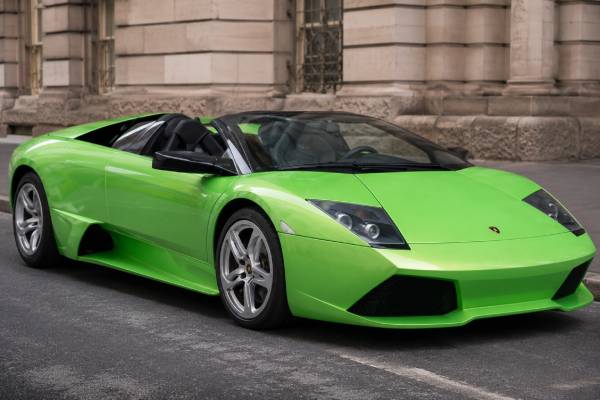
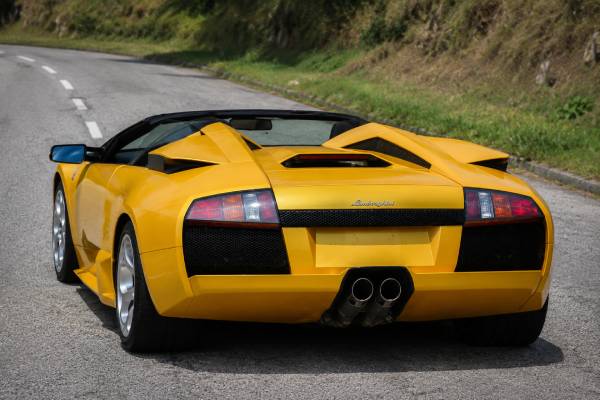
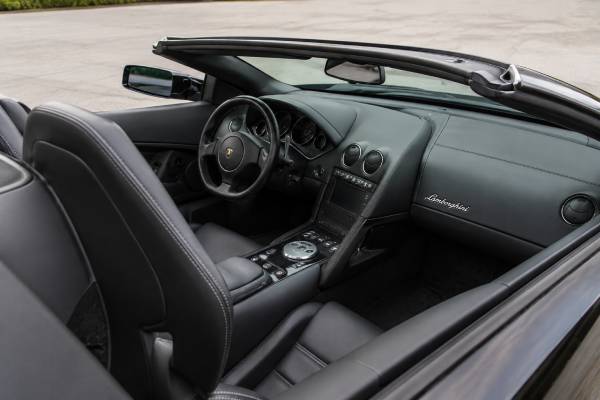
The Lamborghini Murciélago LP 640 Roadster is the open-air version of Lamborghini’s last pre-Aventador V12 flagship, and it still feels wild even by modern supercar standards. It combines a 6.5-liter naturally aspirated V12, permanent all-wheel drive, scissor doors, a removable emergency-style roof, and the kind of low, wide bodywork that makes every journey feel like an event. For buyers, the LP 640 Roadster is not just a louder convertible Murciélago. It is a complex exotic with serious heat, clutch, hydraulic, electrical, trim, and documentation questions. For enthusiasts, it is one of the final analog-feeling Lamborghini V12s before carbon-tub chassis design, dual-clutch transmissions, hybrid systems, and digital drive modes took over the brand’s top line. The best examples are spectacular; neglected ones can become brutally expensive.
Table of Contents
- Why the LP 640 Roadster Matters
- V12, Chassis, and Key Specifications
- Production, Versions, and Factory Options
- Design, Engineering, and Roadster Details
- Road and Track Driving Character
- Maintenance, Reliability, and Ownership Risks
- Market Values and Buying Checklist
Why the LP 640 Roadster Matters
The LP 640 Roadster matters because it captures Lamborghini’s V12 drama just before the brand moved into a more modern, more structured era. It is still a hand-finished, intimidating, physically large supercar, but it also benefits from Audi-era improvements in build quality, electronics, braking, and usability.
The Murciélago replaced the Diablo and became Lamborghini’s flagship V12 model of the early 2000s. The original Murciélago arrived with a 6.2-liter V12, while the LP 640 update raised displacement to 6.5 liters and brought a broader mechanical and styling refresh. “LP” stands for Longitudinale Posteriore, describing the longitudinal rear-mid engine layout, and “640” refers to its 640 metric horsepower output.
The Roadster version gives the LP 640 a different character from the coupe. It is heavier, more exposed, and more theatrical. The roof is not a refined everyday convertible system. It is a removable soft panel intended for low-speed protection from weather, not a power-folding top for easy touring. That makes the car less practical, but also more special. The open cockpit lets the intake roar, exhaust note, gearbox noises, and heat become part of the experience.
Historically, the Murciélago sits between two major Lamborghini eras. It followed the last of the pre-Audi Diablo line and came before the Aventador, which introduced a carbon-fiber monocoque and a new-generation V12. The LP 640 Roadster therefore appeals to collectors who want the old Lamborghini feeling with slightly more polish than a Diablo and less digital filtering than later models.
Its collectability rests on several points:
- It is a naturally aspirated V12 flagship with no turbocharging and no hybrid assistance.
- It offers both gated manual and e-gear automated-manual transmissions, with manual Roadsters being especially rare.
- It has the visual signatures collectors expect from a top-line Lamborghini: scissor doors, wide rear stance, rear-mid V12 layout, and extreme wedge proportions.
- It belongs to the final generation of Lamborghinis that still feel raw, hot, loud, and mechanically direct.
- The Roadster body adds rarity and occasion, even though it also adds inspection risk.
For many buyers, the LP 640 Roadster is not the easiest Murciélago to own. It is the one that best turns every drive into theater.
V12, Chassis, and Key Specifications
The LP 640 Roadster’s core appeal is simple: a 6.5-liter naturally aspirated V12 sits behind the driver and sends power to all four wheels. The car is fast, but the more important point is how much mechanical intensity it delivers through sound, heat, vibration, throttle response, and physical size.
| Area | Specification |
|---|---|
| Model | Lamborghini Murciélago LP 640 Roadster |
| Internal platform reference | L147 Murciélago family |
| Production period covered | 2006–2010 |
| Body style | Two-door, two-seat roadster |
| Engine | 60-degree naturally aspirated Lamborghini V12 |
| Displacement | 6,496 cc |
| Bore x stroke | 88 mm x 89 mm |
| Compression ratio | About 11.0:1 |
| Output | 640 CV / 471 kW at 8,000 rpm |
| Torque | 660 Nm / 487 lb-ft at 6,000 rpm |
| Fuel system | Multi-point fuel injection |
| Transmission | Six-speed manual or six-speed e-gear automated manual |
| Drivetrain | Permanent all-wheel drive |
| Suspension | Double wishbones with coil springs and anti-roll bars |
| Steering | Hydraulic rack-and-pinion power steering |
| Standard brake type | Ventilated steel discs |
| Optional brake type | Carbon-ceramic discs on many markets |
| Front tires | 245/35 ZR18 |
| Rear tires | 335/30 ZR18 |
| Wheelbase | 2,665 mm |
| Length | 4,610 mm |
| Width | About 2,058 mm without mirrors |
| Height | About 1,132–1,135 mm, depending on market data |
| Fuel tank | 100 liters / 26.4 US gallons |
| 0–100 km/h | About 3.4 seconds |
| Top speed | About 330 km/h / 205 mph for the Roadster |
The engine is the main event. It is large, naturally aspirated, and happiest when worked hard. Unlike modern turbocharged engines, it does not deliver its best through a thick low-rpm torque plateau. It builds, hardens, and gets more dramatic as the tachometer rises. The 8,000-rpm power peak is part of the car’s personality.
The LP 640 also brought important changes over the earlier Murciélago. The larger V12, revised bodywork, updated electronics, modified suspension, stronger braking options, and revised gearbox calibration made it quicker and sharper. The e-gear transmission remained a single-clutch automated manual, not a dual-clutch gearbox. That distinction matters because it shifts with a mechanical pause and clutch engagement that can feel dramatic when driven hard and clumsy when treated like a modern automatic.
The all-wheel-drive system gives the Roadster real traction, especially compared with older rear-drive supercars, but it does not make the car small or simple. The rear tires are enormous, the wheelbase is long, and the body is very wide. On narrow roads, the car’s size is always in your mind.
Fuel economy is poor by normal standards, but few owners buy one for efficiency. The more useful ownership detail is fuel range: the large tank helps, but spirited driving makes the V12 very thirsty.
Production, Versions, and Factory Options
The LP 640 Roadster is most desirable when its specification, transmission, colors, service book, VIN history, and factory documentation all tell the same story. At this market level, the difference between “nice car” and “collector-grade car” is usually paperwork, originality, mileage, and exact configuration.
The broader Murciélago family ran from the early 2000s to 2010, with the LP 640 update forming the major second-phase version. The LP 640 coupe was shown first, followed by the LP 640 Roadster. The Roadster shared the main mechanical upgrades with the coupe but added the open cockpit, different roof arrangement, and body-specific details.
Important related versions include:
- Murciélago Roadster 6.2: Earlier open model with the smaller V12 and pre-LP 640 styling.
- Murciélago LP 640 Coupe: Fixed-roof version with the same 6.5-liter output and sharper high-speed character.
- Murciélago LP 640 Roadster: The model covered here, combining the LP 640 mechanical update with the open body.
- LP 640 Versace editions: Special Ad Personam-style collaborations with distinctive fashion-house interior treatment and limited availability.
- LP 650-4 Roadster: Later limited Roadster derivative with 650 CV and special color treatment, related but not the same model.
- LP 670-4 SuperVeloce: Final, lighter, more focused Murciélago coupe variant, useful as market context but not a Roadster substitute.
Transmission choice is one of the largest value factors. Most LP 640 Roadsters were ordered with e-gear because it suited the period’s supercar market and allowed paddle shifting. Gated manual cars are far rarer and usually far more valuable, especially in Roadster form. A manual should be verified carefully: the shifter, pedals, transmission type, records, and factory data should all match. Conversions may be enjoyable, but they are not the same as factory-built manual cars in a collector sale.
Factory and dealer options can also move value. Desirable equipment often includes carbon-ceramic brakes, special paint, Ad Personam interior trim, contrast stitching, carbon-fiber cabin details, upgraded audio or navigation equipment, painted wheels, and unusual leather or Alcantara combinations. On a Roadster, the condition and completeness of roof-related parts matter because missing pieces can be costly and frustrating to source.
A serious buyer should ask for:
- Original service book and manuals
- Factory option record or dealer build documentation
- VIN-matched recall and campaign records
- Complete ownership timeline
- Paint-meter readings and accident history
- Clutch wear report for e-gear cars
- Photos of underbody panels and jacking points
- Proof of recent major servicing
- Tire age and brake condition records
- All keys, tools, roof parts, battery tender, and accessories
Color matters more here than on an ordinary used car. Loud Lamborghini colors such as orange, yellow, bright green, and pearl finishes can bring strong attention, while black, silver, white, and grey may appeal to buyers who want a cleaner look. Interior condition is just as important. Sticky switches, worn bolsters, shrinking leather, scratched carbon trim, and poor aftermarket audio work can quickly pull a car away from collector-grade status.
Design, Engineering, and Roadster Details
The LP 640 Roadster looks extreme because its engineering demands are extreme: it has to feed, cool, support, and stabilize a large V12 in a very low open body. The styling is not decoration alone; many of its scoops, vents, cut lines, and proportions serve packaging and cooling needs.
The Murciélago’s basic shape is a classic Lamborghini wedge, but the LP 640 sharpened the look. The front bumper became more aggressive, the rear gained a large central exhaust outlet, and the side intakes became a major visual signature. The Roadster adds a low windshield, exposed rear buttress area, and a cockpit that feels more like a speedboat than a normal convertible.
The asymmetry is part of the LP 640’s identity. The left-side intake arrangement and body detailing are not mirrored in the way casual observers expect. That gives the car a more technical look and helps distinguish it from earlier Murciélagos. Inside, the Roadster layout is driver-focused, with a low seating position, broad center tunnel, and a strong sense that the mechanical mass of the car sits close behind your shoulders.
The body and chassis are a blend of old and new thinking. The Murciélago uses a steel tubular structure with extensive lightweight body panels rather than the carbon monocoque that would come with the Aventador. That means accident inspection is critical. A cosmetically repaired Murciélago can hide expensive structural, suspension-pickup, undertray, or alignment problems. Because the Roadster loses the fixed roof, it also needs additional reinforcement and should be checked for body fit, panel gaps, door operation, and roof sealing more carefully than a coupe.
The roof is one of the most misunderstood parts of the car. It is not a convenient daily convertible top. It is a removable soft roof designed for limited use and lower speeds. Many owners prefer to drive the car only in dry weather and treat the roof as emergency equipment. When inspecting one, check that every roof component is present and that the fabric, seals, latches, frame pieces, and storage method are correct.
The sensory details are a big part of the appeal. The V12 sits close enough that the driver hears mechanical intake noise, valvetrain texture, exhaust resonance, gearbox sounds, and cooling fans. Heat soak is real. The engine bay becomes very hot, the cabin can feel warm, and the car rewards owners who understand that an exotic of this era needs proper warm-up, cool-down, and battery care.
Small design features also affect ownership. The front overhang is vulnerable, the doors need space and proper strut condition, the wheels are easy to mark, and the rear bodywork is broad enough to make parking stressful. None of this is a flaw in the collector sense. It is part of the car’s character.
Road and Track Driving Character
The LP 640 Roadster feels fast, loud, wide, and physical rather than smooth and effortless. Modern supercars may be quicker, but few make the driver feel so close to the engine and so aware of the car’s size, clutch, tires, heat, and mass.
At low speed, the Roadster can feel heavy and awkward. The steering is hydraulic and more communicative than many modern electric systems, but the car’s width and low seating position demand care. Rear visibility is limited, the nose is vulnerable, and the turning circle is not city-friendly. Speed bumps, ramps, tight underground parking, and narrow streets all require patience.
Once moving, the car becomes more natural. The V12 is flexible enough to cruise, but it becomes special when the revs climb. The engine note hardens from a deep mechanical growl into a sharper metallic scream. Throttle response is clean and immediate because there is no turbocharger delay. The car rewards smooth inputs, not nervous stabs at the throttle.
Gearbox character depends heavily on transmission choice. A gated manual LP 640 Roadster offers the most direct involvement. The clutch is not light, the shift needs deliberate action, and missed shifts are expensive mistakes, but the reward is huge. The e-gear version is more common and still characterful. It works best when the driver treats it like an automated manual: lift slightly during gentle shifts, use firm throttle when driving hard, and avoid creeping in traffic. Repeated low-speed slipping is bad for clutch life.
The all-wheel-drive system gives the car strong traction out of corners, but the Murciélago does not shrink around the driver like a small sports car. It carries real mass and a very wide rear track. The front end needs respect, especially on cold tires. Once the tires are warm, grip is high, and the car feels planted at speed. On fast open roads, the LP 640 Roadster makes sense; on tight, bumpy lanes, it can feel like too much car.
Braking performance depends on equipment and condition. Steel brakes are strong when fresh but can suffer from wear, heat, and age. Carbon-ceramic brakes offer impressive resistance to fade, but they are expensive and must be inspected properly. A car with carbon brakes should not be judged only by rotor appearance; rotor weight, surface condition, pad thickness, and service records all matter.
Track use is possible, but it is not where most owners will get the best value from the Roadster. The car is heavy, expensive to consume, and more exposed than the coupe. A track-driven example should have deeper documentation, including brake, tire, clutch, fluid, alignment, and cooling history.
The best use case is a dry weekend drive on open roads, where the engine, steering, view over the low nose, and open-air sound can dominate the experience. That is where the LP 640 Roadster feels unforgettable.
Maintenance, Reliability, and Ownership Risks
The LP 640 Roadster can be reliable when maintained by specialists, but neglected examples are financially dangerous. The car is not fragile in the way some myths suggest, yet almost every system is expensive when deferred.
Annual servicing is the minimum mindset. Even low-mileage cars need fluids, inspections, battery care, seals, tires, hoses, and age-related maintenance. A collector car that has covered only a few hundred miles in several years can still need major spending before it is truly road-ready.
Common ownership and inspection areas include:
- Clutch wear: E-gear cars should have a current clutch wear reading and calibration history. Manual cars still need clutch inspection, but they avoid some e-gear hydraulic and actuator concerns.
- E-gear hydraulics: Pumps, actuators, accumulators, sensors, and calibration can affect shift quality and clutch life.
- Cooling system: Radiators, fans, hoses, expansion tank issues, and heat-related aging should be checked carefully.
- Oil leaks: The dry-sump V12 can develop leaks from covers, seals, lines, or fittings. A clean engine bay is good; an overly detailed one may hide recent seepage.
- Fuel system recall: Certain 2007–2008 LP 640 coupe and Roadster models were involved in a fuel tank recall related to the fuel pump support welds. Proof of completion is essential.
- Brake condition: Steel brakes need inspection for wear and corrosion. Carbon-ceramic brakes require specialist measurement because replacement costs are high.
- Tires: Correct sizes, matching quality tires, and recent date codes matter. Old tires ruin the driving experience and can be unsafe.
- Suspension and lift systems: Check dampers, bushings, ball joints, front lift operation if equipped, and any hydraulic leaks.
- AWD driveline: Inspect CV boots, front differential, rear differential, transfer components, and fluid service history.
- Electrical systems: Battery drain, aging modules, window regulators, switches, alarm issues, sensors, and instrument displays can all cause frustration.
- Roadster roof and seals: Missing roof parts, water leaks, damaged seals, or poorly stored roof hardware reduce usability and value.
- Interior aging: Sticky switches, leather shrinkage, worn seat bolsters, loose trim, and aftermarket modifications are common value deductions.
Restoration is difficult because the car is too modern to be simple and too old to be supported like a current model. Parts availability can vary, and some trim, roof, electrical, and body parts may be slow or costly to source. Specialist labor is not optional. A general workshop may be able to change oil, but it should not be trusted for e-gear setup, clutch diagnostics, carbon-ceramic brake evaluation, structural inspection, or complex electrical troubleshooting.
Originality also matters. Sensible reversible upgrades, such as a modern battery tender setup or protective film, are usually acceptable. Poor exhaust work, questionable ECU tuning, non-factory paint changes, cheap interior retrims, missing catalysts, or incomplete manual conversions can damage value. A loud exhaust may be fun, but it should be legal, well-made, reversible, and supported by the original parts if collector value matters.
The safest ownership pattern is simple: buy the best documented car, keep it exercised, service it yearly, avoid traffic abuse, store it correctly, and fix small problems before they become large ones.
Market Values and Buying Checklist
The LP 640 Roadster market rewards originality, low mileage, rare transmission choice, strong colors, complete records, and clean history. It punishes accident stories, missing roof parts, unclear service history, sticky interiors, aged tires, clutch uncertainty, and cars that have been modified without taste or documentation.
As of recent market snapshots, e-gear LP 640 Roadsters often trade in the low-$300,000 to mid-$400,000 range, depending on mileage, color, condition, and history. Exceptional cars can go higher. Factory manual LP 640 Roadsters are a different market because rarity can push them far beyond ordinary e-gear values. A single sale should not define the whole market, but it does show how sharply collectors separate rare factory manuals from more common specifications.
The strongest value drivers are:
- Factory manual transmission
- Low mileage with regular service rather than long dormancy
- Original paint or fully documented paintwork
- Desirable factory colors
- Complete books, tools, roof equipment, keys, and accessories
- Clean accident and title history
- Completed recall and campaign records
- Recent clutch, fluids, tires, and brake documentation
- Original interior with minimal sticky-button or leather issues
- Specialist inspection from a known Lamborghini shop
Cars to seek are usually boring on paper and exciting in person: known ownership, original specification, clean underbody, no stories, recent service, correct tires, good clutch data, no warning lights, and no excuses about missing parts. A slightly higher purchase price for that kind of car is often cheaper than buying a discount example and repairing it.
Cars to avoid include examples with vague import history, unexplained paintwork, poor panel gaps, old tires, slipping clutch, incomplete roof kit, unverified recall status, warning lights, rough e-gear shifts, aftermarket wiring, cheap audio work, non-reversible modifications, or sellers who cannot provide records. A Murciélago can look spectacular in photos while hiding a six-figure correction path.
A proper pre-purchase inspection should include:
| Inspection area | What to verify | Why it matters |
|---|---|---|
| Identity and documents | VIN, build data, service book, title history, option records | Confirms authenticity and protects resale value |
| Transmission | Clutch wear, e-gear calibration, manual authenticity | Major value and repair-cost factor |
| Engine | Leaks, compression health, service history, cooling behavior | V12 repairs are specialist and expensive |
| Recall status | Fuel tank recall completion where applicable | Safety and documentation issue |
| Brakes and tires | Rotor condition, pad life, tire date codes, correct sizes | Direct safety and high replacement cost |
| Roadster equipment | Roof parts, seals, latches, storage bag, water marks | Missing or damaged parts hurt usability and value |
| Body and chassis | Paint depth, underbody panels, jacking damage, alignment | Accident repairs can be costly and value-sensitive |
| Interior and electronics | Switches, modules, windows, displays, battery drain | Small faults add up quickly |
Long-term collectability looks strong because the LP 640 Roadster has the right ingredients: open V12 drama, limited real-world supply, flagship status, analog feel, and a clear place before the Aventador era. The safest investment-grade cars will be factory-original, fully documented, visually striking, and carefully maintained. The best enthusiast cars may have more miles, but they should still have excellent records and no unresolved mechanical questions.
The smart buying rule is clear: do not buy the cheapest LP 640 Roadster. Buy the one with the fewest unknowns.
References
- Lamborghini Murciélago LP 640 Roadster – Technical Specifications, Pictures 2006 (Manufacturer History Page)
- Lamborghini Murciélago: the first V12 engine of the new millennium 2022 (Manufacturer Publication)
- Microsoft Word – Notification to Customer Letter R01 01 2010 (Recall Database)
- Gas Mileage of 2010 Lamborghini Murcielago 2010 (Official Fuel Economy)
- Lamborghini Murcielago LP640 Roadster – Automatic Market – CLASSIC.COM 2026 (Market Data)
Disclaimer
This article is for informational purposes only and is not a substitute for professional diagnosis, inspection, repair, valuation, or legal advice. Specifications, torque values, service intervals, recall status, procedures, and correct parts can vary by VIN, market, model year, equipment, and prior repair history. Always verify details against official Lamborghini service documentation and use a qualified Lamborghini specialist before buying, servicing, or repairing a Murciélago LP 640 Roadster.
If this guide helped you, please share it on Facebook, X/Twitter, or your favorite automotive community to support our work.