
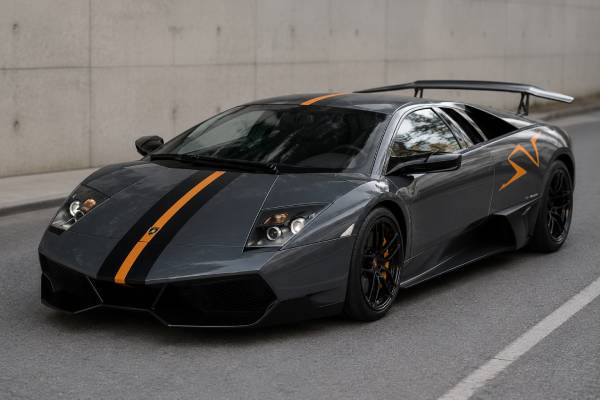
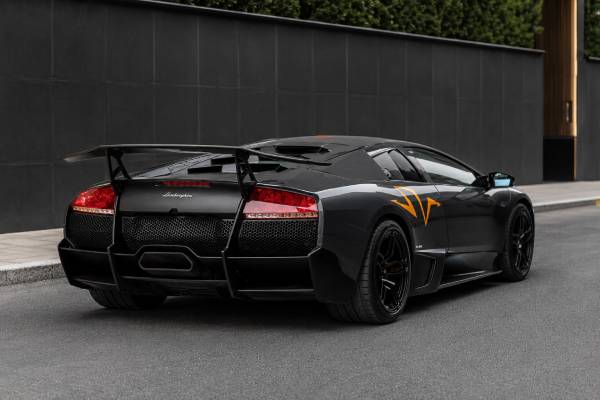
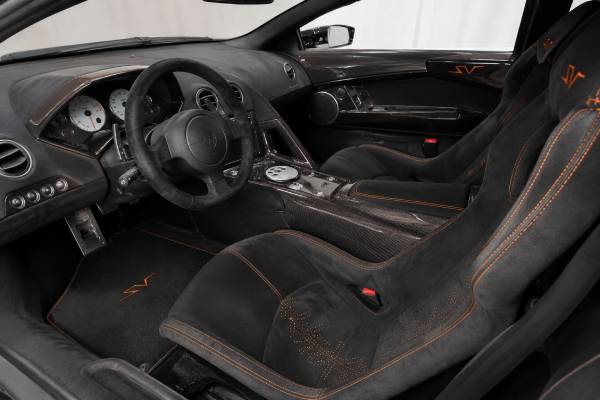
The Lamborghini Murciélago LP 670-4 SuperVeloce China Limited Edition is one of the rarest final-era Murciélagos: a 10-car China-market version of Lamborghini’s most extreme V12 flagship before the Aventador arrived. It matters because it combines the best-known Murciélago ingredients—scissor doors, a naturally aspirated 6.5-liter V12, all-wheel drive, carbon bodywork, and huge visual drama—with a very specific limited-edition identity. Mechanically, it is based on the LP 670-4 SuperVeloce, so the real story is not extra power or a different chassis. The value is in the final-run SV specification, the China-only production, the numbered owner plaque, and the special flat grey and orange visual treatment. For collectors, the car is a provenance exercise. For enthusiasts, it is one of the last old-school Lamborghinis that still feels mechanical, loud, wide, demanding, and gloriously excessive.
Table of Contents
- Why This China Limited SV Matters
- V12 Specs, Chassis, and Performance Data
- Production, Identity, and China Edition Details
- Carbon Aero, Design, and Signature Features
- How the LP 670-4 SV Drives
- Maintenance Risks and Specialist Inspection
- Collector Value and Buying Strategy
Why This China Limited SV Matters
The China Limited Edition matters because it turns the already rare Murciélago LP 670-4 SuperVeloce into a 10-unit market-specific collector car. It is not a separate engineering model, but it is a highly specific final-chapter Murciélago with clear visual identity and strong provenance appeal.
The Murciélago itself was Lamborghini’s first new V12 flagship of the 21st century and the successor to the Diablo. It also marked the brand’s first all-new flagship developed under Volkswagen Group and Audi ownership, which helped bring better structure, quality control, electronics, and daily usability without removing the wild character buyers expected from Sant’Agata Bolognese.
The original Murciélago was launched for the early 2000s with a 6.2-liter V12, dramatic wedge proportions, upward-opening doors, and the low, wide stance that made it instantly recognizable. The LP 640 later brought the larger 6.5-liter V12 and a sharper exterior. The LP 670-4 SuperVeloce was the final, lighter, louder, more focused evolution. In Lamborghini language, “LP” means longitudinal posteriore, meaning the engine sits longitudinally behind the cabin. “670” refers to metric horsepower, and “4” refers to all-wheel drive.
The China Limited Edition arrived in 2010, near the end of Murciélago production. Lamborghini unveiled it for the Chinese market at a time when China was becoming increasingly important for exotic-car makers. The car’s special finish, limited production, and buyer-specific plaque made it more than a paint package in collector terms. It became a marker of Lamborghini’s push into a fast-growing market and a rare piece of late Murciélago history.
What makes it especially important today is the combination of four traits:
- Final-era Murciélago status: It belongs to the last and most powerful regular-production Murciélago family.
- SuperVeloce specification: It uses the lightweight SV body, aero, interior, exhaust, and chassis package.
- China-only run: Only 10 cars were built for the Chinese market.
- Distinct identity: The flat grey finish, orange center stripe, and numbered owner plaque make authenticity easier to verify than on many appearance-only editions.
For enthusiasts, the China Limited Edition sits in the sweet spot between analog and modern. It has carbon-ceramic brakes, all-wheel drive, an automated manual gearbox in most configurations, a front lift system, and carbon body panels, yet it does not feel filtered like newer dual-clutch, hybrid, or software-heavy supercars. For collectors, it is desirable because the story is simple: final V12 Murciélago, SV base, China-only, 10 units.
The car’s significance is not motorsport success or lap-record chasing. It is about being one of the most concentrated forms of the Murciélago idea: a naturally aspirated V12 supercar with extreme styling, limited production, and enough mechanical edge to feel special even beside newer, quicker Lamborghinis.
V12 Specs, Chassis, and Performance Data
The China Limited Edition uses the LP 670-4 SuperVeloce mechanical package: a 6.5-liter naturally aspirated V12, permanent all-wheel drive, carbon-intensive bodywork, carbon-ceramic brakes, and a dry weight of about 1,565 kg. Its key performance claims are 0–100 km/h in 3.2 seconds and up to 342 km/h with the small rear spoiler.
Core specifications
| Item | Specification |
|---|---|
| Model code | L147 Murciélago |
| Production year | 2010 |
| Configuration | Two-seat mid-engine coupe |
| Engine | 6.5-liter naturally aspirated 60-degree V12 |
| Displacement | 6,496 cc |
| Bore x stroke | 88 mm x 89 mm |
| Compression ratio | 11.0:1 |
| Maximum power | 670 hp at 8,000 rpm |
| Maximum torque | 660 Nm at 6,500 rpm |
| Fuel system | Multipoint sequential injection, drive-by-wire |
| Lubrication | Dry sump |
| Transmission | 6-speed e-gear automated manual; 6-speed manual was a no-cost SV option |
| Drivetrain | Permanent all-wheel drive with viscous traction system |
| Body and chassis | Tubular steel structure with carbon-fiber components; carbon-fiber bodywork except steel roof and exterior door panels |
| Dry weight | 1,565 kg |
The engine is the heart of the car and one of the main reasons collectors still care about it. It is a large, high-revving V12 with four valves per cylinder, four overhead camshafts, electronically controlled continuous timing variation, and a three-mode variable-geometry intake system. The dry-sump lubrication system lets Lamborghini mount the engine low and keeps oil supply stable during hard cornering, braking, and acceleration.
The LP 670-4 SV gained its extra power over the LP 640 through optimized valve timing, a reworked intake system, and increased valve lift. It also used a lighter exhaust system, which helped weight reduction and gave the SV its sharper, harder-edged sound.
Dimensions, chassis, and running gear
| Area | Specification |
|---|---|
| Wheelbase | 2,665 mm |
| Length | 4,705 mm |
| Width | 2,058 mm without mirrors |
| Height | 1,135 mm |
| Weight distribution | 42 percent front / 58 percent rear |
| Fuel tank | 100 liters |
| Front tires | 245/35 ZR 18 |
| Rear tires | 335/30 ZR 18 |
| Front brakes | Carbon-ceramic, 380 x 38 mm rotors, 6-piston calipers |
| Rear brakes | Carbon-ceramic, 380 x 38 mm rotors, 6-piston calipers |
| Suspension | Independent double-wishbone layout with coil springs, hydraulic dampers, anti-roll control, anti-dive, and anti-squat geometry |
| Front lift | Factory lifting system raises the front by about 45 mm |
The numbers show why the car feels physically serious. It is very wide, very low, and traction-biased toward the rear. The rear tires are massive, and the front tires are comparatively narrow, which helps stability but also means tire condition and temperature strongly influence steering feel and front-end bite.
Performance figures
| Measure | Figure |
|---|---|
| 0–100 km/h | 3.2 seconds |
| Top speed with small rear spoiler | 342 km/h |
| Top speed with large Aeropack wing | 337 km/h |
| Power-to-weight ratio | About 2.3 kg per hp |
| Combined European-cycle fuel consumption | 20.6 L/100 km |
| CO2 figure | 480 g/km |
The large wing improves high-speed downforce but slightly reduces top speed. That tradeoff matters to buyers because some cars look more dramatic with the Aeropack wing, while small-spoiler cars carry the higher factory top-speed figure. On a China Limited Edition, originality matters more than theoretical top speed, so the correct factory configuration should be documented before purchase.
Production, Identity, and China Edition Details
The most important production fact is simple: the China Limited Edition was limited to 10 units. Its value depends on proving that a car is one of those 10, not merely a repainted LP 670-4 SV with a similar stripe.
The standard Murciélago LP 670-4 SuperVeloce was announced as a limited series, and the China Limited Edition was a further market-specific version created for China. It was presented at the 2010 Beijing Auto Show and was intended for Chinese buyers. The edition used the same core SV mechanical specification but added a distinct exterior theme and individual identity details.
The best-known China Limited Edition identifiers are:
- Flat grey exterior finish
- Orange center stripe running over the body
- Orange detailing intended to symbolize the force of an erupting volcano
- Numbered plaque
- Owner-name personalization on the badge
- China-market delivery history
- LP 670-4 SuperVeloce body, aero, interior, and drivetrain package
Those details matter because any LP 670-4 SV can be visually altered. A real China Limited Edition should have factory documentation that ties the VIN to the edition. A buyer should not rely only on paint, a badge, online photos, or seller statements.
Documents that matter most
For a 10-unit Lamborghini, paperwork is not a bonus. It is part of the car. The strongest examples should have a clean chain of evidence from factory build to present ownership.
Useful documents include:
- Original sales invoice or delivery paperwork
- Lamborghini dealer delivery records
- Factory build confirmation or heritage documentation
- Original owner plaque details
- Service book and stamped maintenance history
- Import and registration documents, especially if the car has left China
- Photos from early ownership showing original finish and details
- Records for paint protection film, paint correction, or body repairs
- Recall and campaign completion records by VIN
The named owner plaque creates an unusual issue. It is a key part of the edition’s story, but it also creates privacy, replacement, and authenticity questions. A missing plaque weakens the car unless Lamborghini or a selling dealer can document why it was removed or replaced. A plaque that does not match the ownership story should trigger deeper investigation.
Transmission and option verification
The LP 670-4 SV was standard with Lamborghini’s e-gear automated manual gearbox, while a traditional gated six-speed manual was available as a no-cost option on the standard SV. For the China Limited Edition, buyers should verify the original transmission from factory documentation rather than assume all cars follow the same pattern.
This point matters because manual Murciélagos carry huge collector interest. A genuine factory manual SV would be a major value event. A conversion, even if well executed, is not the same thing. For this edition, originality beats personal preference. A car should be valued as built, not as modified.
Other SV options and details to verify include:
- Small rear spoiler versus large Aeropack wing
- Carbon-ceramic brake specification and rotor condition
- Seat type and trim
- Radio-navigation delete or fitted audio/navigation equipment
- Exterior finish and stripe originality
- Interior contrast details
- Regional compliance equipment
- Any later exhaust, ECU, suspension, or wheel changes
The correct car is the one that still tells its original story. A modified example may be exciting to drive, but for a 10-unit China-market SV, non-original parts usually reduce collector confidence unless the original components come with the sale.
Carbon Aero, Design, and Signature Features
The LP 670-4 SV looks different because Lamborghini changed the bodywork for cooling, downforce, weight reduction, and visual aggression. The China Limited Edition adds a rare color-and-stripe treatment, but the foundation is the SuperVeloce’s carbon-heavy, aerodynamically revised body.
The original Murciélago shape was created under Lamborghini design leadership in the early Audi era. It kept the classic wedge, cab-forward glasshouse, huge rear deck, and scissor doors, but it was cleaner and more controlled than the Diablo. The LP 670-4 SV pushed that shape into a more technical, track-focused direction.
The front end uses a more aggressive carbon-fiber splitter and enlarged brake-cooling intakes. The front fenders include extra vents for brake ventilation. Along the side, the Murciélago’s dramatic intakes and low sill openings feed the cooling systems, including the oil cooler. At the rear, the SV uses a carbon diffuser, a wide central exhaust outlet, enlarged mesh, and a fixed rear spoiler or optional large wing.
The transparent engine cover is one of the most memorable SV features. It uses hexagonal transparent polycarbonate panels in a carbon-fiber frame. The design is not only for display. The layered, rear-open layout helps hot air escape from the engine bay. It is also very Lamborghini: theatrical, technical, and shaped around the V12.
Lightweight construction
The SV’s weight reduction came from many areas rather than one simple change. Lamborghini reworked the chassis and exterior, used more carbon fiber, removed the moving rear-spoiler mechanism, fitted a lighter exhaust, and trimmed the cabin with Alcantara and carbon rather than heavier comfort materials.
The structure combines a tubular steel frame with carbon-fiber components. The transmission tunnel and floor use carbon fiber attached to the steel structure. The roof and exterior door skins remain steel, while much of the outer body uses carbon composite. This mix reflects the Murciélago’s era: more advanced than older tube-frame exotics, but not yet the full carbon monocoque approach used by later flagship supercars.
China Limited Edition visual identity
The China Limited Edition’s flat grey and orange theme is central to its collectability. The orange stripe is not just decoration; it is the edition’s signature. It gives the car an instantly recognizable look without changing the mechanical package.
That creates two important inspection points. First, matte and flat finishes are hard to repair invisibly. A localized paint repair can stand out under the right light, and a full repaint may erase important factory finish evidence. Second, a stripe is easy to copy. The buyer needs factory records, early photos, and physical inspection of paint edges, panel consistency, clear film lines, and plaque details.
Inside, the SV cabin is focused rather than luxurious. Alcantara covers major surfaces, carbon fiber appears on the door panels and center tunnel, and lightweight bucket seats give the car a motorsport-like feel. The standard Murciélago seats were available on the SV, but the carbon bucket seats are the more characterful choice and support the lightweight mission.
The cabin is still an old-school Lamborghini environment. The windshield is far ahead, the dashboard is low and wide, rear visibility is limited, and the doors make every entry and exit feel like an event. Newer supercars are easier to use. Few feel as dramatic before the engine even starts.
How the LP 670-4 SV Drives
The LP 670-4 SV drives like a heavy, wide, high-grip V12 supercar that rewards commitment more than casual inputs. It is fast by modern standards, but its real appeal is the sound, throttle response, physicality, and sense that the driver is managing a large mechanical machine.
The naturally aspirated V12 is the center of the experience. It does not rely on turbo torque or hybrid fill. It builds power with revs, then becomes increasingly urgent as it approaches 8,000 rpm. The response is immediate, and the sound changes from deep idle rumble to hard metallic howl. The lighter SV exhaust makes the car feel more alive than a standard LP 640.
Acceleration is still serious. A 3.2-second 0–100 km/h figure remains quick, and the all-wheel-drive system helps the car put power down with less drama than a rear-drive V12 of similar output. But the Murciélago does not hide its size. The driver feels the width, the rear mass, and the big tires. It is not a small, nimble sports car. It is a flagship Lamborghini that needs space.
Gearbox character
The e-gear transmission is an automated single-clutch manual, not a modern dual-clutch gearbox. That distinction matters. At low speeds it can feel jerky if the driver treats it like a torque-converter automatic. It responds better when the driver lifts slightly during shifts or drives with deliberate throttle inputs.
In Corsa mode, shifts are sharper and more aggressive. At speed, that suits the car’s character. In traffic, the same system can wear the clutch and feel clumsy. A properly set up e-gear car should shift cleanly, engage predictably, and show clutch-wear data within a reasonable range. Poor calibration, worn clutch hardware, or actuator problems can make the car unpleasant and expensive.
A factory manual, where documented, changes the experience completely. The gated shifter adds interaction and collector appeal, but it also increases the importance of verifying originality. For a China Limited Edition, a claimed manual car needs especially careful documentation.
Steering, braking, and balance
The steering is power-assisted but still has more weight and road texture than many newer supercars. The front tires are wide but not extreme compared with the huge rear tires, so the car can feel stable first and sharp second. Good tires, correct alignment, and fresh suspension components are essential. Old tires can make the car feel dull, nervous, or reluctant to turn.
The carbon-ceramic brakes are powerful and resistant to fade, but they need inspection. On the road, they can feel firm and slightly temperature-sensitive. On track, they are more at home, but track use increases rotor, pad, tire, and heat-related wear quickly. Any buyer should look beyond odometer mileage and ask how the car was used.
The all-wheel-drive system gives the SV a planted corner-exit feel. It can send torque forward through a viscous coupling when rear slip builds, and the limited-slip differentials help traction. The car feels safest when driven smoothly: brake in a straight line, settle the front, turn decisively, and let the V12 pull the car out. Abrupt mid-corner inputs are not the Murciélago’s friend.
Usability and road manners
The Murciélago SV can be driven on the road, but it is not relaxed in the modern GT sense. The cabin is low, hot in traffic, loud at speed, and tight by luxury-car standards. The nose lift helps with ramps and driveways, but the car still requires route planning. Rear visibility is poor, the turning circle is large, and the width can make city streets stressful.
That is part of the appeal. The China Limited Edition is not valuable because it is easy. It is valuable because it delivers the full last-generation analog Lamborghini flagship experience in one of the rarest factory packages.
Maintenance Risks and Specialist Inspection
The LP 670-4 SV is not fragile when serviced correctly, but it is an exotic V12 Lamborghini with expensive parts, heat exposure, aging electronics, and very high labor demands. The biggest ownership risks are deferred maintenance, poor repairs, clutch and e-gear wear, carbon-ceramic brake costs, old tires, and undocumented bodywork.
The V12 itself is a strong unit when maintained, warmed properly, and used with correct fluids. It uses chain-driven cams, so there is no timing-belt service like on some older exotics. That does not make it cheap to own. The dry-sump system holds a large oil volume, access can be labor-intensive, and small leaks or worn hoses can become expensive because of packaging.
Common inspection priorities
A serious pre-purchase inspection should be done by a Lamborghini specialist familiar with Murciélagos and SV-specific parts. It should include diagnostic data, underside inspection, paint measurements, body-panel analysis, and a long test drive from cold.
Key areas to inspect include:
- E-gear clutch wear: Get a diagnostic clutch-wear reading and assess engagement quality.
- E-gear hydraulics: Check pump operation, actuator behavior, pressure-holding ability, sensors, and shift calibration.
- Carbon-ceramic brakes: Inspect rotor thickness, surface condition, chips, cracks, pad wear, and brake hardware.
- Recall completion: Verify carbon-ceramic brake rotor screw recall work by VIN where applicable.
- Cooling system: Inspect radiators, fans, hoses, expansion tank, coolant pipes, and signs of heat soak.
- Dry-sump oil system: Check oil lines, cooler, fittings, seepage, and service records.
- Front lift system: Confirm smooth lifting, no leaks, no sagging, and no warning lights.
- Suspension: Check dampers, bushings, ball joints, alignment, and uneven tire wear.
- Tires: Replace by age and condition, not just tread depth.
- Electrical system: Test battery health, immobilizer behavior, warning lights, window regulators, lights, displays, and modules.
- Body and carbon panels: Look for accident repairs, uneven gaps, cracked carbon, refinished matte paint, and poorly applied film.
The carbon-ceramic brake system deserves special attention. A recall affected certain Murciélago models with carbon-ceramic discs because stainless steel screws securing the brake rotors could fail after exposure to salty conditions. Even if the car was not used in winter climates, a VIN-specific recall check and physical inspection are essential. A low-mileage car is not automatically safe from age-related brake hardware concerns.
Age and storage issues
Many cars like this sit for long periods. Low mileage can help value, but long storage creates its own problems. Fluids age, seals dry, tires harden, batteries fail, fuel degrades, and actuators can become sticky. A car driven 300 careful kilometers a year with annual service may be healthier than one parked for five years as a static display.
Storage-related warning signs include:
- Old tires with plenty of tread
- Weak battery or repeated jump-start history
- Flat-spotted tires
- Sticky buttons or interior coating breakdown
- Fuel odor
- Coolant crust around hose ends
- Slow front-lift movement
- E-gear hesitation after sitting
- Air-conditioning weakness
- Brake vibration from pad deposits or rotor issues
The matte exterior finish adds another ownership challenge. Paint correction is limited compared with gloss paint, and panel repainting is difficult to match. Protective film can preserve originality, but old film can yellow, lift, or damage edges if removed carelessly. A buyer should inspect the finish under natural light and indoor lighting.
Originality versus upgrades
Many Murciélagos received aftermarket exhausts, ECU tunes, audio changes, wheels, suspension changes, or cosmetic updates. On a standard car, some buyers may accept reversible upgrades. On a 10-unit China Limited Edition, originality should dominate the decision.
An aftermarket exhaust may sound spectacular, but the original exhaust should come with the car. Non-original wheels may improve stance, but the original Ares forged wheels matter. Paint changes, stripe changes, retrimmed interiors, missing plaques, or undocumented carbon-panel replacement are much more serious.
The best maintenance history shows continuous care by recognized Lamborghini dealers or specialists, not a sudden burst of work just before sale. A thick file of invoices is only useful if the work was done correctly and matches the car’s age, mileage, and known risk areas.
Collector Value and Buying Strategy
The China Limited Edition should be valued as a provenance-grade collector Lamborghini, not as an ordinary used Murciélago. Standard LP 670-4 SV public sales already sit in high-six-figure territory, while a genuine 10-unit China Limited Edition can command a rarity premium when originality, documents, and condition are strong.
As of the current market, normal LP 670-4 SV examples often trade roughly in the $500,000 to $900,000 range depending on mileage, transmission, condition, color, documentation, and region. Exceptional cars, rare configurations, and especially desirable histories can move above that. The China Limited Edition is too scarce for a clean public price guide. A real example should be assessed against standard SV comps, then adjusted for the 10-unit China-market status, originality, and proof.
The market is thin, so asking prices can be misleading. A seller may price a China Limited Edition far above standard SVs because of rarity. That may be justified for the right car, but only if the car’s identity is unquestionable. The wrong car, a repainted car, a missing-plaque car, or a poorly documented import should not receive the same premium.
What drives value
The strongest examples usually share the same traits:
- Confirmed China Limited Edition identity by VIN
- Original flat grey and orange finish
- Original numbered and owner-name plaque
- Complete factory and dealer documentation
- Low but believable mileage
- Continuous specialist or dealer service history
- No accident history
- No structural carbon or chassis repairs
- Original wheels, seats, exhaust, aero, and trim
- Correct recall and campaign completion
- Clean import and registration history
- High-quality storage and preservation
Mileage matters, but it is not the only factor. A very low-mileage car with poor storage and missing records may be less attractive than a slightly higher-mileage car with excellent documentation, recent service, fresh tires, and original paint.
Buyer inspection checklist
| Area | What to verify | Why it matters |
|---|---|---|
| Edition identity | VIN, factory records, plaque, early photos, delivery paperwork | Confirms the car is one of the 10 China-market examples |
| Paint and stripe | Original finish, paint depth, panel match, film condition | Matte paint and edition graphics are central to value |
| Transmission | Original gearbox type, e-gear diagnostics, clutch wear | Gearbox condition and originality strongly affect cost and value |
| Carbon body | Panel gaps, cracks, repairs, underside damage | Carbon and chassis repairs are expensive and value-sensitive |
| Brakes | CCB rotor condition, pads, recall completion, hardware | Brake replacement and recall issues can be costly |
| Service history | Annual records, fluids, lift system, cooling, tires | Prevents buying a low-mileage but neglected car |
| Original parts | Exhaust, wheels, seats, manuals, tools, covers, accessories | Missing original parts reduce collector confidence |
Examples to seek and avoid
Seek the car that is boring on paper and spectacular in person: original, documented, properly serviced, complete, and easy to explain. The best collector examples do not need a long story. The paperwork, condition, and physical details all agree.
Avoid cars with unclear identity, modified appearance, missing plaque, accident history, weak service records, unexplained paintwork, warning lights, old tires, clutch uncertainty, or sellers who cannot provide diagnostic data. Also be careful with cars that have crossed several countries without a clear chain of title and import documents. Rare Lamborghinis often move internationally, but every move should be traceable.
The long-term collectability case is strong. The Murciélago sits between the Diablo and Aventador, and it carries traits that newer supercars are gradually losing: a naturally aspirated V12 without hybrid assistance, dramatic manual-era proportions, scissor doors, and a rawer driving experience. The LP 670-4 SV is the sharpest factory expression of that platform, and the China Limited Edition adds a 10-car production story.
The main risk is not desirability. The main risk is buying the wrong example at the right-example price. With this car, authenticity is the product. A proper purchase should include a Lamborghini specialist inspection, factory identity confirmation, paint and body analysis, diagnostic report, service-file review, and a realistic maintenance budget from day one.
References
- Lamborghini Murciélago LP 670 SuperVeloce – Technical Specifications 2026 (Manufacturer Specifications)
- Microsoft Word – Lamborghini Murciélago LP 670-4 SuperVeloce – EN.doc 2009 (Press Release)
- Lamborghini Murciélago: the first V12 engine of the new millennium 2022 (Manufacturer History)
- 1200 New Jersey Avenue SE Washington, DC 20590 2013 (Recall Database)
- Lamborghini Murcielago LP670-4 SV Market 2026 (Market Data)
Disclaimer
This article is for informational purposes only and is not a substitute for professional diagnosis, repair, valuation, or pre-purchase inspection. Specifications, torque values, service intervals, recall applicability, repair procedures, and equipment can vary by VIN, market, production date, and factory configuration. Always verify details against official Lamborghini service documentation, factory records, and a qualified Lamborghini specialist before buying, servicing, restoring, or modifying a vehicle.
If this guide helped you, please consider sharing it on Facebook, X/Twitter, or your favorite car community to support our work.