
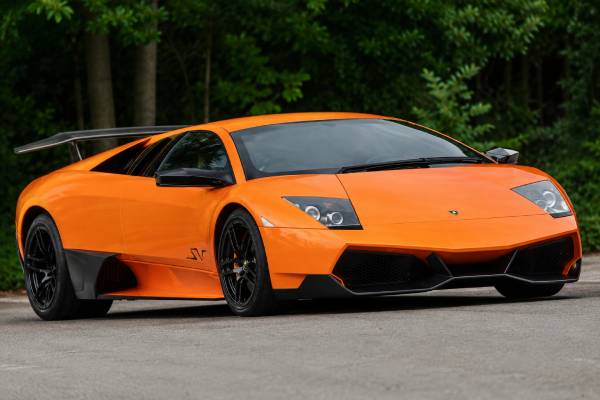
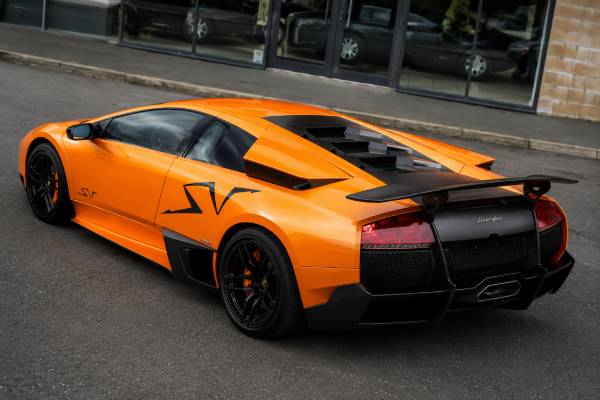
The Lamborghini Murciélago LP 670-4 SuperVeloce is the hardest-edged factory Murciélago and one of the last truly analog-feeling Lamborghini V12 flagships. It took the LP 640 formula, removed weight, added power, sharpened the aero, and turned the car into a louder, rarer, more serious collector machine. The SV matters because it sits at a key turning point: it was the final evolution of the Murciélago, one of the last Lamborghinis tied to the original naturally aspirated V12 bloodline, and a bridge between old-school theater and modern Audi-era engineering discipline.
For buyers, the LP 670-4 SV is not just “a faster Murciélago.” It is a limited-production, specification-sensitive exotic where originality, carbon-ceramic brake condition, clutch wear, paint history, factory documentation, and option mix can change both value and ownership risk. For enthusiasts, it is pure Lamborghini: wide, low, loud, demanding, and unforgettable.
Table of Contents
- The Final Old-School V12 Flagship
- V12, Chassis, Dimensions, and Specs
- Production, SV Variants, and Factory Options
- Carbon, Aero, and SuperVeloce Details
- Road and Track Driving Character
- Maintenance, Reliability, and Inspection Risk
- Market Values and Buying Strategy
The Final Old-School V12 Flagship
The LP 670-4 SuperVeloce is the most focused Murciélago and the final factory performance peak of Lamborghini’s L147 V12 flagship line. It was launched for 2009 as a limited-production top model, above the LP 640, with more power, less weight, fixed aerodynamic hardware, and a stripped-back interior theme.
The Murciélago itself replaced the Diablo and became Lamborghini’s first clean-sheet V12 flagship of the Audi era. That matters because the car combines two very different personalities. It keeps the drama expected from a traditional Lamborghini: scissor doors, a vast mid-mounted V12, a low roofline, a huge rear track, and a cabin that feels like entering a piece of machinery rather than a normal car. At the same time, it has a more engineered, more repeatable feel than the Diablo. The structure, driveline, electronics, and build quality moved Lamborghini into a more modern period.
The LP 670-4 SV arrived near the end of that arc. The name tells the story clearly:
- LP means Longitudinale Posteriore, referring to the longitudinal rear-mid engine layout.
- 670 refers to the metric power rating.
- 4 identifies the permanent all-wheel-drive system.
- SuperVeloce means “super fast,” a historic Lamborghini label used for lighter, sharper special models.
Compared with the LP 640, the SV gained 30 hp, lost a claimed 100 kg of dry weight, and received revised aero with either a smaller rear spoiler or the larger Aeropack wing. The car was not a homologation racer, but it was clearly more track-minded than the standard Murciélago. Lamborghini described it as a more extreme, purist version of the model line, and that description still fits.
Today, the LP 670-4 SV is collectible for four main reasons. First, it is rare, with Lamborghini presenting it as a 350-unit limited edition. Second, it is the last and most aggressive Murciélago coupe. Third, it has a naturally aspirated 6.5-liter V12 without hybrid assistance, turbocharging, or modern sound filtering. Fourth, it belongs to the final generation of Lamborghinis where mechanical noise, steering effort, clutch wear, heat, and visibility challenges are all part of the ownership experience.
It also has a different collector profile from many newer limited supercars. The SV is valuable because it feels physically special, not because it is loaded with screens, software modes, or complex hybrid deployment. It rewards careful storage, expert servicing, correct documentation, and sympathetic use. A tired example can be expensive to rescue, while a properly maintained, highly original car can sit near the top of the modern Lamborghini collector market.
V12, Chassis, Dimensions, and Specs
The LP 670-4 SV’s core specification is simple but serious: a 6,496 cc naturally aspirated V12, all-wheel drive, carbon-ceramic brakes, carbon-intensive bodywork, and a claimed 3.2-second run to 100 km/h. The numbers are impressive, but the character comes from how mechanical the car still feels.
Engine and drivetrain
The engine is a 60-degree Lamborghini V12 with aluminum block and heads, dry-sump lubrication, four valves per cylinder, four overhead camshafts, and variable valve timing. The intake system uses variable geometry with three operating modes, and the LP 670-4 SV’s extra output came from revised valve timing, increased valve travel, and intake changes compared with the LP 640.
| Item | Lamborghini Murciélago LP 670-4 SuperVeloce |
|---|---|
| Engine | 60-degree naturally aspirated Lamborghini V12 |
| Displacement | 6,496 cc |
| Bore x stroke | 88 mm x 89 mm |
| Compression ratio | 11.0:1 |
| Maximum power | 670 hp at 8,000 rpm |
| Maximum torque | 660 Nm at 6,500 rpm |
| Lubrication | Dry sump |
| Fuel injection | Multipoint sequential injection, drive-by-wire |
| Standard transmission | 6-speed e-gear automated manual |
| Manual transmission | 6-speed gated manual, no-cost option when ordered new |
| Drive system | Permanent all-wheel drive with viscous traction system |
| Clutch | Dry single disc, 272 mm |
The e-gear transmission is an automated single-clutch manual, not a modern dual-clutch gearbox. It uses electro-hydraulics to operate shifts and clutch engagement. It can feel abrupt at low speed, especially when cold or when driven like a torque-converter automatic. When used with intent, it suits the car’s mechanical nature. The gated manual is far rarer and highly desirable because it adds direct driver involvement and collector scarcity.
Chassis, brakes, wheels, and dimensions
The chassis uses a high-strength tubular steel structure with carbon-fiber components. The bodywork is largely carbon fiber, while the roof and exterior door panels are steel. Compared with a standard Murciélago, the SV received structural and body changes aimed at improving stiffness and reducing mass.
| Item | Specification |
|---|---|
| Frame | High-strength tubular steel with carbon-fiber components |
| Bodywork | Carbon fiber except roof and external door panels |
| Suspension | Independent double-wishbone layout with coil springs and hydraulic shock absorbers |
| Front lift | Factory lifting system raises the nose by 45 mm |
| Front brakes | Carbon-ceramic discs, 380 x 38 mm, six-piston calipers |
| Rear brakes | Carbon-ceramic discs, 380 x 38 mm, six-piston calipers |
| Front tires | 245/35 ZR 18 |
| Rear tires | 335/30 ZR 18 |
| Wheelbase | 2,665 mm |
| Length | 4,705 mm |
| Width | 2,058 mm, excluding mirrors |
| Height | 1,135 mm |
| Dry weight | 1,565 kg |
| Weight distribution | 42 percent front, 58 percent rear |
| Fuel tank | 100 liters |
| Measure | Figure |
|---|---|
| 0–100 km/h | 3.2 seconds |
| Top speed with small spoiler | 342 km/h |
| Top speed with large Aeropack wing | 337 km/h |
| Manual EPA city/highway/combined | 8 / 13 / 10 mpg |
| E-gear EPA city/highway/combined | 9 / 14 / 11 mpg |
| European combined consumption | 20.6 L/100 km |
| European CO2 figure | 480 g/km |
The official dry weight is useful for comparison, but buyers should remember that real curb weight with fluids and equipment is higher. That difference matters less than condition. On an SV, a correct suspension setup, fresh tires, healthy brakes, and a well-calibrated clutch transform how the car feels.
Production, SV Variants, and Factory Options
The LP 670-4 SV was built as a limited coupe, not as a normal Murciélago trim level. For identification and value, buyers should focus on factory documentation, original option specification, color, transmission, aero package, and whether the car still matches its delivered configuration.
The headline production figure is the planned 350-unit limited edition. Because modern Lamborghini registry data and public sightings can create debate about exact completed totals, the safest buying-guide approach is to treat 350 as the factory-stated limited-run cap and then verify each individual car through chassis records, service history, and Lamborghini dealer documentation.
The main production and specification points are:
- Body style: coupe only for the standard LP 670-4 SV.
- Engine: 6.5-liter V12 with 670 hp.
- Transmission: e-gear standard; gated six-speed manual available as a no-cost option.
- Aero: smaller rear spoiler for the highest top-speed figure, or large Aeropack wing for more downforce.
- Brakes: carbon-ceramic brakes standard.
- Seats: lightweight carbon-structure bucket seats standard.
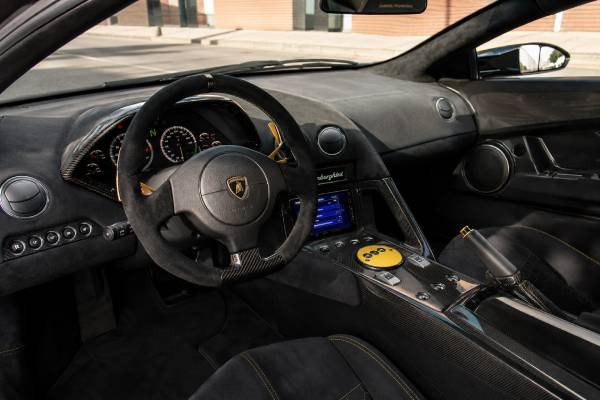
- Interior theme: Alcantara and carbon fiber used heavily to save weight.
- Navigation/audio: radio-navigation was omitted as part of the weight-saving approach but could be ordered.
- Wheels: forged 18-inch Ares wheels with staggered Pirelli P Zero Corsa tires.
Factory colors listed for the SV included Giallo Orion, Arancio Atlas, Bianco Isis, Grigio Telesto, and Nero Aldebaran. Matte Bianco Canopus and matte Nero Nemesis were optional. Color matters because the LP 670-4 SV’s market is highly visual. Orange, yellow, white, and matte finishes often attract strong attention, but condition and originality matter more than color alone.
Aero and transmission choices
The rear wing is one of the easiest visual identifiers, but it is also a value factor. The smaller spoiler gives the car its highest factory top-speed claim. The large Aeropack wing reduces quoted top speed slightly but adds downforce and gives the SV the poster-car stance many collectors associate with the model. Neither is automatically “better.” The best choice is the one documented as factory-delivered.
Transmission is more sensitive. E-gear cars represent the normal production pattern and can be excellent when maintained correctly. Manual cars are far rarer and carry special collector appeal because they combine the final Murciélago SV body with a gated shifter and naturally aspirated V12. A manual SV should be inspected with extra care to confirm it is a genuine factory manual car, not a later conversion or a car with unclear documentation.
China Limited Edition and market-specific cars
A China-market LP 670-4 SuperVeloce special edition is often discussed among collectors. It used distinctive exterior striping and market-specific presentation details. Because these cars can be confused with later cosmetic changes or dealer-applied themes, any buyer should rely on factory paperwork, not appearance alone.
Market-specific equipment also matters for import, registration, lighting, emissions, and service parts. A European, U.S., Middle East, Japanese, or Chinese-market car may not have identical compliance equipment. For a collector, this does not make one market automatically better, but it affects paperwork, import history, and future resale audience.
The cleanest SVs tend to have the same traits: original paint where possible, undamaged carbon panels, books, tools, service records, VIN-specific dealer history, original window sticker or order sheet, documented factory options, and no unexplained gaps in mileage.
Carbon, Aero, and SuperVeloce Details
The SV’s design works because the aggressive parts are functional, not just decorative. Lamborghini changed the front end, engine cover, rear diffuser, wing, body materials, cabin trim, and exhaust to reduce weight, improve cooling, and increase high-speed stability.
The most obvious change is the body attitude. The SV looks flatter, sharper, and more purposeful than the LP 640. The front spoiler stretches forward and uses vertical supports. Brake-cooling openings are larger and more obvious. The rear is dominated by a wide central exhaust outlet, carbon diffuser work, fixed wing hardware, and a transparent engine cover with hexagonal polycarbonate panels set into a carbon-fiber frame.
That engine cover is more than theater. Its layered openings help release heat from the V12 bay, and the exposed engine view reinforces the car’s mechanical focus. The Murciélago already had a dramatic rear-mid-engine layout, but the SV turns the powertrain into a display piece.
The lightweight program was broad rather than superficial. The transmission tunnel and floor used carbon fiber bonded and riveted to the steel frame. The front fenders, rear side panels, and third-brake-light casing used carbon-fiber material. Lamborghini also removed the movable rear-spoiler drive mechanism and replaced it with fixed aero. Inside, carbon-fiber door panels, the carbon center tunnel, Alcantara trim, and lightweight bucket seats reduced mass and changed the mood of the cabin.
Important SV engineering details include:
- Revised chassis structure: stronger sectional steel and recalculated framework improved stiffness.
- Fixed aero: small spoiler or large Aeropack wing replaced the standard car’s movable-spoiler thinking.
- Larger cooling paths: front brake cooling and engine-bay heat extraction were central to the design.
- Dry-sump engine mounting: the oiling system allowed the V12 to sit low, helping the center of gravity.
- Standard carbon-ceramic brakes: lighter and more fade-resistant than steel brakes, but costly to replace.
- Lightweight exhaust: reduced mass and intensified the sound.
The cockpit is tight, low, and special. The scissor doors make access easier than the roofline suggests, but this is not a relaxed grand tourer. The wide sills, low seat, narrow glass area, and long rear body shape all remind the driver that the car was designed around the engine and stance first. Alcantara reduces glare and saves weight, while the carbon trim makes the cabin feel more like a race-derived road car than a luxury coupe.
The SV also represents a design bridge. It has the older Lamborghini wedge drama from the Countach and Diablo lineage, but it previews the sharper, more angular design language that later Lamborghinis pushed even further. The Y-shaped rear light signature and exposed carbon details feel modern, while the proportions remain unmistakably old-school V12 Lamborghini.
Road and Track Driving Character
The LP 670-4 SV feels fast because it is loud, wide, physical, and naturally aspirated, not because it isolates the driver from speed. It delivers modern supercar acceleration, but the experience is still mechanical enough to demand attention.
The V12 is the center of everything. At low rpm, it has torque and mass, but it does not feel lazy. As revs climb, the engine gets harder, sharper, and more urgent. Peak power arrives at 8,000 rpm, so the car rewards drivers who use the upper half of the tachometer. The sound is not a synthetic exhaust tune. It is intake, valvetrain, exhaust, and engine bay resonance layered together.
The e-gear transmission is best understood as a period system. In automatic mode it can be clumsy, especially in traffic. Driven manually with the paddles, and with the throttle timed properly, it feels more natural. Corsa mode sharpens the shift behavior, but it also increases drivetrain shock and can accelerate clutch wear if used carelessly. A manual car brings a very different rhythm. The open-gate shift adds occasion, and the driver becomes more involved in managing the V12’s torque, clutch engagement, and downshifts.
Steering is one of the SV’s most underrated strengths. It is not light in the modern sense, and the front tires are not tiny, but the car gives a clear sense of mass and front-end load. At speed, the all-wheel-drive system and rear-biased weight distribution make the car feel planted. It is not delicate like a small mid-engine sports car. It is more like guiding a very wide, powerful machine with confidence and respect.
Braking performance is strong when the carbon-ceramic system is healthy and warm enough. Pedal feel can vary with pad condition, rotor state, and fluid age, so a pre-purchase drive should include careful brake assessment. Any pulsing, grinding, vibration, warning lights, or uneven bite deserves expert inspection.
The ride is firm but not pointless. The Murciélago’s wheelbase, weight, and suspension geometry help it feel stable on fast roads. Poor surfaces, steep driveways, and tight city streets are a different story. The nose lift is useful, not decorative. The rear visibility is limited, the car is very wide, and the turning circle is not friendly in cramped spaces. Owners who treat it like a normal city exotic will quickly learn why condition, tire age, clutch wear, and front-lift function matter.
On track, the SV is dramatic and capable, but it is not cheap to run. Tire temperature, brake heat, fluid condition, and clutch management matter. The large Aeropack wing adds stability, yet the car remains heavy compared with dedicated track specials. It is best enjoyed as a high-speed, high-sensation supercar rather than a disposable lap-time tool.
The best examples feel tight, immediate, and cohesive. Tired examples feel heavy, hot, reluctant, and expensive. That gap is why a specialist inspection is not optional.
Maintenance, Reliability, and Inspection Risk
The LP 670-4 SV can be robust when maintained properly, but neglect is extremely expensive. This is a limited V12 Lamborghini with carbon bodywork, carbon-ceramic brakes, an automated single-clutch option, hydraulic systems, aging electronics, and specialist-only service needs.
The V12 itself is generally respected for strength, but it must be judged by records, leaks, cooling health, oil condition, warning lights, and how the car behaves when hot. Low mileage is not automatically good. Long storage can create fuel-system, seal, battery, tire, brake, and clutch-calibration problems. A car that has been exercised and serviced correctly may be healthier than a static museum piece.
Common ownership risk areas
A proper inspection should focus on the exact systems that make the SV valuable and costly:
- Clutch wear: e-gear clutch wear should be read with diagnostic equipment and interpreted by someone who knows Murciélago values. Driving style changes wear dramatically.
- E-gear hydraulics: pump function, actuator behavior, shift quality, and fault history matter.
- Manual gearbox condition: clutch take-up, synchro feel, shift linkage, and proof of factory manual specification are critical.
- Carbon-ceramic brakes: inspect rotor surface, thickness, hardware, pads, calipers, and service-campaign completion.
- Front-lift system: confirm it raises and lowers evenly and does not leak down.
- Cooling system: radiators, fans, hoses, coolant age, and heat management need close attention.
- Oil leaks: the dry-sump V12 carries a large oil volume, and small leaks should not be ignored.
- Carbon body panels: check for cracks, poor repairs, underside damage, mismatched weave, paint edges, and accident history.
- Tires: old Pirelli P Zero Corsa tires can look usable but drive poorly and reduce safety.
- Electrical systems: weak batteries, control modules, warning lights, sticky switches, and aging connectors are common exotic-car issues.
- Interior wear: Alcantara, seat bolsters, carbon trim, door pulls, and switchgear show how the car was used.
The 2013 U.S. recall campaign for certain 2006–2010 Murciélago cars with carbon-ceramic brake discs is especially relevant to buyers. It concerned stainless steel screws securing the brake rotor to the bell, with corrosion risk in salty environments. A buyer should not assume completion from model year alone. The right approach is simple: check the VIN through Lamborghini and official recall resources, then confirm the repair in service records.
Service records and specialist labor
A strong SV file should show regular annual care even if the car covered little mileage. Look for engine oil and filter services, brake fluid, gearbox and differential fluids where due, coolant work, battery replacement, tire dates, clutch readings, brake measurements, and any e-gear calibration or hydraulic work.
Specialist labor is part of the ownership cost. A general repair shop may be able to change fluids, but diagnosis and correct setup require Lamborghini-specific experience. The difference between “serviced” and “serviced correctly” is large on these cars. Poor jacking, rushed undertray removal, incorrect fluids, bad battery support, or careless carbon-panel repair can cause expensive secondary problems.
Originality also creates a tradeoff. Some owners improve usability with modern tires, updated audio, protective film, or reversible battery-tender setups. Those changes are usually acceptable when documented and reversible. Non-original paint schemes, aftermarket wings, exhaust modifications, questionable ECU tuning, and missing factory parts can reduce collector confidence unless the car is priced accordingly.
For a serious buyer, the most important maintenance rule is this: do not buy the cheapest SV unless it is also the best documented. A bargain can become more expensive than a premium car after one clutch job, brake issue, carbon repair, or unresolved e-gear fault.
Market Values and Buying Strategy
The LP 670-4 SV sits near the top of the Murciélago market, with the best cars trading in high-six-figure territory and exceptional specifications commanding more. Values move with mileage, transmission, color, originality, provenance, and the quality of recent service history.
Recent market databases have shown the SV well above normal LP 640 coupes and roadsters. Public records have included lower sales around the high-$400,000 range for less favored or higher-risk examples and top public results above $800,000 for exceptional cars. A realistic buyer should treat those numbers as market context, not a fixed price guide. This market is thin, and one rare manual, low-mileage, original-paint car can reset expectations.
| Factor | Why it matters |
|---|---|
| Factory manual transmission | Far rarer than e-gear and highly collectible when documented |
| Original paint and carbon | Carbon repairs and repaint history can be difficult to judge later |
| Color and finish | Bold factory colors and matte finishes can attract strong demand |
| Aero package | Factory-delivered small spoiler or Aeropack wing should match records |
| Mileage | Low mileage helps value, but only with proper servicing and storage |
| Service history | Clutch readings, brake condition, fluid records, and recall status reduce risk |
| Provenance | Original books, tools, window sticker, dealer history, and ownership chain support value |
| Accident history | Carbon structure and panel repairs can be costly and value-sensitive |
Buyer inspection checklist
Before committing to an LP 670-4 SV, use a specialist inspection and insist on VIN-specific verification. The checklist should include:
- Confirm VIN, market specification, factory color, transmission, and aero package.
- Verify service records with authorized Lamborghini dealer or respected specialist support.
- Read clutch wear and e-gear system data on diagnostic equipment.
- Inspect carbon-ceramic brakes, rotor hardware, pads, and recall completion.
- Check tire age, tire type, wheel condition, and alignment evidence.
- Inspect carbon body panels, front splitter, rear diffuser, engine cover, underbody, and jacking points.
- Test front lift, air conditioning, cooling fans, instruments, warning lights, locks, windows, and battery behavior.
- Road test only when the car is properly warmed and insured, watching for shift faults, overheating, vibration, brake noise, and driveline harshness.
- Confirm books, tools, keys, factory documents, owner history, and import paperwork.
- Compare the asking price with recent sales for similar mileage, transmission, color, and condition.
The examples to seek are the boringly complete ones: original, documented, serviced, undamaged, and still in their factory-delivered specification. The examples to avoid are cars with vague mileage stories, missing books, unexplained paintwork, aftermarket aero, unclear brake condition, clutch data that does not match the seller’s claims, or a long period of storage followed by quick sale preparation.
Long-term collectability looks strong because the SV has the right ingredients: limited production, final-model status, naturally aspirated V12 power, dramatic design, and a raw driving experience that newer cars do not fully duplicate. The main risk is not desirability. The main risk is buying the wrong car, underestimating maintenance, or paying a top-tier price for a mid-tier example.
A great LP 670-4 SuperVeloce is one of the most exciting modern Lamborghinis to own. It is rare enough for collectors, loud enough for fans, fast enough to remain serious, and mechanical enough to feel special every time the V12 wakes up. Buy on condition and documentation first; the color, wing, and mileage only matter after the fundamentals are right.
References
- Lamborghini Murciélago LP 670 SuperVeloce – Technical Specifications 2026 (Manufacturer Page)
- Microsoft Word – Lamborghini Murciélago LP 670-4 SuperVeloce – EN.doc 2009 (Press Release)
- Gas Mileage of 2010 Lamborghini Murcielago 2010 (Official Fuel Economy)
- 1200 New Jersey Avenue SE Washington, DC 20590 2013 (Recall Database)
- Lamborghini Murcielago LP670-4 SV Market 2026 (Market Data)
Disclaimer
This article is for informational purposes only and is not a substitute for professional diagnosis, repair, appraisal, or pre-purchase inspection. Specifications, torque values, service intervals, recall applicability, and repair procedures can vary by VIN, market, equipment, production date, and later updates. Always verify technical and maintenance information against the official Lamborghini service documentation for the exact vehicle.
If this guide helped you, please share it on Facebook, X/Twitter, or your favorite car community to support our work.