
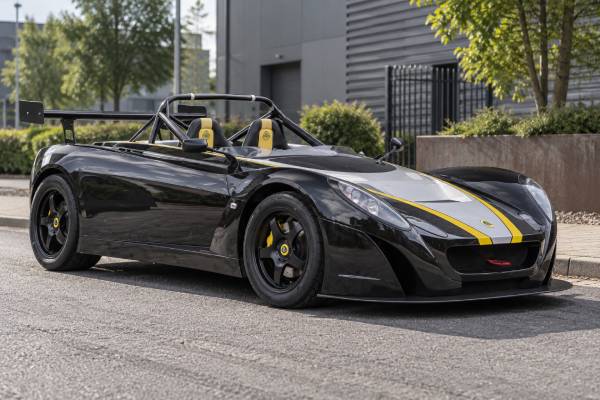
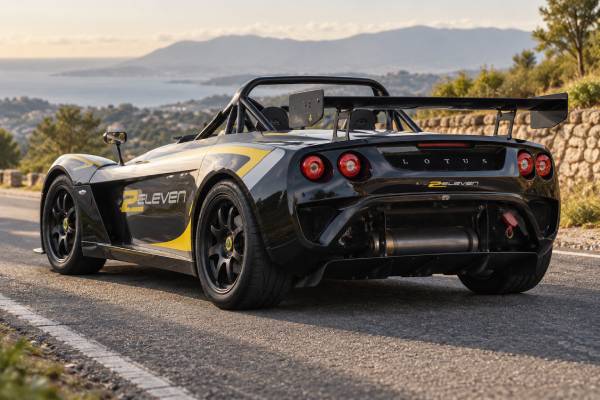
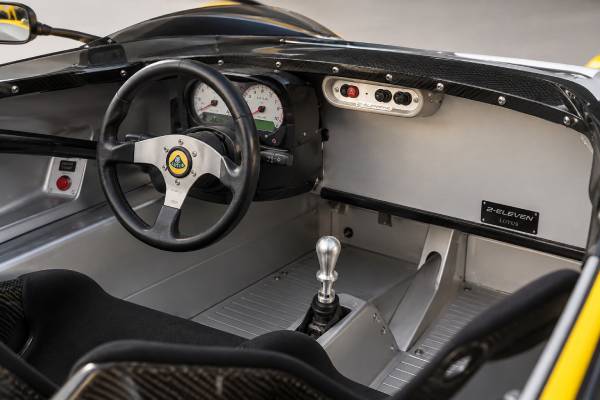
The 189 hp Lotus 2-Eleven is the naturally aspirated branch of the Type 123 family: a 720 kg, Toyota-powered track car introduced in 2008 as a lower-cost, highly configurable alternative to the supercharged 2-Eleven. Its 1.8-liter 2ZZ-GE makes its power high in the rev range rather than through forced induction, yet Lotus quoted 0–60 mph in 4.3 seconds and a 140 mph top speed. More important, the base car could be built in dramatically different ways. Buyers could add road-registration equipment, adjustable Öhlins dampers, stronger brakes, aero hardware, a limited-slip differential, a larger competition fuel cell, carbon-fiber body panels, or even the 255 PS supercharger package. That mix makes specification history unusually important today. This guide focuses specifically on the 189 hp naturally aspirated 2-Eleven sold from 2008 through 2010, separating its core mechanical identity from the many factory options and explaining what matters for driving, servicing, and buying one now.
Table of Contents
- Why 190 PS Was the Point
- Specification Map for the 189 hp Car
- Options That Transform the Base Car
- Driving the Naturally Aspirated 2-Eleven
- Service Life and Track Use
- Buyer Checklist and Configuration Traps
Why 190 PS Was the Point
The 189 hp 2-Eleven was not simply the original car with an important part removed. Lotus deliberately turned the Type 123 into a modular platform in 2008, lowering the entry price while letting owners decide how much road equipment, racing hardware, aero, braking capacity, and engine performance they actually wanted.
When the 2-Eleven appeared in 2007, its public identity centered on the supercharged 255 PS Launch specification. In March 2008, Lotus announced an “entry level” version in response to feedback from racers and owners. The starting point was the naturally aspirated 2ZZ-GE from the Elise R, rated by Lotus at 190 PS, 189 hp, or 141 kW. The quoted kerb mass was 720 kg, only a fraction of what a conventional sports car of the period weighed. In basic form Lotus claimed 0–60 mph in 4.3 seconds, 0–100 km/h in 4.5 seconds, and 140 mph (225 km/h) maximum speed.
That performance makes the word “entry-level” misleading if it is read as “slow.” The naturally aspirated car gives away 63 hp to the 252 hp supercharged version, but it still combines roughly 263 hp per metric tonne with a very low seating position, unassisted-feeling control responses, little isolation from the air, and track-oriented tires. Auto Express tested the road-legal version in 2008 and emphasized that the missing supercharger did not make the car feel short of pace. What changes most is how speed arrives.
The 2ZZ-GE is an engine that rewards revs. Variable valve timing and lift, a short-stroke character, and a peak-power point near 7,800 rpm mean that the driver gets the best from it by keeping the engine in its upper operating range. There is less midrange shove than in the supercharged car, so gear selection becomes a larger part of the experience. On a circuit this can be a benefit rather than a penalty: the power delivery is progressive, the rear tires are asked to transmit less torque, and the driver has more reason to use the close six-speed gearbox accurately.
Lotus also made the base model interesting by not fixing a single “correct” final configuration. The factory option list let a customer build anything from a relatively simple track-day car to a road-registrable machine with sophisticated dampers and aero. There were two types of limited-slip differential, an FIA-approved 70-liter bag tank, a removable competition steering wheel, stronger front brakes, a carbon body option, and several mutually exclusive lighting or road-registration packs. A supercharger upgrade remained available, but fitting it effectively moved the car out of the 189 hp specification covered here.
Specification Map for the 189 hp Car
The defining specification is a naturally aspirated 1,796 cc Toyota 2ZZ-GE inline-four driving the rear wheels through a six-speed manual gearbox, in a 720 kg base car. Lotus’s 2008 release is the best anchor for the variant, while period testing and technical references fill in the engine, performance, chassis, and running-gear details.
| Item | Specification |
|---|---|
| Engine | Toyota 2ZZ-GE |
| Configuration | Inline 4-cylinder, DOHC, 16 valves |
| Displacement | 1,796 cc (1.8 L) |
| Induction | Naturally aspirated |
| Valve control | VVTL-i variable valve timing and lift |
| Fuel delivery | Multipoint electronic fuel injection |
| Maximum power | 141 kW / 190 PS / 189 hp at 7,800 rpm |
| Maximum torque | 181 Nm (133 lb-ft) at 4,680 rpm |
| Transmission | 6-speed manual |
| Drive | Rear-wheel drive |
The rating is sometimes shown as 190 PS and sometimes 189 hp because metric horsepower and mechanical horsepower are different units. They describe the same naturally aspirated specification here, not two separate engine tunes. Likewise, an advertisement describing a 255 PS or 252 hp 2-Eleven is referring to the supercharged configuration rather than this version.
| Measure | 189 hp 2-Eleven |
|---|---|
| 0–60 mph | 4.3 seconds |
| 0–100 km/h | 4.5 seconds |
| 0–100 mph | 11.1 seconds |
| Quarter mile | 13.1 seconds |
| 80–120 km/h in 4th | 4.9 seconds |
| 80–120 km/h in 5th | 6.7 seconds |
| Maximum speed | 225 km/h (140 mph) |
| Combined fuel consumption | 9.3 L/100 km (30.4 mpg UK) |
| CO2 emissions | 216 g/km |
Period performance numbers deserve context. They are manufacturer-era figures for a very light, traction-sensitive car on specialized tires; surface, tire temperature, driver technique, vehicle specification, and launch method can change real results. The in-gear figures are especially useful because they reveal the naturally aspirated model’s character: it does not have the supercharged car’s torque advantage, so keeping the engine in the right gear matters.
| Item | Specification |
|---|---|
| Vehicle type | Lotus Type 123 open two-seat track/road sports car |
| Base kerb mass | 720 kg (1,600 lb), Lotus 2008 entry-level figure |
| Chassis | Bonded aluminum Elise/Exige-derived tub with 2-Eleven revisions |
| Front suspension | Double wishbones with 2-Eleven-specific upper geometry |
| Rear suspension | Double wishbone layout |
| Standard dampers | Non-adjustable Bilstein |
| Ride height | 100 mm front / 110 mm rear, mid-laden reference |
| Front anti-roll bar | Adjustable |
| Traction control | Lotus traction control; variable system with appropriate option pack |
| Body | Lightweight composite panels; carbon-fiber panels optional |
The 2-Eleven uses familiar Elise/Exige architecture but is not merely an Elise without doors. Lotus service notes describe full-height chassis side members, revised suspension components to suit the lower ride height, and a body without conventional shock-absorbing bumpers. That last point is practical as well as technical: minor parking or paddock contact can become a composite-body repair rather than a sacrificial bumper-cover job.
| Item | Period specification |
|---|---|
| Front tire | 195/50 R16 Yokohama A048 LTS |
| Rear tire | 225/45 R17 Yokohama A048 LTS |
| Standard wheels | Y-type 8-spoke cast wheels |
| Sport Pack wheels | 7 twin-spoke ultra-lightweight forged alloys |
| Standard rear aero | Single-plane SVA-compliant GRP rear wing |
| Aero Pack | Adjustable carbon-fiber rear wing plus extended front splitter |
| Sport Pack brakes | RS14 pads and braided stainless-steel hoses |
| Optional front brake upgrade | Four-piston front calipers with two-piece front discs |
Tire specification is central to how this car works. The period Yokohama A048 was a Lotus-specific road-legal semi-slick chosen for grip and response. Modern replacements can be appropriate, but age, heat history, condition, compound, and matching axle pairs matter more than preserving an obsolete sidewall label.
| Area | Lotus offering |
|---|---|
| Base safety/controls | ABS, traction control, driver harness, rear roll hoop |
| Sport Pack | Öhlins 2-way dampers, forged wheels, RS14 pads, braided hoses, adjustable traction control |
| Aero Pack | Adjustable carbon rear wing and extended front splitter; intended for track use |
| UK SVA Pack | Road-registration lighting, mirrors, number-plate hardware, catalyst and related trim/equipment |
| Differential choices | Torsen limited-slip or plate-type limited-slip differential |
| Fuel option | 70 L FIA FT3 bag fuel tank |
| Brake option | Four-piston front calipers and two-piece front discs |
| Body option | Carbon-fiber body panels; Lotus quoted 700 kg kerb mass when fitted to an entry-level car |
| Steering option | Removable competition steering wheel and boss |
| Engine option | 255 PS supercharger pack; fitting it changes the car from the 189 hp specification |
Options That Transform the Base Car
On the naturally aspirated 2-Eleven, the option list is part of the engineering story, not a catalog footnote. A base 189 hp car and a heavily optioned 189 hp car can feel and function differently enough that a buyer should document the exact hardware before making judgments about price or intended use.
Start with the Sport Pack. Its two-way adjustable Öhlins dampers gave owners control over compression and rebound behavior, while forged wheels reduced unsprung mass. Lotus paired those changes with RS14 brake pads, braided stainless-steel brake hoses, and adjustable traction control. For a driver who wants to tune balance from circuit to circuit, this can be more consequential than an engine modification. It also adds maintenance responsibility: adjustable dampers need to be healthy and correctly set, not simply present.
The Aero Pack altered the high-speed end of the car. It combined an adjustable carbon-fiber rear wing with a longer front splitter so that rear-wing changes would not simply load one end of the chassis. Lotus claimed that, at the wing’s maximum angle, aerodynamic load at 100 mph could exceed ten percent of vehicle weight. The company separately quoted 60 kg of downforce at 100 mph for the road-legal aero arrangement. Those figures underline why damaged, missing, incorrectly mounted, or improvised aero parts matter. An adjustable wing is useful only when the front and rear package remains balanced.
Lighting and registration equipment create another dividing line. Lotus offered Track Day, Track Day with Lights, and UK SVA-related packs, with some combinations explicitly incompatible. A road-equipped car could include headlights, indicators, mirrors, number-plate provisions, a catalyst, horn, switchgear, and related harnesses. Market approval outside the UK varied. Consequently, “road legal” is not a universal model designation: a car registered in one country may require different equipment, inspections, or documentation elsewhere.
The differential options deserve similar care. A Torsen-type limited-slip differential and a plate-type limited-slip differential do not behave identically, particularly under power, on corner entry, and when one rear tire is lightly loaded. Plate differentials can also introduce additional service considerations. If a seller claims a particular LSD, confirm it with invoice history, build information, or mechanical inspection rather than assuming that every 2-Eleven had one. Lotus service information states that traction control was fitted irrespective of whether the optional LSD was specified.
There were practical endurance choices too. The 70-liter FIA FT3 bag tank can be valuable for circuit running, but a competition fuel cell is not a fit-and-forget lifetime component. Its manufacturer date, certification life, condition, installation, and replacement history matter. Likewise, twin air/oil coolers were listed as an option specifically for the 190 PS naturally aspirated engine, and the base specification already included an Accusump oil-pressure reserve system. On a car that has spent years on slick or semi-slick tires, verifying that oil-control hardware is intact and correctly plumbed is more meaningful than polishing cosmetic details.
The optional carbon body could bring Lotus’s quoted kerb mass from 720 to 700 kg. Because original carbon panels are valuable and vulnerable, confirm them through invoices, build records, period photographs, and consistent hardware rather than treating any later carbon panel as factory specification.
Driving the Naturally Aspirated 2-Eleven
The 189 hp version is defined by momentum, revs, and precision rather than torque. It is fast enough to be serious on circuit, but its naturally aspirated delivery gives the driver more time and more reason to manage gears, braking points, and corner speed accurately.
At low and medium engine speeds, the 2ZZ-GE does not imitate a large-displacement engine. Its 181 Nm torque peak is modest by modern standards, and the car depends on low mass to turn that output into urgency. As revs rise, the VVTL-i system’s high-lift cam profile helps the engine deliver its strongest work near the top of the tachometer. A clean lap therefore rewards a driver who finishes braking, places the car accurately, and exits in the part of the rev range where the engine is awake.
That engine behavior changes the relationship with the six-speed gearbox. In the supercharged car, extra torque can cover an imperfect gear choice. In the naturally aspirated version, shifting too early or choosing a tall gear costs more speed. The upside is an unusually transparent feedback loop: the driver can feel the consequence of technique without having to manage a sudden surge of boost or a huge reserve of midrange torque.
The chassis is the larger event. The bonded aluminum structure, low mass, double-wishbone suspension, direct steering, and semi-slick tires mean small inputs produce obvious results. Period road testing praised the precision of the steering, brakes, and gearshift, but that same immediacy requires respect. A 2-Eleven has little of the acoustic, weather, impact, or electronic insulation that makes a normal road car forgiving. It can expose poor surface choice, cold tires, standing water, abrupt control inputs, and careless setup very quickly.
Wet-weather behavior deserves special emphasis. Track-oriented tires work within a temperature and water-depth envelope. The broad rear footprint and light vehicle mass do not guarantee security when water cannot be cleared effectively. Modern replacement tires may improve certain wet characteristics, but the basic car still has no roof, no normal windscreen, limited weather protection, and a cockpit that turns rain into an operational problem rather than a mere comfort issue. Owners who drive to track days should plan for weather instead of assuming the journey home will resemble the outward trip.
On track, setup discipline is the key to exploiting the car. Adjustable dampers, anti-roll bar settings, wing angle, tire pressures, alignment, ride height, and differential type can all move the balance. Change one variable at a time and keep notes. A well-sorted 189 hp car on appropriate tires can be more confidence-inspiring—and therefore quicker in an amateur driver’s hands—than a more powerful 2-Eleven with neglected geometry or mismatched settings.
Service Life and Track Use
Maintenance on a 189 hp 2-Eleven should be driven by condition and track exposure, not just calendar mileage. The Toyota-based engine is familiar, but the car around it operates in a high-load environment where fluids, brakes, tires, suspension joints, restraints, and cooling hardware can age faster than the odometer suggests.
Establish a baseline before intensive use: verify fluids and leaks, brakes, wheels, tires, steering, suspension play, and appropriate fastener security. Low road mileage proves little on a circuit car; track hours, curb strikes, heat cycles, and long storage periods can age components without moving the odometer very far.
Oil control deserves attention because the car’s cornering capability is high. Lotus’s 2-Eleven hardware included an Accusump system, and the 2008 option list offered twin air/oil coolers for the naturally aspirated engine. Do not assume those systems remain factory-correct after years of ownership. Check hoses, fittings, mounting, pressure behavior, and evidence of leakage. If the car has had an engine failure or oil-system contamination in its past, service documentation becomes especially valuable because cooler lines and reservoirs can retain debris.
The 2ZZ-GE itself should be evaluated as a high-revving performance engine. Listen for abnormal mechanical noise, verify smooth transition through the upper rev range, investigate misfires rather than driving through them, and confirm the engine reaches operating temperature normally. A compression or leak-down test can be sensible when history is incomplete or symptoms justify it, but numerical results should be interpreted by a technician familiar with the engine and test method. Maintenance intervals, fluid grades, torque settings, and internal repair procedures should come from the correct Lotus/Toyota service information for the car’s VIN and specification.
Brakes are consumables on a track car. Beyond pad thickness, inspect discs for heat damage, fluid and hoses for deterioration, calipers for leaks or binding, and pads for uneven wear. Identify factory four-piston or aftermarket systems before ordering parts. Inspect inner wheel barrels too, where curb strikes and tire fitting can hide damage.
Tires should be judged by age, heat cycles, storage, sidewall condition, and compound as well as tread depth. A lightly worn but old semi-slick can be a poor track tire. After a session, record hot pressures and look for unusual shoulder wear or graining; before the next session, return to a deliberate cold-pressure plan rather than copying another owner’s number blindly. Alignment settings should match the tires and intended use.
The low ride height exposes splitters, underbody areas, wishbones, toe links, and rims to curbs and loading ramps. Öhlins dampers require periodic professional servicing. Check anti-roll-bar links, bearings, ball joints, toe hardware, steering joints, and the rear brace; investigate any change in steering center, tire wear, or braking stability before another fast session.
Finally, treat safety equipment by age and certification, not sentiment. Harnesses, race seats, fire extinguishing equipment, fuel cells, and roll-over components may all have date, condition, or sanctioning-body requirements. A car that was properly prepared in 2009 is not automatically properly prepared in 2026. For organized competition or timed events, the current rulebook always overrides a period brochure.
Buyer Checklist and Configuration Traps
The best 189 hp 2-Eleven is not necessarily the least modified one; it is the one whose configuration, condition, and history can be explained. Because Lotus invited buyers to mix factory packages and standalone options, provenance is essential to knowing what you are actually paying for.
Begin with identity. The 2-Eleven is Type 123, but the VIN and factory documentation should be checked rather than inferred from decals or bodywork. Confirm that the engine is a naturally aspirated 2ZZ-GE and that the car has not simply had supercharger hardware removed after a different life. Likewise, a 189 hp advertisement should not contain a 255 PS claim unless it is describing a later conversion or a spare configuration. Ask for build sheets, invoices, service records, old photographs, registration papers, and any motorsport logbooks.
Next, map the options physically. Does the car have Bilstein or Öhlins dampers? Cast or forged wheels? Standard or four-piston front brakes? Standard GRP rear wing or adjustable carbon aero? Torsen, plate LSD, or open differential? Standard fuel system or a 70-liter bag tank? Fixed wheel or removable competition wheel? Road lights and catalyst, track lighting, or a mixed later conversion? Build a written inventory before comparing prices with other cars.
Road-registration claims need documentary proof. The UK SVA pack was a specific collection of equipment, and other countries used their own approval processes. Registration in the past does not guarantee that a car remains compliant after exhaust, lighting, mirror, aero, seat, or harness changes. Check the rules where the car will actually be used, and do not rely on a seller’s statement that “they’re all road legal.” Some were track-oriented from the start.
Inspect the aluminum chassis with particular care. The bonded structure is central to the car and should not be treated like a conventional steel shell that can simply be straightened and welded anywhere. Look for evidence of impact around suspension pickups, underbody areas, front corners, and rear structure. The absence of conventional bumpers makes low-speed body damage possible, while track incidents can load the chassis in less obvious ways. A specialist inspection is inexpensive relative to discovering structural trouble after purchase.
Check composite and carbon panels for cracks, repairs, distorted mounts, and mismatched finish. Because the cockpit is open, inspect connectors for water-related problems and verify the master switch, starter, instruments, fans, required lights, and traction-control functions. Later track wiring can be a larger risk than the original loom.
Then assess consumables as a package. Four old tires, worn discs, tired dampers, expired harnesses, an aging fuel cell, and overdue fluid service can turn an apparently attractive price into an immediate four-figure recommissioning bill. Conversely, a car with documented damper rebuilds, fresh correct tires, healthy brakes, current safety equipment, and careful setup may justify a premium even if its paint shows honest circuit use.
A pre-purchase drive should establish temperature stability, clean high-rpm operation, clutch and shift quality, straight braking, steering consistency, and traction-control function. Follow it with a specialist workshop inspection; there is no reason to chase the rev limiter on public roads merely to prove the car is fast.
Most of all, buy the configuration that matches the intended use. For occasional road drives and non-competitive track days, SVA equipment, dependable cooling, sensible tires, and good dampers may matter more than maximum aero. For a dedicated circuit car, current safety equipment, brake endurance, fuel capacity, geometry, and serviceability may outweigh cosmetic originality. The 189 hp model’s virtue is that its lower-output engine leaves the chassis at center stage. Preserving that balance—and knowing exactly which factory and later choices created it—is the key to owning the right naturally aspirated 2-Eleven rather than merely owning a rare one.
References
- Lotus 2-Eleven – A track day dominator | Lotus Cars (2026)
- Lotus “entry Level” 2-eleven – Group Lotus – Midlands Lotus Owners Club (MLOC) (2008)
- Lotus 2-Eleven | Auto Express (2008)
- 2-Eleven straßentauglich: Mehr Spielraum für Lotus – n-tv.de (2008)
- LOTUS 2-ELEVEN 2007 SERVICE NOTES Pdf Download | ManualsLib (2007)
- 2010 Lotus 2-Eleven (man. 6) (model for Europe ) car specifications & performance data review (2010)
Disclaimer
This article is for general informational purposes only and is not a substitute for professional diagnosis, repair, inspection, or motorsport preparation. Specifications, torque values, service intervals, legal requirements, and procedures can vary by VIN, market, equipment, and later modification. Verify all work against the correct official Lotus and component-manufacturer service documentation for the individual vehicle. If this guide helped, share it with other Lotus enthusiasts on Facebook, X, or your preferred owners’ community.