
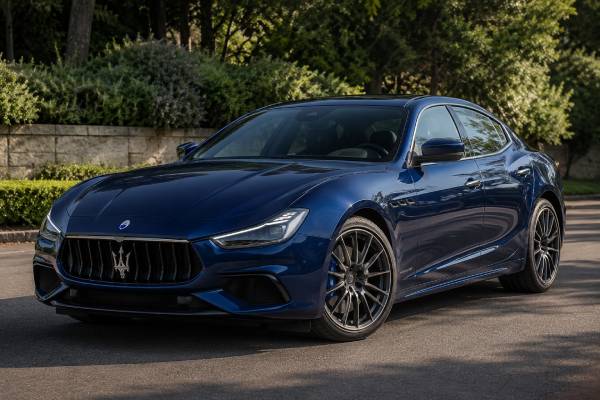
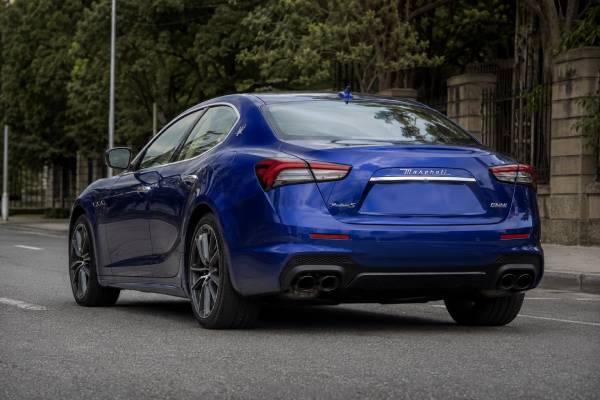
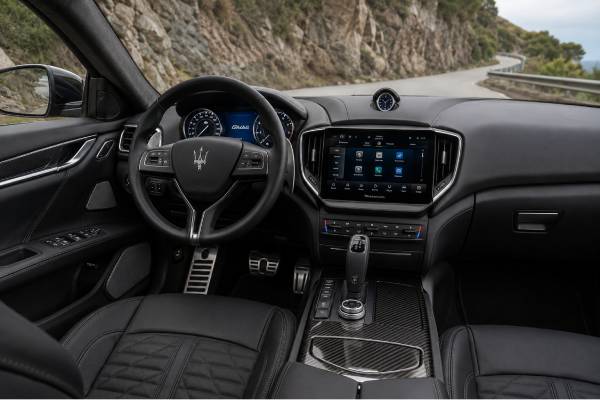
The Maserati Ghibli Modena S is the international-market name for the late rear-wheel-drive Ghibli with the 430 hp F160 twin-turbo V6. It belongs to the 2021–2023 phase in which Maserati replaced the older base, S, GranLusso, and GranSport language with GT, Modena, Modena S, and Trofeo identities in many regions. Modena S matters because the “S” is not decorative: in the markets that used this hierarchy, it separates the 430 hp car from a 350 hp Modena. Other countries, especially the United States, generally called the same high-output position simply Modena and quoted 424 SAE hp. That naming overlap makes original documentation essential. A genuine Modena S should have a factory build record, market invoice, 2,979 cc petrol V6, rear-wheel drive, 580 Nm, and late-model equipment that agrees with its VIN. On the road it provides much of the speed buyers want from a modern Maserati while retaining a lighter, simpler front end than Q4. Ownership still demands specialist standards: correct oil, cooling integrity, ignition health, stable battery voltage, quality tires, measured brakes, accurate alignment, current software, and a complete module scan before purchase.
Table of Contents
- The Modena S Role Explained
- 430 hp Rear-Drive Specifications
- International Versions and Factory Choices
- The Sporting Details That Matter
- Fast-Road Character Below Trofeo
- High-Output V6 Maintenance Reality
- How to Buy a Modena S
The Modena S Role Explained
Modena S is the sporting V6 flagship in the international late-Ghibli hierarchy, positioned above the 350 hp Modena and below the V8 Trofeo. The letter identifies the stronger engine calibration and should appear consistently in the car’s original market records.
The M157 had already been in production for years when Maserati reorganized its trims. Earlier buyers chose among Ghibli, Ghibli S, Ghibli S Q4, Diesel, GranLusso, and GranSport combinations. The later structure was intended to communicate personality more directly: GT for grand touring, Modena for sporting character, and Trofeo for maximum performance. In markets with two petrol V6 outputs, “S” remained necessary to separate them.
The result is easy to misunderstand on the used market. A 430 hp car can be listed as Modena, Modena S, or even S GranSport depending on country, production date, and the seller’s database. Conversely, a 350 hp Modena may receive an S badge or be advertised with 430 hp because a generic decoder associates Modena with the U.S. specification.
Metric and SAE ratings add another layer. International material generally states 430 CV or hp, while North American sources state 424 SAE hp. The engines occupy the same high-output class, but the commercial model names are not always identical. For collectors and careful owners, the original nomenclature should be retained rather than “corrected” to another country’s brochure.
The Modena S uses rear-wheel drive. That is central to its character and distinguishes it from Modena S Q4. With no front transfer system, the steering is concerned only with direction, and the rear limited-slip differential handles power delivery. The layout is mechanically leaner but requires appropriate rear tires and restraint when roads are cold or wet.
Historically, the car is one of the final series-production V6 Ghiblis. It carries years of M157 development: revised styling, electric steering, active driver aids, a newer 10.1-inch infotainment system, and a mature powertrain calibration. It does not have Trofeo’s 3.8-liter V8, Corsa mode, or limited-final-edition status, yet it offers lower operating exposure and more discreet everyday use.
Current desirability depends on specification and evidence. A well-colored Modena S with complete records, modest wheels, functioning Skyhook, and no tuning can be more compelling than a poorly maintained Trofeo. The badge opens the discussion; the VIN, condition, and service file decide the value.
430 hp Rear-Drive Specifications
The Modena S combines a 2,979 cc twin-turbo V6 with a ZF eight-speed automatic and rear limited-slip differential. Manufacturer figures place it at about 4.9 seconds from 0–100 km/h and roughly 286 km/h at the top end.
| Item | Specification |
|---|---|
| Engine code and layout | F160, 60-degree twin-turbocharged V6 |
| Displacement | 2,979 cc |
| Fuel system | Direct petrol injection |
| Maximum power | 430 hp at approximately 5,750 rpm |
| Maximum torque | 580 Nm from approximately 2,250 rpm |
| Gearbox | Eight-speed ZF automatic with manual paddles |
| Driven wheels | Rear, through a limited-slip differential |
| 0–100 km/h | Approximately 4.9 seconds |
| Maximum speed | Approximately 286 km/h |
| Front suspension | Double-wishbone independent layout |
| Rear suspension | Five-link independent layout |
| Steering | Electric power assistance |
| Wheelbase | 2,998 mm |
| Fuel tank | Approximately 80 liters |
The F160’s aluminum block and heads, two turbochargers, direct injection, and variable valve timing produce a dense torque curve rather than a peaky delivery. It reaches useful boost early and continues pulling strongly as speed rises. The engine’s construction history includes Ferrari manufacturing involvement, but service parts, controls, and installation remain Maserati-specific.
The 580 Nm torque rating is the more useful everyday number. It allows the automatic to accelerate the car in a high gear without delay, while Sport mode accesses lower ratios and a sharper accelerator map. Compared with the 350 hp engine, the S calibration is most noticeable under sustained load and at higher road speed.
The ZF gearbox is integrated with engine, stability, differential, and drive-mode controls. In normal use it should shift almost invisibly. Sport makes shifts firmer and delays upshifts; the fixed paddles provide direct manual requests. A hard mechanical bang, repeated flare, or long delay selecting Drive or Reverse is a fault symptom, not expected sporting behavior.
The chassis is built around a mixed steel-and-aluminum body structure. Aluminum suspension parts reduce unsprung mass, and the double-wishbone front geometry supports consistent tire contact. Skyhook adaptive damping adjusts each corner according to sensor input and selected mode. Equipment and damper calibration may vary by market.
Brake and wheel packages are not fully uniform. Many cars carry large ventilated discs, multi-piston front calipers, and 20- or 21-inch wheels, but factory 19-inch combinations also exist. The correct tire dimensions, load ratings, and pressure information should be taken from the specific vehicle.
Published mass varies with equipment and measurement convention. A sunroof, premium seats, audio, assistance hardware, and larger wheels all change the figure. For buying decisions, measured tire and brake condition is more useful than arguing over a brochure curb-weight number.
International Versions and Factory Choices
The Modena S was configured differently across countries, so a complete build sheet is more valuable than a list copied from a review. Powertrain identity may be stable while comfort, assistance, wheel, lighting, and infotainment details differ.
The late trim theme usually includes dark exterior accents, sport seats, a more assertive bumper and grille treatment, and larger wheels than GT. Some cars add carbon-fiber interior or exterior pieces, colored brake calipers, full natural leather, or Alcantara headlining. Special paint and interior combinations can have more effect on rarity than an ordinary option package.
The 10.1-inch Maserati Intelligent Assistant screen is a major late-car feature. It replaces the slower earlier unit and controls navigation, audio, smartphone integration, connected services, cameras, and vehicle settings. Verify local-language support, map region, phone compatibility, and whether connected functions remain active in the country of use.
Driver aids can include adaptive cruise control, lane keeping, active blind-spot support, automatic emergency braking, traffic-sign recognition, surround cameras, and parking sensors. Option names and bundles changed. A windscreen replacement or front-bumper repair may require camera or radar calibration even when no warning is currently displayed.
Specification details that affect value
- Original 20-inch wheels may offer a better road compromise than optional 21-inch wheels.
- Skyhook adds adaptability but makes damper condition and diagnostic access more important.
- Premium audio improves the cabin only if the amplifier and every speaker operate cleanly.
- Ventilated seats, heated rear seats, and a heated wheel matter in daily use but add modules and wiring.
- Full leather and Alcantara can elevate the interior, yet sun damage and poor dye repairs are expensive to reverse.
- Two functioning keys and complete factory accessories avoid coding and sourcing costs.
Production and registration years can differ. A car first used in 2023 might have been built earlier, while model-year equipment may arrive before the calendar changes. Inspect the production label, software versions, lamp markings, and option codes to determine the true configuration.
Imported cars need a second layer of verification. Confirm headlamps, rear fog functions, emissions compliance, speed display, radio frequencies, navigation, connected services, and warranty support. A professional conversion should have invoices and no unexplained coding changes.
Factory originality should be judged intelligently. Normal replacement tires, batteries, brake components, and filters do not reduce authenticity when correct parts are used. The concerns are structural repair, altered engine software, nonstandard emissions hardware, mixed trim, incorrect wheels, and module configuration that no longer matches the build record.
The Sporting Details That Matter
The Modena S feels distinctive because its engineering and design reinforce each other: rear-drive proportions, a strong V6, fixed paddles, valved exhaust, and a cabin arranged around the driver. Cosmetic badges are the least important part of that experience.
The M157 silhouette remains low and long, with the cabin pulled rearward over a nearly three-meter wheelbase. Frameless doors reduce visual mass, while the short rear deck keeps the profile from becoming formal. The three side vents and trident are traditional Maserati signals rather than add-on aerodynamic claims.
Late boomerang-shaped rear lamps reference earlier Maserati forms and separate the final phase from the first cars. Modena S usually uses black or dark brightwork, sport bumpers, and assertive wheel designs. The exact treatment should match the build data because previous owners often fit Trofeo-look grilles or carbon parts.
The front bumper is also a cooling and sensor assembly. Air must reach radiators, condensers, charge coolers, and brakes. Radar and parking sensors require correct brackets and alignment. A front-end repair should be judged from underneath and through diagnostic data, not only by paint match.
Inside, the large paddles do more than decorate the steering column. Their fixed position gives consistent access through a bend and encourages manual control on fast roads. The driver sits low behind a broad console, while the analog-style gauges and dashboard clock preserve some traditional character around the modern display.
The valved exhaust is one of the strongest reasons to choose the V6 over the Hybrid. Normal mode keeps the sedan civilized; Sport releases a louder, sharper note and makes gear changes more dramatic. Rattling valves, loose heat shields, a one-sided sound, or permanent drone indicate wear or modification.
The rear-drive package also affects steering purity. Electric assistance provides less surface detail than the hydraulic rack of the earliest M157s, but there is no front-axle drive torque to manage. Correct tires and alignment reveal a clean, accurate response. Poor geometry can make the same car feel nervous and heavy.
Interior materials should be inspected as carefully as body panels. Look for stretched dashboard leather, lifted trim, scratched gloss surfaces, bolster wear, headliner sag, and damaged switch coatings. An unusual factory color in excellent condition can be a stronger ownership pleasure than an extra carbon package in poor shape.
Fast-Road Character Below Trofeo
The Modena S delivers its best performance on fast public roads, where strong midrange acceleration, stable high-speed manners, and rear-drive balance matter more than the Trofeo’s ultimate power. It is quick enough to require discipline but calm enough for daily use.
In traffic, the engine should be smooth and the gearbox unobtrusive. The car can move on torque with modest throttle and does not need to rev hard. A rough idle, delay selecting a gear, shudder on takeoff, or flat spot before boost should be diagnosed rather than accepted as character.
Sport mode changes the car’s tone. The transmission holds lower gears, the exhaust opens, and accelerator response becomes more immediate. The V6’s 580 Nm arrives in a broad surge, and the upper rev range feels stronger than in the 350 hp version. Paddle selection is useful for keeping the car settled before a corner.
The rear limited-slip differential helps transfer power when exiting a bend. On dry, warm tires the car can deploy most of its output cleanly. In cold rain, torque can exceed available rear grip quickly. Stability control is calibrated to help, but it cannot compensate for old, mixed, or inexpensive tires.
Steering is accurate and predictable when the chassis is healthy. It should not pull, tramline excessively, or return unevenly. Wide tires naturally follow some road contours, but an off-center wheel or inner-shoulder wear points toward alignment, bent wheels, bushings, or previous impact.
Skyhook can give the car two useful personalities. The softer setting allows long-distance compliance; the firmer setting contains body movement on smooth, fast roads. A worn system may become bouncy over large undulations and harsh over sharp edges. Compare modes and inspect each damper for leakage.
Wheel choice is decisive. Twenty-inch wheels often preserve enough sidewall for real roads, while 21-inch packages sharpen impacts and increase repair risk. A high-output car on poor tires may feel less composed than a 350 hp car on a well-chosen premium set.
Brakes should provide a firm, progressive pedal and straight stopping. Large discs can look serviceable from outside while inner faces are corroded or cracked. Check thickness, runout, pad wear, caliper movement, hose condition, and fluid age. A hot wheel after ordinary driving suggests drag.
On a motorway, the Modena S settles into eighth gear and has immediate passing reserve. The long wheelbase gives stability, but wheel imbalance or bent rims become obvious at speed. Test the car through a range of legal speeds because a vibration can appear only in a narrow band.
Trofeo is much faster and more dramatic, but it also carries V8-specific fuel, thermal, tire, brake, and collection considerations. Modena S is the more rational fast-road choice for many owners: distinctive, rapid, and usable without pretending to be a track car.
High-Output V6 Maintenance Reality
A Modena S should be maintained as a high-performance, networked luxury car, not as an ordinary used sedan. Time-based service, diagnostic evidence, and preventive correction of small faults protect the engine and preserve the value.
Use the exact approved oil and filter, and verify level through the proper procedure. Inspect turbo oil and coolant connections, covers, seals, and undertrays. Persistent smoke, burning-oil smell, or repeated top-ups require diagnosis. A low-mile car used for short trips can still have degraded oil and moisture contamination.
The cold start should be prompt and even. Spark plugs and coils are normal service concerns on a turbocharged direct-injection engine. Injectors, high- and low-pressure fuel control, oxygen sensors, intake leaks, boost valves, and turbo actuators can produce misfires or reduced power. Read live data and pending codes before replacing parts.
Cooling capacity is fundamental. Examine reservoirs, pumps, hoses, radiators, charge-air cooling, fans, caps, and dried traces. Clear debris from heat exchangers without damaging fins. Any unexplained loss, sweet odor, or fan irregularity needs a pressure test and specialist assessment.
A strong 12-volt battery prevents a long list of misleading symptoms. Load-test it, inspect grounds, verify charging, and use a maintainer during storage. Low voltage may trigger warnings in the gearbox, parking brake, steering, lights, cameras, radar, seats, infotainment, and keyless system.
Expensive areas to evaluate early
- Skyhook dampers, suspension arms, rear links, wheel bearings, and four-wheel alignment.
- Large brake discs, quality pads, caliper operation, parking brake, and fresh fluid.
- High-speed tires, bent wheels, cracked inner barrels, and incorrect spacers.
- Engine and transmission mounts, propeller-shaft joints, differential seals, and exhaust valves.
- MIA screen, premium amplifier, adaptive lighting, cameras, radar, and coded modules.
- Windscreen replacement followed by correct assistance-system calibration.
The automatic transmission should be evaluated from cold through full operating temperature. Delayed engagement, flare, harsh repeated shifts, or limp mode requires analysis of engine torque, software, adaptations, mounts, fluid condition, and internal operation. Correct fluid and fill temperature are essential during service.
Verify recalls and campaigns by VIN with an official source. Late Ghibli populations may have safety actions involving seat-belt or fuel-system components, depending on region and production date. Manufacturer software updates and technical actions may not appear in a public recall search.
Parts for routine maintenance are available, but market-specific trim, lamps, electronics, and modules can be slow or costly. Establish a relationship with a workshop that has Maserati diagnostic access and understands coding. Repeated parts swapping by a general shop can cost more than a correct specialist diagnosis.
How to Buy a Modena S
The first buying rule is to verify that the car is a factory Modena S for its original market. The second is to inspect every system cold and hot before calculating value.
Ask the seller for the complete VIN, production label, original invoice or order, factory build data, registration, service invoices, and both keys. Confirm 430 hp, 580 Nm, rear-wheel drive, and the market’s Modena S designation. Resolve any paperwork that describes 350 hp, Q4, or a different trim.
Do not allow the car to be warmed before inspection. Note cranking speed, warning-lamp sequence, exhaust smoke, idle quality, accessory noise, charging voltage, and initial gearbox engagement. Scan all modules immediately and save fault frequency, mileage records, software, readiness, and configuration data.
Evidence-based purchase checks
- Measure paint depth and inspect structural seams, fasteners, glass dates, bumper sensors, cooling ducts, undertrays, and jacking points.
- Test compression or perform deeper engine diagnostics when misfire, smoke, or inconsistent boost is present.
- Examine oil, coolant, leaks, turbo plumbing, mounts, exhaust, suspension, brakes, wheel barrels, and full-width tire wear on a lift.
- Road-test parking behavior, broken surfaces, constant-speed cruise, moderate boost, manual shifts, cornering, and controlled braking.
- Operate Skyhook, Sport, exhaust valves, parking brake, MIA, audio, cameras, radar, lights, climate, seats, locks, and both keys.
- Re-scan the hot car and compare any new engine, transmission, steering, or assistance-system faults.
- Obtain written repair estimates and add overdue maintenance before negotiating the price.
The road test should show a smooth torque build and repeatable shifts. A tuned car may initially feel stronger, but unknown software adds fuel, heat, emissions, driveline, and resale risk. Ask for the original calibration and supporting invoices; otherwise value it as a diagnostic project.
Tires and brakes are bargaining items only when their cost is quantified. Read date codes, measure tread across the inner shoulder, inspect repairs, and check wheel runout. Measure disc thickness and inner condition. A seller’s claim that these are “good for the mileage” is not a measurement.
Check every convenience feature. Late cars can hide expensive faults behind a black screen, intermittent camera, weak amplifier channel, failed seat ventilation, or adaptive-light warning. A new battery may temporarily erase symptoms without fixing the cause, so the hot re-scan matters.
Compare alternatives by use. The 350 hp Modena offers the same general shape with less output. Modena S Q4 adds traction and front-driveline maintenance. Trofeo adds the final V8 and a different cost scale. The rear-drive Modena S is ideal for a mild climate and an owner who values steering clarity and petrol V6 character.
A sound car will have matching records and configuration, an honest body, clean starts, even boost, stable temperatures, consistent transmission behavior, premium tires, and no unexplained module history. Buying that evidence is more important than buying a badge. With careful selection, Modena S represents the mature high-output V6 Ghibli at its most direct and usable.
References
- Maserati Ghibli Modena S: your new sports sedan (Manufacturer Model Page)
- Maserati 2022 new trims: GT, Modena and Trofeo 2021 (Manufacturer News)
- Maserati_Ghibli_Digital_Catalogue_EN.pdf (Manufacturer Brochure)
- Part 573 Safety Recall Report 21V-703 2021 (Recall Database)
Disclaimer
This article is for informational purposes and does not replace professional diagnosis, repair, coding, calibration, or a vehicle-specific inspection. Specifications, horsepower standards, equipment, fluids, intervals, software, and warranty terms vary by VIN, market, and production date. Verify all important details with official documentation for the exact vehicle.
Please share this guide on Facebook, X/Twitter, or an enthusiast community if it was helpful. Sharing supports more detailed model-specific resources.