
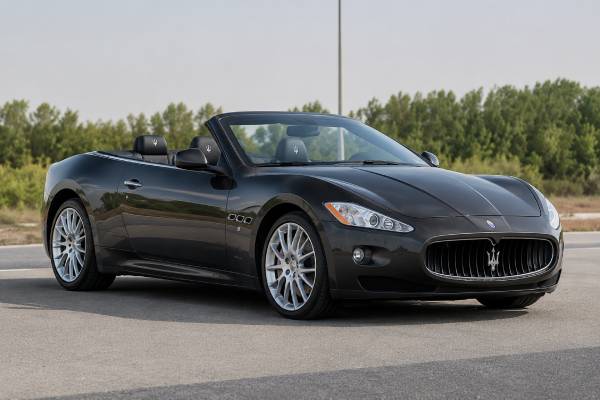
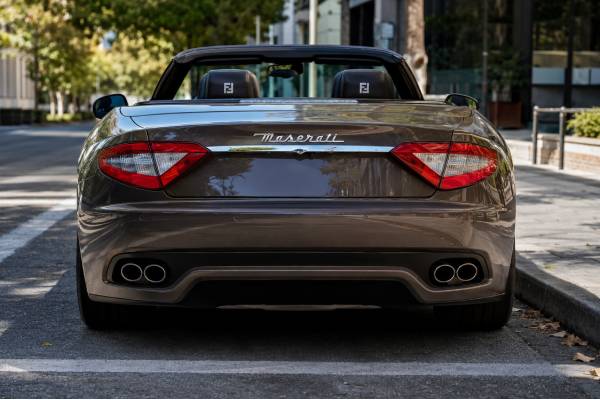
The 2012 Maserati GranCabrio Fendi is a fashion-led limited edition that combines the original 440 hp GranCabrio powertrain with materials, colors, and detailing developed with Silvia Venturini Fendi. Only 50 cars were announced for production, all finished in the special Grigio Fiamma Fendi paint and individually identified by a numbered dashboard plaque. Its mechanical character is therefore closer to the early luxury-focused GranCabrio than to the later 460 hp Sport and MC models.
A standard GranCabrio can be repainted, retrimmed, or fitted with badges, but a genuine Fendi should have a coherent set of factory details: the iridescent exterior color, Fendi-branded wheel centers, yellow brake calipers, dedicated roof plaque, embossed leather, distinctive wood, and serial-number identification. Mechanical condition is equally important. Limited production does not protect the roof mechanism, suspension, electronics, cooling system, or leather from age. This guide explains what makes the Fendi version different, how it drives, where it can deteriorate, and how a buyer should verify a car before paying a collectible premium.
Table of Contents
- A Fashion Collaboration with Real Rarity
- Fendi V8 Platform and Core Specifications
- Fifty Cars and the Authenticity Details
- Grigio Fiamma, Leather, and Craftsmanship
- Grand-Touring Character Behind the Label
- Preserving a Low-Volume Luxury Convertible
- How to Buy a Genuine Fendi
A Fashion Collaboration with Real Rarity
The GranCabrio Fendi is significant because its special identity comes from integrated factory craftsmanship rather than a simple color-and-badge package. Maserati and Fendi presented the car in 2011 and announced a production run of 50 units for sale in 2012, linking two Italian luxury houses through color, leather, wood, and small branded details.
The collaboration was directed with Silvia Venturini Fendi and centered on the fashion house’s familiar grey and yellow palette. The exterior uses Grigio Fiamma Fendi, a specially developed grey with a gold-like iridescent effect. Under changing light it moves from cool metallic grey to a warmer tone, giving the large Pininfarina body more depth than a conventional solid or metallic finish.
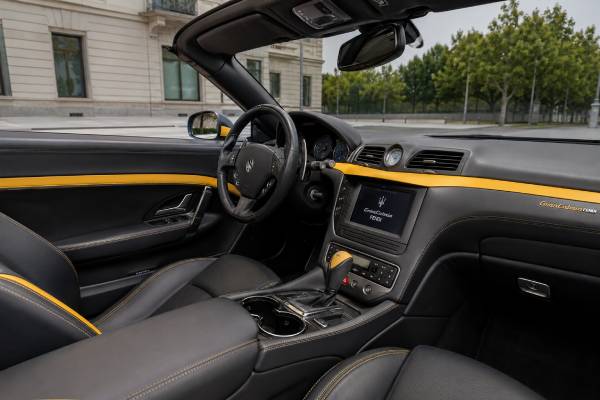
Inside, the treatment becomes more distinctive. Grigio Chrono leather covers the seats and carries embossed Fendi branding through the central sections. Yellow embroidery highlights the Maserati Trident on the head restraints. Cuoio Romano leather appears on the instrument panel and gear selector, while Pergamena Fendi wood extends across the dashboard and doors. The combination is recognizable, but it is also difficult to restore correctly if damaged.
Mechanically, the Fendi is not a separate high-performance derivative. It uses the naturally aspirated 4.7-liter V8 in 440 hp form with 490 Nm and a six-speed automatic. That choice suits the edition’s purpose: it is a luxury and design statement based on the more relaxed early GranCabrio, not a counterpart to the later MC.
The limited run gives the model a credible rarity that ordinary option combinations cannot match. Yet rarity alone does not determine value. A Fendi missing its plaque, wearing the wrong paint, or retrimmed with generic leather loses much of what makes it special. Conversely, a complete car with factory documentation, continuous history, original finishes, and sympathetic maintenance can appeal to both Maserati collectors and buyers interested in Italian design collaborations.
The model also occupies a particular place in the history of branded luxury cars. Many collaborations add logos to a standard vehicle. The Fendi version went deeper by developing a dedicated exterior finish, integrating house-specific leather, choosing a unique wood treatment, and coordinating the smallest visible accents. Its value therefore depends on preservation of the whole composition.
Today, the best use case is careful but regular touring. A car that is never driven may suffer from seals, batteries, roof switches, tires, and fluids aging in place. A car used without regard for its rare trim may accumulate damage that is difficult to repair. Balanced ownership means exercising the mechanical systems while protecting the unique materials and retaining every original component.
Fendi V8 Platform and Core Specifications
The Fendi uses the standard early GranCabrio’s 4,691 cc V8, rear-wheel-drive layout, six-speed automatic, and four-seat convertible structure. Its performance figures reflect the 440 hp specification rather than the 450 or 460 hp Sport calibrations.
| Category | Specification |
|---|---|
| Engine | 90-degree naturally aspirated V8 |
| Displacement | 4,691 cc |
| Construction | Aluminum block and heads |
| Induction | Naturally aspirated |
| Maximum power | 440 hp at 7,000 rpm |
| Maximum torque | 490 Nm at 4,750 rpm |
| Transmission | ZF six-speed automatic with paddle control |
| Drivetrain | Rear-wheel drive with limited-slip differential |
| Suspension | Double wishbones front and rear; adaptive Skyhook where specified |
| Steering | Hydraulic power assistance |
| Wheels | 20-inch alloy wheels with Fendi double-F center detail |
| Typical tires | 245/35 ZR20 front; 285/35 ZR20 rear |
| Wheelbase | 2,942 mm |
| Width | 1,915 mm excluding mirrors |
| Fuel capacity | 75 liters |
| Boot capacity | Approximately 173 liters |
| 0–100 km/h | Approximately 5.3 seconds |
| Maximum speed | Approximately 283 km/h |
The engine uses four overhead camshafts, four valves per cylinder, and variable valve timing. It develops power progressively and saves its most dramatic response for the upper rev range. This is different from a turbocharged luxury car, where strong torque often arrives early and then flattens. In the Maserati, a downshift and rising engine speed are part of the experience.
The ZF automatic reinforces the grand-touring character. Normal mode prioritizes smooth shifts, while Sport settings hold gears longer, sharpen response, and make the exhaust more prominent. The steering-wheel paddles provide manual selection, but the transmission remains a torque-converter unit rather than a dual-clutch or automated manual system.
A front-mid-engine layout places the V8 behind the front axle line, helping the long convertible achieve balanced responses. Double-wishbone suspension controls wheel movement at both ends, and hydraulic steering provides direct feedback. The body is reinforced through the sills, floor, and bulkheads to replace stiffness normally supplied by the roof.
The Fendi edition does not receive a unique braking or suspension package solely because of its fashion collaboration. Replacement parts must still be identified by VIN because market equipment can vary. On any test drive, the brakes should feel firm, the suspension should settle after one movement, and the steering should remain free of knocks or dead spots.
The special 20-inch wheels are part of the car’s identity. Their centers feature Fendi’s double-F motif, and yellow calipers connect the exterior to the cabin accents. Refinishing must preserve the correct design, color, and center details. Generic replacement wheels may make the car usable but substantially weaken authenticity.
Weight figures differ by measurement standard, but the car is heavy. The long wheelbase and broad track create stability, while low-profile tires transmit sharp impacts. Fresh matching tires and correct alignment are essential. Old rubber can make the Fendi feel nervous in the wet and can also expose its rare wheels to impact damage.
Fifty Cars and the Authenticity Details
A genuine GranCabrio Fendi should present a matched group of numbered and design-specific features. Verification should begin with factory records and continue through every visible detail; no single badge proves authenticity.
The official production announcement specified 50 cars. Each was to carry a plaque on the right side of the dashboard beside the GranCabrio script. The plaque combines the Maserati Trident, Fendi branding, and an individual serial number. It should look integrated and original, not recently engraved or attached with improvised hardware.
The expected exterior details include:
- Grigio Fiamma Fendi paint with its grey-to-gold iridescent effect.
- 20-inch alloy wheels with Fendi double-F center treatment.
- Yellow brake calipers.
- A dedicated Fendi plaque on the fabric roof.
- Standard Maserati body identification consistent with the original GranCabrio base.
The expected cabin details include:
- Grigio Chrono leather with embossed Fendi logos in the seat centers.
- Yellow embroidered Trident emblems on the head restraints.
- Cuoio Romano leather on the dashboard and gear selector.
- Pergamena Fendi wood across the dashboard and doors.
- The numbered dashboard plaque.
- Factory stitching and trim transitions that match period documentation.
Authenticity checks should go beyond a visual comparison. Ask Maserati or a recognized heritage specialist for build information tied to the VIN. Compare the paint and trim codes with the car. Review early invoices, registration documents, delivery photographs, and ownership records. A continuous history is especially useful if the car has traveled between countries.
The paint deserves expert evaluation. Grigio Fiamma Fendi may be challenging to match after accident or cosmetic repair. A panel can appear acceptable under workshop lighting and noticeably different in sunlight. Use a paint-depth gauge across the body, but interpret readings with knowledge of low-volume hand-finishing and prior authorized work. Uneven metallic orientation, masking lines, overspray, or mismatched gold effect should be investigated.
Interior restoration is even more sensitive. Generic grey leather with stamped logos is not equivalent to the original Fendi material. Replacement wood may lack the correct tone and finish. If a seat bolster has been repaired, inspect the grain, perforation, embossing, stitching color, and surface sheen. Sympathetic repair is preferable to deterioration, but the work should be documented and reversible where possible.
Limited-edition components can be difficult to source. Missing wheel centers, plaque, roof badge, or wood may require specialist fabrication, and a newly made part may not carry the same collector value as an original. Buyers should price missing items before purchase rather than assuming they can be ordered from normal parts stock.
Grigio Fiamma, Leather, and Craftsmanship
The Fendi edition is distinguished by how its materials change the mood of the GranCabrio. The engineering remains familiar, but color and texture turn the car from a conventional luxury convertible into a coordinated design object.
Grigio Fiamma Fendi is the most visible element. Its subtle gold effect responds to body curvature and light, emphasizing the Pininfarina surfaces along the front fenders and rear haunches. Correct paint care should preserve that depth. Aggressive machine polishing can thin edges and alter appearance, while poor ceramic or film installation may trap contamination or create a different gloss across panels.
The roof plaque adds identity to a component that normally serves only a functional role. The multilayer fabric roof follows the coupe-like roofline when raised and folds beneath a flush cover when open. Its fabric color and condition must harmonize with the body. A replacement roof may be mechanically sound but should be assessed for correct material, color, stitching, and plaque transfer.
Inside, the Grigio Chrono seats and yellow embroidery create a stronger contrast than the exterior. Fendi embossing is integrated into the central leather rather than added as a loose badge. The Cuoio Romano leather introduces a warmer, saddle-like texture around the dashboard and selector. Pergamena Fendi wood lightens the horizontal trim and visually connects front and rear seating areas.
These materials age differently. Leather can dry, crease, shrink, or become glossy from incorrect cleaners. Dashboard covering can lift in hot climates. Wood may crack or cloud. Yellow thread can fade or absorb dirt. A preservation plan should use products tested on hidden areas and avoid household cleaners, strong solvents, and heavy silicone dressings.
The broader GranCabrio design remains one of the car’s strengths. The long hood and short front overhang create classic grand-tourer proportions. The rear seats are shaped for real passengers rather than included for marketing. With the top down, the cabin materials become part of the exterior composition, making correct color balance unusually important.
Structural engineering supports that presentation. The steel monocoque uses reinforcement in the floor, sills, and cross-car structures, while selected aluminum panels help manage mass. Some movement over harsh diagonal bumps is normal for a convertible of this generation, but persistent cowl shake, door movement, or roof creaks should lead to a chassis and accident-repair inspection.
The engine sound supplies the sensory counterpart to the materials. The naturally aspirated V8 remains restrained at light load and becomes richer as it approaches 7,000 rpm. An original active exhaust preserves both quiet touring and open-road drama. An aftermarket system may be enjoyable, but it should not overwhelm the carefully designed luxury character or eliminate valuable factory parts.
Grand-Touring Character Behind the Label
Behind its fashion identity, the Fendi drives like the original 440 hp GranCabrio: smooth, stable, progressive, and more interested in a flowing road than an aggressive lap time.
The V8 starts with a cultured idle and responds cleanly to small throttle movements. In traffic, the automatic transmission shifts early and the engine remains quiet. The car’s width and long doors require attention, while the rear view becomes restricted with the roof raised. Parking sensors should operate correctly because damage to special paint can be disproportionately costly.
On faster roads, the engine’s personality unfolds gradually. Midrange acceleration is strong, but the most memorable pull comes after a deliberate downshift. The final approach to 7,000 rpm combines linear power with a clear change in intake and exhaust tone. The response is immediate because there are no turbochargers between the pedal and the engine’s airflow.
The transmission is not designed to deliver modern supercar shift speed. It works best when the driver plans ahead, using the paddles to select a gear before a corner or overtake. Sport mode makes the automatic logic more suitable for a winding route, but smoothness remains part of the car’s identity.
Hydraulic steering gives the driver useful information about front-tire load. The wheel is not nervous around center, and the long wheelbase creates strong high-speed stability. The car turns with confidence when inputs are measured. Fast changes of direction reveal its mass, which is why the Fendi is more rewarding when driven with rhythm than with abrupt braking and steering.
Ride quality should be compliant enough for long journeys. On Skyhook-equipped cars, normal mode allows more body movement and Sport tightens control. The difference should feel purposeful. Harshness over small bumps often points to old tires, bent wheels, tired dampers, or incorrect suspension parts rather than an inherent trait.
The roof-down experience is central. With two people and the wind stop fitted, the front cabin can remain calm at highway speeds. With four occupants, airflow and noise increase, but the car still offers a shared experience that most performance convertibles cannot. The Fendi’s special cabin materials are fully visible with the top lowered, adding to the sense of occasion.
Brakes should deliver a firm, progressive pedal. The car’s weight means repeated hard stops require good fluid and adequate pad thickness. A car stored for long periods may develop corrosion or uneven deposits on the discs, leading to vibration. Correct diagnosis should separate disc issues from wheel, tire, and suspension faults.
The Fendi is not the version for a buyer seeking the fastest GranCabrio. Its strengths are rarity, presentation, naturally aspirated response, and relaxed performance. Driving it hard enough to enjoy the V8 is appropriate; treating it as a disposable track-day car is not.
Preserving a Low-Volume Luxury Convertible
Preservation requires two parallel plans: ordinary M145 mechanical maintenance and special care for Fendi-specific materials. Ignoring either side undermines the car’s value.
Mechanically, the V8 should be serviced by time as well as mileage. Annual oil changes are sensible, and records should document filters, spark plugs, belts, coolant, brake fluid, transmission fluid, differential oil, and air-conditioning work according to the vehicle’s market schedule. Long storage intervals do not stop fluids and rubber from aging.
Inspect for oil seepage around cam covers, front covers, seals, and ancillary components. A dry undertray is encouraging, but it can also hide recent cleaning. Examine the engine before and after a road test. Cold-start noise, smoke, unstable idle, low-oil warnings, or a strong burnt-oil smell require specialist diagnosis.
The cooling system deserves preventive attention. Clear debris from radiator and condenser faces, verify fan operation, check hose condition, and inspect for dried coolant. The temperature should remain steady in traffic. A failed fan or slow leak can damage an otherwise strong engine.
The ZF automatic benefits from correct fluid and filter service. It should engage drive promptly and shift smoothly when cold and hot. Harshness can come from software adaptation, mounts, differential bushings, or driveline joints as well as internal transmission wear. Written diagnosis avoids unnecessary replacement.
Roof care is essential. Operate the top regularly, keep drains clear, condition seals with appropriate products, and never force a stalled mechanism. Test the windows, latches, storage cover, and rear glass. Inspect the trunk and rear carpets for moisture because water can damage control modules.
The electrical system is sensitive to low voltage. Use the correct battery and a quality maintainer during storage. A weak battery can create multiple warning messages and interrupt roof operation. Recurrent discharge should trigger a proper parasitic-draw and charging-system test.
Special trim preservation includes:
- Gentle hand washing and careful decontamination of the iridescent paint.
- Paint-depth records before any correction or protective-film work.
- Leather cleaning with products suitable for the original finish.
- Protection from prolonged sun and high cabin temperatures.
- Documentation of every trim repair, including materials and color matching.
- Safe storage of removed original parts.
- Avoiding unnecessary drilling, wiring, or adhesive on unique panels.
Suspension components age even on low-mileage cars. Control-arm bushings, ball joints, dampers, anti-roll-bar links, tie rods, and tires should be inspected. Tire date codes matter as much as tread depth. Old tires reduce wet grip and increase the risk of wheel damage.
Parts supply is the largest difference between an ordinary GranCabrio and a Fendi. Standard mechanical components may be available through Maserati specialists, but edition-specific trim can be unavailable. Insurance coverage should reflect agreed value and the cost of specialist paint or interior work rather than ordinary used-car repair rates.
How to Buy a Genuine Fendi
The safest purchase is a fully documented, factory-confirmed car with all numbered and material-specific features intact. A specialist inspection should cover both mechanical systems and authenticity.
Request the VIN, plaque number, build information, service file, ownership history, and detailed photographs before traveling. Ask specifically whether the car has been repainted, retrimmed, had its roof replaced, or lost any unique components. Vague answers should reduce the price or end the inquiry.
Use this verification sequence:
- Confirm the VIN as a factory GranCabrio Fendi through authoritative build records.
- Match the dashboard serial plaque to the car’s documented history.
- Check the exterior paint code and assess Grigio Fiamma under direct and diffuse light.
- Verify wheel centers, yellow calipers, roof plaque, and correct wheel design.
- Compare leather, embossing, embroidery, wood, and stitching with period material.
- Review invoices for trim or accident repairs and identify who performed them.
- Complete a full M145 mechanical inspection and electronic module scan.
A pre-purchase inspection should begin with a cold start and end only after the car is fully warm. Operate the roof several times, test every electrical function, scan all modules, measure tire age, inspect the underside, and road-test the car over smooth and broken surfaces. Check for wind noise and water marks with the roof raised.
Paint correction or body repair should be evaluated by a specialist familiar with complex metallic finishes. A repaired panel is not automatically unacceptable, but the color and metallic effect must match from multiple angles. Structural repair, disturbed roof geometry, or poorly aligned doors is a much greater concern.
Interior originality should be valued realistically. Light bolster wear may be preferable to an inaccurate full retrim. A correct local repair by a recognized trimmer can preserve more authenticity than replacing every leather surface. The same principle applies to wood and roof fabric.
Do not let low mileage replace condition. A seldom-used Fendi may need tires, fluids, a battery, seals, dampers, roof work, and extensive recommissioning. A regularly exercised car with careful detailing and continuous invoices may be healthier. Mileage credibility should be supported by inspection history and service dates.
Keep a reserve for both mechanical and cosmetic needs. The purchase premium buys rarity, not immunity from age. Standard GranCabrio repairs can already be expensive, and special trim adds another layer of risk. An agreed-value insurance policy and secure, dry storage are sensible.
The right buyer appreciates the Fendi as a complete design collaboration and intends to preserve it while using it thoughtfully. Anyone primarily interested in maximum performance should choose a 460 hp Sport or MC. The Fendi’s strongest case is its combination of genuine limited production, distinctive Italian craftsmanship, four-seat usability, and the original 440 hp V8 character.
References
- Maserati Grancabrio Fendi limited edition 2012
- A Maserati GranCabrio for Fernando Alonso 2010
- Maserati Guides & Documentation for your vehicle 2026 (Owner Documentation)
Disclaimer
This article is for informational purposes only and is not a substitute for professional authentication, diagnosis, inspection, or repair. Specifications, torque values, intervals, and procedures vary by VIN, market, production date, and equipment; verify all details against official service and build documentation for the specific car.
Please share this guide on Facebook, X/Twitter, or a relevant collector community if it helped your research and you would like to support our work.