
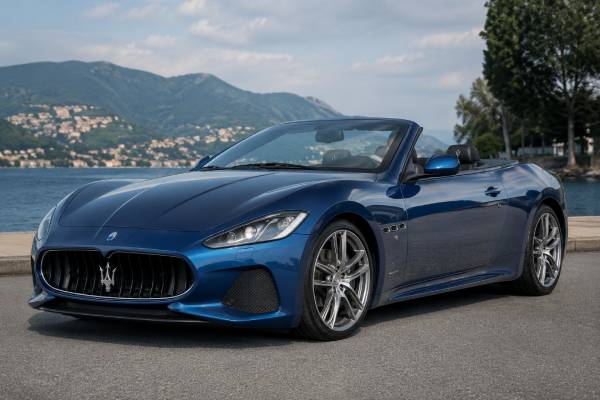
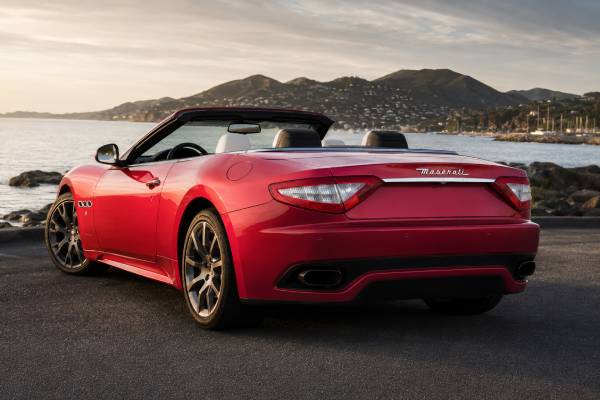
The 2011–2012 Maserati GranCabrio Sport sharpened the original four-seat convertible without turning it into a stripped-out track car. Its 4.7-liter naturally aspirated V8 rose to 450 hp and 510 Nm, the six-speed automatic gained quicker MC Auto Shift programming, and the adaptive suspension received a more focused calibration. The result is a useful middle ground: more responsive and visually assertive than the 440 hp GranCabrio, but less extreme than the later 460 hp MC.
This short-lived version is easy to confuse with both the earlier car and the 2012-onward 460 hp Sport. Buyers therefore need to verify the production date, engine output, exterior specification, and original paperwork rather than relying on badges. Condition remains more important than rarity. A well-kept Sport feels cohesive, stable, and richly mechanical; a neglected one can hide expensive faults in its roof, dampers, suspension arms, electronics, cooling system, or transmission. The following guide focuses specifically on the 450 hp M145S car and explains how its changes affect performance, ownership, and value.
Table of Contents
- Why the 450 hp Sport Matters
- M145S Engine, Chassis, and Performance Data
- Short Production Run and Correct Identification
- Sport-Specific Design and Engineering Changes
- Road Manners, Sound, and Driver Feedback
- Service Risks on an Early Sport
- Inspection Strategy and Purchase Advice
Why the 450 hp Sport Matters
The 450 hp GranCabrio Sport is the first factory attempt to give Maserati’s large convertible a harder performance edge. Introduced at the 2011 Geneva Motor Show, it retained four usable seats and the full luxury equipment of the GranCabrio while making the engine, transmission, suspension, exhaust, and appearance more alert.
Maserati did not simply raise the peak-power figure. The company’s friction-reduction work lowered internal losses and improved engine response, while revised management software made the powertrain feel livelier at ordinary road speeds. Output increased by 10 hp over the original GranCabrio, and torque rose from 490 to 510 Nm. The gains sound modest, yet the Sport responds more crisply because its throttle, gearbox, damper settings, and exhaust work together.
Historically, this model marks the bridge between two phases of the M145. The early 440 hp GranCabrio emphasized elegance and comfort. The 450 hp Sport introduced a more aggressive interpretation in 2011. Maserati then updated the Sport again for the 2012 Paris period with 460 hp, 520 Nm, revised lighting, and further chassis development. As a result, the 450 hp car had a relatively brief production life and is less commonly seen than the later version.
Its appeal today is not based on outright speed. Modern performance convertibles can accelerate far more quickly, but few combine hydraulic steering, a naturally aspirated Ferrari-built V8, a traditional torque-converter automatic, and a genuinely adult-sized rear compartment. The Sport adds enough tension to the chassis to make a winding road engaging while retaining the relaxed character expected of a grand tourer.
The model is also attractive to buyers who prefer the first-generation front-end treatment. Later 460 hp cars adopted updated headlamps and revised styling, while the MC added dramatic aerodynamic parts. The 450 hp Sport has a cleaner look, often distinguished by dark detailing, 20-inch wheels, and an assertive exhaust note rather than extensive body changes.
Because values have fallen, many examples have passed through owners who treated maintenance as optional. This car is not inexpensive to run merely because the purchase price is accessible. Its roof mechanism, adaptive suspension, large brakes, electronic modules, hand-trimmed cabin, and low-volume body parts still belong to an exotic luxury car. Service history must therefore be judged as part of the vehicle’s condition, not as paperwork added after the fact.
M145S Engine, Chassis, and Performance Data
The M145S Sport uses the same 4,691 cc basic V8 architecture as the original GranCabrio, but produces 450 hp and 510 Nm. It remains rear-wheel drive and uses a ZF six-speed automatic with Maserati-specific MC Auto Shift control.
| Item | Factory specification |
|---|---|
| Engine configuration | 90-degree naturally aspirated V8 |
| Displacement | 4,691 cc |
| Construction | Aluminum block and cylinder heads |
| Valve gear | DOHC, four valves per cylinder, variable timing |
| Maximum power | 450 hp at 7,000 rpm |
| Maximum torque | 510 Nm at 4,750 rpm |
| Transmission | Six-speed ZF MC Auto Shift automatic |
| Driven wheels | Rear-wheel drive |
| Differential | Mechanical limited-slip |
| Front suspension | Double wishbones with Sport Skyhook adaptive damping |
| Rear suspension | Double wishbones with Sport Skyhook adaptive damping |
| Steering | Hydraulic rack and pinion |
| Wheels | 20-inch alloy wheels |
| Typical tires | 245/35 ZR20 front; 285/35 ZR20 rear |
| Wheelbase | 2,942 mm |
| Width | 1,915 mm excluding mirrors |
| Height | Approximately 1,380 mm |
| Fuel tank | 75 liters |
| Luggage capacity | Approximately 173 liters |
| 0–100 km/h | About 5.2 seconds |
| Top speed | 285 km/h |
The V8’s character is defined by revs rather than boost. Peak torque arrives at 4,750 rpm and peak power at 7,000 rpm, so the car rewards a deliberate downshift before an overtake. At lower engine speeds it remains smooth and flexible, but it does not produce the immediate low-rpm shove of a modern turbocharged engine. The benefit is a direct relationship between pedal movement, engine speed, and sound.
MC Auto Shift programming is a major part of the Sport identity. In automatic normal mode, the gearbox behaves like a luxury-car transmission. Sport and manual modes hold gears longer, increase shift speed, sharpen downshift behavior, and allow the engine to remain in its stronger range. The paddles are fixed to the steering column, which makes them easy to locate during cornering.
The Sport Skyhook system continuously adjusts damper force. Maserati paired it with revised springs and anti-roll control to reduce body movement. The setup should feel disciplined, not harsh. If a car crashes over small imperfections or bounces after a crest, do not assume that is normal Sport tuning; inspect dampers, top mounts, bushings, tires, and wheel condition.
Large Brembo brakes provide the stopping performance required by a heavy, fast convertible. Exact disc and caliper specifications can differ by market and production detail, so replacement parts should be ordered by VIN. Pedal response should be firm, and the car should stop without steering vibration or pulsing. Worn front suspension joints can imitate brake-disc problems, making a specialist diagnosis valuable.
Short Production Run and Correct Identification
Correctly identifying a 450 hp Sport requires more than reading the trunk badge. The version was sold during a transition period, and later 460 hp cars may share similar names, registration years, wheel designs, or replacement exterior parts.
Start with the VIN and official build record. Confirm the production date, engine type, market specification, paint code, trim code, and factory options. The assignment designation M145S and the original documentation should align with the 450 hp output. A 2012 registration does not guarantee a 460 hp engine because vehicles can remain in inventory or be registered after production.
The 450 hp Sport typically carries darker visual details than the base GranCabrio. Depending on market and configuration, cues can include black headlamp backgrounds, a dark grille, body-color or black aerodynamic elements, distinctive 20-inch wheels, red-accented badging, and colored brake calipers. Interior themes often use drilled aluminum pedals, extended shift paddles, contrast stitching, and sportier trim choices.
None of these items is conclusive alone. Wheels, grilles, exhausts, badges, steering wheels, and carbon trim are easy to swap. More reliable evidence includes:
- Original sales invoice and option list.
- Factory build data tied to the VIN.
- Engine-control identification and output specification.
- Period service records naming the correct model.
- Production labels that have not been disturbed.
- Consistent paint, trim, and wheel codes.
The short production period adds interest but does not automatically make every car collectible. Color combination, condition, originality, mileage credibility, history, and market location matter more. A rare specification with a damaged roof, incomplete servicing, or poor accident repair is less desirable than a more common color in excellent mechanical condition.
Factory personalization was extensive. Buyers could combine exterior colors with multiple roof fabrics, leather shades, piping, stitching, dashboard trim, wheel finishes, and brake-caliper colors. This variation means replacement interiors can be difficult to match. Sun-faded leather, shrunk dashboard covering, damaged stitching, and missing special-order trim should be priced realistically.
Modifications should be documented. A quality exhaust may suit the V8, but bypassed valves, removed catalysts, poor wiring, or excessive drone reduce usability. Lowering springs can upset the Skyhook calibration and create clearance problems. Aftermarket infotainment can add modern phone integration, yet careless installation may introduce battery drain or damage rare trim panels.
Sport-Specific Design and Engineering Changes
The Sport’s engineering brief was to make the GranCabrio more immediate without sacrificing its four-seat, long-distance purpose. Maserati achieved that through coordinated changes rather than one dramatic component.
The engine calibration gives the accelerator a cleaner first response and maintains stronger pull toward the 7,000 rpm power peak. The gearbox then supports that character by selecting lower ratios more readily and reducing shift time in its faster modes. An active exhaust adds a more open sound under load, making the increase in urgency obvious even when road speed changes only modestly.
Sport Skyhook is equally important. Adaptive dampers react to body and wheel movement, and the Sport calibration reduces roll and pitch when the driver selects the more aggressive setting. The car remains compliant in normal mode, which preserves the core GranCabrio advantage over tighter two-seat sports cars. On a healthy example, the difference between modes is noticeable in control and response rather than a crude change from soft to punishing.
The body retains Pininfarina’s original proportions. The long hood, high rear haunches, and compact fabric roof create a balanced profile whether the top is raised or lowered. Sport detailing adds visual tension without changing the basic shape. Dark finishes around the grille and lights make the front look lower, while larger wheel designs fill the arches more assertively.
The roof uses a multilayer cloth skin over a metal frame with a glass rear window. It folds under a flush cover, preserving the cabin’s clean open shape. The mechanism coordinates hydraulic or electric actuation, position switches, windows, latches, and the storage cover. This complexity means a roof can stop because of a minor sensor issue or because of a costly mechanical fault; diagnosis should never be reduced to guesswork.
Structural reinforcement through the floor, sills, and bulkheads helps the convertible resist twisting. The result was impressive for its era, but the car can still show some movement over broken diagonal surfaces. Excessive shake is not a charming trait. It may indicate worn chassis components, bent wheels, loose bracing, prior collision repair, or a roof and windshield structure that no longer seals correctly.
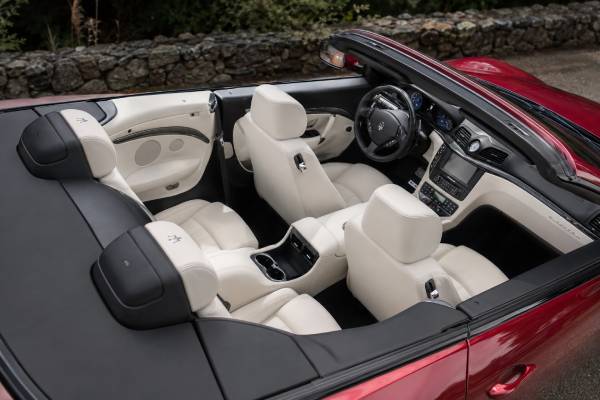
Inside, the Sport blends traditional materials with functional performance details. Poltrona Frau leather, analog instruments, the central clock, and sculpted seats create a formal Italian atmosphere. Aluminum pedals and column-mounted paddles add purpose without making the cabin austere. Rear-seat space remains one of the car’s defining engineering achievements.
The hydraulic steering system deserves attention because it contributes much of the car’s personality. It transmits tire loading and road texture more naturally than many electric systems. Fluid leaks, pump noise, worn tie rods, poor alignment, or incorrect tires can dull that advantage. A properly set up Sport should steer consistently and return cleanly to center.
Road Manners, Sound, and Driver Feedback
The 450 hp Sport feels faster and more focused than the numerical increase over the 440 hp car suggests. Its stronger impression comes from the way the throttle, gearbox, suspension, and exhaust respond together.
In town, the car remains easy to drive. The torque-converter automatic creeps smoothly, the engine accepts low revs, and the suspension can absorb ordinary surface changes. Its width, long doors, and limited rear visibility require care in garages. Working parking sensors are not a luxury; they protect bodywork that is expensive to repair and difficult to match.
On an open road, the V8 becomes the center of attention. Throttle response is clean, and the engine gains urgency as it passes 4,000 rpm. The final third of the rev range delivers both the strongest acceleration and the characteristic metallic exhaust note. Because torque builds progressively, the driver can meter power precisely when exiting a corner.
The six-speed automatic is best approached on its own terms. It cannot match a dual-clutch transmission for instantaneous shifts, but it suits the car’s broad role. In automatic Sport mode it anticipates more of the driver’s intent. In manual mode, selecting a lower gear before turn-in keeps the engine ready and avoids asking for a shift while the chassis is loaded.
Steering weight is substantial enough to give confidence without becoming tiring. The front tires communicate grip progressively, and the long wheelbase makes the car stable at speed. The rear differential helps apply power smoothly, though stability control should remain active on cold, wet, or unfamiliar roads. A heavy rear-drive convertible on old tires can move abruptly once grip is lost.
The Sport Skyhook setup limits roll better than the base car, but the body still takes a set rather than snapping into a bend. Smooth inputs work best. A driver who brakes early, releases the pedal progressively, turns once, and feeds in power will find the car balanced and rewarding. Abrupt corrections make its mass more obvious.
Ride comfort remains good by performance-car standards. Broad highway surfaces suit it especially well, and the cabin is quiet enough with the roof raised for long journeys. Tire roar, rattles, or wind noise beyond a light background level should prompt inspection. Damaged seals, misaligned glass, hardened tires, or a poorly adjusted roof can make the car seem far less refined than it should.
Brake feel is reassuring when the system is healthy. The heavy body means repeated high-speed stops create heat quickly, so mountain-road use requires fresh fluid and adequate pad material. A firm first stop followed by a lengthening pedal suggests a problem that must be addressed before enthusiastic driving.
Roof down, the Sport reveals its strongest identity. The active exhaust is more audible, the engine’s response feels immediate, and the large cabin allows passengers to share the experience. The wind deflector improves front-seat calm but occupies the rear area. With four occupants, conversation is practical at moderate speeds and less so on fast highways.
Service Risks on an Early Sport
The main ownership risk is accumulated neglect, not one universal engine defect. These cars now require age-based maintenance across every system, even when the mileage is low.
The V8 should start quickly from cold, settle to a stable idle, and run without smoke or persistent mechanical noise. Inspect for oil leaks around cam covers, front covers, seals, and the undertray. Minor seepage can be monitored, but oil on hot exhaust components, a falling level, or a contaminated accessory belt needs prompt repair.
Cooling-system health is essential. Examine radiators and condensers for debris, check the expansion tank and cap, inspect hoses and joints, and confirm that both fans operate correctly. The temperature should remain stable in traffic with the air conditioning on. A brief test drive may not reveal a marginal fan, partially blocked radiator, or slow coolant loss, so pressure testing can be worthwhile.
The ZF automatic is robust when maintained, but many cars were sold with optimistic ideas about lifetime fluid. Fluid and filter service using the correct procedure is sensible. Harsh engagement, flare, delayed response, or vibration under load may come from the gearbox, mounts, differential, prop shaft, or software adaptation. Diagnosis should identify the source before parts are ordered.
Sport Skyhook dampers are expensive enough that sellers may ignore early failure. Look for oil leakage, uneven ride height, repeated bouncing, warning messages, and a poor difference between modes. Control-arm bushings, ball joints, anti-roll-bar links, tie rods, and wheel bearings also wear. A chassis refresh can restore the car dramatically, but costs rise if every component is overdue.
Electrical stability starts with the battery. Low voltage can create unrelated warnings for the transmission, suspension, roof, parking system, airbags, or stability control. The correct battery, a healthy alternator, secure grounds, and a maintainer during storage are basic requirements. Repeated discharge needs a parasitic-draw test rather than endless battery replacement.
Roof faults require systematic testing. Operate the top several times after checking fluid condition, latches, seals, windows, and storage-area clearance. Inspect drains and carpets for water. A failed microswitch may be simple; a damaged hydraulic component, bent linkage, or water-damaged control unit may not be. Written diagnosis is far more valuable than a seller’s estimate.
Other recurring age-related concerns include sticky buttons, worn seat mechanisms, parking-sensor failures, cracked wheel rims, tire-pressure warnings, leather shrinkage, delaminated trim, weak air conditioning, and outdated infotainment. These are not all catastrophic, but several together reveal a car that has not received continuous attention.
Service planning should include annual oil changes, regular brake-fluid replacement, coolant-age control, belt inspection, spark plugs at the specified interval, transmission and differential fluids, cabin and engine filters, and air-conditioning service as needed. Exact intervals vary by VIN and market. Specialist records should show what was done, which parts were used, and what inspections were completed.
Inspection Strategy and Purchase Advice
A 450 hp GranCabrio Sport should be bought only after a full specialist inspection, module scan, and extended road test. The cost of that work is small compared with one adaptive-damper, roof, cooling, or electrical repair.
First confirm identity. Ask for the VIN before traveling and obtain factory build information where possible. Check that the production date and engine output match the 450 hp version. Compare exterior and interior equipment with period photographs and the option list, but remember that cosmetic parts can be changed.
Next evaluate history. A thick file of invoices is more useful than a stamped book with no details. Look for regular servicing by date, not only mileage, and note whether major work was preventive or reactive. A car that repeatedly changed batteries without electrical diagnosis, for example, may still have an unresolved drain.
Inspect these areas closely:
- Roof fabric, frame, rear glass, latches, seals, drains, and storage cover.
- Front and rear suspension joints, adaptive dampers, springs, and alignment.
- Wheel inner barrels, tire dates, matching tire models, and tread wear.
- Cooling fans, radiator faces, hoses, coolant residue, and operating temperature.
- Engine oil leaks, belt condition, mounts, and exhaust-valve operation.
- Gearbox engagement, shift quality, fluid leaks, and driveline play.
- Brake-disc condition, pad depth, pedal feel, and caliper operation.
- Dashboard leather, sticky controls, seat functions, parking sensors, and audio.
The road test should begin cold and continue until every fluid and electronic system is fully warm. Use all transmission modes, perform light and strong acceleration, drive over different surfaces, and brake from several speeds. Listen with the roof up and down. Repeat roof operation after the drive because heat can expose weak sensors or hydraulic components.
A pre-purchase diagnostic scan should cover all modules, not only the engine computer. Stored history can reveal intermittent roof, suspension, airbag, or communication problems even when the dashboard is clear. Faults should be interpreted by someone familiar with the platform; clearing codes before diagnosis removes useful evidence.
Budget for baseline maintenance after purchase. Fresh fluids, filters, alignment, tires, a battery, and minor trim work can improve the car immediately. Keep a reserve beyond that baseline. The GranCabrio is enjoyable when maintained ahead of problems and frustrating when every repair must wait for funds.
Pay more for an original, dry, straight car with a fully functioning roof and consistent history. Mileage should influence price but not dominate the decision. Regular use helps seals, switches, roof mechanisms, and fluids remain active. A dormant low-mileage car may need extensive recommissioning.
The 450 hp Sport is the right choice for a buyer who wants the early Pininfarina design with sharper factory tuning and a relatively uncommon production specification. It should not be purchased solely as the rarest affordable badge. Buy it because its blend of V8 response, hydraulic steering, four-seat practicality, and restrained Sport styling matches the way you intend to drive.
References
- Worldwide preview at the Geneva Auto Show for the Maserati GranCabrio Sport 2011
- Strong representation of Maserati Benelux at Brussels Motor Show 2012 2012
- Maserati Guides & Documentation for your vehicle 2026 (Owner Documentation)
Disclaimer
This article is provided for informational purposes and does not replace professional diagnosis, inspection, or repair. Specifications, torque values, service intervals, and procedures may vary by VIN, market, production date, and equipment; always verify them in the official service documentation for the individual vehicle.
Please share this article on Facebook, X/Twitter, or an enthusiast forum if it supported your research and you would like to help our work reach other owners.