
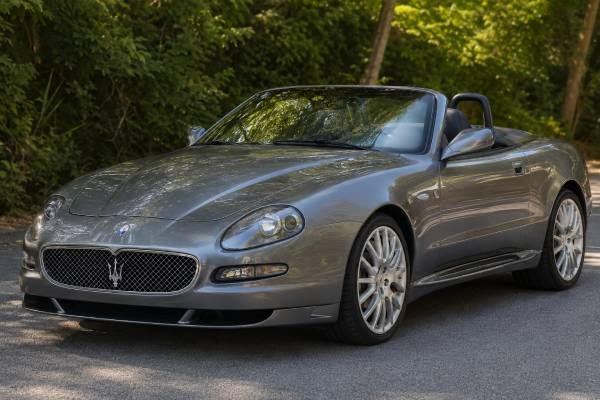
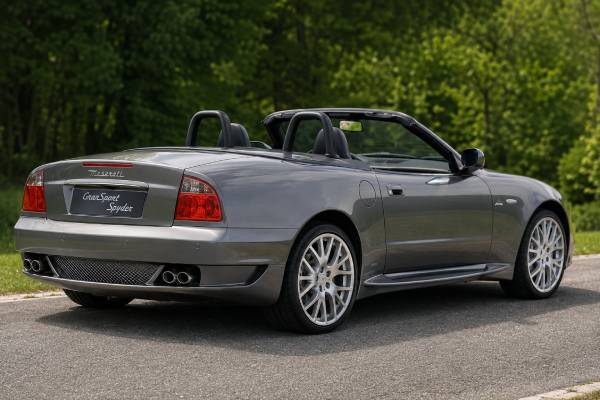
The 2005–2007 Maserati GranSport Spyder puts the GranSport’s 400 hp V8, rear transaxle, rapid Cambiocorsa shifts, lower suspension, and dramatic exhaust into a compact two-seat convertible. It is not simply a coupé with its roof removed. The M138ADC Spyder rides on a wheelbase 220 mm shorter than the GranSport coupé’s, uses a reinforced open body, carries no rear seats, and delivers a more immediate sense of rotation and speed. With the fabric roof lowered, the engine and exhaust dominate the experience; with the roof raised, it can still serve as a serious weekend GT. Ownership requires more inspection than the closed car because the roof mechanism, drains, seals, interior water exposure, and body rigidity join the usual GranSport concerns of clutch wear, hydraulic transmission faults, suspension joints, sticky controls, and age-sensitive cooling parts. A strong example feels tight, tracks cleanly, and operates its roof smoothly without damp carpets or warning lights.
Table of Contents
- Why the GranSport Spyder Is Distinct
- Short-Wheelbase V8 and Chassis Data
- Production, Specifications, and Original Equipment
- Convertible Structure, Roof, and Cockpit
- Open-Air Speed and Handling Character
- Roof, Clutch, and Age-Related Maintenance
- A Practical GranSport Spyder Buying Plan
Why the GranSport Spyder Is Distinct
The GranSport Spyder is the rare open version of Maserati’s performance-developed M138, built from 2005 through 2007 and officially listed at 473 examples. Its shorter wheelbase, two-seat cabin, and open roof give it a different personality from the four-seat GranSport coupé even though the powertrain and basic suspension design are closely related.
Maserati revealed the GranSport coupé at Geneva in 2004 and followed with the Spyder at Frankfurt in 2005. The company’s aim was clear: combine the existing M138 Spyder’s compact proportions with the stronger engine tune, revised Cambiocorsa programming, lower chassis, 19-inch wheels, aerodynamic treatment, and sporting interior developed for the GranSport.
The underlying Spyder platform had already been shortened relative to the Coupé. Its 2,440 mm wheelbase is 220 mm shorter, and overall length falls to about 4,303 mm. Removing the rear seats and placing the axles closer together makes the car feel more compact from behind the wheel. It also reduces straight-line calm compared with the coupé and can make abrupt inputs more noticeable, especially on old tires or poor alignment.
The GranSport Spyder arrived near the end of the M138 generation. It represents the last compact two-seat Maserati convertible before the company moved to the larger four-seat GranCabrio. That gives it historical appeal beyond production numbers. It belongs to a period when Maserati combined Ferrari-era engine development with hydraulic steering, steel brakes, a single-clutch rear transaxle, and a traditional fabric roof.
Its collector position is still developing. The MC Victory coupé receives more attention because of its numbered production and MC12 links, while the standard coupé offers rear seats and a stiffer fixed roof. The Spyder counters with much lower production, purer two-seat packaging, and a more vivid sensory experience. It can therefore be the most emotionally satisfying M138 GranSport for an owner who accepts the extra roof and body-maintenance responsibilities.
A suitable buyer should understand what the car is not. It is not a quiet modern convertible, not an effortless automatic, and not a track car with a removable roof. The Cambiocorsa needs deliberate technique, the body can show more movement over broken roads than the coupé, and luggage capacity must be managed around roof packaging. Driven smoothly on the right road, those compromises become part of its character rather than defects.
Short-Wheelbase V8 and Chassis Data
The GranSport Spyder uses the same 4,244 cc dry-sump V8 and six-speed electrohydraulic transaxle as the coupé, producing 400 hp at 7,000 rpm and 452 Nm at 4,500 rpm. Its key dimensional difference is the 2,440 mm wheelbase, which materially changes the car’s responses.
| Item | Specification |
|---|---|
| Model code | M138ADC |
| Engine code | M138P |
| Engine | 4,244 cc naturally aspirated 90-degree V8 |
| Construction | Aluminum block and heads, 32 valves, DOHC |
| Lubrication | Dry sump |
| Power | 400 hp at 7,000 rpm |
| Torque | 452 Nm at 4,500 rpm |
| Transmission | Six-speed Cambiocorsa automated manual |
| Drivetrain | Rear-wheel drive, rear transaxle, limited-slip differential |
| Front suspension | Independent double wishbones |
| Rear suspension | Independent double wishbones |
| Damping | Skyhook electronic control on many cars; market specification varies |
| Brakes | Brembo four-piston calipers with ventilated cross-drilled steel discs |
| Disc dimensions | 330 × 32 mm front; 310 × 28 mm rear |
| Wheels | 19-inch Trofeo-style alloy wheels |
| Tires | 235/35 ZR19 front; 265/30 ZR19 rear |
The engine has a 92.0 mm bore, 79.8 mm stroke, 11.1:1 compression ratio, variable intake-cam timing, and a maximum permitted speed of 7,600 rpm. It is naturally aspirated, so throttle response is immediate and torque builds progressively rather than arriving in a turbocharged surge. The dry-sump system helps maintain oil pressure during cornering but requires the correct warm checking procedure.
The rear-mounted gearbox and differential are connected to the engine through a torque tube. This places meaningful mass behind the cabin and supports a rearward weight distribution. The layout is valuable in the Spyder because structural reinforcements and roof hardware add mass that would otherwise make a front-engine convertible feel nose-heavy.
| Measure | Figure |
|---|---|
| Length | 4,303 mm |
| Width | 1,822 mm |
| Height | 1,305 mm |
| Wheelbase | 2,440 mm |
| Front/rear track | 1,525 mm / 1,538 mm |
| Turning circle | About 11.5 m |
| Boot capacity | About 300 liters |
| Fuel tank | 88 liters |
| Dry weight | About 1,630 kg |
| Kerb weight | About 1,730 kg in period European data |
| Claimed 0–100 km/h | 4.95 seconds |
| Claimed top speed | Approximately 285–290 km/h, depending on source and market definition |
Weight and top-speed figures need context. Maserati’s current heritage material lists 1,630 kg and 290 km/h, while period brochure data identifies 1,630 kg as dry weight, about 1,730 kg as kerb weight, and 285 km/h as top speed. A careful article should not force these different definitions into one unsupported number. Registration documents, homologation data, and the correct market brochure should be used when exact legal or competition figures matter.
Cambiocorsa is a manual gearbox operated by electrohydraulic controls. It has a friction clutch, selector actuator, hydraulic pump, accumulator, sensors, and control unit. Automatic mode does not turn it into a torque-converter transmission. Smooth driving comes from manual paddle use, a slight throttle lift during upshifts, and avoiding prolonged clutch slip.
Production, Specifications, and Original Equipment
The GranSport Spyder was built in small numbers but offered substantial personalization, so originality must be judged against each car’s build specification rather than a single “correct” color or cabin. Official heritage information records 473 cars, making it significantly scarcer than the coupé.
The production window is generally described as 2005–2007, though registration and model-year labeling can vary by market. The mechanical formula remained stable: 400 hp V8, Cambiocorsa only, rear transaxle, 19-inch wheels, lower GranSport suspension, Brembo brakes, and MSP stability management.
Standard or commonly fitted equipment included leather and technical-fabric trim, carbon-fiber details, electric seats, climate control, power windows and mirrors, remote locking, a push-button starter, a valved sports exhaust, and the electrically operated soft top. Depending on country and order, cars may also have xenon headlights, navigation, telephone preparation, upgraded audio, heated seats, parking sensors, an electrochromic mirror, custom luggage, and different roof or piping colors.
Skyhook equipment should be verified from the build data. Period material indicates it was standard on the GranSport Spyder in some configurations, while market details differ. The dashboard suspension button and visible damper wiring are clues, not a substitute for option-code confirmation and diagnostic testing.
Colors and trim combinations
Maserati offered restrained metallic colors as well as stronger reds, blues, yellow, and special whites. Roof fabric could be coordinated or contrasted, and interior choices combined leather, Alcantara or BrighTex-style technical fabric, carbon trim, and colored piping. Age, sunlight, and water affect these materials differently, so a visually attractive color combination may need extensive restoration beneath the surface.
A factory-original roof is not automatically preferable if its fabric, stitching, rear window, or tension straps have failed. A high-quality replacement in the correct color and pattern can be a positive, provided the work is documented and the mechanism was adjusted rather than forced to accommodate poor fit.
Identification and authenticity
Check the VIN in the body, labels, registration, service book, and diagnostic system. Confirm M138ADC body identity and the original exterior, roof, wheel, and interior codes. A normal M138 Spyder can be fitted with GranSport bumpers and wheels, so appearance alone does not establish the model.
Correct GranSport details include the deeper front treatment, aerodynamic side skirts, rear styling, four exhaust outlets, Trofeo-inspired wheels, sports seats, carbon trim, and 400 hp specification. Verify that accident repairs have not mixed standard Spyder and GranSport components. Panel gaps around the long doors, rear deck, roof cover, and front bumper can reveal poor assembly or structural repair.
Unlike the coupé range, the GranSport Spyder did not receive the MC Victory package as a normal factory series. Sellers sometimes use “MC” language loosely for carbon accessories or racing-style trim. Demand documentary proof for any claimed special status.
Convertible Structure, Roof, and Cockpit
The Spyder’s defining engineering challenge is maintaining body control without a fixed roof. Maserati reinforced the steel monocoque and retained front and rear subframes, but buyers should still expect more steering-column, mirror, and body movement over rough surfaces than in the coupé.
A healthy car should not feel loose. Excessive cowl shake, rattling doors, moving windshield trim, uneven roof gaps, or unpredictable steering can indicate worn suspension, poor body repairs, degraded mounts, or a roof mechanism that is not locating correctly. The short wheelbase can make these symptoms feel sharper.
The powered fabric roof folds beneath a rear cover, preserving the Spyder’s clean profile. Its operation depends on electric and hydraulic components, position switches, latches, linkages, tension elements, and correctly aligned body panels. The sequence should begin and finish without manual pushing, grinding noises, repeated pauses, or dashboard warnings.
Roof inspection should include:
- Fabric for shrinkage, abrasion, fading, pinholes, and damaged seams.
- Rear window for clouding, separation, creases, or poor sealing.
- Header seal for compression and water marks.
- Side-window contact with the roof seals.
- Drain channels for blockage and standing water.
- Hydraulic cylinders, hoses, and pump area for fluid leakage.
- Hinges, bows, and cover panels for bent or freshly painted parts.
- Interior carpets, seat bases, and electronic modules for moisture.
Water testing is useful when done carefully. Pouring high-pressure water directly at old seals can create misleading leaks and damage. A controlled hose test followed by inspection beneath carpets gives a more realistic picture. A musty smell, fogged windows, corrosion under seat mounts, or repeated electrical faults can point to past water entry even when the cabin looks dry.
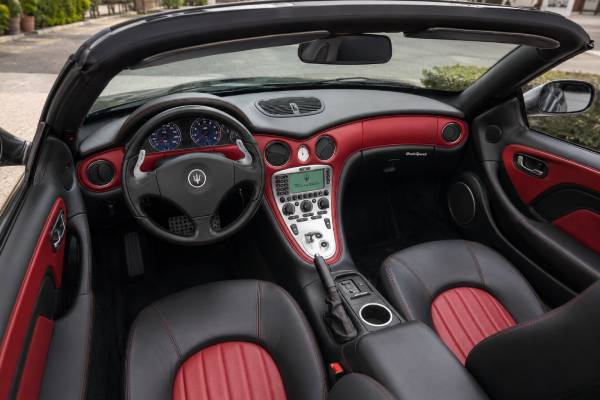
The two-seat cockpit feels more intimate than the coupé. Carbon trim, a thick steering wheel, metal paddles, supportive seats, and the central analog clock create a focused driving environment. Without rear seats, luggage and personal items must be managed between the boot and cabin storage. The 300-liter boot is useful, but roof-system packaging and an optional wind deflector can affect practical space.
Top-down aerodynamics are acceptable rather than calm. A wind stop can reduce turbulence, though taller occupants may still experience buffeting. With the roof raised, wind noise, seal condition, and fabric tension vary significantly between cars. A properly adjusted roof should not drum violently or allow obvious air gaps.
Open-Air Speed and Handling Character
The GranSport Spyder delivers its strongest appeal below maximum speed: immediate steering, fast-revving V8 response, short-wheelbase agility, and an exhaust note that becomes the center of the drive with the roof down. It feels more intense than the coupé at the same pace.
Pulling away smoothly requires patience. The clutch controller must move a conventional friction disc, and low-speed creep generates heat. Leave room in traffic, avoid repeated half-car-length movements, and do not hold the car on the throttle on a slope. Manual mode gives the driver better control of shift timing than the automatic program.
Once moving, the gearbox becomes more convincing. Sport mode sharpens changes and makes downshift blips more dramatic. A small lift of the accelerator during upshifts produces a cleaner result, while keeping the throttle fully open can create a harder interruption. The system should still shift decisively without slamming, flaring, or dropping into neutral.
The engine’s linear delivery suits the chassis. Below the midrange it is flexible and civil; above roughly 4,000 rpm it becomes urgent and vocal. The lack of turbo lag makes small throttle changes easy to judge during cornering. Because maximum torque is moderate by modern standards, the driver uses revs and gear choice rather than relying on a broad boost plateau.
The shorter wheelbase makes turn-in quick and helps the car rotate on tight roads. It also means alignment, tire quality, and smooth inputs matter. A worn rear suspension joint or old rear tire can produce a nervous car that feels very different from a sorted example. MSP provides useful protection, but it cannot restore grip to hardened, mismatched tires.
Hydraulic steering should feel weighted and alive without kickback or looseness. A steering wheel that sits off-center, pulls under braking, or shivers at specific speeds calls for inspection of wheels, tires, alignment, tie rods, ball joints, and brake condition.
Ride comfort is firm. The wheelbase and 19-inch tires expose short bumps that the coupé can absorb more calmly. Skyhook in its normal setting helps the car remain usable on longer trips, while Sport is best reserved for smoother roads. Squeaks from body seals can occur, but heavy knocks or persistent creaks require diagnosis.
The Brembo steel brakes have good road feel and sensible replacement costs compared with carbon ceramics. They should stop the car straight with a consistent pedal. Cracks around drilled holes, blue heat marks, steering vibration, or dark old fluid suggest hard use or overdue maintenance.
At highway speed with the roof raised, the Spyder is capable of touring but less serene than the fixed-roof car. With the top down, conversation and audio become secondary to wind and exhaust. That is the point: the open car exchanges some refinement for a stronger connection to the powertrain and surroundings.
Roof, Clutch, and Age-Related Maintenance
A GranSport Spyder needs all the usual M138 service attention plus disciplined care of the roof, seals, drains, and water-sensitive interior. The most expensive mistake is buying a car with several “small” deferred faults that interact.
Cambiocorsa system
A proper inspection reads clutch wear, clutch position, PIS or kiss-point calibration, hydraulic pressure behavior, shift counts, and stored faults. The displayed wear percentage depends on correct setup, so it must be interpreted by an experienced technician.
Listen to how often the pump primes when the driver’s door opens and during repeated shifts. Delayed first or reverse, flashing gear indication, hot refusal to select a ratio, judder, or unexpected neutral can involve the clutch, release bearing, pump, accumulator, actuator, sensors, relay, wiring, or calibration. Repairing only the most obvious component may not solve a system-level fault.
Soft-top system and water control
Operate the roof several times from cold and again after the car is warm. Inspect hydraulic-fluid level and leakage using the approved procedure. Clean drains gently and keep seals conditioned with compatible products. Do not compensate for poor alignment by forcing the frame or adjusting windows without understanding the complete sealing geometry.
A damp cabin can harm connectors, control units, carpet backing, seat mechanisms, and trim. Drying visible carpet is not enough if insulation beneath it remains wet. Roof repairs should be documented with photographs and part details because poorly rebuilt mechanisms can fail again.
Engine, cooling, and exhaust
The V8 is chain-driven and generally strong, but it depends on correct oil, regular time-based changes, proper warm-up, and a sound cooling system. Check oil lines, cam-cover areas, coolant hoses, radiator, fans, expansion tank, thermostat behavior, water-pump area, and accessory bearings. Confirm actual oil pressure if the warning system behaves abnormally.
The valved exhaust should change tone as designed. Vacuum leaks, seized valves, cracked mounts, tired catalysts, oxygen sensors, or aftermarket wiring can create noise and warning lights. Convertible use makes exhaust drone more noticeable, so evaluate the system at steady speeds as well as full throttle.
Chassis and cabin aging
Inspect ball joints, wishbone bushings, tie rods, anti-roll-bar links, wheel bearings, dampers, engine mounts, and transmission mounts. Body flex can mask or amplify suspension noise, which is another reason to use an M138 specialist. Measure brake discs, check tire dates, and verify that wheel refinishing has not hidden cracks or bends.
Sticky switches, shrinking leather, worn seat bolsters, slow windows, weak batteries, failed parking sensors, and climate-control faults are common age-related issues. On the Spyder, windows must also drop and rise correctly during roof and door operation. A battery maintainer helps, but it should never be used to dismiss recurring electrical problems.
A Practical GranSport Spyder Buying Plan
Buy a GranSport Spyder only after a roof-specific and Cambiocorsa-specific pre-purchase inspection. A beautiful open car with a marginal clutch, leaking roof cylinder, wet carpet, old tires, and loose suspension can require a large percentage of its value in immediate work.
First, verify identity and specification. Match the VIN, body labels, service book, registration, and diagnostic record. Obtain the build sheet when possible. Confirm original paint, roof color, interior, wheels, options, and market equipment. Check whether the car includes both keys, manuals, tool kit, wind stop, luggage accessories, and any removed factory parts.
Next, inspect the body with the roof both raised and lowered. Door and deck gaps should remain consistent. Look beneath the front spoiler, side skirts, floor, rear subframe area, and jacking points. Search for overspray, disturbed seam sealer, uneven fasteners, or fresh undercoating. Structural repairs matter more on an open car because alignment affects both driving and roof sealing.
| Priority | Required check |
|---|---|
| Roof | Complete powered cycle, seal contact, drain condition, dry carpets, no hydraulic leaks |
| Clutch | Diagnostic wear and calibration, smooth hot engagement, documented replacement work |
| Gearbox hydraulics | Normal pump cycle, no stored faults, reliable first and reverse selection |
| Structure | Consistent gaps, no cowl looseness, correct underbody and subframe condition |
| Suspension | Tight ball joints and bushings, dry dampers, correct alignment and ride height |
| Tires and wheels | Matching recent tires, straight wheels, no inner-edge wear |
| Cooling | Stable temperature, operating fans, no coolant odor or residue |
| Electrics | Windows, roof switches, climate control, locks, seats, display, lights, parking aids |
The road test must begin from cold and continue until heat soak. Drive with the roof up and down. Use manual and automatic gearbox modes, select Sport, make repeated low-speed turns, and test first and reverse after the hydraulic system is hot. Brake firmly, accelerate through the upper rev range, and listen on rough roads for body or suspension movement.
A car that has been used regularly may be preferable to an ultra-low-mileage example. Regular operation circulates fluids, exercises seals, and reveals faults. Mileage still affects value, but history and present function should lead the decision.
Plan an immediate baseline service unless recent invoices are detailed. Keep a reserve for clutch work, roof hydraulics, seals, suspension arms, tires, brakes, sticky-plastic restoration, and wheel repair. Store the car dry, maintain the battery, exercise the roof using the correct operating procedure, and avoid leaving the fabric folded for long periods when damp.
The strongest GranSport Spyder is not necessarily concours-perfect. It is a complete, dry, structurally straight car whose roof, windows, clutch, gearbox, cooling system, and suspension work together. That combination preserves what makes the model special: a compact two-seat Maserati with open-air V8 sound, responsive steering, and enough touring ability to be driven rather than merely displayed.
References
- GranSport, GranSport Spyder – Gran Turismo models | Maserati 2026
- Convertible sports cars – Maserati car models | Maserati US 2026
- gransport spyder · coupé 2006 (Brochure)
- Certification of Authenticity for your Maserati car | Maserati UK 2026
Disclaimer
This article is for informational purposes and is not a substitute for professional diagnosis, inspection, or repair. Specifications, torque values, intervals, and procedures can differ by VIN, market, and equipment; verify all work against the official service documentation for the specific car.
Please share this article on Facebook, X/Twitter, or another automotive community to support our work.