
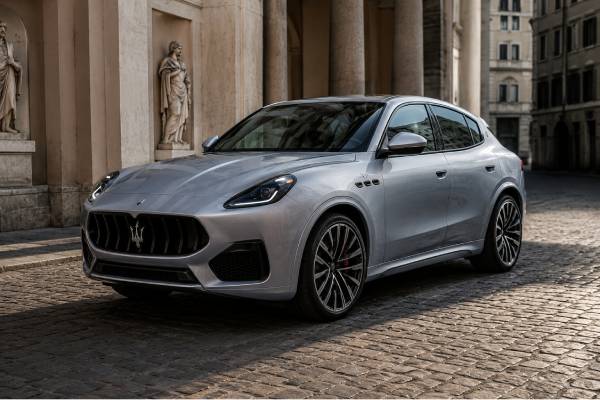
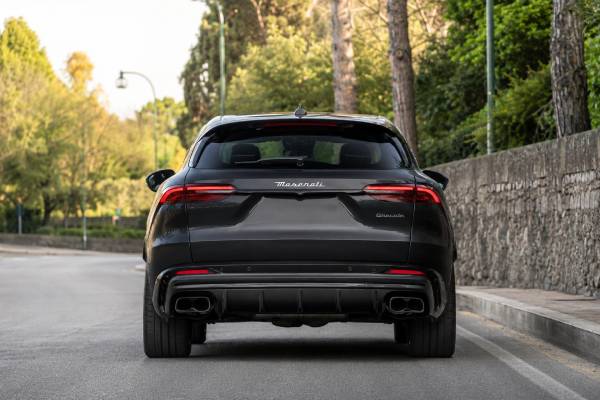
The 2026 Maserati Grecale 250 is the entry point to the Italian brand’s compact luxury SUV range in selected European markets. It uses a 2.0-liter turbocharged four-cylinder gasoline engine, a 48-volt mild-hybrid system, an eight-speed automatic transmission, and Q4 all-wheel drive. Its 250 hp output is less dramatic than the 300 hp Grecale or the V6 versions, but the important numbers remain strong for daily use: 450 Nm of torque, 0–100 km/h in 6.3 seconds, and a 229 km/h top speed. The 2026 model also matters because Maserati simplified the naming. What had previously appeared as a GT-based 250 hp configuration became the plainly named Grecale 250, while Modena 250 remained a separate, more richly equipped choice. That distinction affects price, standard equipment, wheels, interior finish, and resale comparisons more than it affects the basic powertrain. Buyers should therefore judge each car by its market specification and option list, not only by the badge. This guide explains the exact model’s engineering, road manners, maintenance needs, and the checks that matter before purchase.
Table of Contents
- Where the 2026 Grecale 250 Fits
- Engine, Chassis, and Key Data
- Model-Year Details, Options, and Identification
- Mild-Hybrid Design and Cabin Technology
- Road Behavior and Real-World Performance
- Service, Reliability, and Ownership Costs
- Buying Checklist and Value Judgment
Where the 2026 Grecale 250 Fits
The Grecale 250 is best understood as the accessible, tax-conscious version of Maserati’s M182 SUV, not as a stripped economy model. It keeps the core Grecale platform, rear-biased all-wheel-drive layout, premium cabin architecture, and everyday performance while lowering the official power rating to 250 hp for markets where taxation, insurance, or fleet rules make output especially important.
Maserati launched the Grecale family in 2022 as a smaller companion to the Levante. Its mission was broader than simply adding another SUV. The model had to bring Maserati into a high-volume premium segment dominated by vehicles such as the Porsche Macan, BMW X3, Mercedes-Benz GLC, and Alfa Romeo Stelvio. It also had to preserve recognizable Maserati traits: a long hood, a prominent grille, frameless door glass, rear-biased handling, and a cabin that feels more theatrical than a typical company-car crossover.
The M182 platform supports several personalities. Early mild-hybrid versions included 300 hp GT and 330 hp Modena specifications, while Trofeo used a Nettuno-derived V6 and Folgore introduced battery-electric propulsion. The 250 hp calibration appeared in selected European markets before the 2026 naming update. For model year 2026, Maserati offered a base Grecale 250 alongside a distinct Grecale Modena 250. The engine output and headline acceleration were shared, but the trim level, visual treatment, equipment, and pricing were not automatically identical.
That naming change is easy to overlook in used listings. A seller may call a 2026 car “GT” out of habit, while official model-year material may identify it simply as Grecale 250. Neither description alone proves the actual equipment. The build record, registration data, VIN-linked specification, wheel design, seat trim, and factory option codes provide a more reliable picture.
The model’s appeal is straightforward:
- It offers genuine luxury-SUV speed without the fuel use or purchase cost of a V6.
- The 450 Nm torque figure gives it stronger midrange response than the 250 hp badge suggests.
- Q4 all-wheel drive and a conventional automatic transmission suit year-round use.
- The cabin, digital displays, and exterior proportions remain close to more expensive Grecale variants.
- In output-sensitive tax systems, it may cost materially less to register or own than a 300 or 330 hp version.
Its limitations are equally clear. This is not the most emotional Grecale. The four-cylinder soundtrack is subdued, the mild-hybrid system cannot propel the vehicle for meaningful distances on electricity, and a poorly chosen option list can leave an expensive SUV without features buyers assume are standard. The Grecale 250 makes most sense when its lower running burden and purchase price matter more than having the fastest or most lavish specification.
Engine, Chassis, and Key Data
The core specification combines a 1,995 cc turbocharged GME T4 engine with 48-volt assistance, an eight-speed automatic, and all-wheel drive. The system produces 250 hp and 450 Nm, enough for 0–100 km/h in 6.3 seconds and a maximum speed of 229 km/h under the relevant market specification.
| Item | Specification |
|---|---|
| Platform code | M182 |
| Engine | Turbocharged inline-four gasoline engine with 48-volt mild-hybrid assistance |
| Displacement | 1,995 cc |
| Maximum output | 250 hp at approximately 5,750 rpm |
| Maximum torque | 450 Nm at approximately 2,000–4,000 rpm |
| Transmission | Eight-speed torque-converter automatic |
| Drivetrain | Q4 all-wheel drive |
| 0–100 km/h | 6.3 seconds |
| Top speed | 229 km/h |
| Wheelbase | Approximately 2,901 mm |
| Body | Five-door compact luxury SUV |
The GME T4 belongs to a modern family of direct-injected turbocharged engines. In the Grecale, it is mounted longitudinally rather than transversely. That layout supports the vehicle’s rear-driven proportions and its Q4 system. The turbocharger supplies the main boost, while the 48-volt belt starter-generator helps recover energy during deceleration, smooths engine restarts, and supports response at low speed. An electric compressor can assist boost development before exhaust flow fully drives the conventional turbocharger.
This is a mild hybrid, not a full hybrid. The small 48-volt battery and motor-generator reduce load on the engine and improve response, but they do not provide useful electric-only commuting. Owners should not expect the silent low-speed movement or large fuel-economy gain associated with a full hybrid or plug-in hybrid.
The eight-speed automatic is a major part of the car’s character. A torque converter gives smooth initial movement in traffic, while closely spaced ratios keep the four-cylinder engine near its useful torque band. Steering-wheel paddles allow manual selection, although the control software generally chooses sensible ratios in normal driving.
Q4 all-wheel drive is designed to maintain a rear-driven feel and send torque forward when traction or stability requires it. On dry roads, that helps the Grecale feel less nose-led than many crossovers. On wet, snowy, or uneven surfaces, the front axle provides additional security. Tire quality remains critical; all-wheel drive cannot compensate for old summer tires, mismatched tread depths, or an unsuitable winter compound.
The chassis uses independent suspension and electrically assisted steering. Exact spring, damper, brake, wheel, and tire specifications vary with market, production date, and options. Standard steel springs are common on lower configurations, while adaptive damping or air suspension may appear through option packages. Larger wheels improve visual presence and may sharpen initial steering response, but they also increase replacement cost and make the ride more sensitive to sharp road edges.
Published fuel-consumption and emissions figures must be read against the exact certificate of conformity. Wheel size, tires, equipment, test cycle, and homologation update can change the official numbers. For real ownership, driving style matters even more. Short cold journeys, dense city traffic, frequent boost use, and high motorway speed can move consumption well above the laboratory combined figure.
Model-Year Details, Options, and Identification
The crucial production detail is that the 2026 Grecale 250 and the 2026 Grecale Modena 250 are separate configurations. They may share the same 250 hp powertrain, but a buyer should not assume that exterior trim, seats, suspension, driver assistance, cameras, audio, or convenience equipment match.
The base Grecale 250 was positioned as the lower-priced way into the range. Typical market material paired it with practical luxury options such as a panoramic roof, privacy glass, wireless charging, metallic paint, and a surround-view camera. The Modena 250 could add a more assertive visual theme and was more likely to be offered with items such as ventilated seats, colored brake calipers, enhanced assistance packages, and optional Skyhook air suspension. These examples illustrate market configurations rather than a universal standard-equipment list.
How to identify the exact car
Use documentation before appearance. Wheels and badges can be changed, and dealer-installed accessories may make a base car resemble a higher trim.
- Confirm the VIN and model designation on the registration document.
- Obtain the original factory build sheet or dealer-generated equipment list.
- Match the power rating in kilowatts to the 250 hp specification.
- Verify the model year rather than relying only on the first registration date.
- Check whether the suspension is steel, adaptive, or air-assisted.
- Confirm every assistance feature with an operational test.
- Compare the installed wheel and tire sizes with the approved sizes listed for that VIN.
A vehicle first registered in 2026 is not necessarily model year 2026. It may be older stock, and the reverse can also occur near the model-year transition. The tenth VIN character is useful in some markets, but local registration and manufacturer records remain the safer sources.
Options that materially change ownership
Some options affect daily satisfaction more than decorative trim:
- Surround-view camera: valuable because the Grecale is wide and its body corners are not easy to judge from the driver’s seat.
- Adaptive cruise and lane support: worthwhile for frequent motorway use, but functions and names vary by package.
- Panoramic roof: brightens the cabin, though buyers should inspect drains, seals, shade operation, and headliner condition.
- Premium audio: desirable to many secondhand buyers and expensive to retrofit properly.
- Heated and ventilated seating: useful in extreme climates; test every fan and heating level.
- Air suspension or adaptive damping: broadens the ride-and-handling range but adds components that may become costly outside warranty.
- Tow equipment: check the approved towing specification, electrical integration, and evidence of heavy use.
Fuoriserie personalization can add unusual paint, leather, stitching, or trim combinations. A tasteful factory specification may improve desirability, while highly personal colors can narrow the resale audience. Authenticity matters: factory documentation is more valuable than a seller’s statement that a finish is “special order.”
Production changes can also occur within a model year. Software, infotainment functions, package composition, and homologated figures may be revised without a major visual change. This is why a generic online brochure should never replace the VIN-specific equipment record.
Mild-Hybrid Design and Cabin Technology
The Grecale 250’s distinctive quality comes less from its power figure than from the way Maserati combines sporty proportions, a rear-oriented chassis layout, and a highly digital cabin. The design communicates more expense than many four-cylinder rivals, even though the mechanical package is the range’s most restrained.
The exterior uses a low, wide grille, three side vents, a long hood, and a cabin set relatively far rearward. Those cues link the SUV to Maserati’s sports-car language. Frameless side glass adds elegance, though it places more importance on correct window indexing, seal condition, and glass alignment. At the rear, boomerang-influenced lamps and broad shoulders give the vehicle a planted stance.
Cooling needs shape the front opening and lower intakes. The turbocharged engine, charge-air system, air conditioning, transmission, and hybrid electronics all generate heat. Leaves and road debris should not be allowed to block the heat exchangers. A minor front impact can damage shutters, sensors, brackets, or cooling components even when the painted bumper looks repairable.
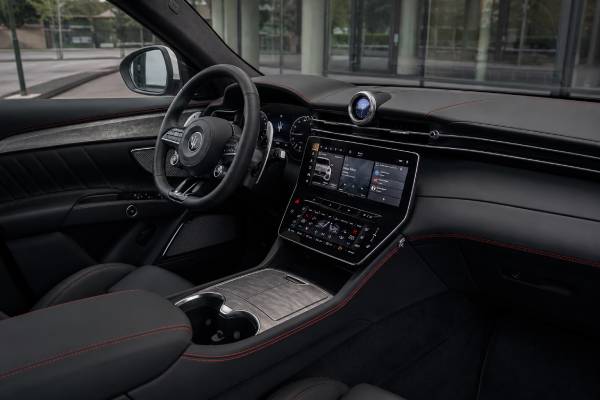
Inside, the dashboard is organized around multiple displays. The digital instrument cluster sits ahead of the driver, the main infotainment screen handles navigation and media, and a lower touchscreen manages climate and secondary functions. A digital clock display occupies the traditional clock position and can show other information. This arrangement looks modern but makes software health important. A frozen lower screen can affect basic comfort controls, not just entertainment.
The transmission selector uses dashboard buttons rather than a conventional console lever. This releases storage space but requires a brief adjustment period. Owners should learn the logic before making quick parking maneuvers, especially when alternating between reverse and drive on an incline.
What the 48-volt system actually does
The mild-hybrid system has four practical roles:
- It restarts the engine quickly after stop-start events.
- It recovers some energy during deceleration.
- It assists accessory and boost demands through the 48-volt network.
- It helps fill response before the exhaust-driven turbocharger is fully active.
It does not turn the Grecale into an electric vehicle at low speeds. The gasoline engine remains central to almost every driving situation. The system’s value lies in smoother operation, stronger low-rpm response, and modest efficiency support rather than electric range.
Cabin space is one of the Grecale’s strengths. The wheelbase gives rear passengers useful legroom, while the cargo area is practical enough for luggage, child equipment, or weekly shopping. The sloping roof and styling-led rear opening can limit bulky loads compared with a boxier SUV, so buyers with a stroller, dog crate, or sports gear should test their actual equipment before purchase.
Material quality varies by where the eye and hand land. Leather, metal-effect details, and stitched surfaces create a special atmosphere, but glossy touchscreens collect fingerprints and some lower trim pieces are more ordinary. Condition matters greatly on a premium used car. Scratched screens, polished steering-wheel leather, stained pale upholstery, and damaged luggage-area trim can make a low-mileage example feel neglected.
Road Behavior and Real-World Performance
The 2026 Grecale 250 is quick enough for nearly every public-road situation, but its strongest quality is balanced response rather than outright acceleration. The 6.3-second sprint to 100 km/h feels brisk, and 450 Nm gives confident overtaking without requiring constant high revs.
In normal driving, the engine works best in the middle of its rev range. The automatic transmission upshifts early for refinement and economy, while a firmer drive mode holds gears longer and sharpens throttle response. Full throttle produces clear four-cylinder effort rather than the layered sound and force of the V6. Buyers moving from a mainstream 2.0-liter premium SUV may find it suitably energetic; buyers expecting traditional Maserati drama should test it carefully before deciding.
The mild-hybrid assistance is most noticeable as smoothness rather than a separate surge. Engine restarts are usually quick, and initial response is cleaner than a simple turbocharged engine with no electrical support. Any hesitation, warning message, rough restart, or repeated stop-start refusal deserves diagnosis because it may involve battery state, temperature, software, or another system condition.
Steering is light enough in town and gains confidence at speed. The Grecale’s long-wheelbase stance and rear-oriented layout help it turn with less front-heavy behavior than many crossovers. It is still a substantial SUV, so physics become clear on narrow roads. Smooth inputs work better than abrupt steering or braking.
Ride quality depends heavily on wheel size, tire construction, and suspension specification. A car on moderate wheels with healthy tires can feel composed and refined. Large wheels with low-profile tires transmit more sharp impacts and are more vulnerable to pothole damage. Air suspension, where fitted, can add useful breadth, but a buyer should evaluate it in every height and drive setting and listen for compressor overwork.
Braking performance should feel strong and progressive. Mild-hybrid energy recovery may slightly influence pedal behavior during gentle deceleration, but the transition should not feel unsafe or inconsistent. Vibration under braking may point to disc variation, wheel issues, tire defects, or suspension wear. A long pedal, warning lamp, or pull to one side requires immediate investigation.
Where it works best
- City use: Good visibility forward, useful camera systems, and smooth automatic operation help, but width and expensive wheels demand care near curbs.
- Motorway travel: Strong torque, stable tracking, and a quiet cabin suit long distances. Driver-assistance options add value here.
- Mountain roads: The chassis feels eager for an SUV, though repeated hard acceleration exposes the difference from higher-output versions.
- Winter conditions: Q4 improves traction, but a complete set of correct winter tires matters more than the badge on the tailgate.
- Towing or heavy loads: Confirm the VIN-specific rating and understand that sustained load raises thermal and maintenance demands.
The car is not intended as a track-focused model. Aggressive repeated braking, high tire temperatures, and prolonged full-load operation accelerate wear. Enthusiastic road driving is within its brief, but owners should preserve correct tire pressures, allow fluids to reach operating temperature, and cool the vehicle with an easy final stretch after demanding use.
Service, Reliability, and Ownership Costs
The Grecale 250 should be maintained as a complex premium vehicle, not as an ordinary four-cylinder crossover. Its engine, turbocharging, 48-volt system, all-wheel drive, driver-assistance hardware, and networked electronics make complete service history and correct diagnostic equipment especially important.
Because the model is relatively new, long-term age-related evidence is still developing. That makes warranty history, software updates, service campaigns, and the quality of previous care more useful than broad reliability labels. A car with low mileage but repeated battery discharge and incomplete updates may be a worse prospect than a regularly driven example with documented dealer attention.
Powertrain checks
Cold-start behavior should be clean and consistent. Listen for abnormal rattles that continue after oil pressure builds, check for smoke, and watch for unstable idle. Turbocharged direct-injection engines depend on correct oil quality and sensible service intervals. Repeated short trips can leave fuel and moisture in the oil, so time-based servicing matters even when annual mileage is low.
Inspect the cooling system for dried residue, odor, damaged hoses, and evidence of front-end repair. The turbocharger and tightly packaged engine bay create significant heat. A warning for coolant temperature, reduced power, or repeated fan operation should not be dismissed.
The eight-speed automatic should engage drive and reverse promptly, shift smoothly at light throttle, and respond cleanly to manual commands. A harsh single shift can be software-related, but repeated thumps, delayed engagement, flare, or vibration require proper diagnosis. “Sealed for life” language should not be treated as proof that fluid condition is irrelevant over long ownership, especially when the vehicle has towed, operated in heat, or accumulated high mileage.
All four tires should match in brand, model, size, load rating, speed rating, and similar tread depth. Large circumference differences can burden an all-wheel-drive system. Inspect inner shoulders as well as visible outer tread; alignment wear can hide where a casual walk-around will not reveal it.
Electrical and electronic ownership
Low-voltage battery health affects modern Maserati behavior. A weak 12-volt battery can trigger multiple warnings, failed updates, window-indexing problems, or modules that appear defective. The 48-volt system adds another layer and should be handled only by technicians trained for the vehicle.
Test the following before purchase:
- Both central screens from a cold start and after a longer drive.
- Bluetooth, navigation, audio, voice functions, and smartphone integration.
- Every camera view and parking sensor.
- Adaptive cruise, blind-spot monitoring, and lane functions where safely possible.
- Keyless entry, both keys, alarm, and remote features.
- Seat controls, heating, ventilation, memory, and steering-column adjustment.
- Panoramic roof, shade, windows, mirrors, tailgate, and ambient lighting.
Software updates can fix genuine faults, but they should not become a blanket explanation for every symptom. Ask for repair invoices and campaign completion records. Repeated module replacement, water entry, or unresolved warning lights deserves more caution than a single documented update.
Cost drivers
The largest predictable expenses are tires, brakes, scheduled servicing, insurance, and depreciation. Optional large wheels raise tire cost and pothole risk. Performance-oriented tires may wear quickly if alignment is poor or the car is driven hard. Brake replacement costs exceed mainstream-SUV expectations, especially when discs and pads are needed together.
Air suspension, if fitted, adds future risk through air springs, valves, height sensors, and the compressor. A car that sits unevenly after parking, changes height slowly, or runs its compressor frequently should be inspected before sale. Accident-damaged sensors and calibration work can also be expensive because camera, radar, steering, and alignment systems must agree.
Maintain the vehicle to the schedule assigned to its VIN and market. Keep itemized invoices, not only stamps. Documentation supports warranty claims, helps future diagnosis, and protects resale value.
Buying Checklist and Value Judgment
Buy the 2026 Grecale 250 when you want the Grecale’s style, cabin, chassis balance, and AWD usability but do not need the status or speed of the stronger engines. The best example is not automatically the cheapest or lowest-mileage car; it is the one with the right equipment, complete history, current software, healthy batteries, undamaged wheels, and a transparent specification.
Before viewing
Ask the seller for the VIN, registration document, build sheet, service invoices, warranty history, and a list of included keys and accessories. Confirm whether the car is the base Grecale 250 or Modena 250. Request clear photographs of every wheel, tire sidewall, seat bolster, screen, and body panel in daylight.
Check the original market. An imported car may have different lighting, infotainment, warranty, assistance systems, or standard equipment. Confirm that connected services and navigation functions operate in the country where the vehicle will be used.
During the inspection
Start with the car fully cold. Watch the instrument cluster before the engine is started so warning lamps cannot be hidden. Check panel gaps, paint texture, glass dates, underbody shields, wheel alignment, and radiator condition. Look for moisture around the roof, footwells, luggage area, and rear lamp housings.
On the road, test gentle and full-throttle acceleration, steady-speed cruising, manual shifts, stop-start operation, tight turns, rough surfaces, and firm braking. The car should track straight without steering-wheel vibration. Listen for suspension knocks and drivetrain binding. After the drive, recheck for leaks, odors, warning messages, or a cooling fan that behaves unusually.
A pre-purchase inspection should include:
- Full diagnostic scan with manufacturer-capable equipment.
- Battery tests for the relevant low-voltage systems.
- Confirmation of open recalls and service campaigns.
- Paint-depth readings and structural inspection.
- Tire age, tread-depth, and wheel-runout checks.
- Brake-pad and disc measurements.
- Cooling-system pressure and leak assessment where appropriate.
- Verification of ADAS calibration after any glass, bumper, suspension, or alignment work.
Choosing the right specification
Prioritize useful equipment over cosmetic excess. A base car with cameras, assistance features, moderate wheels, comfortable seats, and a strong history can be a better long-term purchase than a showier car with oversized wheels and missing convenience options. Air suspension is attractive when ride comfort is a priority, but steel or simpler adaptive suspension may appeal to buyers minimizing long-term complexity.
Compare insurance and tax costs before committing. The 250 hp rating may create an advantage in one jurisdiction and almost none in another. Also compare the purchase price with a 300 hp Grecale. A small price gap may make the stronger version attractive, while a large gap or significant annual tax difference can justify the 250.
The final judgment is positive with conditions. The Grecale 250 delivers enough speed, distinctive design, and a premium driving environment without chasing maximum output. It is a rational Maserati by brand standards, but it remains a Maserati in service cost, electronics, option complexity, and depreciation. Buy on condition and documentation, secure warranty coverage where practical, and budget beyond routine fuel and oil changes.
References
- Maserati Grecale, SUV di Lusso, Versioni e Specifiche 2027 | Maserati IT 2026
- Maserati Grecale Catalogues | Maserati 2026
- Offerte e Promo noleggio auto per Aziende e P. IVA | Maserati IT 2026
- Maserati Owner Documentation 2026 (Owner’s Manual)
- Vehicle Detail Search – 2026 MASERATI GRECALE | NHTSA 2026 (Recall Database)
Disclaimer
This article is for informational purposes only and is not a substitute for professional diagnosis, maintenance, or repair. Specifications, torque values, service intervals, equipment, and procedures can vary by VIN, market, production date, and installed options. Verify all work and technical data against the vehicle’s official service documentation and consult a qualified Maserati technician. Please share this article on Facebook, X/Twitter, or another platform if it helped you; sharing supports our work.