
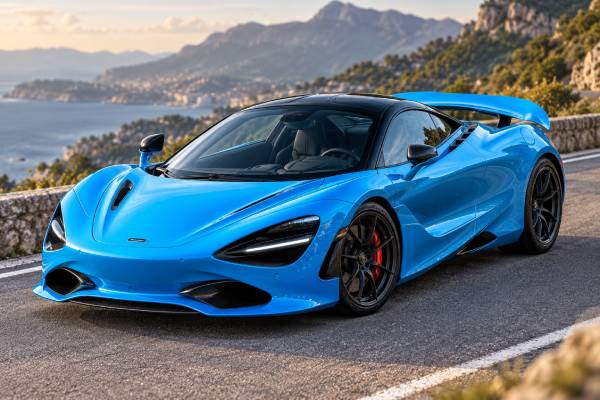
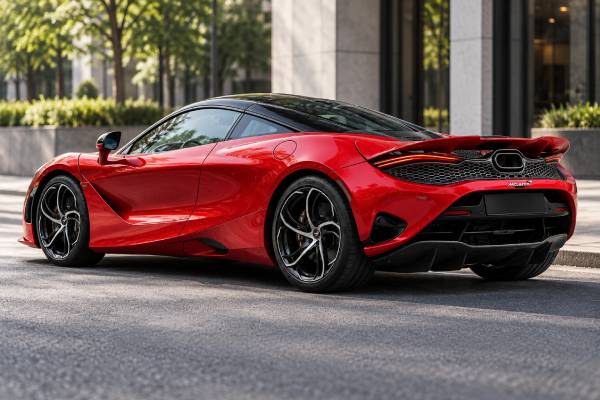
The McLaren 750S is the final evolution of the company’s familiar twin-turbo V8 series-production supercar formula, but it is much more than a 720S with a new badge. Introduced for 2023, the P28-generation 750S combines 740 bhp, 800 Nm, a shorter final drive, revised suspension, a wider front track, quicker steering, lower mass, and a more aggressive active-aero package while retaining the carbon-fibre Monocage II and hydraulic chassis philosophy that made its predecessor distinctive. McLaren’s current specifications list 0–100 km/h in 2.8 seconds, 0–200 km/h in 7.2 seconds, a 10.1-second quarter mile, and 332 km/h top speed for the Coupé. The numbers are dramatic, but ownership decisions depend just as much on condition, software status, hydraulic systems, carbon-ceramic brakes, tire age, and service documentation. This guide covers the standard 750S Coupé across the 2023–2026 period, with a focus on verified specifications, how the engineering changes affect the drive, and what to inspect before buying.
Table of Contents
- From 720S to 750S: What Actually Changed
- Engine, Gearing, and Chassis Character
- McLaren 750S Technical Specifications
- Road, Track, and Daily Use
- Maintenance and Known Service Items
- Used 750S Inspection Guide
- Choosing a Specification and Owning Well
From 720S to 750S: What Actually Changed
The 750S is an extensive evolution of the 720S rather than a clean-sheet replacement. McLaren says roughly 30 percent of components were changed, with the engineering effort aimed at lower mass, sharper response, more power, shorter gearing, and greater driver engagement rather than a completely new architecture.
The engine remains the 3,994 cc M840T twin-turbo V8, but revised calibration and components raise output to 750 PS, equivalent to 740 bhp, and torque to 800 Nm. Compared with the 720S, McLaren publicized gains of 30 PS and 30 Nm. The seven-speed Seamless Shift Gearbox also uses a final-drive ratio 15 percent shorter, which is important because it changes how often the engine reaches its strongest part of the rev range during normal acceleration. The tradeoff is that gearing, not a higher top-speed target, becomes part of the car’s personality.
Mass reduction was similarly targeted. McLaren quoted the 750S as 30 kg lighter overall than the 720S in comparable form. Lightweight forged wheels, a lighter windscreen, exhaust changes, carbon-fibre seats on suitable specifications, and detail savings contribute to the result. The official lightest dry weight for the Coupé is 1,277 kg, while DIN weight is 1,389 kg. Those are factory reference figures; an individual car with comfort seats, audio, paint protection, or optional equipment can weigh more.
Chassis geometry and control were also revised. The front track is 6 mm wider, the steering rack is quicker, and Proactive Chassis Control III uses new twin-valve dampers. McLaren retained electro-hydraulic steering, an unusual choice in an era when most competitors rely entirely on electric assistance. The benefit is the texture and load build-up enthusiasts expect from the brand, although the system also means buyers should take hydraulic condition seriously during inspection.
Aerodynamics changed visibly at both ends. The nose, front splitter, intakes, and rear treatment were reworked, and the active rear wing is larger and lighter than before. The wing contributes to stability and braking strategy rather than existing simply for appearance. Special editions later added a High Downforce Kit, but the standard Coupé covered here uses the regular 750S active-aero configuration.
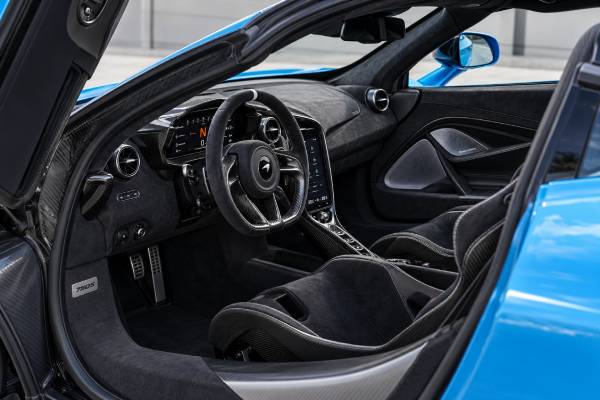
The cabin was redesigned around faster access to driving modes. Controls are placed around the instrument binnacle so the driver can change powertrain and handling settings without reaching far from the wheel. Apple CarPlay, central infotainment, and a vehicle-lift system support normal road use, but the layout still prioritizes visibility and driving position over decorative complexity.
Engine, Gearing, and Chassis Character
The 750S feels faster than its power increase alone suggests because the shorter final drive, reduced mass, and sharper chassis all work at the same time. Its defining trait is response: throttle, steering, transmission, and body movement react quickly enough that small driver inputs produce immediate changes.
The V8 uses twin electrically actuated twin-scroll turbochargers and dry-sump lubrication. Dry-sump design helps maintain oil control under high lateral and longitudinal loads while allowing compact engine packaging. Peak power arrives at 7,500 rpm, and the engine can spin to 8,500 rpm, giving the driver a wide usable range rather than forcing early upshifts after the turbos come on boost.
The shorter gearing is one of the most noticeable differences from the 720S. A 15-percent shorter final drive means more torque multiplication at the wheels in a given gear, which supports harder acceleration and keeps the car feeling alert at road speeds. It also means gear choice matters more on a circuit: corners that once fell neatly into one ratio may place the 750S closer to an upshift or downshift point.
McLaren keeps an open mechanical differential and uses Brake Steer to influence the inside rear wheel. That may sound less exotic than an electronically controlled limited-slip differential, but it fits the company’s preference for low mass and predictable behavior. The traction-control system, chassis modes, and tire choice still play major roles in how effectively 800 Nm reaches the road.
Proactive Chassis Control III links the suspension hydraulically and uses adaptive damping to manage body motion without conventional anti-roll bars. On smooth roads, the 750S can feel unusually supple for its performance. On rougher pavement, the benefit is not softness for its own sake, but the ability to keep the tires in contact with the surface while controlling pitch and roll.
Steering is another key ownership reason. The electro-hydraulic rack transmits more surface information than many electrically assisted systems, yet it also places additional components and fluid circuits on the maintenance checklist. During a test drive, steering should be consistent from center, free of unexplained heaviness, and quiet through low-speed maneuvers.
The carbon-fibre Monocage II forms the structural core. It provides a stiff passenger cell and allows the suspension to work from a stable platform. The structure is durable, but collision assessment requires specialists who understand carbon composites. A clean vehicle-history report cannot substitute for a physical inspection when panel gaps, underbody damage, or repair evidence raise questions.
McLaren 750S Technical Specifications
The standard 750S Coupé is a petrol-only, longitudinal mid-engine, rear-wheel-drive supercar with no hybrid system. Its specifications are built around low mass, a 4.0-litre twin-turbo V8, seven-speed dual-clutch transmission, carbon structure, hydraulic chassis control, and carbon-ceramic brakes.
| Specification | Value |
|---|---|
| Engine code | M840T |
| Layout | 90° V8, longitudinal mid-engine |
| Displacement | 3,994 cc (4.0 L) |
| Induction | Twin electrically actuated twin-scroll turbochargers |
| Lubrication | Dry sump |
| Valvetrain | DOHC, 32 valves, variable valve timing |
| Maximum power | 750 PS (740 bhp / 552 kW) at 7,500 rpm |
| Maximum torque | 800 Nm (590 lb-ft) at 5,500 rpm |
| Maximum engine speed | 8,500 rpm |
| Specification | Value |
|---|---|
| Transmission | 7-speed Seamless Shift Gearbox with reverse |
| Final drive | 15% shorter than 720S final drive |
| Driven wheels | Rear-wheel drive |
| Differential | Open differential with Brake Steer |
| Steering | Electro-hydraulic power-assisted rack |
| Suspension | Double wishbone with adaptive twin-valve dampers |
| Chassis system | Proactive Chassis Control III |
| Body structure | Carbon-fibre Monocage II |
| Measure | Value |
|---|---|
| 0–100 km/h (0–62 mph) | 2.8 seconds |
| 0–60 mph | 2.7 seconds |
| 0–200 km/h (0–124 mph) | 7.2 seconds |
| Quarter mile | 10.1 seconds |
| Top speed | 332 km/h (206 mph) |
| 100–0 km/h | 30 m (98 ft) |
| 200–0 km/h | 113 m (371 ft) |
| Specification | Value |
|---|---|
| Front brakes | 390 mm carbon-ceramic discs, 6-piston forged aluminium calipers |
| Rear brakes | 380 mm carbon-ceramic discs, 4-piston forged aluminium calipers |
| Front wheels | 19 × 9.0J |
| Rear wheels | 20 × 11.0J |
| Front tires | 245/35 R19 93Y XL |
| Rear tires | 305/30 R20 103Y XL |
| Road tire family | Pirelli P Zero |
| Track-focused choices | P Zero Corsa and P Zero Trofeo R offered for 750S |
| Specification | Value |
|---|---|
| Length | 4,569 mm (179.9 in) |
| Width without mirrors | 1,930 mm (76.0 in) |
| Width with mirrors | 2,161 mm (85.1 in) |
| Height | 1,196 mm (47.1 in) |
| Wheelbase | 2,670 mm (105.1 in) |
| Front / rear track | 1,680 / 1,629 mm (66.1 / 64.1 in) |
| Lightest dry weight | 1,277 kg (2,815 lb) |
| DIN weight | 1,389 kg (3,062 lb) |
| Luggage capacity | 150 L front, 210 L rear |
| Specification | Value |
|---|---|
| Fuel type | Petrol/gasoline |
| Fuel-tank capacity | 72 L (15.8 UK gal / 19.0 US gal) |
| EU WLTP combined consumption | 12.2 L/100 km |
| EU WLTP combined CO₂ | 276 g/km |
| Standard exhaust | Centre-exit sports exhaust |
These figures describe the factory baseline and should not be used to infer the exact weight or acceleration of a car with a particular seat, wheel, tire, or MSO specification. Temperature, surface condition, tire state, fuel load, and launch procedure all affect measured performance.
Road, Track, and Daily Use
The 750S is unusually usable for a car with this performance, but daily suitability depends on whether the owner accepts low clearance, wide bodywork, limited outward margins, expensive consumables, and the attention required by a high-performance carbon car. Its real strength is that the same chassis can feel compliant on a long trip and highly focused on a circuit.
Visibility is better than the dramatic body shape suggests. McLaren’s thin pillars and low scuttle help the driver place the front corners, while the dihedral doors can be useful in narrow spaces once there is enough vertical clearance. The nose-lift system remains important for steep ramps and parking structures; confirm it works quickly and symmetrically before buying.
The front luggage compartment holds 150 litres, and the Coupé adds 210 litres behind the seats. That gives it more touring capacity than the Spider and makes soft luggage practical for two people. Heat near the rear compartment and unusual bag shapes should still be considered when packing electronics, cosmetics, or temperature-sensitive items.
In traffic, the dual-clutch gearbox can operate automatically, but the car feels most natural when the driver uses the paddles and plans ahead. The short final drive keeps the engine lively. Low-speed brake feel may be firmer than in an ordinary road car because the carbon-ceramic system is designed for repeated high-energy stops, yet pedal response should remain consistent and confidence-inspiring.
On a fast road, steering feedback and damping stand out more than raw horsepower. The car communicates small changes in grip, and the suspension controls body motion without relying on harsh springing. That does not make public roads a place to explore the limit. The available performance is far beyond what can be used safely or legally outside controlled conditions.
A circuit exposes the importance of preparation. Check tire pressures cold and hot, wheel torque using correct procedures, brake condition, fluid levels, and underbody clearance. After the session, allow appropriate cooling, inspect tires for pickup or shoulder damage, look for splitter and diffuser strikes, and record the event in the service file. A track-driven 750S can still be an excellent used purchase when use is transparent and maintenance is proportionate.
Owners choosing tires should match them to actual use. A more aggressive P Zero Trofeo R can sharpen dry response but makes less sense in cold, standing water, or ordinary commuting. Correct pressures and healthy road tires often deliver a better overall ownership experience than fitting the most extreme option simply because it appears on an enthusiast forum.
Maintenance and Known Service Items
A 750S should be maintained by time, condition, and official schedule rather than mileage alone. Low-use supercars can develop battery, tire, seal, fluid, and storage-related issues even when the odometer barely moves.
Stable battery voltage is fundamental. Use a compatible maintainer during extended storage and investigate repeated discharge rather than repeatedly jump-starting the car. Low voltage can trigger multiple electronic messages that appear unrelated, complicating diagnosis. A battery test and charging-history discussion are therefore worthwhile during a pre-purchase inspection.
Engine oil, filters, brake fluid, coolant condition, and other service items should follow the handbook and market schedule for the exact VIN. Avoid relying on generic intervals copied from another McLaren model. The same principle applies to torque specifications and fluid grades: a workshop should use current model-specific technical information.
The hydraulic chassis deserves regular visual and functional attention. Look for seepage around suspension and steering components, unusual knocking, inconsistent ride behavior, or changes in steering assistance. A quick test drive may not reveal temperature-dependent symptoms, so a serious inspection should include both cold and fully warmed operation.
Carbon-ceramic brakes are a major cost item. Inspect discs for chips, abnormal wear patterns, contamination, and impact damage, and measure or assess them according to McLaren procedures rather than judging only by surface appearance. Pads, fluid, calipers, and parking-brake function matter as well. A low-mileage car used heavily on track can consume brakes faster than a higher-mileage touring car.
Tires need equal scrutiny. Check date codes, sidewall condition, inner shoulders, puncture repairs, and alignment wear. The 750S’s performance makes old tires a safety issue long before they look bald. If a car has sat on one set for years, budget replacement even if tread depth seems generous.
Software status is part of modern supercar service. Technical campaigns have addressed items such as HVAC-control behavior and later platform software on certain VIN ranges and model years. Applicability is not universal. Ask a McLaren retailer to check the VIN for open campaigns, completed actions, and current software rather than assuming an internet bulletin applies to every 750S.
Recall history should also be VIN-specific. For example, Transport Canada published a 2025 recall affecting certain 2024 McLaren vehicles in which rear brake lines could be incorrectly connected, potentially affecting stability-control operation. That is a useful reminder to run official recall checks, but it is not evidence that every 750S has the defect.
Storage practice matters for body and cabin condition. Keep the car clean and dry, avoid trapping moisture beneath covers, maintain sensible tire pressure, and protect the interior from prolonged UV exposure. Starting the engine briefly without bringing it to proper temperature is generally less useful than following the manufacturer’s storage guidance and driving the car correctly when conditions allow.
Used 750S Inspection Guide
The best used 750S is not necessarily the lowest-mileage example; it is the car with coherent provenance, correct maintenance, healthy consumables, and no unexplained repair history. A comprehensive pre-purchase inspection can prevent a superficially attractive car from becoming a very expensive catch-up project.
Verify identity first. Match the VIN on the car to registration documents, service invoices, warranty history, and build records. Confirm model year and market because equipment, emissions certification, and campaign applicability can differ. If the car has MSO paint or unusual carbon options, obtain original specification evidence rather than treating seller descriptions as proof.
Examine the body in strong, neutral light. Look for inconsistent paint texture, overspray, mismatched panel gaps, disturbed fasteners, stone damage, and poorly installed protective film. Paint-depth readings are useful on suitable painted panels, but the carbon Monocage and composite body components require material-specific expertise. A suspected structural repair should be inspected by someone experienced with McLaren carbon architecture.
Inspect beneath the car on a lift. The front splitter, floor panels, jacking areas, diffuser, suspension, coolant and hydraulic lines, and wheel inner barrels can reveal impacts invisible from showroom height. A scrape is not automatically serious, but cracked carbon, displaced hardware, or damage close to structural mounting points requires deeper assessment.
Start the engine cold if possible. Listen for abnormal noise, watch for warning messages, and allow temperatures to stabilize. Check for leaks or smells after the drive. Test the transmission in automatic and manual modes, at light throttle and under stronger acceleration where safe. Shifts should be rapid and predictable without repeated warnings or unexplained hesitation.
Operate every chassis setting, front lift, climate-control function, infotainment feature, camera, seat adjustment, window, lighting function, and active rear wing behavior that can be safely checked. Electrical faults can be intermittent, so stored diagnostic codes and battery health are valuable context.
Brake and tire condition should be converted into money before negotiating. A set of correct high-performance tires, carbon-ceramic components, or damaged forged wheels can quickly erase the apparent savings of a cheaper car. The same applies to cosmetic carbon pieces and active-aero hardware.
Finally, read the service history chronologically. Gaps, duplicated mileage, unexplained dealer changes, or invoices that mention recurring symptoms deserve questions. A well-used 750S with transparent service, fresh consumables, and documented repairs can be a better ownership proposition than a garage-kept example that has spent years with stale fluids, old tires, and repeated flat batteries.
Choosing a Specification and Owning Well
The best 750S specification is the one that matches how the car will actually be used. Lightweight seats, visual carbon, extreme tires, premium audio, lift system, and MSO paint all have different value to a road driver, track regular, or collector.
For frequent road use, prioritize seat comfort, front lift, useful cameras, a road-oriented tire, and a color you are willing to maintain. Carbon racing seats can save mass and look dramatic but should fit the driver properly; an uncomfortable seat defeats the point of the 750S’s long-distance capability. Try the exact seat shell rather than assuming all McLaren buckets fit alike.
For track use, condition matters more than cosmetic rarity. Fresh tires, healthy brakes, good alignment, documented fluid service, and a clean underbody are worth more than an unusual paint code. Consider a separate set of wheels for circuit tires, but retain the original wheels and document any reversible changes.
Collectors should focus on factory originality and paperwork. Special MSO themes can command attention, yet the base 750S is significant in its own right as the most developed standard version of McLaren’s non-hybrid twin-turbo V8 supercar architecture. Original specification, low-damage paint, complete keys and accessories, and uninterrupted service history make a stronger long-term case than artificially low mileage alone.
Insurance, secure storage, tire replacement, annual service, and potential carbon or hydraulic repair costs should be budgeted before purchase. The acquisition price is only one part of ownership. A reserve for wear items lets the owner fix small problems promptly rather than deferring them until several issues accumulate.
Use the car often enough to keep systems exercised, but use it intelligently. Warm fluids before heavy load, cool the car appropriately after hard driving, avoid unnecessary curb impacts, maintain the battery, and clean brake dust and road contamination before they become cosmetic damage. Record every service and meaningful change.
The 750S rewards that approach because its appeal is not limited to a single acceleration figure. It combines a light carbon structure, communicative hydraulic steering, unusual suspension technology, compact dimensions, and a high-revving twin-turbo V8 in a package that remains practical enough for real trips. Buy on condition and documentation, then maintain it as a precision machine rather than as a static collectible.
References
- McLaren 750s — McLaren Automotive, current model specifications.
- Discover McLaren 750S & 750S Spider — McLaren Automotive, current model overview.
- McLaren Ownership – Owner’s Handbooks | McLaren Automotive — McLaren Automotive, ownership information.
- McLaren 750S – HVAC Controls Enhancement — McLaren Automotive / NHTSA, 2024.
- Transport Canada Recall – 2025183 – MCLAREN — Transport Canada, 2025.
- Check for Recalls: Vehicle, Car Seat, Tire, Equipment | NHTSA — National Highway Traffic Safety Administration, recall lookup.
Disclaimer
This article is general information, not a substitute for the owner’s handbook, McLaren workshop documentation, current recall data, or a professional inspection. Equipment, specifications, software, service actions, and legal requirements can differ by model year, market, VIN, and individual MSO build. Verify any car using its VIN, original build record, current official service information, and an authorized McLaren retailer or qualified specialist. Maintenance and repair work should follow the exact factory procedures, lifting instructions, fluids, torque values, and safety requirements for the vehicle.
If this guide was useful, share it with another 750S owner or buyer who wants a practical reference built around verified specifications and condition-based ownership advice.