
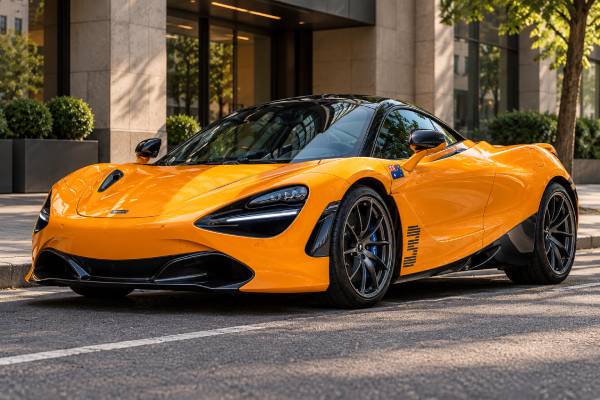
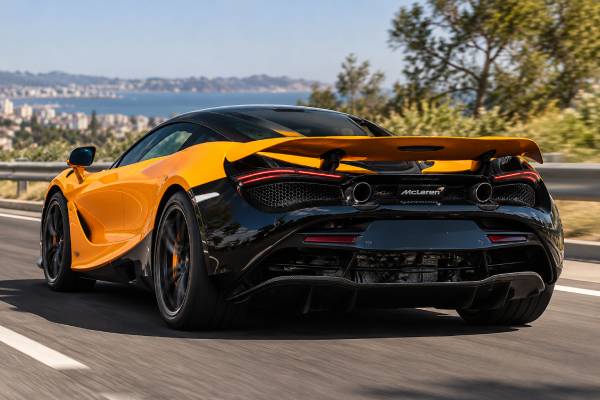
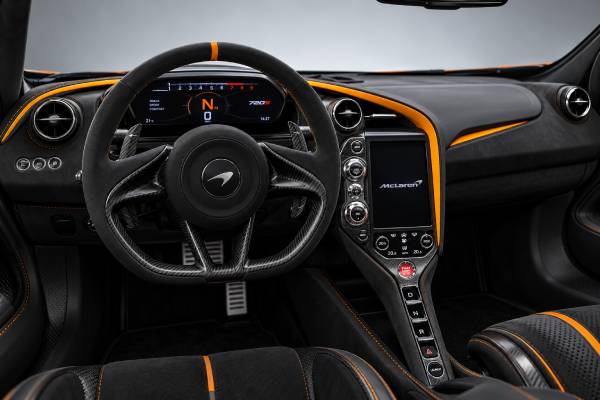
The 2021 McLaren Daniel Ricciardo Edition 720S is a three-car, Australia-only MSO special created around the Formula 1 driver’s identity and McLaren’s 2021 racing colors. All three cars use Papaya Spark paint with Burton Blue details, Ricciardo’s number 3, Australian-flag graphics, black wheels, blue brake calipers and signed carbon-fiber sill treatment. The edition arrived in the same season in which Ricciardo won the Italian Grand Prix at Monza and led a McLaren one-two with Lando Norris, giving the road car a clear motorsport context. Under the special finish, it remains a 720S Coupé: the 3,994 cc M840T twin-turbo V8 produces 720 PS (710 bhp) and 770 Nm, the seven-speed SSG drives the rear wheels, and the carbon Monocage II supports Proactive Chassis Control II. Because only three were built, the ownership question is less about finding the “best trim” and more about proving that the car, its bespoke pieces and its history all belong together.
Table of Contents
- The Australia-Only Ricciardo Edition in Context
- F1-Inspired Colors and MSO Details
- Engine, Chassis, Performance, and Dimensions
- What Changes—and What Does Not—Behind the Wheel
- Maintenance for a Low-Volume MSO 720S
- How to Authenticate and Inspect One
- Buying Perspective for a One-of-Three Car
The Australia-Only Ricciardo Edition in Context
The Daniel Ricciardo Edition was built for Australia in a run of only three cars, matching Ricciardo’s Formula 1 race number. McLaren Special Operations developed the cars in collaboration with McLaren’s Sydney and Melbourne retailers, making geography part of the edition’s identity rather than an afterthought.
Ricciardo joined McLaren for the 2021 Formula 1 season and won the Italian Grand Prix at Monza on September 12. Lando Norris finished second, producing McLaren’s first one-two result in Formula 1 since 2010 and the team’s first Grand Prix victory since 2012. Contemporary coverage of the road car explicitly connected the edition with Ricciardo and that racing moment.
The production count is especially important here. “Three” is not simply a marketing number printed on a plaque; it mirrors the driver’s #3 and keeps the entire run smaller than many individual color allocations of other limited 720S models. All three were intended for the Australian market.
That makes later export history worth documenting carefully. If a car now appears outside Australia, the move does not make it less genuine, but import paperwork, compliance changes and ownership records should explain how it got there. Lighting, registration equipment or minor market-specific changes may have occurred during relocation, and buyers should distinguish those from undocumented modification.
The edition also illustrates MSO’s role clearly. McLaren did not claim a new power output, revised turbochargers or a special gearbox calibration. The value lies in the factory-backed visual specification, connection to Ricciardo, extremely low production and complete provenance.
F1-Inspired Colors and MSO Details
The Ricciardo Edition is defined by its Papaya Spark and Burton Blue treatment, which references McLaren’s 2021 Formula 1 visual identity. A correct car should show that theme consistently across paint, accents, number graphics and cabin identification.
Papaya Spark covers the body, while Burton Blue appears on areas including mirror housings, side treatment and selected air-intake or aero details. Ricciardo’s number 3 is displayed prominently on the doors, accompanied by Australian-flag graphics. Black-painted wheels and blue brake calipers complete the exterior contrast.
The carbon-fiber sill treatment is one of the most valuable authentication details because it includes Ricciardo’s signature. Contemporary Australian reporting also notes “One of Three” identification in the car. These are exactly the pieces that deserve photographic documentation before and after any service requiring interior trim removal.
The color relationship matters. Papaya is deeply associated with McLaren, but not every orange 720S is a Ricciardo Edition, and Burton Blue accents can be replicated. The combination of factory specification, correct graphics, signed sill, production identification and provenance is what establishes the car.
Condition should be judged with preservation in mind. Blue-painted calipers, black wheels and brightly colored trim can be refinished, but a buyer should know whether that work has happened. A high-quality cosmetic restoration may be preferable to damaged original finish for some owners, yet it should be disclosed rather than mistaken for untouched factory presentation.
Protective film is common on valuable supercars and can be beneficial, especially over Papaya Spark paint. Inspect film edges around graphics, mirrors and air inlets. Old film can shrink or discolor, and removal should be performed cautiously around special decals or painted accents.
Engine, Chassis, Performance, and Dimensions
Mechanically, the Ricciardo Edition is a gasoline 720S Coupé using the M840T V8, seven-speed dual-clutch transmission and rear-wheel-drive chassis. Its verified special-edition differences are primarily MSO design and identity features, so the appropriate technical baseline is the standard 720S specification rather than an invented “Ricciardo tune.”
| Item | Value |
|---|---|
| Engine | M840T, 90-degree V8 |
| Installation | Longitudinal mid-engine |
| Displacement | 3,994 cc (4.0 L) |
| Induction | Twin electrically actuated twin-scroll turbochargers |
| Lubrication | Dry sump |
| Power | 720 PS (710 bhp / 530 kW) at 7,500 rpm |
| Torque | 770 Nm (568 lb-ft) at about 5,500 rpm |
| Transmission | 7-speed Seamless Shift Gearbox (SSG) |
| Drivetrain | Rear-wheel drive |
| Performance measure | Factory figure |
|---|---|
| 0–100 km/h (0–62 mph) | 2.9 seconds |
| 0–200 km/h (0–124 mph) | 7.8 seconds |
| Quarter mile (0–400 m) | 10.3 seconds |
| Top speed | 341 km/h (212 mph) |
| 100–0 km/h braking distance | 30 m (98 ft) |
| 200–0 km/h braking distance | 118 m (387 ft) |
| System | Configuration |
|---|---|
| Structure | Carbon-fiber Monocage II |
| Suspension | Double wishbones with adaptive dampers |
| Body-control system | Proactive Chassis Control II |
| Steering | Hydraulically assisted |
| Differential | Open differential with Brake Steer |
| Front brakes | Carbon-ceramic discs, 6-piston aluminum calipers |
| Rear brakes | Carbon-ceramic discs, 4-piston aluminum calipers |
| Rear aerodynamics | Active wing with airbrake function |
| Measurement | Value |
|---|---|
| Body configuration | 2-door, 2-seat Coupé |
| Length | 4,544 mm (178.9 in) |
| Width without mirrors | 1,930 mm (76.0 in) |
| Height | 1,196 mm (47.1 in) |
| Wheelbase | 2,670 mm (105.1 in) |
| Lightest published dry weight | 1,283 kg (2,828 lb) |
| DIN kerb weight | 1,419 kg (3,128 lb) |
| Front luggage capacity | 150 L |
| Rear luggage capacity | 210 L |
| Item | Value or condition |
|---|---|
| Fuel tank | 72 L (19.0 US gal) |
| Archived McLaren EU WLTP fuel consumption | 12.2 L/100 km combined |
| Archived McLaren EU WLTP CO₂ | 276 g/km |
| Front tire size | 245/35 ZR19 |
| Rear tire size | 305/30 ZR20 |
| Michelin 720S cold-pressure reference | 2.2 bar (32 psi) front and rear; confirm against the exact vehicle placard |
Australian certification figures and equipment can differ from archived global or European listings. For an individual car, the Australian-delivered build record, compliance documentation and owner’s manual are the correct sources for vehicle-specific values.
What Changes—and What Does Not—Behind the Wheel
The Ricciardo Edition does not need more power to feel special; its driving character is that of the 720S, while the F1-inspired surroundings make the experience more personal. The key dynamic systems are unchanged and already highly distinctive.
The carbon Monocage II provides the structural base. Its stiffness allows the suspension to be tuned for control without making the car depend on an excessively rigid conventional anti-roll setup. Proactive Chassis Control II hydraulically links the dampers and manages roll and pitch while preserving wheel movement over uneven pavement.
Hydraulic steering gives the driver a strong sense of front-tire load. That is particularly useful in a car capable of reaching 100 km/h in less than three seconds because speed builds before the body gives many visual cues. The clear sight lines around the slim A-pillars also help place the car accurately.
At the rear axle, the open differential works with Brake Steer rather than a conventional mechanical limited-slip differential. Selective braking can help the car rotate and manage traction. The active rear wing changes its position with speed and braking demand, adding stability and acting as an airbrake when required.
The special colors do not change those fundamentals. There is no reason to expect the Ricciardo Edition to accelerate faster than an equivalent healthy 720S on the same tires and surface. Performance claims should therefore stay anchored to the published 720S figures.
That matters when buying a modified example. A tune, exhaust change or altered turbo system may produce more power, but it also means the car is no longer mechanically as delivered. On a three-car edition, reversibility and documentation become especially important. An owner who wants significantly more output may be better served by modifying a regular 720S and preserving the Ricciardo car’s factory configuration.
Australian use adds a practical layer to that experience. High ambient temperatures place a premium on clean cooling surfaces, correct coolant condition and healthy air-conditioning, while coarse road surfaces can make tire age, pressure and alignment more obvious than they are on a short showroom drive. The 720S has enough suspension bandwidth to cover imperfect roads, but a low-mileage collector car can still have flat-spotted tires or aged rubber even when the tread looks almost new. A test drive should therefore include a cold start, normal urban speeds and a fully warmed run rather than a brief high-performance demonstration.
The special graphics also change how the car should be approached around track events. Nothing in the Ricciardo package turns the three cars into dedicated competition machines, and the 720S remains road-focused despite its enormous performance reserve. If an owner does use one on circuit, tire condition, brake-pad thickness, brake-fluid age and wheel torque deserve the same attention they would on any 720S. The sensible objective is repeatable mechanical health, not preserving an artificially tiny odometer while allowing consumables to age unnoticed.
Maintenance for a Low-Volume MSO 720S
The smartest maintenance approach is to treat the car as a 720S mechanically and as a one-of-three object cosmetically. Routine systems need use and service; the MSO-specific pieces need protection, documentation and restraint.
Begin with battery management. Collector cars often spend enough time stationary for voltage to fall, and the 720S has many electronic modules. Use a compatible conditioner for storage and investigate recurring low-voltage warnings, slow cranking or repeated reset behavior rather than accepting them as normal.
Tire condition is critical. A rear-drive car with 770 Nm can overwhelm aged rubber even when tread looks healthy. Check date codes, cracking, heat history and inner-edge wear. Australian heat and ultraviolet exposure can age rubber and exterior finishes quickly when cars are stored in bright or hot spaces.
The black wheels deserve a separate inspection because refinishing can hide prior curb damage or repairs. Ask whether any wheel has been straightened, welded or replaced. If a second set has been used for track days, confirm that the original wheels remain with the car.
Carbon-ceramic brakes should be evaluated by someone familiar with McLaren hardware. Pad life, rotor condition, impact damage and caliper health matter. Blue calipers are part of the visual specification, so refinishing should preserve the correct appearance and be documented.
Cooling openings should remain unobstructed by poorly fitted film, debris or aftermarket mesh. After demanding use, give the car a sensible cool-down period. Owners who track the car should shorten inspection intervals based on use and retain records for brake fluid, tires and alignments.
The Papaya Spark and Burton Blue surfaces need careful detailing. Avoid aggressive correction around graphics and edges. If paint-protection film is old, have a specialist assess removal rather than pulling it off casually. Signed carbon-fiber sills should be cleaned gently and protected from scuffing during entry.
Long periods between drives can be harder on this kind of car than steady, sympathetic use. The battery should be supported with the approved maintainer when the car is stored, and the owner should watch for warning messages after a weak-voltage event rather than assuming every electronic alert represents a failed control unit. Before returning a stored car to service, inspect tire pressures, fluid levels and the floor beneath it, then let the drivetrain reach normal operating temperature during a real drive instead of repeatedly starting the engine for a few minutes in the garage.
Cosmetic preservation deserves its own plan because replacement is not the same as originality. Paint-protection film can protect the exposed Papaya Spark nose and the Burton Blue accent areas, but installation and removal should be entrusted to a shop familiar with carbon-bodied exotics and factory graphics. The numbered and signed details should be photographed before any work is performed. If a damaged graphic, sill or trim piece ever must be replaced, retain invoices, photographs of the original part and correspondence establishing what McLaren or MSO supplied.
How to Authenticate and Inspect One
Authentication should prove that the car is one of the three Australian MSO examples before a buyer spends time debating mileage or cosmetic condition. With such a small run, factory and retailer documentation should be central to the transaction.
Start by confirming the VIN with an authorized McLaren retailer or reliable factory record. The build specification should identify the MSO treatment and Australian-market delivery. Then compare the car’s physical details with that paperwork.
Check for the coordinated features: Papaya Spark body finish, Burton Blue accents, Ricciardo’s #3, Australian-flag graphics, black wheels, blue brake calipers, signature sill treatment and production identification. Do not assume every published photograph shows every car exactly the same; factory documentation for the individual VIN is the controlling evidence.
A pre-purchase inspection should then address the normal 720S risks:
- scan all control modules for current and stored faults;
- inspect engine, transmission and cooling systems for leaks;
- verify active rear-wing operation and vehicle lift if fitted;
- check underbody panels and the nose for impact damage;
- inspect tires by date and inner-edge condition;
- assess carbon-ceramic brakes;
- test air conditioning, cameras, parking sensors, infotainment and driver display;
- check the battery and charging system under load.
Accident history deserves special care because the 720S uses carbon structure and composite body panels. A competent repair can be acceptable, but the buyer should know exactly what was replaced, whether structural areas were affected and which facility performed the work. Paint-meter readings alone are not enough on a car with composite panels.
Review the ownership package as well. Keys, manuals, charger, original sales documents, MSO paperwork, service invoices and any delivery material connected with the edition add useful provenance. If the car was exported from Australia, retain import and compliance records.
A complete inspection should also establish how the car has been used, not merely whether the edition details are present. Read the service history in chronological order and compare dates, odometer readings, tire date codes and invoices. Look underneath for evidence of curb or ramp strikes around the front splitter and floor, inspect wheel rims for repairs, and check that panel gaps and exposed carbon surfaces are consistent side to side. A paint-depth survey can be useful on painted panels, but it should be interpreted by someone who understands the 720S mix of carbon and composite construction.
Because these cars can cross borders, documentation around importation matters as well. Registration requirements, lighting rules, emissions paperwork and warranty treatment depend on the jurisdiction and can change over time. A buyer outside Australia should verify the car’s legal status with the relevant authorities rather than assuming that a previous registration automatically solves every future compliance issue. The edition’s rarity makes a clean paperwork trail unusually valuable: with only three examples, unexplained gaps are proportionally harder to dismiss.
Buying Perspective for a One-of-Three Car
A Daniel Ricciardo Edition 720S should be bought on provenance and condition, not on the assumption that every limited car automatically becomes more valuable. The production count is unquestionably tiny, but the market for a driver-themed modern supercar can be thin and transaction prices may be infrequent.
The strongest example is one whose story is easy to follow: original Australian delivery, clear MSO build specification, consistent service history, complete special equipment and documented ownership. Mileage should be interpreted in context. A car with moderate use and regular servicing may be mechanically healthier than a nearly static example that has sat with old tires, weak batteries and deferred fluid changes.
Prospective owners should also decide whether they want a Ricciardo collectible or simply a 720S in bright colors. If the goal is frequent track use, extensive modification and high annual mileage, a standard 720S can provide the same core performance with less anxiety about damaging rare identity pieces. If the appeal is the Monza-era McLaren connection and one-of-three status, preserving the signed sill, graphics and factory specification is part of the ownership experience.
Insurance should describe the exact edition and provide photographs of the special features. Transporters should be familiar with low supercars and use ramps and tie-down methods that protect the splitter, carbon panels and wheels. Storage should be dry, temperature-conscious and supported by proper battery maintenance.
A final useful step is to create a delivery-day condition file. Photograph the VIN, production identification, signature sills, number graphics, flags, wheel finish, calipers, paint edges, underbody and accessories. Save diagnostic and inspection reports alongside the images. With only three cars built, that record may become more useful over time than a generic valuation guide.
For a prospective owner, comparison shopping is unusual because a genuinely comparable Ricciardo Edition may not be on the market at the same time. The useful benchmark is therefore a normal 2021 720S of similar mileage and condition, followed by a separate judgment about the value of the documented MSO specification and provenance. That keeps the mechanical condition visible instead of allowing the three-car production claim to overwhelm ordinary due diligence. Financing, insurance and agreed-value coverage should likewise describe the exact edition rather than relying on a generic 720S database entry.
The best handover file would include the original sales documents, build or specification sheet, service invoices, both keys, manuals and any edition-specific material supplied with the car. Photographs showing its condition at delivery and before later protective-film or detailing work can add useful continuity. None of those items makes a neglected car mechanically sound, but together they help establish that a rare MSO commission has remained intact. On a car whose identity rests on a very specific Australian story, that chain of evidence is part of what the next custodian is actually buying.
References
- McLaren 720S Supercar – Interior, Specs, HP, 0-60, Engine 2026
- McLaren Owners 2026 (Owner’s Manual)
- Michelin Car Tires for McLaren 720S | Michelin Canada 2026
- A special McLaren 720S to celebrate a winning rider 2022
- McLaren 720S Daniel Ricciardo Edition is a rare beast 2021
- Welcome to the winners’ club 2021
Disclaimer
This article is for informational purposes only and is not a substitute for professional diagnosis, inspection, maintenance, or repair. Specifications, torque values, service intervals, procedures, market equipment, and campaigns can vary by VIN. Verify the individual car against official McLaren service and build documentation before purchase or service work.
If this guide helped, please share it on Facebook, X/Twitter, or with an Australian or McLaren enthusiast community to support our work.