
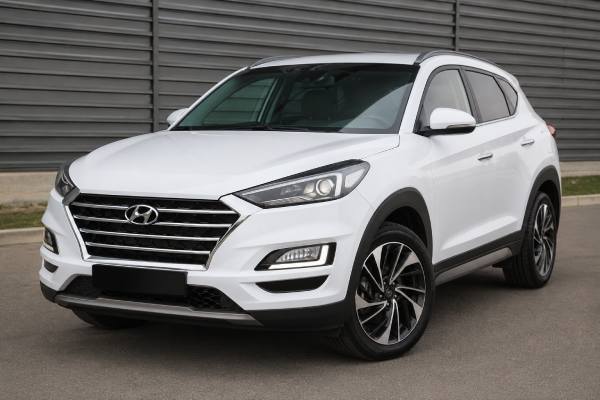
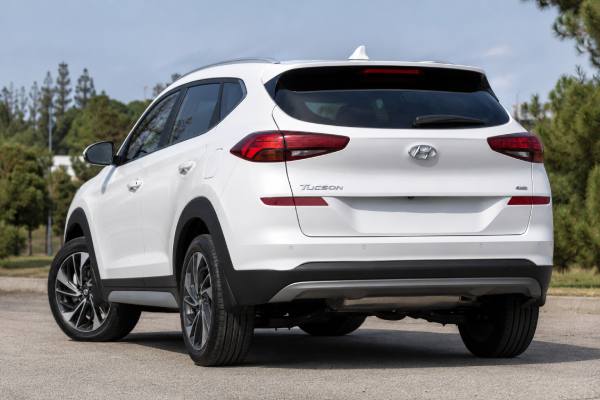
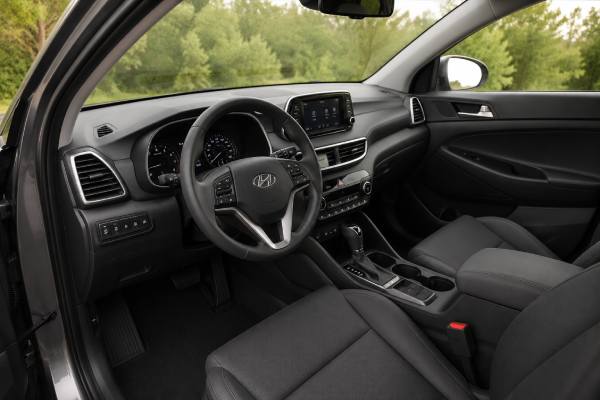
The facelift Hyundai Tucson TL with the 1.6 CRDi 48V 115 hp diesel engine is a practical, modestly powered family SUV aimed at drivers who want diesel range, sensible running costs, and everyday comfort rather than strong acceleration. In European markets, including the UK, this version paired the 1.6-litre Smartstream diesel with a 48-volt mild-hybrid system, a 6-speed manual gearbox, and front-wheel drive.
Its biggest strengths are space, relaxed cruising, and low fuel use on longer trips. Its main limitations are the relatively gentle performance, diesel emissions-system sensitivity, and the need to verify recall work and service history carefully before buying.
Final Verdict
The 2019–2020 Hyundai Tucson TL facelift 1.6 CRDi 48V 115 hp FWD is a good used SUV for drivers who cover regular motorway or rural mileage and want comfort, equipment, and diesel economy without moving to a larger or more complex SUV. It suits families, commuters, and high-mileage private buyers better than short-trip urban users. The tradeoff is performance: it is adequate, not lively, and the diesel emissions system needs proper heat cycles. Buy one only with clear servicing, completed recall checks, healthy AdBlue/DPF operation, and no warning lights from the 48V system.
| Pros | Cons |
|---|---|
| Strong diesel torque for relaxed everyday driving | 115 hp feels modest when fully loaded |
| 48V system improves stop-start smoothness and economy | Mild hybrid adds diagnostic complexity |
| Comfortable cabin with useful family space | 48V battery reduces boot volume versus non-hybrid models |
| AEB and lane assistance were widely fitted | Adaptive cruise was not fitted to this manual version |
| Good motorway fuel economy when driven properly | DPF and AdBlue systems dislike repeated short trips |
Table of Contents
- Tucson 1.6 CRDi 48V Overview
- Specifications and Technical Data
- Trims, Safety and Driver Assistance
- Reliability, Issues and Service Actions
- Maintenance and Buyer’s Guide
- Driving, Performance and Efficiency
- How the Tucson Compares to Rivals
Tucson 1.6 CRDi 48V Overview
The 1.6 CRDi 48V 115 hp Tucson is best understood as a comfort-focused diesel SUV with mild-hybrid assistance, not as a full hybrid. It cannot drive on electric power alone; the 48V system supports the diesel engine, recovers energy when slowing, and helps reduce fuel use and emissions.
This facelift model sits in the third-generation Tucson family, known by the TL platform code. The facelift brought sharper styling, upgraded equipment, updated infotainment, and a cleaner engine range. In the 115 hp 48V form, the Tucson uses front-wheel drive and a 6-speed manual gearbox, which keeps weight and fuel use under control.
The 1.6 CRDi replaced earlier Hyundai diesel units in this size class and was designed to meet tighter European emissions standards. The 115 hp output is not exciting on paper, but the 280 Nm torque figure is more important in daily driving. It gives the car enough low- and mid-range pull for commuting, school runs, motorway cruising, and moderate holiday loads.
The 48V system is simple compared with a full hybrid. A small lithium-ion battery, mild-hybrid starter-generator, converter, and inverter help the engine during acceleration and support smoother stop-start operation. This makes the car feel slightly more refined in traffic than an older conventional diesel, though the benefit is mainly efficiency rather than performance.
As a used buy, this Tucson appeals because it offers a sensible mix of size, equipment, comfort, and running cost. It is easier to live with than many premium SUVs and usually cheaper to maintain than more complex all-wheel-drive automatics. However, the exact used-car condition matters a lot. A diesel Tucson that has done regular long journeys and had correct servicing is far more attractive than one used only for short urban trips.
The boot is still practical, but the 48V system reduces luggage volume compared with some non-hybrid Tucson versions. Buyers should also remember that the 115 hp model is the economy-biased version. It is fine for calm drivers but less convincing for towing, frequent full-load travel, or fast overtaking on hilly roads.
Specifications and Technical Data
This version combines a 1.6-litre four-cylinder diesel engine, a 48V mild-hybrid system, a 6-speed manual gearbox, and front-wheel drive. The key ownership points are the useful 280 Nm torque output, the manual-only layout for this 115 hp 48V version, and the reduced boot capacity caused by the mild-hybrid battery packaging.
Engine and mild-hybrid system
| Item | Hyundai Tucson 1.6 CRDi 48V 115 hp FWD |
|---|---|
| Engine family | Smartstream 1.6 CRDi diesel |
| Engine code | D4FE, market dependent |
| Displacement | 1,598 cc |
| Layout | Inline-four, DOHC, 16 valves |
| Fuel system | Common-rail direct diesel injection |
| Induction | Turbocharged diesel with intercooling |
| Bore × stroke | 77.0 × 85.8 mm |
| Compression ratio | 15.9:1 |
| Maximum power | 115 PS / 84.6 kW at 4,000 rpm |
| Maximum torque | 280 Nm / 206.5 lb-ft at 1,500–2,750 rpm |
| Mild-hybrid type | 48V battery-assisted starter-generator system |
| Emissions equipment | DPF and AdBlue/SCR system |
| Emissions standard | Euro 6d Temp |
Transmission, chassis and capability
| Item | Specification |
|---|---|
| Transmission | 6-speed manual |
| Drive type | Front-wheel drive |
| Front suspension | MacPherson struts with coil springs |
| Rear suspension | Multi-link |
| Steering | Motor-assisted rack and pinion |
| Turning circle | 10.6 m |
| Front brakes | Ventilated discs |
| Rear brakes | Solid discs |
| Braked towing capacity | 1,400 kg |
| Unbraked towing capacity | 750 kg |
| Nose weight | 100 kg |
| Maximum roof load | 100 kg |
Dimensions, weights and capacities
| Item | Value |
|---|---|
| Body style | 5-door compact SUV |
| Seats | 5 |
| Length | 4,475 mm |
| Width excluding mirrors | 1,850 mm |
| Width including mirrors | 2,065 mm |
| Height | 1,650 mm on common 17/18-inch wheel trims |
| Wheelbase | 2,670 mm |
| Kerb weight | 1,537–1,666 kg |
| Gross vehicle weight | 2,120 kg |
| Payload | 454–583 kg |
| Boot capacity, seats up | 459 litres |
| Boot capacity, seats folded | 1,449 litres |
| Fuel tank | 62 litres |
| AdBlue tank | 14 litres |
Performance, economy and wheels
| Item | Value |
|---|---|
| 0–62 mph | 11.8 seconds |
| Top speed | 109 mph / 175 km/h |
| Official WLTP combined economy | About 5.5 l/100 km / 51.4 mpg UK / 42.8 mpg US |
| Official CO₂ emissions | About 114 g/km on common 17/18-inch trims |
| Common tyre size | 225/60 R17 on SE Nav |
| Common tyre size | 225/55 R18 on Premium |
The 115 hp 48V model is not a heavy-duty tow car, but the 1,400 kg braked rating is useful for light caravans or small trailers. For regular towing, the stronger 136 hp diesel or 2.0 CRDi 48V automatic is a better fit.
Trims, Safety and Driver Assistance
In the UK-style 2019 range, the 1.6 CRDi 48V 115 hp manual was mainly associated with SE Nav and Premium grades. That matters because the equipment level, wheel size, safety features, and interior finish vary more than the basic mechanical package.
S Connect sat at the lower end of the Tucson range, but the 115 hp diesel there was generally the non-48V version. SE Nav is often the sweet spot for used buyers because it adds the larger navigation system, rear camera, smartphone integration, privacy glass, roof rails, and a useful level of driver assistance without the cost and wheel size of top trims.
Premium adds comfort items such as heated front seats, smart key entry, higher-grade trim, wireless phone charging, and upgraded audio on many cars. Premium SE brought more luxury equipment, but the 115 hp 48V manual was not typically the main powertrain for that grade. N Line focused on sporty styling, 19-inch wheels, and trim changes, but the 115 hp 48V version is not the usual N Line choice.
Quick identifiers include CRDi and 48V badging, manual gearbox, and the lower boot floor layout affected by the mild-hybrid battery. On UK cars, SE Nav usually has 17-inch wheels, while Premium commonly has 18-inch wheels. Larger 19-inch wheels look sharper but are less relevant to this exact 115 hp version and can make the ride firmer.
Safety rating context
The third-generation Tucson received a five-star Euro NCAP result when tested in 2015. The scores were strong for the time: 86% adult occupant protection, 85% child occupant protection, 71% pedestrian protection, and 71% safety assist.
For a 2019–2020 used buyer, that rating is useful historical evidence, but it should not be treated as equal to a new-car five-star result under later, tougher test standards. Euro NCAP protocols change over time, especially for pedestrian protection, active safety, lane support, and automated emergency braking.
Safety equipment and ADAS
The facelift Tucson was well equipped for its class. UK 2019 cars commonly included:
- Front, front-side, and curtain airbags
- ABS, electronic stability control, brake assist, and hill-start assist
- Downhill brake control and trailer stability assist
- Rear outer ISOFIX child-seat anchor points
- Autonomous emergency braking
- Lane keep assist
- Tyre pressure monitoring with individual pressure display
- Seatbelt reminders for front and rear occupants
Blind spot detection and rear cross traffic alert were trim-dependent, usually appearing on higher grades such as Premium and Premium SE. Smart adaptive cruise with stop-go function was tied to automatic or DCT versions, so it is not a feature to expect on the 115 hp manual. High-beam assist and LED headlamps were also trim dependent.
After windscreen replacement, front body repair, bumper repair, suspension alignment, or steering-angle work, driver-assistance systems may need inspection or calibration. A car with warning lights, an inactive lane system, or unexplained AEB messages should be diagnosed before purchase, not after.
Reliability, Issues and Service Actions
A well-maintained Tucson 1.6 CRDi 48V can be a dependable long-distance SUV, but it is not the right diesel for neglect or constant short trips. The main risk areas are emissions hardware, manual clutch wear, 48V system faults, and incomplete recall or campaign work.
Common and occasional issues
| Issue area | Prevalence | Cost risk | What to check |
|---|---|---|---|
| DPF loading or failed regeneration | Common on short-trip cars | Medium to high | Warning lights, poor fuel economy, frequent fan operation |
| AdBlue/SCR or NOx sensor faults | Occasional | Medium | Countdown warnings, engine light, recent sensor invoices |
| Clutch and dual-mass flywheel wear | Occasional | Medium | Slip, judder, rattling at idle, high biting point |
| 48V charging or belt-drive faults | Occasional | Medium | Mild-hybrid warning, stop-start inactive, belt noise |
| Suspension links and bushes | Common with age | Low to medium | Knocks over bumps, uneven tyre wear |
| ABS/HECU recall-related checks | VIN dependent | High if ignored | Official recall completion record |
Diesel emissions equipment is the biggest ownership divider. A Tucson used for steady 30–60 minute drives will usually be happier than one used for repeated five-minute cold starts. Symptoms of DPF or SCR trouble include a persistent engine-management light, “check exhaust system” type warnings, limp mode, rising oil level from repeated interrupted regenerations, or AdBlue countdown messages.
The correct remedy is not to clear codes and hope. The system needs proper diagnosis: DPF soot and ash values, differential pressure readings, exhaust temperature sensor data, NOx sensor readings, AdBlue pump operation, and software status. A cheap used diesel with unresolved emissions faults can quickly become expensive.
The manual gearbox itself is generally straightforward, but the clutch and dual-mass flywheel should be tested carefully. During a test drive, accelerate from low revs in a higher gear and watch for revs rising faster than road speed. Listen for rattles when switching the engine off, vibration through the pedal, or judder when moving away.
The 48V system should work quietly in the background. The stop-start system may not operate in cold weather, with a weak 12V battery, during DPF regeneration, or when cabin demand is high. That alone is not a fault. Warning lights, repeated charging messages, belt squeal, or dealer history showing unresolved mild-hybrid faults are more serious.
Service actions and recalls
The Tucson TL had recall and campaign activity in several markets. The most important used-buying advice is simple: check the car by VIN with Hyundai, not just by model year. Certain Tucson TLE vehicles in Europe and Ireland were recalled for ABS module concerns that could cause an electrical short and potential engine-bay fire. Other markets had related ABS/HECU fire-risk campaigns on Tucson models.
Do not rely only on the seller saying “no recalls.” Ask for dealer printouts or digital service history showing recall completion. If the car has lived in more than one country, check the VIN in the current registration market and, where possible, through a Hyundai dealer with access to manufacturer campaign records.
There is also online discussion around Hyundai/Kia D4FE diesel oil/vacuum pump or tandem-pump issues in related applications. Because recall coverage can be model, VIN, country, and build-date specific, treat this as a reason to ask a Hyundai dealer for a complete campaign check rather than as proof that every Tucson is affected.
Maintenance and Buyer’s Guide
The 1.6 CRDi 48V Tucson rewards conservative maintenance. Even when the official schedule allows longer intervals, many used-diesel buyers are better served by annual servicing and shorter oil intervals if the car does short trips, heavy traffic, towing, or high-mileage motorway work.
Practical maintenance schedule
| Interval | Maintenance items |
|---|---|
| Every 10,000–15,000 km or 12 months | Engine oil and filter, inspection, tyre pressures, lights, wipers, brake check |
| Every 15,000–20,000 km | Cabin filter, DPF/SCR scan if mostly urban, battery health check |
| Every 30,000 km | Engine air filter, fuel-system inspection, brake hoses, suspension and steering checks |
| Every 2 years | Brake fluid replacement, air-conditioning check, coolant strength inspection |
| Every 60,000–80,000 km | Manual gearbox oil inspection or replacement if used hard or towing |
| By age, mileage, or VIN schedule | Timing belt and auxiliary belt work according to official documentation |
| As required | AdBlue refill, DPF diagnosis, wheel alignment, 12V battery replacement |
Use low-SAPS diesel engine oil meeting the correct Hyundai/Kia specification for DPF-equipped CRDi engines. A common service fill for the 1.6 CRDi family is about 4.4 litres with filter, but the exact fill and oil specification should be checked by VIN. The safest approach is to use the grade listed in the owner’s manual or dealer service system for the exact market.
The D4FE 1.6 CRDi is belt-driven, unlike older Hyundai/Kia diesels that many owners remember as chain-driven. Timing belt guidance varies by market and service documentation, so do not buy a car on assumptions. If there is no proof of belt service and the car is approaching higher mileage or 8–10 years of age, budget for timing-belt work and ask the workshop to inspect related pulleys, tensioners, water pump guidance, auxiliary belt, and any oil-pump belt or pump-related service requirements that apply to the exact engine.
Brake fluid should not be ignored. Regenerative braking is light on a mild hybrid compared with a full hybrid or EV, but the car still depends on conventional hydraulic brakes. Rear brake corrosion can appear on cars that sit outside or do gentle short trips, so check disc condition, caliper movement, and parking brake function.
The 12V battery matters more than many owners expect. A weak 12V battery can disable stop-start, trigger odd warnings, and make diagnosis confusing. On a five- to seven-year-old Tucson, a battery test is cheap and worthwhile.
Used buyer inspection checklist
Before buying, check:
- Cold start: smooth start, no excessive rattle, no heavy smoke
- Dashboard: no engine, AdBlue, DPF, ABS, ESC, airbag, or 48V warning lights
- Service history: annual oil changes, correct diesel oil, fuel filter and brake fluid records
- Recall status: Hyundai VIN printout showing completed campaigns
- Test drive: no clutch slip, no dual-mass flywheel rattle, no hesitation under boost
- Emissions system: no recent code clearing, no repeated AdBlue countdown warnings
- Suspension: no knocking from drop links, bushes, or strut mounts
- Tyres: even wear, matching axle pairs, no cheap mismatched replacements
- Body underside: inspect subframes, brake pipes, sills, rear suspension mounts, and exhaust
- Interior electronics: infotainment, reversing camera, parking sensors, keyless entry, lane assist
The best cars are usually privately or dealer-sold examples with clear service invoices and a driving pattern that suits diesel. Avoid cars with unknown servicing, a freshly cleared engine light, unresolved AdBlue warnings, slipping clutch, or a seller who refuses a VIN recall check.
Driving, Performance and Efficiency
The 115 hp Tucson is calm and economical rather than quick. It works best when driven smoothly, using the diesel torque between about 1,500 and 2,750 rpm instead of chasing high revs.
In town, the Tucson is easy to place for its size. The steering is light, the clutch is manageable, and the elevated driving position helps visibility. The ride is generally comfortable on 17- and 18-inch wheels, though sharp potholes can still be felt because this is a relatively heavy SUV. The rear multi-link suspension gives it better composure than cheaper torsion-beam crossovers.
On the motorway, the car feels stable and relaxed. The 1.6 diesel settles into a steady cruise well, and this is where the powertrain makes the most sense. Wind and road noise are moderate rather than premium-car quiet, but refinement is good enough for long-distance family use.
The performance limitation appears when the car is fully loaded, climbing hills, or asked for quick overtakes. The 0–62 mph time of 11.8 seconds tells the story: it is acceptable, not brisk. Drivers moving from a small hatchback may find it fine; drivers used to 150–180 hp SUVs may find it slow.
The 6-speed manual gearbox is simple and suits the engine, but it needs proper gear choice. Letting the engine labour below the torque band can cause vibration and slow response. Dropping one gear before overtaking makes the Tucson feel much more settled.
Real-world economy depends heavily on use. On longer mixed routes, expect roughly 5.5–6.5 l/100 km, or about 43–51 mpg UK. On steady motorway trips at moderate speeds, it can do better if traffic and weather are favourable. In short urban use, winter weather, or repeated cold starts, fuel use can rise toward 7.0 l/100 km or worse, and the emissions system will be less happy.
The 48V system helps most in stop-start and gentle acceleration. It does not transform the car, and it will not deliver petrol-hybrid-style city economy. Its real value is smoother restart behaviour, small efficiency gains, and slightly reduced engine load.
Towing is possible within the 1,400 kg braked limit, but this is not the strongest Tucson for caravan use. With a trailer, expect more gear changes, slower hill climbs, higher fuel consumption, and more clutch wear if manoeuvring often. For regular towing, choose a stronger diesel Tucson or a rival with more torque and automatic transmission cooling suited to load use.
How the Tucson Compares to Rivals
The Tucson 1.6 CRDi 48V sits in a crowded class, but it still makes sense if comfort, equipment, warranty history, and value matter more than sharp handling or premium badge appeal.
The closest rival is the Kia Sportage QL with related 1.6 CRDi diesel engines. The Kia feels very similar mechanically and offers comparable practicality. The Sportage may be slightly more style-led inside, while the Tucson often feels a little more restrained and family-focused. Used condition and service history matter more than badge choice between the two.
The Nissan Qashqai 1.5 dCi is usually more economical and easier to park, but it is smaller, less spacious, and less SUV-like. For mainly urban use, the Qashqai may be easier to live with. For family trips and luggage space, the Tucson feels more substantial.
The Peugeot 3008 BlueHDi has a more modern-feeling cabin and often better perceived interior design. It is also efficient and pleasant to drive. The Tucson counters with a more conventional dashboard layout, good equipment, and a simpler ownership image for buyers who prefer function over flair.
The Volkswagen Tiguan TDI feels more premium and may have stronger engine options, but it is usually more expensive to buy used and can cost more to repair. A well-equipped Tucson can be better value, especially if the buyer is not chasing badge prestige.
The Ford Kuga diesel is often more engaging to drive, with sharper steering and a more car-like feel. The Hyundai is calmer, easier-going, and more comfort-biased. For keen drivers, the Ford has the edge. For relaxed family use, the Tucson is very competitive.
The main reason to choose this specific Tucson is balance. It is not the fastest, most stylish, or most advanced SUV in the class, but it combines useful space, good diesel economy, decent safety equipment, and reasonable used pricing. The main reason not to choose it is usage pattern. If most journeys are short, cold, and urban, a petrol Tucson, petrol-hybrid rival, or smaller crossover is the safer long-term choice.
References
- Hyundai Tucson press kit – December 2019 2019 (Manufacturer Technical Data)
- Designed for electrification: Hyundai’s New Tucson offers pioneering 48-volt diesel mild hybrid powertrain 2018 (Manufacturer Press Release)
- Hyundai Owners manuals | Hyundai Motor UK 2026 (Owner’s Manual Index)
- Hyundai Tucson – Euro NCAP Results 2015 2015 (Safety Rating)
- Hyundai recalls certain ‘Tucson TLE’ passenger vehicles – CCPC Consumers 2021 (Recall Notice)
Disclaimer
This article is for informational purposes only and is not a substitute for professional diagnosis, repair advice, or official workshop procedures. Specifications, torque values, service intervals, fluids, software actions, and repair methods can vary by VIN, market, trim, equipment, and production date. Always verify details against the official owner’s manual, service documentation, Hyundai dealer systems, and the vehicle’s own service history.
If this guide helped you, please consider sharing it on Facebook, X/Twitter, or your preferred automotive community to support our work.