
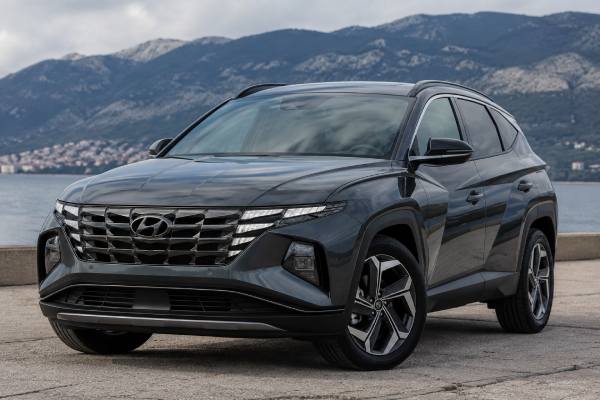
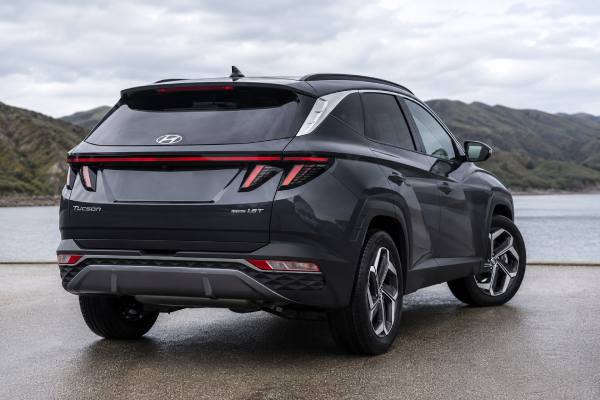
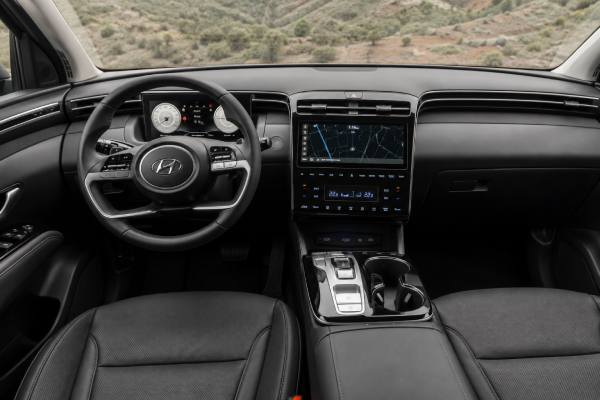
The fourth-generation Hyundai Tucson NX4 with the Smartstream 1.6 T-GDi 48V mild-hybrid engine is a practical family SUV with sharp styling, useful cabin space, and a more flexible turbo petrol engine than the lower-output versions. This specific 180 hp front-wheel-drive version is best understood as a mild hybrid, not a full hybrid: it cannot drive on electric power alone and it does not plug in, but its 48-volt system helps restart, coasting, and low-speed assistance.
For used buyers, the main appeal is simple: you get Tucson space and technology with stronger performance than the 150 PS petrol, without the cost and complexity of the full hybrid or plug-in hybrid models. The key is buying the correct version, checking service history carefully, and understanding that short-trip use can be harder on a turbocharged direct-injection engine than steady mixed driving.
Final Verdict
The Hyundai Tucson NX4 1.6 T-GDi 48V 180 hp FWD is a strong choice for drivers who want a roomy, modern compact SUV with good performance, a comfortable cabin, and lower complexity than the full hybrid. It suits families, commuters, and motorway users better than buyers chasing maximum fuel economy. Its main tradeoff is that the 48V system improves smoothness more than economy, so it will not match the Tucson HEV in city use. Buy only with documented annual servicing, confirmed recall completion, clean 48V/12V battery checks, and no cold-start, clutch, GPF, or warning-light issues.
| Pros | Cons |
|---|---|
| 180 PS turbo engine feels stronger than base petrol versions | 48V mild hybrid cannot drive in electric-only mode |
| Spacious NX4 cabin and large boot suit family use | Real economy depends heavily on route and driving style |
| FWD layout is lighter and simpler than HTRAC AWD | Wet-road traction can be limited with full torque applied |
| Euro NCAP five-star rating applies to this 48V MHEV variant | ADAS repairs need proper radar and camera calibration |
| Good equipment availability on Premium, Ultimate, and N Line trims | 19-inch wheels make the ride firmer and tyres costlier |
Table of Contents
- Tucson 1.6 T-GDi 48V Overview
- Tucson 48V Specifications
- Trims, Safety and Driver Assistance
- Reliability, Issues and Service Actions
- Maintenance and Buying Advice
- Driving, Performance and Efficiency
- Tucson 48V Against Rivals
Tucson 1.6 T-GDi 48V Overview
The 180 hp Tucson 1.6 T-GDi 48V FWD is the more powerful mild-hybrid petrol version of the pre-facelift NX4 Tucson. It is best for buyers who want stronger everyday performance than the 150 PS model, but do not need AWD, plug-in charging, or the higher purchase price of the full hybrid.
The NX4 generation arrived with a much bolder design than the previous Tucson, including hidden-style front lighting, a wide grille, sharper body surfacing, and a more digital interior. Underneath the styling, it remained a compact family SUV with five seats, a large tailgate opening, and a wheelbase long enough to give adults usable rear legroom.
The “48V” part matters. Hyundai’s mild-hybrid system uses a 48-volt mild-hybrid starter generator to reduce the load on the engine, smooth restarts, support coasting, and recover some braking energy. It is not the same as the Tucson 1.6 T-GDi HEV. The HEV has a stronger electric motor, a larger high-voltage battery, and can move the car electrically at low speeds. The 48V mild hybrid mainly assists the petrol engine.
This means the 180 hp 48V FWD model makes most sense if you value a normal petrol driving feel. There is no charging routine, no electric range to manage, and less hybrid hardware than the HEV or PHEV. On the other hand, city fuel economy is only modestly improved compared with a non-mild-hybrid turbo petrol. In slow traffic, the full hybrid is usually more efficient.
For used buyers, the most important distinction is transmission and market specification. In many European launch specifications, the 180 PS 48V front-wheel-drive version was paired with Hyundai’s 6-speed intelligent manual transmission, while the 180 PS 48V 7-speed DCT was often tied to AWD in some markets. If a used listing describes a 180 hp FWD automatic, check the VIN, build sheet, registration document, and service records before assuming it is this exact version.
The Tucson’s strongest everyday qualities are cabin space, equipment, safety technology, and a generally relaxed driving character. The 1.6 turbo engine gives it enough torque for motorway merging and loaded family trips, while FWD keeps weight and mechanical complexity down. Its weaker points are ordinary real-world economy for a mild hybrid, possible sensitivity to short-trip use, and the need for correct servicing on the turbocharged direct-injection engine.
Tucson 48V Specifications
This version uses Hyundai’s Smartstream 1.6-litre turbocharged petrol engine with a 48-volt mild-hybrid system and front-wheel drive. The key technical points are the 1,598 cc turbo engine, 180 PS output, 265 Nm torque band, 6-speed intelligent manual transmission in common FWD European specification, and a roomy five-door SUV body.
Powertrain and efficiency
| Item | Specification |
|---|---|
| Engine family | Smartstream G1.6 T-GDi |
| Engine type | Turbocharged inline-four petrol, direct injection |
| Displacement | 1,598 cc |
| Bore x stroke | 75.6 x 89.0 mm |
| Compression ratio | 10.5:1 |
| Maximum power | 180 PS / 132.4 kW at 5,500 rpm |
| Maximum torque | 265 Nm from 1,500–4,500 rpm |
| Hybrid type | 48V mild hybrid with MHSG assistance |
| Fuel type | Unleaded petrol, typically 95 RON in Europe |
| Emissions standard | Euro 6d in early European specification |
Transmission and driveline
| Item | Specification |
|---|---|
| Drive type | Front-wheel drive |
| Common FWD transmission | 6-speed intelligent manual transmission |
| Coasting function | Electronically decouples the engine during selected overrun conditions |
| AWD system | Not fitted to this FWD version |
| Terrain modes | Not a key feature of this FWD mild-hybrid model |
Dimensions, chassis and capacities
| Item | Specification |
|---|---|
| Body style | Five-door compact SUV |
| Seats | Five |
| Length | 4,500 mm |
| Width | 1,865 mm |
| Height | About 1,650 mm |
| Wheelbase | 2,680 mm |
| Front suspension | MacPherson strut |
| Rear suspension | Multi-link |
| Common tyres | 215/65 R17, 235/55 R18, 235/50 R19 |
| Boot volume | About 577–1,756 litres, depending on measurement method |
| Fuel tank | About 54 litres |
Performance and official consumption
| Item | Specification |
|---|---|
| 0–100 km/h | About 9.4 seconds |
| Top speed | 205 km/h |
| WLTP combined fuel use | About 6.4–6.7 L/100 km |
| WLTP combined economy | About 35–37 mpg US / 42–44 mpg UK |
| CO2 emissions | About 145–152 g/km, depending on wheels and equipment |
| Braked towing capacity | Up to about 1,650 kg where rated |
| Unbraked towing capacity | About 750 kg where rated |
Quick service reference
| Item | Typical value |
|---|---|
| Engine oil capacity | About 4.8 litres with filter |
| Common oil grade | 0W-20 full synthetic meeting the correct Hyundai-market specification |
| Brake fluid | DOT 4 |
| Wheel nut torque | About 108–127 Nm |
| Timing drive | Chain; inspect for noise, stretch, and correlation faults |
Trims, Safety and Driver Assistance
Trim names vary by country, but the 180 hp 48V Tucson was generally sold as a well-equipped version rather than a stripped-out entry model. For used buyers, the most important differences are wheels, lighting, infotainment, seat equipment, parking cameras, and the level of driver assistance fitted.
In the UK and many European markets, typical trim names around this period included SE Connect, Premium, Ultimate, N Line, and N Line S. Other markets used names such as Comfort, Style, Executive, Luxury, Prestige, or Premium. Do not rely only on the badge on the tailgate. Check the original order sheet or VIN build data because safety and convenience packages changed by market and model year.
Premium-style trims usually offer the best value because they tend to include larger screens, dual-zone climate control, better upholstery, heated seats in some markets, and a stronger safety equipment list. Ultimate and N Line S versions are more desirable if you want the panoramic roof, ventilated front seats, upgraded sound, blind-view camera display, powered tailgate, or surround-view monitor. N Line models add sportier styling and interior details, but not a separate high-performance engine tune for this mild-hybrid version.
Wheel size changes the car more than many buyers expect. The 17-inch wheel package gives the most forgiving ride and usually the lowest tyre cost. The 18-inch setup is a good middle ground. The 19-inch package looks better on N Line and high-grade trims, but it adds road noise, sharper impacts over broken surfaces, and higher replacement tyre prices.
Quick identifiers include:
- “48V” or “MHEV” wording in adverts, documents, or service records.
- 1.6 T-GDi engine listing with 180 PS or 132 kW output.
- FWD or 2WD drivetrain notation in the registration data.
- 6-speed iMT listing for many FWD 180 PS European cars.
- NX4 platform generation with the angular body and hidden-style front lighting.
- 17-, 18-, or 19-inch wheel package tied to trim and option level.
Safety is one of the Tucson NX4’s strong points. Euro NCAP awarded the Tucson a five-star rating in 2021, and the rating applied to several variants, including the 1.6 T-GDi 48V MHEV 4×2. The score breakdown was 86 percent for adult occupant protection, 87 percent for child occupant protection, 66 percent for vulnerable road users, and 70 percent for safety assist. The 2024 facelift review kept the 2021 outcome, although buyers should remember that crash-test protocols and equipment fit can change by market.
Airbag provision commonly included front airbags, side airbags, curtain airbags, and a front centre airbag in many NX4 markets. Rear outboard ISOFIX and i-Size child-seat provisions are a major family benefit, and the rear bench is wide enough for practical family use, though three bulky child seats across the rear will depend on the exact child-seat models.
Hyundai SmartSense equipment may include Forward Collision-Avoidance Assist with pedestrian, cyclist, and junction-turning detection; Lane Keeping Assist; Lane Following Assist; Driver Attention Warning; High Beam Assist; Blind-Spot Collision-Avoidance Assist; Rear Cross-Traffic Collision-Avoidance Assist; Smart Cruise Control with Stop & Go on compatible versions; Highway Driving Assist; Blind-Spot View Monitor; and Surround View Monitor.
After windscreen replacement, front bumper repair, grille work, suspension alignment, or collision repair, the camera and radar systems need proper calibration. A car that shows no warning lights can still have poorly aimed sensors if repairs were done cheaply. On a test drive, confirm that lane support, adaptive cruise, blind-spot monitoring, parking sensors, and cameras behave normally.
Reliability, Issues and Service Actions
The NX4 Tucson 1.6 T-GDi 48V is not known as a fundamentally fragile SUV, but it rewards correct servicing and dislikes neglect. The most important ownership risks are low-voltage electrical faults, short-trip engine use, missed oil changes, software updates, GPF problems, and poorly repaired ADAS or body damage.
The 1.6 T-GDi Smartstream engine uses turbocharging and direct injection, so oil quality and service timing matter. A car used mostly for short urban trips can suffer more oil dilution, carbon deposits, condensation, and gasoline particulate filter loading than one used for regular longer journeys. This does not mean the engine is a bad choice, but it does mean “low mileage” is not always better if the use pattern was harsh.
Common or occasional issues to watch include:
| Issue | Prevalence | Typical symptoms | Best response |
|---|---|---|---|
| Weak 12V battery | Common with short trips | Warning messages, no-start, odd electronic faults | Battery test, charging-system scan, replacement if weak |
| 48V system warnings | Occasional | MHEV warning, stop-start disabled, reduced assistance | Dealer diagnostic scan and software check |
| GPF loading | Occasional in urban use | Warning light, limp mode, poor response | Correct drive cycle, diagnosis, software update if applicable |
| Ignition or sensor faults | Occasional | Misfire, rough idle, check-engine light | Scan codes, check plugs, coils, sensors, and fuel trims |
| Brake corrosion | Common in low-use cars | Grinding, pulsing, rusty rear discs | Inspection, cleaning, pad/disc replacement if needed |
| ADAS calibration faults | Occasional after repairs | Lane, radar, or camera warnings | Proper calibration using dealer-level equipment |
The timing chain does not have a routine replacement interval like a belt, but it is not a lifetime guarantee. Listen for cold-start rattles, check for timing-correlation fault codes, and avoid cars with a long oil-change gap history. Chain wear, guide wear, or tensioner problems are more likely when oil quality has been poor or service intervals have been stretched.
The 6-speed intelligent manual transmission has a different feel from a conventional old-style manual because of its electronically managed clutch and coasting strategy. During a test drive, check for smooth take-up, no clutch slip under load, no judder when pulling away, and no warning lights related to the clutch or mild-hybrid system. If the car is a market-specific 7DCT version, also check for low-speed shudder, delayed engagement, overheating messages, and jerky manoeuvring.
Suspension and chassis durability are generally reasonable, but compact SUVs are hard on tyres, alignment, anti-roll-bar links, and suspension bushes. Uneven tyre wear can point to kerb impacts or poor alignment. A dull knock from the front over small bumps often comes from drop links or bushes rather than a major structural fault, but it is still a bargaining point.
Corrosion is not a major headline issue on young NX4 Tucsons, but inspect the rear subframe area, suspension arms, brake lines, lower door edges, tailgate seams, and underside protection, especially in countries that use winter road salt. Also check the panoramic roof drain function on cars so equipped.
Recalls and service campaigns depend heavily on country, production date, and VIN. Regional examples have included curtain-airbag installation checks on certain 2022–2023 NX4 vehicles, electric window anti-trap concerns in some European recall listings, and market-specific tow-hitch wiring or electrical campaigns outside Europe. A clean advert is not proof that campaigns are complete. Ask for dealer paperwork and run the VIN through the official recall checker for the country where the car is registered.
For pre-purchase inspection, request:
- Full Hyundai or specialist service history with dates, mileage, oil grade, and invoices.
- VIN recall and service campaign printout.
- Battery health check for both 12V and mild-hybrid systems.
- Diagnostic scan for engine, transmission, ADAS, body, and hybrid-control modules.
- Cold-start test after the car has sat overnight.
- Road test including motorway acceleration, stop-start traffic, and parking manoeuvres.
- Evidence of correct ADAS calibration after glass, bumper, grille, or accident repair.
Maintenance and Buying Advice
The best maintenance strategy for this Tucson is conservative: annual oil service at minimum, earlier oil changes for short-trip use, and regular battery and brake checks. The engine is modern and efficient, but turbocharged direct-injection petrol engines do not respond well to cheap oil, missed services, or repeated cold running.
A practical schedule for normal use is:
| Interval | Work to perform |
|---|---|
| Every 10,000–15,000 km or 12 months | Engine oil and filter, inspection, diagnostic check, tyre and brake inspection |
| Every 12 months | Cabin filter, wipers, lights, battery test, ADAS visual check |
| Every 30,000 km or 2 years | Brake fluid, deeper brake inspection, coolant and hose inspection |
| Every 45,000 km | Engine air filter in normal use; sooner in dusty areas |
| Every 60,000 km | Auxiliary belt inspection, suspension check, steering joints, wheel bearings |
| About 75,000 km | Spark plugs, depending on market service schedule and plug type |
| 90,000–120,000 km | Manual gearbox oil consideration, coolant age check, deeper driveline inspection |
| 10 years or high mileage | Coolant replacement where specified, then more frequent coolant service |
For severe use, shorten the oil interval. Severe use includes repeated short trips, high heat, mountain driving, heavy traffic, dusty roads, long idling, towing, and frequent full-load acceleration. A 10,000–12,000 km oil interval is a sensible ownership choice even if the official schedule allows longer.
The timing chain should be inspected by symptoms rather than replaced on a fixed schedule. Warning signs include rattling at cold start, cam/crank correlation codes, rough running, and poor response. A good service record is the best protection because clean oil helps the chain, tensioner, turbocharger, and valve timing system.
Fluid and service notes:
- Use the correct low-viscosity full synthetic oil for the exact VIN and climate.
- Do not guess coolant type; use the correct Hyundai-compatible long-life coolant.
- Use DOT 4 brake fluid and replace it on time, especially in mountain or towing use.
- Use approved gearbox oil only; modern Hyundai manual and DCT fluids are not generic.
- Keep the battery system healthy with longer drives if the car is used mostly locally.
- Rotate tyres regularly and align the car if tyre shoulders wear unevenly.
The 48V system does not need owner servicing, but it does need proper diagnostic care. Do not let a general repair shop probe orange or high-voltage-labelled components without training. Although a 48V mild-hybrid system is less complex than a full hybrid or EV system, incorrect diagnosis can still lead to expensive parts replacement.
As a used buy, the safest choices are cars with clean annual service records, standard wheels or 18-inch wheels, no accident history, and no unresolved warning lights. Premium-style trims are usually the sweet spot. Ultimate and N Line S are appealing but can cost more to repair because of larger wheels, cameras, powered features, panoramic roofs, and higher equipment content.
Be careful with cars that have:
- No proof of annual oil changes.
- Repeated battery replacements without a clear diagnosis.
- Uneven tyre wear across both axles.
- Warning lights cleared just before sale.
- Evidence of front-end repair without ADAS calibration paperwork.
- Heavy clutch wear, clutch judder, or vague manual shift quality.
- A towbar with no proof of proper wiring and coding.
- A late-2024 registration that may actually be the facelifted lower-output version.
Long-term durability should be good if the car is serviced properly and used for mixed driving. The engine, turbo, manual gearbox, and FWD layout are not exotic. The main durability threat is neglect: stretched oil changes, ignored warning lights, cheap tyres, poor accident repair, and repeated short trips without proper warm-up.
Driving, Performance and Efficiency
The 180 hp Tucson 48V FWD feels brisk enough for family SUV use, but it is not a hot SUV. Its best driving traits are relaxed mid-range torque, stable motorway manners, and a cabin that feels more refined than many older compact SUVs.
The 1.6 T-GDi engine pulls well from low revs because the 265 Nm torque plateau starts early. Around town, the 48V system helps smooth restart events and take-off, but the car still feels like a petrol turbo rather than a full hybrid. There is no meaningful EV-only glide through traffic. Drivers coming from a Toyota-style hybrid should understand this before buying.
The 6-speed iMT can feel unusual at first. The clutch and coasting logic are designed for efficiency, so some drivers notice a different sensation when lifting off the throttle compared with a conventional manual. Once used to it, the system is easy to drive, but it is worth testing carefully if you do a lot of stop-start traffic.
Ride comfort depends heavily on wheel size. On 17-inch wheels, the Tucson is comfortable and well suited to rough city roads. On 18s it remains nicely balanced. On 19s, especially with N Line styling, it looks sharper but sends more impact harshness into the cabin. The suspension is secure rather than sporty, and the steering is light, predictable, and easy to use in tight spaces.
Front-wheel drive is enough for most buyers, but the engine’s torque can overwhelm the front tyres in wet conditions if you accelerate hard out of junctions. Good tyres make a big difference. Cheap or worn tyres will make the car feel less refined, less stable, and less safe, especially with the instant torque rise of a turbo engine.
Braking feel is normal for a mild hybrid. The system has some regeneration, but not enough to create the stronger blended-brake sensation found in full hybrids or EVs. Cars used gently can still develop rusty brake discs, so use the brakes firmly now and then when safe, and inspect rear discs before buying.
Real-world fuel economy varies more than the official figures suggest. Sensible mixed use often lands around 6.8–7.8 L/100 km, or roughly 30–35 mpg US and 36–42 mpg UK. Urban short-trip driving can rise to 8.0–9.5 L/100 km, or about 25–29 mpg US and 30–35 mpg UK. A steady motorway run can sit around 6.4–7.4 L/100 km, or about 32–37 mpg US and 38–44 mpg UK, depending on speed, tyres, weather, and load.
Cold weather reduces efficiency because the petrol engine runs richer when cold, the cabin needs heat, tyre resistance rises, and batteries are less efficient. A winter penalty of around 0.5–1.5 L/100 km is realistic for short trips. The Tucson HEV usually does better in city use, while the 48V model is more competitive on longer steady routes.
For towing, the 180 hp engine has enough torque for small trailers and moderate loads, but FWD traction and clutch condition matter. A braked rating around 1,650 kg is useful on paper, yet a lighter trailer will make the car feel happier and more controlled. Expect a clear fuel penalty when towing, often 25–45 percent depending on trailer shape, speed, and terrain.
Tucson 48V Against Rivals
The Tucson 1.6 T-GDi 48V FWD competes best as a spacious, well-equipped family SUV rather than as the most economical hybrid. It is strongest against rivals when comfort, cabin design, safety kit, warranty history, and used value matter as much as fuel economy.
The Kia Sportage is the closest rival because it shares much of its platform and powertrain family. The Sportage often feels a little more conventional inside, while the Tucson has the more dramatic dashboard and exterior design. Buying between them often comes down to trim, warranty balance, service history, and personal taste.
The Toyota RAV4 Hybrid is more efficient in town and has a strong reliability reputation, but it is usually more expensive used and belongs slightly above the Tucson in size and market position. If most driving is urban, the Toyota’s full-hybrid system is a better fuel-saving tool. If purchase price, equipment, and design are priorities, the Tucson remains attractive.
The Volkswagen Tiguan 1.5 eTSI is more conservative and polished, with a broad dealer network and strong used demand. The Tucson offers bolder styling and often more equipment for the money. The Tiguan may feel more premium in some details, but equivalent specification can cost more.
The Nissan Qashqai mild hybrid is smaller and easier to park, but it cannot match the Tucson’s rear-seat and boot space. The Qashqai e-Power is more interesting for urban drivers because it feels more electric in traffic, though it has its own complexity and cost considerations.
The Peugeot 3008 has a stylish cabin and a more compact, premium feel, but rear visibility and control layout are more divisive. The Tucson is usually easier to recommend as a family all-rounder because of its cabin space, controls, and rear-seat usability.
The Ford Kuga is a strong driver’s SUV and its full-hybrid versions can be efficient, but interior design and perceived quality vary by trim. The Tucson feels more modern inside in many specifications and has a calmer everyday character.
Choose the Tucson 48V if you want a spacious, distinctive SUV with good equipment and useful turbo performance. Choose the Tucson HEV if city fuel economy is the priority. Choose the PHEV only if you can charge regularly. Choose the AWD version if you often drive in snow, rural lanes, or steep wet areas. For most normal family use, the FWD 180 hp mild hybrid is a sensible middle ground when bought carefully.
References
- The all-new Hyundai Tucson: a smart tech hero with a standout design 2020 (Manufacturer Press Kit) ([Hyundai News][1])
- All-new TUCSON 2021 (Manufacturer Brochure)
- Euro NCAP | Hyundai TUCSON 2021 (Safety Rating) ([Euro NCAP][2])
- Hyundai Owners Manuals | Hyundai Motor UK 2026 (Owner’s Manual Index) ([Hyundai][3])
- Check if a vehicle, part or accessory has been recalled – GOV.UK 2026 (Recall Database) ([GOV.UK][4])
Disclaimer
This article is for informational purposes only and is not a substitute for professional diagnosis, repair, inspection, or official Hyundai service documentation. Specifications, torque values, service intervals, fluids, software actions, safety equipment, and repair procedures can vary by VIN, model year, market, trim, and equipment package. Always verify critical information against the owner’s manual, service schedule, dealer records, and official repair data for the exact vehicle.
If this guide helped you, please consider sharing it on Facebook, X/Twitter, or your preferred automotive community to support our work.