
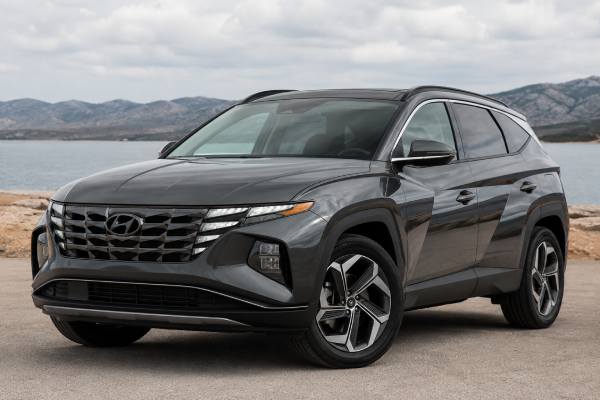
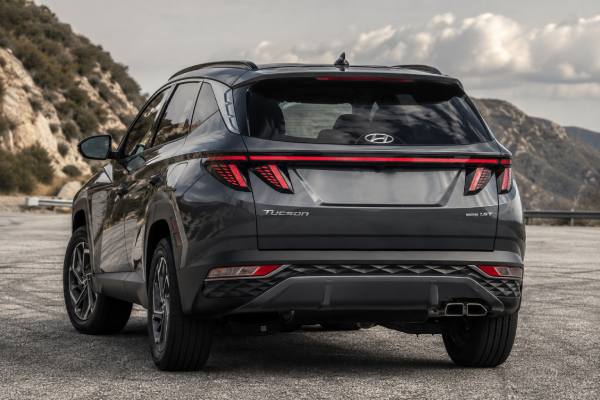
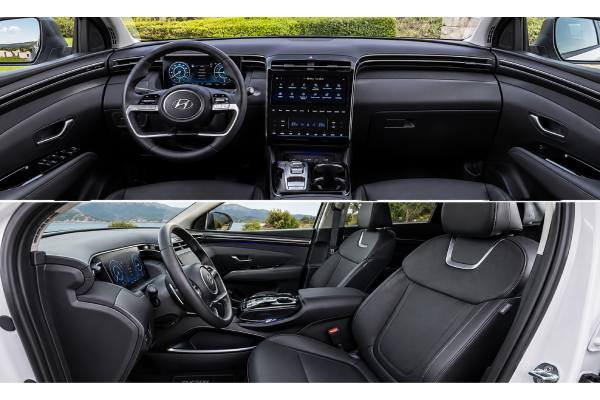
The fourth-generation Hyundai Tucson NX4 with the Smartstream 1.6 T-GDi 48V mild-hybrid engine is one of the more practical European-market compact SUVs from the early 2020s. It combines a roomy family cabin, sharp styling, useful safety technology, and a small turbocharged petrol engine helped by a 48-volt system. In this 150 hp front-wheel-drive form, it is not the fastest Tucson, and it is not a full hybrid, but it offers a sensible balance for drivers who want petrol refinement without diesel complexity or plug-in charging.
Final Verdict
The Hyundai Tucson FWD NX4 1.6 T-GDi 48V 150 hp is a strong used buy for families and commuters who want space, comfort, modern safety equipment, and reasonable running costs without stepping up to the full hybrid or plug-in hybrid. Its biggest appeal is the roomy cabin and refined mild-hybrid petrol drivetrain, especially with the 7DCT automatic. The main tradeoff is that the 48V system cannot drive the car on electric power alone, so real economy depends heavily on driving style. Buy only with clear service history, completed recalls, and evidence of correct oil and transmission-care habits.
| Pros | Cons |
|---|---|
| Roomy NX4 cabin with strong rear-seat and boot practicality | 48V system is mild hybrid only, not EV-capable |
| 150 hp turbo petrol gives relaxed everyday performance | 7DCT can feel hesitant in heavy stop-start traffic |
| Good Euro NCAP safety result and broad standard ADAS | Higher trims on 19-inch wheels ride more firmly |
| Fuel economy is respectable for a petrol family SUV | Short trips and cold weather reduce the mild-hybrid benefit |
| Practical towing and roof-load ratings for light family use | Used examples need recall and software-history checks |
Table of Contents
- Detailed Overview
- Specifications and Technical Data
- Trims, Safety and Driver Assistance
- Reliability, Issues and Service Actions
- Maintenance and Buyer’s Guide
- Driving and Performance
- How the Tucson Compares to Rivals
Detailed Overview
The 2021–2024 Tucson NX4 1.6 T-GDi 48V 150 hp FWD is best understood as a mild-hybrid petrol SUV, not a conventional hybrid. The 48-volt system supports the engine during start-up, coasting, and light acceleration, but it does not move the car on electric power alone.
This version sits below the 230 hp full hybrid and plug-in hybrid models, yet above a basic petrol engine in sophistication. The main hardware is Hyundai’s Smartstream 1.6-litre turbocharged direct-injection petrol engine, paired with either a 6-speed intelligent manual transmission or a 7-speed dual-clutch automatic, depending on market and trim.
The NX4 generation made a big leap over the previous Tucson. It brought a more angular exterior design, a wider-looking cabin, larger infotainment screens, better driver assistance features, and stronger interior packaging. In Europe and the UK, the shorter-wheelbase Tucson body was used, which still gives generous passenger space for a compact SUV.
The 150 hp 48V model suits drivers who do mixed daily use: school runs, commuting, longer weekend trips, and occasional light towing. It is not the best choice for high annual mileage drivers who would have chosen a diesel in the past, nor is it the efficiency champion of the range. The full hybrid is smoother and stronger in urban driving, while the plug-in hybrid makes sense only if it is charged regularly.
What this model does well is simplicity compared with the full hybrid. There is no large traction battery, no plug-in charging hardware, and no complex EV-only driving strategy. The system is mainly there to reduce engine load, smooth restarts, and allow coasting. That makes the ownership experience closer to a normal petrol SUV.
Used buyers should pay attention to trim level, transmission, wheel size, and service history. A Premium or Ultimate car can feel quite upmarket, but larger wheels and more technology mean more items to check. A 7DCT automatic is pleasant on the open road but needs sensible driving and fluid-care awareness if the vehicle spends most of its life in city traffic.
Specifications and Technical Data
The Tucson NX4 1.6 T-GDi 48V 150 hp uses a small turbocharged petrol engine with mild-hybrid assistance and front-wheel drive. The 48V system improves smoothness and efficiency but does not provide plug-in charging or EV-only driving. Market data varies slightly by trim, tyre package, homologation year, and transmission, so the figures below focus on the commonly published European 2021–2024 FWD specification.
| Item | Specification |
|---|---|
| Engine family | Hyundai Smartstream G1.6 T-GDi |
| Engine layout | Inline-4 petrol, turbocharged, direct injection |
| Displacement | 1,598 cc, 1.6 litres |
| Valvetrain | DOHC, 16 valves, CVVD technology |
| Maximum power | 150 PS, 148 hp, 110 kW |
| Maximum torque | 250 Nm, 184 lb-ft |
| Hybrid type | 48V mild hybrid with starter-generator support |
| Fuel type | Petrol meeting EN228 or equivalent standard |
| Official combined consumption | About 6.3–6.8 L/100 km, depending on trim and gearbox |
| CO2 emissions | Usually around 143–152 g/km WLTP, depending on trim |
| Item | Specification |
|---|---|
| Drive type | Front-wheel drive |
| Manual gearbox | 6-speed intelligent Manual Transmission, market dependent |
| Automatic gearbox | 7-speed dual-clutch transmission |
| AWD hardware | Not fitted to this FWD 150 hp version |
| Parking brake | Electronic parking brake on most high-spec versions |
| Item | Specification |
|---|---|
| Body style | 5-door compact SUV, 5 seats |
| Length | 4,500 mm, 177.2 in |
| Width | 1,865 mm, 73.4 in excluding mirrors |
| Height | About 1,650 mm, 65.0 in |
| Wheelbase | 2,680 mm, 105.5 in |
| Turning circle | About 11.0 m |
| Common tyre sizes | 215/65 R17, 235/55 R18, 235/50 R19 |
| Fuel tank | 54 litres, 14.3 US gal |
| Boot capacity | About 577 litres seats up, up to about 1,756 litres folded |
| Unbraked trailer rating | 750 kg, 1,653 lb |
| Item | Specification |
|---|---|
| 0–100 km/h | About 9.6–10.3 seconds, depending on gearbox |
| Top speed | About 189 km/h, 117 mph |
| Kerb weight | Typically about 1,438–1,618 kg by trim and gearbox |
| Braked towing capacity | Often listed around 1,510–1,650 kg by market and homologation |
| Roof load | Up to 100 kg where roof bars are approved |
| Item | Specification |
|---|---|
| Engine oil capacity | 4.8 litres, drain and refill |
| Engine oil grade | SAE 0W-20, API SN PLUS/SP or relevant ILSAC grade |
| Automatic transmission fluid | Hyundai Genuine ATF SP-IV or equivalent |
| Coolant capacity | About 8.5 litres for Smartstream G1.6 T-GDi |
| Brake fluid | DOT 4 |
| Spark plug interval | Replace every 70,000 km under normal schedule |
Trims, Safety and Driver Assistance
The Tucson 1.6 T-GDi 48V 150 hp was offered across several trim levels, with equipment changing by country and model year. The key used-buying point is that safety and comfort equipment can vary more than the engine does.
In the UK launch structure, the main trims were SE Connect, Premium, and Ultimate, with N Line and N Line S adding sportier styling. Other European markets used names such as Comfort, Trend, Style, Executive, Prime, or Premium, but the pattern is similar: base cars get the core safety kit, mid-spec cars get better lighting and convenience features, and high-spec cars add larger wheels, more cameras, and luxury items.
SE Connect-style cars usually include the important basics: touchscreen infotainment, digital instruments, rear camera, parking sensors, cruise control, dual-zone climate control, lane assistance, autonomous emergency braking, and tyre-pressure monitoring. Premium-type versions often add larger alloy wheels, LED lighting, heated seats, heated steering wheel, smart key, upgraded audio, wireless phone charging, and additional rear parking sensors. Ultimate and high-grade N Line S models can add leather seat facings, ventilated front seats, heated rear seats, panoramic roof, powered tailgate, surround-view camera, blind-spot camera display, and more advanced highway assistance.
The quick visual identifiers are useful on a used forecourt. A true N Line has sportier bumpers, N Line badging, different interior trim, and usually 19-inch wheels. Ultimate-style models often have a panoramic roof, powered tailgate, ventilated front seats, and more complete camera equipment. The 48V mild-hybrid cars may show MHEV or 48V references in sales listings, but the easiest confirmation is the exact powertrain code on the vehicle documents or VIN build data.
The Tucson achieved a five-star Euro NCAP rating in 2021. The published scores were 86% for adult occupant protection, 87% for child occupant protection, 66% for vulnerable road users, and 70% for safety assist. Importantly for this article, the Euro NCAP rating validity includes the 1.6 T-GDi 48V MHEV 4×2 version in both left-hand-drive and right-hand-drive coverage.
Standard safety features are strong for the class. Depending on year and trim, the Tucson can include:
- Forward Collision-Avoidance Assist with car, pedestrian, and cyclist detection.
- Lane Keep Assist and Lane Follow Assist.
- Intelligent Speed Limit Assist or speed-limit information.
- Multi-Collision Brake.
- Electronic stability control and trailer stability assist.
- Front, side, curtain, and centre-side airbag protection.
- Rear ISOFIX/i-Size child-seat mounting points.
- Blind-spot and rear cross-traffic warnings on better-equipped trims.
- Adaptive cruise control and Highway Drive Assist on selected DCT or higher-trim models.
ADAS calibration matters after accident repair, windscreen replacement, suspension work, or wheel alignment. A Tucson that has had a front bumper, camera, radar, or windscreen replaced should have documentation showing that calibration was completed. Warning lights, unavailable lane assist, or inconsistent adaptive cruise behaviour should not be dismissed as minor software quirks.
Reliability, Issues and Service Actions
The NX4 Tucson 1.6 T-GDi 48V is generally a solid modern family SUV, but it is still a turbocharged direct-injection petrol vehicle with mild-hybrid electronics and, often, a dual-clutch transmission. The best examples are the ones serviced on time, kept updated, and driven with some mechanical sympathy.
| Issue area | Prevalence | Severity | What to check |
|---|---|---|---|
| 7DCT hesitation or judder | Occasional | Medium | Slow manoeuvres, hill starts, clutch take-up, software updates |
| Brake corrosion from light use | Common in wet climates | Low to medium | Rear discs, inner pad wear, parking brake operation |
| 12V battery weakness | Occasional | Low | Start-stop behaviour, stored voltage codes, battery age |
| Infotainment or camera glitches | Occasional | Low | Software version, Bluelink functions, camera image stability |
| Turbo or direct-injection issues | Rare to occasional | Medium to high | Oil history, smoke, boost faults, misfires, fuel quality |
The 1.6 T-GDi engine uses timing-chain hardware rather than a simple scheduled timing belt replacement. There is no routine belt interval to budget for, but chain systems still need good oil quality. On a cold start, listen for prolonged chain rattle, uneven idle, or cam-timing fault codes. Short-lived noise right at start-up is not always a failure, but a loud metallic rattle that continues needs diagnosis.
Direct injection can create carbon build-up on intake valves over high mileage, especially on cars used mostly for short cold trips. Symptoms include rough idle, hesitation, misfire codes, and reduced fuel economy. This is not unique to Hyundai; it is a typical issue for many turbocharged direct-injection petrol engines. Good fuel, regular oil changes, and occasional longer fully warmed drives help reduce risk.
The 7DCT automatic is efficient and responsive once moving, but it is not the same as a torque-converter automatic. In crawling traffic, the clutch packs can heat up if the driver holds the car on the throttle or inches forward repeatedly. Symptoms of concern include harsh engagement, shuddering, delayed reverse, warning messages, or repeated clutch-temperature alerts. A software update or adaptation may help mild cases, but mechanical wear needs proper diagnosis.
Manual 6iMT versions have their own character. The intelligent manual’s clutch is electronically managed to allow engine-off coasting in some conditions. It can feel different from a traditional mechanical clutch pedal, so a test drive should include town speeds, hill starts, and steady cruising.
Mild-hybrid components are usually reliable, but buyers should check for warning messages related to the 48V system, starter-generator, DC–DC conversion, or battery state. The 48V battery is smaller than a full hybrid battery, but replacement will still cost more than a normal 12V battery. A diagnostic scan is worthwhile before buying, especially on higher-mileage cars.
Service actions and recalls are VIN-specific. Depending on market, Tucson owners may see campaigns for software updates, tow-hitch wiring, seatbelt-related components, emissions calibration, infotainment functions, or driver-assistance modules. The safe approach is simple: check the VIN with Hyundai or the relevant national recall database, then ask for dealer proof that campaigns were completed. Do not rely only on the seller saying “no recalls showing,” because recently issued campaigns can take time to appear against every VIN.
Corrosion is not a major headline issue on young NX4 Tucsons, but buyers in salted-road regions should still inspect rear suspension arms, subframe edges, brake pipes, exhaust fixings, wheel hubs, and the underside of the tailgate. Uneven tyre wear can point to alignment issues, pothole damage, or worn suspension bushes.
Maintenance and Buyer’s Guide
The Tucson 1.6 T-GDi 48V rewards regular servicing more than extended-interval neglect. For normal European schedule guidance, engine oil and filter replacement every 10,000 km or 12 months is a sensible baseline; severe use can shorten this sharply.
| Item | Recommended attention |
|---|---|
| Engine oil and filter | Every 10,000 km or 12 months; sooner for severe use |
| Engine oil level | Check every 500 km or before long journeys |
| Air cleaner filter | Inspect regularly; replace around 40,000 km or sooner in dust |
| Cabin air filter | Replace every 30,000 km or 24 months |
| Spark plugs | Replace every 70,000 km under normal schedule |
| Brake fluid | Replace every 30,000 km or 24 months |
| Coolant | First replacement around 200,000 km or 120 months, then shorter intervals |
| Tyre rotation | Every 10,000 km or 12 months with pressure and wear check |
| Valve clearance | Inspect around 90,000 km or 72 months if noise or vibration is present |
| 7DCT fluid | Often listed as no normal service; change after water ingress or severe-use guidance |
For real ownership, many specialists prefer more frequent oil changes than the longest permitted interval, especially on turbocharged petrol engines. A 0W-20 oil meeting the correct Hyundai specification is not just an economy choice; it also affects cold-start lubrication, valve-timing control, and turbocharger protection.
Brake maintenance is important because modern mild-hybrid and ADAS-equipped cars may not always use the brakes hard in routine driving. Rear discs can develop corrosion if the vehicle is driven gently, parked outdoors, or used mainly on short trips. A yearly brake clean and inspection is often cheaper than replacing prematurely pitted discs and seized pads.
Before buying, use this checklist:
- Confirm the exact engine and mild-hybrid version on the registration document or VIN data.
- Ask for complete service invoices, not just digital stamps.
- Check whether oil grade and filter replacements are recorded clearly.
- Test the 7DCT from cold, in reverse, on a hill, and in crawling traffic.
- Scan for powertrain, 48V, battery, ADAS, and infotainment fault codes.
- Check all cameras, parking sensors, blind-spot systems, and lane systems.
- Inspect tyres for uneven wear, especially on 19-inch-wheel cars.
- Look underneath for towbar wiring quality, corrosion, impact damage, and fluid leaks.
- Check that recalls and service campaigns are complete.
- Verify both keys, infotainment pairing, Bluelink status, and navigation updates.
The best used version depends on priorities. Premium-style trims often make the most sense because they bring useful comfort and safety equipment without all the complexity of the highest trims. Ultimate and N Line S examples are appealing if you want the full feature set, but check the panoramic roof, powered tailgate, seat ventilation, cameras, and sensors carefully. If ride comfort matters, an 18-inch-wheel car may be a better daily driver than a 19-inch N Line.
Long-term durability should be good if the car is maintained well. The engine is modern and efficient, the body is practical, and parts availability should remain strong because the Tucson is a high-volume model. The main risk is not one catastrophic known flaw; it is buying a neglected example with missed oil services, abused DCT operation, unresolved software campaigns, or hidden accident repair.
Driving and Performance
The Tucson 1.6 T-GDi 48V 150 hp feels calm and capable rather than sporty. It has enough torque for daily driving, but the mild-hybrid system is designed for support and efficiency, not dramatic acceleration.
Around town, the engine is smooth once warm. The 48V starter-generator helps restart the engine more cleanly than a basic stop-start system, and the car can coast in some conditions. Drivers coming from a conventional petrol SUV will notice smoother restarts and slightly better low-speed response, but not the silent electric movement of a full hybrid.
The 7DCT automatic gives the Tucson a more polished feel on open roads. Shifts are quick and fuel economy is helped by the tall upper gears. The downside appears in slow traffic, where the transmission can pause or creep less naturally than a torque-converter automatic. Good throttle discipline helps. Use the brake to hold the car still instead of letting the clutch slip on inclines.
The 6iMT manual is unusual because it allows electronic clutch control for coasting functions. It can be economical and pleasant for drivers who prefer manual control, but the DCT is usually the easier match for the Tucson’s family-SUV character.
Steering is light, accurate, and easy in town. The Tucson does not have the sharp feedback of a Mazda CX-5 or Ford Kuga, but it feels secure and predictable. Body roll is controlled well for a comfortable SUV, and straight-line stability is good at motorway speeds. Larger wheels sharpen response a little but add firmness over potholes and coarse surfaces.
Ride comfort depends strongly on tyres. Seventeen- and eighteen-inch wheels suit the car best for mixed roads. Nineteen-inch wheels look better and are common on N Line or Ultimate trims, but they make broken urban roads more noticeable. Cabin noise is generally well controlled, with wind noise becoming more noticeable at motorway speed than engine noise.
Real-world economy varies widely. In mixed use, many drivers should expect about 6.5–7.5 L/100 km, equal to roughly 31–36 mpg US or 38–43 mpg UK. Gentle A-road driving can improve that, while winter commuting, short trips, roof bars, larger wheels, and heavy traffic can push consumption higher. A full hybrid Tucson is more efficient in urban use, but the 48V model can be competitive on steady longer journeys.
For overtaking, the engine’s 250 Nm torque band is useful, but the Tucson is still a 1.5-tonne-plus SUV. Plan motorway passes rather than expecting hot-hatch urgency. With passengers and luggage aboard, it remains composed but not quick. The brakes are easy to modulate, and the stability-control tuning is conservative, which suits the car’s family role.
Light towing is possible, but this is not the ideal Tucson for frequent heavy trailers. For occasional small trailers, bike racks, camping gear, or a lightweight caravan within the VIN-rated limit, it is capable. Expect a clear fuel-consumption penalty when towing and allow extra distance for braking. Always confirm the exact braked and gross train ratings on the car’s plate, because market and homologation data vary.
How the Tucson Compares to Rivals
The Tucson 1.6 T-GDi 48V competes with the Kia Sportage, Nissan Qashqai, Toyota RAV4, Ford Kuga, Volkswagen Tiguan, Peugeot 3008, Mazda CX-5, and Honda CR-V. Its strongest card is the balance of space, equipment, safety, warranty support, and value.
The Kia Sportage is the closest rival because it shares much of the same platform and powertrain thinking. The Kia usually feels similar mechanically, so the choice often comes down to styling, interior layout, trim availability, warranty terms, and used prices. The Tucson has a more dramatic dashboard and exterior design; the Sportage may appeal to buyers who prefer a slightly different cabin layout.
The Nissan Qashqai is lighter-feeling and easy to drive, with strong family appeal. However, the Tucson usually feels roomier and more substantial, especially in the rear seats and boot. The Qashqai can be more efficient in some mild-hybrid versions, but the Hyundai feels more robust as a family load-carrier.
The Toyota RAV4 hybrid is more efficient and more proven as a full-hybrid system, especially in city driving. It is also more expensive used. If low fuel consumption and long-term hybrid reputation are top priorities, the Toyota has an edge. If cabin technology, value, and purchase price matter more, the Tucson 48V is often the better buy.
The Ford Kuga is more engaging to drive and has strong plug-in hybrid availability. Its steering and chassis feel livelier than the Hyundai’s. The Tucson counters with a calmer cabin, bold design, and strong standard equipment. For drivers who simply want an easy family SUV, the Hyundai may feel more relaxing.
The Volkswagen Tiguan has a more conservative interior and a premium-leaning image. It can feel more mature, but used examples often cost more for similar equipment, and maintenance can be pricier. The Tucson gives more visual drama and equipment for the money.
The Peugeot 3008 offers one of the most stylish interiors in the class and efficient petrol engines. Its smaller steering wheel and cabin ergonomics are not for everyone, and rear-seat practicality can feel less straightforward than the Tucson’s. The Hyundai is the easier recommendation for family practicality.
The Mazda CX-5 is the driver’s choice among many compact SUVs. It has better steering feel and a more traditional premium cabin ambience. The Tucson wins on infotainment modernity, ADAS availability, and mild-hybrid efficiency, although the Mazda may appeal to buyers who want a naturally aspirated petrol engine and fewer electrified parts.
Overall, the Tucson 1.6 T-GDi 48V 150 hp is not the cheapest, fastest, or most economical rival in every comparison. Its strength is that it does most things well. It is spacious, safe, good-looking, easy to live with, and widely available. For used buyers who want one SUV to cover commuting, family trips, weekend luggage, and occasional towing without plug-in charging, it remains a very sensible shortlist car.
References
- Hyundai announces prices and specifications for new Tucson compact SUV 2020 (Manufacturer Specifications) ([Hyundai News][1])
- The all-new Hyundai Tucson 2020 (Manufacturer Press Kit) ([Hyundai News][2])
- Euro NCAP | Hyundai TUCSON 2021 (Safety Rating) ([Euro NCAP][3])
- Normal Maintenance Schedule (Smartstream 1.6 T-GDi) 2021 (Owner’s Manual) ([Hyundai Owners Manual][4])
- Recommended lubricants and capacities 2021 (Owner’s Manual) ([Hyundai Owners Manual][5])
Disclaimer
This article is for informational purposes only and is not a substitute for professional diagnosis, repair, inspection, or official workshop guidance. Specifications, torque values, service intervals, software updates, recall status, and procedures can vary by VIN, country, model year, trim, gearbox, tyre package, and equipment. Always verify important data against the official owner’s manual, service documentation, dealer records, and VIN-specific Hyundai information before buying, servicing, towing, or repairing the vehicle.
If this guide helped you, please consider sharing it on Facebook, X/Twitter, or your preferred community to support our work.