
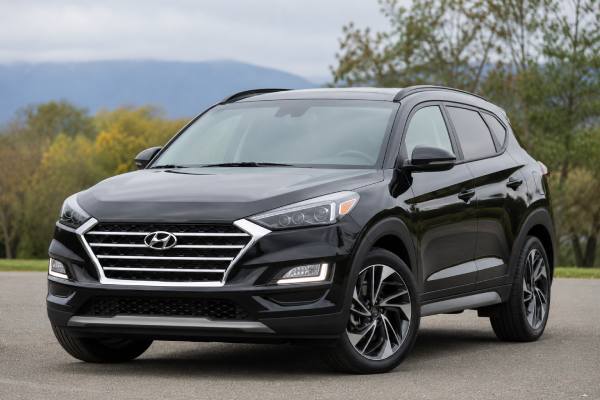
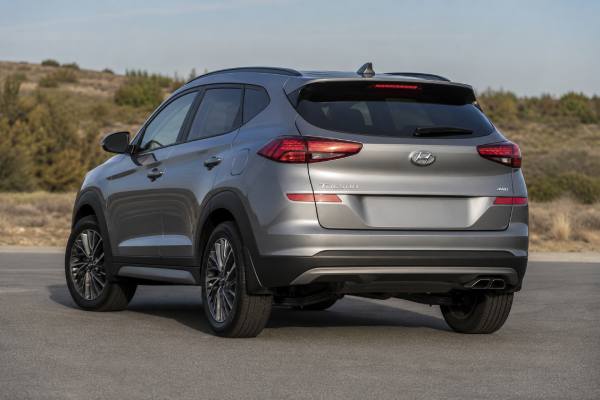
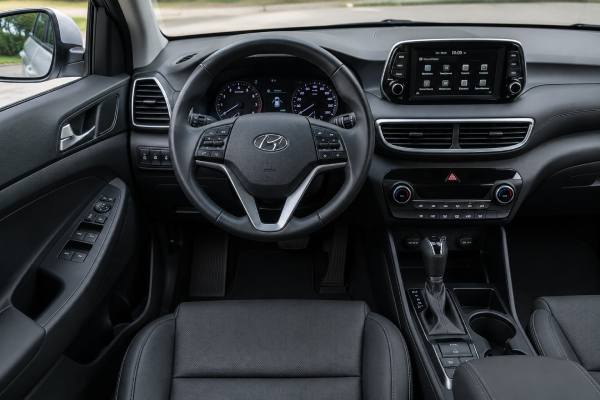
The 2019–2020 Hyundai Tucson FWD 1.6 CRDi 48V sits in a useful middle ground: more efficient than the older diesel Tucson versions, easier to live with than many larger SUVs, and still practical enough for family use. This facelifted TL-generation model uses Hyundai’s 1.6-litre Smartstream CRDi diesel with 48-volt mild-hybrid assistance, giving 136 PS, strong low-speed torque, and noticeably better refinement than the previous 1.7 CRDi.
It is not a full hybrid and cannot drive on electric power alone. The 48V system helps the diesel restart more smoothly, recover energy while slowing down, and support the engine under load. For used buyers, the key decision is condition: a well-serviced example with clean recall history, healthy emissions equipment, and no dual-clutch shudder can be a very sensible compact SUV.
Final Verdict
The Hyundai Tucson TL facelift 1.6 CRDi 48V FWD is a good used choice for drivers who want a roomy, economical diesel SUV without the complexity of a plug-in hybrid. Its strongest appeal is the blend of low-rev torque, comfortable ride, strong equipment, and useful fuel economy on longer journeys. It suits commuters, families, and motorway users better than mostly short-trip urban drivers. The main ownership tradeoff is diesel emissions-system sensitivity, especially DPF, AdBlue/SCR, and NOx-sensor issues. Buy only with service records, completed recall checks, and a smooth test drive from cold.
| Pros | Cons |
|---|---|
| 136 PS diesel has useful mid-range pull for family use | Not quick; acceleration is adequate rather than lively |
| 48V mild-hybrid system improves restart smoothness and economy | Cannot run in electric-only mode like a full hybrid |
| FWD layout keeps weight and fuel use lower than AWD | Less traction on snow, mud, or wet grass than HTRAC versions |
| Cabin, boot, and rear-seat space suit family ownership well | 48V battery packaging reduces boot volume versus non-MHEV models |
| Strong safety equipment on UK facelift models, including AEB | Blind-spot and rear cross-traffic systems depend on trim |
| Generally durable if serviced and driven on longer runs | Short-trip use can trigger DPF, SCR, and AdBlue faults |
Table of Contents
- Hyundai Tucson TL 1.6 CRDi 48V Overview
- Hyundai Tucson 1.6 CRDi 48V Specifications
- Trims, Options, Safety, and ADAS
- Reliability, Common Issues, and Service Actions
- Maintenance and Used Buying Guide
- Driving, Performance, and Real-World Economy
- How the Tucson 1.6 CRDi 48V Compares to Rivals
Hyundai Tucson TL 1.6 CRDi 48V Overview
This Tucson is best understood as a practical diesel SUV with a mild-hybrid assist system, not as an electric or full-hybrid SUV. The 48V hardware improves smoothness and efficiency, but the main character still comes from the 1.6-litre CRDi diesel engine.
The facelifted TL-generation Tucson arrived with sharper exterior styling, a revised cabin, updated driver assistance, and a cleaner diesel range. The 1.6 CRDi replaced earlier 1.7-litre diesel versions in many European markets, while the 48V mild-hybrid system was added to improve fuel consumption and CO₂ output without requiring charging.
For the exact FWD 136 hp version, the ownership appeal is straightforward. It gives enough torque for loaded family use, better economy than the petrol 1.6 T-GDi, and lower running weight than the AWD diesel versions. The FWD setup also avoids rear differential and transfer-case service concerns, which helps running costs.
The 48V system consists of a small lithium-ion battery, a mild-hybrid starter-generator, and a DC-DC converter linking the 48V and 12V electrical systems. During deceleration, the system recovers energy. During take-off or acceleration, it can assist the diesel through the belt-driven motor-generator. At low speeds, it also allows earlier and smoother engine stop-start operation.
The result is a Tucson that feels calmer in traffic than a conventional diesel and more relaxed on motorways than a small petrol SUV. It is not sporty, but it suits buyers who value comfort, equipment, and dependable daily usability.
The best examples are usually privately owned cars with regular long-distance use. Diesels that have lived on short urban journeys need closer inspection because the DPF and SCR/AdBlue systems depend on exhaust temperature and correct regeneration cycles.
Hyundai Tucson 1.6 CRDi 48V Specifications
The 2019–2020 Tucson 1.6 CRDi 48V FWD uses a 1,598 cc four-cylinder diesel engine with a belt-driven 48V mild-hybrid starter-generator. Depending on trim and market, it was offered with a 6-speed manual or a 7-speed dual-clutch transmission. The 7DCT version has slightly slower official acceleration than the manual but is easier in traffic.
| Item | Hyundai Tucson TL 1.6 CRDi 48V FWD |
|---|---|
| Engine | Smartstream 1.6 CRDi diesel, inline-four |
| Engine code family | D4FE / Smartstream D1.6 CRDi |
| Displacement | 1,598 cc |
| Valvetrain | DOHC, 16 valves |
| Bore × stroke | 77.0 × 85.8 mm |
| Compression ratio | 15.9:1 |
| Maximum power | 136 PS / 100 kW at 4,000 rpm |
| Maximum torque | 320 Nm / 236 lb-ft at 2,000–2,250 rpm |
| 48V battery | 0.44 kWh lithium-ion battery under luggage area |
| Mild-hybrid assist | Belt-driven starter-generator, up to 12 kW recuperation/assist |
| Emissions equipment | DPF and SCR/AdBlue on Euro 6d-TEMP versions |
| AdBlue tank | 14 litres |
| Item | Specification |
|---|---|
| Drive type | Front-wheel drive |
| Manual transmission | 6-speed manual, 2WD |
| Automatic transmission | 7-speed dual-clutch transmission, 2WD |
| 0–62 mph | 11.2 sec manual; 11.8 sec 7DCT |
| Top speed | 112 mph / 180 km/h |
| Steering | Motor-assisted rack-and-pinion |
| Turning circle | 10.6 m |
| Item | Specification |
|---|---|
| Body style | Five-door compact SUV, five seats |
| Length | 4,475 mm |
| Width | 1,850 mm excluding mirrors; 2,065 mm including mirrors |
| Wheelbase | 2,670 mm |
| Suspension | MacPherson strut front; multi-link rear |
| Brakes | Ventilated front discs; solid rear discs |
| Kerb weight | 1,537–1,666 kg manual; 1,555–1,682 kg 7DCT |
| Gross vehicle weight | 2,120 kg manual; 2,145 kg 7DCT |
| Fuel tank | 62 litres |
| Boot volume | 459 litres seats up; 1,449 litres seats down |
| Item | Specification or practical note |
|---|---|
| Official combined economy | About 47.9–51.4 mpg UK, depending on trim and transmission |
| Official combined economy | About 5.5–5.9 L/100 km |
| CO₂ emissions | About 113–115 g/km on many UK 48V FWD versions |
| Common wheels | 17-inch, 18-inch, or 19-inch alloys depending on trim |
| Common tyres | 225/60 R17, 225/55 R18, or 245/45 R19 |
| Braked towing limit | 1,400 kg manual; 1,600 kg 7DCT |
| Unbraked towing limit | 750 kg |
| Nose weight | 100 kg |
| Roof load | 100 kg |
Trims, Options, Safety, and ADAS
The best-equipped 1.6 CRDi 48V 136 hp cars are usually Premium, Premium SE, or N Line models, while SE Nav and similar mid-grade trims often give the best value. Mechanical differences are modest on the FWD diesel, so condition and equipment matter more than trim badge alone.
On UK-spec 2019–2020 cars, the 136 PS 48V diesel was available with the 7DCT across several trims, while the 136 PS manual was focused higher in the range. The lower-output 115 PS 48V diesel sat below it and should not be confused with the 136 PS version.
Quick identifiers include “48V” or mild-hybrid badging in some markets, an AdBlue filler, a tyre repair kit rather than a spare wheel on 48V variants, and the reduced 459-litre boot compared with non-48V Tucson models. N Line cars are easy to spot by their sportier bumpers, grille treatment, N Line badges, darker cabin details, and 19-inch wheels.
Trim and equipment highlights
SE Nav-style cars usually cover the essentials well: navigation, reversing camera, dual-zone climate control, Apple CarPlay and Android Auto, roof rails, privacy glass on many cars, and 17-inch wheels. These versions are often the sweet spot for comfort because the smaller wheels ride better than the 19-inch setup.
Premium models add a more upscale cabin feel, larger wheels, keyless entry, upgraded instruments, heated seats, and extra driver assistance on many market versions. Premium SE usually brings luxury features such as ventilated front seats, panoramic sunroof, heated steering wheel, powered tailgate, and surround-view camera where fitted.
N Line is mainly a styling and trim package on this diesel. The sport suspension note in UK data applied to T-GDi petrol versions, so buyers should not assume the 1.6 CRDi 48V N Line has major mechanical upgrades beyond wheels, tyres, and appearance.
Safety ratings and structure
The TL-generation Hyundai Tucson was tested by Euro NCAP in 2015 and received a five-star rating under the standards of that time. The adult occupant score was 86%, child occupant protection was 85%, pedestrian protection was 71%, and safety assist was 71%.
That rating is useful for comparing the Tucson with other used SUVs from the same era, but it should not be treated as equal to a current five-star score. Euro NCAP testing became stricter after this model was introduced, especially around vulnerable road users, active safety, and crash avoidance.
Standard safety equipment on many facelift UK cars included front, side, and curtain airbags, stability control, anti-lock braking, brake assist, hill-start assist, downhill brake control, trailer stability assist, tyre-pressure monitoring, front seatbelt pretensioners, rear ISOFIX points, lane keep assist, and autonomous emergency braking.
ADAS availability and calibration
Autonomous Emergency Braking and Lane Keep Assist were widely fitted on the facelift range, which is a strong point for a used family SUV. Blind Spot Detection and Rear Cross Traffic Alert were trim-dependent, commonly appearing from higher trims. Smart adaptive cruise with stop-and-go was tied to automatic or DCT models on certain trims.
After windscreen replacement, bumper repair, suspension work, or accident repair, the camera and radar systems may require inspection or calibration. A Tucson that shows lane-assist warnings, AEB faults, or intermittent blind-spot alerts should be scanned before purchase rather than dismissed as a weak battery or dirty sensor.
Reliability, Common Issues, and Service Actions
The 1.6 CRDi 48V Tucson can be reliable, but it is maintenance- and usage-sensitive. Long journeys suit it well; repeated short trips are the pattern most likely to cause expensive diesel emissions problems.
| Area | Prevalence | Severity | Typical symptoms and remedy |
|---|---|---|---|
| DPF soot loading | Occasional | Medium | Warning light, limp mode, failed regeneration; diagnose cause before forced regen |
| SCR/AdBlue faults | Occasional | Medium to high | No-start countdown, exhaust warning; check AdBlue quality, injector, pump, NOx sensors |
| NOx sensor failure | Occasional | Medium | Engine/emissions warning; replace correct upstream or downstream sensor after diagnosis |
| 7DCT clutch shudder | Occasional | Medium | Judder when creeping; software/adaptation check, clutch inspection if persistent |
| 48V belt or MHSG faults | Rare to occasional | Medium | Hybrid warning, rough restart; scan 48V system, inspect belt and DC-DC operation |
| Suspension links and bushes | Common with age | Low to medium | Knocks over bumps; replace drop links, bushes, or worn joints |
| Rear brake corrosion | Common in low-use cars | Low to medium | Scraping, MOT advisories; service sliders, replace discs/pads when pitted |
Diesel emissions system concerns
The DPF needs regular high-temperature operation to burn soot. Short trips, low-speed urban use, failed thermostats, poor oil choice, leaking injectors, or repeated interrupted regenerations can all increase soot loading. A blinking DPF or exhaust-system warning should be investigated with live data, not just cleared.
The SCR system uses AdBlue to reduce NOx emissions. Old or contaminated AdBlue can crystallise, sensors can drift, and injectors can clog. A car with an AdBlue countdown, recurring NOx codes, or recent emissions parts replaced without paperwork deserves caution.
The fuel filter also matters on modern common-rail diesels. Water contamination can damage high-pressure components, so any fuel-filter warning light should be treated seriously.
48V mild-hybrid system
The 48V system is generally less complex than a full hybrid, but it still adds parts that a normal diesel does not have. The belt-driven starter-generator, 48V lithium-ion battery, DC-DC converter, and control electronics should be checked if the car shows mild-hybrid warning messages, poor stop-start operation, or low-voltage faults.
The system should restart the engine cleanly and without harsh vibration once warm. If restart is clumsy, or if the stop-start system never activates despite a charged battery and normal temperatures, a diagnostic scan is worthwhile.
Transmission and driveline
The 6-speed manual is simple and usually durable, but clutch and dual-mass flywheel condition depend heavily on driving style. Listen for rattles at idle, vibration when pulling away, or clutch slip in higher gears.
The 7DCT is convenient, but it dislikes prolonged creeping. During a test drive, try gentle parking manoeuvres, uphill starts, roundabout pull-away, and light throttle from low speed. A healthy unit should engage smoothly. Repeated shudder, delay, flaring revs, or a burnt smell suggests clutch wear, adaptation problems, or the need for specialist diagnosis.
Because this article covers the FWD version, there is no rear differential or transfer case to service. That is an advantage over AWD models for buyers who do not need extra traction.
Recalls and service actions
One important safety recall affecting many TL-generation Tucson vehicles concerns the ABS/ESC control unit, which may short circuit. The remedy can involve wiring rework, amended fuses, and in some specifications a software update. Market coverage varies, so the correct check is always by VIN through Hyundai or the relevant national recall database.
Ask for proof of completed recalls and dealer campaigns. Also ask whether the engine ECU, transmission control module, infotainment system, and ADAS systems have had any available updates. Public TSB information varies by country, and many calibration improvements are handled at dealer level rather than widely published.
Maintenance and Used Buying Guide
The safest maintenance approach is to follow the VIN-specific Hyundai schedule and shorten intervals for short trips, towing, dusty roads, or heavy city driving. For long-term ownership, fresh fluids and clean diesel emissions operation matter more than stretching every interval to the maximum.
| Item | Recommended practical interval |
|---|---|
| Engine oil and filter | Every 10,000–15,000 km or 12 months for best longevity |
| Engine air filter | Inspect yearly; replace around 30,000–40,000 km or sooner in dust |
| Cabin filter | Every 12 months or 15,000–20,000 km |
| Fuel filter | Usually 30,000–60,000 km depending on market and fuel quality |
| Brake fluid | Every 2 years |
| Coolant | Follow VIN schedule; inspect annually and replace long-life coolant by age |
| Auxiliary and 48V drive belts | Inspect at every service; replace if cracked, noisy, or contaminated |
| Timing chain | No routine belt change; inspect if noisy or timing-correlation faults appear |
| 7DCT fluid and clutch operation | Inspect/diagnose by condition; consider earlier service under severe use |
| Tyres, rotation, alignment | Check pressures monthly; rotate/alignment check around 10,000–15,000 km |
| 12V battery | Test from year four; weak batteries can trigger misleading electronic faults |
| 48V battery health | Scan during major service or before purchase if warning history exists |
Use low-SAPS diesel engine oil that meets the correct Hyundai specification for a DPF-equipped 1.6 CRDi. In many European applications this means an ACEA C2/C3/C5-type 5W-30 or equivalent oil, but the exact grade should be confirmed by VIN, climate, and owner’s manual. The D4FE oil fill is commonly around 4.4–4.9 litres depending on drain method and filter, so do not rely on a generic parts listing without checking the dipstick level correctly.
Use DOT 4 brake fluid. Use ISO 22241 AdBlue/DEF only, and avoid topping up from dirty containers. Wheel nuts are commonly tightened in the 107–127 Nm range, but drain plugs, suspension fasteners, brakes, and high-voltage/mild-hybrid components should always be tightened to the official service-manual value for that VIN.
Pre-purchase inspection checklist
A good Tucson 1.6 CRDi 48V should start cleanly from cold, idle evenly, accelerate without limp mode, and show no engine, emissions, ABS, lane-assist, or mild-hybrid warning lights. The engine should pull smoothly from low revs and should not smoke heavily under load.
Check the following before paying:
- Full service history with correct oil specification.
- Proof of recall completion, especially ABS/ESC campaign status.
- Evidence of AdBlue/SCR repairs if any emissions warnings occurred.
- Smooth 7DCT engagement from cold and hot, if automatic.
- No clutch slip, dual-mass flywheel rattle, or harsh vibration on manuals.
- Clean coolant, no oil leaks, and no diesel smell around injectors or fuel lines.
- Even tyre wear, because alignment issues are common on used SUVs.
- Rear brake condition, especially on cars used lightly.
- Suspension knocks from drop links, bushes, ball joints, or top mounts.
- Working parking camera, sensors, infotainment screen, and keyless functions.
- Dry boot floor and rear light areas after rain.
- No accident-repair clues around bumper sensors, radar, windscreen camera, and headlights.
The best buys are cars with 17- or 18-inch wheels, full Hyundai or specialist service history, mostly motorway mileage, and no recurring emissions warnings. Avoid cars with freshly cleared fault codes, missing AdBlue history, heavy clutch judder, or dashboard warnings explained away as “just a sensor.”
Long-term durability outlook
With proper oil, regular longer runs, and timely emissions-system maintenance, the 1.6 CRDi can cover high mileage. The Tucson body and cabin also tend to age well if protected from salt and cleaned underneath. The main long-term cost risk is not the base engine but the systems around it: DPF, SCR/AdBlue, NOx sensors, 7DCT clutch wear, and electronics affected by weak batteries or poor repairs.
Driving, Performance, and Real-World Economy
The 1.6 CRDi 48V Tucson is relaxed rather than exciting. It feels strongest in the middle of the rev range, where the 320 Nm torque helps it move a loaded cabin without needing constant downshifts.
Around town, the mild-hybrid restart is smoother than a conventional diesel stop-start system. The engine still sounds like a diesel when cold, but it settles well once warm. The FWD layout gives predictable handling, and the steering is light enough for parking without feeling nervous on the motorway.
The ride depends heavily on wheel size. Cars on 17-inch wheels usually feel the most settled over broken roads. The 19-inch N Line and Premium SE wheel packages look sharper but bring more tyre noise and firmer impacts. On motorways, the Tucson tracks straight and feels stable, though wind and tyre noise are more noticeable than in some more expensive rivals.
The brakes are easy to modulate, but used examples often need rear brake attention if they have sat unused or done gentle short journeys. Brake corrosion is not unique to Hyundai; it is common across SUVs of this age.
Powertrain character
The manual version feels slightly more direct and gives the best official acceleration. The clutch should be light and progressive. If it bites high, slips, or vibrates, budget for clutch and flywheel checks.
The 7DCT suits relaxed driving and keeps the diesel in its torque band. It can hesitate slightly from rest, especially if the driver alternates between brake and throttle in traffic. That is normal to a degree, but strong judder is not. Do not drive it like a torque-converter automatic by creeping for long periods on the throttle; use the brake and let the clutch fully engage when possible.
Turbo lag is mild but present below the main torque band. Once above about 1,700–2,000 rpm, the engine pulls well enough for overtaking and inclines. The 48V assist helps smoothness more than outright speed.
Real-world fuel economy
Official WLTP combined figures are usually around 5.5–5.9 L/100 km depending on wheel size, trim, and transmission. In real use, expect roughly:
| Use case | Expected economy |
|---|---|
| Urban short trips | 6.5–7.5 L/100 km / 31–36 mpg US / 38–43 mpg UK |
| Mixed driving | 5.5–6.4 L/100 km / 37–43 mpg US / 44–51 mpg UK |
| Steady highway driving | 5.0–5.8 L/100 km / 41–47 mpg US / 49–56 mpg UK |
| Cold winter short use | Often 10–20% worse, with higher DPF risk |
Towing up to the rated limit is possible, but this is not the strongest tow vehicle in the Tucson range. The 7DCT’s 1,600 kg braked limit is useful, but sustained hill towing adds heat and clutch load. For regular towing, inspect transmission behaviour carefully and consider whether the larger diesel AWD versions suit the job better.
How the Tucson 1.6 CRDi 48V Compares to Rivals
The Tucson 1.6 CRDi 48V is strongest against rivals when value, equipment, cabin space, and warranty-backed used history matter. It is less impressive if you want the sharpest handling, the quietest cabin, or the lowest-risk car for short urban use.
| Rival | How it compares |
|---|---|
| Kia Sportage 1.6 CRDi MHEV | Very similar hardware; Kia often has a longer original warranty period |
| Nissan Qashqai dCi | Often lighter and economical, but less roomy and less substantial-feeling |
| Peugeot 3008 1.5 BlueHDi | More stylish cabin and efficient, but infotainment and ergonomics divide buyers |
| Volkswagen Tiguan 2.0 TDI | More polished and stronger diesel options, usually higher purchase prices |
| Ford Kuga diesel | Better handling feel, but Tucson usually feels simpler and roomier inside |
| Honda CR-V diesel | Very practical, but often older-feeling and less common in this exact era |
Against the Kia Sportage, the Tucson is almost a matter of taste. The Kia shares much of the underlying engineering, so choose the better-maintained car rather than chasing badge differences. Equipment, service history, and clutch/transmission feel matter more.
Against the Qashqai, the Tucson feels larger, sturdier, and more family-oriented. The Nissan can be cheaper to run and easier to park, but it does not match the Tucson’s rear-seat space or solid SUV feel.
Against the Peugeot 3008, the Hyundai is less striking inside but more conventional. Buyers who want simple controls and predictable ergonomics may prefer the Tucson. Buyers who prioritise design and low fuel use may prefer the Peugeot.
Against the Tiguan, the Tucson wins on value. The Volkswagen is quieter, more refined, and more premium in feel, but used prices and repair costs are often higher. A well-kept Tucson can be the smarter buy if the budget is fixed.
The final decision should come down to usage. For motorway commuting, family trips, and mixed driving, the Tucson 1.6 CRDi 48V FWD makes a lot of sense. For mostly school runs and short urban errands, a petrol, full hybrid, or plug-in hybrid SUV is usually a safer long-term ownership choice.
References
- Hyundai Tucson press kit – December 2019 2019 (Technical Data)
- Hyundai 48-Volt Mild Hybrid System 2019 (Manufacturer Press Release)
- Hyundai Tucson – Euro NCAP Results 2015 2015 (Safety Rating)
- HYUNDAI TUCSON 2018 – Check if a vehicle, part or accessory has been recalled – GOV.UK 2021 (Recall Database)
- Part 573 Safety Recall Report 20V-543 2020 (Recall Database)
Disclaimer
This article is for informational purposes only and is not a substitute for professional diagnosis, repair advice, or official Hyundai service documentation. Specifications, torque values, service intervals, fluids, recall coverage, software updates, and procedures can vary by VIN, market, production date, trim, and equipment. Always verify details against the official owner’s manual, service manual, dealer systems, and recall records for the exact vehicle.
If this guide helped you, please share it on Facebook, X/Twitter, or your preferred platform to support our work.