
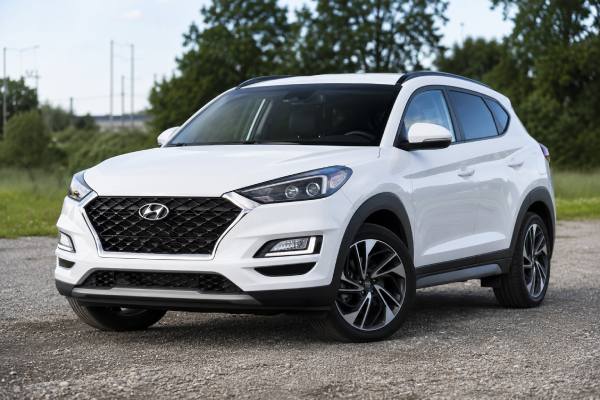
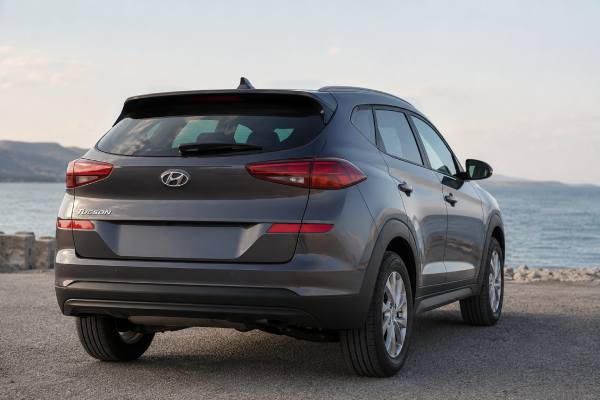
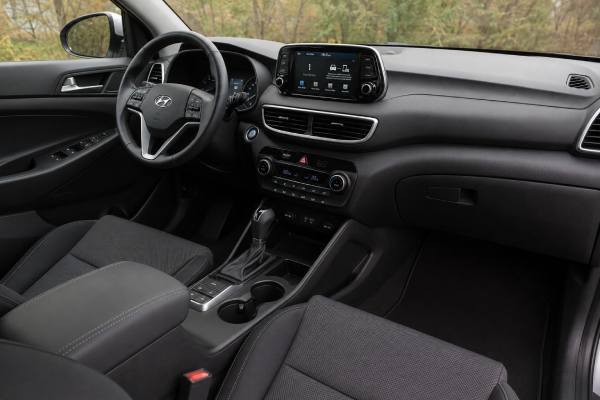
The facelifted Hyundai Tucson TL with the Gamma 1.6 T-GDi engine and HTRAC AWD sits in a useful middle ground: more responsive than the basic petrol versions, more refined than many diesels in urban use, and still practical enough for family duties. In 2019–2020 form, this version combines a 177 hp turbocharged direct-injection petrol engine, a 7-speed dual-clutch transmission, and an on-demand all-wheel-drive system.
It is not the simplest Tucson TL to own, because the turbo engine and dry-clutch DCT both reward careful maintenance and sympathetic driving. But for buyers who want a compact SUV with decent performance, good equipment, strong safety credentials, and usable winter traction, it remains one of the more appealing versions of the third-generation Tucson.
Final Verdict
The 2019–2020 Hyundai Tucson TL 1.6 T-GDi HTRAC AWD is a good choice if you want a compact SUV with stronger-than-average petrol performance, confident wet-weather traction, and family-friendly space without moving into a larger vehicle. It suits drivers who do mixed city, suburban, and motorway use, especially where snow or poor roads make AWD worthwhile. The main tradeoff is ownership sensitivity: the turbocharged GDI engine, 7-speed dry dual-clutch gearbox, and AWD hardware need timely servicing and proper inspection. Buy only with clear service history, completed recall checks, and a smooth low-speed DCT test drive.
| Pros | Cons |
|---|---|
| 177 hp turbo engine feels strong for a family SUV | Dry-clutch DCT can judder if abused in traffic |
| HTRAC AWD improves winter and wet-road confidence | AWD adds weight, fuel use, and extra fluid-service needs |
| Facelift cabin brings better infotainment and safety equipment | Equipment varies sharply by market and trim grade |
| Good rear-seat space and practical luggage capacity | Ride can feel firm on 19-inch wheels |
| Strong crash-test record for the TL generation | Recall and software history must be verified by VIN |
Table of Contents
- Tucson TL 1.6 T-GDi Overview
- Tucson 1.6 T-GDi AWD Specifications
- Trims, Options, Safety and ADAS
- Reliability, Common Issues and Recalls
- Maintenance and Used Buying Guide
- Driving, Performance and Efficiency
- Tucson 1.6 T-GDi vs Rivals
Tucson TL 1.6 T-GDi Overview
The 1.6 T-GDi HTRAC AWD is the performance-focused petrol Tucson TL, not the basic low-cost version. Its appeal comes from a broad torque band, quick-shifting DCT gearbox, and AWD traction in a compact SUV body that is still easy to park and live with.
The TL generation replaced the ix35/Tucson predecessor in many markets and received a facelift for the 2019 model year. That facelift brought sharper exterior styling, a revised dashboard, updated infotainment, and wider availability of driver assistance features. The 1.6 T-GDi remained the strongest petrol choice in the range, positioned above naturally aspirated 1.6 or 2.0 petrol engines and alongside diesel versions in some markets.
The engine is Hyundai’s Gamma 1.6 T-GDi, a turbocharged four-cylinder petrol unit with gasoline direct injection. In this tune it produces 177 PS, commonly rounded to 177 hp, and 265 Nm of torque. The useful part is not just the peak number, but where it arrives: the engine delivers its maximum torque from low revs through the mid-range, so the Tucson feels more flexible than its displacement suggests.
HTRAC AWD is Hyundai’s electronically controlled on-demand all-wheel-drive system. In normal driving, the Tucson behaves mostly like a front-drive SUV to save fuel. When the front tyres start to work harder, the system can send torque rearward. Many versions also include a low-speed lock mode that helps maintain a more even front-to-rear split on slippery surfaces.
This is not a serious off-road SUV, and it should not be bought as one. Ground clearance, approach angles, road-biased tyres, and DCT heat management all point toward light trails, snow, gravel roads, and poor weather rather than deep mud or heavy towing. Its real-world strength is confident all-season road use.
The ownership catch is complexity. The 1.6 T-GDi is more maintenance-sensitive than a simpler naturally aspirated engine, and the 7-speed DCT does not like creeping for long periods like a conventional torque-converter automatic. A good example feels smooth, alert, and refined. A neglected one can show clutch judder, rough idle, overdue fluid service, or unresolved recall work.
Tucson 1.6 T-GDi AWD Specifications
The 2019–2020 Tucson TL 1.6 T-GDi AWD uses a transverse turbocharged petrol engine, a 7-speed dry dual-clutch transmission, and an active on-demand AWD system. Specifications vary by market, especially emissions rating, fuel economy test cycle, wheel size, and boot measurement method. The figures below focus on commonly published factory data for the facelifted TL 1.6 T-GDi AWD where available.
| Item | Specification |
|---|---|
| Engine family | Hyundai Gamma 1.6 T-GDi petrol |
| Layout | Inline-4, transverse front-mounted |
| Displacement | 1,591 cc |
| Induction | Turbocharged |
| Fuel system | Turbo gasoline direct injection |
| Valvetrain | DOHC, 16 valves |
| Bore × stroke | 77.0 × 85.44 mm |
| Compression ratio | 10.0:1 |
| Maximum power | 177 PS / 130 kW at 5,500 rpm |
| Maximum torque | 265 Nm from 1,500–4,500 rpm |
| Timing drive | Timing chain |
| Fuel tank | 62 litres |
| Combined fuel economy | About 7.7 L/100 km on published AWD data |
| CO₂ emissions | About 175–178 g/km, depending test cycle |
| Item | Specification |
|---|---|
| Transmission | 7-speed dual-clutch transmission |
| Clutch type | Dry dual clutch |
| Manual control | Sequential manual mode on DCT versions |
| Drive type | All-wheel drive |
| AWD system | Active on-demand AWD / HTRAC |
| AWD lock function | Low-speed 50:50 front/rear lock mode on many versions |
| Drive modes | Comfort, Eco and Sport on equipped trims |
| Item | Specification |
|---|---|
| Body style | 5-door compact SUV |
| Seats | 5 |
| Length | 4,475–4,480 mm |
| Width | 1,850 mm, excluding mirrors |
| Height | About 1,650–1,660 mm, depending rails |
| Wheelbase | 2,670 mm |
| Ground clearance | About 172 mm on published AWD data |
| Turning circle | About 10.6–11.0 m |
| Front suspension | MacPherson strut |
| Rear suspension | Multi-link |
| Kerb weight | About 1,560–1,730 kg, depending trim |
| Cargo capacity | About 488–513 litres seats up |
| Maximum cargo capacity | About 1,478–1,503 litres seats folded |
| Item | Specification |
|---|---|
| 0–100 km/h | Typically around 9.5–10.0 seconds, depending market and trim |
| Top speed | About 200–201 km/h |
| Braked towing capacity | Up to 1,600 kg in many published AWD specifications |
| Unbraked towing capacity | 750 kg |
| Roof load | 100 kg |
| Front brakes | Ventilated discs |
| Rear brakes | Solid discs |
| Common tyre sizes | 225/60 R17, 225/55 R18, 245/45 R19 |
| Item | Practical reference |
|---|---|
| Engine oil viscosity | 5W-30 or 5W-40 commonly specified by market |
| Oil change quantity | Approximately 4.5 litres for a normal service fill |
| DCT fluid | SAE 70 DCT fluid; verify exact approval by VIN |
| Brake fluid | DOT 4 |
| Coolant | Hyundai-approved premix coolant |
| Wheel-nut torque | Typically 107–127 Nm; confirm on vehicle documentation |
Trims, Options, Safety and ADAS
The best Tucson 1.6 T-GDi AWD examples are usually mid-to-high trims, because the engine and AWD package was often paired with better infotainment, wheels, seating, and driver assistance. The exact trim names differ by country, but the equipment pattern is similar.
In the UK facelift range, trim names included S Connect, SE Nav, Premium and Premium SE, although UK petrol AWD availability differed from some other markets. In Australia, the 1.6 T-GDi AWD DCT was associated with higher grades such as Elite and Highlander. In continental Europe, trim names varied again, but the high-output 1.6 turbo was usually positioned above the entry petrol models.
Useful identifiers include the “T-GDi” engine designation, AWD or HTRAC badging where fitted, the DCT selector pattern, drive-mode button, and AWD lock button on many versions. Higher trims may have larger alloy wheels, leather-appointed seats, keyless entry, power tailgate, panoramic sunroof, premium audio, wireless charging, LED headlights, and larger infotainment screens.
The main functional differences to check are not only comfort items. Look for:
- 17-, 18-, or 19-inch wheel packages, because they affect ride comfort and tyre cost.
- Halogen, projector, or LED headlight setups, because safety ratings and night visibility can vary.
- Adaptive cruise and radar-based forward collision systems on higher trims.
- Parking sensors, rear camera, surround-view camera, and rear cross-traffic warning.
- Smart key, electric parking brake, auto hold, and powered tailgate operation.
Safety equipment is a strong point for the TL generation. Core passive safety normally includes front airbags, front side airbags, curtain airbags, ABS, stability control, hill-start assist, downhill brake control, tyre pressure monitoring, front seatbelt pretensioners, rear child locks, and ISOFIX/LATCH child-seat anchor points on the outer rear seats.
Euro NCAP tested the Hyundai Tucson in 2015 and awarded the model a five-star rating under that period’s protocol. IIHS ratings for the 2019 Tucson were also strong in the U.S. context, with good crashworthiness results and a Top Safety Pick+ award when equipped with qualifying front crash prevention and specific headlights built after March 2019.
ADAS availability is highly trim-dependent. Many facelift cars have lane keeping assist, autonomous emergency braking, driver attention warning, and traffic-sign recognition or speed-limit information. Higher grades can add blind-spot monitoring, rear cross-traffic alert, high-beam assist, smart cruise control with stop-and-go, and a more capable camera/radar forward collision system.
After windscreen replacement, front bumper repair, suspension work, or wheel alignment, ADAS calibration matters. A Tucson that pulls to one side, shows lane-assist warnings, has a replaced windscreen with poor camera alignment, or displays radar faults should be inspected with proper diagnostic equipment.
Reliability, Common Issues and Recalls
The Tucson TL 1.6 T-GDi AWD can be reliable, but it is not a neglect-tolerant drivetrain. The biggest used-buying risks are DCT behavior, incomplete recall work, poor oil-change history, and signs of hard urban use.
| Area | Prevalence | Cost tier | What to watch for |
|---|---|---|---|
| 7-speed DCT judder | Occasional | Medium to high | Shudder, hesitation, clutch smell, jerky low-speed starts |
| GDI carbon buildup | Occasional with mileage | Medium | Rough idle, weak response, misfires, reduced economy |
| Ignition coils and plugs | Occasional | Low to medium | Misfire under boost, warning light, uneven acceleration |
| Turbo and boost control | Occasional | Medium | Whistling, boost loss, oil seepage, limp mode |
| AWD fluids and coupling | Occasional if neglected | Medium to high | Binding, rear driveline noise, poor traction response |
| Suspension links and bushes | Common with age | Low to medium | Knocks, uneven tyre wear, loose steering feel |
| ABS/HECU recall history | VIN-dependent | High if open | ABS light, burning smell, open campaign record |
DCT behavior and software
The 7-speed DCT is the part of this Tucson that most needs a careful test drive. A healthy gearbox should engage smoothly, shift cleanly, and pull away without strong vibration. Mild clutch take-up at very low speed can be normal for a dry dual-clutch unit, but repeated shudder, harsh engagement, or a delay when crossing traffic is not something to ignore.
Hyundai issued technical service guidance in some markets for DCT judder diagnosis, TCU software updates, and clutch replacement on earlier TL 1.6T vehicles. Even when a specific 2019–2020 car is outside a listed bulletin population, the inspection logic is useful: scan it, check software level, measure clutch judder where possible, and do not assume a mechanical clutch replacement is the first remedy.
Avoid long creeping in traffic, holding the car on the accelerator on hills, or repeated inching while parking. Use the brake, let the clutch engage cleanly, and allow cooling time if the transmission warns of overheating.
Engine issues
The Gamma 1.6 T-GDi is a modern small turbo petrol. It gives good performance, but it asks for clean oil, correct spark plugs, proper fuel, and a healthy cooling system. Short trips and extended oil intervals are not ideal.
Because it uses direct injection, the backs of the intake valves do not get washed by fuel in the same way as older port-injected engines. Over time, carbon deposits can build up, especially on cars used mostly for short urban trips. Symptoms include rough idle, hesitation, misfires, and reduced fuel economy. Cleaning the intake valves is not routine maintenance for every car, but it is a known diagnostic path if symptoms appear at higher mileage.
Oil consumption should be checked before buying. A small turbo engine that has been run low on oil can develop chain, turbo, or bearing wear. Check for smoke on start-up, oil leaks around the turbo oil lines, wetness around the timing cover, and any rattling at cold start.
AWD, brakes and chassis
HTRAC AWD hardware usually works quietly in the background. The main problem is neglect. Rear differential and transfer-case fluids age, and many owners forget them because the Tucson behaves like a normal road car. On a test drive, listen for humming, binding during tight turns, thumps on throttle changes, or vibration under load.
Brake corrosion is common on SUVs used gently, especially in wet or salted climates. Inspect the inner faces of the rear discs, caliper slide pins, and parking brake operation. Suspension wear usually shows through knocking over rough roads, wandering, uneven tyre wear, or a vague steering feel.
Recalls and service campaigns
The most important recall area to verify is the ABS hydraulic electronic control unit, often called HECU. In affected Tucson TL vehicles, internal electrical short risk led to recall actions in several markets. The remedy can include fuse-kit installation and, for certain model years and specifications, ABS/ESC software updating.
Do not rely on the seller’s word. Check the VIN with an official Hyundai dealer or national recall database, and ask for printed proof of completed recalls and service campaigns. If a car shows ABS, ESC, brake, or warning-light history, treat that as a buying inspection priority, not a minor nuisance.
Maintenance and Used Buying Guide
The safest way to own this Tucson is to service it more like a small turbo performance drivetrain than a basic family SUV. Short oil intervals, clean filters, fresh brake fluid, DCT attention, and AWD fluid checks make a real difference.
| Item | Suggested interval | Practical note |
|---|---|---|
| Engine oil and filter | 10,000–15,000 km or 6–12 months | Use shorter interval for city, heat, towing, or short trips |
| Engine air filter | Inspect each service; replace about 40,000 km | Replace sooner in dusty areas |
| Cabin air filter | 15,000–30,000 km or annually | Cheap fix for poor airflow and odours |
| Spark plugs | About 80,000 km on many schedules | Use correct iridium plugs for turbo engine |
| Brake fluid | Every 2 years or about 30,000 km | Important for ABS, ESC and corrosion prevention |
| DCT fluid | About 60,000 km in severe or market schedules | Use correct SAE 70 DCT fluid only |
| Transfer and rear differential oil | 60,000–80,000 km for AWD use | Shorten interval for towing, snow, or rough roads |
| Coolant | First major change around 100,000 km | Follow market schedule and correct premix type |
| Drive belt and hoses | Inspect yearly after 5 years | Replace cracked, noisy, swollen, or oil-soaked parts |
| Timing chain | Inspect by symptoms, not routine replacement | Listen for cold rattle and check timing-correlation faults |
| Tyre rotation and alignment | 10,000–15,000 km | Protects AWD driveline and tyre life |
| 12 V battery | Test yearly after 4 years | Weak batteries can trigger misleading electronic faults |
Used inspection checklist
Start cold. Listen for chain rattle, uneven idle, exhaust smoke, or turbo whine. Once warm, test the DCT in stop-start traffic, on a hill, during gentle parking manoeuvres, and during a firm motorway merge. A short, easy test drive is not enough.
Check these points before purchase:
- Full service record with oil changes at least annually.
- Correct spark plug history and no recurring misfire codes.
- DCT software, adaptation, and clutch-judder records where applicable.
- Completed ABS/HECU recall and any local service campaigns.
- Clean coolant, no overheating history, and dry radiator hoses.
- AWD operation with no binding, rear noise, or drivetrain vibration.
- Even tyre sizes, matching tread depth, and no mixed cheap tyres.
- Rear brake disc condition, caliper movement, and parking brake function.
- Windscreen replacement quality and ADAS camera calibration.
- Boot floor, subframes, suspension mounts, brake pipes, and seams for corrosion.
The best buys are cars on 17- or 18-inch wheels with complete dealer or specialist service history, smooth DCT behavior, and no unresolved warning lights. High-spec cars are attractive, but avoid paying extra for features that do not work correctly, such as panoramic roofs, power tailgates, blind-spot sensors, or smart cruise systems.
Long-term durability should be good if maintenance is disciplined. The engine is not inherently fragile, but neglected oil, overheating, poor fuel, and ignored misfires can become expensive. The DCT is the main risk item. If it behaves perfectly and has been serviced correctly, it can be pleasant and efficient. If it already judders badly, budget accordingly or walk away.
Driving, Performance and Efficiency
The 1.6 T-GDi AWD Tucson feels quicker than the basic petrol versions and more relaxed than the numbers suggest. Its strongest point is mid-range torque, which makes it easy to overtake, climb hills, and merge onto fast roads without working the engine hard.
In normal driving, throttle response is smooth but not sharp in Eco mode. Comfort mode gives the best daily balance. Sport mode holds gears longer and makes the drivetrain feel more alert, but it also makes the DCT more eager to downshift. Turbo lag is present at very low rpm, yet the broad torque plateau means the car pulls well once the turbo is awake.
The DCT shifts quickly on the move. It feels best when the driver uses clear inputs: accelerate, cruise, brake. It feels least happy when asked to creep for long periods in parking queues or heavy traffic. That is normal dry-clutch behavior, but excessive vibration is not.
Ride comfort depends strongly on wheel size. Cars on 17-inch wheels are usually the most forgiving. Eighteen-inch wheels are a good compromise. Nineteen-inch wheels look better and sharpen the steering slightly, but they make potholes, tyre noise, and replacement costs more noticeable.
Handling is safe and predictable rather than sporty. The Tucson has good straight-line stability, secure cornering balance, and enough steering accuracy for everyday driving. It leans more than a hatchback, but the multi-link rear suspension helps it stay composed over rough bends. Braking feel is generally progressive, though old brake fluid or corroded rear discs can make the pedal feel less confident.
Real-world fuel economy varies widely. In mixed use, expect roughly 8.0–9.5 L/100 km, equal to about 25–29 mpg US or 30–35 mpg UK. Careful motorway driving can bring it closer to 7.0–8.0 L/100 km, while short winter city trips can push it beyond 10.0 L/100 km. AWD, cold starts, roof boxes, large wheels, and stop-start traffic all raise consumption.
Towing is acceptable within rated limits, but this is not the best Tucson powertrain for frequent heavy towing. The turbo petrol has the power, and AWD helps traction, but the dry-clutch DCT dislikes repeated low-speed manoeuvring with a heavy trailer. For occasional light towing, it is fine. For regular caravan use, a diesel automatic or larger SUV is the more relaxed choice.
Tucson 1.6 T-GDi vs Rivals
The Tucson 1.6 T-GDi AWD competes best as a value-rich, practical, well-equipped compact SUV with stronger petrol performance than many rivals. It is less polished than the best Volkswagen Group SUVs and less efficient than hybrid alternatives, but it can be a smart buy at the right price.
| Rival | How it compares | Best choice if |
|---|---|---|
| Kia Sportage 1.6 T-GDi AWD | Closely related, similar strengths and DCT concerns | You prefer Kia styling, trim mix, or warranty terms |
| Volkswagen Tiguan 1.5 TSI / 2.0 TSI | More premium feel, often higher parts and repair costs | You value cabin finish and road refinement most |
| Toyota RAV4 Hybrid | More efficient and simpler in traffic, usually pricier used | Fuel economy and long-term dependability are priorities |
| Mazda CX-5 petrol | Better steering and cabin feel, less turbo mid-range in base form | You want a more driver-focused SUV |
| Nissan Qashqai | More compact and efficient, less powerful and less spacious | You mainly drive in town and want lower running costs |
| Skoda Karoq / SEAT Ateca | Practical and efficient, but DSG history needs inspection | You want sharper packaging and lighter road manners |
Against its closest Kia Sportage cousin, the Tucson mostly comes down to price, condition, equipment, and personal taste. Both share the same general platform and many mechanical themes, so the better-maintained car is usually the better buy.
Against the Toyota RAV4 Hybrid, the Tucson wins on used price and turbocharged response, but the Toyota wins on urban fuel economy and low-speed smoothness. Against the Tiguan, the Tucson usually costs less to buy and can be very well equipped, but the Volkswagen feels more premium and may offer stronger high-speed refinement.
The ideal Tucson buyer wants practical size, strong petrol performance, AWD security, and plenty of equipment without premium-brand costs. The wrong buyer expects diesel-like towing economy, off-road toughness, or a conventional automatic feel in heavy city traffic. Match the car to the use case, inspect carefully, and the 1.6 T-GDi HTRAC AWD can still make a lot of sense.
References
- Hyundai Tucson. 2019 (Manufacturer Specifications)
- SUV Maintenance – Hyundai Maintenance | Hyundai Malaysia 2024 (Maintenance Schedule)
- Hyundai Tucson – Euro NCAP Results 2015 2015 (Safety Rating)
- Part 573 Safety Recall Report 20V-543 2020 (Recall Database)
- HMA TSB 2022 (Technical Service Bulletin)
Disclaimer
This article is for informational purposes only and is not a substitute for professional diagnosis, repair, inspection, or official service information. Specifications, torque values, fluid capacities, maintenance intervals, recall applicability, software updates, and repair procedures can vary by VIN, market, build date, trim, and equipment. Always verify details against the vehicle’s official service documentation and with an authorised Hyundai dealer or qualified technician.
If this guide helped you, please consider sharing it on Facebook, X/Twitter, or your preferred social platform to support our work.