
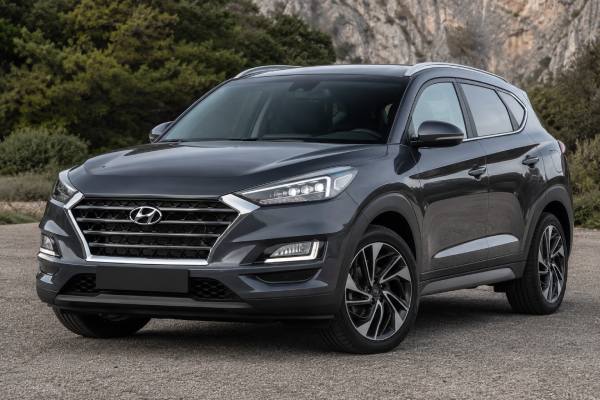
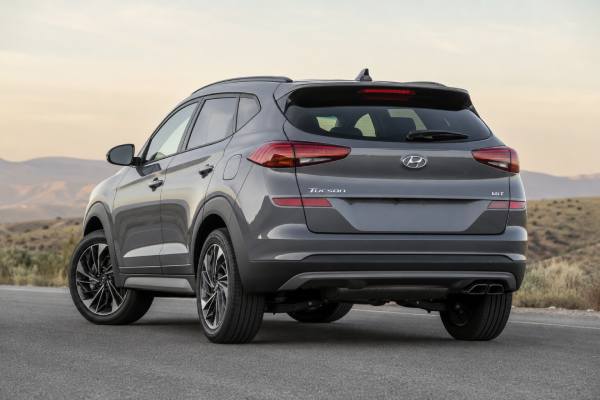
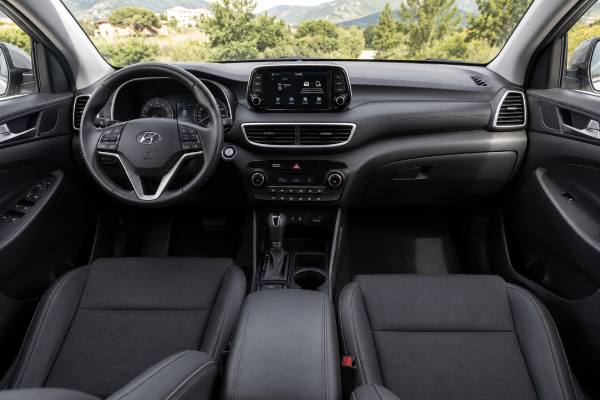
The facelifted Hyundai Tucson TL with the Nu 2.0 GDi engine and AWD is the sensible, lower-output version of Hyundai’s compact SUV from the 2019–2021 model years. It is not the quickest Tucson of this generation, but it offers a useful mix of compact size, simple controls, good cabin space, available HTRAC all-wheel drive, and strong safety equipment for the price. For used buyers, the key is understanding that the 2.0 GDi belongs mostly to lower trims, while many better-equipped cars use the stronger 2.4 GDi.
Final Verdict
The 2019–2021 Hyundai Tucson TL 2.0 GDi AWD is a good used compact SUV for buyers who want comfort, winter traction, easy parking, and decent safety technology without paying for a larger crossover. Its strongest appeal is everyday usability: a roomy cabin, predictable six-speed automatic, and available HTRAC AWD in a manageable footprint. The tradeoff is performance; with 161 hp and AWD weight, it feels adequate rather than lively, especially on highway passes or with passengers. It is easiest to recommend with full service history, completed ABS recall work, regular oil checks, and evidence that the AWD fluids have not been ignored.
| Pros | Cons |
|---|---|
| HTRAC AWD adds useful wet-road and winter traction | 161 hp feels modest with AWD and full passengers |
| Six-speed automatic is smoother than the earlier dual-clutch Tucson | Fuel economy is average for a compact SUV |
| Facelift brought stronger standard driver-assistance equipment | Best headlights and ADAS depend heavily on trim |
| Cabin and cargo space are practical for small families | 2.0 GDi mostly appears on lower SE and Value trims |
| Parts availability is good in North America and Europe | Oil consumption and GDI carbon buildup need watching |
Table of Contents
- Tucson TL 2.0 AWD overview
- Specifications and technical data
- Trims, safety, and driver assistance
- Reliability, issues, and service actions
- Maintenance and buying guide
- Driving, performance, and efficiency
- How the Tucson compares to rivals
Tucson TL 2.0 AWD overview
The Tucson TL 2.0 GDi AWD is best understood as the practical, comfort-focused version of the facelifted third-generation Tucson. It suits commuting, school runs, bad-weather driving, and light weekend use better than fast driving or regular towing.
This version uses Hyundai’s Nu 2.0-litre gasoline direct-injection four-cylinder engine, paired with a conventional six-speed automatic transmission. AWD was optional in markets where front-wheel drive was also sold, and Hyundai marketed the active on-demand system as HTRAC AWD in North America. The system normally behaves like a front-biased crossover drivetrain, then sends torque rearward when slip, throttle input, steering angle, or drive conditions call for it.
The facelift arrived for the 2019 model year in the U.S. and brought a cleaner front end, revised lighting, updated cabin technology, and a stronger standard safety package. For the 2.0 GDi buyer, the most important change is not styling. It is that the lower trims became better equipped, especially with Forward Collision-Avoidance Assist and Lane Keeping Assist.
This exact 161 hp AWD version is not the same as the higher-trim 2.4 GDi Tucson. The 2.4 has more torque and feels more relaxed, but it also comes with different ownership considerations. The 2.0 GDi is simpler in positioning: it is the entry or near-entry engine, usually found on SE and Value trims in the U.S. market.
The Tucson’s main strengths are ease of use and balance. It has a comfortable seating position, good outward visibility, a cargo area that works well for everyday family use, and controls that do not require much learning. It is also compact enough for city parking, yet tall enough to feel more substantial than a hatchback.
Its main weakness is urgency. The 2.0 GDi makes its best power high in the rev range, and peak torque does not arrive until 4,700 rpm. Around town, the automatic masks this reasonably well. On steep roads, short highway ramps, or when carrying four adults, the engine has to work. That does not make it bad, but buyers expecting turbocharged punch may find it underwhelming.
Specifications and technical data
The 2019–2021 Tucson TL 2.0 GDi AWD uses a naturally aspirated direct-injection petrol engine, a six-speed torque-converter automatic, and active on-demand AWD. The most useful facts are the engine output, transmission type, AWD layout, weight, fuel economy, cargo space, and service-fluid references.
| Item | Hyundai Tucson TL 2.0 GDi AWD |
|---|---|
| Engine family | Nu 2.0 GDi inline-four |
| Displacement | 1,999 cc / 2.0 litres |
| Fuel system | Gasoline direct injection |
| Valvetrain | DOHC, 16 valves, D-CVVT |
| Block and head | Aluminum block and aluminum head |
| Bore × stroke | 81 mm × 97 mm |
| Compression ratio | 11.5:1 |
| Power | 161 hp at 6,200 rpm / about 120 kW |
| Torque | 150 lb-ft at 4,700 rpm / about 203 Nm |
| Recommended fuel | Regular unleaded gasoline |
| Official AWD fuel economy | 22 / 25 / 23 mpg US city/highway/combined |
| Item | Specification |
|---|---|
| Transmission | 6-speed automatic with torque converter |
| Manual mode | SHIFTRONIC manual shift mode |
| AWD system | HTRAC active on-demand AWD |
| 2.0 AWD final drive | 3.648:1 |
| Front suspension | MacPherson strut, coil springs, gas shocks |
| Rear suspension | Multi-link, gas shocks |
| Steering | Motor-driven rack-and-pinion |
| Turning circle | 34.9 ft / about 10.6 m |
| Front brakes | 305 × 25 mm ventilated discs |
| Rear brakes | 302 × 10 mm solid discs |
| Item | Value |
|---|---|
| Body style | 5-door compact SUV |
| Seats | 5 |
| Wheelbase | 105.1 in / about 2,670 mm |
| Length | 176.2–176.4 in / about 4,475–4,481 mm |
| Width | 72.8 in / about 1,849 mm |
| Height | 64.8–65.0 in / about 1,646–1,651 mm |
| Ground clearance | 6.4 in / about 163 mm |
| Curb weight, 2.0 AWD | About 3,455–3,485 lb / 1,567–1,580 kg |
| Fuel tank | 16.4 US gal / about 62 litres |
| Cargo volume | 31.0 cu ft seats up / 61.9 cu ft seats folded |
| Item | Typical value or note |
|---|---|
| Engine oil | 5W-20 preferred in many U.S. references; 5W-30 also commonly listed |
| Oil capacity | About 4.2 US qt / 4.0 litres with filter |
| Automatic transmission fluid | Hyundai SP-IV type specification |
| Rear differential oil | API GL-5, SAE 75W-85 type specification |
| Transfer case oil | API GL-5, SAE 75W-85 type specification |
| Brake fluid | DOT 4 |
| Wheel-nut torque | 79–94 lb-ft / 107–127 Nm |
Trims, safety, and driver assistance
For this engine, the most relevant trims are SE and Value, because higher U.S. trims usually moved to the 2.4 GDi engine. That matters when shopping, because a Tucson Limited or Ultimate may look similar but often is not the 161 hp 2.0 GDi version covered here.
| Trim | Typical engine fitment | Buyer note |
|---|---|---|
| SE | 2.0 GDi | Base trim, usually cloth seats and 17-inch wheels |
| Value | 2.0 GDi | Best match for this article; adds useful comfort features |
| SEL | Usually 2.4 GDi | More equipment and stronger engine in most U.S. listings |
| Sport, Limited, Ultimate | Usually 2.4 GDi | Often better headlights, audio, seating, and ADAS options |
The Value trim is often the sweet spot for a 2.0 AWD buyer. It commonly adds heated front seats, heated mirrors, roof rails, proximity key access, blind-spot monitoring, rear cross-traffic warning, and Blue Link equipment over the SE. Those features make the car easier to live with without moving into the higher-output 2.4 trims.
Wheel and tire packages are also a quick identifier. SE and Value versions commonly use 17-inch wheels with 225/60R17 tires. Higher trims often have 18-inch or 19-inch packages. For ride comfort and winter tire cost, the 17-inch setup is the practical choice. The 19-inch Sport-style package looks sharper, but replacement tires cost more and the ride is firmer.
Safety ratings and crash protection
The TL Tucson performed well in major safety testing for its period. IIHS ratings for the 2019 model show good crashworthiness in the main original crash tests, while the Top Safety Pick+ award depended on specific headlights and front crash-prevention equipment. That detail matters because not every used Tucson has the same lighting or driver-assistance package.
Hyundai’s own award listings also identify the Tucson as having 5-Star Overall Safety Rating recognition from NHTSA for this period. Still, buyers should verify the exact year, drivetrain, trim, and VIN because published safety pages can separate FWD and AWD versions or apply ratings under specific test rules.
Passive safety equipment includes front airbags, front side-impact airbags, side curtain airbags, stability control, traction control, ABS, brake assist, tire-pressure monitoring, child-safety locks, and LATCH child-seat anchors. The Tucson is a compact SUV, not a large family hauler, but its rear seat is usable for child seats and school-age passengers.
ADAS equipment and calibration
The facelifted Tucson brought useful safety technology to lower trims. Lane Keeping Assist and Forward Collision-Avoidance Assist became important selling points, while Blind-Spot Collision Warning and Rear Cross-Traffic Collision Warning are especially worth seeking on Value and above.
Higher trims can add features such as pedestrian detection, Smart Cruise Control with Stop & Go, High Beam Assist, Surround View Monitor, and better LED lighting. These systems depend on cameras, radar sensors, and correct alignment. After windshield replacement, front-end collision repair, suspension work, or bumper removal, ask for proof that sensors were checked and calibrated where required.
Reliability, issues, and service actions
The 2.0 GDi Tucson can be durable with careful maintenance, but it is not a “forget it and drive” powertrain. The used examples to buy are the ones with frequent oil changes, completed recall records, no low-oil history, and no neglected AWD service.
| Issue | Prevalence | Severity | What to check |
|---|---|---|---|
| ABS module fire recall | Recall-related | High | Confirm fuse kit and ABS/ESC software completion |
| Oil consumption | Occasional | Medium to high | Dipstick level, exhaust smoke, consumption-test records |
| GDI intake carbon buildup | Common over time | Medium | Rough idle, hesitation, misfires, poor cold start |
| Automatic shift harshness | Occasional | Medium | Cold and warm shifts, delayed engagement, fluid history |
| AWD transfer or rear differential neglect | Occasional | Medium | Fluid service, binding, whining, seepage |
| Suspension and brake wear | Normal wear | Low to medium | Front bushings, rear links, rotors, calipers, tire wear |
Engine and oil-related concerns
The Nu 2.0 GDi is a direct-injection engine, so it can develop intake-valve carbon deposits because fuel does not wash over the back of the intake valves. Short trips, cold starts, low-quality oil, and extended oil intervals make this worse. Symptoms include rough idle, hesitation, misfire codes, weak acceleration, and reduced fuel economy.
Oil consumption is the bigger concern on high-mileage examples. Check the dipstick before the test drive, after the test drive, and again after the engine has sat briefly. A clean seller will not mind. Be cautious if the oil level is low, the exhaust has blue smoke after idling, the tailpipe is oily, or the owner says it “just needs topping up between services” without records.
This engine uses a timing chain, not a scheduled timing belt. A chain is not maintenance-free in the absolute sense. Rattle at startup, timing-correlation fault codes, metal debris in the oil, or poor running can point to chain, guide, tensioner, or oil-pressure problems. Frequent oil service is the best prevention.
Recall and service-action checks
The major safety recall to verify is the ABS/HECU fire-risk campaign affecting certain 2019–2021 Tucson vehicles. The fault involved the anti-lock brake hydraulic electronic control unit potentially shorting internally, with a remedy involving a fuse kit and, for 2019–2021 vehicles where required, ABS/ESC software updating.
Do not accept “the dealer probably did it” as proof. Ask for a VIN recall printout, Hyundai dealer invoice, or official recall status check. A completed recall is not a bonus; it is a baseline requirement.
Also check for Hyundai engine software campaigns where applicable. Some Hyundai/Kia engine families received knock-sensor logic updates intended to detect abnormal bearing noise and place the vehicle in protection mode. Coverage depends on VIN, engine, campaign number, and market, so the correct approach is a dealer VIN check rather than guessing.
Driveline, chassis and corrosion
The six-speed automatic is generally smoother than the older Tucson’s 1.6 turbo dual-clutch setup, but fluid neglect is still risky. “No service required under normal usage” should not be read as “fluid lasts forever under all conditions.” In city traffic, heat, hills, snow use, and repeated short trips, fluid ages.
For AWD cars, listen for rear-end whine, clunks when shifting from drive to reverse, and binding during tight parking-lot turns. Inspect transfer case and rear differential seals. A Tucson that lived in snow-belt roads should also be checked for subframe corrosion, brake-line corrosion, seized caliper hardware, exhaust rust, and crust around suspension mounting points.
Maintenance and buying guide
A 2.0 GDi AWD Tucson is cheapest to own when serviced more often than the longest possible interval. A cautious used-car schedule is better than relying only on “normal usage” assumptions, especially for short-trip city vehicles.
| Item | Practical interval | Why it matters |
|---|---|---|
| Engine oil and filter | 5,000–7,500 miles / 8,000–12,000 km | Protects timing chain, rings, GDI fuel dilution tolerance |
| Oil level check | Every 500–1,000 miles | Early warning for consumption or leaks |
| Engine air filter | Inspect yearly, replace about 30,000 miles | Dust shortens engine and sensor life |
| Cabin air filter | 12–15 months | Maintains HVAC airflow and defogging |
| Spark plugs | About 97,500 miles / 156,000 km | Worn plugs stress coils and catalyst |
| Coolant | First at 120,000 miles or 10 years, then shorter intervals | Protects aluminum engine and heater core |
| Brake fluid | Every 2–3 years | Prevents internal corrosion and poor pedal feel |
| ATF | 60,000–75,000 miles under severe use | Reduces shift wear despite “normal usage” wording |
| Transfer case and rear differential oil | 30,000–60,000 miles depending on use | Important for AWD longevity |
| Tire rotation and alignment | 7,500 miles rotation; align when uneven wear appears | Protects AWD system and tire life |
| 12 V battery | Test yearly after year four | Weak batteries cause electronic faults and no-starts |
What to inspect before buying
Start with the VIN. Confirm model year, trim, engine, drivetrain, open recalls, and warranty history. Then check the service book or digital invoices. For this Tucson, oil-change history matters more than cosmetic extras.
On the test drive, start the engine cold. Listen for chain rattle, ticking that does not settle, belt noise, exhaust leaks, or a rough idle. Drive gently at first, then accelerate firmly onto a faster road. The six-speed automatic should shift cleanly without flares, bangs, or long hesitation.
Check the AWD by making tight low-speed turns in a parking lot. There should be no hopping, binding, or grinding. On a lift, inspect the transfer case, rear differential, rear coupler area, CV boots, prop shaft, exhaust, fuel and brake lines, and rear suspension links.
Look closely at tires. Mixed brands, mismatched tread depth, or uneven wear are red flags on AWD vehicles. The Tucson does not need expensive performance tires, but it does need four closely matched tires.
Inside, test every safety and comfort feature: rear camera, blind-spot warning, lane keeping, forward-collision warning indicators, seat heaters, infotainment screen, USB ports, HVAC modes, fan speeds, steering-wheel buttons, keyless entry, and all windows. Electrical diagnosis can consume more time than the part price suggests.
Best versions to seek or avoid
For the exact 2.0 GDi AWD, the Value trim is usually the best target because it combines the lower-output engine with meaningful comfort and safety upgrades. SE is acceptable if priced well and maintained properly. Avoid overpaying for a 2.0 AWD simply because it has low mileage; condition, recall proof, oil history, and underbody condition matter more.
Be careful with cars that have no oil records, repeated auction history, visible accident repair near the radar or camera areas, mismatched tires, or warning lights that were “just cleared.” Also be cautious with any example showing fresh thick oil, a recently cleaned engine bay, and no paperwork. That combination can hide leaks or consumption.
Long-term durability is reasonable when the Tucson is maintained as a GDI AWD vehicle, not as a disposable appliance. The engine needs clean oil, the AWD system needs matching tires and fluid attention, and the brakes need regular service in salty climates.
Driving, performance, and efficiency
The Tucson 2.0 GDi AWD drives like a calm compact SUV, not a sporty one. It is comfortable, predictable, and easy to place, but the engine needs revs when you ask for quick acceleration.
In city driving, throttle response is smooth and the torque-converter automatic helps the car move away cleanly. The 2.0-litre engine does not have turbo lag because it is naturally aspirated, but it also does not have strong low-rpm torque. The transmission often needs a downshift for hills, passing, or merging.
At highway speed, the Tucson tracks well and feels stable for its size. Wind and tire noise are moderate rather than luxury-level. Cars on 17-inch tires usually ride better and sound calmer than versions on larger wheels. The suspension is tuned for comfort, with enough body control for normal driving but no strong performance edge.
Steering is light and easy in town. It is accurate enough for daily driving, but it does not give much road feel. Braking feel is generally progressive, and the four-wheel disc setup is adequate for family use. If the pedal pulses, the car pulls under braking, or the rear brakes look rusty, budget for brake service.
The AWD system is useful in rain, snow, gravel driveways, and cold climates. It is not an off-road system with low range. The AWD Lock function can help at low speeds by encouraging a more even front-rear torque split, but ground clearance and road tires are the limiting factors. Think of it as bad-weather traction, not trail equipment.
Official AWD fuel economy for the 2.0 GDi is 22 mpg city, 25 mpg highway, and 23 mpg combined. In metric terms, that is about 10.7 L/100 km city, 9.4 L/100 km highway, and 10.2 L/100 km combined. In UK mpg, the same figures are roughly 26 mpg city, 30 mpg highway, and 28 mpg combined.
Real-world mixed driving often falls close to the low-to-mid 20s mpg US. Cold weather, winter tires, short trips, roof racks, and remote start can pull it down. Gentle highway driving can improve the figure, but the AWD 2.0 is not the economy leader in this class.
The Tucson can handle a small utility trailer or light recreational load when properly equipped and within the owner’s manual limits, but towing is not its main strength. If towing is a regular need, a larger SUV or a Tucson with more torque is the better fit.
How the Tucson compares to rivals
The Tucson 2.0 GDi AWD is a value-and-comfort choice against rivals, not the quickest or most efficient compact SUV. It makes the most sense when priced below equivalent Toyota, Honda, and Mazda options.
| Rival | How it compares | Who may prefer it |
|---|---|---|
| Toyota RAV4 | Often better resale and efficiency, usually higher used price | Buyers prioritizing long resale value |
| Honda CR-V | Roomier cargo area and stronger daily practicality | Families needing maximum rear-seat and cargo space |
| Mazda CX-5 | Sharper handling and nicer cabin feel in many trims | Drivers who value steering and interior finish |
| Kia Sportage | Closely related platform, similar engines and ownership checks | Buyers finding a cleaner Kia at a better price |
| Nissan Rogue | Often spacious and efficient, but CVT condition is critical | Buyers focused on comfort and low purchase price |
| Subaru Forester | Standard AWD and better rough-road confidence | Snow-belt buyers who want AWD as standard |
Against a RAV4 or CR-V, the Tucson’s strongest argument is purchase value. It often costs less for the same model year and mileage, and it can include more convenience equipment for the money. The tradeoff is weaker resale value and less power from the 2.0 GDi AWD.
Against a Mazda CX-5, the Tucson feels less premium and less engaging, but it may ride more softly on smaller wheels and can be cheaper to insure or buy. The CX-5 is the better driver’s SUV. The Tucson is the easier budget family choice.
Against the related Kia Sportage, condition matters more than badge. The two share broad engineering themes and many ownership considerations. Buy the cleaner vehicle with better records, fewer warning signs, and completed recall work.
For most used buyers, the Tucson 2.0 AWD is a good deal only when priced correctly. Do not pay near RAV4 money for a slower, lower-trim Tucson unless the Hyundai is exceptionally clean, low-mileage, and fully documented. Its sweet spot is as a dependable, comfortable, all-weather compact SUV at a fair discount.
References
- 2019 Tucson Specifications 2019 (Manufacturer specifications)
- 2021 Tucson Specifications 2021 (Manufacturer specifications)
- 2019 Hyundai Tucson 2019 (Safety rating)
- Part 573 Safety Recall Report 20V-543 2020 (Recall database)
- Manuals & Warranties | Hyundai Resources | MyHyundai 2026 (Owner resources)
Disclaimer
This article is for informational purposes only and is not a substitute for professional diagnosis, repair, inspection, or official service information. Specifications, torque values, service intervals, fluids, procedures, recalls, and equipment can vary by VIN, market, production date, trim, and installed options. Always verify critical information against the official owner’s manual, service documentation, recall database, and a qualified Hyundai technician before buying, servicing, or repairing a vehicle.
If this guide helped you, please consider sharing it on Facebook, X/Twitter, or your preferred social platform to support our work.