
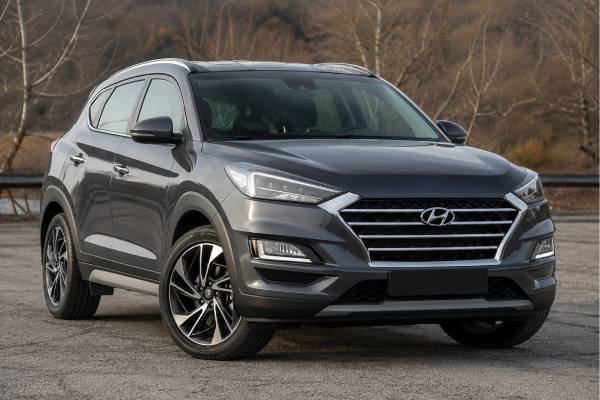
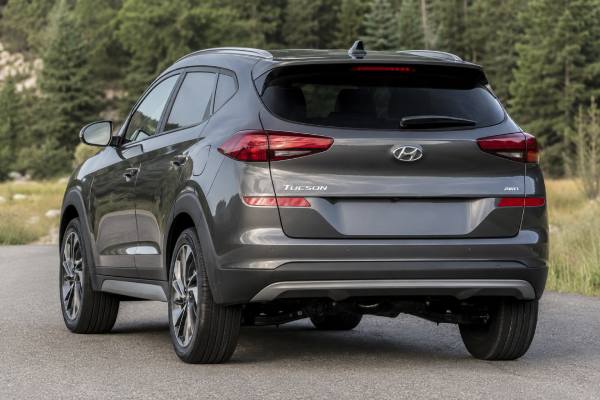
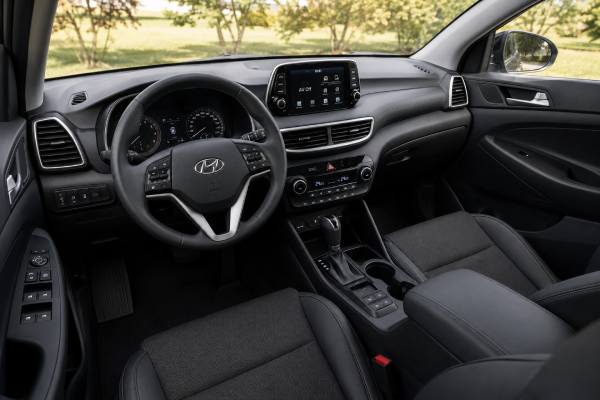
The facelifted Hyundai Tucson TL with the 2.4-liter Theta II GDi engine is a practical compact SUV aimed at buyers who want straightforward family transport rather than sporty performance or class-leading fuel economy. In front-wheel-drive form, it avoids the extra weight and service points of AWD, while the 181 hp naturally aspirated engine gives it stronger everyday response than the base 2.0-liter version.
For 2019–2021, this Tucson sits in a useful used-car window: modern enough to offer good driver assistance and phone integration, but still simple compared with newer turbocharged and hybrid rivals. The main question is not whether it is comfortable or usable—it is—but whether the specific car has had recall work completed and has been maintained carefully enough to make the Theta II GDi a good long-term bet.
Final Verdict
The 2019–2021 Hyundai Tucson FWD 2.4 GDi is a good choice for buyers who want a comfortable, easy-to-drive compact SUV with sensible space, a conventional automatic transmission, and stronger response than the base 2.0-liter model. It suits commuting, family use, and light road-trip duty better than towing, performance driving, or maximum fuel savings. Its main tradeoff is average efficiency and the need to take Theta II GDi oil consumption, service history, and ABS/HECU recall completion seriously. Buy one only with clean maintenance records, no engine knock, no warning lights, and documented recall repairs.
| Pros | Cons |
|---|---|
| 181 hp 2.4 GDi feels stronger than the base 2.0 | Fuel economy trails newer CR-V and RAV4 competitors |
| Six-speed automatic is smoother than many dual-clutch rivals | Theta II GDi needs disciplined oil checks and service history |
| Good cargo space for a compact SUV of its age | Rear-seat and cargo room are not class-leading |
| Facelift added useful standard safety tech | Best headlights and ADAS depend heavily on trim |
| FWD layout reduces weight and driveline complexity | Traction is tyre-dependent in snow or steep wet starts |
| Often priced below equivalent Toyota and Honda rivals | Recall completion must be verified before purchase |
Table of Contents
- 2019–2021 Tucson 2.4 FWD Overview
- Tucson 2.4 GDi Specifications
- Trims, Safety, and Driver Assistance
- Reliability, Issues, and Service Actions
- Maintenance and Buying Advice
- Driving, Performance, and Efficiency
- Tucson 2.4 Compared with Rivals
2019–2021 Tucson 2.4 FWD Overview
The 2.4-liter FWD Tucson is the better-driving gasoline version of the facelifted TL range, mainly because it has more torque than the base 2.0 while keeping the same easy six-speed automatic layout. It is not quick by modern standards, but it feels relaxed in normal traffic and fits buyers who value comfort, simple controls, and predictable running costs.
The TL Tucson was facelifted for the 2019 model year with revised styling, a cleaner dashboard layout, updated infotainment, and broader driver-assistance availability. The 2.4 GDi engine was used in higher trims rather than the entry-level versions, so most used examples have better equipment than a base Tucson. That matters because the cabin and safety package can vary more than the engine itself.
In the U.S. market, the 2.4-liter naturally aspirated four-cylinder was generally found in SEL and above trims during this facelift period. The FWD version uses a transverse engine layout, front-wheel drive, and a traditional torque-converter automatic. That combination is one of the Tucson’s strengths. There is no turbocharger, no dual-clutch gearbox, and no hybrid battery system to evaluate.
The tradeoff is that the Tucson 2.4 is not especially efficient for a compact SUV. Its official 22 mpg city, 28 mpg highway, and 25 mpg combined EPA rating is acceptable, but newer rivals do better. Real-world city use can dip noticeably if the car spends a lot of time idling, doing short trips, or running on worn tyres.
As a used purchase, the Tucson’s appeal depends heavily on condition. A well-maintained FWD 2.4 with clean oil history, completed recall work, quiet cold starts, and no transmission shudder can be a sensible value buy. A neglected one with low oil, engine noise, warning lights, or incomplete ABS/HECU recall work should be treated as a high-risk purchase, even if the price looks attractive.
Tucson 2.4 GDi Specifications
The FWD Tucson 2.4 uses Hyundai’s Theta II gasoline direct-injection four-cylinder, paired with the A6MF2 six-speed automatic transmission. The important points are simple: it is a naturally aspirated engine, it runs on unleaded gasoline, it uses a timing chain, and the FWD layout keeps the driveline lighter than AWD versions. For most buyers, the most useful technical facts are engine output, fuel economy, dimensions, cargo space, service fluids, and trim-related wheel sizes.
| Item | Hyundai Tucson FWD 2.4 GDi |
|---|---|
| Engine family | Theta II 2.4 GDi |
| Configuration | Inline-4, DOHC, 16 valves |
| Displacement | 2,359 cc / 2.4 L |
| Fuel system | Gasoline direct injection |
| Induction | Naturally aspirated |
| Block and head | Aluminum block and aluminum cylinder head |
| Bore × stroke | 88 × 97 mm |
| Compression ratio | 11.3:1 |
| Maximum power | 181 hp at 6,000 rpm / about 135 kW |
| Maximum torque | 175 lb-ft at 4,000 rpm / about 237 Nm |
| Recommended fuel | Regular unleaded gasoline |
| Timing drive | Timing chain |
| EPA fuel economy | 22 city / 28 highway / 25 combined mpg US |
| Metric fuel economy | 10.7 city / 8.4 highway / 9.4 combined L/100 km |
| Item | Specification |
|---|---|
| Drive type | Front-wheel drive |
| Transmission | 6-speed automatic with torque converter |
| Transmission family | A6MF2 for 2.4-liter models |
| Manual control | SHIFTRONIC manual shift mode |
| Drive modes | Selectable modes through center-console control |
| Final drive | 3.064:1 on 2.4 FWD specification data |
| Item | Value |
|---|---|
| Body style | 5-door compact SUV |
| Seating | 5 passengers |
| Wheelbase | 2,670 mm / 105.1 in |
| Overall length | About 4,480 mm / 176.2–176.4 in |
| Overall width | 1,849 mm / 72.8 in |
| Overall height | 1,646–1,651 mm / 64.8–65.0 in |
| Ground clearance | 163 mm / 6.4 in |
| Turning diameter | 10.6 m / 34.9 ft curb-to-curb |
| Front suspension | MacPherson struts with coil springs |
| Rear suspension | Multi-link independent suspension |
| Fuel tank | 62.1 L / 16.4 US gal |
| Cargo volume | 31.0 cu ft seats up / 61.9 cu ft folded |
| Common FWD curb weight | About 1,554–1,630 kg / 3,426–3,593 lb by trim |
| Item | Useful value |
|---|---|
| Front brakes | 305 × 25 mm ventilated discs |
| Rear brakes | 302 × 10 mm solid discs |
| Brake systems | ABS, EBD, brake assist, stability control |
| Common tyre sizes | 225/55R18 or 245/45R19 on many 2.4 trims |
| Oil viscosity | 5W-20 preferred; 5W-30 commonly permitted |
| Engine oil capacity | About 4.8 L / 5.1 US qt with filter |
| Wheel-nut torque | About 107–127 Nm / 79–94 lb-ft |
| Oil drain plug torque | About 29 lb-ft with a new washer |
Trims, Safety, and Driver Assistance
The 2.4 GDi FWD Tucson is usually found in better-equipped trims, so the trim level can matter almost as much as the engine. The safest buys are often SEL or higher cars with intact safety equipment, factory wheels, clear service records, and no evidence of poor collision repair.
For 2019, the U.S. lineup included SE, Value, SEL, Sport, Night, Limited, and Ultimate. The base SE and Value were generally associated with the 2.0-liter engine, while the 2.4-liter engine appeared in higher grades. For 2020 and 2021, the same basic split continued: SE and Value served as the value trims, while SEL and above brought the stronger 2.4-liter powertrain.
Trim and equipment differences
SEL models are the sweet spot for many used buyers because they pair the 2.4 engine with useful comfort equipment without the highest replacement cost for wheels, lighting, and electronics. Sport and Night versions add a more aggressive look, often with larger wheels and sportier exterior trim. Limited and Ultimate models bring more luxury-oriented equipment such as leather trim, upgraded audio, navigation, panoramic roof availability, parking cameras, and higher-level driver assistance depending on year.
Quick identifiers are straightforward. A 2.4 model may have “2.4 GDI” under the hood on emissions or service labels, higher trim badging on the liftgate, larger alloy wheels, and equipment such as dual-zone climate control, heated seats, push-button start, or upgraded lighting. The VIN and original window sticker are still the best way to confirm exact trim and factory options.
Larger 19-inch wheel packages look sharper but are not always better for ownership. They use lower-profile tyres, which can ride more firmly and cost more to replace. For a daily driver, 18-inch wheels are often the better balance of comfort, tyre availability, and pothole resistance.
Safety ratings and crash-test context
The 2021 Tucson earned strong IIHS crashworthiness scores in the main tests used for its Top Safety Pick award, but the award depended on optional front crash prevention and specific headlights. This detail matters when shopping used: not every Tucson on the market has the same headlight performance or the same ADAS package.
IIHS ratings for the 2021 model show Good results in the main original crashworthiness tests, including small-overlap front, moderate-overlap front, original side, roof strength, and head restraints. More demanding later test categories tell a more nuanced story, with poorer performance in the updated moderate-overlap evaluation and a Marginal score in the updated side test. In plain language, the Tucson was a strong performer for its original design period, but newer crash tests became tougher.
NHTSA ratings for this generation are generally favorable, with the 2021 Tucson widely listed as a 5-star overall vehicle in U.S. safety rating summaries. Always compare the exact model year and drivetrain page when rating details matter, because government crash-test listings can be separated by FWD and AWD.
Driver assistance and calibration
The facelifted Tucson improved standard safety equipment. Common systems include Forward Collision-Avoidance Assist, Lane Keeping Assist, Driver Attention Warning, a rearview camera, stability control, traction control, and tyre-pressure monitoring. Blind-spot monitoring and rear cross-traffic alert are more common on mid and higher trims. Smart cruise control and pedestrian detection are typically tied to upper trims or option packages.
Sensor condition matters after any collision repair. Windshield camera systems may need calibration after windshield replacement, front camera work, suspension alignment, or steering-angle sensor service. Radar-equipped cars may also need calibration after front bumper repairs. A used Tucson with mismatched bumper paint, aftermarket windshield glass, ADAS warning messages, or poor lane-keeping behavior deserves a deeper inspection.
Reliability, Issues, and Service Actions
A well-kept Tucson 2.4 can be a durable compact SUV, but it is not a car to buy blindly. The two biggest ownership checks are engine condition and recall completion, followed by transmission behavior, suspension wear, brake condition, and electronics.
Common and important issues
Oil consumption is the first thing to check on any Theta II GDi. Some engines use very little oil between changes, while neglected or higher-mileage examples may consume enough to create low-oil risk before the next service. Symptoms include a low dipstick reading, oil top-up receipts, blue smoke after idling, rattling on cold start, or a catalytic-converter efficiency code. The remedy depends on cause, but buyers should avoid cars with unexplained oil loss unless a proper diagnosis has already been completed.
Direct injection can also lead to intake-valve carbon buildup over time. Because fuel is injected directly into the combustion chamber, it does not wash over the intake valves the way port injection does. At higher mileage, symptoms may include rough idle, hesitation, misfires, and reduced response. Cleaning the intake valves is not routine maintenance for every car, but it becomes more relevant around 80,000–120,000 miles if symptoms appear.
Rod-bearing or lower-engine noise is a lower-frequency but high-severity concern. A light tick from injectors is normal on a GDi engine, but deep knocking, metallic rumble, oil-pressure warnings, or glitter in the oil are not. Any engine noise that gets worse with rpm should be treated as a serious red flag.
The A6MF2 automatic is generally smooth and sensible, but it should not flare, bang into gear, shudder under light throttle, or hesitate excessively when shifting from reverse to drive. Occasional poor behavior can be caused by old fluid, software adaptation, mounts, or solenoids, but a used buyer should price the risk carefully. A clean test drive from cold and hot is essential.
Chassis wear is usually normal compact-SUV stuff: front struts, rear shocks, sway-bar links, control-arm bushings, wheel bearings, brake caliper slides, and tyres. Listen for clunks over small bumps, humming that changes with road speed, steering vibration under braking, and uneven tyre wear. Cars that lived in snow-belt regions deserve an underbody inspection for subframe, brake-line, exhaust, and suspension mounting corrosion.
| Issue | Prevalence | Severity | Typical signs |
|---|---|---|---|
| Oil consumption | Occasional | Medium to high | Low dipstick, top-up history, blue smoke |
| GDi carbon buildup | Occasional at higher mileage | Medium | Rough idle, misfire, hesitation |
| ABS/HECU recall issue | Recall-related | High | Recall status, ABS light, burning smell |
| Transmission shudder or flare | Occasional | Medium | Harsh shifts, delayed engagement |
| Suspension and wheel bearings | Common wear item | Low to medium | Clunks, humming, uneven tyre wear |
| Brake corrosion or sticking | Climate-dependent | Low to medium | Dragging, hot wheel, pulsation |
Recalls and service actions
The major recall item for this generation is the ABS/HECU fire-risk campaign affecting certain 2016–2021 Tucson vehicles not equipped with Smart Cruise Control. The issue involves an ABS module that could short internally and increase the risk of an engine-compartment fire. The official remedy included replacing the ABS module fuse with a lower-amperage fuse and, for affected 2019–2021 vehicles, updating ESC software for use with the new fuse.
A buyer should not accept verbal reassurance alone. Ask for dealer records showing the recall campaign was completed, then run the VIN through an official recall checker. If a Tucson still has an open fire-related recall, follow the manufacturer’s current guidance and arrange dealer repair before treating the car as ready for normal ownership.
Software updates are less dramatic but still relevant. ABS/ESC updates tied to recall work, infotainment updates, navigation map updates, and occasional drivability or transmission calibration updates can improve how the car behaves. If the transmission feels odd but there are no mechanical symptoms, a dealer scan for available updates and stored codes is worthwhile before replacing parts.
Maintenance and Buying Advice
The Tucson 2.4 rewards boring, consistent maintenance. The engine is most comfortable when the oil is kept clean and full, the cooling system is healthy, and the automatic transmission is not ignored just because normal-use schedules may describe it as low-maintenance.
Practical maintenance schedule
For normal use, oil and filter service every 7,500 miles or 12 months is a common factory interval. For severe use—short trips, dusty roads, high heat, repeated idling, mountain driving, delivery work, or heavy traffic—shortening that to about 3,750–5,000 miles is sensible. The Theta II GDi is not an engine where stretching oil changes saves money.
A practical long-term schedule looks like this:
- Every fuel fill or monthly: check engine oil level and coolant level.
- Every 7,500 miles / 12 months: change engine oil and filter; rotate tyres; inspect brakes, suspension, steering, belts, hoses, lights, and leaks.
- Every 15,000 miles: inspect or replace cabin air filter; inspect engine air filter more often in dusty areas.
- Every 30,000 miles: replace engine air filter if dirty; inspect brake fluid, coolant condition, drive belts, CV boots, exhaust, and fuel lines.
- Every 45,000–60,000 miles: consider automatic transmission fluid service under severe use or for long-term ownership.
- At 60,000 miles / 72 months: inspect valve clearance where specified, drive belts, hoses, and timing-chain noise.
- At 97,500 miles: replace spark plugs with the correct type.
- At 120,000 miles / 10 years: replace engine coolant, then repeat coolant replacement more frequently afterward.
- Every 2–3 years: replace brake fluid if moisture content is high or service history is unknown.
- Every 4–6 years: test the 12 V battery and replace before it causes random electrical faults.
The timing chain has no fixed replacement interval, but that does not mean it should be ignored. Listen for cold-start rattle, check for cam/crank correlation codes, and investigate any timing-related fault early. Chain problems are usually tied to oil condition, tensioner performance, guide wear, or high mileage.
For fluids, use oil that matches the owner’s manual and local climate. Many U.S.-market references list 5W-20 as preferred, with 5W-30 commonly permitted. Use the correct automatic transmission fluid specification rather than a generic ATF. Brake fluid should be DOT-rated as specified, and coolant should be compatible with Hyundai’s long-life coolant requirements.
Pre-purchase inspection checklist
Start with records. A good Tucson should have repeated oil-change entries, not just a clean dashboard. Look for evidence of spark plug replacement near 100,000 miles, coolant service if age or mileage requires it, tyre rotations, brake service, and recall completion.
During inspection, check:
- Cold-start noise before the seller warms the car.
- Oil level, oil color, and signs of sludge under the oil cap.
- Coolant level, radiator condition, hose swelling, and water-pump seepage.
- Transmission shifts from cold, hot, reverse, and low-speed rolling traffic.
- Warning lights, stored diagnostic codes, and readiness monitors.
- Tyre date codes, uneven wear, vibration, and wheel damage.
- Brake rotor rust, sticking calipers, and pulsation during stops.
- Subframe, rocker, brake-line, and suspension corrosion.
- ADAS operation, camera warnings, and evidence of front-end repair.
- All keys, infotainment functions, backup camera, charging ports, and climate controls.
The best years and trims depend on budget. A 2020 or 2021 SEL FWD is often a strong value because it has the 2.4 engine and good basic safety equipment without every luxury option. Limited and Ultimate trims are attractive if everything works, but repairs to panoramic roofs, camera systems, LED lighting, and premium electronics can cost more. Avoid any example with engine knock, unresolved oil consumption, poor accident repair, incomplete recall work, or a seller who cannot explain the maintenance history.
Long-term durability is best described as good but maintenance-sensitive. This is not a Toyota RAV4 in resale reputation, and it is not as fuel-efficient as newer compact SUVs. But a clean, well-kept Tucson 2.4 FWD can deliver many more years of practical service at a lower entry price.
Driving, Performance, and Efficiency
The Tucson 2.4 FWD drives like a comfort-focused compact SUV with enough power for daily use. It is smoother and more relaxed than the base 2.0, but it is not a sporty crossover and does not hide its age against newer turbocharged or hybrid rivals.
The 181 hp engine has its best response in the middle of the rev range. Around town, it moves away cleanly and does not feel strained with one or two passengers. With a full cabin, luggage, air conditioning, or steep grades, the transmission will downshift more often. That is normal for a naturally aspirated four-cylinder with peak torque at 4,000 rpm.
Throttle response is predictable rather than sharp. The six-speed automatic is one of the car’s more pleasant traits because it shifts smoothly and avoids the low-speed jerkiness that can affect some dual-clutch competitors. In gentle driving, it upshifts early for economy. In passing situations, it may need a deliberate press of the throttle before it kicks down.
Ride quality is generally comfortable, especially on 18-inch wheels. The Tucson absorbs broken city roads well for its class, and the cabin stays reasonably quiet at urban speeds. On highways, wind and tyre noise are present but not excessive. Cars on 19-inch wheels can feel firmer over sharp impacts, especially if fitted with budget tyres.
Handling is safe and predictable. The steering is light, easy in parking lots, and accurate enough on the highway, but it does not offer much road feel. The FWD layout gives normal compact-SUV behavior: stable in steady cornering, mild understeer when pushed, and traction that depends heavily on tyres in wet or snowy conditions.
Braking feel is easy to modulate, though used examples vary with pad quality and rotor condition. Pulsation usually points to rotor thickness variation or corrosion. A dragging brake can hurt economy and make one wheel noticeably hotter than the others after a drive.
Real-world fuel economy depends strongly on use:
- City driving: about 20–23 mpg US, or 11.8–10.2 L/100 km.
- Highway driving: about 27–30 mpg US, or 8.7–7.8 L/100 km.
- Mixed driving: about 23–26 mpg US, or 10.2–9.0 L/100 km.
Cold weather, winter tyres, short trips, roof racks, and old spark plugs can reduce those figures. A Tucson 2.4 that struggles to reach low-20s mpg in mixed use may have dragging brakes, underinflated tyres, old fluids, a dirty air filter, poor alignment, or too many short trips for the engine to reach full temperature.
Towing should be kept modest. Even where the Tucson is rated for light trailer use, it is not a heavy-duty tow vehicle. The engine will work hard on hills, the transmission will downshift frequently, and braking distance increases quickly with load. For bikes, a small utility trailer, or light weekend gear, it can cope if properly equipped. For regular towing, a larger SUV is the better tool.
Tucson 2.4 Compared with Rivals
The Tucson 2.4 FWD is usually a value play against the Honda CR-V, Toyota RAV4, Mazda CX-5, Subaru Forester, and its close relative, the Kia Sportage. It rarely wins on one headline number, but it can make sense when purchase price, warranty history, comfort, and equipment are weighed together.
Against the Honda CR-V, the Tucson feels more traditional. The CR-V usually offers more rear-seat room, better cargo packaging, and stronger fuel economy, especially with its turbocharged 1.5-liter engine or later hybrid versions. The Tucson counters with a simpler naturally aspirated engine feel and a conventional automatic, which some buyers prefer over Honda’s CVT.
Against the Toyota RAV4, the Tucson is typically cheaper on the used market. The RAV4 has stronger resale value, better fuel economy in many versions, and a reputation that pulls buyers toward Toyota. The Tucson can deliver more equipment for the money, but it needs a stricter inspection because resale reputation and powertrain perception are not as strong.
The Mazda CX-5 is the driver’s choice. It has sharper steering, a more upscale cabin feel, and a more polished road feel. The Tucson is softer, easier-going, and often less expensive. If comfort, price, and simple controls matter more than handling, the Tucson remains competitive. If you enjoy driving, the Mazda has the advantage.
The Subaru Forester offers standard AWD and excellent visibility. It is better suited to buyers in snowy regions who want AWD without shopping for a specific option. The Tucson FWD is simpler and can be more efficient than an AWD SUV in mild climates, but it cannot match Subaru’s traction advantage on winter roads.
The Kia Sportage is the closest rival because it shares much of the platform and powertrain logic. The Sportage often has slightly more expressive styling and similar maintenance needs. Between the two, condition, service history, price, and equipment matter more than the badge.
For most used buyers, the Tucson 2.4 FWD makes the most sense when priced clearly below equivalent Honda and Toyota examples, inspected carefully, and bought as a practical daily driver rather than an enthusiast SUV. Its strengths are comfort, equipment, a smooth automatic, and everyday usability. Its weaknesses are only average fuel economy, trim-dependent safety equipment, and the need to verify engine health and recall status.
References
- 2021 Tucson Specifications 2021 (Manufacturer Specifications)
- 2019 Tucson Specifications 2019 (Manufacturer Specifications)
- Gas Mileage of 2021 Hyundai Tucson 2021 (EPA Fuel Economy)
- 2021 Hyundai Tucson 2021 (Safety Rating)
- Part 573 Safety Recall Report 20V-543 2020 (Recall Database)
Disclaimer
This article is for informational purposes only and is not a substitute for professional diagnosis, repair, or inspection. Specifications, torque values, service intervals, fluid requirements, recall coverage, and procedures can vary by VIN, market, production date, trim, and equipment. Always verify critical information against the official owner’s manual, service documentation, dealer records, and current recall databases before buying, servicing, towing, or repairing a vehicle.
If this guide helped you, please consider sharing it on Facebook, X/Twitter, or your preferred platform to support our work.