
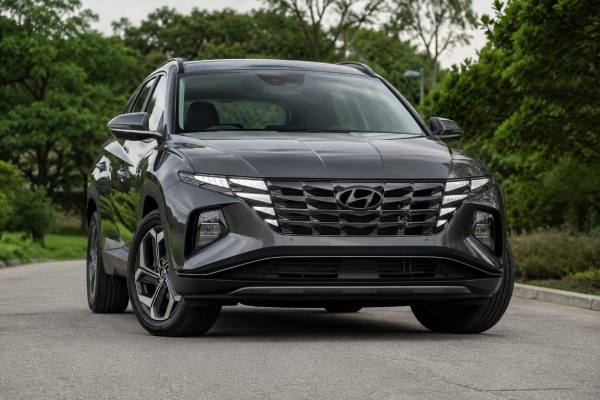
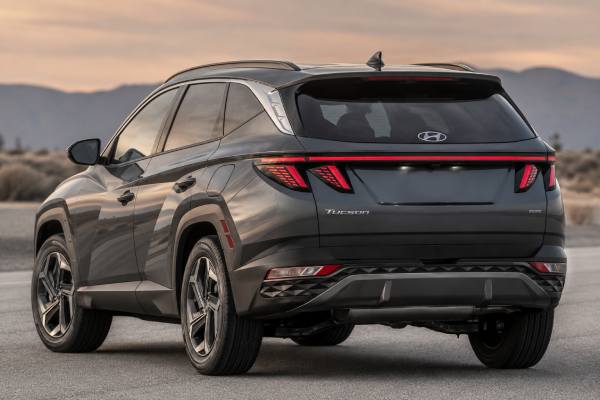
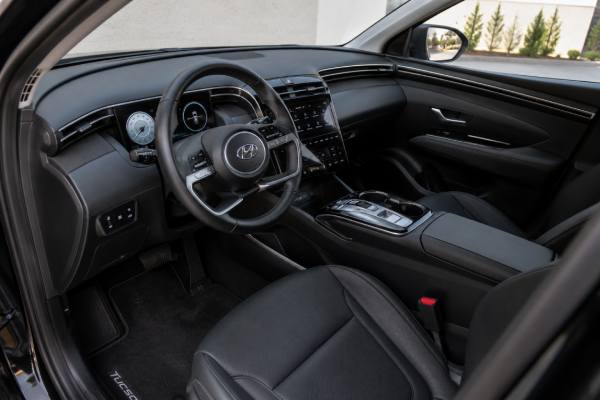
The Hyundai Tucson NX4 with the Smartstream 1.6 CRDi diesel is the sensible long-distance version of Hyundai’s fourth-generation family SUV. In front-wheel-drive form, it aims for low fuel use, strong motorway range, generous cabin space, and modern safety technology rather than outright performance. Most European examples use a 48-volt mild-hybrid system with either a 6-speed intelligent manual transmission or a 7-speed dual-clutch automatic, depending on market and trim.
For used buyers, this Tucson is appealing because it combines a roomy, practical SUV body with a relatively efficient diesel drivetrain. The main question is not whether it is comfortable or economical; it usually is. The bigger question is whether the car’s diesel emissions system, service history, DCT behavior, 48-volt system, and recall record have been looked after properly.
Final Verdict
The 2021–2024 Hyundai Tucson NX4 1.6 CRDi FWD is a good choice for drivers who cover regular motorway or mixed-distance mileage and want a spacious, safe, economical SUV without moving to a full hybrid. Its strongest appeal is the combination of cabin practicality, low diesel fuel consumption, and modern driver assistance. It is less ideal for mostly short urban trips, because the DPF, SCR/AdBlue system, and EGR hardware need proper heat cycles. Buy one only with clear service records, completed recall checks, and a smooth test drive from cold through full operating temperature.
| Pros | Cons |
|---|---|
| Excellent motorway economy for a family SUV | Diesel emissions system dislikes repeated short trips |
| Large cabin and useful 546-litre boot in 48V form | FWD traction depends heavily on tyre quality |
| Strong Euro NCAP safety score and broad ADAS availability | Some driver-assist functions need calibration after repairs |
| 136 hp diesel has relaxed low-speed torque | Not quick when fully loaded or overtaking uphill |
| 7DCT models suit commuting and motorway use well | DCT clutch wear risk rises in heavy stop-start driving |
| Good towing rating for a compact family SUV | Used examples need careful recall and service verification |
Table of Contents
- Hyundai Tucson NX4 1.6 CRDi Overview
- Specifications and Technical Data
- Trims, Safety and Driver Assistance
- Reliability, Common Issues and Service Actions
- Maintenance and Buyer’s Guide
- Driving, Performance and Real-World Economy
- How the Tucson 1.6 CRDi Compares to Rivals
Hyundai Tucson NX4 1.6 CRDi Overview
The NX4 Tucson diesel is best understood as a practical European family SUV for high-mileage drivers. It offers the space and equipment of the modern Tucson range, but with the long-distance economy and towing usefulness that still make diesel attractive in many markets.
This fourth-generation Tucson arrived with a much bolder design than the previous TL model. The sharply creased body, hidden-style front lighting, wide dashboard, and larger cabin made it feel like a much more premium SUV. Under the skin, the diesel version is more conservative: a 1.6-litre four-cylinder CRDi engine, front-wheel drive, and a focus on efficiency.
The 136 hp version is usually the one to look for if you want better flexibility than the lower-output 115 hp diesel. In many European markets, the 136 hp CRDi came with a 48-volt mild-hybrid system. This does not make the Tucson an electric-driving hybrid. Instead, it uses a belt-driven starter-generator and a small lithium-polymer battery to smooth stop-start operation, support coasting, and recover some energy during deceleration.
The Tucson 1.6 CRDi FWD suits:
- motorway commuting and regional business use;
- family driving with regular longer journeys;
- moderate towing, such as small caravans or trailers;
- buyers who want lower fuel consumption than petrol versions;
- owners who prefer a conventional SUV rather than a full hybrid.
It is less suitable for drivers who mostly travel a few kilometres at a time. Modern diesel hardware needs heat. If the car spends most of its life doing cold starts, short school runs, and city traffic, the diesel particulate filter, EGR system, SCR/AdBlue hardware, and intake system are more likely to cause trouble.
The best used examples are boring in a good way: one owner, full Hyundai or specialist service history, correct oil, documented brake fluid and filter changes, no warning lights, no harsh DCT behavior, and a VIN check showing no open safety recalls or service campaigns.
Specifications and Technical Data
The Tucson NX4 1.6 CRDi FWD combines a 1,598 cc Smartstream diesel engine with front-wheel drive and, depending on market, either a 6-speed intelligent manual or 7-speed dual-clutch transmission. The 48-volt system supports the engine but does not drive the wheels by itself. The most important ownership points are the belt-driven camshaft layout, SCR/AdBlue emissions system, 54-litre fuel tank, and 30,000 km or 2-year official long-life service framework in some European schedules.
| Item | Hyundai Tucson NX4 1.6 CRDi FWD |
|---|---|
| Engine family | Smartstream D1.6 CRDi diesel |
| Displacement | 1,598 cc / 1.6 litres |
| Layout | Inline-4, transverse, aluminium diesel engine |
| Induction | Turbocharged and intercooled |
| Fuel system | Common-rail direct injection with piezo injectors |
| Maximum power | 100 kW / 136 PS at 4,000 rpm |
| Maximum torque | Typically 280–320 Nm, depending on transmission and calibration |
| Bore × stroke | 77.0 mm × 85.8 mm |
| Compression ratio | 15.9:1 |
| Timing drive | Timing belt with dual overhead camshafts |
| Emissions hardware | DPF, SCR/AdBlue, oxidation catalyst, NOx storage catalyst |
| Emissions standard | Euro 6d in early European technical data |
| Item | Specification |
|---|---|
| System type | Belt-driven mild-hybrid starter-generator |
| System voltage | 48 volts |
| Battery capacity | 0.44 kWh lithium-polymer |
| Starter-generator output | Up to 12 kW in Hyundai technical data |
| Battery position | Below the luggage compartment floor |
| Electric-only driving | No; this is a support system, not a full hybrid |
| Item | Specification |
|---|---|
| Drive type | Front-wheel drive |
| Transmissions | 6-speed iMT or 7-speed dual-clutch automatic |
| Front suspension | MacPherson struts |
| Rear suspension | Multi-link independent rear suspension |
| Steering | Electric power-assisted rack-and-pinion |
| Front brakes | Ventilated discs, 291 mm |
| Rear brakes | Solid discs, 302 mm |
| Common wheel sizes | 17, 18 and 19-inch alloy wheels |
| Common tyre sizes | 215/65 R17, 235/55 R18, 235/50 R19 |
| Fuel tank | 54 litres |
| Wheel nut torque | 107–127 Nm |
| Item | Measurement |
|---|---|
| Body style | 5-door SUV, 5 seats |
| Length | 4,500 mm |
| Width | 1,865 mm without mirrors |
| Height | About 1,650–1,653 mm, depending on roof equipment |
| Wheelbase | 2,680 mm |
| Ground clearance | About 170 mm |
| Turning circle | About 10.9 m kerb-to-kerb |
| Boot volume | 546 litres seats up; 1,725 litres seats folded |
| Kerb weight | About 1,531–1,660 kg, equipment dependent |
| Braked towing limit | Up to 1,650 kg on suitable versions |
| Unbraked towing limit | 750 kg |
| Maximum roof load | 100 kg |
| Item | Typical value |
|---|---|
| 0–100 km/h | About 11.4 seconds in FWD 48V technical data |
| Top speed | About 180 km/h |
| WLTP combined fuel economy | About 4.9–5.6 L/100 km, depending on transmission and trim |
| WLTP CO₂ emissions | About 127–146 g/km in common FWD 48V data |
| Engine oil capacity | About 4.4 litres including filter |
| DCT oil capacity | About 1.6–1.7 litres |
| Cooling system capacity | About 7.2 litres |
| Official service interval | Up to 30,000 km or 2 years in some European schedules |
Trims, Safety and Driver Assistance
Trim names vary by country, but the mechanical heart of the 1.6 CRDi FWD is broadly similar across Europe. The differences that matter most on the used market are transmission, wheel size, infotainment level, parking aids, LED lighting, and the amount of Hyundai SmartSense driver assistance fitted.
In Germany, early NX4 Tucson grades included Pure, Select, Trend, N Line, and Prime. Other markets used names such as SE Connect, Premium, Ultimate, Comfort, Executive, or Luxury. Rather than shopping by trim name alone, check the exact equipment list for the car in front of you.
Lower trims usually bring the smaller wheels, cloth seats, manual tailgate, simpler audio, and fewer convenience features. Mid-grade cars are often the sweet spot because they add larger screens, navigation, heated seats, keyless entry, better parking aids, and upgraded lighting without the firmest ride. High trims can include 19-inch wheels, panoramic roof, powered tailgate, ventilated seats, premium audio, remote smart parking features in some markets, and more complete safety packages.
Quick identifiers include the rear “CRDi” or “48V” badging where fitted, the transmission selector or iMT manual gear lever, wheel size, dashboard screen layout, and equipment visible on the steering wheel. DCT cars have the automatic selector and should be tested carefully in creeping traffic. Manual iMT cars do not have a conventional fully mechanical clutch pedal feel; the clutch is electronically managed.
Euro NCAP awarded the 2021 Tucson a five-star rating. The detailed 2021 scoring was 86% adult occupant protection, 87% child occupant protection, 66% vulnerable road user protection, and 70% safety assist. The rating applies across several Tucson variants, including 1.6 CRDi and 1.6 CRDi 48V 4×2 versions, but equipment can differ by country and trim.
Safety equipment commonly includes:
- front, side, curtain, and centre airbags;
- anti-lock braking, stability control, and electronic brake-force distribution;
- autonomous emergency braking;
- lane keeping and lane following assistance;
- driver attention warning;
- speed limit assistance;
- rear ISOFIX child-seat anchorages;
- advanced eCall and multi-collision braking in European models.
Higher trims and option packs may add adaptive cruise control, blind-spot collision avoidance, rear cross-traffic collision avoidance, surround-view cameras, safe exit warning, and more advanced junction support for AEB. These features are useful, but they also make correct repair important. Windscreen replacement, front-end repairs, wheel alignment changes, bumper repairs, and radar or camera disturbance can require calibration. A car with warning lights, unavailable safety functions, or mismatched bumper repairs should be inspected before purchase.
Reliability, Common Issues and Service Actions
A well-maintained Tucson 1.6 CRDi FWD can be a dependable high-mileage SUV, but it is not maintenance-proof. Most serious ownership problems come from diesel short-trip use, neglected fluids, low-quality repairs, unresolved recalls, or DCT abuse in heavy urban traffic.
| Issue | Prevalence | Severity | Typical signs |
|---|---|---|---|
| DPF loading from short trips | Occasional | Medium | Warning light, high idle, fan running after shutdown |
| AdBlue or SCR faults | Occasional | Medium | No-start countdown, emissions warning, poor range estimate |
| EGR and intake deposits | Occasional | Medium | Rough running, hesitation, fault codes |
| 7DCT clutch wear or judder | Occasional | Medium to high | Shudder, delayed take-up, harsh low-speed engagement |
| 12 V battery weakness | Common with age | Low to medium | Start-stop unavailable, warning messages, random electronic faults |
| ADAS sensor misalignment | Repair-dependent | Medium | Lane, radar, or AEB warnings after glass/body repairs |
The engine itself is not known as a fragile unit when serviced correctly. It uses a timing belt, common-rail injection, turbocharging, and modern aftertreatment. That means the oil specification matters, the fuel filter matters, and soot management matters. Listen for cold-start rattles, uneven idle, turbo whistle, boost leaks, and injector correction issues. A smooth diesel sound is normal; heavy knocking, smoke, coolant loss, or persistent emissions warnings are not.
For the DPF, the ideal owner regularly drives at road speed long enough for regeneration. A car used only in dense city driving may need forced regeneration, sensor replacement, or cleaning earlier in life. A pre-purchase scan should check soot load, recent regeneration history where available, exhaust temperature sensor faults, differential pressure readings, and any hidden emissions codes.
The SCR/AdBlue system can create expensive inconvenience if ignored. Crystallized AdBlue around caps or injectors, poor-quality fluid, repeated top-ups from dirty containers, or long storage can cause faults. During inspection, confirm the car accepts AdBlue normally, shows a sensible remaining range, and has no countdown warning.
On DCT models, low-speed behavior matters more than motorway shifts. The 7-speed dual-clutch transmission should pull away smoothly, reverse without banging, and crawl without excessive shudder. A short hesitation is not unusual, but repeated clutch judder, burnt smell after parking manoeuvres, or harsh engagement suggests wear, adaptation issues, or mechatronic trouble.
The 48-volt system is generally simple compared with a full hybrid. Still, check for warnings related to the mild-hybrid starter-generator, 48 V battery, DC/DC converter, or start-stop function. A weak 12 V battery can mimic larger faults, so proper battery testing is part of diagnosis.
Service actions and recalls vary by market and VIN. Across NX4 Tucson markets, used buyers should pay attention to safety campaigns involving items such as airbags, window lifter anti-trap function, software updates, trailer wiring where fitted, and control-unit updates. Do not rely on a seller saying “there are no recalls.” Use an official Hyundai VIN checker or ask a Hyundai dealer to print the campaign status. Keep that printout with the service history.
Maintenance and Buyer’s Guide
The official long interval may be up to 30,000 km or 2 years in some European documents, but many owners should service the diesel more often. For mixed driving, annual oil changes are cheap protection; for taxis, delivery use, heavy city driving, towing, mountain roads, or repeated short trips, shorter intervals are strongly preferable.
| Item | Practical interval |
|---|---|
| Engine oil and filter | Every 15,000 km/12 months for severe use; never exceed official schedule |
| Engine air filter | Inspect yearly; replace around 30,000 km or sooner in dusty areas |
| Cabin filter | Every 12 months, especially in city or dusty use |
| Fuel filter | Inspect/drain as scheduled; replace around major service intervals |
| Brake fluid | Every 2 years |
| Coolant | Check every service; renew by official coolant schedule and condition |
| Timing belt | Replace at the VIN-specific manufacturer interval; inspect during major service |
| Auxiliary belt and 48V belt drive | Inspect for cracks, noise, tensioner wear, and pulley alignment |
| DCT fluid | Consider early replacement in heavy traffic or towing use |
| Manual/iMT gearbox oil | Inspect for leaks; replace if shifting quality deteriorates or usage is severe |
| Brake pads and discs | Inspect every service; check rear discs for corrosion |
| Tyres and alignment | Rotate/check every 10,000–15,000 km; align after uneven wear |
| 12 V battery | Test from year three; many need replacement by years four to six |
The engine oil should be a low-SAPS diesel oil meeting the correct Hyundai specification for the VIN and market. Do not choose oil only by viscosity printed on a generic parts website. The DPF and SCR system depend on the right oil chemistry, not just the right thickness.
Fluid and service reference points to remember:
- engine oil capacity is about 4.4 litres including the filter;
- cooling system capacity is about 7.2 litres;
- DCT oil capacity is about 1.6–1.7 litres;
- wheel nut torque is 107–127 Nm;
- fuel tank capacity is 54 litres;
- tyre pressures should be set from the door placard, not copied from another trim.
For a pre-purchase inspection, start with paperwork. You want a stamped or digital service history, invoices showing oil type, filter replacements, brake fluid changes, and recall completion. A car with long gaps, missing diesel fuel filter history, or only vague “serviced by a friend” claims should be priced accordingly.
Then inspect the car itself:
- check cold start, idle quality, smoke, and warning lights;
- scan all modules, not just the engine ECU;
- check DPF soot load and emissions-related stored codes;
- inspect for oil, coolant, AdBlue, and boost leaks;
- test the DCT in reverse, hill starts, crawling traffic, and hard acceleration;
- look for uneven tyre wear from poor alignment;
- inspect rear brake corrosion and parking brake operation;
- check the underside, subframes, suspension arms, and brake lines for corrosion;
- confirm all ADAS features work without warnings;
- verify both keys, navigation, cameras, parking sensors, and Bluelink features where fitted.
The best trims to seek are usually mid-to-high specification cars on 17 or 18-inch wheels. They give most of the comfort and safety equipment without the extra tyre cost and firmer ride of larger wheels. N Line cars look sharper, but check ride comfort and wheel condition carefully. For long-term ownership, a clean mid-grade diesel with full records is often better than a flashy high-trim car with patchy history.
Driving, Performance and Real-World Economy
The 1.6 CRDi Tucson is calm and economical rather than sporty. It has enough torque for daily use and motorway cruising, but it feels like a sensible 136 hp family SUV, especially when loaded with passengers or luggage.
Around town, the diesel pulls smoothly from low revs once moving. The 48-volt system helps stop-start refinement and can make restart events less intrusive than in older diesels. Manual iMT versions feel unusual at first because the clutch is electronically managed, but they are easy once familiar. DCT versions are more convenient, especially in traffic, though they should not be driven like a torque-converter automatic. Avoid holding the car on the throttle on hills, and use the brake in creeping traffic.
On the motorway, this Tucson is in its comfort zone. It tracks straight, the engine settles down, and the tall SUV body does not feel nervous. Wind and tyre noise depend strongly on wheel size and tyre choice. Seventeen-inch wheels usually give the best ride comfort, while 19-inch wheels look better but add firmness over broken surfaces.
The steering is light and accurate enough for family use. It does not offer much road feel, but the Tucson corners predictably. Front-wheel drive is fine in dry and wet conditions with good tyres, but it cannot match AWD traction on snow, muddy campsites, steep wet driveways, or loose gravel. If towing or driving in mountains is frequent, tyre choice becomes more important than trim level.
Braking feel is consistent in normal driving. Rear disc corrosion can appear on low-mileage city cars, so check for roughness, noise, or poor rear disc surface condition. After long descents or towing, any brake vibration should be investigated rather than dismissed as normal SUV behavior.
Real-world fuel economy depends heavily on journey type:
| Use case | Typical consumption | Approx. mpg US / UK |
|---|---|---|
| Steady motorway, 100–115 km/h | 5.0–5.8 L/100 km | 41–47 mpg US / 49–56 mpg UK |
| Mixed commuting | 5.5–6.5 L/100 km | 36–43 mpg US / 43–51 mpg UK |
| Urban short trips | 6.5–7.8 L/100 km | 30–36 mpg US / 36–43 mpg UK |
| Cold winter use | Add about 0.5–1.0 L/100 km | Noticeable reduction in range |
| Towing or heavy load | Often 20–40% higher | Depends on trailer weight and speed |
Overtaking performance is adequate, not effortless. The official 0–100 km/h figure around 11.4 seconds tells the story: this is not underpowered for normal life, but it needs planning when fully loaded. The diesel’s mid-range torque helps from 80–120 km/h, but the Tucson is still a tall, relatively heavy SUV.
For towing, the braked rating of up to 1,650 kg is useful, but the car feels best with lighter trailers and sensible speeds. Keep the DCT cool by avoiding long uphill crawling, respect nose weight, and use the correct towbar wiring. Any trailer wiring recall or service campaign must be completed before regular towing.
How the Tucson 1.6 CRDi Compares to Rivals
The Tucson 1.6 CRDi FWD sits in a competitive group of efficient family SUVs. Its biggest strengths are cabin design, equipment value, safety technology, warranty reputation, and motorway economy. Its main weakness is that some rivals offer stronger diesel engines or simpler long-term drivetrains.
The Kia Sportage 1.6 CRDi mild hybrid is the closest rival because it shares much of its engineering base. The Sportage may be styled differently and packaged slightly differently by market, but the ownership logic is similar: strong practicality, good safety kit, efficient diesel running, and the same need for careful DPF, SCR, and DCT checks. Choose between them based on condition, price, trim, and dealer support rather than badge alone.
The Volkswagen Tiguan 2.0 TDI feels more mature and can be stronger on long-distance refinement, especially with the 2.0-litre diesel’s extra torque. It may also feel more substantial when towing. The tradeoff is that good Tiguans often cost more, DSG repairs can be expensive, and equipment levels vary widely. A clean Tucson may be a better-value buy than a tired premium-feeling Tiguan.
The Peugeot 3008 1.5 BlueHDi is very efficient and stylish inside, with a distinctive driving position and low fuel use. It can beat the Tucson for economy, but it is less spacious in some practical situations and its ergonomics are more divisive. Buyers should also be careful with emissions-system maintenance and timing-belt-related engine history on some Stellantis diesels.
The Toyota RAV4 Hybrid is the strongest alternative for drivers who mostly do urban and suburban mileage. It avoids diesel DPF and AdBlue concerns and is excellent in stop-start use. It is usually more expensive to buy, and motorway fuel economy may not beat the Tucson diesel by much. For short trips, buy the Toyota; for frequent long-distance diesel economy, the Tucson still makes sense.
The Mazda CX-5 diesel is enjoyable to drive and has a high-quality feel, but diesel Mazda ownership can be more sensitive to journey type and maintenance quality. The Tucson is less engaging but often easier to recommend for buyers who prioritize space, technology, and warranty-backed ownership.
Overall, the Tucson 1.6 CRDi FWD is one of the better balanced used diesel SUVs if your driving pattern suits it. It is not the strongest, sportiest, or most luxurious option, but it is spacious, safe, economical, and easy to live with when maintained correctly.
References
- Hyundai Tucson Technische Daten Diesel 2020 (Technical Data)
- 15092020_Technical Data_all-new_Tucson 2020 (Technical Data)
- Euro NCAP | Hyundai TUCSON 2021 (Safety Rating)
- Hyundai TUCSON and IONIQ 5 achieve five-star ratings in Euro NCAP testing 2021 (Safety Rating)
- Home | Hyundai Recalls & Service Campaigns 2026 (Recall Database)
Disclaimer
This article is for informational purposes only and is not a substitute for professional diagnosis, repair, inspection, or official Hyundai service information. Specifications, torque values, maintenance intervals, fluids, software actions, towing limits, safety equipment, and repair procedures can vary by VIN, market, production date, trim, and equipment. Always verify details against the official owner’s manual, service documentation, dealer records, and VIN-specific recall information before buying, servicing, towing, or repairing the vehicle.
If this guide helped you, consider sharing it on Facebook, X/Twitter, or your preferred automotive community to support our work.