
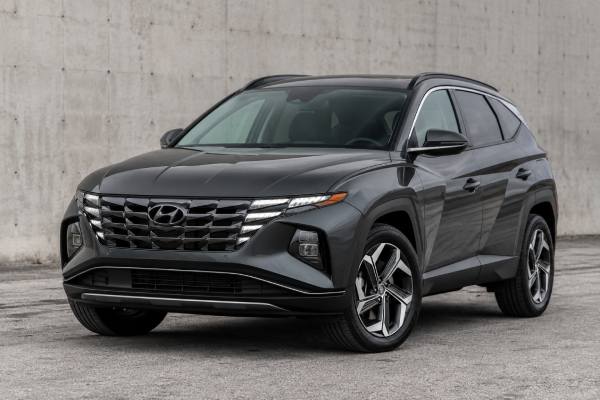
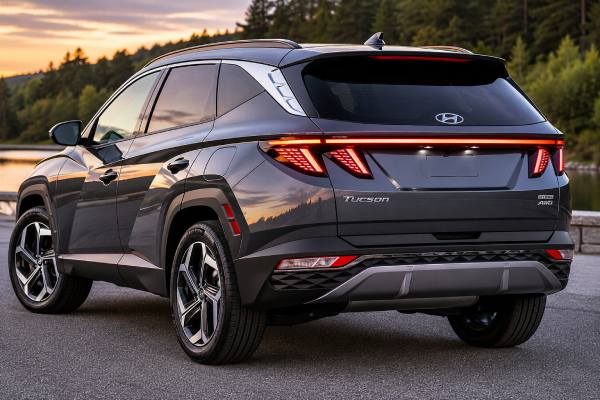
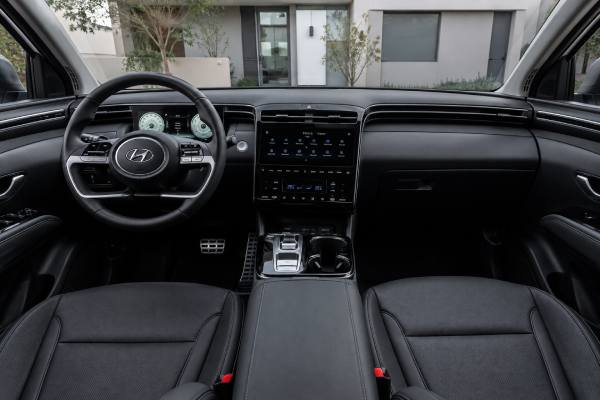
The Hyundai Tucson NX4 with the Smartstream 1.6 CRDi diesel, 48-volt mild-hybrid assistance, 7-speed dual-clutch transmission, and HTRAC all-wheel drive is one of the more balanced long-distance versions of Hyundai’s fourth-generation family SUV. It combines useful low-speed torque, good motorway economy, a roomy cabin, and stronger wet-weather traction than front-wheel-drive models. For buyers comparing used 2021–2024 Tucsons, this version is less about sporty acceleration and more about calm, efficient, all-season practicality.
Final Verdict
The 2021–2024 Hyundai Tucson NX4 1.6 CRDi 136 hp HTRAC AWD is a strong choice for drivers who cover regular motorway mileage, want a comfortable family SUV, and value diesel range with extra traction in bad weather. Its best appeal is the mix of space, safety equipment, and relaxed torque rather than outright speed. The main tradeoff is mechanical complexity: diesel emissions hardware, a 48-volt system, HTRAC driveline parts, and a 7DCT need the right use and service history. Buy one only with proof of oil changes, recall checks, DPF-friendly driving, and smooth clutch behavior.
| Pros | Cons |
|---|---|
| Strong diesel torque suits motorway cruising and loaded family use | Not quick; 0–100 km/h takes around 11.6 seconds |
| HTRAC AWD adds confidence in rain, snow, and gravel | Extra AWD hardware increases tyre and fluid-service sensitivity |
| 48V mild hybrid smooths stop-start and low-speed assistance | Mild hybrid cannot drive on electric power alone |
| Roomy NX4 cabin with useful cargo space and modern infotainment | 19-inch wheels can reduce ride comfort on broken roads |
| Five-star Euro NCAP rating with broad ADAS availability | Camera and radar systems need calibration after repairs |
| Good used value compared with hybrid and plug-in hybrid Tucsons | Short urban trips can cause DPF, EGR, and AdBlue problems |
Table of Contents
- Tucson CRDi HTRAC Overview
- Tucson Diesel Specifications
- Trims, Safety, and Driver Assistance
- Reliability, Common Issues, and Service Actions
- Maintenance and Used Buying Guide
- Driving, Performance, and Efficiency
- Tucson CRDi vs Rivals
Tucson CRDi HTRAC Overview
The diesel HTRAC Tucson is best understood as the practical, all-weather long-distance version of the NX4 range. It is quieter and more efficient than older diesels, but it is still happiest when it gets regular longer drives that let the emissions system work properly.
This model uses Hyundai’s Smartstream D1.6 CRDi four-cylinder diesel with 48-volt mild-hybrid assistance. The system does not make the Tucson a full hybrid. Instead, a small lithium-ion battery and mild-hybrid starter-generator help with restarting, coasting, and smoothing load on the diesel engine. The result is better refinement and economy than a conventional diesel, especially in mixed driving.
HTRAC is Hyundai’s electronically controlled all-wheel-drive system. In normal conditions, the Tucson behaves mainly like a front-driven SUV for efficiency. When the front tyres begin to lose grip, or when the software predicts a need for more traction, it sends torque to the rear axle. It is useful on wet roads, winter tyres, gravel tracks, and steep driveways, but it does not turn the Tucson into a serious off-roader.
The 7-speed dual-clutch transmission is an important part of the ownership experience. It gives efficient cruising and quick shifts once moving, but it is not as naturally smooth as a torque-converter automatic when crawling in traffic, reversing uphill, or manoeuvring with a trailer. A good one should pull away cleanly with only light clutch take-up feel. Jerking, repeated clutch smell, or hesitation during parking-speed manoeuvres deserves investigation.
As a used buy, this Tucson suits drivers who do enough distance to justify diesel ownership. A family covering rural, suburban, or motorway miles will get the best from it. A driver doing mostly short trips, school runs, and stop-start urban use may be better served by the petrol hybrid, because the diesel particulate filter and AdBlue/SCR system need heat and steady running.
The NX4 generation also brought a major cabin and technology jump over the previous Tucson. The dashboard layout is more modern, the rear seat is generous for the class, and higher trims can feel close to premium family SUV territory. The bold exterior styling is subjective, but it has aged well and still looks more distinctive than many compact SUVs from the same period.
Tucson Diesel Specifications
This version pairs a 1.6-litre common-rail turbo-diesel with 48-volt mild-hybrid hardware, a 7-speed DCT, and HTRAC AWD. The most important numbers are the 320 Nm torque output, the official WLTP combined fuel economy around 5.7–6.0 L/100 km for AWD versions, and the 1,650 kg braked towing rating where fitted and approved.
| Item | Hyundai Tucson NX4 1.6 CRDi 48V HTRAC AWD |
|---|---|
| Engine family | Smartstream D1.6 CRDi diesel |
| Engine layout | Transverse inline-four, turbocharged |
| Displacement | 1,598 cc / 1.6 litres |
| Fuel system | Common-rail direct injection |
| Valvetrain | DOHC, 16 valves |
| Maximum power | 136 PS / 134 hp / 100 kW |
| Maximum torque | 320 Nm / 236 lb-ft with 7DCT |
| Mild-hybrid battery | 48V lithium-ion, about 0.44 kWh |
| Emissions equipment | DPF, EGR, SCR/AdBlue on most European versions |
| Official WLTP combined economy | About 5.7–6.0 L/100 km, trim and tyre dependent |
| Official WLTP CO₂ | About 149–158 g/km for AWD 7DCT versions |
| Item | Specification |
|---|---|
| Transmission | 7-speed dual-clutch automatic |
| Drive type | Front-biased all-wheel drive |
| AWD system | Hyundai HTRAC electronically controlled AWD |
| Drive modes | Normal, Eco, Sport, and market-dependent terrain/snow modes |
| Rear driveline | Propshaft, rear differential, electronically controlled coupling |
| Item | Specification |
|---|---|
| Body style | Five-door compact SUV, five seats |
| Length | 4,500 mm / 177.2 in |
| Width | 1,865 mm / 73.4 in, excluding mirrors |
| Height | About 1,650–1,653 mm, depending on wheels and trim |
| Wheelbase | 2,680 mm / 105.5 in |
| Ground clearance | About 170 mm / 6.7 in |
| Turning circle | About 10.9 m |
| Front suspension | MacPherson struts |
| Rear suspension | Multi-link independent suspension |
| Fuel tank | 54 litres / 14.3 US gal |
| Cargo volume | About 546 litres seats up; about 1,725 litres seats folded |
| Item | Specification |
|---|---|
| 0–100 km/h | About 11.6 seconds |
| Top speed | 180 km/h / 112 mph |
| Kerb weight | About 1,590–1,665 kg, trim dependent |
| Braked towing capacity | Up to 1,650 kg where approved |
| Unbraked towing capacity | 750 kg |
| Nose weight | 100 kg |
| Roof load | 100 kg |
| Item | Useful value |
|---|---|
| Common tyre sizes | 215/65 R17, 235/55 R18, 235/50 R19 |
| Engine oil capacity | About 4.4 litres with filter |
| Engine oil type | Low-SAPS diesel oil; viscosity varies by market and climate |
| Brake fluid | DOT 4 specification, changed on time |
| Wheel-nut torque | Typically 107–127 Nm; verify by VIN |
| Timing drive | Timing belt system; interval must be checked by VIN |
Trims, Safety, and Driver Assistance
Trim names vary by country, but the buying pattern is similar: lower grades give the key safety and infotainment features, while upper grades add larger wheels, more comfort equipment, and more advanced driver assistance. For the diesel HTRAC AWD, availability was more market-dependent than for petrol and hybrid versions.
In many European markets, the NX4 Tucson range was sold with grades similar to SE Connect, Premium, Ultimate, N Line, and N Line S, though the exact names and equipment lists changed by country. Diesel AWD versions were often found in better-equipped trims because HTRAC and the 7DCT were not always offered on entry models.
Trim and option highlights
Base and mid-level trims usually cover the essentials well. Look for the 10.25-inch infotainment system, digital instrument display, dual-zone climate control, rear-view camera, parking sensors, smartphone integration, and the main active-safety suite. Premium-style trims typically add LED headlamps, heated front seats, heated steering wheel, smart key, adaptive cruise on DCT versions, wireless charging, and upgraded audio.
Higher trims can add leather seat facings, ventilated front seats, heated rear seats, three-zone climate control, panoramic sunroof, smart power tailgate, head-up display, surround-view camera, Blind View Monitor, Highway Driving Assist, and remote parking features where available. N Line versions bring sportier bumpers, interior trim, steering wheel design, and larger wheels, but they do not turn the diesel into a performance model.
The main functional differences to watch are wheel size, suspension setup, camera/radar equipment, and towing equipment. A Tucson on 17-inch wheels generally rides more calmly and uses cheaper tyres. A car on 19-inch wheels looks sharper but can feel firmer, especially on rough roads. If you tow, check the VIN plate, towbar approval, trailer wiring quality, and whether the car has had software or recall work related to towing equipment.
Quick identifiers include the HTRAC or AWD badge, a diesel fuel flap and AdBlue filler arrangement where fitted, the 7DCT gear selector, drive/terrain mode menus, and rear driveline hardware visible underneath. A VIN check is still the safest way to confirm engine, emissions level, recall status, and original market specification.
Safety ratings
The Hyundai Tucson NX4 achieved a five-star Euro NCAP rating in 2021. The detailed scores were 86% adult occupant protection, 87% child occupant protection, 66% vulnerable road user protection, and 70% safety assist. Importantly for this guide, Euro NCAP lists the 1.6 CRDi 48V MHEV 4×4 variant within the rating validity scope.
That makes this Tucson a reassuring family SUV, but the details matter. Adult and child protection were strong, and the Tucson includes a centre airbag to reduce front-occupant contact in side impacts. The vulnerable-road-user score was lower than the occupant scores, mainly because some pedestrian impact areas around the windscreen pillars are harder structures.
Driver assistance and calibration
Most NX4 Tucsons have a broad safety suite, including forward collision avoidance, lane keeping, lane following, speed-limit assistance, stability control, multi-collision braking, and tyre pressure monitoring. Depending on trim and year, equipment may also include adaptive cruise control, blind-spot monitoring, rear cross-traffic alert or braking, safe exit warning, Highway Driving Assist, surround-view cameras, and blind-spot camera displays.
After windscreen replacement, front bumper repair, suspension work, wheel alignment, or accident damage, the camera and radar systems may need calibration. This is not just a warning-light issue. Poor calibration can cause late warnings, false braking, lane support drift, or unavailable assistance. A used car with recent bodywork should come with repair invoices and calibration records.
Reliability, Common Issues, and Service Actions
The NX4 Tucson diesel is generally a solid vehicle when serviced correctly and driven in diesel-friendly conditions. The highest-risk examples are cars used mainly for short trips, cars with missing service history, and cars showing DCT judder, emissions warnings, or unresolved recall status.
| Area | Prevalence | Cost tier | What to watch |
|---|---|---|---|
| DPF regeneration interruptions | Common in short-trip use | Medium | Frequent fans, rising oil level, warning lights |
| EGR and intake soot | Occasional | Medium | Rough running, hesitation, reduced power |
| SCR/AdBlue faults | Occasional | Medium to high | No-start countdowns, NOx sensor faults |
| 7DCT clutch judder | Occasional | Medium to high | Shudder when pulling away or reversing uphill |
| 48V battery or MHSG faults | Rare to occasional | Medium | Stop-start faults, hybrid system warnings |
| ADAS sensor calibration | Repair-related | Medium | Lane, radar, or camera warnings after bodywork |
Diesel emissions system
The diesel particulate filter needs heat and steady running to burn off soot. A Tucson used mostly for short urban trips may never complete regeneration properly. Symptoms include a DPF warning, cooling fan running after shutdown, reduced power, increased fuel consumption, or a rising oil level from interrupted regeneration cycles.
EGR valves and coolers can also suffer from soot deposits, especially with low-speed driving and long oil intervals. Typical signs are hesitation, uneven idle, limp mode, and emissions-related fault codes. The remedy may be a software update, cleaning, sensor replacement, EGR work, or DPF service depending on the fault.
SCR and AdBlue issues are also possible on modern diesels. Look for crystal deposits around the AdBlue filler, warning messages, poor-quality AdBlue history, NOx sensor faults, or countdown messages. If a car shows an AdBlue warning during a viewing, do not assume it only needs a top-up.
7DCT transmission behavior
The 7-speed DCT is efficient, but it does not like being slipped like a conventional automatic. Heavy traffic, repeated uphill parking manoeuvres, towing on steep gradients, and aggressive creeping can overheat the clutches. During a test drive, check smooth pull-away from cold, gentle reversing, uphill starts, and low-speed traffic flow.
Symptoms of trouble include clutch shudder, delayed engagement, harsh first-to-second shifts, transmission overheating messages, or a burning smell. Some drivability issues may improve with software updates or clutch adaptation, but worn clutches or mechatronic faults are more expensive.
HTRAC AWD and chassis
The HTRAC system is reliable when tyres are matched and fluids are maintained. Problems are more likely if the car has mismatched tyre brands, uneven tread depths, accident damage, or ignored driveline servicing. Listen for rear whine, clunks on take-up, vibration under load, and binding sensations during tight turns.
Suspension wear is usually ordinary family SUV stuff: anti-roll-bar links, bushes, top mounts, wheel bearings, and alignment wear after potholes. Cars on 19-inch wheels are more exposed to tyre noise and impact damage, so inspect wheels and inner tyre edges carefully.
Software, recalls, and service actions
Software updates can affect engine drivability, emissions behavior, DCT calibration, infotainment stability, navigation, Bluelink connectivity, and camera/radar operation. A dealer service history is valuable because it is the easiest way to confirm completed campaigns and calibrations.
Recalls and service campaigns are VIN-specific. Do not rely only on a generic model-year list, because affected ranges can differ by production date, market, factory, trim, and optional equipment. Before buying, run the VIN through Hyundai’s official recall portal for the relevant country and ask the seller for printed dealer records showing completed actions.
Maintenance and Used Buying Guide
The best maintenance plan for this Tucson is conservative rather than minimal. The diesel engine, DPF, 7DCT, HTRAC system, and mild-hybrid hardware all reward clean fluids, correct specifications, and early attention to warning signs.
| Interval | Service item | Practical note |
|---|---|---|
| 10,000–15,000 km or 12 months | Engine oil and filter | Use correct low-SAPS diesel oil; shorten for city use |
| 15,000 km or 12 months | Cabin filter | Replace sooner in dusty or polluted areas |
| 30,000 km or 24 months | Engine air filter | Inspect sooner for rural or dusty use |
| 30,000 km or 24 months | Brake inspection and tyre rotation | Check inner tyre wear and rear brake corrosion |
| 24 months | Brake fluid | Use DOT 4 and bleed correctly |
| 60,000 km or 4 years | Fuel filter | Important for high-pressure common-rail diesel injection |
| 60,000–90,000 km | DCT and AWD fluid checks | Consider earlier service for towing or mountain use |
| At every major service | Timing belt, auxiliary belts, hoses | Confirm replacement interval from official VIN data |
| At every service | 12V battery and 48V system scan | Weak 12V batteries can trigger misleading faults |
| Ongoing | DPF and AdBlue health | Scan soot load, regeneration history, and SCR faults |
Fluid specifications are VIN- and market-sensitive. As a general guide, expect low-SAPS diesel engine oil in a climate-appropriate grade, Hyundai-approved long-life coolant, DOT 4 brake fluid, and specific Hyundai/Kia driveline fluids for the DCT, transfer components, rear differential, and AWD coupling. Do not substitute generic gear oil in the AWD hardware without checking the exact specification.
The timing drive deserves special attention because this Smartstream diesel is not the same as older chain-driven Hyundai diesels. Treat it as a belt-driven engine and confirm the official interval for the exact VIN. If a seller cannot prove the interval or belt history on a higher-mileage car, price the job into the purchase.
Used inspection checklist
Start with the service record. You want annual oil changes, correct oil specification, fuel-filter replacement, brake-fluid changes, and evidence of dealer campaign checks. A car with fewer miles but many short trips can be a worse diesel buy than a higher-mileage motorway car.
During the viewing, check:
- Cold start quality, idle smoothness, smoke, and warning lights.
- DPF, EGR, SCR, NOx sensor, and AdBlue fault history with a proper scan tool.
- DCT pull-away, reversing, uphill crawling, and shift quality.
- HTRAC operation, rear driveline noise, and tyre tread matching.
- Coolant level, oil leaks, boost hoses, and exhaust leaks.
- Brake disc condition, especially rear corrosion from light use.
- Suspension knocks, steering alignment, and inner tyre wear.
- Infotainment, cameras, parking sensors, keyless entry, and Bluelink functions.
- Windscreen and bumper repair history, followed by ADAS calibration proof.
- Recall and service campaign completion by VIN.
The best examples are one-owner or dealer-maintained cars with regular long-distance use. A diesel HTRAC Tucson with matched premium tyres, smooth DCT behavior, no emissions warnings, and clear dealer records is a much safer buy than a cheap car with vague history.
For trims, the sweet spot is often a mid-to-high grade with LED lights, adaptive cruise, heated seats, good parking aids, and smaller wheels if ride comfort matters. The fully loaded versions are attractive, but panoramic roofs, camera systems, powered seats, and 19-inch wheels add more items to inspect.
Long-term durability should be good if the car is used as intended. The engine has enough torque without feeling highly stressed, the chassis is robust for family use, and Hyundai parts support is generally strong. The risks are mostly modern diesel complexity and transmission misuse, not a fundamentally weak vehicle.
Driving, Performance, and Efficiency
The 1.6 CRDi HTRAC Tucson drives like a calm, torque-led family SUV. It is not fast, but it feels more relaxed than the acceleration figure suggests because the torque arrives low in the rev range.
Around town, the diesel is smooth once warm, and the 48V system helps take the edge off stop-start operation. There can still be some diesel sound when cold, and the DCT can feel less fluid than a torque-converter automatic in creeping traffic. The best approach is to drive it decisively rather than inch forward on the clutch for long periods.
On open roads, the Tucson settles well. The steering is light and accurate, body control is safe rather than sporty, and the rear multi-link suspension helps it feel more composed than simpler rear-axle SUVs. The ride is best on 17- or 18-inch wheels. Cars on 19-inch wheels look better but transmit more sharpness over potholes and coarse surfaces.
Motorway refinement is one of its strengths. At steady speeds, the engine sits in its torque band without much effort, wind noise is controlled, and the cabin feels stable. The diesel is also better suited than the petrol turbo for drivers who often carry passengers, luggage, or a roof box.
Performance is modest on paper: around 11.6 seconds from 0–100 km/h and a 180 km/h top speed. The more relevant measure is mid-range response. From 80–120 km/h, it has enough torque for safe overtaking, but the DCT may pause before selecting the right gear if you ask for sudden acceleration. Sport mode sharpens response, while Eco mode favours early shifts and smoother throttle mapping.
HTRAC is most useful in bad weather. It helps the Tucson pull away cleanly on wet junctions, snowy side streets, and loose tracks. With winter tyres, it becomes a very confident cold-weather family car. Without winter tyres, AWD cannot overcome poor tyre grip, so tyre choice matters more than the badge.
Real-world economy depends heavily on use. On steady 100–120 km/h motorway runs, expect roughly 5.6–6.8 L/100 km, or about 35–42 mpg US and 42–50 mpg UK. Mixed driving usually lands around 6.2–7.2 L/100 km, or about 33–38 mpg US and 39–46 mpg UK. Heavy city use, winter temperatures, roof boxes, short trips, and DPF regeneration can push it higher.
For towing, the 1,650 kg braked rating is useful, but this is still a compact SUV with a dual-clutch gearbox. It is suitable for smaller caravans, utility trailers, bikes, and light leisure towing. For frequent heavy towing on hills, use manual gear control where appropriate, avoid excessive clutch slip, watch temperatures, and service the driveline more often.
Tucson CRDi vs Rivals
The diesel HTRAC Tucson sits in a crowded class, but it has a clear personality: it is more practical and comfort-focused than sporty, more modern inside than many older rivals, and usually better value used than premium-badged SUVs.
The closest rival is the Kia Sportage 1.6 CRDi MHEV AWD, which shares much of the same engineering in its equivalent generation. The Sportage has a different interior layout and styling, but the same broad strengths and concerns apply: diesel efficiency, 48V assistance, DCT behavior, and emissions-system health. Choosing between them often comes down to price, warranty history, equipment, and personal taste.
The Volkswagen Tiguan 2.0 TDI 4Motion feels more traditional and can be stronger for towing, especially with the larger 2.0-litre diesel. It also has a mature cabin and good motorway manners. However, equivalent Tiguans can cost more used, and DSG/AdBlue/DPF checks are just as important.
The Toyota RAV4 Hybrid AWD is the better choice for short trips, city use, and long-term simplicity if diesel economy is not essential. It is smoother in traffic and avoids diesel emissions hardware, but used prices are usually higher and motorway fuel economy may not beat the Tucson diesel for high-speed drivers.
The Mazda CX-5 diesel AWD feels more driver-focused and has a high-quality cabin, but Mazda diesels require careful maintenance and are not ideal for short-trip use either. The Tucson has the advantage in screen technology and rear-seat space, while the Mazda feels more natural to drive.
The Peugeot 3008 diesel is efficient and stylish inside, but most versions are front-wheel drive, so it cannot match the Tucson HTRAC for traction. It is a good alternative for drivers who do not need AWD and want lower running costs.
The Nissan Qashqai is cheaper to run and easy to live with, but it is smaller and less capable as a loaded long-distance SUV. The Tucson feels more substantial, especially with AWD, better rear space, and stronger towing usefulness.
Overall, the Tucson CRDi HTRAC is most appealing if you want diesel range, family space, strong safety credentials, and winter confidence without paying premium-SUV prices. The hybrid Tucson is better for city-heavy drivers, but for regular motorway users the diesel AWD still makes a strong case.
References
- The all-new Hyundai Tucson 2020 (Manufacturer Press Kit)
- The all-new Hyundai TUCSON takes the stress out of travelling 2021 (WLTP Data)
- Euro NCAP | Hyundai TUCSON 2021 (Safety Rating)
- Hyundai Owners manuals | Hyundai Motor UK 2026 (Owner’s Manual Portal)
- Hyundai Recalls & Service Campaigns: Home 2026 (Recall Database)
Disclaimer
This article is for informational purposes only and is not a substitute for professional diagnosis, inspection, repair, or official service information. Specifications, torque values, maintenance intervals, recall status, fluids, and repair procedures can vary by VIN, market, production date, trim, and equipment. Always verify details against the vehicle’s official service documentation and a Hyundai dealer or qualified technician.
If this guide helped you, please consider sharing it on Facebook, X/Twitter, or your preferred automotive group to support our work.