
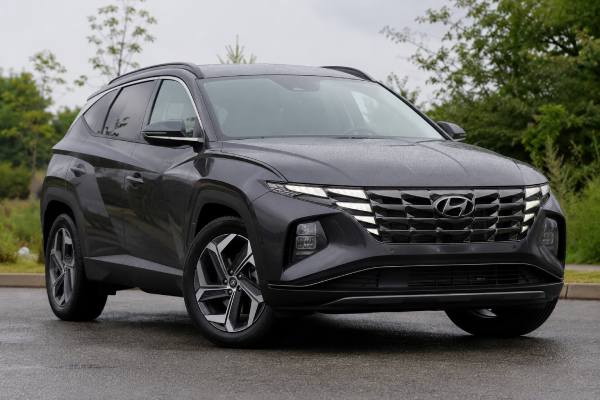
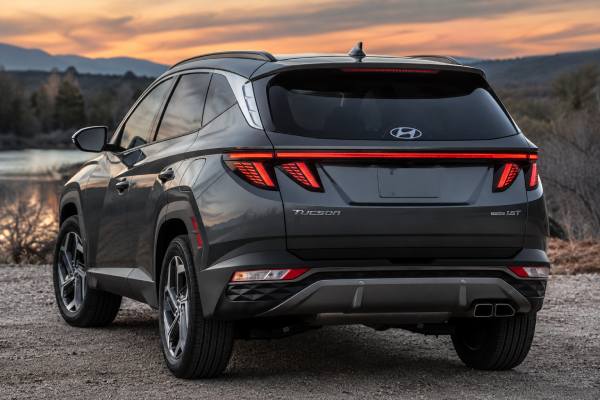
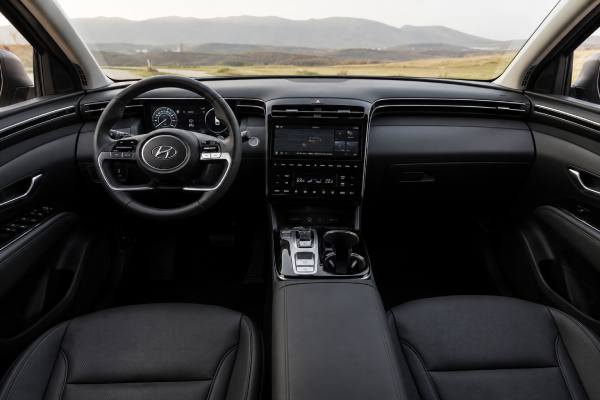
The fourth-generation Hyundai Tucson, known by the NX4 platform code, was a major step up from the previous Tucson. In 1.6 T-GDi 150 hp front-wheel-drive form, it is the straightforward petrol version: no high-voltage hybrid system, no all-wheel-drive hardware, and no heavy battery pack. That makes it lighter, simpler, and often cheaper to buy used than the hybrid and plug-in hybrid models.
This guide focuses on the 2021–2024 pre-facelift Tucson FWD with the Smartstream 1.6 T-GDi turbo petrol engine, usually paired with a 6-speed manual gearbox in many European markets. Equipment, service intervals, and exact figures can vary by country and trim, but the ownership character is consistent: roomy family SUV, sensible running costs, good safety equipment, and a turbocharged engine that rewards regular oil servicing.
Final Verdict
The Hyundai Tucson FWD NX4 1.6 T-GDi 150 hp is a good choice for buyers who want the space, comfort, design, and safety tech of the fourth-generation Tucson without the extra cost and complexity of hybrid or AWD versions. Its strongest appeal is everyday usability: a roomy cabin, large boot, calm ride, and enough turbo torque for family driving. The main tradeoff is that it is not especially fast or frugal when driven hard, and the direct-injection turbo engine needs disciplined oil changes. Buy one only with a clean service record, completed recalls, and no signs of clutch, turbo, coolant, or ADAS-related neglect.
| Pros | Cons |
|---|---|
| Roomy NX4 cabin with strong rear-seat comfort | Manual 150 hp version feels modest when fully loaded |
| 620-litre boot on non-hybrid petrol versions | Real-world economy trails hybrid Tucson versions |
| Smartstream 1.6 T-GDi has useful low-rpm torque | Turbo direct-injection engine is oil-service sensitive |
| Five-star Euro NCAP rating for the NX4 range | ADAS equipment varies strongly by trim and market |
| Lower complexity than HEV, PHEV, and AWD models | Check VIN carefully for airbag and window recalls |
Table of Contents
- Tucson FWD NX4 Overview
- Smartstream 1.6 T-GDi Specifications
- Trims, Safety and Driver Assistance
- Reliability, Common Issues and Service Actions
- Maintenance and Buyer’s Guide
- Driving, Performance and Efficiency
- How the Tucson Compares to Rivals
Tucson FWD NX4 Overview
The Tucson NX4 1.6 T-GDi 150 FWD is the simplest petrol version of Hyundai’s sharp-looking fourth-generation family SUV. It suits buyers who want a spacious, well-equipped crossover more than outright performance or maximum fuel economy.
The NX4 arrived with a bolder design, a wider cabin feel, a more modern dashboard, and much stronger driver-assistance equipment than the previous Tucson. The 150 hp petrol version sits below the mild-hybrid, full-hybrid, plug-in hybrid, and higher-output AWD versions in performance and complexity.
This model is best understood as a practical family car with a turbocharged petrol engine. It has enough torque for city driving, motorway cruising, and moderate loads, but it is not the version to choose if you tow regularly, drive in mountains often, or want strong overtaking performance with five people and luggage on board.
The FWD layout keeps weight and running costs down. It also means fewer driveline parts to maintain than the HTRAC AWD variants. For many owners in mild climates, front-wheel drive is entirely adequate, especially with good tyres. Buyers in snowy regions should focus more on winter tyres than on chasing AWD unless they regularly drive on steep or poorly cleared roads.
The biggest practical advantage over the hybrid versions is cargo space. In many pre-facelift European specifications, the non-hybrid petrol Tucson has a larger boot than the mild-hybrid versions because it avoids hybrid-related packaging compromises. That makes this 150 hp petrol especially appealing to families who need prams, sports bags, luggage, or a dog crate.
The ownership profile is sensible rather than exciting. You get the modern Tucson body, strong safety credentials, a broad dealer network, and a proven Hyundai warranty environment. In return, you accept average performance, average-to-good fuel economy, and the maintenance needs of a small turbocharged direct-injection engine.
For used buyers, condition matters more than badge level. A lower-trim car with annual oil changes, matching tyres, clean recall history, and no warning lights is usually a safer purchase than a highly specified car with missed services or questionable accident repairs.
Smartstream 1.6 T-GDi Specifications
The 150 hp Tucson covered here uses Hyundai’s Smartstream G1.6 T-GDi petrol engine, a 1.6-litre turbocharged four-cylinder. In FWD manual form, it is lighter and mechanically simpler than the DCT mild-hybrid, full-hybrid, plug-in hybrid, and AWD versions.
| Item | Hyundai Tucson FWD 1.6 T-GDi 150 |
|---|---|
| Engine family | Smartstream G1.6 T-GDi |
| Fuel type | Unleaded petrol, typically RON 91 or higher |
| Layout | Inline 4-cylinder, DOHC, 16 valves |
| Displacement | 1,598 cc |
| Bore × stroke | 75.6 × 89.0 mm |
| Compression ratio | 10.5:1 |
| Induction | Turbocharged petrol direct injection |
| Maximum power | 150 PS / 110.3 kW at 5,500 rpm |
| Maximum torque | 250 Nm / 184 lb-ft from 1,500–4,000 rpm |
| 0–62 mph | 10.3 seconds |
| Top speed | 117 mph / 188 km/h |
| Emissions standard | Euro 6d in European launch specifications |
| Item | Specification |
|---|---|
| Transmission | 6-speed manual |
| Drive type | Front-wheel drive |
| Front suspension | MacPherson strut with coil spring |
| Rear suspension | Multi-link |
| Steering | Motor-assisted rack and pinion |
| Steering turns lock-to-lock | 2.41 |
| Turning circle | 10.9 m |
| Front brakes | Ventilated discs |
| Rear brakes | Solid discs |
| Item | Value |
|---|---|
| Body style | 5-door SUV, 5 seats |
| Length | 4,500 mm |
| Width excluding mirrors | 1,865 mm |
| Wheelbase | 2,680 mm |
| Height | 1,651–1,653 mm, depending on trim and wheels |
| Kerb weight | 1,425–1,575 kg |
| Gross vehicle weight | 2,050 kg |
| Payload | 475–625 kg |
| Fuel tank | 54 litres |
| Boot volume, seats up | 620 litres VDA |
| Boot volume, seats down | 1,799 litres VDA |
| Braked towing limit | 1,650 kg |
| Unbraked towing limit | 750 kg |
| Maximum noseweight | 100 kg |
| Maximum roof load | 100 kg |
| Trim or setup | Tyres | Official combined economy | CO₂ |
|---|---|---|---|
| SE Connect-style 17-inch setup | 215/65 R17 | 42.2 mpg UK / 6.7 L/100 km | 151 g/km |
| Premium-style 18-inch setup | 235/55 R18 | 41.5 mpg UK / 6.8 L/100 km | 154 g/km |
| Ultimate-style 19-inch setup | 235/50 R19 | 41.5 mpg UK / 6.8 L/100 km | 155 g/km |
| Item | Useful reference value |
|---|---|
| Engine oil capacity | About 4.8 litres drain and refill |
| Engine oil grade | SAE 0W-20, API SN PLUS/SP or ILSAC equivalent |
| Brake fluid | DOT 4 / DOT 4 LV type, market dependent |
| Spark plugs | Commonly listed at 70,000 km in Smartstream 1.6 T-GDi schedules |
| Brake fluid interval | Commonly 30,000 km or 24 months |
| Wheel lug nut torque | 11–13 kgf·m / 79–94 lb-ft / 107–127 Nm |
Trims, Safety and Driver Assistance
The Tucson 1.6 T-GDi 150 was sold with a wide spread of trims, and equipment matters more than the engine badge. In used listings, two cars with the same engine can differ heavily in wheels, lighting, infotainment, seat trim, parking cameras, and driver-assistance systems.
In the UK-style launch range, SE Connect, Premium, Ultimate, and later N Line grades covered most buyer needs. Other European markets used different trim names, but the structure was similar: a well-equipped base model, a comfort-focused mid trim, and a high-spec version with more safety and convenience technology.
SE Connect-type cars usually have the practical basics: alloy wheels, dual-zone climate control, rear camera, rear parking sensors, cruise control, digital displays, and a strong standard safety package. Premium-type cars add features such as larger wheels, LED headlamps, heated front seats, heated steering wheel, keyless entry, wireless phone charging, and upgraded audio in some markets. Ultimate-type cars bring leather trim, ventilated front seats, heated rear seats, panoramic roof, powered tailgate, more advanced safety aids, and larger wheels.
N Line versions are mostly visual and equipment-led rather than mechanically transformed. They add sportier bumpers, darker grille details, body-coloured arch inserts, 19-inch wheels, alloy pedals, and a more dynamic interior look. On the 150 hp FWD manual, do not expect a hot-SUV driving experience. The N Line makes the Tucson look sharper but does not turn this engine into the high-performance choice.
Quick identifiers are useful when inspecting used cars. The simplest signs are wheel size, seat trim, headlamp type, infotainment screen size, roof rails, panoramic roof, power tailgate, and the presence of camera-based systems such as the around-view monitor or blind-spot view monitor. The VIN and build sheet remain the safest way to confirm factory equipment, especially on imported cars.
The NX4 Tucson earned a five-star Euro NCAP rating in 2021. The tested model was a 1.6 T-GDi HEV, but the rating applies across a broad range of Tucson variants, including 1.6 T-GDi 4×2 versions where specified by the test authority. The headline scores were 86% adult occupant protection, 87% child occupant protection, 66% vulnerable road-user protection, and 70% safety assist.
The airbag package includes front, side, curtain, and centre-airbag protection in Euro NCAP-rated versions. The centre airbag is important because it helps reduce occupant-to-occupant contact in side impacts. Rear ISOFIX points, seatbelt reminders, multi-collision braking, stability control, anti-lock braking, and emergency call functionality all strengthen the Tucson’s family-car credentials.
Driver-assistance availability depends on trim, gearbox, and model year. Common systems include Forward Collision-Avoidance Assist, lane-keeping support, lane-following assist, intelligent speed-limit assistance, rear cross-traffic warning or assist, blind-spot warning or assist, safe-exit warning, and Highway Driving Assist on better-equipped versions. Manual 150 hp cars may not receive the same adaptive cruise or stop-and-go functions as DCT, hybrid, or plug-in hybrid models.
ADAS checks matter after windscreen replacement, front bumper repair, wheel alignment, suspension work, or crash damage. A car can look tidy but still have poorly calibrated radar or camera systems. During a test drive, check that lane support, speed-limit recognition, parking sensors, cameras, and blind-spot alerts operate normally and do not throw intermittent warnings.
Reliability, Common Issues and Service Actions
The 1.6 T-GDi FWD Tucson is generally a lower-complexity NX4 choice, but it still needs proper turbo-petrol maintenance. Most serious used-car risk comes from missed oil changes, short-trip use, accident repairs, ignored recalls, and electronic faults rather than one single universal failure point.
| Area | Prevalence | Severity | Symptoms | Recommended action |
|---|---|---|---|---|
| Engine oil neglect | Occasional | High | Noisy cold starts, low oil, poor service history | Reject badly documented cars; shorten oil intervals |
| Turbo and intake leaks | Occasional | Medium | Whistle, boost loss, oily hoses, warning light | Inspect intercooler hoses, clamps, PCV and turbo lines |
| Direct-injection carbon build-up | Age-related | Medium | Rough idle, misfire, poor cold running | Diagnose properly; walnut clean only when confirmed |
| Clutch and dual-mass flywheel wear | Usage-related | Medium | Judder, slip, vibration, rattling at idle | Check hill starts and low-speed take-up |
| Brake corrosion | Common in light use | Low to medium | Scored discs, pulsing, scraping after parking | Inspect discs, sliders, pads and parking brake |
| ADAS sensor faults | Occasional | Medium | Lane, radar, camera or blind-spot warnings | Check calibration history after glass or body repairs |
| Infotainment and Bluelink glitches | Occasional | Low | Slow boot, phone pairing issues, navigation bugs | Apply software and map updates where available |
| 12 V battery weakness | Occasional | Low | Slow start, random warnings, stop-start inactive | Test battery and charging system before replacing parts |
The Smartstream 1.6 T-GDi uses a timing chain rather than a routine timing belt. That reduces scheduled belt-replacement cost, but it does not make the timing system maintenance-free. Listen for chain rattle on cold start, check for cam/crank timing-correlation faults, and treat oil quality as part of timing-chain care. Long oil intervals, low oil level, and cheap oil are poor companions for a small turbo engine.
Oil consumption should not be ignored. Hyundai manuals advise regular oil-level checks, and this is especially sensible on a turbocharged direct-injection petrol engine. A small amount of consumption can be normal, especially with high-speed use, but a car that needs frequent topping up, smokes, or smells of burnt oil needs diagnosis before purchase.
Cooling-system issues are usually less dramatic but still important. Look for crusty residue near hose joints, coolant smell after a drive, staining around the expansion tank, and signs of overheating. Turbocharged engines dislike heat stress, so a “minor” coolant leak deserves attention.
The manual gearbox is generally simpler than DCT versions, but clutch condition depends heavily on the previous driver. City driving, steep driveways, towing, and repeated clutch slipping can age the clutch and dual-mass flywheel early. On a test drive, accelerate from low rpm in a higher gear to check for slip, then listen for rattles when the clutch pedal is pressed and released.
Recalls and service campaigns must be checked by VIN. Public European recall notices have covered some NX4 Tucson vehicles for curtain-airbag installation concerns and rear electric window anti-trap operation. Some campaigns affect only narrow production ranges, so do not assume every 2021–2024 Tucson is affected, and do not assume a car is clear because it looks well maintained.
Ask for proof of completed recall work, not just a verbal assurance. A Hyundai dealer VIN check is the cleanest route. In the UK, Hyundai’s recall and service-campaign checker can also help owners identify outstanding campaigns, but imported cars and recently completed work may still need dealer confirmation.
Pre-purchase checks should include:
- Full service history with dates, mileage, oil grade, and invoices.
- Cold start from fully cold, not after the seller has warmed the engine.
- OBD scan for stored engine, body, ADAS, and infotainment faults.
- VIN recall check through Hyundai or the national recall database.
- Inspection for crash repairs around bumpers, windscreen, headlights, and radar areas.
- Clutch bite point, flywheel noise, and hill-start behaviour.
- Tyre wear pattern, because poor alignment can make the Tucson noisy and expensive to run.
- Operation of all cameras, parking sensors, lane systems, blind-spot functions, and electric windows.
Maintenance and Buyer’s Guide
The best maintenance strategy for this Tucson is simple: service it yearly, use the correct oil, inspect the turbo and cooling system, and do not stretch intervals on cars used mainly for short trips. A tidy 1.6 T-GDi with annual invoices is usually a much better buy than a newer car with missing records.
| Interval | Maintenance items |
|---|---|
| Every month or before long trips | Check engine oil level, coolant level, tyre pressures, lights and washer fluid |
| Every 10,000–15,000 km or 12 months | Replace engine oil and oil filter; inspect brakes, tyres, suspension and leaks |
| Every 12 months | Inspect engine air filter, cabin filter, battery condition, belts, hoses and wipers |
| Every 30,000 km or 24 months | Replace brake fluid; replace cabin filter if not already done |
| Every 40,000–60,000 km | Inspect coolant condition, auxiliary belt, brake discs, suspension bushes and wheel bearings |
| Every 70,000 km | Replace spark plugs where specified for Smartstream 1.6 T-GDi schedules |
| Every 90,000 km or 72 months | Inspect valve clearance if listed in the local service schedule |
| At 120 months or high mileage | Replace coolant according to VIN-specific schedule, then repeat at shorter intervals |
| After water immersion | Change gearbox or driveline oils as needed and inspect wheel bearings and brakes |
For severe use, shorten the oil interval. Severe use includes repeated short trips, heavy traffic, long idling, dusty roads, mountain driving, towing, very cold weather, roof loads, taxi or delivery use, and frequent hard acceleration. Many used Tucsons fall into at least one of these categories, even if the owner does not describe it that way.
Use the specified oil grade. The Smartstream G1.6 T-GDi is commonly listed with SAE 0W-20 full-synthetic oil meeting API SN PLUS/SP or the relevant ILSAC standard. The approximate drain-and-refill quantity is 4.8 litres. Do not rely on generic workshop oil without checking the invoice. The oil line on the receipt should show the viscosity and specification, not just “engine oil.”
Brake fluid is a time-based item because it absorbs moisture. Old brake fluid can reduce braking performance and contribute to corrosion inside hydraulic components. For a family SUV that may carry children and luggage, this is not a place to save money.
Tyres affect the Tucson more than many buyers expect. The 17-inch setup usually gives the best ride comfort and replacement cost. The 18-inch wheels are a good balance. The 19-inch wheels look sharper, but they make tyre replacement more expensive and can add impact harshness on poor roads.
During inspection, pay attention to the following areas:
- Front bumper and grille: radar and parking sensors can be disturbed by poor repairs.
- Windscreen: camera calibration may be needed after replacement.
- Boot area: check for water ingress, trim damage, and tailgate operation.
- Rear brakes: light-use cars can suffer corrosion and uneven pad contact.
- Lower suspension arms and bushes: listen for knocks over rough roads.
- Exhaust and heat shields: check for rattles and corrosion on cars used in salted climates.
- Engine bay: look for coolant stains, oil misting, loose intake hoses, and non-original repairs.
- Interior electronics: test every switch, window, camera, display, USB port, and driver-assistance warning.
The best used examples are usually mid- or high-trim cars with smaller wheel damage, matching premium tyres, dealer or specialist service records, and all software and recall work complete. Avoid cars with repeated warning lights, cheap mismatched tyres, vague service history, accident-panel gaps, damp carpets, clutch slip, or a seller who cannot explain when the last oil service was done.
Long-term durability should be good if the engine is serviced conservatively and the car is not abused. The body structure, cabin, suspension layout, and general parts availability are all favourable. The main long-term cost risks are turbo-related neglect, clutch wear, electronic sensor faults, and deferred brake or suspension work.
Driving, Performance and Efficiency
The 150 hp FWD Tucson drives like a comfortable family SUV, not a sporty crossover. Its strengths are relaxed cruising, easy controls, good visibility, and a cabin that feels more grown-up than the previous-generation Tucson.
The engine’s 250 Nm torque plateau from low revs gives it decent everyday flexibility. In town, it pulls cleanly without needing constant revs, and the manual gearbox helps the driver keep the engine in its useful mid-range. Turbo lag is present but not disruptive. The car feels best when driven smoothly rather than rushed.
Performance is adequate. The official 0–62 mph time of 10.3 seconds tells the story: it is quick enough for normal traffic, but not strong enough to feel effortless when heavily loaded. Overtaking on faster two-lane roads needs planning, especially with passengers and luggage. Motorway cruising is more relaxed because the engine has enough mid-range torque to hold speed without feeling strained.
Ride comfort depends on wheel size. On 17-inch wheels, the Tucson has a calmer, more rounded feel over broken surfaces. On 18-inch wheels, it remains comfortable but slightly firmer. On 19-inch wheels, the car looks better but can feel sharper over potholes and expansion joints. Suspension noise is generally well controlled, though worn tyres or cheap replacements can make the cabin noticeably louder.
Handling is secure rather than playful. The steering is light at low speed and stable enough on the motorway. In corners, the Tucson resists feeling clumsy, but it is still a tall family SUV. Push hard and the front tyres run out of enthusiasm before the chassis feels entertaining. For most owners, the important point is that it feels predictable and safe.
Braking feel is straightforward. Because this non-hybrid petrol version does not rely on regenerative braking, the pedal feel is more conventional than in some hybrid SUVs. Check for vibration or pulsing on a test drive because corroded discs can be common on lightly used family cars.
Real-world fuel economy depends heavily on route and wheel size. Sensible expectations are:
- City driving: about 8.0–10.0 L/100 km, or roughly 24–29 mpg US / 28–35 mpg UK.
- Motorway driving at 100–120 km/h: about 6.2–7.4 L/100 km, or roughly 32–38 mpg US / 38–46 mpg UK.
- Mixed use: about 7.0–8.3 L/100 km, or roughly 28–34 mpg US / 34–40 mpg UK.
Cold weather, short trips, roof bars, winter tyres, and heavy loads can push consumption higher. Drivers coming from older naturally aspirated petrol SUVs may find the Tucson efficient enough. Drivers expecting hybrid-like numbers should buy the Tucson Hybrid instead.
Towing is possible, with a braked trailer rating of up to 1,650 kg in relevant European specifications. Still, this 150 hp FWD manual is not the ideal Tucson for frequent towing. The engine can manage moderate loads, but hill starts, clutch wear, front-tyre traction, and cooling load all become more important. For regular caravan use, a hybrid, diesel where available, or AWD version may be more relaxed.
How the Tucson Compares to Rivals
The Tucson 1.6 T-GDi 150 competes with mainstream family SUVs such as the Kia Sportage, Nissan Qashqai, Volkswagen Tiguan, Ford Kuga, Peugeot 3008, Toyota RAV4, Mazda CX-5, and Seat Ateca. Its strongest cards are cabin space, safety equipment, design, warranty support, and value.
Against the Kia Sportage, the Tucson feels closely related because the two share broad Hyundai-Kia engineering roots. The Sportage often has a slightly different cabin layout and brand personality, but the same broad strengths apply: good practicality, strong safety tech, and solid value. Choice between them often comes down to price, trim, warranty status, and which interior you prefer.
Against the Nissan Qashqai DIG-T, the Tucson usually feels larger and more substantial. The Qashqai can be easier to place in town and may appeal to buyers who want a lighter-feeling crossover, but the Tucson wins on boot space and rear-seat room in many comparisons. The Hyundai’s 1.6 turbo also has a stronger torque figure than many smaller petrol rivals.
Against the Volkswagen Tiguan 1.5 TSI, the Tucson often offers more equipment for the money on the used market. The Tiguan counters with a mature driving feel, strong resale reputation, and a broad specialist repair network. Used Tiguan buyers need to check DSG servicing and engine-specific issues; Tucson buyers need to focus on Hyundai service history, recalls, and ADAS function.
Against the Ford Kuga 1.5 EcoBoost, the Tucson is usually the calmer and more cabin-focused car. The Kuga often feels sharper to drive, especially on twisty roads, but the Tucson has a more distinctive interior and a strong equipment list. For family use, the Hyundai’s rear space and boot practicality make a strong case.
Against the Peugeot 3008, the Tucson is less dramatic inside but easier for many drivers to adapt to. The Peugeot has a stylish cabin and efficient engines, but the small steering wheel and high-set instruments do not suit everyone. The Hyundai’s controls and seating position are more conventional.
Against the Toyota RAV4, the Tucson 1.6 T-GDi 150 is usually cheaper used but cannot match Toyota hybrid economy. The RAV4 Hybrid is the better choice for high-mileage city drivers. The Tucson petrol makes more sense for buyers who want lower purchase cost, a manual gearbox, and simpler non-hybrid ownership.
Against the Mazda CX-5, the Tucson feels more modern in infotainment and driver assistance. The Mazda often has better steering feel and a more premium driving character, but its cabin packaging is not as space-efficient. Buyers who value driving feel may prefer the Mazda; buyers who need tech, rear-seat room, and warranty value may prefer the Hyundai.
The Tucson’s sweet spot is practical family ownership. It is not the fastest, most efficient, or most premium SUV in the class, but it blends space, comfort, safety, and cost in a way that works well for everyday use.
References
- Hyundai announces prices and specifications for new Tucson compact SUV 2020 (Manufacturer Press Kit)
- All New Tucson – Pricing spec and tech – 18 Dec 2020 2020 (Technical Data)
- Hyundai TUCSON 2021 (Safety Rating)
- Normal Maintenance Schedule (Smartstream 1.6 T-GDi) 2021 (Owner’s Manual)
- Recalls by manufacturer (2024) 2024 (Recall Database)
Disclaimer
This article is for informational purposes only and is not a substitute for professional diagnosis, repair, servicing, or inspection. Specifications, torque values, service intervals, fluids, software updates, recalls, and repair procedures can vary by VIN, market, trim, equipment, production date, and local Hyundai documentation. Always verify critical information against the official owner’s manual, workshop data, dealer records, and VIN-specific Hyundai service information before buying, servicing, towing, or repairing the vehicle.
If you found this guide useful, please consider sharing it on Facebook, X/Twitter, or your favourite car community to support our work.