
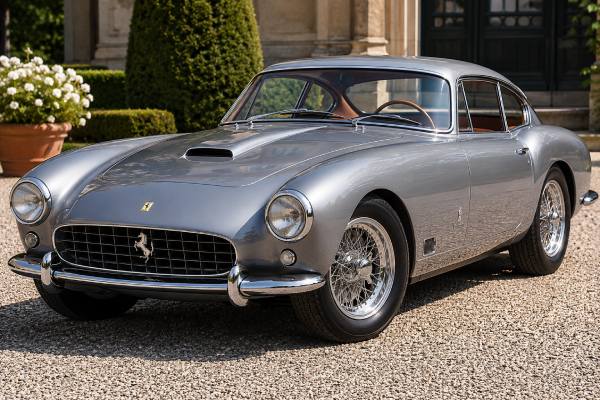
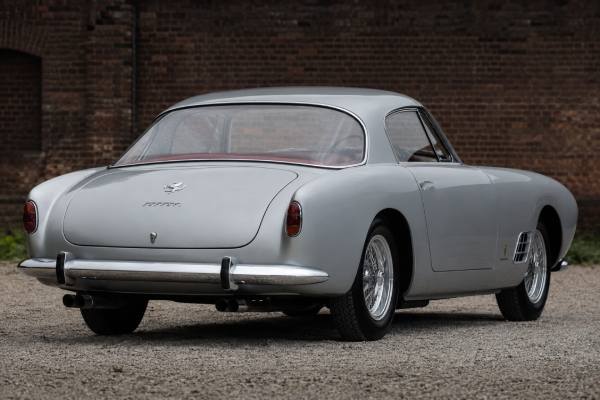
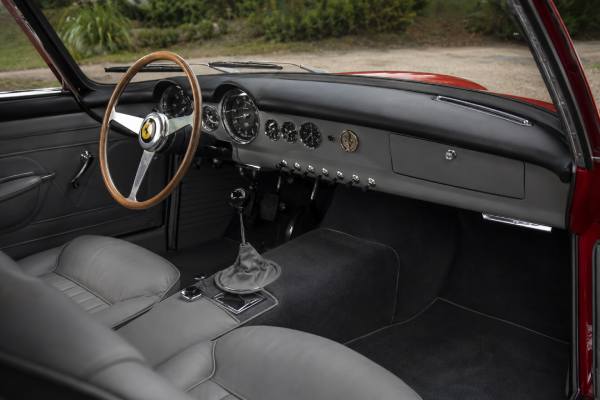
The Ferrari 250 Europa GT was the 1954–1955 grand touring Ferrari that turned the 250 idea into the road-car bloodline collectors recognize today. Built around the Tipo 508 tubular chassis and powered by the Tipo 112 3.0-liter Colombo V12, it replaced the earlier Lampredi-engined 250 Europa with a shorter, lighter, more sporting package rated at about 220 hp. It was not just another early Ferrari coupé. It was the bridge between the expensive, coachbuilt road Ferraris of the early 1950s and the better-known 250 GT family that later produced the Boano, Ellena, Tour de France, SWB, California Spider, Lusso, and GTO.
Most examples wore elegant Pinin Farina coupé bodywork, though a handful of special-bodied and competition-leaning cars make the model more complicated than a simple production count suggests. For collectors, the appeal is clear: the 250 Europa GT has the right V12, the right early GT chassis, the right coachbuilder, and the right historical position. The caution is equally clear. Each car has a detailed individual history, and value depends heavily on originality, matching components, coachwork identity, restoration quality, Ferrari Classiche documentation, and whether later upgrades have improved usability at the cost of authenticity.
Quick Take
The Ferrari 250 Europa GT is most desirable as the first true 250 GT road Ferrari: a hand-built Pinin Farina grand tourer with a 2,953 cc Colombo V12, a 2,600 mm Tipo 508 chassis, and the visual language that shaped Ferrari’s 1950s identity. It is rarer and more historically important than many later 250 GT coupés, but it is also harder to buy safely because production was small, coachwork varied, histories can be complex, and mechanical or cosmetic restoration mistakes can have seven-figure consequences. The best examples combine clear provenance, correct Tipo 112 specification, proper documentation, and restoration work by specialists who understand early Ferrari construction.
Table of Contents
- History and Collector Importance
- Engine, Chassis and Key Specs
- Production, Variants and Authenticity
- Design, Engineering and Special Details
- Road Feel and Period Performance
- Maintenance, Restoration and Known Risks
- Market Values, Buying Guide and Rivals
History and Collector Importance
The 250 Europa GT matters because it marks the point where Ferrari’s 250 road-car formula became recognizable: a front-mounted 3.0-liter Colombo V12, a shorter GT chassis, Pinin Farina coachwork, and a more usable grand touring purpose. It was not yet a standardized production car in the modern sense, but it moved Ferrari much closer to repeatable series production.
The earlier 250 Europa of 1953 was a different kind of machine. It used a longer chassis and a three-liter version of Aurelio Lampredi’s larger “tall-block” V12. That car belonged more closely to Ferrari’s early luxury road-car family, sharing some character with the America line. The 250 Europa GT that followed in 1954 brought the shorter Colombo V12 into the road-going 250 series. That change gave the car a different identity: more compact, more sporting, and more directly related to the later 250 GTs that dominate Ferrari collecting today.
The model also arrived at a crucial time for Ferrari. Enzo Ferrari’s company still built racing cars first, but customer road cars were becoming more important to the business. The 250 Europa GT helped create a template that could serve both prestige buyers and sporting customers. It offered long-distance comfort, style, luggage space, and road manners, while still carrying racing-derived engineering and enough performance to make sense of the Gran Turismo name.
Pinin Farina’s role was central. Earlier Ferraris often wore bodies from Touring, Vignale, Ghia, and other coachbuilders, and the results varied widely. The Europa GT helped strengthen the Ferrari and Pinin Farina partnership. Its high-waisted coupé shape, upright oval grille, long hood, restrained chrome, and clean side profile established a look that became strongly associated with Ferrari’s 1950s road cars.
This is why the car remains important today. It is not the fastest 250, the most famous 250, or the easiest 250 to understand. Its importance is more foundational. It sits at the start of the 250 GT story and shows Ferrari learning how to make a small series of refined, high-performance road cars without losing the character of its competition machines.
For concours and collector use, the Europa GT has strong standing. Standard Pinin Farina coupés are elegant and historically significant, while special-bodied cars and competition-linked chassis can attract additional attention. Cars with period show history, notable first owners, original colors, matching major components, and Ferrari Classiche certification sit at the top of the desirability ladder. Cars with replacement engines, heavy modifications, incomplete documentation, or uncertain coachwork history require much more caution.
Engine, Chassis and Key Specs
The Europa GT’s defining technical feature is the combination of the Tipo 112 Colombo V12 with the Tipo 508 tubular steel chassis. This pairing made the car shorter, more responsive, and more closely related to the later 250 GT line than the first Lampredi-powered Europa.
| Item | Specification |
|---|---|
| Model | Ferrari 250 Europa GT |
| Production period | 1954–1955, with some sources grouping related transitional cars into 1956 |
| Chassis type | Tipo 508 tubular steel frame |
| Engine type | Tipo 112 front-mounted 60-degree Colombo V12 |
| Displacement | 2,953.21 cc |
| Bore x stroke | 73 mm x 58.8 mm |
| Valve gear | Single overhead camshaft per bank, two valves per cylinder |
| Fuel system | Triple Weber twin-choke carburetors, commonly 36 DCZ/3 or related period specification |
| Output | About 220 hp at 7,000 rpm |
| Transmission | 4-speed all-synchromesh manual |
| Drivetrain | Front-engine, rear-wheel drive |
| Wheelbase | 2,600 mm on standard Europa GT chassis |
| Brakes | Four-wheel hydraulic drum brakes |
| Top speed | About 230 km/h, depending on body, gearing, tune, and period test conditions |
The engine is the heart of the car’s appeal. The Colombo V12 was smaller and more compact than the Lampredi unit used in the earlier Europa. In 3.0-liter form it gave Ferrari the “250” identity, based on the approximate displacement of each cylinder. The engine used an aluminum block and heads, wet-sump lubrication, one camshaft per bank, and a smooth, rev-happy character that suited both road and competition development.
The standard 220 hp rating should be understood in period context. Early Ferrari power figures were not always measured or stated exactly the way modern buyers expect, and individual engines varied with carburetion, state of tune, exhaust specification, and later rebuild work. Competition-style Europa GT berlinettas and related special cars could be tuned beyond the standard coupé figure, but the car covered here is the road-going Tipo 112 220 hp version.
The Tipo 508 chassis was a major step forward from the earlier 250 Europa layout. The 2,600 mm wheelbase made the car more compact and more athletic. The front suspension used independent wishbones with a transverse leaf spring on earlier cars, while the rear used a live axle with semi-elliptic leaf springs. That sounds old-fashioned now, but it was normal for high-performance GT cars of the period. Ferrari’s advantage came from engine response, weight distribution, chassis tuning, and the strength of the V12.
Drum brakes were standard, and they are one of the main differences between reading the specification and driving the car properly. In good condition they are capable for fast touring, but they need correct setup and respect. Poorly adjusted drums, old linings, oval drums, tired hydraulics, or modern traffic expectations can make the car feel much less secure than it should.
Production, Variants and Authenticity
The Europa GT was built in tiny numbers, and authenticity is more important than simple model-year labeling. Most accepted counts place production at about 35 cars, with roughly 27 standard Pinin Farina coupés, but some catalogs count related or transitional chassis differently.
This uncertainty is not unusual for a hand-built Ferrari of the mid-1950s. The factory, coachbuilders, dealers, and later historians did not always use modern production categories. Some cars were completed, shown, registered, rebodied, or modified across different calendar years. Others were prototypes, special-order bodies, or links to the next generation of 250 GT cars.
Main Europa GT groups
The standard Pinin Farina coupé is the body style most people picture when they think of the 250 Europa GT. It has a formal but sporting roofline, a high beltline, a long hood, and a large egg-crate-style front grille. These cars carry the strongest identity as early Ferrari grand tourers rather than pure competition machines.
There were also special-bodied Europa GTs and related early 250 GT competition cars. Some received alloy bodies, lower rooflines, different grille treatments, covered headlamps, or more competition-focused details. These cars can be more valuable, but they must be understood chassis by chassis. A special body is not automatically better unless the history, body number, period documentation, and mechanical specification support the claim.
A few cars are often discussed as evolutionary links between the Europa GT and the later 250 GT Berlinetta or Boano/Ellena production line. This is one reason buyers need expert help. A catalog description, old registration, or casual “Europa” label is not enough.
Identification points that matter
A serious buyer should focus on the car’s complete identity rather than a single number. The most important items include:
- Chassis number and suffix style.
- Engine type and engine number.
- Gearbox and rear-axle numbers.
- Pinin Farina body number, where applicable.
- Factory build information and delivery records.
- Original exterior and interior colors.
- Early ownership history.
- Period photographs, race entries, show appearances, or dealer records.
- Restoration invoices and specialist reports.
- Ferrari Classiche certification status and what it confirms.
Matching-numbers status is especially important, but it should be read carefully. Some cars received replacement engines very early in life. Others were modified for racing, rallies, or long-distance events. A replacement engine built to correct Tipo 112 specification may be acceptable to some buyers, especially if documented, but it does not carry the same value as an original major component in a top concours example.
Factory colors and interiors can also make a large difference. Early Ferraris were often delivered in subtle metallics, two-tone combinations, beige or tan leather, cloth inserts, or special-order shades that are more interesting than the red-over-tan restorations many cars received later. Returning a car to its original color can add appeal, but only when the work is documented and done accurately.
Design, Engineering and Special Details
The Europa GT’s design is important because it helped define the mature 1950s Ferrari road-car look. It is elegant rather than aggressive, but the proportions and details show that it was built around a serious V12 chassis rather than styled as a luxury ornament.
The long hood is not decoration. It reflects the placement of the front-mounted V12 behind a traditional Ferrari grille opening, with enough space for cooling, carburetion, and service access. The cabin sits rearward, giving the car the classic front-engine GT stance. The roofline is formal enough for touring comfort, but the body sides and rear quarters carry enough tension to avoid looking heavy.
Pinin Farina’s standard bodywork used restrained curves and clean surfaces. Compared with some earlier Vignale-bodied Ferraris, it looks calmer and more unified. That restraint is part of its appeal today. The car does not shout in the way later competition Ferraris do. It communicates early Ferrari quality through proportion, metalwork, stance, glass area, and detail.
The large grille is one of the strongest identifiers. On many cars it has an egg-crate pattern and a rounded rectangular or oval-influenced opening. The front wings are high by modern standards, the lamps sit proudly, and the chrome is used as a design accent rather than heavy decoration. The rear is compact and tidy, with a trunk suitable for actual grand touring.
Because these were coachbuilt cars, details can vary. Door fits, roof contours, lighting, bumper treatment, vents, interior trim, and dashboard layouts may differ from car to car. That variation is charming for enthusiasts but challenging for restorers. A restorer cannot simply copy a later 250 GT or another Europa GT and assume accuracy. The correct reference is the individual chassis.
Inside, the Europa GT is simple but special. The driving position is upright compared with later sports cars, and the cabin is narrow by modern GT standards. The dashboard typically places large instruments in clear view, with switchgear and trim that reflect 1950s Italian hand-built practice. Seats are more supportive than they first appear, but they do not offer modern adjustment. Heat, noise, and ventilation depend heavily on the condition of the car and the accuracy of the restoration.
The engineering is equally transitional. The car uses a racing-derived V12 and a strong tubular chassis, but it was built for road use. The four-speed synchromesh gearbox, large fuel capacity in many examples, and touring body make it more civilized than Ferrari’s pure competition berlinettas. At the same time, the steering is unassisted, the brakes are drums, and the engine needs careful warm-up and correct tuning.
The result is a car with a very clear identity: more usable than an early Ferrari racer, more special than a normal luxury coupé, and more historically important than its quiet styling might suggest.
Road Feel and Period Performance
A well-sorted 250 Europa GT feels like a fast 1950s grand tourer, not a modern sports car. The engine is smooth, mechanical, and eager, while the chassis rewards rhythm, mechanical sympathy, and clean inputs.
The Colombo V12 is the main event. It does not rely on huge low-end torque. Instead, it builds speed through response, smoothness, and revs. At low speed, a correctly tuned car should pull cleanly once warm, but carburetor condition matters. Hesitation, popping, rich running, fuel smell, or uneven idle usually points to setup issues rather than normal character.
The engine note is complex rather than simply loud. Intake sound from the triple Weber carburetors mixes with a crisp exhaust note, and the car becomes more alive as revs rise. The best Europa GTs feel light in the drivetrain, with quick throttle response and a sense that the engine is happier being used than being idled around town.
The four-speed gearbox should feel mechanical but not crude. Synchromesh helps, though old oil, worn linkages, poor clutch adjustment, or tired synchros can make shifts slow or reluctant. Drivers used to modern gearboxes need to slow down and guide the lever. A good shift has weight and precision; a bad one grinds, baulks, or jumps out under load.
Steering is unassisted and heavier at parking speeds. Once moving, it becomes one of the car’s pleasures. The front end communicates clearly, and the relatively compact wheelbase gives the Europa GT a more alert feel than the earlier long-wheelbase Europa. On a flowing road, the car is at its best when the driver avoids sudden corrections and lets the chassis settle.
Ride quality depends heavily on tires, dampers, suspension bushings, and spring condition. A properly restored car should not feel harsh or loose. It should have compliance, body movement, and a period sense of travel, but not wandering or uncontrolled float. Many disappointing drives in old Ferraris come from old tires, incorrect alignment, weak dampers, or restoration work that makes the car look better than it drives.
Braking requires period expectations. The drums can work well when fresh and adjusted, but they do not have the repeated high-speed bite of later discs. Long downhill sections, modern traffic, and aggressive driving expose their limits. A driver should use engine braking, plan ahead, and avoid treating the car like a modern performance coupe.
In period terms, the Europa GT was seriously fast. A top speed around 230 km/h placed it among the elite road cars of its day. Acceleration figures vary by source, body, gearing, engine tune, and test conditions, but the important point is not a single number. The car combined real high-speed touring ability with a level of refinement that made long-distance use possible.
Usability is better than people expect if the car is sorted. The cabin has reasonable visibility, the engine is flexible once warm, and the car was built for European touring rather than short demonstration runs. Still, it is not casual transport. It needs warm-up time, careful fluid checks, gentle operation until oil temperature rises, and regular exercise by someone who understands carbureted V12 behavior.
Maintenance, Restoration and Known Risks
The 250 Europa GT is not unreliable in the ordinary used-car sense; it is demanding because it is rare, hand-built, old, and mechanically specialized. Condition matters far more than mileage, and a cheap inspection can miss problems that become extremely expensive.
The engine is durable when correctly built and maintained, but it is not tolerant of neglect. The Colombo V12 needs proper oil pressure, correct ignition timing, clean fuel delivery, balanced carburetors, healthy cooling, and careful valve-train setup. A rebuild by the wrong shop can reduce both reliability and value. Correct parts, accurate machining, and knowledge of early Ferrari tolerances are essential.
Fuel-system issues are common on cars that sit. Old fuel, varnished carburetors, tired pumps, degraded lines, and dirty tanks can cause poor running or worse. Modern fuel can create additional problems with hoses and seals if the system has not been updated with compatible materials while preserving the correct appearance.
Cooling deserves close attention. A Europa GT that runs hot may have a partially blocked radiator, incorrect fan setup, poor ignition timing, weak water pump, internal corrosion, or airflow problems caused by restoration changes. Overheating should never be dismissed as normal old-Ferrari behavior. It is a warning sign.
The gearbox, clutch, and rear axle are major inspection areas. A proper road test should check clean engagement in all gears, noise on acceleration and overrun, clutch take-up, vibration, and oil leaks. Some cars have received later gearboxes or drivetrain upgrades for rally use. These may improve drivability, but they must be documented and valued honestly.
Body and chassis concerns
The tubular chassis must be inspected for corrosion, old accident repair, poor welding, distortion, and hidden damage. Early Ferraris were often repaired in period with whatever was practical. A car can look beautiful above the paint and still have serious structural or alignment issues underneath.
Bodywork is equally important. Hand-formed panels should have correct shape, fit, and surface quality. Excess filler, incorrect door gaps, uneven roofline, wrong grille shape, poorly replicated trim, or modernized details can all affect value. Aluminum panels on special-bodied cars require even more specialist inspection.
Corrosion can appear in steel structure, floors, sills, lower body sections, mounting points, and areas where moisture is trapped between materials. Even cars that lived in dry climates may have corrosion from old repairs, storage, or trapped condensation.
Restoration quality and originality
The best restorations are not simply shiny. They preserve the car’s identity. Correct finishes, hardware, upholstery patterns, instruments, carburetor specification, engine details, and coachbuilder features all matter. Over-restoration can make a car look impressive but historically wrong. Under-restoration can hide mechanical risk behind attractive patina.
Important maintenance and restoration checks include:
- Compression and leak-down testing by a Ferrari specialist.
- Oil-pressure readings hot and cold.
- Carburetor type, condition, and tuning quality.
- Cooling-system inspection, including radiator and water pump.
- Brake drum condition, hydraulic cylinders, hoses, and linings.
- Steering box play and front suspension wear.
- Rear axle noise and leakage.
- Chassis measurement and accident-damage inspection.
- Body-number and coachwork verification.
- Review of all restoration invoices, not just summary claims.
- Confirmation of original parts retained after any upgrades.
Parts availability is possible but not simple. Many items must be rebuilt, sourced through specialists, or made correctly. The cost is high because the work is low-volume and accuracy matters. A buyer should assume that any deferred mechanical work will be expensive and that a major restoration can exceed the value difference between an average car and a great one.
Period safety is limited. There are no airbags, no anti-lock brakes, no stability control, no modern crash structure, and no modern tire footprint. That does not reduce the car’s historical value, but it should shape how it is driven.
Market Values, Buying Guide and Rivals
The 250 Europa GT sits in a valuable but highly condition-sensitive part of the Ferrari market. Standard Pinin Farina coupés generally trade below the most famous competition 250s, but top examples still sit firmly in seven-figure territory, while special-bodied or competition-linked cars can move into a very different value band.
Recent public auction context shows the spread clearly. Well-documented Pinin Farina-bodied Europa GTs have been offered and sold around the low-to-mid seven figures, with value moving sharply according to originality, show history, restoration quality, color, and certification. A car with a replacement engine, even a correctly specified one, may still be highly desirable if the work is documented and the rest of the car is exceptional, but it will be judged differently from a fully matching-numbers example.
The most valuable cars tend to share several traits: original or well-documented major components, clear early history, correct coachwork, known colors, respected restoration, concours success, and strong paperwork. Cars with vague histories, undocumented engine swaps, incorrect interiors, heavy event modifications, or poor older restorations are harder to value and harder to resell.
| Priority | Why it matters |
|---|---|
| Provenance | Early ownership, delivery records, period photos, and show or rally history support identity and value. |
| Matching components | Original engine, gearbox, rear axle, and bodywork can make a major price difference. |
| Correct Tipo 112 specification | The engine is central to the car’s identity as the first true 250 GT road Ferrari. |
| Coachwork accuracy | Pinin Farina body details and hand-built variations must match the specific chassis. |
| Restoration quality | Good work improves usability and value; incorrect work can be expensive to undo. |
| Ferrari Classiche documentation | Certification can help confirm major facts, though it should be read alongside full history files. |
| Mechanical condition | A weak V12, tired brakes, or poor cooling can turn a purchase into a major project. |
A pre-purchase inspection should be handled by people who know early Ferraris, not just classic cars generally. The inspection should include a chassis-number review, engine-number review, coachbuilder-number review, body measurement, road test, compression and leak-down testing, underside inspection, brake assessment, and a detailed review of invoices. The best specialists will also know whether details such as carburetors, instruments, lamps, wheels, upholstery, and trim are correct for that chassis.
Buyers should be cautious with cars described as “event prepared.” Some upgrades are reversible and useful, such as improved cooling, discreet electrical improvements, or safer fuel-system materials. Others can reduce originality, such as later engines, modern gearboxes, disc-brake conversions, altered suspension, or non-original body changes. Event eligibility may matter, but a car’s long-term value still rests on history and correctness.
Rivals and alternatives depend on the buyer’s goal. A later 250 GT Boano or Ellena can offer similar Colombo V12 charm with a more developed production identity, often at lower values than the rarest early Europa GTs. A 250 GT Pinin Farina Coupé is usually more available and easier to understand, though less foundational. A 250 GT Tour de France is far more competition-focused and usually much more expensive. Outside Ferrari, a Mercedes-Benz 300 SL Gullwing offers stronger global recognition and engineering sophistication, while an Aston Martin DB2/4 or early DB4 offers British GT character at a different market level.
The Europa GT is best for a buyer who values origin stories, coachbuilt detail, and early Ferrari character more than headline fame. It is not the easiest 250 to explain at a casual cars-and-coffee meet, and it is not the most usable classic Ferrari for someone new to the marque. But for a collector who wants the beginning of the 250 GT road-car line, a correct Europa GT has a depth of significance that few later production coupés can match.
References
- Ferrari 250 GT Coupé (1954) 1954 (Manufacturer Archive) ([Ferrari][1])
- Ferrari 250 Europa (1953) – Ferrari.com 1953 (Manufacturer Archive) ([Ferrari][2])
- Ferrari 250 GT Coupé: Ferrari History 1954 (Manufacturer Archive) ([Ferrari][3])
- 1955 Ferrari 250 Europa GT Coupe by Pinin Farina 2026 (Auction Record) ([RM Sotheby’s][4])
- 1954 Ferrari 250 Europa GT | Gooding Christie’s 2026 (Auction Record) ([Gooding Christie’s][5])
Disclaimer
This article is for informational purposes only and is not a substitute for professional diagnosis, repair, restoration, valuation, or inspection. Specifications, torque values, service intervals, procedures, and correct components can vary by chassis number, market, equipment, restoration history, and individual vehicle. Owners and buyers should verify all details against official Ferrari documentation, Ferrari Classiche records where available, and a qualified early-Ferrari specialist.
If you found this guide useful, please consider sharing it on Facebook, X/Twitter, or your favorite enthusiast community to support our work.