
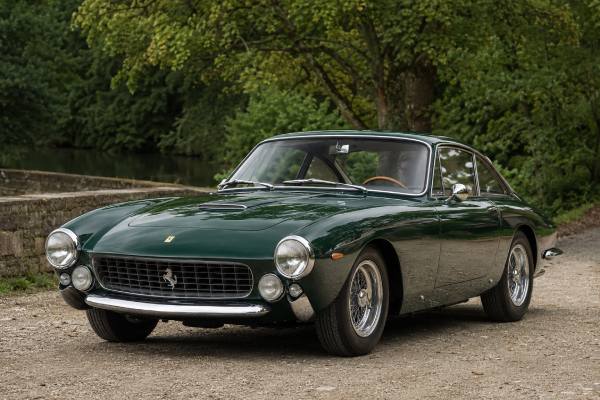
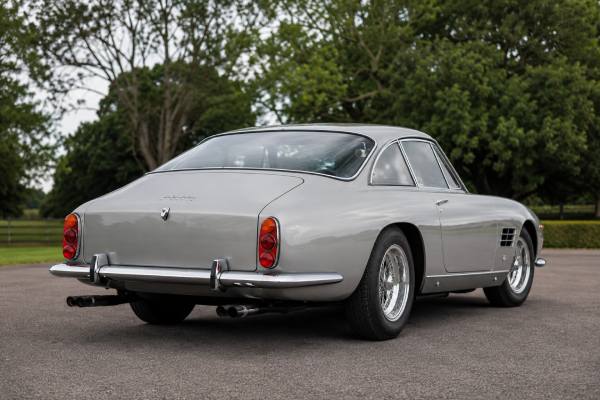
The Ferrari 250 GT Berlinetta Lusso, built from 1962 to 1964 with the Tipo 168/U 3.0-liter Colombo V12, is the refined final road-going expression of Ferrari’s 250 GT line. Known as the 250 GT/L, GTL, or simply Lusso, it combined a short-wheelbase Ferrari chassis, elegant Pininfarina design, Scaglietti-built bodywork, and a 240 hp front-mounted V12 into one of the most admired grand touring Ferraris of the 1960s.
The Lusso was not a stripped racing berlinetta like the 250 GT SWB or 250 GTO. It was Ferrari’s more polished two-seat GT for owners who wanted speed, beauty, and usability without moving into a four-seat 250 GTE. That balance is why the model still attracts collectors, drivers, and concours judges: it is rare, visually important, technically sophisticated for its era, and highly sensitive to originality, condition, and documentation.
Quick Take
The Ferrari 250 GT Berlinetta Lusso is most appealing as a beautifully proportioned, usable, front-engined V12 Ferrari that closes the 250 GT road-car chapter with unusual grace. Its identity rests on the Tipo 168/U Colombo V12, 2,400 mm short-wheelbase chassis, four-wheel disc brakes, Scaglietti craftsmanship, and Pininfarina fastback design. The caution is that values depend heavily on matching numbers, body authenticity, corrosion history, restoration quality, and specialist documentation; a tired or poorly restored Lusso can cost far more to correct than the purchase discount suggests.
Table of Contents
- History and Significance in Ferrari’s 250 Line
- Engine, Chassis and Key Specifications
- Production, Variants and Factory Details
- Design, Engineering and Special Features
- Driving Experience and Period Performance
- Maintenance, Reliability and Restoration Risks
- Market Value, Buying Guide and Rivals
History and Significance in Ferrari’s 250 Line
The 250 GT Berlinetta Lusso matters because it was the last and most elegant road-biased development of Ferrari’s 250 GT family. It arrived when Ferrari was moving from raw competition-derived road cars toward more mature grand tourers, yet it kept the short-wheelbase proportions and V12 character that made the earlier 250s famous.
Ferrari showed the Lusso prototype at the 1962 Paris Salon. Production followed for a short period through 1964. The car sat between two different Ferrari worlds: the hard-edged 250 GT SWB and GTO on one side, and the more spacious 250 GTE 2+2 on the other. It used the same 2,400 mm wheelbase associated with Ferrari’s short-wheelbase berlinettas, but its purpose was more refined. “Lusso” means luxury, and in this case the name was not just decoration.
The design was by Pininfarina and the bodies were built by Scaglietti in Modena. That partnership gave the car a special place in Ferrari history. It had the sculptural elegance of Pininfarina’s best early-1960s work, but it was also hand-built with the variation and craftsmanship typical of Scaglietti. The result was a two-seat berlinetta that looked more delicate than the 250 GT SWB but still had serious mechanical substance underneath.
The Lusso also marked the end of an era. After it, Ferrari’s front-engined V12 GT range moved into the 275 GTB and 330-series period, with independent rear suspension, larger engines, and a different design language. The Lusso therefore represents the closing chapter of the classic 3.0-liter “250” road cars: a final polishing of the Colombo V12 formula before Ferrari’s GT cars became more modern, heavier, and technically more complex.
Its reputation today comes from several overlapping strengths:
- It is rare, with roughly 350 to 351 cars generally cited.
- It has a direct link to the most desirable 250 GT mechanical lineage.
- It is more comfortable and road-friendly than Ferrari’s competition berlinettas.
- It has a design widely considered one of Pininfarina’s most balanced Ferrari shapes.
- It remains usable enough for rallies, tours, and selective road events when properly maintained.
- It rewards originality, provenance, and documentation more strongly than many ordinary classics.
The Lusso did not build its legend through major factory racing success. It was not conceived as a race car, and that distinction matters. Its value is not based on Le Mans results or homologation urgency. Instead, it is collected because it captures Ferrari’s early-1960s GT ideal: compact, light, fast, elegant, and still closely connected to Maranello’s racing engineering.
For many collectors, the Lusso is the 250 Ferrari that can be admired at a concours, driven on a historic tour, and enjoyed without the intensity or value level of a GTO or California Spider. It is still an expensive, specialist car, but its appeal is broader than pure competition history. It is a design object, a mechanical landmark, and a deeply characterful road car.
Engine, Chassis and Key Specifications
The Lusso’s core specification is simple and serious: a front-mounted 3.0-liter Colombo V12, rear-wheel drive, tubular steel chassis, independent front suspension, live rear axle, four-wheel disc brakes, and a four-speed manual gearbox. The factory-rated 240 hp output and 240 km/h top speed made it very fast for a refined road GT in the early 1960s.
| Item | Specification |
|---|---|
| Production years | 1962–1964 |
| Body style | Two-seat berlinetta coupe |
| Chassis type | Tubular steel chassis, commonly associated with Tipo 539/U |
| Engine | Tipo 168/U Colombo 60-degree V12 |
| Displacement | 2,953.21 cc |
| Bore x stroke | 73 mm x 58.8 mm |
| Compression ratio | 9.2:1 |
| Maximum power | 240 hp at 7,500 rpm |
| Induction | Triple Weber carburetors on most period specifications |
| Transmission | 4-speed manual with reverse |
| Drivetrain | Front engine, rear-wheel drive |
| Wheelbase | 2,400 mm |
| Front track | 1,395 mm |
| Rear track | 1,387 mm |
| Dry weight | About 1,020 kg |
| Top speed | About 240 km/h |
The engine is the main reason the Lusso feels like a true Ferrari rather than just a beautiful coachbuilt coupe. The Colombo V12 is small by modern standards, but it is highly responsive and smooth. Each cylinder displaces about 250 cc, which is where Ferrari’s 250 model naming logic came from. The Tipo 168/U version used in the Lusso was a developed road-going form of the short-block 3.0-liter V12, with the high-rev character and mechanical delicacy expected from a period Ferrari.
The chassis was not exotic by modern carbon-fiber standards, but it was advanced and highly effective for the time. The tubular frame gave the car a light, stiff foundation for grand touring use. Front suspension used unequal-length wishbones with coil springs and telescopic dampers. The rear used a live axle, radius arms, semi-elliptic leaf springs, coil assistance, telescopic dampers, and a Watts linkage arrangement on many descriptions of the model’s final development. That sounds old-fashioned today, but a properly restored Lusso can feel surprisingly settled when the axle, dampers, bushings, and alignment are correct.
Braking was by discs at all four corners. This was an important feature for a car capable of sustained high-speed touring. Wire wheels, typically Borrani-style center-lock items, and period 185-section tires shaped much of the steering and ride character. Modern replacement tires can change the car noticeably, so buyers should care not only about tread but also age, specification, and fitment.
The Lusso’s performance numbers should be understood in period terms. A top speed around 240 km/h was serious in the early 1960s, especially for a leather-trimmed road GT. Acceleration figures vary depending on source, gearing, tune, weather, and testing method, but the car’s real-world pace is less about stoplight launches and more about its ability to cover distance with a rising V12 soundtrack, light weight, and long-legged gearing.
Production, Variants and Factory Details
The 250 GT Berlinetta Lusso was built in small numbers, and the main “variant” differences are usually individual chassis histories rather than clearly separated factory series. For buyers, the important questions are not trim packages but authenticity: chassis, engine, gearbox, rear axle, body details, factory colors, ownership history, and documentation.
Most sources place production at about 350 or 351 examples. That small discrepancy is common in hand-built Ferrari history, where prototypes, numbering practice, completion dates, and later record interpretation can blur exact totals. The practical takeaway is the same: the Lusso is rare, but not a one-off. There is a visible market, yet each car must be judged as an individual artifact.
The model is often described by several names:
- Ferrari 250 GT Berlinetta Lusso
- Ferrari 250 GT/L
- Ferrari GTL
- Ferrari 250 GT Lusso
- Ferrari 250 GT/L Berlinetta Lusso by Scaglietti
These names usually refer to the same model, not separate trims. “Berlinetta” describes the two-seat closed coupe body. “Lusso” identifies the more luxurious character. “GT/L” is the abbreviated model form frequently used in catalogues and auction descriptions.
Because these cars were hand-built, small differences matter. A Lusso can vary in interior trim, exterior color, instruments, lighting details, market equipment, and later restoration choices. The correct finish for a particular chassis should be verified through period records, Ferrari Classiche documentation, factory build data where available, Marcel Massini-style historical reports, prior restoration invoices, photographs, and owner correspondence.
Matching numbers and identification
Matching-numbers status is central to Lusso value. Buyers should look for alignment among the chassis number, engine number, gearbox number, rear axle number, and body-related identifiers where available. A car with its original drivetrain and documented continuity is normally more desirable than one with a replacement engine, even if the replacement is period-correct.
The issue is not only whether the car runs well. In this market, identity is part of the car’s value. A Lusso with a correct-type but non-original V12 can still be enjoyable, but the value should reflect the difference. A car with unclear stampings, missing records, or inconsistent restoration claims needs expert review before money changes hands.
Colors, interiors and special-order character
Factory colors and interiors can be a major part of the story. Red over tan is widely accepted and attractive, but unusual original colors can be very valuable if properly documented. Period shades such as silver, grey, dark blue, ivory, black, and other elegant tones often suit the Lusso’s lines beautifully. The key word is “original.” A rare color only supports value if records show the car left the factory that way or if the restoration has returned it accurately to its original specification.
Interior trim should be judged with care. A fresh leather interior may look appealing, but over-restoration can erase valuable original material. Conversely, old leather that is dry, split, or poorly repaired can signal future expense. A sympathetic, well-preserved interior often carries more collector interest than a shiny but incorrect retrim.
Documents that matter
A strong Lusso file often includes:
- Ferrari Classiche certification or factory-related documentation.
- Build sheet copies or credible historical research.
- Ownership chain from new or early life.
- Restoration invoices with specialist names and dates.
- Engine, gearbox, rear axle, and body verification.
- Old photographs showing color, trim, and body details.
- Import, registration, and tax documents.
- Event history, concours history, or historic rally participation.
A thin file does not automatically make a car bad, but it increases risk. At this value level, missing paperwork can be expensive because it leaves buyers paying for uncertainty.
Design, Engineering and Special Features
The Lusso’s design is special because it blends early-1960s Ferrari aggression with unusual restraint. It has the long hood, short rear deck, and compact cabin expected of a front-engined V12 Ferrari, but the fastback roofline, glass area, and soft surfacing make it feel more elegant than combative.
Pininfarina’s shape avoided unnecessary ornament. The front is defined by a traditional Ferrari egg-crate grille, delicate bumper treatment, covered or open headlamp arrangements depending on market and specification, and rounded front wings. The side profile is the car’s strongest view: a low nose, a clean shoulder line, and a roof that flows into a short Kamm-style tail. The rear looks purposeful rather than heavy, helping the car seem smaller and lighter than many later GTs.
Scaglietti body construction gives every Lusso a hand-made character. Panel gaps, door fit, hood fit, and trim alignment should be assessed with knowledge of the period, not modern mass-production expectations. Still, “hand-built” is not an excuse for poor accident repair. Uneven panel shapes, distorted shut lines, thick filler, incorrect seams, and mismatched trim can point to serious past damage or low-quality restoration.
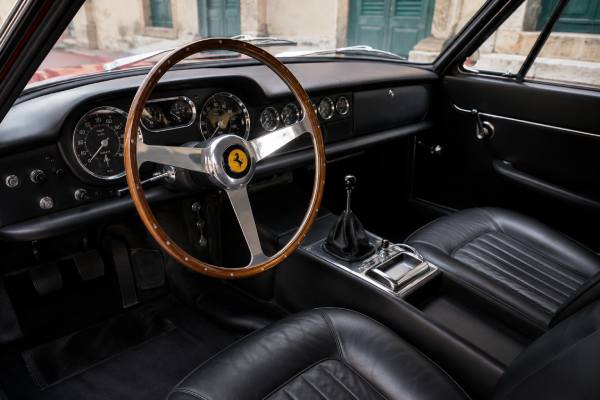
The cockpit is one of the Lusso’s signature features. Rather than placing all major instruments directly in front of the driver in a modern layout, the car uses a distinctive dash arrangement with prominent central gauges and auxiliary instruments closer to the driver’s line of control. The wood-rim steering wheel, leather trim, metal switchgear, and sparse but elegant controls create a period Ferrari atmosphere that is more refined than a competition car but far from soft.
Engineering decisions also explain the car’s character. The engine sits forward enough to create a more usable cabin than the tighter competition berlinettas. That packaging choice helped make the Lusso more comfortable for touring, but it also means the car is not trying to be a pure track weapon. The steering, balance, and axle behavior reward smooth inputs rather than aggressive modern driving habits.
Cooling and airflow matter on these cars. The front grille, engine bay ventilation, carburetor setup, and radiator health all affect real-world usability. A Lusso that looks perfect but runs hot in traffic or stumbles when warm is not properly sorted. Many ownership complaints come not from bad design but from aging fuel lines, incorrect carburetor tuning, weak ignition components, tired cooling systems, or restorations that prioritize cosmetics over function.
The sound is central to the experience. The 3.0-liter V12 does not deliver the deep shove of a large-displacement modern engine. Instead, it builds with a clean, layered mechanical note: intake hiss, valvetrain texture, exhaust resonance, and a hardening pitch as revs rise. The car feels alive because many systems are mechanical, direct, and lightly filtered. That is also why poor tuning is easy to notice. A properly set-up Lusso feels crisp and eager; a neglected one can feel flat, hot, heavy, and expensive.
Driving Experience and Period Performance
A good Lusso drives like a fast, light, mechanical grand tourer, not like a modern supercar. Its best qualities are throttle response, balance, steering feel, V12 smoothness, and the sense that the car becomes better as speed and temperature rise.
Starting and warm-up are part of the ritual. Carbureted V12 Ferraris need correct technique and patience, especially after sitting. A cold engine may need careful choke or throttle management depending on setup. Oil temperature matters. The gearbox, differential, tires, brakes, and dampers all feel more natural once the car has heat in it. Owners used to modern cars must adjust expectations.
Once warm, the engine is the star. The Tipo 168/U V12 is not about low-rpm torque dominance. It likes clean revs and precise throttle openings. At moderate speeds it is smooth and flexible enough for relaxed touring. Press harder and the character sharpens. The power builds in a way that encourages gear selection and momentum rather than lazy acceleration.
The four-speed manual gearbox has a period feel. It should not be rushed when cold, and worn synchros or incorrect adjustment can make shifts unpleasant. A healthy gearbox feels deliberate and mechanical. A tired one may graunch, resist downshifts, jump out of gear, or reveal expensive internal wear. During inspection, shift quality should be assessed at cold start, warm running, gentle driving, and harder use.
Steering is unassisted and honest. At parking speeds it needs effort, especially on modern tires. Once moving, it becomes one of the car’s pleasures. The narrow tires, light front end compared with later GTs, and direct chassis communication give the driver clear information. The Lusso is not a high-grip machine by modern standards, but it offers a graceful, readable balance.
Ride quality is better than many expect. The car was designed for grand touring, and a properly rebuilt suspension can feel supple over real roads. However, old dampers, worn bushings, tired leaf springs, incorrect tires, or poor alignment can make the car wander, crash over bumps, or feel loose. Many driving impressions of classic cars are really impressions of restoration quality.
Braking is good for the period but not modern. Four-wheel discs give the Lusso a strong foundation, yet the driver must respect tire grip, brake temperature, road conditions, and the absence of modern electronic safety aids. Pedal feel should be firm and progressive. Pulling, pulsing, long pedal travel, or uneven braking points to hydraulic, caliper, rotor, hose, or suspension issues.
On a mountain road, the Lusso rewards rhythm. It is happiest when the driver brakes early, turns in smoothly, uses the engine’s mid-to-high-rpm response, and lets the chassis settle. It will not flatter clumsy inputs the way a modern stability-controlled sports car can. On highways, it can feel remarkably capable, with long-legged speed and a cabin that is more civilized than Ferrari’s competition cars, though still noisy, warm, and mechanical by modern luxury standards.
Period safety expectations must be clear. The Lusso has no airbags, no anti-lock brakes, no stability control, no modern crash structure, and limited occupant protection by today’s standards. That does not reduce its importance, but it does affect how it should be driven and insured.
Maintenance, Reliability and Restoration Risks
The Lusso can be reliable when used regularly and maintained by specialists, but it is not a low-maintenance classic. Most problems come from age, poor storage, old restorations, incorrect parts, weak documentation, and deferred mechanical work rather than from one simple design flaw.
The Colombo V12 is durable in expert hands, but rebuild quality is critical. A proper engine rebuild involves far more than new gaskets and polished cam covers. It can require crankshaft inspection, bearing work, valve-train measurement, timing-chain service, carburetor rebuilding, ignition correction, cooling-system renewal, oil-system checks, and careful setup. Bad work can be hidden under a beautiful engine bay.
Fuel and ignition systems deserve special attention. Old fuel lines, incorrect clamps, tired pumps, dirty tanks, worn carburetor shafts, and poor synchronization can create drivability problems and fire risk. Ignition weakness can mimic carburetor faults, so diagnosis needs experience. A Lusso that starts poorly, smells strongly of fuel, fouls plugs, or hesitates under load needs proper investigation.
Cooling is another major ownership area. Radiators, hoses, fans, water pumps, thermostats, and internal corrosion all matter. A car that only stays cool in perfect weather is not fully sorted. Because many Lussos live in collections and see limited miles, cooling issues may appear only during real road use, traffic, or warm-weather touring.
The gearbox, clutch, and rear axle are expensive to correct. Clutch replacement may lead to related work once the car is apart. Gearbox synchro wear, noisy bearings, leaking seals, or incorrect ratios should be assessed before purchase. Rear axle noise, worn mounts, or poor setup can affect both driving pleasure and cost.
Corrosion is one of the biggest risks. Even a restored Lusso can hide problems in boxed sections, floors, sills, lower doors, wheel arches, front structure, rear bodywork, and areas around old accident repairs. Aluminum and steel interaction, trapped moisture, and decades of paintwork can make diagnosis difficult. A magnet is not enough. Buyers need a specialist inspection, lift access, paint-depth readings, photographic restoration history, and ideally someone who knows Lusso body construction.
| Area | What to check | Why it matters |
|---|---|---|
| Engine | Compression, leak-down, oil pressure, smoke, timing, carburetion | V12 rebuilds are specialist and costly |
| Cooling system | Temperature stability, radiator condition, hoses, water pump | Touring usability depends on proper cooling |
| Gearbox | Synchros, noise, engagement, leaks | Poor shift quality can signal expensive wear |
| Chassis | Straightness, repairs, corrosion, suspension pickup points | Identity and safety depend on structure |
| Body | Panel shape, filler, seams, door fit, old accident damage | Scaglietti body correction is labor-intensive |
| Brakes | Calipers, hoses, discs, pedal feel, fluid condition | Period brakes need to be perfectly maintained |
| Documentation | Build records, ownership history, restoration invoices, photos | Paperwork strongly affects value |
Restoration quality is a major value divider. Some older restorations were done when these cars were worth far less, so shortcuts may be present. A shiny paint job can hide incorrect panel work, non-original trim, wrong fasteners, poor wiring, modern substitutions, and mechanical neglect. The best cars are either highly original, sympathetically preserved, or restored by recognized Ferrari specialists with clear records.
Originality versus usability is a real tradeoff. Sensible hidden improvements, such as better cooling reliability or carefully chosen ignition updates, may make a car easier to use. But visible modern changes, incorrect materials, wrong interior patterns, non-period wheels, or altered body details can hurt collector value. Any upgrade should be reversible and documented.
Routine maintenance should be treated as calendar-based, not mileage-only. Many Lussos cover few miles, but fluids age, seals dry, fuel turns stale, batteries weaken, tires expire, and brake systems absorb moisture. A low-mileage car that sat unused can need more recommissioning than a car driven regularly by a careful owner.
Market Value, Buying Guide and Rivals
The Lusso sits in the upper tier of collectible Ferrari road cars, below the most famous 250 competition cars and California Spiders but far above ordinary classic GTs. Current public-market examples show that condition, provenance, originality, and documentation can move value by hundreds of thousands of dollars.
Recent market data shows typical public results often around the mid-seven-figure range, with strong cars commonly trading around roughly $1.4 million to more than $2 million, while exceptional or unusually documented examples can go higher. Project or compromised cars can be far cheaper at hammer price, but the restoration bill can quickly erase any apparent bargain. A publicly recorded high sale above $3 million shows what can happen when specification, condition, venue, and buyer appetite align.
The biggest value drivers are:
- Matching original chassis, engine, gearbox, and rear axle.
- Confirmed factory color and trim.
- Continuous ownership history.
- Ferrari Classiche or equivalent high-quality documentation.
- Known specialist restoration or preservation.
- Correct body shape and trim.
- No serious unresolved accident or corrosion history.
- High-quality mechanical condition, not just cosmetics.
- Desirable event eligibility and concours presentation.
- Rare but authentic color combinations.
Buyers should avoid thinking like ordinary used-car shoppers. Mileage is often “true mileage unknown” or less important than condition and history. Paint shine is less important than body correctness. A newly restored car is not automatically better than an older, preserved car. A famous owner can help value, but only if the rest of the car supports the story.
Pre-purchase priorities
A serious Lusso inspection should follow a clear order:
- Confirm identity through chassis, engine, gearbox, axle, and body information.
- Review documentation before falling in love with the paintwork.
- Inspect the chassis and body on a lift with a Ferrari specialist.
- Test mechanical health with compression, leak-down, oil pressure, and road behavior.
- Check cooling, brakes, steering, suspension, and gearbox when hot.
- Compare color, trim, instruments, wheels, and details against known factory data.
- Estimate immediate recommissioning costs, not just long-term restoration dreams.
- Review tax, import, registration, and export issues before bidding internationally.
The best example to buy is usually the most honest one that fits the intended use. A collector who wants concours success should pay for documentation, correctness, and top restoration quality. A driver who wants tours and rallies should prioritize mechanical sorting, cooling, brakes, suspension, and a trustworthy specialist history. An investor should be wary of cars with unclear identity, missing records, heavy modifications, or unresolved restoration questions.
Rivals and alternatives depend on the buyer’s goal. Within Ferrari, the 250 GT SWB is more competition-focused and far more expensive. The 250 GTE 2+2 is more practical and much less valuable, but it lacks the Lusso’s two-seat purity and design status. The 275 GTB is the natural successor, more modern and technically advanced, with independent rear suspension and a larger V12. The 330 GTC offers excellent usability at a different price and character point.
Outside Ferrari, natural comparisons include the Aston Martin DB5, Maserati 3500 GT and 5000 GT, Lamborghini 350 GT, and certain coachbuilt Alfa Romeo or Lancia grand tourers. These cars can be wonderful, but the Lusso’s combination of Ferrari 250 lineage, V12 specification, Pininfarina design, and Scaglietti bodywork gives it a market position few rivals can match.
Long-term collectability looks strong because the Lusso has the ingredients that tend to survive market cycles: beauty, rarity, usability, Ferrari identity, V12 power, and historical importance. Still, it is not immune to condition-based repricing. The market has become more selective. Buyers are increasingly willing to pay for exceptional cars and increasingly cautious about expensive projects, incomplete histories, and restorations that need redoing.
A properly bought Lusso is not simply a financial asset. It is a car that needs exercise, specialist care, and respect. Its appeal is strongest for someone who values the overlap between engineering, design, and provenance. Treat it like a normal classic and it can punish you. Treat it like a significant Ferrari artifact that also happens to drive beautifully, and the Lusso makes far more sense.
References
- Ferrari 250 GT Berlinetta lusso (1962) 1962
- Ferrari 250 GT Berlinetta Lusso: Ferrari History 1962
- Ferrari 250 GT Berlinetta Lusso Market – CLASSIC.COM 2026
- 1964 Ferrari 250 GT/L Berlinetta Lusso by Scaglietti | London 2025 | RM Sotheby’s 2025
Disclaimer
This article is for informational purposes only and is not a substitute for professional diagnosis, inspection, repair, restoration, or valuation advice. Specifications, torque values, service intervals, procedures, and correct components can vary by chassis number, market, production date, equipment, and later history. Always verify details against official Ferrari documentation, factory records, qualified marque specialists, and the specific vehicle being inspected.
Please share this article on Facebook, X/Twitter, or your preferred car community if it helped you. Your support helps us keep producing detailed classic and collector-car guides.