
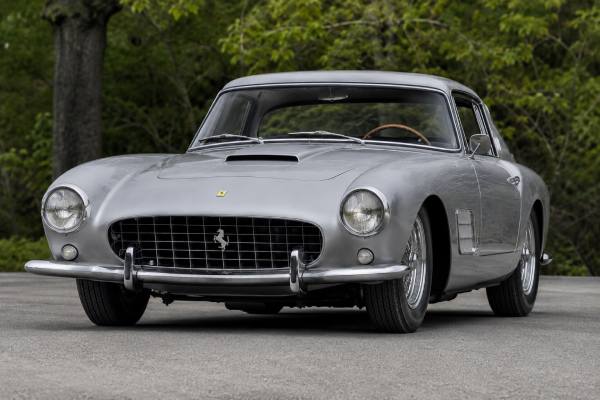
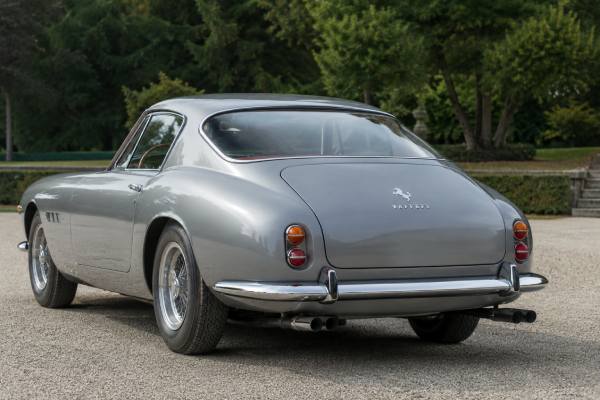
The Ferrari 250 GT Coupé Boano is the early long-wheelbase grand tourer that helped move Ferrari from tiny-batch coachbuilt road cars toward more repeatable series production. Built around the Tipo 508 tubular chassis and the Tipo 128B 3.0-liter Colombo V12, the Boano-bodied coupé belongs to the 1955–1957 development period that bridged the 250 Europa GT and the later Pinin Farina-built 250 GT Coupé.
Its importance is not only mechanical. The car sits at a key moment in Ferrari history, when demand from wealthy road-car customers was beginning to outgrow Pinin Farina’s capacity. Pinin Farina shaped the design, but Carrozzeria Boano handled much of the early body production. The result was a restrained, low-roof, two-seat Ferrari GT with hand-built character, 240 hp, classic front-engine V12 balance, and a close link to the wider 250 family that would soon include some of the most valuable Ferraris ever built.
Quick Take
The Ferrari 250 GT Coupé Boano is most appealing as an early, elegant, coachbuilt 250-series road Ferrari with a strong Colombo V12 identity and genuine historical weight. Its 3.0-liter Tipo 128B engine, 2,600 mm long-wheelbase chassis, low-roof Boano body, and hand-finished details make it more intimate and rarer than later production GTs, but buyers must treat originality, matching numbers, body history, corrosion, restoration quality, and Ferrari Classiche documentation as central value factors rather than side details.
Table of Contents
- Why the Boano Coupé Matters
- V12, Chassis and Key Specifications
- Production, Variants and Authenticity
- Coachbuilt Design and Engineering Details
- Road Feel, Performance and Character
- Maintenance, Restoration and Known Risks
- Values, Buying Advice and Rivals
Why the Boano Coupé Matters
The 250 GT Coupé Boano matters because it was one of Ferrari’s first serious steps toward a repeatable road-car production model. It kept the handmade coachbuilt feel of early Ferraris, but it also pointed toward the more standardized 250 GT Pinin Farina Coupé that followed.
The car grew out of the 250 Europa GT, Ferrari’s early attempt to offer a more usable grand tourer for regular customers rather than only racers and one-off clients. By the mid-1950s, Ferrari’s road-car business was becoming more important. The company still depended on racing for reputation, but affluent private customers wanted fast, elegant, road-ready cars that could cross Europe in comfort.
Pinin Farina was central to that move. The Turin design house created the clean, formal shape that defined the early 250 GT Coupé line. But Pinin Farina did not yet have enough body-production capacity to meet Ferrari’s needs. Its new Grugliasco factory was still part of the answer, not yet the full solution. Ferrari therefore used Carrozzeria Boano as a subcontracted body builder for the coupé.
That is why the Boano is often described as a transitional Ferrari. It is more production-minded than the earlier one-off and small-series cars, yet it still feels deeply coachbuilt. Each body can have small differences. Trim, panel fit, vents, interior details, and restoration history matter more than they would on a later, more standardized sports car.
The Boano also carries the appeal of the 250 name without being one of the extreme competition cars. It shares the broad mechanical identity that made the 250 series legendary: a compact Colombo V12, a front-engine rear-drive layout, a tubular chassis, and elegant two-seat GT proportions. But its role was different from the 250 GT Berlinetta “Tour de France.” The Boano was a road coupé first. It was built for fast touring, not primarily for endurance racing.
That does not make it unimportant to competition-minded collectors. Some alloy-bodied or competition-used cars exist, and individual chassis histories can include rallies, hill climbs, historic events, and concours appearances. For most examples, however, collectability comes from early-series status, low-roof Boano coachwork, matching-number drivetrain, documentation, and the quality of restoration or preservation.
Ferrari later moved the 250 GT Coupé into larger-scale Pinin Farina production. Those later cars are important, but the Boano has a narrower, earlier identity. It belongs to the moment before Ferrari road cars became more uniform. That is a major reason collectors still search for it: it is rare enough to feel special, usable enough to enjoy, and historically close to Ferrari’s defining 1950s GT development.
V12, Chassis and Key Specifications
The Boano’s core specification is classic 1950s Ferrari: a front-mounted 3.0-liter Colombo V12, rear-wheel drive, a steel tubular chassis, independent front suspension, a live rear axle, and hydraulic drum brakes. The headline output is usually given as 240 hp, though individual cars and period measurements can vary.
The engine is the Tipo 128B, part of the Colombo V12 family that became the backbone of many 250-series Ferraris. Its 2,953 cc displacement came from a 73 mm bore and 58.8 mm stroke. The “250” name refers to the approximate displacement of one cylinder in cubic centimeters, a traditional Ferrari naming method of the period.
Core Technical Data
| Item | Specification |
|---|---|
| Production period covered | 1955–1957 development and Boano production period |
| Engine | Tipo 128B Colombo 60-degree V12 |
| Displacement | 2,953 cc |
| Bore x stroke | 73.0 mm x 58.8 mm |
| Induction | Three Weber twin-choke carburetors |
| Power | About 240 hp at 7,000 rpm |
| Torque | About 193 lb-ft at 5,000 rpm |
| Transmission | 4-speed manual |
| Drivetrain | Front engine, rear-wheel drive |
| Chassis | Tipo 508 steel tubular frame |
| Wheelbase | 2,600 mm |
| Brakes | Hydraulic drums front and rear |
The chassis layout was conventional but effective for its time. At the front, the car used unequal-length wishbones, coil springs, hydraulic dampers, and an anti-roll bar. At the rear, it used a live axle located by semi-elliptic leaf springs. This was not exotic by modern standards, but it was a proven grand-touring setup in the 1950s. The car was designed to cover distance quickly on real roads, not deliver modern track-car stiffness.
The 4-speed manual gearbox is a major part of the experience. It requires deliberate inputs, mechanical sympathy, and proper warm-up. A well-set-up car should shift cleanly, but it will not feel like a modern synchromesh sports car. If the gearbox is reluctant, noisy, or difficult even when warm, the issue may be adjustment, wear, or a sign of deeper internal work ahead.
Dimensions and Performance
| Item | Typical figure |
|---|---|
| Length | About 4,458 mm |
| Width | About 1,676 mm |
| Height | About 1,346 mm |
| Track, front/rear | About 1,351 mm / 1,345 mm |
| Weight | Roughly 1,300 kg, depending on body and equipment |
| Fuel capacity | About 100 liters |
| 0–60 mph | Often quoted around six seconds for strong examples |
| Top speed | Period and reference figures vary, commonly around 140–155 mph |
Performance figures for 1950s Ferraris should be read carefully. Test conditions, gearing, engine tune, body material, tires, and later restoration choices can change real-world results. A freshly rebuilt, correctly tuned V12 may feel sharp and flexible. A tired or poorly synchronized car may still look valuable but drive far below its potential.
The brakes also need context. Hydraulic drums can be effective when properly rebuilt, adjusted, bedded in, and cooled. They are not modern discs. On a mountain descent or fast event, they need planning. A buyer should not judge a Boano by modern stopping distances, but weak, pulling, grabbing, or fading brakes are not “just old Ferrari behavior.” They usually point to service needs.
Production, Variants and Authenticity
Boano production numbers are not always quoted the same way, so buyers should look beyond a single total. The safest approach is to confirm the exact chassis, body history, engine number, gearbox, axle, factory records, and later documentation for the individual car.
Most commonly, collectors separate the early 250 GT Coupé line into Pinin Farina prototypes, Boano low-roof coupés, alloy-bodied or competition-related Boano examples, and the later Ellena-built cars. Some sources group Boano and Ellena together. Others count only the low-roof Boano bodies. That is why totals can range depending on what is included.
The Boano low-roof cars are generally the most important group for this article. They are valued for their clean roofline, early production position, and strong link to the Pinin Farina design. When Mario Boano left to work at Fiat, production responsibilities moved toward his son-in-law Ezio Ellena and Luciano Pollo. The Ellena cars are closely related, but many have a raised roofline and detail differences.
Key Identification Points
For a serious buyer, identification should be physical, documentary, and historical. Useful checks include:
- Chassis number stamped in the correct location and consistent with factory records.
- Engine number matching the chassis where claimed.
- Gearbox and rear axle numbers checked against documentation when available.
- Body number and coachbuilder details reviewed by a Ferrari specialist.
- Low-roof Boano body features compared with known period photographs.
- Interior pattern, instruments, switchgear, seats, and trim compared with original specification.
- Ferrari Classiche certification reviewed carefully, including what it confirms and what it does not.
- Old restoration records, invoices, import papers, event entries, and ownership history checked for gaps.
Matching numbers are especially important in this market. A non-original engine does not make the car worthless, but it changes the collector conversation. A correct-type replacement engine is better than an incorrect engine, yet it is not the same as the original unit. The same principle applies to bodywork. Many classic Ferraris have had accident repair, corrosion repair, or panel replacement. What matters is how much was changed, who did the work, how well it was documented, and whether the current body represents the car’s period identity honestly.
Boano, Alloy Cars and Ellena Differences
Most Boano coupés were steel-bodied, often with aluminum opening panels depending on the car and restoration history. A smaller number of alloy-bodied cars are far more desirable and can sit in a different value tier, especially if they have competition history or exceptional provenance.
The later Ellena cars should not be dismissed. They are part of the same early 250 GT story and can be excellent driving Ferraris. But the low-roof Boano is usually the sharper collector term because it identifies the earlier, lower-roof coachwork most closely associated with this short production chapter.
Factory options in the modern sense were limited. These were hand-built luxury GTs, so variation came through paint color, interior trim, instruments, lighting, bumpers, vents, special requests, and market equipment. A “correct” car is not always one that looks identical to another Boano. The question is whether its details match its own build history and early photographs.
Documentation can be worth a large amount of money. A car with Ferrari Classiche certification, old photographs, long-term ownership, restoration invoices from respected specialists, event eligibility, and known history is easier to buy and easier to sell. A car with vague stories and fresh cosmetic work over unknown metal is much riskier, even if it appears beautiful.
Coachbuilt Design and Engineering Details
The Boano’s design is elegant because it is disciplined. It does not rely on large fins, heavy decoration, or dramatic racing cues; its value comes from proportion, restraint, and the way Pinin Farina’s shape was translated into small-series coachbuilt production.
The car is a classic three-box coupé, with a long hood, compact cabin, and defined rear deck. The low roof gives it a more delicate profile than many later grand tourers. The side line is clean, the glasshouse is slim, and the overall stance is formal without being stiff. Compared with later 250 GT coupés, the Boano can feel more handmade and less regular in the fine details.
The nose is one of its strongest visual elements. The oval grille, covered or open lighting details depending on the car, and slender bumper treatment give the front end a refined but purposeful look. The rear is more understated, which suits the car’s grand-touring role. It is not trying to look like a pure racing berlinetta.
Because the bodies were coachbuilt, small differences matter. Door gaps, hood fit, trunk fit, window frames, rocker profiles, rain gutters, bumper mounts, and trim placement can reveal the quality of original construction and later restoration. A perfect-looking body is not automatically better if it has lost its original shape under heavy restoration. On the other hand, poor panel fit should not be excused too quickly. These cars were hand-built, but they were not crude.
Engineering Character
The most important engineering feature is the Colombo V12. It is compact, rev-happy, and central to the car’s identity. With a single overhead camshaft per bank, two valves per cylinder, and triple Weber carburetors, the engine rewards correct tuning. When the carburetors, ignition, valve clearances, fuel system, and cooling system are right, it feels crisp and expensive. When they are wrong, the car can be hard to start, uneven at low rpm, hot in traffic, and flat under load.
The chassis is a steel tubular structure, which was typical for Ferrari at the time. It gives the car a firm mechanical base but also creates restoration challenges. Tubes can corrode from the inside, accident damage can be hard to judge without careful measurement, and old repairs may be hidden beneath paint, underseal, or interior trim.
Cooling is another key design area. A front-mounted V12 in a hand-built 1950s GT needs a healthy radiator, clean passages, good hoses, correct fans, and careful ignition and carburetor setup. Overheating should never be brushed off as normal. A properly prepared Boano should tolerate sensible road use, though heavy traffic in hot weather will always require more attention than in a modern car.
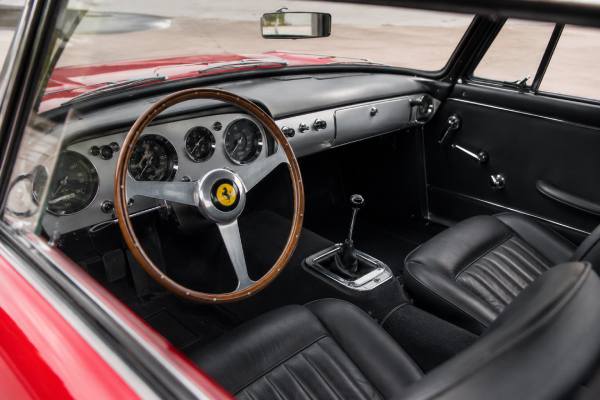
Inside, the Boano is a simple but rich grand tourer. The driving position is upright compared with later sports cars. The dashboard, large steering wheel, thin pillars, leather trim, and analog instruments create a clear period feel. Cabin ventilation, insulation, and ergonomics are 1950s standards, not modern luxury standards. That is part of the charm, but it also affects real usability.
The sound is a major part of the car’s appeal. The Tipo 128B V12 does not have the brutal edge of a later racing Ferrari, but it has a layered mechanical voice: induction from the Webers, valvetrain texture, and a smooth exhaust note that builds with rpm. A tired exhaust, incorrect silencers, or poor carburetor tune can flatten that character.
Road Feel, Performance and Character
A well-sorted 250 GT Boano feels fast in a period-correct, mechanical way rather than in the effortless way of a modern performance car. The appeal is throttle response, V12 smoothness, steering feel, and the sense that every control is connected to real hardware.
Starting and warm-up matter. The engine needs proper fuel delivery and ignition condition, and the driver needs patience while fluids reach temperature. Cold oil, cold gearbox components, and carburetors that are not fully settled can make the first few miles feel heavy. Once warm, a good car should become smoother, sharper, and more willing to rev.
The power delivery is flexible but happiest when the V12 is allowed to breathe. Below the middle of the rev range, it should pull cleanly if tuned well. Higher up, it becomes more urgent and musical. The 240 hp figure was strong for the time, especially in a relatively light two-seat GT. Today, the number is less important than the delivery. The Boano is quick enough to feel alive on open roads, yet not so fast that the driver is removed from the experience.
The gearbox rewards deliberate timing. Rushed shifts, especially when cold, are not the way to drive the car. The clutch should be progressive, not excessively heavy or grabby. A clutch that judders, slips, or bites unevenly can point to wear, contamination, poor adjustment, or deeper driveline issues.
Steering effort is higher at parking speeds and more natural once moving. With narrow period-style tires, the car should not feel over-gripped. That is good. The steering can communicate road texture and front-end load in a way that modern wide tires often filter out. Incorrect tire choice can spoil this. Overly modern rubber may increase grip but add steering weight, stress suspension parts, and change the car’s balance.
Ride quality is usually more compliant than people expect from an old Ferrari. The long wheelbase helps, and the suspension was designed for fast road use. But dampers, springs, bushings, shackles, wheel bearings, and alignment have a huge effect. A restored car with poor setup can feel nervous or harsh, while a mechanically honest car can feel settled and fluent.
Braking requires judgment. The drum brakes are part of the period experience and can work well in normal fast road use, but they need adjustment and respect. Repeated heavy stops will expose their age. Buyers should pay attention to pedal travel, straight-line stability under braking, heat behavior, and evidence of recent brake work.
The Boano is not an ideal city car. It can handle occasional urban use, but heat, clutch wear, limited ventilation, and old-car visibility compromises make it happier on open roads. Its best environment is a flowing route where the V12, gearbox, steering, and chassis can work together. It is a car for rhythm, not point-and-squirt aggression.
Maintenance, Restoration and Known Risks
Ownership risk is less about ordinary reliability ratings and more about condition, originality, restoration quality, and specialist care. A neglected Boano can consume money quickly, while a properly restored and regularly exercised car can be a rewarding historic Ferrari.
The engine is strong in principle, but expensive in practice. A Colombo V12 rebuild is specialist work. It involves careful measurement, machining, parts sourcing, carburetor rebuilding, ignition setup, cooling-system inspection, and often correction of older work. The cost can be substantial, especially if the car has been sitting, previously overheated, or assembled with incorrect parts.
Fuel-system condition is critical. Old tanks, lines, pumps, filters, carburetor seals, and gaskets can create running problems or safety risks. Modern fuels can also be hard on older rubber components. A car that smells strongly of fuel, runs unevenly, leaks, or has inconsistent hot starting needs proper diagnosis, not casual adjustment.
Cooling problems deserve serious attention. Look for signs of overheating, coolant staining, blocked radiator cores, weak fans, incorrect caps, tired hoses, and oil or combustion contamination. A seller may describe warm running as normal for an old Ferrari, but a buyer should still verify the system properly.
Body and Chassis Risks
The body and chassis can be more important than the engine when judging total risk. Key areas include:
- Chassis tubes, especially lower sections exposed to moisture and old repairs.
- Rockers, sills, floors, door bottoms, and lower fenders.
- Front and rear body sections where accident damage may have been repaired.
- Suspension mounting points and chassis alignment.
- Hood, door, and trunk fit compared with known correct Boano shapes.
- Evidence of heavy filler, poor welding, or modern panels with incorrect contours.
- Corrosion hidden under underseal, carpets, trim, and fresh paint.
A shiny restoration can be dangerous if it is mostly cosmetic. The best inspections include paint-depth readings, underside access, photographs from restoration, chassis measurement where needed, and review by someone who knows early Ferrari construction.
Mechanical Systems to Inspect
Beyond the engine, the buyer should examine the gearbox, rear axle, suspension, steering, brakes, wheels, and electrical system. Worn suspension can make the car wander. A tired steering box can create vague response. Old wire wheels may need inspection for spoke tension, rim condition, and hub wear. Brake drums, linings, wheel cylinders, hoses, and master cylinder condition should all be verified.
Electrical problems are common in old hand-built cars. Weak charging, poor grounds, aged wiring, incorrect switches, and added accessories can create intermittent faults. A careful restoration should preserve the original look while making the system safe and dependable.
Parts availability is mixed. Some mechanical parts are supported by the Ferrari specialist world, but body, trim, instruments, and correct detail pieces can be difficult and costly. The rarer the part, the more important it is that the car already has it. Missing original trim can become a long search rather than a simple purchase.
Regular use is healthy for these cars. Long storage can damage seals, fuel systems, brakes, tires, and cooling components. A low-mile car is not automatically better if it has sat for years without proper recommissioning. For a Boano, a documented pattern of expert maintenance often matters more than a very low odometer reading.
Values, Buying Advice and Rivals
The 250 GT Boano sits in a valuable but nuanced part of the Ferrari market. It is far below the most famous competition 250s, yet far above ordinary classic GTs, and its value depends heavily on exact identity, originality, documentation, restoration quality, and body type.
As of the mid-2020s, steel-bodied Boano and closely related Ellena coupés generally trade in the high-six-figure to low-seven-figure range depending on condition and history. Exceptional low-roof Boano examples, Classiche-certified matching-number cars, and cars with strong provenance can push higher. Alloy-bodied and competition-associated cars can sit in a different category altogether.
Market averages can be misleading because the sample size is small. One car may be a restored steel-bodied road coupé with limited early history. Another may be a low-roof Boano with matching numbers, old photographs, event history, and major specialist work. Another may have body changes, missing original components, or older restoration problems. Those are not the same asset.
What Drives Value
| Factor | Why it matters |
|---|---|
| Matching numbers | Original engine and major drivetrain components strongly support collector value. |
| Coachwork identity | Low-roof Boano cars are usually more sought after than later related versions. |
| Alloy body | Alloy-bodied examples are much rarer and may carry competition appeal. |
| Ferrari Classiche | Useful for confirming important identity points, though the details still need review. |
| Restoration quality | Poor body or mechanical work can cost more to correct than buyers expect. |
| Provenance | Long-term ownership, early photos, event history, and known specialists reduce uncertainty. |
| Completeness | Correct trim, instruments, seats, wheels, and detail parts can be difficult to replace. |
A proper pre-purchase inspection should be done by an early Ferrari specialist, not a general classic-car shop. The inspection should include numbers verification, cold start, hot restart, compression and leak-down testing where appropriate, oil pressure behavior, cooling performance, gearbox operation, brake performance, suspension condition, chassis inspection, and document review.
Seek cars with consistent stories. A thick file is helpful only if it makes sense. The best history files connect factory data, ownership, photographs, restoration work, event participation, and maintenance invoices into one believable timeline. Be cautious with cars that have recent paint, vague import history, missing records, unexplained engine changes, or claims that are not supported by paperwork.
Avoid assuming that concours presentation means low risk. Some concours-quality cars are excellent. Others are cosmetically impressive but mechanically underused. A buyer who wants to drive should look for a car that has been exercised, sorted, and maintained after restoration.
The closest Ferrari alternatives include the 250 GT Ellena, later 250 GT Pinin Farina Coupé, 250 GT Europa GT, and, at much higher values, the 250 GT Berlinetta and California Spider. The later Pinin Farina coupé is usually easier to understand as a production model, while the Boano offers earlier coachbuilt charm. The Europa GT feels more directly connected to the first 250 GT road-car phase. The Berlinetta brings competition identity and much higher cost.
Period non-Ferrari rivals include the Aston Martin DB2/4 Mark III, Mercedes-Benz 300 SL Gullwing or Roadster, Maserati A6G/2000, and high-end coachbuilt Alfa Romeo or Lancia GTs. The Aston is more gentlemanly and less exotic mechanically. The Mercedes 300 SL is more technically dramatic and often more valuable. The Maserati can be similarly rare and beautiful, but market depth is different. The Ferrari’s advantage is the combination of Colombo V12, 250-series identity, coachbuilt Italian design, and direct connection to Ferrari’s rise as a road-car maker.
For long-term collectability, the Boano has strong fundamentals: rarity, beauty, early 250-series status, V12 power, hand-built construction, and usability in major historic events when eligible. Its main risk is not desirability. The risk is buying the wrong car, with the wrong history, at the wrong price. The best example is not always the shiniest one. It is the car with the clearest identity, most honest body, strongest documentation, and highest-quality mechanical preparation.
References
- Ferrari 250 GT Coupé (1954) 1954
- ARISTOCRATIC ELEGANCE 2024
- 1956 – 1957 Ferrari 250 GT Boano Specifications – Ultimatecarpage.com 2004
- 1957 Ferrari 250 GT Coupé by Boano | Paris 2026 | RM Sotheby’s 2026
- Ferrari 250 GT Coupe Boano & Ellena Market – CLASSIC.COM 2026
Disclaimer
This article is for informational purposes only and is not a substitute for professional diagnosis, repair, valuation, or restoration advice. Specifications, torque values, service intervals, procedures, and component details can vary by chassis number, market, equipment, restoration history, and later modifications. Always verify important information against official service documentation and consult a qualified Ferrari specialist before purchase, repair, or restoration work.
If this guide helped you, please consider sharing it on Facebook, X/Twitter, or with other classic Ferrari enthusiasts to support our work.