
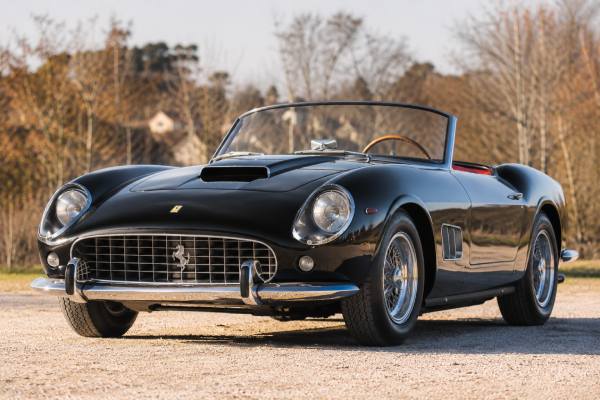
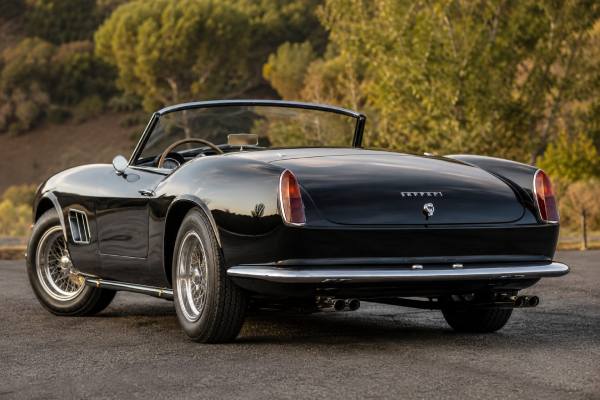
The Ferrari 250 GT LWB California Spyder with Tipo 508C chassis and Tipo 128C 3.0-liter V12 is the early, long-wheelbase version of one of the most admired open Ferrari road cars ever built. Covering the 1957 prototype period and the first 1958 production cars, this version sits at the point where Ferrari’s serious competition-derived 250 GT platform was reshaped into a fast, elegant, open two-seat car for wealthy American clients.
It matters because it was not simply a glamorous convertible. The LWB California Spyder used the same basic 2,600 mm wheelbase architecture associated with the 250 GT Berlinetta “Tour de France,” combined with Scaglietti coachwork, a Colombo V12, rear-wheel drive, and the light, mechanical feel of a late-1950s Ferrari. Its appeal today is tied to rarity, beauty, usability, and authenticity. A correct early car with strong documentation, matching numbers, original body identity, and known restoration history is a major collector-grade Ferrari, not a normal classic sports car.
Quick Take
The 1957–1958 Ferrari 250 GT LWB California Spyder is most compelling because it blends open-air grand touring with genuine 250 GT competition DNA: a 3.0-liter Colombo V12, 2,600 mm long-wheelbase chassis, Scaglietti bodywork, and a lean, purposeful road feel. The tradeoff is that every important detail matters. Early cars vary in body details, engine tune, documentation, and restoration history, so value depends less on generic condition and more on chassis identity, original components, Ferrari Classiche or expert documentation, body authenticity, and the quality of specialist maintenance.
Table of Contents
- History and Significance
- Engine, Chassis and Specifications
- Production, Variants and Options
- Design, Engineering and Features
- Driving Experience and Performance
- Maintenance, Restoration and Reliability
- Market, Buying Guide and Rivals
History and Significance
The early LWB California Spyder is important because it turned Ferrari’s hard-edged 250 GT Berlinetta formula into a roadgoing open car without losing the serious mechanical character. It was created for a market that wanted speed, style, and open-air driving, especially in the United States, where Ferrari importers Luigi Chinetti and John von Neumann understood the appeal of a fast Italian spider aimed at California-style use.
The car’s roots were practical as much as romantic. Ferrari already had the 250 GT Cabriolet, a more formal Pinin Farina-bodied open model. The California Spyder was different. It was lower, leaner, sportier, and closer in spirit to the Berlinetta line. The early long-wheelbase cars used the 2,600 mm 250 GT chassis, and the Tipo 508C reference places the car within Ferrari’s late-1950s tubular chassis development.
Scaglietti’s role was central. The California Spyder body was not a mass-produced shell but hand-built coachwork, which is why individual cars can differ in vents, lamps, hardtop fit, trim, and small body contours. The 1957 prototype, chassis 0769 GT, helped establish the model’s look and purpose. Series production followed in 1958, with only a small number of cars built that year.
The LWB California Spyder later evolved through 1959 and 1960 before the shorter 2,400 mm SWB California Spyder took over. That later short-wheelbase version is often better known in popular culture, but the LWB is the original shape and the cleaner historical link to the Tour de France-era 250 GT platform.
For collectors, the 1957–1958 Tipo 508C / Tipo 128C cars are especially sensitive to documentation. They belong to the first chapter of the model, before later production changes and before the SWB chassis arrived. A correct early car can be concours material, a top-tier Ferrari event car, and a usable road rally machine, but only when its history and restoration are properly understood.
Its reputation today rests on four strengths:
- It is one of the earliest California Spyders.
- It combines Scaglietti design with a race-derived Ferrari chassis.
- It uses the Colombo 3.0-liter V12, one of Ferrari’s defining engines.
- It is rare enough that each chassis has its own identity and market story.
That individuality is part of the charm, but it also makes buying one demanding. A California Spyder cannot be judged by photographs alone. Body authenticity, chassis number, engine number, period configuration, restoration records, and long-term ownership history all carry real value.
Engine, Chassis and Specifications
The core specification is a front-mounted Tipo 128C Colombo V12 in a tubular Tipo 508C long-wheelbase chassis. Factory-period figures vary by source and individual tune, but the commonly cited specification for the 250 California is 2,953.21 cc and 240 hp at 7,000 rpm.
| Category | Specification |
|---|---|
| Production focus | Early LWB California Spyder, 1957 prototype and 1958 cars |
| Chassis type | Tipo 508C tubular steel chassis |
| Wheelbase | 2,600 mm |
| Engine | Tipo 128C Colombo 60-degree V12 |
| Displacement | 2,953.21 cc |
| Induction | Triple Weber carburetors, commonly 36 DCL-type on early examples |
| Quoted output | About 240 hp at 7,000 rpm, depending on tune and period documentation |
| Transmission | 4-speed manual |
| Drive | Rear-wheel drive |
| Front suspension | Independent front suspension with coil springs and hydraulic dampers |
| Rear suspension | Live rear axle with period location and hydraulic dampers |
| Brakes | Four-wheel hydraulic drum brakes on early LWB cars |
| Body | Scaglietti two-seat spider coachwork, usually steel with aluminum panels on many road cars |
| Dry weight | About 1,100 kg, depending on body and equipment |
| Top speed | Up to about 252 km/h in factory-style specification |
The engine is the heart of the car. The Colombo V12 is small by modern standards, but it is a high-revving, short-stroke unit with a crisp mechanical sound. The displacement comes from the traditional 250 formula: roughly 250 cc per cylinder, multiplied across twelve cylinders. That is where the “250” name comes from.
The Tipo 128C is a single-overhead-cam-per-bank engine with two valves per cylinder. It uses carburetion rather than fuel injection, so correct tuning is essential. When set up well, the engine should feel sharp, smooth, and eager. When poorly tuned, it can feel uneven at low speed, run hot, foul plugs, or lose much of the clean response that defines a good 250.
The 4-speed manual gearbox is also part of the car’s identity. It is not a modern, quick-shift transmission. It rewards timing, mechanical sympathy, warm oil, and deliberate movement. Rear-wheel drive, a live rear axle, and period tires mean the California Spyder is best understood as a fast 1950s sports GT, not as a later supercar.
The brakes are a key early-car detail. The 1957–1958 LWB California Spyder used drum brakes, which can work well when correctly rebuilt and adjusted, but they need more anticipation than later disc-brake Ferraris. Brake condition, lining material, drum roundness, hydraulic health, and cooling all matter.
Production, Variants and Options
The 1957–1958 cars represent the first phase of California Spyder production, and they must be separated from later LWB and SWB cars. The total LWB California Spyder run is generally treated as about 50 cars, with 1958 accounting for only a small early batch.
The first prototype, chassis 0769 GT, is significant because it introduced the idea and appearance of the California Spyder. It was not merely an early sale car; it helped launch the model and appeared in period promotional material. The 1958 cars that followed began the model’s formal production life.
The biggest identification split is between LWB and SWB. The LWB cars have a 2,600 mm wheelbase. The SWB cars, introduced later, use a 2,400 mm wheelbase and have a different stance and driving feel. For this article’s 1957–1958 focus, the relevant identity is the early LWB chassis, Tipo 508C, with Tipo 128C engine specification.
Body details are not perfectly uniform. Because Scaglietti built these cars by hand, early California Spyders may show differences in:
- headlamp treatment, including covered or open lamps depending on car and later changes;
- front fender vent shape and trim;
- hood scoop design;
- bumper fitment or deletion;
- hardtop presence and fit;
- interior trim details;
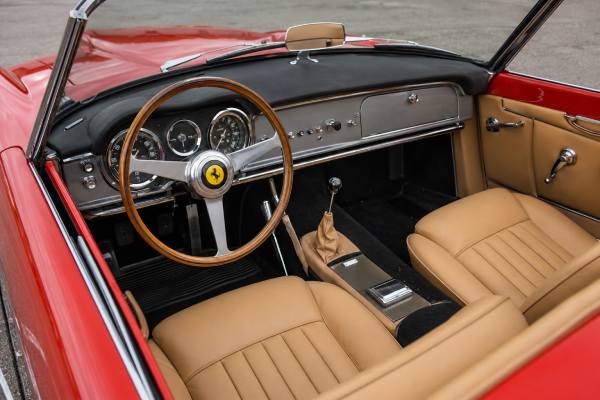
- instrument layout and steering wheel choice;
- steel versus aluminum body-panel configuration on special or competition-oriented cars.
Factory colors and interiors were also important. Ferrari clients could order special finishes, and many cars changed color over decades. A red California Spyder can be beautiful, but a return to the original color combination may be more valuable if the original shade is documented and desirable. The same applies to leather color, carpets, instruments, and roof material.
Documentation is not optional at this level. A serious car should be supported by a strong file, which may include:
- Ferrari Classiche certification where available;
- Massini or other recognized Ferrari historian reports;
- period build or delivery records;
- ownership chain;
- restoration invoices and photographs;
- engine, gearbox, rear axle, and body-number confirmation;
- competition history, if claimed;
- concours judging history, if relevant.
Matching numbers matter, but the phrase must be used carefully. Buyers should confirm what is matching: engine, gearbox, rear axle, body, chassis, and original coachwork are separate questions. A replacement engine, rebodied shell, restamped component, or undocumented identity correction can change value dramatically.
The early cars also sit in a gray zone where later updates may have been fitted over time. A car might have gained covered headlamps, different vents, modern cooling upgrades, non-original trim, revised brakes, or a new hardtop. Some changes can be reversible. Others affect authenticity more deeply. The goal is not always to find an untouched car, because most have been restored. The goal is to understand what is original, what is restored, what is replaced, and what is documented.
Design, Engineering and Features
The California Spyder’s design works because it looks elegant without hiding its sporting purpose. Scaglietti gave the LWB chassis an open body with long-hood proportions, low doors, a compact cabin, and a tail that feels lighter and more athletic than Ferrari’s more formal cabriolets.
The front end is one of the car’s defining areas. Early cars can have covered headlamps, open headlamps, or later changes that make identification tricky. Covered lamps give the car a smoother, more competition-like face, while open lamps can look more upright and road-car-like. Neither should be judged in isolation without knowing the car’s original build and market history.
The hood scoop and side vents are more than decoration. They help define the car’s relationship to the 250 GT Berlinetta family. The scoop feeds the visual idea of a serious front-engine V12, while the side vents break up the long fenders and help the car look lean rather than heavy. On hand-built cars, the exact shape and position of these details can vary.
The structure is traditional Ferrari practice of the period: a steel tubular chassis carrying coachbuilt bodywork. This gives the car a light and direct feel, but it also means accident damage and old repairs must be inspected by experts. A poorly repaired frame or distorted body can be expensive to correct and may never look right without major work.
Inside, the California Spyder is simple. The cabin is built around the driving position, large steering wheel, clear instruments, and the close mechanical relationship between driver and drivetrain. There is little insulation by modern standards. Heat, oil smell, leather, fuel vapor, and mechanical noise are part of the experience when the car is used as intended.
The special feature is the whole package rather than one gimmick. The California Spyder has:
- open bodywork with real 250 GT performance;
- a compact V12 mounted ahead of the driver;
- a manual gearbox and rear-drive layout;
- hand-shaped Scaglietti character;
- competition-era chassis behavior;
- enough grand touring comfort for road use, but not enough softness to feel detached.
The removable hardtop, when present and original to the car, can be a major value factor. Hardtops are often missing, replaced, or poorly fitted. A correct hardtop with documented history is not just an accessory; it can support the car’s completeness and desirability.
The exhaust and intake character are also important. A healthy Tipo 128C should not sound rough or lazy. It should have the bright, layered tone associated with small-displacement Ferrari V12s, with intake texture from the Webers and a harder edge as revs rise. Excessive smoke, misfire, fuel smell, or harsh mechanical noise should be treated as inspection items, not “character.”
Driving Experience and Performance
A well-sorted early LWB California Spyder feels light, fluent, and mechanical rather than brutally fast by modern standards. Its performance comes from revs, balance, gearing, low weight, and driver involvement, not from huge torque or electronic control.
The engine needs warming before it gives its best. Cold oil, carburetors, and period ignition all require patience. Once warm, the V12 should pull cleanly, rev willingly, and respond sharply to small throttle inputs. The 240 hp figure is modest beside modern performance cars, but in a roughly 1,100 kg 1950s Ferrari with open bodywork, it feels vivid and special.
The gearbox rewards good technique. A hurried shift when cold can feel heavy or reluctant. A skilled driver will let the drivetrain settle, match revs, and use the long, deliberate movement as part of the rhythm. Synchro condition is a useful clue to how the car has been driven and maintained.
Steering is one of the pleasures. At low speeds it can be heavy, especially with period-correct tire sizes and a large steering wheel. Once moving, it becomes clearer and more natural. It does not have modern rack-and-pinion precision, but it gives useful information through the wheel and encourages smooth inputs.
The chassis is best on open roads. It is a grand touring sports car with real pace, not a point-and-shoot modern machine. The front end should feel accurate, the rear live axle should remain settled when the dampers and bushings are correct, and the car should flow through bends when the driver avoids abrupt movements.
Braking expectations need to be period-correct. The drum brakes can be strong when fresh, but they do not feel like carbon ceramics or modern assisted discs. A driver must leave space, avoid repeated heavy stops on long descents, and understand that brake condition changes the car’s confidence level dramatically.
Ride quality is often better than expected if the suspension is rebuilt correctly and the tires are appropriate. A tired car may wander, crash over bumps, tramline, or feel loose at the rear. Those symptoms are not simply “old Ferrari behavior.” They can point to worn dampers, incorrect alignment, tired bushings, wheel issues, chassis repairs, or poor tire choice.
The California Spyder is usable in the way a valuable classic Ferrari can be usable. It can cover distance, run in rallies, appear at concours events, and give a superb road experience. It is not ideal for heavy city traffic, hot idle conditions, careless parking, or drivers who expect modern air conditioning, sealed refinement, and low maintenance.
Maintenance, Restoration and Reliability
Reliability depends almost entirely on specialist care, correct restoration, and regular use. A properly rebuilt early California Spyder can be dependable for tours and events, while a neglected or cosmetically restored car can become an expensive sequence of fuel, cooling, brake, gearbox, and electrical problems.
The engine needs expert attention. The Colombo V12 is not a mysterious unit to a proper Ferrari specialist, but it is expensive to rebuild and easy to make mediocre through poor setup. Compression, leak-down results, oil pressure, coolant temperature, carburetor balance, ignition condition, and exhaust smoke all matter.
Common ownership and restoration concerns include:
- carburetor wear, air leaks, incorrect jetting, and poor synchronization;
- ignition faults, weak coils, old wiring, and distributor wear;
- cooling system weakness from blocked radiators, old hoses, scale, or poor water-pump condition;
- fuel tank contamination and deteriorated lines;
- oil leaks that may be acceptable in small amounts but not when excessive;
- clutch wear or poor adjustment;
- worn gearbox synchros;
- tired differential bearings or incorrect final-drive setup;
- brake drum wear, hydraulic leaks, and weak lining material;
- worn kingpins, bushings, dampers, and steering components.
Corrosion is a major inspection area. Even top-tier Ferraris can hide old repairs under beautiful paint. Check the lower body, sills, wheel arches, door bottoms, floor areas, spare-wheel well, battery area, front structure, rear body mounts, and any junction where steel and aluminum meet. A fresh restoration does not remove the need for inspection; it makes documentation even more important.
Accident damage is equally serious. These cars were fast, valuable only later in life, and sometimes repaired when standards were lower than today. A specialist should inspect the frame tubes, suspension pickup points, door gaps, hood fit, trunk fit, windshield frame, and symmetry of the body. Scaglietti bodies were hand-built, so small differences are normal, but structural distortion is not.
Restoration quality can make or break the car. A concours restoration should preserve original identity, not erase it. Over-restored trim, incorrect leather grain, wrong instruments, modern fasteners, inaccurate paint, incorrect carburetors, and non-period finishes can all reduce authenticity. On the other hand, sympathetic safety and usability work may be acceptable if it is reversible and documented.
A proper pre-purchase inspection should include:
| Area | What to verify |
|---|---|
| Identity | Chassis, engine, gearbox, axle, body numbers, and documentation consistency |
| Body | Original coachwork, panel history, corrosion, accident repairs, and correct details |
| Engine | Compression, leak-down, oil pressure, carburetion, ignition, cooling, and rebuild records |
| Drivetrain | Gearbox synchros, clutch action, differential noise, axle setup, and fluid condition |
| Chassis | Frame straightness, suspension pickup points, weld quality, and old repair evidence |
| Brakes | Drum condition, hydraulic cylinders, hoses, lining material, balance, and fade resistance |
| Paperwork | Classiche file, historian report, restoration invoices, ownership chain, and event history |
Parts availability is mixed. Mechanical parts can often be sourced or made through the right network, but originality-sensitive items are difficult and expensive. Correct instruments, trim pieces, body hardware, lights, and period accessories can be far harder to replace than basic service parts.
The best ownership pattern is regular, careful use supported by a Ferrari specialist. Long static storage is harmful. Fuel systems dry out, seals shrink, hydraulics leak, tires age, and carburetors gum up. A California Spyder that is exercised, serviced, and kept in a stable environment is usually a better ownership prospect than a showpiece that never reaches operating temperature.
Market, Buying Guide and Rivals
The 1957–1958 LWB California Spyder sits in the upper tier of collectible Ferrari road cars, with value driven by identity, provenance, originality, and restoration quality more than simple mileage. Public sales show that early LWB cars live in a multi-million-dollar market, while competition history, prototype status, exceptional originality, or celebrity-grade provenance can push results much higher.
Market value is not uniform because no two cars are identical. A freshly restored but less original car, a car with uncertain component history, and a documented early chassis with original body and major concours history are very different assets. Auction estimates can also be conservative or optimistic depending on venue, timing, currency, and the broader collector-car market.
The main value drivers are:
- original chassis and body identity;
- matching or original engine and drivetrain components;
- early production status;
- documented 1957 or 1958 history;
- factory color and interior combination;
- covered-headlamp or special-body configuration when original;
- original hardtop, tools, books, and records;
- Ferrari Classiche certification and respected historian reports;
- quality of restoration;
- absence of major unresolved accident or corrosion history;
- event eligibility and concours record.
Cars to seek are those with a calm, consistent story. The best examples have known ownership from new or near-new, clear restoration photographs, expert reports, and no major gaps in identity. A car that has been with one caretaker for decades can be attractive, but only if storage and maintenance were good.
Cars to approach cautiously include:
- examples with unclear engine-number history;
- cars with major undocumented body reconstruction;
- cars restored before modern standards without detailed photos;
- cars advertised with vague “believed to be” claims;
- cars with later cosmetic features presented as original;
- cars that run poorly despite beautiful presentation;
- cars without respected Ferrari specialist inspection access.
The closest Ferrari alternatives depend on what the buyer values. A 250 GT Tour de France Berlinetta offers a more direct competition closed-car experience. A 250 GT Cabriolet Series I gives open V12 Ferrari style with a more formal personality. A later SWB California Spyder is more famous and sharper, but often even more expensive in top specification. A 275 GTS offers open Ferrari V12 usability from a later generation, though it does not carry the same early California Spyder mythology.
Period rivals are few because the Ferrari’s blend of rarity, performance, coachbuilt beauty, and brand history is unusual. The Mercedes-Benz 300 SL Roadster is the closest blue-chip open sports car in market stature, but it has a very different engineering character. The Aston Martin DB4 GT and DB4 convertible sit in related grand touring territory, though neither duplicates the Ferrari’s V12 Scaglietti identity. Maserati’s 3500 GT Spyder offers Italian open GT appeal at a different market level.
For buyers, the smartest approach is to budget for expertise before emotion. A beautiful California Spyder can still hide seven-figure questions. The inspection should be handled by people who know early Ferrari construction, not just general classic cars. The final decision should weigh the car’s beauty against its documented truth.
| Priority | Why it matters |
|---|---|
| Identity | The car’s chassis, engine, and body history define its value more than cosmetic condition alone. |
| Documentation | Factory records, Classiche certification, and historian reports reduce uncertainty. |
| Restoration quality | Poor restoration can be expensive to correct and may damage authenticity. |
| Mechanical health | A V12 rebuild, gearbox work, brake renewal, or body correction can be very costly. |
| Original specification | Colors, lamps, vents, hardtop, trim, and body details affect desirability. |
| Use case | Concours, touring, rally, and investment ownership favor slightly different examples. |
The long-term collectability outlook remains strong because the supply is fixed, the model is internationally known, and the early LWB cars are historically important. Still, buyers should avoid assuming that every California Spyder will perform the same financially. The best cars tend to remain liquid among serious collectors. Questionable cars can become difficult to sell, even if the model name is famous.
References
- Ferrari 250 California (1957) – Ferrari.com 1957 (Official Model Page)
- Ferrari 250 California: Ferrari History 1957 (Official History Page)
- 1957 Ferrari 250 GT LWB California Spider Prototipo | Gooding Christie’s 2025 (Auction Lot)
- 1958 Ferrari 250 GT LWB California Spider by Scaglietti | Monterey 2022 | RM Sotheby’s 2022 (Auction Lot)
- Gooding Christie’s Achieves New Auction Record with $25.3 Million Ferrari 250 GT California Spider Competizione, Grosses over $128 Million at 21st Annual Pebble Beach Auctions 2025 (Auction Results)
Disclaimer
This article is for informational purposes only and is not a substitute for professional diagnosis, inspection, repair, appraisal, or restoration advice. Specifications, torque values, service intervals, component details, and correct procedures can vary by chassis number, market, period updates, restoration history, and equipment. Always verify details against official Ferrari service documentation, factory records, and a qualified marque specialist.
If you found this guide useful, please consider sharing it on Facebook, X/Twitter, or another platform to support our work.