
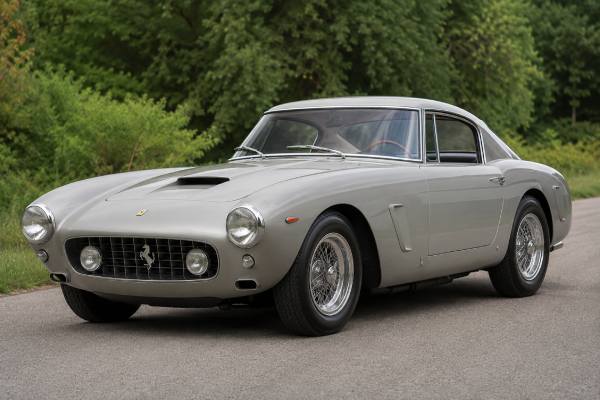
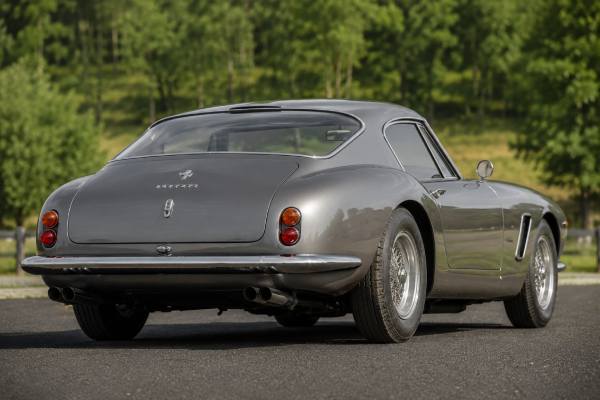
The Ferrari 250 GT Berlinetta Tour de France with the Tipo 508D chassis and Tipo 128D 3.0-liter V12 represents the late, highly developed form of Ferrari’s long-wheelbase competition berlinetta. Built in the 1958–1959 period, it combined Scaglietti aluminum coachwork, a 2,600 mm wheelbase, a front-mounted Colombo V12, rear-wheel drive, and a race-bred character that made it one of the defining GT cars of its era.
This version matters because it sits at the point where Ferrari’s early 250 GT racing formula had become mature, fast, and intensely collectible, just before the shorter-wheelbase 250 GT Berlinetta SWB changed the shape of Ferrari GT racing. The “Tour de France” name was never simply a styling label. It came from hard competition use, especially Ferrari’s success in the Tour de France Automobile. Today, the late single-louver and related 1958–1959 cars are valued for their mix of usable road manners, period racing credibility, mechanical beauty, and extreme sensitivity to originality.
Quick Take
The 1958–1959 Ferrari 250 GT Berlinetta Tour de France Tipo 508D / Tipo 128D is most appealing as a usable, front-engine V12 competition Ferrari with real period GT identity rather than a show-only collector object. Its core identity is the 260 hp Colombo V12, Scaglietti alloy berlinetta body, long-wheelbase chassis, and direct link to Ferrari’s late-1950s racing dominance. The caution is that every important detail matters: chassis, body, engine, gearbox, restoration quality, Classiche paperwork, race history, and even louver and headlamp configuration can change the value by large sums.
Table of Contents
- History, Purpose and Collector Importance
- Tipo 128D V12, Chassis and Specs
- Production Details, Variants and Factory Details
- Scaglietti Design, Engineering and Special Features
- Driving Character and Period Performance
- Reliability, Maintenance and Restoration Risks
- Market Value, Buying Guide and Rivals
History, Purpose and Collector Importance
The 250 GT Berlinetta Tour de France was Ferrari’s answer to the need for a fast, durable, production-based GT car that could win major road races and still be recognizable as a grand tourer. The 1958–1959 Tipo 508D / Tipo 128D version is important because it represents the final long-wheelbase development before the 250 GT SWB took over.
Ferrari’s official model name was 250 GT Berlinetta, but the “Tour de France” nickname became inseparable from the car after its success in the Tour de France Automobile. The event was not a short circuit race. It was a long, punishing mix of road stages, hill climbs, and circuit work, which rewarded cars that could survive as well as sprint. That suited Ferrari’s approach perfectly: a light coupe body, a strong V12, simple chassis engineering, and enough road equipment to qualify as a GT.
The model developed quickly from 1956 through 1959. Early cars had different body details and engine specifications, while later cars became sharper, cleaner, and more competition-focused. The version covered here belongs to the late long-wheelbase family, commonly associated with the single-louver Scaglietti body style and the more developed Tipo 128D engine specification.
This car also sits in an important place within Ferrari’s 250 family. The 250 series included elegant road cars, California Spiders, Pinin Farina coupes, SWB berlinettas, and eventually the 250 GTO. The Tour de France was one of the earliest 250 GTs to prove that Ferrari could build a road-usable berlinetta with genuine international race-winning ability. For many collectors, it is the car that links Ferrari’s early sports-racing machines to the later, more famous 250 GT SWB and 250 GTO.
Its significance today comes from several overlapping qualities:
- Competition credibility: The TdF was created for serious GT racing, not merely styled to look sporting.
- Coachbuilt rarity: Scaglietti aluminum bodies were hand-built, and small differences between cars are part of their identity.
- Mechanical purity: The front-mounted Colombo V12, four-speed gearbox, live rear axle, and drum brakes give it a direct 1950s competition feel.
- Historical position: It is one of the cars that made Ferrari’s 250 GT line internationally respected.
- Collector sensitivity: Values depend heavily on originality, numbers matching, documented history, and correct restoration.
The 1958–1959 cars are especially interesting because they show Ferrari refining the formula. They are not as visually rounded as some early TdFs, and not as compact as the later SWB. Instead, they have a lean, functional look: long hood, low cabin, tapered tail, and race-car details that make sense only when viewed through the needs of endurance competition.
Tipo 128D V12, Chassis and Specs
The heart of this Ferrari is the Tipo 128D Colombo V12, a 2,953 cc all-alloy engine rated at about 260 hp at 7,000 rpm in the version covered here. The chassis is the long-wheelbase Tipo 508D tubular steel frame, clothed in lightweight Scaglietti aluminum coachwork.
The Colombo V12 is central to the car’s identity. It is small in displacement by modern standards, but it is smooth, eager, and highly responsive. The “250” name refers to the approximate displacement of each cylinder in cubic centimeters, which was Ferrari’s usual naming logic at the time. With twelve cylinders, triple Weber carburetors, and a high-revving character, the engine gives the TdF its distinctive mix of flexibility and racing edge.
| Item | Specification |
|---|---|
| Model | Ferrari 250 GT Berlinetta Tour de France |
| Production period covered | 1958–1959 |
| Chassis type | Tipo 508D tubular steel frame |
| Body | Scaglietti aluminum two-seat berlinetta |
| Engine | Tipo 128D Colombo 60-degree V12 |
| Displacement | 2,953 cc |
| Valve gear | Single overhead camshaft per cylinder bank |
| Induction | Triple Weber carburetors |
| Power | 260 hp at 7,000 rpm |
| Transmission | 4-speed manual |
| Drivetrain | Front engine, rear-wheel drive |
| Wheelbase | 2,600 mm |
| Front suspension | Independent suspension with coil springs and lever-arm dampers |
| Rear suspension | Live axle with semi-elliptic leaf springs and lever-arm dampers |
| Brakes | Hydraulic finned aluminum drum brakes |
The engine’s appeal is not just its output. The Tipo 128D specification brought a more developed form of the Colombo short-block V12, with detail improvements over earlier versions. In period, exact output depended on engine build, carburetion, camshaft choice, compression, exhaust setup, and race preparation. A correctly built 260 hp example is lively and urgent without feeling crude.
The four-speed manual gearbox is part of the car’s charm and part of its inspection risk. A good gearbox should feel mechanical, deliberate, and precise once warm. A worn one can be expensive to rebuild, especially if incorrect parts or old competition repairs are discovered.
The suspension layout is simple by modern standards but effective for a 1950s GT racer. The front end gives the car its steering accuracy, while the rear live axle demands respect on uneven roads. The drum brakes are powerful when correctly prepared, but they require more mechanical sympathy than later disc brakes. They are also central to the car’s period feel, so replacing or modifying them can affect authenticity.
Performance figures vary across period sources because axle ratios, engine tune, body details, and race preparation varied. A strong 260 hp TdF was fast enough to run with the best GT cars of its time, with a top speed commonly understood to be in the 150 mph range when geared appropriately. More important than any single number is the combination of high speed, durability, and balance that made the car successful in long-distance events.
Production Details, Variants and Factory Details
Production of the broader 250 GT Berlinetta Tour de France family was small, hand-built, and complicated by prototypes, body-style changes, special-bodied cars, and competition updates. For the late single-louver Scaglietti body style often associated with the 1958 Tipo 128D cars, auction catalogues commonly describe a 36-car subset.
This is one reason buyers must be careful with TdF identification. “Tour de France” is used broadly in the market, but not every TdF has the same body, engine type, headlamp layout, louver pattern, or competition history. Some are early no-louver or multi-louver cars. Some have covered headlights. Later examples may have open headlights. Some cars are more road trimmed, while others are more clearly competition prepared.
The 1958–1959 Tipo 508D / Tipo 128D cars sit near the end of the long-wheelbase line. They are sometimes discussed as a bridge between the earlier TdF and the later SWB. The long 2,600 mm wheelbase remained, but the body was cleaner and the engine development had advanced. This makes them attractive to collectors who want late TdF engineering without moving into the shorter, different-feeling SWB platform.
Identification points that matter
The most important identification items are not cosmetic alone. A serious buyer should look at the complete identity of the car:
- Chassis number and chassis type
- Engine number and engine type
- Gearbox number
- Rear axle and differential details
- Body number or coachwork documentation
- Factory build record
- Original color and interior trim
- Period race entries and results
- Ownership chain
- Ferrari Classiche certification
- Independent historian reports
- Restoration invoices and photographs
Matching-numbers status is especially important. In this market, “matching numbers” usually means the car retains its original major components as documented by factory or specialist records. A TdF with its original chassis, body, engine, gearbox, and rear axle is far more desirable than one assembled from correct-type but non-original parts.
Factory and customer variation
These cars were not mass-produced in the modern sense. Ferrari built them in small numbers, and Scaglietti shaped the bodies by hand. Buyers could receive differences in trim, competition equipment, paint, interior materials, gearing, carburetion, and detail specification.
Typical areas of variation include:
- Covered or open headlamp treatment, depending on body style and period requirements
- Louver arrangement on the sail panels or front fenders
- Bumper fitment or deletion
- Sliding or wind-up side windows
- Road-oriented or competition-oriented interior trim
- Different final-drive ratios for road racing, hill climbs, or high-speed events
- Carburetor specification and engine tune
- External lighting details for different markets or events
Because of this, restoration accuracy is not as simple as comparing one TdF to another. A detail that is correct on one chassis may be wrong on another. The safest approach is to document the individual car, not just the model type.
Scaglietti Design, Engineering and Special Features
The late 250 GT Tour de France looks the way it does because it was shaped for speed, cooling, weight reduction, and race serviceability. Its beauty comes from function: a long hood for the V12, a compact cabin, a low roof, and an aluminum body that keeps the car light.
Scaglietti’s role is central. The bodies were built in Modena using traditional coachbuilding methods, and the result is more individual than a modern stamped-body car. Panel gaps, vents, door fit, and interior details can vary from car to car. That hand-built nature is part of the appeal, but it also makes restoration harder. Recreating a TdF body accurately requires historical knowledge, metal-shaping skill, and access to the right reference material.
The single-louver body style gives late cars a cleaner side profile than earlier multi-louver versions. The louver was not decoration. It helped manage heat and airflow around the engine bay and cabin area. Covered-headlamp cars have a particularly sleek look, while open-headlamp late cars have their own historical identity. Both can be valuable, but buyers must understand which configuration belongs to the specific chassis.
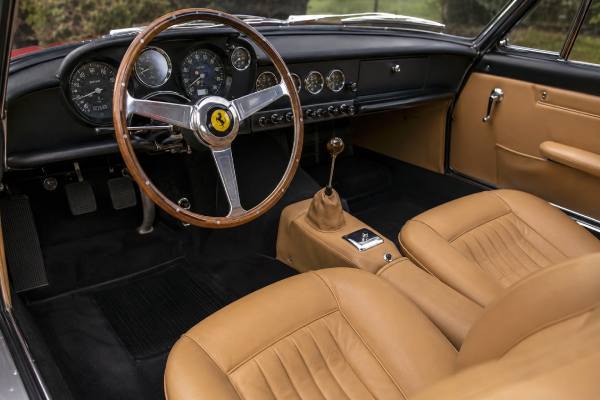
The cockpit is simple, focused, and more competition car than luxury coupe. The driver sits behind a large wood-rim steering wheel, with clear instruments and little unnecessary decoration. Visibility is good by 1950s GT standards, though the long hood and delicate bodywork require care in tight spaces. Heat, noise, and vibration are part of the experience.
Why the engineering still feels special
The car’s engineering is not complicated in the modern electronic sense, but it is sophisticated in balance. Ferrari combined proven components with racing development:
- A small-displacement V12 that rewards revs
- A light aluminum body over a tubular frame
- A front-engine layout with strong weight distribution for the period
- A manual gearbox that requires skill rather than automation
- Drums and tires that demand planning rather than late braking
- A chassis that works best when the driver is smooth
The exhaust and induction sound are key emotional features. A well-tuned Tipo 128D does not simply make noise; it has layers. At low speed it can sound crisp and busy. At higher revs the intake and exhaust merge into the hard-edged sound that defines early Ferrari competition V12s. Poor carburetor setup, weak ignition, worn throttle linkage, or incorrect exhaust work can dull that character quickly.
Driving Character and Period Performance
A properly sorted 250 GT Tour de France feels fast, light, mechanical, and alive, but it is not a modern supercar. It needs warming, rhythm, and respect, especially when cold, on old tires, or in traffic.
The engine is the main event. The Tipo 128D V12 is flexible enough for road use but happiest when allowed to rev. Throttle response depends heavily on carburetor condition and linkage setup. A well-set-up car should pull cleanly, respond sharply, and feel eager above the mid-range. A tired example may hesitate, foul plugs, run hot, or feel flat despite looking perfect on a concours lawn.
The gearbox requires patience when cold. Once the oil is warm, shifts should become more natural, though still deliberate. Rushing changes is unwise, especially in a car where original gearbox parts are valuable and expensive. Owners familiar with modern synchronized gearboxes may need time to adapt.
The steering is one of the car’s great strengths. At parking speeds it is heavy, but once moving it becomes clear and communicative. The long-wheelbase chassis gives stability at speed, while the relatively light body keeps the car responsive. Compared with the later SWB, the TdF feels more flowing and less compact. It suits fast open roads, long bends, and sweeping routes rather than stop-start modern traffic.
Braking is the area where expectations must be period-correct. The finned aluminum drums can work very well when properly adjusted, cooled, and driven with mechanical sympathy. They do not feel like modern carbon-ceramic or even modern steel disc brakes. Long downhill roads, repeated hard stops, and poor adjustment can expose fade or imbalance. Brake condition is therefore both a driving issue and a buying issue.
Ride quality depends heavily on setup. Correct springs, dampers, bushings, tires, and wheel condition matter. A beautifully restored but poorly set-up TdF may feel nervous or harsh. A correctly prepared one can feel surprisingly composed for a 1950s competition GT. The live rear axle is part of the character. On smooth roads it behaves well; on rough pavement it reminds the driver to stay measured.
For road use, the TdF is more usable than its value suggests, but not casual. It has cabin heat, mechanical smells, heavy controls at low speeds, and limited protection by modern safety standards. There are no airbags, stability systems, anti-lock brakes, or crash structures in the modern sense. The reward is directness. The driver feels the engine, tires, brakes, and road surface in a way that modern cars filter out.
Reliability, Maintenance and Restoration Risks
Reliability in a 1958–1959 Ferrari 250 GT Tour de France depends less on the original design and more on the quality of decades of maintenance, storage, use, and restoration. A correctly restored and regularly exercised car can be dependable for tours and historic events, but a neglected or poorly restored one can become extremely expensive very quickly.
The Colombo V12 is a robust engine when built and maintained by specialists who understand early Ferrari tolerances, oiling, ignition, and carburetion. Problems often come from age, poor past work, incorrect parts, and long periods of inactivity rather than from a single inherent defect.
Key mechanical areas to inspect include:
- Compression and leak-down results
- Oil pressure hot and cold
- Carburetor condition and correct specification
- Ignition system condition
- Cooling system capacity and radiator condition
- Fuel tank, fuel lines, and pumps
- Timing chain and valve-train condition
- Exhaust manifold and system integrity
- Engine mounts and driveline vibration
- Gearbox synchros, bearings, and selector feel
- Differential noise and axle condition
The chassis is another major concern. A tubular steel frame can suffer from corrosion, accident damage, poor repairs, or distortion from hard competition use. Because these cars were raced, restored, and sometimes modified over many decades, the chassis must be measured and inspected by someone who knows the model. Cosmetic restoration can hide serious structural problems.
The aluminum body brings its own risks. Corrosion between dissimilar metals, old accident repairs, excessive filler, incorrect panel replacement, and inaccurate body reshaping can all affect value. A TdF body should not be judged only by shine. The important questions are whether the body is original to the car, how much metal has been replaced, whether the shape is correct, and whether restoration photographs support the work.
Maintenance priorities for owners
Owners should treat a TdF as a competition-derived machine, not as a low-maintenance classic. Important maintenance habits include:
- Regular fluid changes, even if mileage is low
- Careful warm-up before using high revs
- Carburetor synchronization and mixture checks
- Valve clearance inspection by a qualified specialist
- Brake adjustment and inspection before events
- Tire age checks, not just tread-depth checks
- Spoke wheel inspection and truing
- Fuel-system cleaning if the car sits
- Cooling-system inspection before summer driving
- Battery and wiring checks to prevent avoidable electrical faults
Restoration is where the largest cost risks appear. Engine rebuilds, gearbox work, chassis correction, brake overhaul, and aluminum bodywork can all become major projects. The most expensive restorations are often those that begin with a car that looks finished but has hidden problems underneath.
Originality versus upgrades is a delicate issue. Some owners want improved cooling, discreet electrical upgrades, or better event usability. Those changes may make the car easier to use, but visible or irreversible modifications can hurt value. For a car at this level, any change should be documented, reversible where possible, and discussed with marque experts before work begins.
Market Value, Buying Guide and Rivals
The 250 GT Tour de France sits in the top tier of collectible front-engine Ferrari GT cars, but values vary widely by chassis history, originality, body style, restoration quality, and documentation. Recent public sales and market listings show that ordinary price-guide thinking is not enough for this model.
Late 1958–1959 TdF examples have traded in the multi-million-dollar range, with public results for relevant cars often landing around the mid-seven-figure area. Exceptional cars with major race history, outstanding originality, famous ownership, or special early significance can move far beyond ordinary comparables. Cars with weaker histories, non-original components, questionable bodywork, or needs can sit lower, but “cheaper” is rarely cheap once restoration and authentication are considered.
The best examples usually share several traits:
- Original chassis, body, engine, gearbox, and rear axle
- Clear factory documentation
- Ferrari Classiche Red Book or equivalent strong documentation
- Known ownership chain with few gaps
- Period race history that is supported by records
- Correct body configuration for the chassis
- High-quality restoration by recognized specialists
- Original colors or well-documented period-correct finishes
- Event eligibility for major tours, concours, and historic races
A buyer should avoid any TdF where the story is stronger than the evidence. Claims about race history, factory specification, original bodywork, or famous ownership must be documented. At this price level, even small uncertainties can become large valuation issues.
| Area | Why it matters |
|---|---|
| Chassis identity | Confirms the car’s core legal and collector identity |
| Matching engine and driveline | Major driver of value and authenticity |
| Body originality | Scaglietti aluminum coachwork is central to desirability |
| Restoration records | Shows what was repaired, replaced, or corrected |
| Race history | Can significantly increase value when proven |
| Mechanical condition | Rebuilds are costly and require rare expertise |
| Certification | Supports authenticity but should not replace inspection |
| Event eligibility | Affects usability and long-term desirability |
The closest Ferrari alternatives depend on buyer intent. A 250 GT SWB is more compact, later, and often more valuable, with disc brakes and a sharper feel. A 250 GT California Spider offers open-air glamour and very high collector appeal but a different driving purpose. A Pinin Farina 250 GT coupe is far more accessible financially but lacks the TdF’s competition identity. A 250 GTO is the spiritual descendant, but it occupies a different market universe.
Non-Ferrari rivals include the Mercedes-Benz 300 SL Gullwing, Aston Martin DB4 GT, Maserati A6G/54, and competition versions of the Jaguar XK and early E-Type. The Mercedes is more famous to the general public and has dramatic engineering, but the Ferrari has a more direct link to Ferrari’s GT racing dynasty. The Aston is a strong period comparison for collectors who want a front-engine GT with competition use, though it has a different engine character and market position.
For a serious buyer, the right approach is to buy the individual car, not the headline model. A less famous chassis with exceptional originality and documentation may be a better long-term purchase than a more dramatic-looking car with gaps in its story. Specialist inspection is not optional. It should include Ferrari historians, mechanical experts, body specialists, and documentation review before money changes hands.
References
- Ferrari 250 GT Berlinetta (1956) 1956 (Factory Model Page)
- How the Ferrari 250 GT Berlinetta earned its TdF nickname 2025 (Manufacturer Article)
- 1958 Ferrari 250 GT Tour de France Berlinetta | Gooding Christie’s 2018 (Auction Catalogue)
- 1958 Ferrari 250 GT LWB Berlinetta ‘Tour de France’ by Scaglietti | Arizona 2025 | RM Sotheby’s 2025 (Auction Catalogue)
- Ferrari 250 GT Berlinetta “Tour de France” Market – CLASSIC.COM 2026 (Market Data)
Disclaimer
This article is for informational purposes only and is not a substitute for professional diagnosis, inspection, repair, restoration, or valuation advice. Specifications, torque values, service intervals, procedures, and component details can vary by chassis number, market, period modification, and individual vehicle history. Always verify details against official service documentation, factory records, Ferrari Classiche material, and qualified marque specialists.
If you found this guide useful, please share it on Facebook, X/Twitter, or your preferred enthusiast community to support our work.