
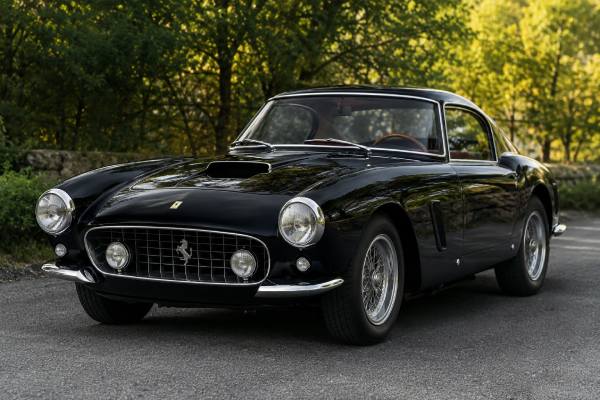
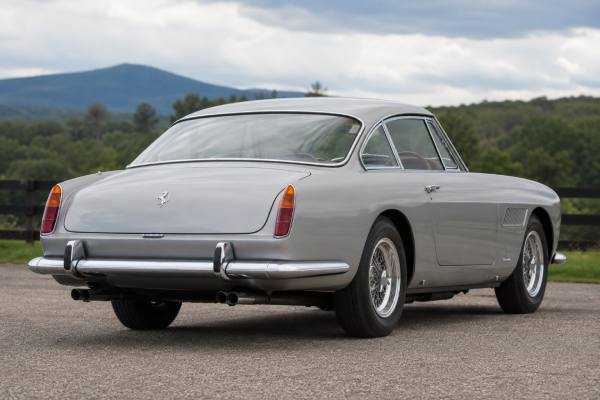
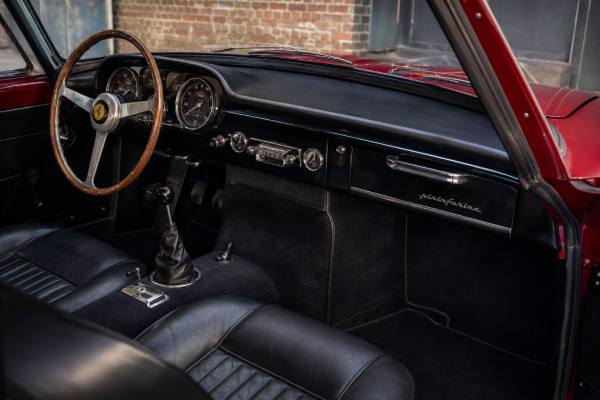
The Ferrari 250 GT Coupé Pinin Farina with the Tipo 508C chassis and early Tipo 128C Colombo V12 belongs to the moment when Ferrari began turning its road-car business from low-volume coachbuilt craft into repeatable, semi-series production. Built around the 1958–1959 period, it used a 3.0-liter, single-overhead-cam-per-bank V12 rated at about 240 hp, a front-engine rear-drive layout, and elegant two-seat coupé coachwork by Pinin Farina.
This was not the most aggressive 250, nor the rarest, nor the most expensive. Its importance is different. The 250 GT Coupé Pinin Farina made the Ferrari grand tourer more mature, more usable, and more commercially scalable. It stood between the earlier Boano and Ellena-bodied 250 GT coupés and the later 250 GT 2+2, while sharing the broad mechanical family that made the 250 series one of Ferrari’s most celebrated lines.
For buyers and collectors today, the appeal is the combination of a real Colombo V12, classic Pinin Farina restraint, usable road manners, and a market position that is usually far below the famous California Spider, Tour de France, SWB Berlinetta, or Lusso. The caution is equally clear: originality, chassis identity, engine type, restoration quality, corrosion, and documentation matter more than cosmetic glamour.
Quick Take
The 1958–1959 Ferrari 250 GT Coupé Pinin Farina is the discreet, road-focused side of the 250 family: a hand-finished Italian grand tourer with a 240 hp Colombo V12, elegant Pinin Farina bodywork, and real historical importance as Ferrari’s first higher-volume GT coupé. Its strongest appeal is usability and purity rather than racing fame, while its main risk is that many examples have lived long, complicated lives involving restoration, color changes, mechanical upgrades, or incomplete documentation. The best cars are matching-numbers, well-documented, structurally sound, and restored by specialists who understand early Ferrari construction rather than merely making the car look fresh.
Table of Contents
- History and Place in Ferrari
- Engine, Chassis and Key Specs
- Production, Versions and Originality
- Pinin Farina Design and Engineering
- Road Feel, Performance and Usability
- Maintenance, Restoration and Known Risks
- Values, Buying Advice and Rivals
History and Place in Ferrari
The 250 GT Coupé Pinin Farina matters because it helped Ferrari standardize the grand touring car without stripping away the character of a coachbuilt Ferrari. It was still hand-finished and special, but it was no longer a one-off exercise for each wealthy customer.
Ferrari’s 250 family had already proved the strength of the Colombo V12 formula. The name “250” came from the approximate displacement of each cylinder, and the basic idea was simple: a compact 3.0-liter V12, a tubular steel chassis, and a body suited either to competition or fast road use. The 250 GT Coupé Pinin Farina took that recipe and made it calmer, cleaner, and more repeatable.
Before this model, Ferrari road coupés came through a more fragmented route. Pinin Farina designed many bodies, but capacity limits meant production was often handled by other coachbuilders such as Boano and Ellena. By the late 1950s, demand for Ferrari road cars was rising, and Pinin Farina’s new production capacity allowed the company to take back a larger role in building the coupé bodies itself.
The result was a refined two-seat GT rather than a thinly disguised racer. It was aimed at customers who wanted Ferrari speed, sound, and prestige, but also wanted a car that could be driven on long trips. Its cabin was more civilized than Ferrari’s competition berlinettas, its body had understated lines, and its mechanical specification was proven rather than experimental.
That does not make it ordinary. In period, a 240 hp V12 coupé capable of very high cruising speeds was exotic machinery. It was expensive, rare, and mechanically sophisticated compared with most European sports cars of the late 1950s. What makes it feel relatively understated today is the shadow cast by the more famous 250 variants.
The Pinin Farina Coupé’s collector reputation has improved as the market has matured. Earlier generations of collectors often chased open cars and competition models first. Some Pinin Farina coupés were neglected, modified, or even sacrificed as donors for more glamorous replicas. Today, originality and preservation have become far more important, and the model is valued as a crucial part of Ferrari’s move toward a sustainable road-car business.
It is also a significant design object. Pinin Farina avoided the heavily decorated look common in some 1950s luxury cars. The Coupé’s shape is clean, formal, and balanced, with a long hood, upright cabin, restrained side surfaces, and a notchback tail. It is a car that rewards close attention rather than demanding it from across the room.
For concours events, Ferrari gatherings, and serious collections, a correct 1958–1959 250 GT Coupé Pinin Farina has a strong case. It may not deliver the same auction drama as a California Spider, but it offers a direct link to the Colombo V12 era, Pinin Farina’s design maturity, and Ferrari’s early shift from small-batch racing constructor to maker of refined road cars.
Engine, Chassis and Key Specs
The core specification is a front-mounted 3.0-liter Colombo V12 in a Tipo 508C tubular chassis, driving the rear wheels through a 4-speed manual gearbox. Early Pinin Farina coupés used the Tipo 128C engine family before later updates brought related 128D and 128F versions into the wider 1958–1960 run.
| Item | Specification |
|---|---|
| Model | Ferrari 250 GT Coupé Pinin Farina |
| Production focus | 1958–1959 early Pinin Farina coupé cars |
| Chassis type | Tipo 508C tubular steel frame |
| Engine type | Tipo 128C Colombo 60-degree V12 |
| Displacement | 2,953 cc |
| Bore x stroke | 73 mm x 58.8 mm |
| Valvetrain | Single overhead camshaft per bank, two valves per cylinder |
| Induction | Three twin-choke Weber carburetors |
| Output | About 240 hp at high engine speed |
| Transmission | 4-speed manual |
| Drivetrain | Front engine, rear-wheel drive |
| Front suspension | Independent with wishbones, coil springs, and hydraulic dampers |
| Rear suspension | Live axle with semi-elliptic leaf springs and hydraulic dampers |
| Brakes | Hydraulic drums on early cars; disc brakes appeared on later production |
| Wheelbase | 2,600 mm |
The Colombo V12 is central to the car’s identity. It is compact, relatively light for a 12-cylinder engine of the period, and happiest when tuned and driven by someone who understands carbureted classics. The engine does not deliver power like a modern large-displacement V8. It builds speed through revs, smoothness, and mechanical precision.
The Tipo 128C sits within a family of related 250 GT engines. Period Ferrari production was not always as rigid as modern model-year logic, so buyers should avoid assuming that every 1958 or 1959 car has the same distributor layout, carburetor specification, or later-life component history. Some cars have been updated, rebuilt, or corrected during restorations.
The chassis is a traditional Ferrari tubular frame, not a monocoque. This matters for restoration because the body and frame must be evaluated together. A car can look beautiful on the surface while hiding old impact repairs, poor alignment, corrosion, or body mounting problems. Door fit, panel gaps, suspension pickup points, and evidence of proper jig work all matter.
The gearbox is a 4-speed manual, and its condition is a major part of the driving experience. A good gearbox should feel mechanical and deliberate, not vague or obstructive once warm. Synchromesh wear, incorrect adjustment, clutch issues, and tired linkages can make an otherwise healthy car unpleasant.
Brakes are an important dividing line. Early cars used hydraulic drum brakes, which were normal for the period and correct for many 1958–1959 examples. Later cars gained Dunlop disc brakes, improving usability and confidence. A disc-brake conversion may make a car easier to drive, but it can affect originality depending on chassis number, build date, and documentation.
Performance figures vary because period tests, factory claims, axle ratios, tune, road conditions, and body weight were not perfectly consistent. A healthy car should feel genuinely quick by 1950s GT standards, but buyers should be cautious of exaggerated modern claims. The better way to understand the car is as a fast, long-legged V12 tourer rather than a lightweight competition berlinetta.
Production, Versions and Originality
The 250 GT Coupé Pinin Farina was built in greater numbers than earlier Ferrari road coupés, but it remained a low-volume, hand-finished collector car. Across the full 1958–1960 Pinin Farina coupé run, commonly cited production is about 353 examples, with early and later cars differing in important mechanical details.
The early 1958–1959 cars are often discussed separately from later 1960 cars because of the development path from 128C and 128D inside-plug engines to later outside-plug 128F-type units, as well as the shift from drum brakes to disc brakes. The exact identity of a car depends on chassis number, engine number, build date, factory records, and later restoration history.
Key production distinctions
The most useful way to think about the model is not by modern trim levels, but by build phase and specification:
- Early Pinin Farina coupés: Closest to the Tipo 508C / Tipo 128C identity, usually with drum brakes and the early inside-plug Colombo V12 layout.
- Later Series I-type cars: Still visually close, but often showing mechanical updates such as the 128D engine family depending on build date.
- Late 1959 and 1960 cars: More likely to feature disc brakes, revised engine specification, and improved usability details.
- Special-bodied or unusual cars: A small number received distinctive details, special body features, or later rebody work, and must be judged individually.
Factory originality is not just a nice extra on this Ferrari. It is one of the main value drivers. Matching chassis and engine numbers, original body identity, correct engine type, correct gearbox, and proper documentation all affect desirability. A beautifully restored but non-original car may still be enjoyable, but it will not sit in the market like a well-documented, numbers-matching example.
Ferrari Classiche certification can be valuable, but it should not be the only document a buyer studies. A serious file may include older registration documents, ownership records, restoration invoices, period photographs, Massini-style history reports, concours records, service records, and correspondence from respected Ferrari specialists. Gaps are not unusual on cars this old, but unexplained gaps should reduce confidence.
Colors and interiors also matter. Many cars have been repainted, retrimmed, or reconfigured. A return to factory colors can help value when supported by records, but some long-established period changes may also be accepted if the car has strong history. The worst situation is a car presented as original when the evidence shows otherwise.
The Pinin Farina body itself has hand-built variation. Panel fit, trim details, interior fittings, gauges, and small hardware should be judged against comparable cars and factory records, not against modern mass-production standards. That said, poor panel alignment should not be dismissed automatically as “Italian hand-built charm.” It can also point to accident history, weak structure, or careless restoration.
Buyers should be especially cautious around cars with replica histories. Because the 250 chassis and V12 are desirable, some closed cars were historically used as donors for recreations of more valuable variants. A car that has been returned to coupé form, rebodied, or reconstructed may still be interesting, but its value depends on transparency and documentation.
Pinin Farina Design and Engineering
The Pinin Farina Coupé is special because it combines Ferrari mechanical drama with a deliberately restrained body. Its design is not loud; it is controlled, balanced, and intended to make a 3.0-liter V12 Ferrari feel like a serious grand tourer.
The front end is long and clean, with a wide grille and headlamps set into gently shaped front wings. Compared with earlier Ferrari coupés, the shape is less busy. The sides are smoother, the roofline is formal, and the tail is more notchback than fastback. This gave the car a more mature look and made the body better suited to repeatable production.
Pinin Farina’s approach also helped define the modern Ferrari GT language. The car has a clear hood-cabin-tail relationship, rather than the more experimental proportions of some earlier coachbuilt Ferraris. It looks like a car designed for elegant high-speed road use, not a racer softened for customers.
The body is usually described as steel construction, with hand-finished details and some light-alloy panels depending on car and period practice. For restoration, the important point is not only the material but the craftsmanship. Lead loading, hand-shaped repairs, trim fit, and the relationship between the body shell and tubular frame all require specialist knowledge.
Inside, the Coupé is simple but rich in the way a late-1950s Ferrari should be. The driver faces clear instruments, a large steering wheel, a manual gear lever, and a cabin that emphasizes mechanical control over decoration. It is more comfortable than a competition berlinetta, but it is still a compact two-seat GT by modern standards.
Engineering choices that define the car
Several engineering choices shape the car’s character:
- The front-mounted V12 gives the car a long-hood GT stance and strong high-speed cruising identity.
- The tubular chassis keeps the car within Ferrari’s competition-influenced construction tradition.
- The live rear axle is simple and durable, but it gives the car a more period-correct feel than later independent rear suspension Ferraris.
- Carburetion gives the engine much of its sound and response, but it also demands correct setup.
- Drum brakes on early cars reward anticipation and mechanical sympathy rather than late, repeated hard stops.
The sound is a major part of the appeal. A properly tuned Colombo V12 has a crisp, layered note that is more musical than brutal. Intake noise from the Webers, mechanical valvetrain sound, and the exhaust combine to create a very different experience from a modern sealed cabin.
Cooling and airflow are important ownership topics. The car was designed for fast European touring, not stop-and-go urban traffic in modern heat. A clean radiator, healthy water pump, correct fan setup, proper ignition timing, and well-set carburetors all help keep the engine stable. Overheating should never be treated as normal just because the car is old.
The design also has emotional strength because it is honest. There are no fake vents, no oversized aerodynamic claims, and no modern styling theatrics. The car’s appeal comes from proportion, mechanical substance, and the knowledge that beneath the formal body sits one of Ferrari’s defining engines.
Road Feel, Performance and Usability
A good 250 GT Coupé Pinin Farina feels smooth, quick, mechanical, and surprisingly usable, but it is still a 1950s Ferrari that needs warm-up time and sympathetic inputs. It rewards patience far more than force.
The engine is the star. At low speeds, it should pull cleanly if the carburetors and ignition are properly set, but it comes alive as revs rise. The V12 does not need to be thrashed to feel special. Even moderate acceleration carries a texture and sound that modern performance cars rarely duplicate.
Throttle response depends heavily on tune. A well-sorted car feels crisp and progressive. A tired or poorly set-up car may hesitate, load up, run rich, or feel flat. Many disappointing drives in old Ferraris are not caused by weak design; they are caused by deferred maintenance or incorrect tuning.
The gearbox should be treated with respect, especially when cold. Rushing shifts before the oil has warmed is a good way to expose wear or create it. Once warm, a healthy 4-speed gearbox gives a direct, mechanical feel. It is part of the pleasure, but it is not a modern short-throw performance gearbox.
Steering is another period pleasure. At parking speeds it can be heavy, especially on modern tires or poor surfaces. Once moving, the car should feel accurate and communicative. It is not nervous. The long wheelbase and GT setup give it stability, while the relatively compact V12 helps avoid the nose-heavy feel of some larger-engined grand tourers.
Ride quality is better than many people expect from a classic Ferrari. This was a road car, and its suspension was chosen for touring as much as cornering. A correct car should breathe with the road rather than crash over it. Harshness often points to incorrect dampers, old bushings, poor tire choice, or a restoration biased toward appearance rather than road behavior.
Braking expectations must be realistic. Drum-brake cars can stop well when correctly rebuilt and adjusted, but they do not tolerate repeated hard use like later disc-brake Ferraris. Pedal feel, straight-line stability under braking, and even response from each corner are essential inspection points. Pulling, fade, vibration, or a long pedal deserves immediate attention.
On a flowing road, the Coupé makes sense. It is not about attacking every corner. It is about rhythm: brake early, settle the chassis, choose the gear, let the V12 pull, and enjoy the balance. The car’s weight and suspension design mean it prefers smooth inputs. Overdriving it makes the experience worse, not better.
In modern traffic, the car is usable but not casual. Cabin heat, low-speed clutch work, visibility limitations, old-car ventilation, and the value of the machine all affect the experience. Owners who drive their cars regularly often invest heavily in making cooling, brakes, ignition, and fuel delivery reliable while keeping the car visually and mechanically correct.
Maintenance, Restoration and Known Risks
The 250 GT Coupé Pinin Farina is not unreliable when properly restored and maintained, but neglect becomes expensive very quickly. This is a specialist Ferrari, and ordinary classic-car maintenance standards are not enough.
The engine needs careful attention to oil pressure, coolant temperature, valve adjustment, ignition condition, carburetor balance, and fuel quality. The Colombo V12 is strong in expert hands, but it is costly to rebuild correctly. A cheap engine rebuild on a 250 is usually not cheap for long.
Fuel-system issues are common on cars that sit. Old fuel, varnish, tired pumps, blocked filters, leaking lines, and carburetor wear can all create poor running or fire risk. Ethanol-blended fuel may also accelerate deterioration of older rubber components unless the system has been updated with suitable materials.
Cooling-system condition is critical. Radiators can look acceptable externally while being restricted internally. Water pumps, hoses, thermostats, fan function, and coolant passages all need inspection. A car that overheats during a calm road test needs diagnosis before purchase, not excuses.
The gearbox, clutch, and rear axle should be quiet, smooth, and consistent. Whining, crunching, jumping out of gear, clutch slip, vibration, or heavy driveline backlash can point to expensive work. Because these cars are valuable, repairs should be done by specialists familiar with early Ferrari tolerances and parts sourcing.
Body and chassis inspection priorities
Rust and old accident repairs are among the largest risks. The Pinin Farina body can hide serious work beneath paint and trim. A pre-purchase inspection should focus on:
- lower door areas, sills, floors, wheel arches, and trunk structure
- front and rear body mounts
- evidence of old collision repair around the nose and tail
- door, hood, and trunk fit
- chassis tube condition and previous welding quality
- suspension pickup points and alignment evidence
- paint thickness, filler use, and corrosion under trim
Restoration quality varies widely. Some older restorations focused on appearance and resale value rather than structural accuracy. Others were performed when these cars were worth much less, which means shortcuts may be hidden under beautiful paint. A glossy car with poor documentation should make a buyer more cautious, not less.
Interior restoration also affects value. Correct materials, gauges, switches, trim, carpets, seat patterns, steering wheel, and hardware all matter. Over-restored interiors can look expensive but feel wrong. The best cabins retain period character while being clean, functional, and accurate.
Parts availability is better than for many obscure classics, but that does not mean parts are cheap or simple to source. Some mechanical items can be remanufactured or rebuilt. Body trim, correct fittings, and original-type components can be much harder. Time is often as important as money.
Originality versus upgrades is a real tradeoff. Improvements such as better cooling fans, discreet ignition upgrades, improved brake linings, or modern internal materials may make the car easier to use. But visible or irreversible changes can reduce collector appeal. The safest approach is to keep original parts, document every change, and avoid modifications that cannot be reversed.
A proper pre-purchase inspection should include a cold start, warm running assessment, compression or leak-down test if appropriate, road test, lift inspection, documentation review, and expert verification of chassis and engine numbers. For a car of this value, skipping specialist inspection is false economy.
Values, Buying Advice and Rivals
The 250 GT Coupé Pinin Farina sits in a more approachable part of the classic Ferrari 250 market, but “approachable” is relative. Strong cars commonly trade in the high six-figure range depending on condition, history, specification, and market timing, while exceptional or especially well-documented examples can command more.
Recent market data shows why buyers must look beyond model name alone. Public results in the 2023–2026 period include cars selling or bidding in a broad range, from project-level or compromised examples below the best-car market to well-presented cars above the middle of the range. A restored, matching-numbers, well-documented car with desirable colors and certification is a different proposition from a tired car with unclear history.
The main value drivers are:
- matching chassis and engine numbers
- correct engine type for the build period
- original body identity and no hidden rebody history
- Ferrari Classiche certification or equivalent expert documentation
- known ownership chain
- high-quality restoration by respected specialists
- structural condition and absence of poor accident repair
- factory or attractive period-correct color combination
- complete mechanical sorting, not just cosmetic freshness
A buyer should avoid cars with vague descriptions such as “believed original” unless the seller can prove the claim. Also be cautious of cars that have been repeatedly offered, cars with missing history during key decades, cars restored without invoices, or cars with freshly detailed engine bays that do not match the condition underneath.
| Area | What to verify | Why it matters |
|---|---|---|
| Identity | Chassis, engine, gearbox, and body history | Defines authenticity and value |
| Documentation | Factory records, ownership file, restoration invoices, expert reports | Reduces risk and supports resale |
| Engine | Oil pressure, temperature control, compression, carburetor tune | V12 work is a major cost driver |
| Chassis | Corrosion, tube repairs, accident damage, alignment | Poor structure is expensive to correct |
| Body | Panel fit, filler, rust, trim accuracy, paint history | Coachbuilt repairs require specialist skill |
| Brakes | Correct drum or disc setup, pedal feel, straight stopping | Affects both safety and originality |
| Interior | Correct materials, gauges, switches, seat pattern | Over-restoration or incorrect trim can hurt value |
The closest Ferrari alternatives depend on budget and intent. A 250 GT Boano or Ellena Coupé offers an earlier flavor and sometimes more coachbuilt charm. A 250 GT/E 2+2 is usually less expensive and more practical, but it has a different identity and four-seat packaging. A 250 GT Lusso is later, more glamorous, and usually much more valuable. The 250 GT Cabriolet Pinin Farina, California Spider, Tour de France, and SWB Berlinetta sit in different price and collectability worlds.
Non-Ferrari rivals include the Aston Martin DB4, Maserati 3500 GT, Mercedes-Benz 300 SL Roadster or Gullwing at much higher levels, and certain coachbuilt Alfa Romeo or Lancia grand tourers. The Ferrari’s advantage is the Colombo V12 and 250-series identity. Its disadvantage is cost: restoration, engine work, and authenticity research are more demanding than on many British or German classics.
For long-term collectability, the outlook remains strong because the car has the right fundamentals: Ferrari badge, Colombo V12, Pinin Farina design, limited production, 250-series connection, and historical importance. It is unlikely to become the most celebrated 250 variant, but that is part of its appeal. It offers a more understated way into the golden-era Ferrari experience.
The best purchase is rarely the cheapest car. A properly documented, structurally excellent, mechanically sorted example may cost more upfront but save a fortune later. The wrong car can consume years and large sums while still ending up less valuable than a better example bought at the start.
References
- Ferrari 250 GT Coupé (1954) 2026 (Manufacturer Archive)
- Trend Setter 2026 (Manufacturer Feature)
- Ferrari 250 GT Coupé Pinin Farina Market – CLASSIC.COM 2026 (Market Data)
- 1959 Ferrari 250 GT Coupé Series I by Pinin Farina | Munich 2025 | RM Sotheby’s 2025 (Auction Listing)
- Ferrari 250 Pinin Farina Coupé – V12 masterpiece – Octane Magazine 2024 (Feature)
Disclaimer
This article is for informational purposes only and is not a substitute for professional diagnosis, repair, inspection, valuation, or restoration advice. Specifications, torque values, service intervals, mechanical procedures, and correct components can vary by chassis number, market, build date, equipment, and restoration history. Always verify details against official service documentation, factory records, and a qualified Ferrari specialist before buying, repairing, or restoring a vehicle.
If you found this guide useful, please consider sharing it on Facebook, X/Twitter, or with other classic Ferrari enthusiasts to support our work.