
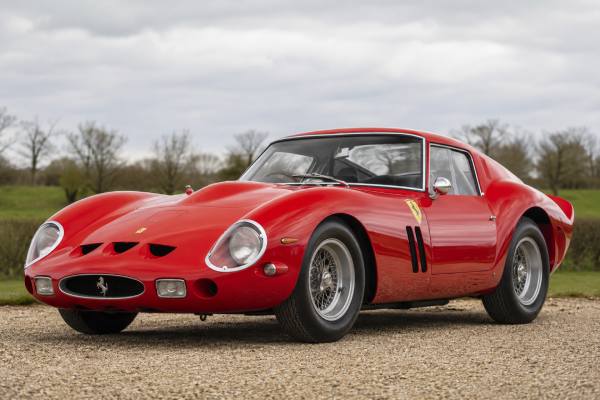
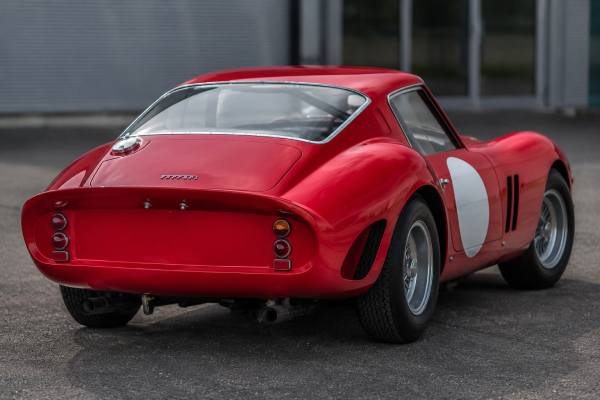
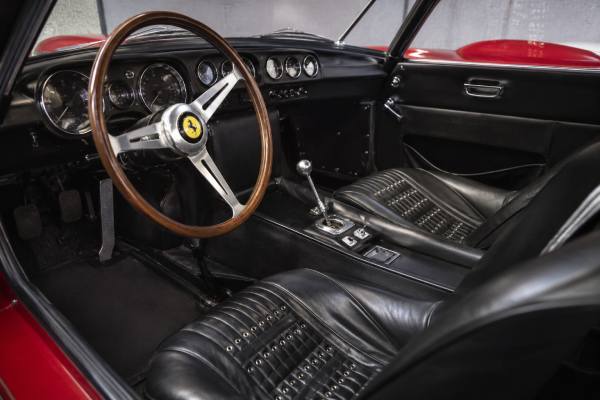
The Ferrari 250 GTO Tipo 539/62 Comp is the 1962–1963 competition berlinetta powered by Ferrari’s Tipo 168/62 Comp 3.0-liter Colombo V12, rated at about 300 hp. Built for FIA Grand Touring racing, it sits at the point where Ferrari’s road-car, racing-car, and coachbuilt traditions all overlap. It was not a soft grand tourer with racing trim added later. It was a road-legal homologation car shaped around endurance racing, high-speed stability, low weight, and the proven 250-series mechanical package.
Its lasting importance comes from more than rarity. The 250 GTO was fast in period, beautiful without being decorative, durable enough for long-distance racing, and successful against serious rivals from Jaguar, Aston Martin, Shelby, and others. Today, it is also one of the most closely watched collector cars in the world. A genuine 250 GTO is judged not only by condition, but by chassis history, period race record, body configuration, engine identity, Ferrari Classiche paperwork, restoration quality, and the small details that prove whether the car still tells the same story it did in the early 1960s.
Quick Take
The Ferrari 250 GTO’s strongest appeal is the way it combines race-winning history, a dry-sump Colombo V12, Scaglietti-built aluminum bodywork, and genuine road usability in one extremely rare package. Its identity is inseparable from homologation, endurance racing, and the final front-engined Ferrari GT era before mid-engined sports prototypes took over. The caution is that no 250 GTO should be treated like a normal classic Ferrari purchase: originality, accident history, engine and gearbox identity, factory records, and expert inspection matter more than cosmetic perfection alone.
Table of Contents
- History and Racing Importance
- Engine, Chassis and Key Specifications
- Production, Variants and Identification
- Design, Engineering and Special Details
- Road and Track Driving Character
- Maintenance, Restoration and Ownership Risk
- Market Values, Buying Advice and Rivals
History and Racing Importance
The 250 GTO matters because it was Ferrari’s most complete front-engined GT racing car of the early 1960s. It developed the successful 250 GT short-wheelbase idea into a lower, more aerodynamic, more focused machine built to win the FIA GT category.
The name explains the purpose. “250” refers to the approximate cubic-centimeter displacement of each cylinder, while “GTO” stands for Gran Turismo Omologato, or Grand Touring Homologated. This was Ferrari’s way of creating a competition car that could be accepted for GT racing while still being tied to a production-based lineage.
The car was developed from the 250 GT SWB, but the GTO was not simply a rebodied SWB. Ferrari lowered the body, refined the aerodynamics, stiffened and modified the tubular chassis, used a dry-sump competition version of the Colombo V12, and adopted a five-speed gearbox. The goal was to make a GT car that could run flat-out for hours while remaining manageable for privateer teams and works-supported drivers.
Giotto Bizzarrini played a major role in the early engineering and aerodynamic development. After Ferrari’s internal upheaval in late 1961, Mauro Forghieri and Sergio Scaglietti helped complete and refine the car. That mixed authorship is part of the GTO’s character: it was not a pure styling exercise by one designer, but a practical competition shape developed through racing needs, testing, and hand-built adjustment.
Ferrari’s timing was ideal. The 250 GT SWB had been highly successful, but by 1961 its upright nose and older body shape were reaching their limits at high speed. Rivals were getting faster. The Jaguar E-Type had strong straight-line performance, Aston Martin was developing serious GT racers, and Shelby’s Cobra would soon add a lighter, V8-powered threat. Ferrari needed a car that kept the 250-series reliability but cut cleaner through the air.
The 250 GTO quickly proved its point. It made a major impression at the 1962 12 Hours of Sebring, finishing second overall and first in class. It went on to play a central role in Ferrari’s GT success during the 1962, 1963, and 1964 seasons. Period results at events such as Le Mans, the Tour de France Automobile, the Targa Florio, Goodwood, and the Nürburgring helped give the GTO its modern status.
For collectors, the 250 GTO is important because it occupies a rare middle ground. It is beautiful enough for concours lawns, historically important enough for the finest collections, and still eligible for high-level historic events. Its value is also supported by the fact that each chassis has a known identity and a heavily researched history. That makes provenance central to the car’s appeal.
It also represents the end of a particular Ferrari era. Soon after the GTO, top-level sports-racing development moved toward mid-engined cars such as the 250 LM. The GTO remains the peak expression of the classic front-engined Ferrari competition berlinetta: long hood, compact cabin, V12 ahead of the driver, driven rear wheels, wire wheels, aluminum body, and mechanical feedback everywhere.
Engine, Chassis and Key Specifications
The 250 GTO’s specification is simple on paper but highly developed in detail. Its strength comes from a light tubular chassis, a dry-sump 3.0-liter V12, careful aerodynamic packaging, and durable racing hardware rather than exotic complexity.
| Category | Specification |
|---|---|
| Production focus | FIA GT homologation berlinetta |
| Chassis type | Tipo 539/62 Comp tubular steel chassis |
| Body | Hand-formed aluminum berlinetta body by Scaglietti |
| Engine | Tipo 168/62 Comp front-mounted 60-degree Colombo V12 |
| Displacement | 2,953 cc |
| Bore x stroke | 73 mm x 58.8 mm |
| Induction | Six Weber 38 DCN carburetors |
| Compression ratio | About 9.8:1 |
| Output | About 300 hp at 7,400 rpm |
| Transmission | Five-speed manual |
| Drivetrain | Rear-wheel drive |
| Wheelbase | 2,400 mm |
| Dry weight | About 880 kg |
| Top speed | About 280 km/h, depending on gearing and setup |
The engine is the heart of the car, but it is not a fragile one-off design. It belongs to Ferrari’s Colombo V12 family, a compact, proven architecture used across many important Ferrari road and racing cars. In the GTO, the dry-sump lubrication system helped the engine sit lower in the chassis and maintain oil control during sustained cornering. The six twin-choke Weber carburetors gave sharp throttle response and strong high-rpm breathing.
The 300 hp figure should be understood in period terms. Exact output varies by engine build, tune, dyno method, exhaust, and setup, but the GTO’s power-to-weight ratio was excellent for its time. With a dry weight under 900 kg, the car did not need huge displacement to be fast. It combined low mass with a broad enough torque curve for road racing and enough top-end power for long straights.
The five-speed manual gearbox was another important step. Many earlier Ferrari GTs used four-speed units, but the GTO’s five-speed helped keep the V12 in its useful range across different circuits. For long-distance racing, that mattered as much as headline horsepower. Better gear spacing meant less time outside the engine’s strongest band and more flexibility on mixed circuits.
The chassis was a welded tubular steel frame derived from Ferrari’s 250 GT competition practice, but refined for the GTO’s lower body and racing mission. The car retained front-engine, rear-drive balance and a live rear axle, a layout that may sound old-fashioned today but was effective in period when carefully located and matched with the right tires, springs, dampers, and geometry.
| Area | Details |
|---|---|
| Front suspension | Independent unequal-length wishbones with coil springs, telescopic dampers, and anti-roll bar |
| Rear suspension | Live axle with semi-elliptic leaf springs, locating links, Watt’s linkage, and telescopic dampers |
| Brakes | Four-wheel disc brakes |
| Steering | Manual steering, typically described as worm-and-peg/ZF type in period references |
| Wheels | Borrani wire wheels with knock-off hubs |
| Length | 4,325 mm |
| Width | 1,600 mm |
| Height | 1,210 mm |
| Front track | 1,354 mm |
| Rear track | 1,350 mm |
The GTO’s numbers tell only part of the story. The car’s real advantage was integration. The V12 was compact and mounted well back, the body was low and slippery for the era, the brakes were strong by early-1960s GT standards, and the chassis gave skilled drivers a predictable platform. It was fast because the whole package worked.
Production, Variants and Identification
The 250 GTO is rare, but its production story is not as simple as one fixed specification. Individual chassis differ because they were hand-built, raced hard, repaired, updated, and sometimes rebodied during their working lives.
Most collectors treat the 3.0-liter 250 GTO as a 36-car family built from 1962 through 1964, while some historical discussions add related 4.0-liter 330 LM/GTO-style cars or discuss them alongside the GTO line. For this article, the focus is the 1962–1963 Tipo 539/62 Comp 3.0-liter form with the Tipo 168/62 Comp V12.
The earliest GTOs are often called Series I cars. These are the classic long-nose, fastback berlinettas most people picture when they hear “250 GTO.” They have a low oval grille, covered headlights on many examples, exposed competition details, front fender vents, rear brake-cooling outlets, and a short rear spoiler lip. Because bodies were shaped and altered by hand, small differences from car to car are normal.
For 1964, Ferrari introduced the revised GTO/64 body style. It looked lower and more angular, with design influence from Ferrari’s newer mid-engined sports-racing thinking. A small number of cars were built in this later style, and several earlier chassis were updated with Series II bodywork in period. These cars are highly important in their own right, but they are not the same visual specification as the 1962–1963 covered model.
Identification depends on more than a body shape. A serious GTO assessment looks at:
- Chassis number and continuous ownership history
- Engine number and whether the unit is original, period-correct, replacement, or factory-built
- Gearbox and rear axle identity
- Body configuration and whether changes were made in period or later
- Factory build records and correspondence
- Race entries, results, photographs, and repair history
- Ferrari Classiche certification and supporting documentation
- Restoration invoices, inspection reports, and expert opinions
Matching numbers matter deeply, but with racing Ferraris the phrase needs care. These cars were competition tools. Engines, gearboxes, body panels, and suspension parts could be repaired or replaced during active racing years. A period replacement with strong documentation may be viewed differently from a later undocumented substitution. The best cars have a clear explanation for every major component and every major body change.
Factory colors also influence identity. Many GTOs are associated with red, but not all were delivered in the same color or raced in the same presentation. Some carried national colors, team details, stripes, roundels, and later finishes tied to specific owners or events. A return to original delivery color may appeal to one collector, while another may value a documented period racing livery more highly.
The coachwork was by Scaglietti, but no two bodies should be expected to match like modern stamped panels. Hand-formed aluminum, racing damage, period modifications, and restoration work all leave evidence. Door fit, bonnet louvers, vent shapes, rivet patterns, grille details, window surrounds, and tail treatment can all become part of the authenticity conversation.
A buyer should be wary of any car described too simply. “Real GTO” is only the beginning. The real question is which chassis, with what engine, in what body configuration, with what race history, restored by whom, documented by what records, and accepted by which experts.
Design, Engineering and Special Details
The 250 GTO looks graceful because its shape is functional. Its low nose, long hood, fastback roofline, venting, and rear spoiler were all tied to cooling, stability, visibility, and endurance-racing speed.
The body is often praised as sculpture, but it was created under pressure. Ferrari needed more high-speed efficiency than the 250 GT SWB could provide. The GTO’s nose is lower and smoother, helping reduce frontal area. The covered headlamps and oval grille improve airflow compared with a taller, blunter front end. The long hood is not just a styling signature; it packages the V12, carburetors, ducting, and front suspension while keeping the cabin set rearward.
Cooling is one of the GTO’s most visible engineering themes. The front opening feeds the radiator, while the vents and louvers help manage hot air from the engine bay and brakes. Many cars have three removable D-shaped nose vents, which could be opened or blanked depending on conditions. This kind of adjustability was practical racing thinking, not decoration.
The small rear spoiler is one of the car’s most important details. It is subtle by modern standards, but in the early 1960s it helped address rear-end lift and improve stability. The GTO is often described as beautiful, yet that beauty comes from solving a problem: making a front-engined GT remain stable at very high speed.
The cabin is sparse, purposeful, and compact. A large wood-rim or leather-rim steering wheel, clear gauges, exposed metal, simple switches, racing seats, and minimal trim tell the driver what the car is for. It is not luxurious in the way a Lusso or a 250 GT cabriolet is luxurious. The GTO’s interior is about control, visibility, and low weight.
The dry-sump V12 also influenced the design. Because the engine could sit lower, the hood line could be reduced. Lowering the mass and the body helped both handling and aerodynamic drag. This is one reason the GTO feels more advanced than many earlier front-engined GTs even though it still used traditional Ferrari hardware.
Several engineering choices now seem modest but were very effective together:
- Aluminum bodywork reduced mass over steel construction.
- Tubular chassis design allowed repair and modification after racing damage.
- Dry-sump lubrication improved oil control and engine placement.
- Five-speed gearing improved flexibility across different circuits.
- Disc brakes gave stronger stopping performance than older drum setups.
- Watt’s linkage helped locate the live rear axle more accurately.
- Borrani wire wheels balanced light weight, strength, and serviceability.
The sound is another defining feature. The 3.0-liter Colombo V12 is smaller than many later Ferrari engines, but it has a sharp mechanical voice, crisp carburetor intake noise, and a hard-edged exhaust note at high rpm. It does not sound like a large, lazy engine. It sounds like a compact racing V12 working through carburetors, cams, ignition timing, and short exhaust paths.
The GTO’s design also matters because it bridges road and race in a way modern cars rarely do. There are no active dampers, no electronic stability systems, no carbon tub, no paddle-shift gearbox, and no hybrid boost. The specialness is physical. The shape, controls, heat, smell, vibration, steering effort, and noise all come from the same mechanical system.
Road and Track Driving Character
A well-sorted 250 GTO feels light, alert, noisy, and intensely mechanical. It is fast for its era, but its real magic is the balance between engine response, steering feel, visibility, and the sense that every input goes directly into the car.
The V12 is tractable enough to use on the road, but it wants proper warm-up and sympathetic operation. Carburetors need temperature, clean fuel, correct synchronization, and the right starting technique. When cold, the engine may feel tight, rich, or uneven. Once warm, it becomes sharper and more willing to rev.
Throttle response is one of the car’s defining pleasures. Six Weber carburetors give the engine immediacy that later fuel-injected cars do not always duplicate. Small pedal movements matter. A good driver can trim the car with the throttle, especially through medium-speed bends where the balance moves from front-end bite to rear-axle rotation.
The gearbox requires respect. It is not a modern shift-by-wire system and should not be rushed when cold. Correct oil temperature, clutch adjustment, linkage condition, and driver technique all affect the feel. A skilled driver uses deliberate movements, matches revs carefully, and avoids treating the car like a modern synchronized manual that can absorb careless shifts.
Manual steering is heavy at low speed and alive once moving. The front tires are narrow by modern standards, but the feedback is rich. The car tells the driver what the front end is doing, how the surface changes, and how much load is building. That communication is a large part of why experienced drivers still admire the GTO.
The rear axle is not crude when the car is properly set up. A live axle has limitations over rough surfaces, but the GTO’s low weight, good geometry, and Watt’s linkage make it predictable. On old tires, poor dampers, tired bushings, or incorrect ride heights, the same car can feel nervous or imprecise. Setup quality makes a large difference.
Braking is strong for the period but still requires period expectations. The disc brakes give useful stopping power, but pedal effort, heat management, pad material, fluid condition, and cooling all matter. A GTO driven hard in historic events needs careful brake preparation, not just attractive calipers and clean discs.
On the road, the car is demanding but not impossible. It has good forward visibility, a compact footprint, and enough torque to move without constant high-rpm drama. It is also loud, hot, valuable, and physically engaging. Traffic, poor fuel, steep ramps, modern SUVs, and inattentive drivers are all more stressful in a car worth tens of millions than in an ordinary classic.
On track, the GTO rewards smoothness. It does not have modern downforce or tire width, so speed comes from preserving momentum, braking in a straight line, feeding in steering, and using the V12’s response without shocking the rear tires. It is a car for rhythm rather than aggression.
Condition changes the driving experience more than many people expect. A freshly and correctly prepared GTO can feel tight, accurate, and confidence-inspiring. A tired example may suffer from vague steering, weak brakes, fuel starvation, poor carburetor balance, axle tramp, worn dampers, or overheating. The model’s reputation is based on the best cars, not on neglected ones.
Maintenance, Restoration and Ownership Risk
A 250 GTO is not maintained like a normal classic car. It needs marque specialists, documented work, careful preservation decisions, and an owner who understands that originality can be more valuable than making the car look new.
The engine is robust when built and operated correctly, but it is still a highly valuable racing V12. The biggest risks are poor rebuild quality, incorrect parts, weak oil control, carburetor issues, cooling problems, ignition faults, and damage from over-revving or cold use. Oil pressure, temperature behavior, compression, leak-down results, and oil analysis can all matter during inspection.
Fuel-system care is essential. Old tanks, degraded lines, dirty filters, incorrect fuel pressure, and poorly synchronized carburetors can create drivability problems or serious fire risk. Many historic Ferraris need periodic cleaning, careful hose selection, and attention to modern fuel compatibility.
Cooling problems should never be dismissed. Radiator condition, water pump health, hose age, thermostat function, airflow, fan setup where fitted, and correct bleeding can make the difference between a usable car and an expensive failure. The GTO was built for speed, where airflow is abundant, so slow modern traffic can be harder on the car than a clear country road.
The gearbox and clutch also need expert attention. A worn clutch, tired synchros, incorrect linkage setup, or wrong lubricant can transform the driving experience. Because component identity matters, rebuilds must be documented carefully. Replacing parts may make the car easier to drive, but undocumented changes can hurt confidence and value.
The chassis and body deserve forensic inspection. These cars raced, crashed, and were repaired in period. Some damage is part of the story; hidden or poorly repaired damage is a problem. Key inspection areas include:
- Front chassis tubes and suspension pick-up points
- Rear axle location points and spring mounts
- Evidence of old accident repair
- Aluminum body panel thickness and replacement history
- Corrosion where aluminum panels meet steel structure
- Door, hood, and rear hatch fit
- Correct vent, louver, and spoiler details
- Welding quality and signs of later reconstruction
Corrosion is not the same problem as on a mass-produced steel monocoque, but it still matters. The combination of steel frame, aluminum panels, old repairs, moisture traps, and dissimilar-metal contact can create issues. Cars that lived in racing environments may also show stress cracks, fatigue, and old patching.
Restoration is a delicate subject. A concours-level restoration can make a car beautiful and mechanically reliable, but over-restoration can erase period evidence. Many top collectors value honest, well-preserved details: original stampings, old bodywork, documented race modifications, worn but authentic interior parts, and evidence that connects the car to its period life.
Ferrari Classiche certification is important, but it should not be the only document considered. A strong history file may include factory build sheets, period photographs, race entries, correspondence, customs paperwork, restoration invoices, expert reports, and ownership records. The most convincing cars have documentation that agrees across multiple sources.
Routine maintenance depends on use, but a serious owner should expect frequent inspections even if mileage is low. Fluids, valve adjustment, carburetor synchronization, brake service, wheel bearings, suspension bushings, spoke tension, tire age, and safety equipment all need attention. For event use, preparation should happen before and after each major outing.
The greatest ownership risk is not only mechanical cost. It is making the wrong decision about originality. Replacing a tired component, refinishing a worn surface, changing a livery, or altering a setup may improve short-term presentation but reduce historical integrity. Every major decision should be documented and discussed with recognized experts before work begins.
Market Values, Buying Advice and Rivals
The 250 GTO sits at the top of the Ferrari collector market, but value varies sharply by chassis history, originality, body style, engine identity, race record, and documentation. A public sale price is useful context, not a universal valuation.
Recent public auction results show the scale. The 1962 Ferrari 330 LM / 250 GTO by Scaglietti sold through RM Sotheby’s in 2023 for $51.705 million. In January 2026, the white “Bianco Speciale” 250 GTO, chassis 3729GT, sold at Mecum Kissimmee for $38.5 million. Earlier major public benchmarks include the 2018 RM Sotheby’s Monterey sale of a 250 GTO for $48.405 million and the 2014 Bonhams Quail Lodge sale of chassis 3851GT for $38.115 million.
Those figures do not mean every GTO is worth the same. A car with original engine, strong race history, desirable period body configuration, known ownership, and top-level documentation may be viewed very differently from a car with major undocumented changes, later replacement components, or less significant competition history.
For a buyer, the first rule is to buy the chassis story, not just the car in front of you. The second rule is to use specialists who know the model at chassis-number level. At this tier, normal pre-purchase inspection is not enough.
| Inspection Area | Why It Matters |
|---|---|
| Chassis identity | Confirms the car’s core historical identity and protects against misrepresentation |
| Engine and gearbox numbers | Major value factor, especially when original or period-documented |
| Race history | Strong period results and famous drivers can materially affect desirability |
| Body history | Period modifications can add interest; later undocumented changes can reduce confidence |
| Classiche and factory records | Important evidence for authenticity, though not a replacement for full due diligence |
| Restoration quality | Poor work can create mechanical risk and damage historical details |
| Preservation level | Original materials, finishes, and period repairs may be more valuable than cosmetic perfection |
| Event eligibility | High-level historic events and concours acceptance support usability and prestige |
The best examples to seek are cars with transparent histories, respected expert support, clear component identity, and no unresolved legal or documentary questions. A car does not need to be cosmetically flawless to be great. In some cases, an honest preserved car with period scars can be more compelling than one restored so completely that its early life is hard to read.
Cars to avoid are not necessarily damaged cars. Many GTOs have accident history. The greater concern is unclear repair history, inconsistent claims, missing paperwork, unverified components, poor restoration decisions, or a seller who cannot explain changes in a credible way.
The main rivals and alternatives depend on what the buyer values. For racing history and front-engined Ferrari appeal, the 250 GT SWB Competizione, 250 Testa Rossa, 250 LM, and 275 GTB/C are the closest internal alternatives. For period GT competition, the Aston Martin DB4 GT Zagato, Jaguar E-Type Lightweight, Shelby Cobra Daytona Coupe, and Aston Martin DP cars are natural comparisons.
| Car | Why It Compares |
|---|---|
| Ferrari 250 GT SWB Competizione | Direct predecessor with major racing success and a more usable GT character |
| Ferrari 250 Testa Rossa | Open sports-racing icon with stronger prototype identity and immense collector value |
| Ferrari 250 LM | Mid-engined successor-era Ferrari with Le Mans significance and different driving character |
| Aston Martin DB4 GT Zagato | Rare, beautiful, and period-correct GT rival with strong concours appeal |
| Jaguar E-Type Lightweight | Lightweight GT rival with serious competition history and a very different engine character |
| Shelby Cobra Daytona Coupe | American V8 GT weapon built to challenge Ferrari on the world stage |
Long-term collectability remains exceptionally strong because the GTO has nearly every ingredient the top market rewards: rarity, beauty, competition success, Ferrari identity, V12 power, known chassis histories, and eligibility for elite events. Still, it is not immune to market cycles. At this level, liquidity is limited, private transactions can be opaque, and one car’s public result may reflect specific details rather than a broad trend.
For most enthusiasts, the 250 GTO is not a practical buying target. Its value is educational: it shows why authenticity, engineering purpose, racing record, and condition matter more than simple rarity. For the very small group of possible buyers, the right GTO is not just an acquisition. It is a research project, a preservation responsibility, and one of the most scrutinized ownership decisions in the collector-car world.
References
- Ferrari 250 GTO (1962) – Ferrari.com 1962 (Manufacturer Specifications)
- Ferrari Classiche: Certification – Ferrari.com 2026 (Certification)
- 1962 Ferrari 330 LM / 250 GTO by Scaglietti | The One – 1962 Ferrari GTO | RM Sotheby’s 2023 (Auction Record)
- Ferrari 250 GTO Hammers For $38.5 Million at Mecum 2026 (Market Result)
Disclaimer
This article is for informational purposes only and is not a substitute for professional diagnosis, repair, appraisal, authentication, or restoration advice. Specifications, torque values, service intervals, component identity, and procedures can vary by chassis number, market, period modification, and restoration history. Always verify details against official Ferrari documentation, factory records, and qualified marque specialists before buying, servicing, restoring, or driving a Ferrari 250 GTO.
If you found this guide useful, please consider sharing it on Facebook, X/Twitter, or with other classic Ferrari enthusiasts to support our work.