
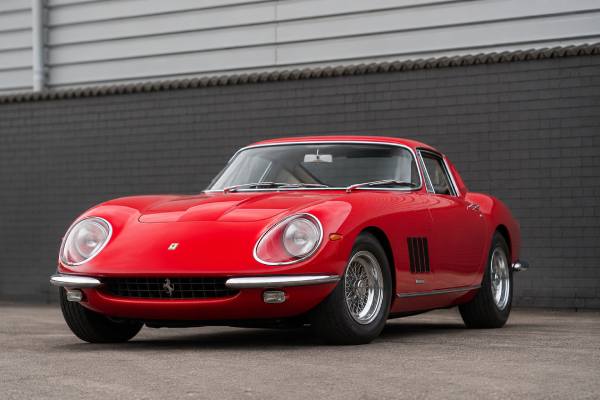
The Ferrari 275 GTB is the two-seat V12 berlinetta Ferrari built from 1964 to 1966, using the Tipo 563 chassis and the 3.3-liter Tipo 213 Colombo V12 rated at 280 hp. It replaced the last of the 250 GT berlinettas and moved Ferrari road cars into a more modern era with a rear-mounted five-speed transaxle and independent rear suspension. That combination is the heart of the car’s appeal: classic front-engine Ferrari beauty with a chassis layout that looked forward rather than backward.
The 275 GTB matters because it sits at a turning point. It still has the delicacy, compact size, and mechanical purity of the 250-series Ferraris, but it adds a stronger, larger V12, better weight distribution, and a more sophisticated suspension layout. Collectors also care because the model is condition-sensitive, highly specification-sensitive, and divided into important short-nose, long-nose, torque-tube, alloy-body, and six-carburetor versions. A good 275 GTB can feel like one of the greatest road Ferraris of the 1960s; a poor one can consume serious restoration money before it ever feels right.
Quick Take
The Ferrari 275 GTB is most appealing as a hand-built, Enzo-era V12 grand tourer that combines Pininfarina design, Scaglietti construction, a 3.3-liter Colombo engine, and Ferrari’s early use of a rear transaxle and independent rear suspension. Its main caution is that small differences in originality, body material, carburetion, nose style, torque-tube specification, and documentation can change value dramatically. The best buys are not simply the shiniest cars, but the ones with verified identity, matching major components, correct restoration work, Ferrari Classiche or strong historian documentation, and no hidden corrosion or accident damage.
Table of Contents
- History and Collector Importance
- Tipo 213 V12, Chassis and Specs
- Production, Variants and Factory Options
- Pininfarina Design and Engineering Details
- Road Feel, Performance and Sound
- Maintenance, Restoration and Ownership Risks
- Market Values, Buying Advice and Rivals
History and Collector Importance
The 275 GTB is important because it was Ferrari’s first major road-going berlinetta to combine a rear transaxle with independent rear suspension. That made it more than a prettier, larger-engined 250 GT replacement; it was a real engineering step toward the later Daytona and modern Ferrari GT layout.
Ferrari introduced the 275 GTB in 1964 at a time when its road-car range was changing quickly. The 250 GT family had defined Ferrari’s 1950s and early 1960s identity, but competition from Aston Martin, Maserati, and the new Lamborghini 350 GT made refinement and high-speed stability more important. Ferrari needed a car that could still feel like a proper sports berlinetta but offer more speed, better road manners, and a more sophisticated drivetrain.
The “275” name refers to the approximate displacement of each cylinder in cubic centimeters. “GTB” stands for Gran Turismo Berlinetta. In practice, that meant a closed two-seat grand touring coupe with serious performance, long-distance ability, and strong road presence. Unlike the softer 275 GTS spider, the GTB had a more aggressive shape and a clearer link to Ferrari’s competition berlinettas.
Pininfarina designed the shape, while Scaglietti built most production bodies in Modena. This matters to collectors because the 275 GTB belongs to the hand-built coachbuilt Ferrari era. Panel fit, body details, trim, interior finish, and small construction differences can vary from car to car. That individuality is part of the charm, but it also makes expert inspection essential.
The model’s reputation grew from several qualities:
- It was one of the last great two-cam Colombo V12 road Ferraris.
- It bridged the 250 GT SWB and the 275 GTB/4.
- It brought a five-speed rear transaxle to a Ferrari road berlinetta.
- It introduced fully independent suspension to Ferrari’s front-engine GT road-car formula.
- It carried one of Pininfarina’s most admired 1960s bodies.
- It remained usable enough for rallies, tours, and concours events.
The 275 GTB was followed by the four-cam 275 GTB/4, which is often more expensive and better known to casual collectors. That does not make the two-cam car secondary. Many drivers prefer the earlier car’s cleaner body, slightly rawer engine feel, and stronger link to the 250-series berlinettas. For collectors, the two-cam 275 GTB is a deep subject because value depends so heavily on version and authenticity.
Its modern importance is not just aesthetic. The 275 GTB represents the point where Ferrari’s road cars became more technically advanced without losing the light, mechanical, analog feel that defines the best 1960s Ferraris. That is why it remains a blue-chip collector car rather than simply an attractive old V12 coupe.
Tipo 213 V12, Chassis and Specs
The 275 GTB uses Ferrari’s Tipo 213 3.3-liter Colombo V12, a five-speed manual rear transaxle, and the Tipo 563 tubular chassis. The key specification is not just the 280 hp figure; it is the combination of V12 response, rear gearbox placement, and independent suspension.
| Item | Specification |
|---|---|
| Production years | 1964–1966 |
| Body style | Two-seat berlinetta coupe |
| Chassis type | Tipo 563 tubular steel chassis |
| Engine | Tipo 213 Colombo 60-degree V12 |
| Displacement | 3,285.72 cc |
| Bore x stroke | 77 mm x 58.8 mm |
| Valvetrain | Single overhead camshaft per bank, two valves per cylinder |
| Standard carburetion | Three twin-choke Weber carburetors |
| Optional carburetion | Six twin-choke Weber carburetors on selected cars |
| Claimed output | 280 hp at 7,600 rpm |
| Transmission | Five-speed manual rear transaxle |
| Drivetrain | Front-engine, rear-wheel drive |
| Suspension | Independent front and rear suspension with coil springs |
| Brakes | Four-wheel disc brakes |
| Wheelbase | 2,400 mm |
The V12 is part of the long Colombo engine family, but the 275 GTB version has its own character. It is oversquare, meaning the bore is larger than the stroke. That helps the engine rev cleanly and gives it the crisp upper-range feel expected of a classic Ferrari V12. The factory rating of 280 hp was a period gross figure, so modern chassis-dyno numbers should not be compared directly with today’s net ratings.
Most 275 GTBs used three twin-choke Weber carburetors. Six-carburetor cars are more valuable and have stronger top-end character, but they also demand careful setup. A poorly synchronized six-carb car can feel worse than a well-tuned three-carb car. Buyers should focus on mechanical health and correct configuration rather than assuming more carburetors automatically mean a better road car.
The rear transaxle is central to the 275 GTB’s identity. Moving the gearbox to the rear helped weight distribution and gave the car a more balanced feel than earlier front-engine Ferraris with front-mounted gearboxes. Early cars used an open driveshaft layout that could suffer vibration if alignment was not right. Later torque-tube cars improved the connection between engine and transaxle, making them especially desirable for driving and collecting.
The suspension was also a major advance. Earlier Ferrari GTs often used a live rear axle, while the 275 GTB used independent rear suspension. This helped ride quality, traction, and stability on uneven roads. It did not turn the car into a modern sports car, but it made it feel more planted and mature at speed.
| Measure | Typical period figure |
|---|---|
| 0–60 mph | About 6 seconds, depending on test and gearing |
| Top speed | Roughly 160 mph, with some period claims higher |
| Power-to-weight feel | Strong for the mid-1960s, especially above 4,000 rpm |
| Best operating character | Fast road and grand touring rather than short urban use |
Exact performance depends on tune, carburetion, tire choice, gearing, body material, engine condition, and test method. A freshly rebuilt, properly set-up car can feel vivid and quick even now. A tired car with weak carburetor tune, dragging brakes, old tires, or worn suspension can feel heavy, hot, and disappointing.
Production, Variants and Factory Options
The 275 GTB is not one single specification. The main collector divisions are short-nose versus long-nose, torque-tube versus non-torque-tube, steel versus alloy body, and three-carburetor versus six-carburetor setup.
Production numbers vary slightly among sources, but the two-cam 275 GTB road-car total is generally cited in the low-to-mid 400s, often around 440 to 453 cars. That small production run helps explain why exact history matters so much. A single car’s factory color, body material, carburetor layout, gearbox, and documentation can have a large effect on value.
Short-nose and long-nose cars
Early 275 GTBs are known as short-nose cars. They have a shorter front section, a wider-looking front opening, and a slightly more compact, delicate appearance. Many enthusiasts love the purity of the short-nose design, but the shape was revised because high-speed front-end lift was a concern.
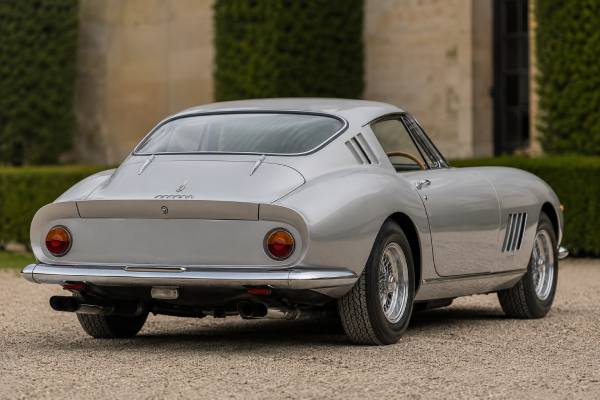
The later long-nose version has a longer, lower front profile and a smaller front intake. It was created to improve high-speed stability. Long-nose cars also received detail changes at the rear, including a larger rear window on many examples and revised packaging around the luggage area. To many collectors, the long-nose body is the best-balanced 275 GTB form.
Torque-tube cars
The torque-tube version is one of the most desirable two-cam 275 GTB specifications. The torque tube rigidly connects the engine and rear transaxle, helping keep the driveline aligned and reducing vibration. Earlier cars can be excellent when correctly set up, but the torque-tube layout is generally viewed as the most developed road specification.
A buyer should verify torque-tube status carefully. It should not be accepted from a catalog description alone. Correct inspection includes checking chassis details, driveline layout, factory records, and Ferrari Classiche or recognized historian documentation.
Steel, alloy, and six-carburetor cars
Most 275 GTBs used steel bodywork with aluminum opening panels such as the hood, doors, and trunk lid. Alloy-bodied cars are much rarer and more valuable. The alloy body saves weight and gives the car stronger competition flavor, but it also raises restoration difficulty. Poorly repaired aluminum panels can hide expensive problems.
Six-carburetor cars, often called 6C cars, are also highly desirable. The setup uses six twin-choke Webers rather than the standard three. It gives the engine a more exotic look and can sharpen response at higher rpm, but correct parts and tuning expertise are essential. A converted car should not be valued the same as a factory six-carburetor car unless the history clearly supports the change and the market accepts it as period-correct or factory-documented.
Important factory and period details include:
- original exterior and interior colors
- Borrani wire wheels or alloy wheels, depending on specification
- three-carburetor or six-carburetor induction
- steel or alloy coachwork
- short-nose or long-nose body style
- torque-tube or earlier driveline
- original books, tools, jack, and manuals
- Ferrari Classiche certification
- build sheets, Massini report, and long-term ownership records
Matching numbers are especially important. For a car in this value range, the chassis, engine, gearbox, differential, and body identity must be checked. A replacement engine or unclear body history does not automatically make a car bad, but it changes the price and the buyer pool.
Pininfarina Design and Engineering Details
The 275 GTB’s design works because it combines elegance with visible mechanical intent. The long hood, rear-set cabin, covered headlights, side vents, and Kamm tail all serve the idea of a fast front-engine berlinetta rather than decoration for its own sake.
Pininfarina gave the car a more muscular look than the earlier 250 GT Lusso. The nose is lower and more purposeful, the fenders are more pronounced, and the tail is cut short for high-speed stability. Scaglietti’s hand-built construction adds character, but it also means restorers cannot treat these cars like mass-produced shells. Panel shape, shut lines, roof contours, and trim details must be judged by people who know the model.
The covered headlights are one of the car’s signature features. They help create the smooth front profile and give the 275 GTB a competition-like face. The side vents release heat and visually reduce the mass of the long front fenders. The rear Kamm treatment is short and functional, giving the car a purposeful tail without losing elegance.
The engineering underneath is just as important as the body. The V12 sits well back in the chassis, while the gearbox is mounted at the rear. This helped the car avoid the nose-heavy feel that can affect older front-engine GTs. The independent rear suspension also allowed the tires to maintain better contact with the road over bumps and fast curves.
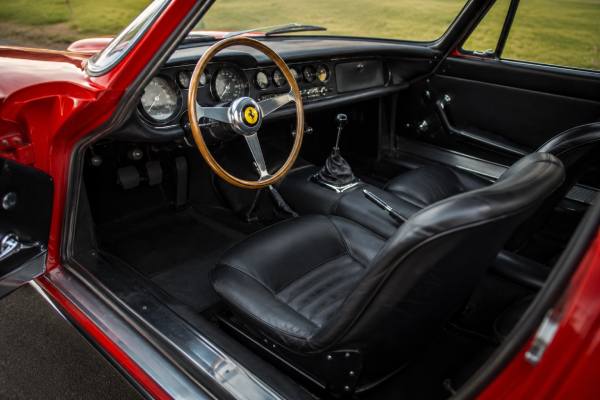
Inside, the 275 GTB is simple but rich. The dashboard layout is clear, the major instruments are easy to read, and the driving position feels low and serious by 1960s standards. It is still a classic Ferrari cabin, so ergonomics are not modern. Pedal placement, steering-wheel position, heat, ventilation, and noise depend heavily on the individual car and the quality of restoration.
The sound is part of the engineering experience. A well-tuned Tipo 213 V12 has a layered voice: mechanical at idle, crisp through the mid-range, and hard-edged near the top. Intake noise differs between three-carburetor and six-carburetor cars. Exhaust choice also matters, because overly loud systems can make long-distance use tiring and may reduce the authentic character of the car.
The most distinctive feature is the way the whole car feels integrated. The 275 GTB is not just a beautiful body on an old chassis. It is a design where body shape, engine position, transaxle, suspension, and high-speed purpose all support one another. That is why incorrect restorations, poor ride height, wrong wheels, or badly chosen tires can spoil the experience so quickly.
Road Feel, Performance and Sound
A properly sorted 275 GTB feels fast, mechanical, and alive, but it does not feel modern. It rewards warmth, rhythm, and mechanical sympathy more than aggression.
Cold behavior matters. The V12 needs oil temperature, the gearbox needs patience, and the carburetors need correct setup. Once warm, the engine pulls cleanly and becomes stronger as revs rise. The 280 hp rating does not describe the whole experience. What matters is the engine’s flexibility, sound, and willingness to rev.
Throttle response should be crisp but not nervous. A flat spot, fuel smell, backfiring, or uneven idle usually points to carburetor, ignition, or fuel-system issues. These cars can be tuned to run beautifully, but they do not tolerate casual maintenance.
The five-speed transaxle is one of the car’s defining features. It should feel deliberate, mechanical, and satisfying when warm. It should not grind, jump out of gear, or vibrate heavily through the driveline. Early cars can have more driveline sensitivity, while torque-tube cars usually feel more settled. Either way, a poor shift quality should never be dismissed as “normal old Ferrari behavior” without inspection.
Steering is unassisted and can be heavy at parking speed. On the road it should become accurate and communicative. The car’s long nose is always present visually, but the chassis should not feel clumsy. Good suspension bushings, correct alignment, and suitable tires make a huge difference.
Ride quality is better than many people expect from a 1960s exotic. The independent rear suspension gives the 275 GTB a more composed feel over broken surfaces than older live-axle Ferraris. It is still a low, old, hand-built GT, so road noise, cabin heat, and body resonance are part of the experience.
The brakes are discs all round. In good condition they are effective for fast road use, but they require realistic expectations. Pedal feel, servo assistance, pad material, fluid condition, caliper health, and tire grip all matter. A buyer should not expect modern carbon-ceramic bite or repeated track-day abuse.
The 275 GTB is best understood as a fast road car and grand tourer. It can cover distance quickly, feels special at moderate speeds, and becomes more exciting as the road opens up. It is less happy in hot traffic, short urban trips, or stop-start use where cooling, clutch, and carburetion are stressed.
A strong example should feel:
- eager above 3,500 rpm
- stable at motorway speed
- precise through long bends
- mechanically smooth once warm
- communicative through the steering and seat
- powerful without feeling brutal
- refined enough for touring, but never isolated
A weak example may feel hot, smoky, vague, noisy in the driveline, reluctant to shift, unstable under braking, or unpleasantly harsh. Those symptoms are not character. They are usually warning signs.
Maintenance, Restoration and Ownership Risks
Owning a Ferrari 275 GTB is less about normal reliability and more about preservation, specialist care, and avoiding expensive hidden damage. The car can be dependable when properly restored and maintained, but neglect is costly.
The Tipo 213 V12 is a sophisticated classic engine. It needs correct valve adjustment, ignition setup, carburetor synchronization, cooling-system health, clean fuel delivery, and proper oil management. A car that sits for long periods can develop fuel varnish, sticking carburetor parts, dried seals, weak ignition components, and cooling problems.
Common ownership concerns include:
- carburetor imbalance or incorrect jetting
- oil leaks from aged seals and gaskets
- tired ignition components
- fuel tank contamination and old fuel lines
- overheating from weak radiators, hoses, fans, or blocked passages
- worn engine mounts and driveline alignment issues
- transaxle wear, bearing noise, or weak synchronizers
- brake caliper leaks and aged hydraulic lines
- tired suspension bushings and dampers
- corrosion hidden under old paint or underseal
- poor older restoration work
Corrosion is a major issue. The 275 GTB is a hand-built steel and aluminum car, and rust can hide in sills, lower body sections, wheel arches, floor areas, door bottoms, inner structures, and around previous repairs. Alloy-bodied cars do not escape risk; aluminum can suffer corrosion, fatigue, cracking, and poor past repair work, especially where it meets steel structure.
Accident damage is another serious concern. Many 275 GTBs have lived long, active lives. Some were crashed, repaired, modified, raced, or restored decades ago when values were much lower. A beautiful paint finish can hide incorrect panel shape, patched chassis tubes, poor welds, wrong body contours, and non-original trim.
A proper inspection should include:
| Area | What to verify |
|---|---|
| Identity | Chassis number, engine number, gearbox, differential, and body details |
| Documentation | Build records, Classiche file, historian report, ownership chain, invoices |
| Body | Correct nose style, panel material, corrosion, accident repairs, shut lines |
| Engine | Compression, leak-down, oil pressure, leaks, smoke, carburetor setup |
| Driveline | Transaxle noise, shift quality, clutch operation, driveshaft or torque-tube condition |
| Suspension | Bushings, dampers, springs, alignment, wheel bearings, ride height |
| Brakes | Calipers, discs, hoses, fluid age, pedal feel, servo operation |
| Interior | Correct instruments, trim, leather pattern, carpets, switches, wood finish |
Restoration quality can make or break the car. A concours restoration by respected Ferrari specialists may support value, especially when documented with photographs and invoices. A cosmetic restoration can do the opposite if it hides weak metalwork or incorrect details.
Originality creates hard choices. Some upgrades, such as improved cooling efficiency, discreet ignition improvements, or safer fuel hoses, can make a car more usable. But visible modern changes, incorrect trim, wrong wheels, non-original colors without documentation, or non-factory carburetor conversions can affect value. The best approach is to preserve original parts and document every change.
Parts availability is better than many rare-car buyers expect, but not simple. Mechanical parts, trim, instruments, Borrani wheels, correct hardware, and body panels can be expensive. Labor is the bigger issue. A general classic shop is not enough. The 275 GTB needs specialists who understand Ferrari tube-frame cars, Colombo V12s, Weber carburetors, transaxles, and coachbuilt bodies.
Period safety is limited. There are no modern airbags, crash structures, stability systems, or anti-lock brakes. Seat belts, tires, lighting, and braking condition should be treated as practical safety items, but the car should still be driven with 1960s expectations.
Market Values, Buying Advice and Rivals
The Ferrari 275 GTB sits in the multi-million-dollar collector market, with value driven more by specification and history than mileage alone. As of the 2025–2026 market, ordinary public-sale references for two-cam GTBs tend to cluster broadly from the low-$2 million range into the mid-$3 million range, while exceptional alloy, six-carburetor, torque-tube, or unusually documented cars can move higher.
The market is not one flat category. A steel short-nose car, an alloy long-nose six-carb car, and a long-nose torque-tube car with Classiche certification are not valued the same way. A car with uncertain identity, replacement major components, old accident damage, or a weak restoration may look cheaper but carry more risk.
The main value drivers are:
- factory alloy bodywork
- six-carburetor factory specification
- long-nose torque-tube configuration
- matching-numbers engine, gearbox, and differential
- original color combination or highly desirable period colors
- Ferrari Classiche certification
- Massini or comparable historian documentation
- known ownership chain
- original books, tools, jack, and manuals
- respected restoration by marque specialists
- absence of serious corrosion or chassis damage
Buyers should seek a car that has been used, maintained, and documented rather than one that has simply been polished. A 275 GTB that has covered careful post-restoration miles may be less risky than a fresh restoration with no sorting mileage. Equally, an unrestored car with strong originality can be extremely desirable, but only if the structure and mechanical condition are genuinely sound.
Be careful with cars that show:
- missing or inconsistent numbers
- vague “believed to be” factory specifications
- undocumented six-carburetor conversions
- unclear alloy-body claims
- fresh paint with no metalwork photographs
- heavy underseal hiding chassis or sill condition
- poor panel gaps explained away as normal
- weak oil pressure or smoke when warm
- transaxle noise or difficult shifting
- long storage with little recent recommissioning
A serious purchase should involve a Ferrari specialist, a body expert, and a document review. The cost of expert inspection is small compared with the cost of correcting a wrong car. For the best examples, the documentation file is part of the car’s value, not an accessory.
Rivals and alternatives
The closest Ferrari alternatives are the 250 GT Lusso, 275 GTB/4, 330 GTC, and 365 GTB/4 Daytona. The Lusso is more delicate and less powerful. The 275 GTB/4 is more developed and often more expensive. The 330 GTC is more refined and usually more affordable. The Daytona is faster and more muscular, but less delicate.
Period rivals include the Aston Martin DB5 and DB6, Lamborghini 350 GT and 400 GT, Maserati Ghibli, and later Lamborghini Miura. None matches the 275 GTB’s exact blend of Ferrari V12 heritage, transaxle engineering, Pininfarina shape, and coachbuilt scarcity.
For long-term collectability, the 275 GTB remains one of the central Enzo-era road Ferraris. It has beauty, usability, rarity, engineering importance, and a deep collector knowledge base. That does not make every example a safe buy. The safest money usually goes toward the best-documented, most correct, most carefully restored or preserved car available, even if the purchase price is higher.
References
- Ferrari 275 GTB (1964) 1964 (Manufacturer Model Page)
- 1965 Ferrari 275 GTB | Paris 2026 | RM Sotheby’s 2026 (Auction Listing)
- 1966 Ferrari 275 GTB | Gooding Christie’s 2023 (Auction Listing)
- Ferrari 275 GTB Market – CLASSIC.COM 2026 (Market Data)
- The Designer’s Car: Battista Pininfarina’s Ferrari 275 GTB – Revs Automedia 2019 (Design and History)
Disclaimer
This article is for informational purposes only and is not a substitute for professional diagnosis, valuation, inspection, restoration, or repair advice. Specifications, torque values, service intervals, procedures, and correct parts can vary by chassis number, market, production date, equipment, and restoration history. Always verify details against official service documentation and consult a qualified Ferrari specialist before buying, servicing, or restoring a Ferrari 275 GTB.
If this guide was useful, please consider sharing it on Facebook, X/Twitter, or your preferred car community to support our work.