

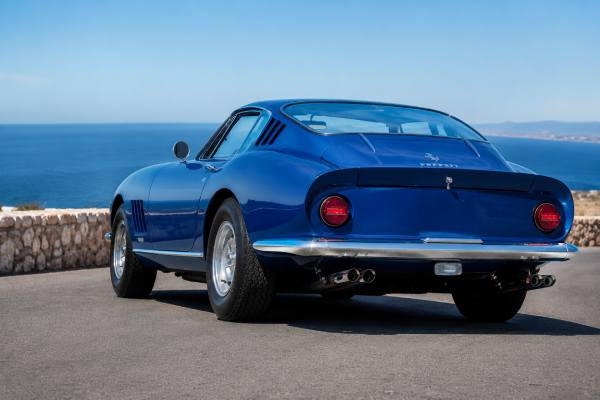
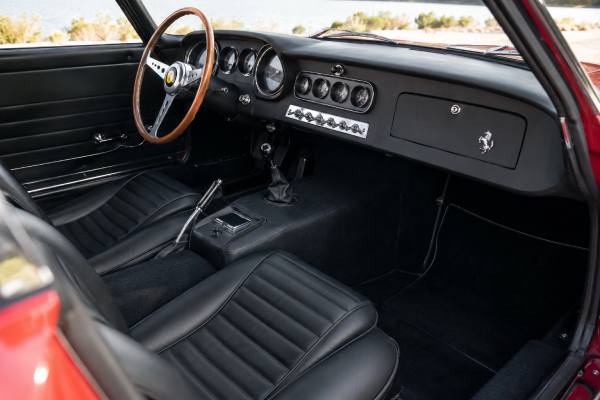
The Ferrari 275 GTB/4 is the four-cam, 3.3-litre V12 berlinetta built from 1966 to 1968, powered by the Tipo 226 engine and carried on the Tipo 596 tubular chassis. It was the most developed closed 275 road car, combining the long-nose Pininfarina shape, Scaglietti-built bodywork, rear transaxle, independent rear suspension, torque-tube driveline, dry-sump lubrication, and six Weber carburettors as standard.
Its importance comes from more than rarity. The 275 GTB/4 sits near the end of Ferrari’s classic front-engined V12 grand touring era, just before the sharper, more aggressive 365 GTB/4 Daytona changed the look and character of Maranello’s flagship road cars. For collectors, it is one of the key Enzo-era road Ferraris because value depends heavily on originality, matching numbers, body integrity, documented history, and restoration quality. For enthusiasts, it remains one of the great links between Ferrari’s 250-series elegance and the faster, more muscular GT cars of the late 1960s.
Quick Take
The Ferrari 275 GTB/4’s strongest appeal is its blend of beauty, mechanical sophistication, and usable V12 performance: a Pininfarina-shaped, Scaglietti-built berlinetta with a high-revving four-cam Colombo V12, five-speed transaxle, and independent suspension. The caution is that it is not a simple classic to buy or maintain; corrosion, old crash repairs, incorrect components, weak documentation, tired drivetrains, and average restorations can seriously affect value. The best examples are not just shiny cars, but well-documented, matching-numbers cars with known ownership, correct details, specialist maintenance, and respected certification or history files.
Table of Contents
- Why the 275 GTB/4 Matters
- Tipo 226 V12 and Core Specifications
- Production, Variants, and Factory Details
- Design, Engineering, and Special Features
- Road Feel, Sound, and Performance
- Maintenance, Reliability, and Restoration Risks
- Market Value, Buying Checks, and Rivals
Why the 275 GTB/4 Matters
The 275 GTB/4 matters because it is the final and most advanced closed 275 road berlinetta, and one of the last Ferrari road cars shaped by the delicate 1960s front-engined V12 tradition. It carried the 275 platform to its peak before the Daytona moved Ferrari’s flagship grand tourer into a more forceful visual and performance era.
Ferrari introduced the 275 line in 1964 as a major step forward from the 250-series road cars. The original 275 GTB already brought two important changes to Ferrari road-car engineering: a rear-mounted transaxle and independent rear suspension. Those features helped balance the car better than older front-engined Ferraris with conventional rear gearboxes and live axles.
The 275 GTB/4 arrived for 1966 as the more developed four-cam version. Its name is simple but important. “275” refers to the approximate displacement per cylinder, “GTB” means Gran Turismo Berlinetta, and “/4” identifies the four overhead camshafts. The car used Ferrari’s 60-degree Colombo V12 architecture, but in Tipo 226 form it gained four camshafts, six Weber carburettors as standard, and dry-sump lubrication.
This was not a racing car with number plates. It was a serious grand tourer for fast road use, long-distance driving, and wealthy clients who expected refinement as well as speed. Still, its engineering carried strong competition influence. The rear transaxle helped weight distribution, the torque tube improved driveline stability, and the independent suspension gave the car a more modern road feel than many earlier Ferraris.
The body was styled by Pininfarina and built by Scaglietti. That combination is central to the car’s identity. The 275 GTB/4 kept the long-nose proportions of the later two-cam 275 GTB, with a slim bonnet bulge needed for the four-cam engine’s carburettor and intake arrangement. The result is subtle rather than dramatic: long bonnet, compact cabin, short tail, covered headlamps on many cars, and muscular rear haunches without losing elegance.
Today, the 275 GTB/4 is collectible for four connected reasons. It is rare, with about 330 GTB/4 berlinettas produced. It is historically important, because it represents Ferrari’s maturing road-car engineering. It is beautiful, with one of the most admired Pininfarina berlinetta shapes of the period. And it is usable by classic Ferrari standards, provided it is correctly maintained.
Its reputation also benefits from the wider 275 family. The 275 GTB/C competition cars, the rare NART Spyder, and the two-cam GTB all add depth to the model line. The closed four-cam berlinetta is not the rarest 275, but it is often viewed as the most complete road-going expression of the platform: elegant, fast, complex enough to be special, and still usable as a real GT car.
Tipo 226 V12 and Core Specifications
The heart of the 275 GTB/4 is its Tipo 226 3.3-litre Colombo V12, a naturally aspirated four-cam engine rated at 300 hp at 8,000 rpm. The rest of the specification is just as important: tubular Tipo 596 chassis, rear-mounted five-speed transaxle, independent suspension at both ends, four-wheel disc brakes, and rear-wheel drive.
| Category | Specification |
|---|---|
| Production years | 1966–1968 |
| Body style | Two-seat berlinetta coupe |
| Chassis type | Tipo 596 welded tubular steel chassis |
| Body construction | Scaglietti-built body, usually steel with aluminium opening panels; some alloy-bodied cars |
| Engine | Tipo 226 Colombo 60-degree V12 |
| Displacement | 3,285.72 cc |
| Bore x stroke | 77 mm x 58.8 mm |
| Valve gear | Four overhead camshafts, two valves per cylinder |
| Fuel system | Six twin-choke Weber downdraught carburettors |
| Lubrication | Dry sump |
| Power | 300 hp at 8,000 rpm |
| Torque | Often quoted around 294 Nm at 6,000 rpm; period figures vary by source |
| Transmission | Five-speed manual rear transaxle with torque tube |
| Drivetrain | Rear-wheel drive, limited-slip differential |
| Suspension | Independent wishbones, coil springs, telescopic dampers, anti-roll bars |
| Brakes | Dunlop discs front and rear |
| Wheelbase | 2,400 mm |
| Top speed | About 268 km/h, or 166 mph |
The engine is the defining mechanical feature. Earlier 275 GTB models used a two-cam version of the Colombo V12. The GTB/4’s four-cam heads improved breathing at higher rpm and gave the car its sharper identity. It is a rev-happy engine by classic GT standards, and it makes its best power high in the range rather than relying on low-speed torque.
The dry-sump system was another important upgrade. Instead of carrying all engine oil in a conventional wet sump beneath the crankshaft, a dry-sump layout stores oil separately and helps maintain lubrication under sustained cornering, braking, and high-speed use. For a fast V12 GT car intended to cover distance at serious speed, that mattered.
The five-speed rear transaxle also shaped the car’s character. By placing the gearbox with the differential at the rear, Ferrari improved front-to-rear balance. The torque tube connecting the engine and transaxle helped control driveline movement and reduced some of the vibration and alignment issues associated with earlier layouts.
The chassis was traditional in material but advanced in layout. The welded tubular frame was not a modern monocoque, yet it gave Ferrari a strong platform for a hand-built body and independent suspension. The independent rear suspension made a major difference in ride and grip compared with older live-axle Ferrari road cars.
Period performance figures vary because road tests, gearing, tyres, state of tune, and measurement methods were not as standardized as they are now. A healthy 275 GTB/4 is best understood as a 165-mph classic GT with strong acceleration, a high-rpm power curve, and much more chassis sophistication than earlier 1950s-style V12 Ferraris.
Production, Variants, and Factory Details
The 275 GTB/4 berlinetta was produced in small numbers, with about 330 examples built from 1966 to 1968. The main points for buyers are body material, originality, matching-number components, factory colours, factory options, and documentation.
| Item | Why it matters |
|---|---|
| Four-cam engine | The Tipo 226 V12 is the key mechanical difference from the earlier two-cam 275 GTB. |
| Bonnet bulge | The narrow central bulge helps identify the GTB/4 body shape. |
| Torque tube | Carried over from later two-cam GTB development and important to driveline refinement. |
| Steel or alloy body | Most cars are steel-bodied with aluminium opening panels; alloy-bodied cars are rarer and can command a major premium. |
| Factory wheels | Campagnolo-style alloy wheels are strongly associated with the GTB/4; Borrani wire wheels were also seen and are important to verify by car. |
| Factory options | Items such as power windows, special trim, radios, unusual colours, and other special-order details can affect desirability. |
| Documentation | Build records, ownership history, restoration invoices, tool rolls, books, and Ferrari Classiche certification can materially affect value. |
The closed GTB/4 should not be confused with the 275 GTS/4 NART Spyder. The NART Spyder used the four-cam 275 mechanical package but was an open car created through Luigi Chinetti’s North American Racing Team connection. Only ten NART Spyders were built, and they sit in a different market. They are useful for understanding the reach of the 275 platform, but they are not the same buying proposition as the berlinetta.
The standard GTB/4 body was a hand-built object, so small differences from car to car are normal. Panel gaps, trim fit, bonnet shape, door skins, and details around lights or bumpers must be judged by someone who understands Scaglietti construction. A slightly individual hand-built feel is expected; crude repairs, wrong panel shapes, heavy filler, or poor shut lines are not.
Matching numbers matter greatly. For a 275 GTB/4, buyers should verify the chassis, engine, transaxle, body identity, and major drivetrain components against factory records and respected marque documentation. A replacement engine or unclear transaxle history does not necessarily make a car unusable, but it changes the collector-grade value discussion.
Factory colour is another major factor. Red cars are popular and visually familiar, but original special colours can be more desirable if properly documented. Blue, silver, grey, green, black, and unusual interiors can attract serious collectors when the specification is original and tasteful. A colour change is not automatically fatal, but a return to original colours is often preferred at the top of the market.
The best-documented cars often have several layers of proof: factory data, early registration records, invoices, old photographs, ownership correspondence, respected historian reports, service records, restoration files, and certification. For this model, paperwork is not decoration. It is part of the asset.
Design, Engineering, and Special Features
The 275 GTB/4 is special because its design and engineering work together: long-nose beauty, front V12 packaging, rear transaxle balance, and subtle competition-derived mechanical upgrades. It looks simple at first, but much of its appeal is in the details.
Pininfarina’s body shape gave the car classic front-engined Ferrari proportions. The bonnet is long because the V12 sits ahead of the cabin, but the engine is mounted well back in the chassis for better balance. The cabin is compact, the roofline is low, and the rear tapers cleanly. Unlike the Daytona that followed, the 275 GTB/4 does not look aggressive by default. It is athletic, but still graceful.
The most obvious GTB/4 visual cue is the bonnet bulge. It is not decorative. It exists because the four-cam engine and carburettor arrangement needed clearance. This is a good example of why the car’s design feels honest: the shape changed because the engineering required it.
Scaglietti construction also gives the car much of its character. The body is not a stamped mass-production shell in the modern sense. It is a coachbuilt structure fitted over a tubular chassis, with steel panels on most cars and aluminium used for the doors, bonnet, and boot lid. Rare alloy-bodied examples reduce weight and increase desirability, but they also demand careful inspection because alloy repair quality varies widely.
The cockpit is purposeful rather than luxurious in the modern sense. Large instruments sit directly in view, with smaller gauges for oil pressure, oil temperature, water temperature, fuel, electrical condition, and other essentials. The driving position is low and close to the car’s mechanical centre. Leather trim, thin pillars by modern standards, and a relatively airy glasshouse make the cabin feel like a working GT car rather than a lounge.
Mechanically, the 275 GTB/4’s most special features are its four-cam V12, dry-sump lubrication, six carburettors, torque tube, and rear transaxle. These details changed the way the car behaved. The engine was more eager at high rpm than earlier road V12s. The torque tube made the drivetrain feel more integrated. The rear transaxle helped balance. Independent suspension improved composure over fast, uneven roads.
The sound is central to the experience. A properly tuned 275 GTB/4 does not have the blunt thunder of a large-displacement American V8 or the hard-edged noise of a modern flat-plane supercar. It has a layered mechanical voice: induction from six Weber carburettors, camshaft and valvetrain texture, exhaust resonance, and a rising V12 note that becomes sharper as the revs build.
Cooling and airflow are also part of the design. The nose openings, bonnet vents, under-bonnet heat management, and oil system all matter in real use. A car that looks concours-ready but runs hot in traffic, leaks heavily, or has poorly routed fuel and breather lines is not truly sorted.
Road Feel, Sound, and Performance
A good 275 GTB/4 feels fast, mechanical, and balanced rather than brutally powerful. Its performance comes from revs, gearing, response, and chassis poise, not from modern torque or electronic grip systems.
The engine needs respect when cold. Oil temperature matters, and the car should not be rushed before fluids are warm. Once ready, the Tipo 226 V12 rewards a driver who uses revs. It pulls cleanly when properly tuned, but the full character arrives higher in the tachometer. The last part of the rev range is where the four-cam identity makes sense.
Throttle response depends heavily on carburettor condition and adjustment. Six Weber carburettors can feel crisp and immediate when synchronized correctly. When they are worn, dirty, poorly jetted, or badly balanced, the car can stumble, smell rich, idle unevenly, or lose the smoothness that makes a great GTB/4 so satisfying.
The five-speed gearbox has a mechanical feel. It should not be forced, especially when cold. A healthy transaxle shifts with precision once warm, but worn synchros, poor linkage adjustment, or old clutch hydraulics can make the car feel heavier and less cooperative. This is one reason a road test is essential before purchase.
Steering is unassisted and full of information. At parking speeds it asks for effort, especially on period-style tyres. On the move, it becomes one of the car’s great strengths. The front end feels more communicative than many later power-assisted GT cars, and the car rewards smooth inputs rather than sudden corrections.
Ride quality is better than many people expect from a 1960s Ferrari. The independent suspension allows the GTB/4 to breathe over uneven roads, and the long-distance grand touring brief is clear. That said, old dampers, incorrect springs, worn bushings, tired tyres, or poor alignment can ruin the car’s balance. A restored example can feel very different from a neglected but shiny one.
Braking is strong for the era when the system is fresh and correctly adjusted, but expectations must be period-correct. There is no ABS, no stability control, no modern tyre footprint, and no carbon-ceramic safety net. Repeated hard use requires mechanical sympathy, fresh fluid, correct pads, and properly maintained calipers and discs.
On a mountain road, the 275 GTB/4 is at its best when driven with flow. It is not a point-and-squirt car. The driver works with the weight transfer, engine speed, steering feedback, and braking zones. On a highway, it becomes a true GT: long-legged, stable, and capable of covering distance at speeds that were deeply impressive in the late 1960s.
Usability depends on condition. A well-sorted example can be driven regularly by classic Ferrari standards. A poorly maintained one may be hot, noisy, smelly, hard to start, reluctant to idle, and expensive to put right. The difference is not the model; it is preparation.
Maintenance, Reliability, and Restoration Risks
The 275 GTB/4 can be dependable for a 1960s exotic if maintained by specialists, but neglect is expensive. Its biggest ownership risks are not everyday reliability in isolation; they are incorrect restoration work, corrosion, drivetrain wear, fuel-system problems, cooling issues, and lost originality.
The engine is robust in principle, but it is not tolerant of careless service. Valve adjustment, ignition setup, carburettor synchronization, oil control, cooling health, and correct warm-up habits all matter. Oil leaks are common on old V12 Ferraris, but heavy leaks, low oil pressure, smoke, overheating, or noisy top-end operation need expert investigation.
Fuel-system condition is critical. Old hoses, incorrect clamps, tired pumps, dirty tanks, blocked filters, and leaking carburettors are safety risks as well as drivability problems. Any car that has been stored for long periods needs careful recommissioning before serious use.
The cooling system must be judged under real conditions. A quick start in a showroom tells little. The car should be evaluated after warm-up, in traffic, at road speed, and after shutdown. Radiator condition, fan operation, thermostat behavior, water pump health, hose quality, and correct bleeding can all affect temperature control.
The transaxle and clutch are major cost areas. Listen for bearing noise, differential whine, weak synchros, clutch slip, dragging, vibration, and harsh driveline movement. Because the gearbox and differential sit at the rear, repair work is specialist work, not ordinary classic-car maintenance.
The chassis and body deserve especially close inspection. Corrosion can appear in sills, lower panels, floors, wheel arches, door bottoms, boot areas, and around repaired accident damage. Aluminium panels can suffer from poor repairs or corrosion where dissimilar metals meet. A car with beautiful paint can still hide serious metalwork problems.
| Area | What to check | Why it matters |
|---|---|---|
| Engine | Oil pressure, smoke, leaks, valve noise, compression, carburettor tune | Major V12 work is costly and affects originality if components are changed. |
| Fuel system | Tanks, pumps, hoses, filters, carburettor leaks | Old fuel systems can create poor running and fire risk. |
| Cooling | Radiator, fans, hoses, water pump, temperature stability | Overheating can damage an expensive engine. |
| Transaxle | Synchros, bearings, differential noise, clutch action | Rear transaxle repair requires specialist knowledge. |
| Body | Panel shape, filler, corrosion, accident repairs, aluminium panels | Coachbuilt body correction can exceed normal restoration budgets. |
| Chassis | Tube damage, poor repairs, alignment, suspension pickup points | Structural errors affect safety, value, and driving quality. |
| Documentation | Factory data, ownership chain, invoices, certification, tools, books | Provenance can separate a top-tier car from an average one. |
Restoration quality is one of the biggest value separators. A great restoration preserves correct materials, panel shapes, weld styles, finishes, hardware, mechanical details, and factory identity. A poor restoration may look attractive at first but use incorrect trim, modern shortcuts, wrong fasteners, overfilled panels, weak mechanical rebuilds, or non-original finishes.
Originality creates its own tradeoff. A preserved car with aged paint, original interior, known history, and sound mechanicals may be more desirable than a freshly restored car with lost details. But preservation is only valuable when the underlying condition is honest. Rust, unsafe fuel lines, tired brakes, and weak cooling are not virtues just because they are old.
Ferrari Classiche certification, respected historian reports, and specialist inspections are valuable tools, but they should not replace physical inspection. Certification can support identity and correctness, while a hands-on inspection reveals how the car actually runs, stops, steers, and survives underneath.
Market Value, Buying Checks, and Rivals
The 275 GTB/4 sits among the most valuable Enzo-era Ferrari road berlinettas, with recent standard steel-bodied examples generally trading in the multi-million-dollar range and exceptional alloy, celebrity, preservation, or special-history cars reaching far higher. Condition, originality, body material, colour, and documentation drive the difference.
Recent public sales and auction listings show a broad band rather than one simple price. Standard, well-presented GTB/4 berlinettas often appear around the low-to-mid seven-figure range in dollars or euros. Cars with exceptional history, rare original colours, top restorations, alloy bodies, or unusual provenance can move above that. Unsold auction results also matter because they show that buyers remain selective, especially when estimates run ahead of condition or documentation.
The smartest buying approach is to treat the car as a historic artifact first and a used car second. Mileage is less important than authenticity, quality of work, and proof. A low-mileage car with poor storage history may need extensive recommissioning. A higher-mileage car with continuous specialist care can be a better driver and a more honest ownership experience.
Look for:
- Matching chassis, engine, transaxle, and body identity supported by records.
- Known ownership chain with few unexplained gaps.
- Factory colour and trim information, especially if the car has been repainted.
- Evidence of correct mechanical rebuilds by respected Ferrari specialists.
- Clear restoration photos showing bare-metal work, not just finished paint.
- Original or correct books, tools, jack, wheels, instruments, trim, and hardware.
- Road behavior that matches the claimed condition.
- A specialist inspection before any purchase commitment.
Be cautious with:
- Fresh paint over unknown metalwork.
- Missing engine or transaxle history.
- Cars described as “restored” without invoices or photos.
- Poor panel fit explained away as “hand-built character.”
- Overheating, weak oil pressure, smoky running, or carburettor backfires.
- Heavy modifications that are expensive to reverse.
- Imported cars with weak title, duty, or registration paperwork.
- Cars priced as top-tier examples without top-tier documentation.
The closest Ferrari alternatives depend on what the buyer wants. A two-cam 275 GTB offers much of the shape and platform with a different engine character and often a lower market position. A 250 GT Lusso is more delicate and elegant, but less advanced in chassis layout. A 365 GTB/4 Daytona is faster, stronger, and more modern in feel, but visually and emotionally different. A 330 GTC is more understated and usable, with less drama and lower values.
Period rivals include the Lamborghini 350 GT and 400 GT, Aston Martin DB5 and DB6, Maserati Ghibli, and Iso Grifo. Each offers a different mix of style, performance, rarity, and maintenance complexity. The Lamborghini and Maserati bring strong Italian GT character, while the Aston Martins offer British elegance and broader recognition. The Ferrari’s advantage is its combination of V12 heritage, engineering progression, coachbuilt beauty, and Enzo-era collectability.
| Alternative | Why compare it | Key difference |
|---|---|---|
| Ferrari 275 GTB two-cam | Same model family and similar design language | Less complex engine, usually less valuable than an equivalent GTB/4 |
| Ferrari 250 GT Lusso | Earlier elegant V12 berlinetta | More delicate, less technically advanced chassis |
| Ferrari 365 GTB/4 Daytona | Direct successor in Ferrari’s front-engined V12 GT line | Faster and more muscular, but less graceful in the 1960s sense |
| Lamborghini 400 GT | Period Italian V12 GT rival | More understated market presence, different brand appeal |
| Aston Martin DB6 | Prestigious 1960s grand tourer | More practical and British in character, less exotic mechanically |
| Maserati Ghibli | Italian GT with strong design presence | Front V8 character and later styling, generally a different collector tier |
Long-term collectability looks strong because the GTB/4 has the right ingredients: rarity, beauty, Ferrari V12 identity, mechanical importance, and established demand among serious collectors. That does not mean every example is equally safe. The market rewards the best cars and discounts uncertainty. A 275 GTB/4 with weak identity, poor restoration, missing original components, or unresolved mechanical needs can be far more expensive than it first appears.
References
- Ferrari 275 GTB4 (1966) 1966 (Manufacturer Specifications)
- Ferrari 275 GTB (1964) 1964 (Manufacturer Model History)
- Ferrari 275 GTB/4 & 275 GTS/4 Guide — Supercar Nostalgia 2020 (Technical Guide)
- 1967 Ferrari 275 GTB/4 by Scaglietti | The Monaco Auction 2026 | RM Sotheby’s 2026 (Auction Record)
- Ferrari Classic Car Auction Results – Collector Car Auction Prices – Glenmarch 2026 (Auction Results)
Disclaimer
This article is for informational purposes only and is not a substitute for professional diagnosis, inspection, restoration advice, or repair. Specifications, torque values, service intervals, procedures, and correct components can vary by chassis number, market, build date, equipment, and later history. Always verify details against official Ferrari service documentation, factory records, and a qualified marque specialist before buying, repairing, restoring, or valuing a Ferrari 275 GTB/4.
Please share this article on Facebook, X/Twitter, or your preferred enthusiast community if it helped you. Sharing supports our work and helps other readers find practical classic Ferrari information.